Advocating for a Rare Petrel
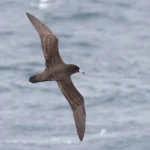
Much of Proaño’s job involves the Critically Endangered Galápagos Petrel, which nests only in the highlands of five Galápagos islands, including Proaño and Cruz’s home island of Santa Cruz.
Rynchops niger
Wayaya (Wayampi)
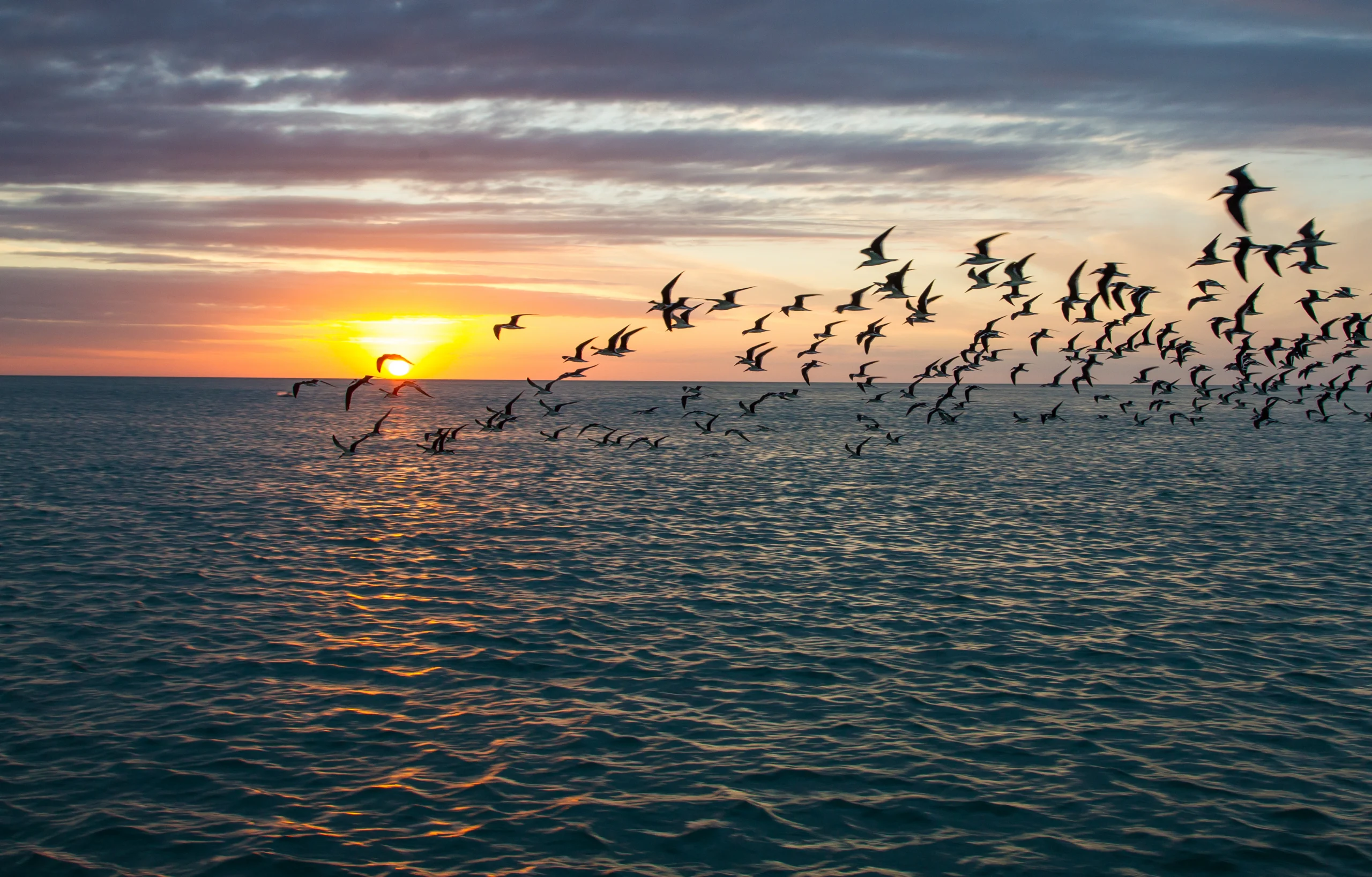
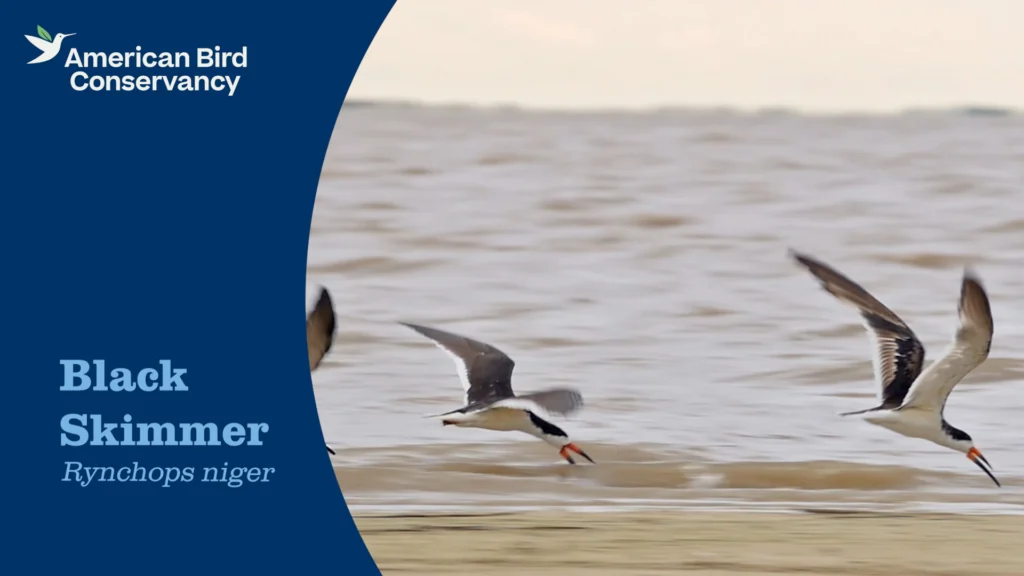
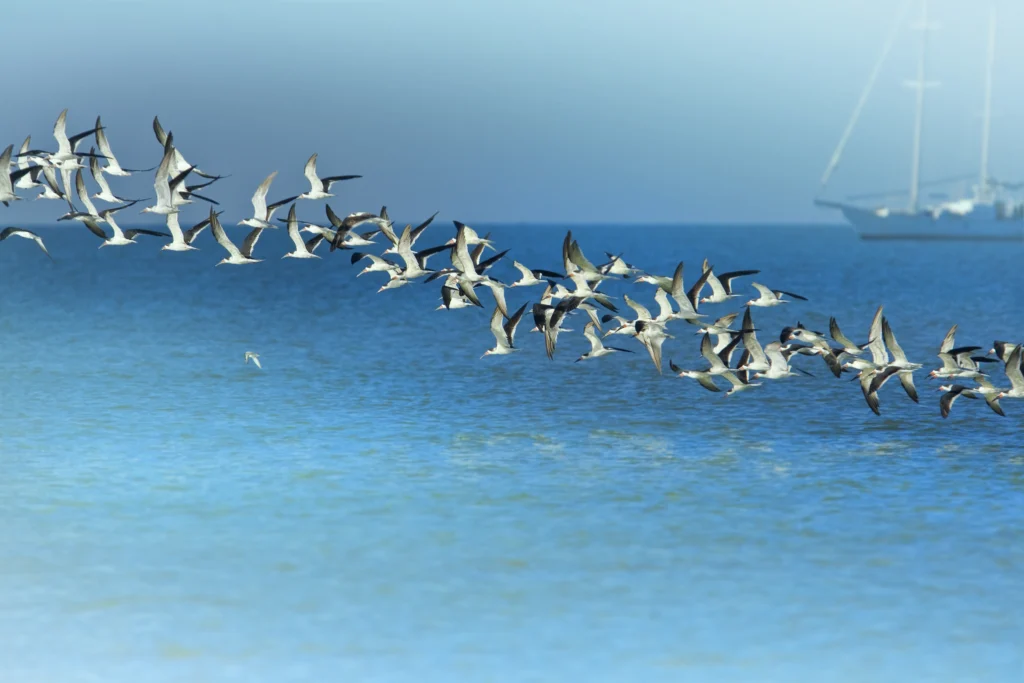
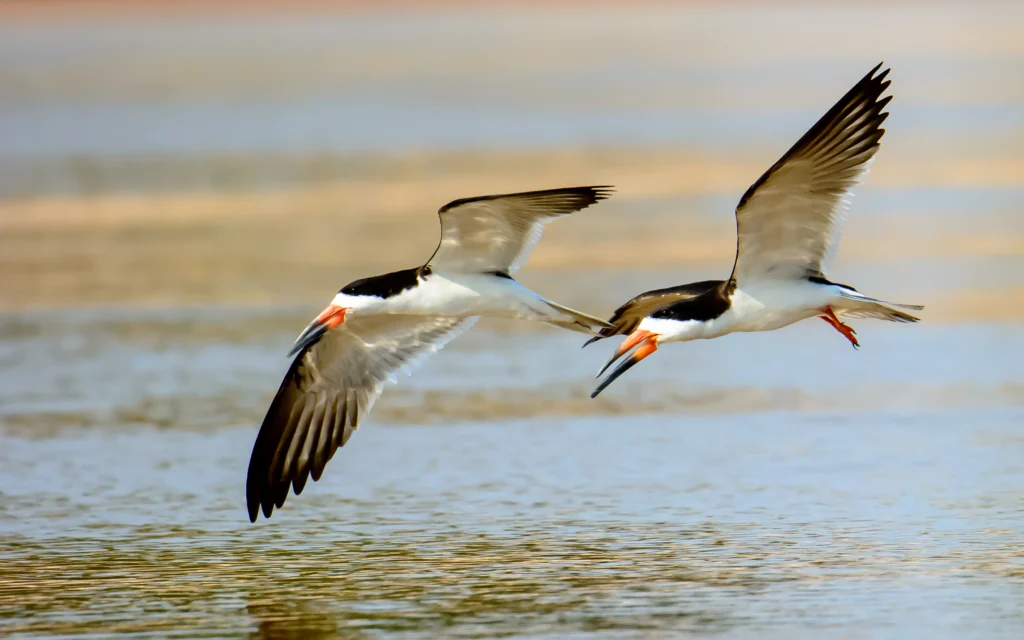
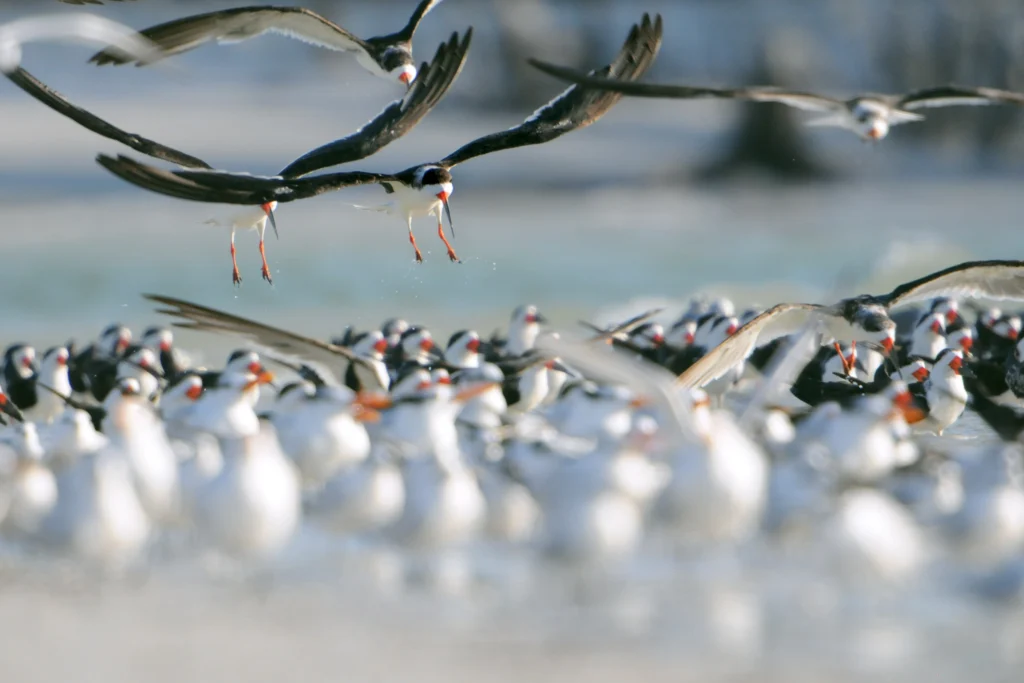
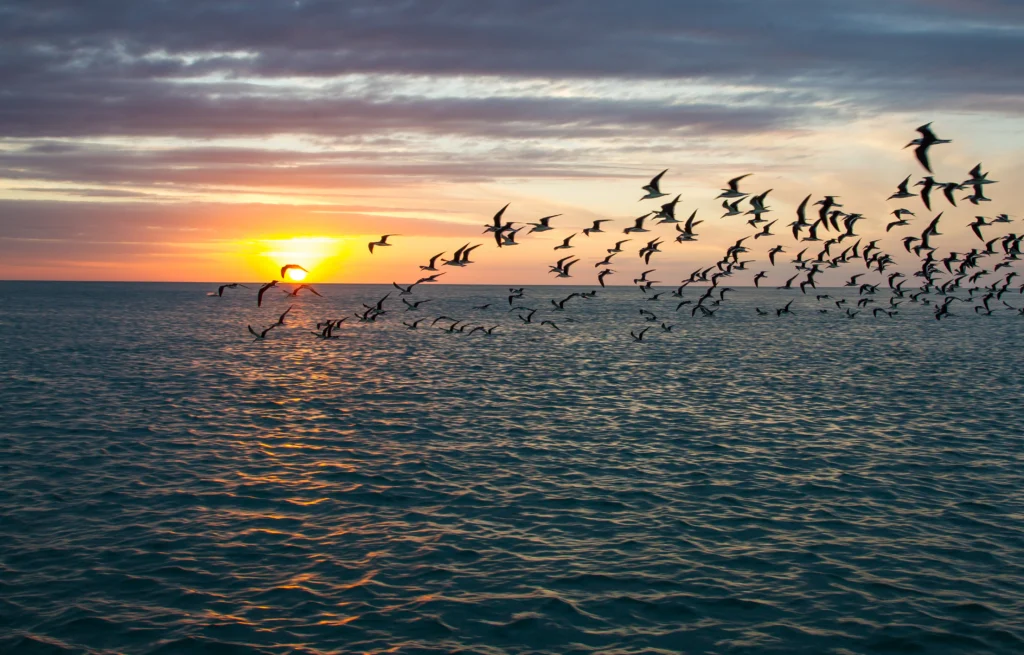
A group of Black Skimmers in flight resembles an aerial ballet, circling, banking, and gracefully alighting as one. Although taxonomists place this unique, long-winged waterbird in a separate genus, it’s closely related to gulls and terns.
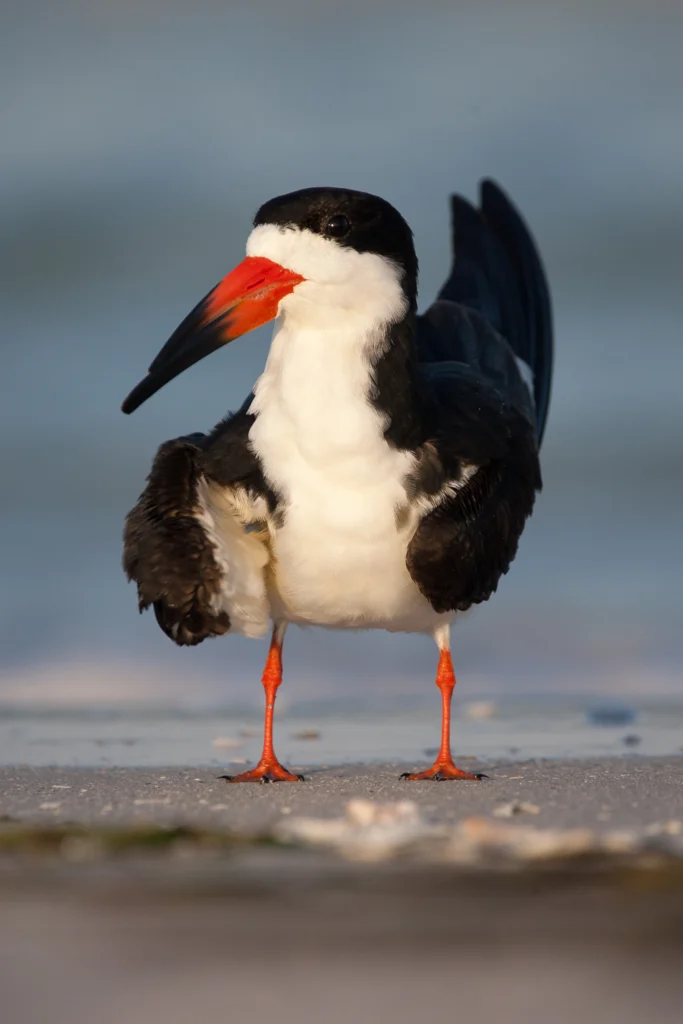
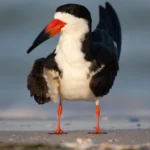
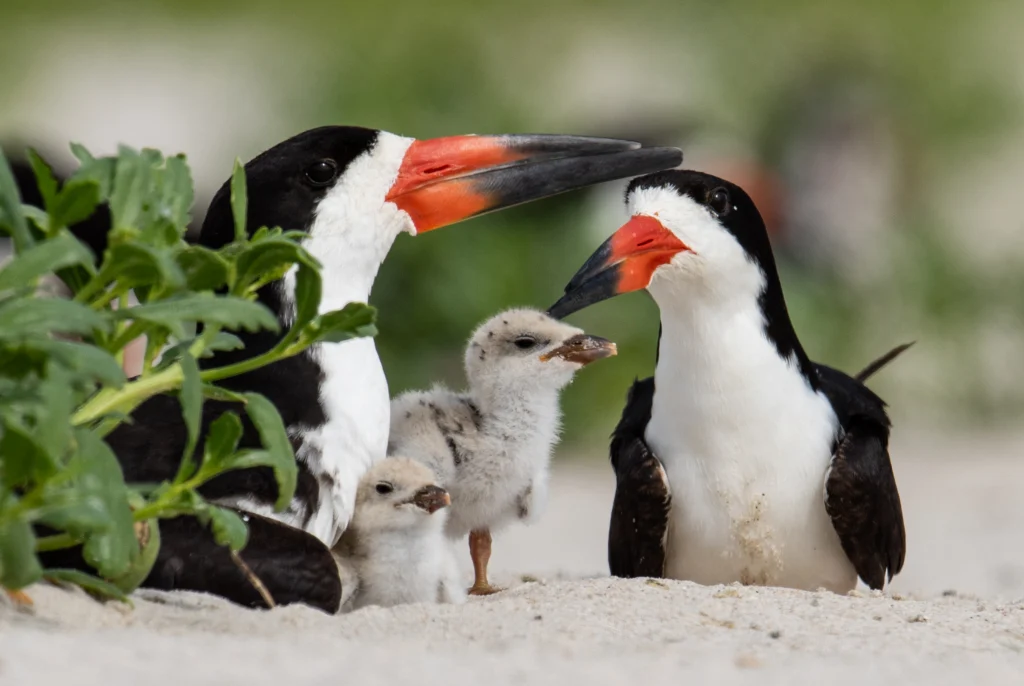
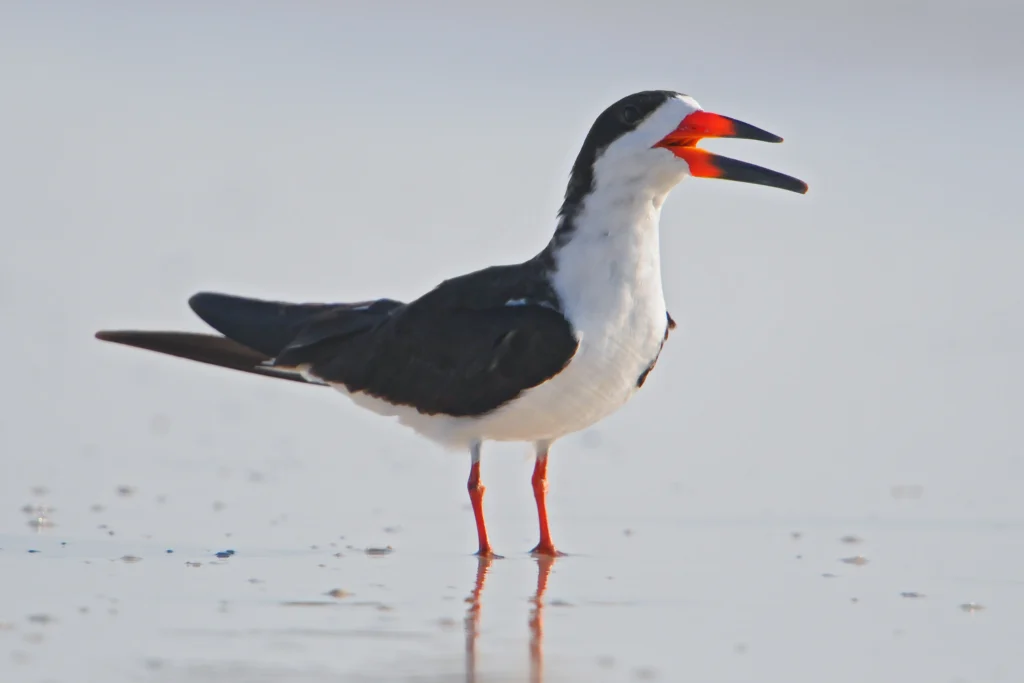
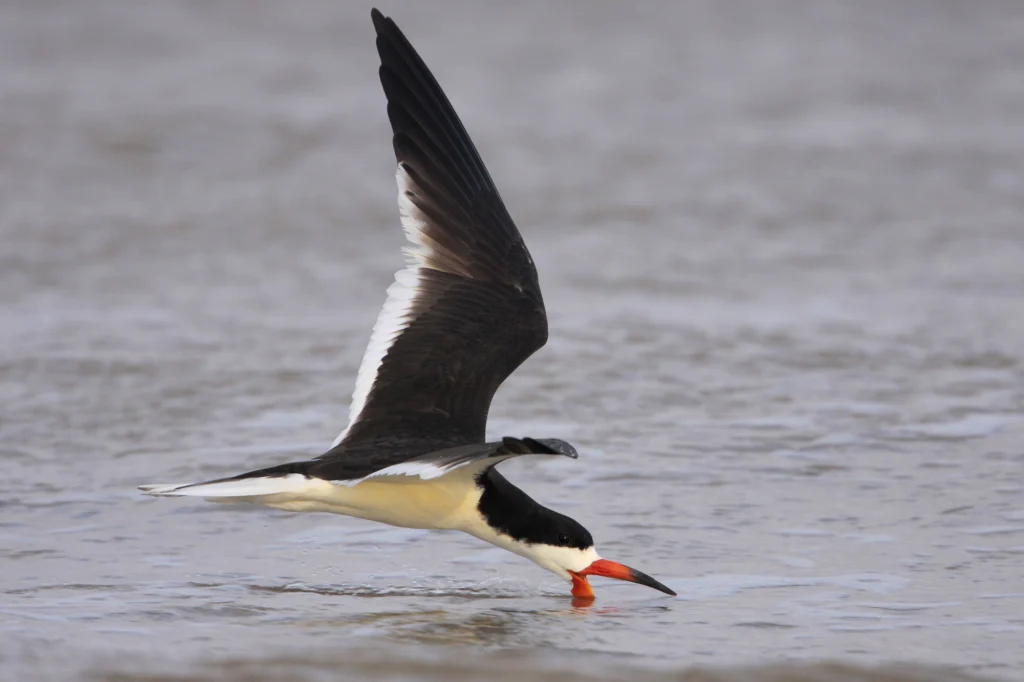
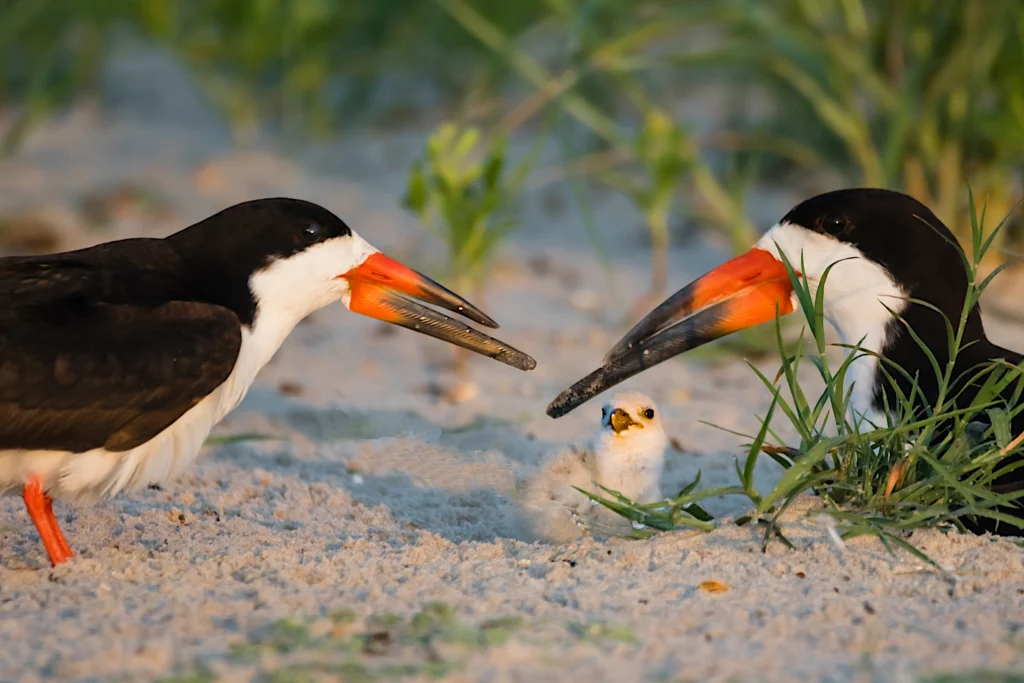
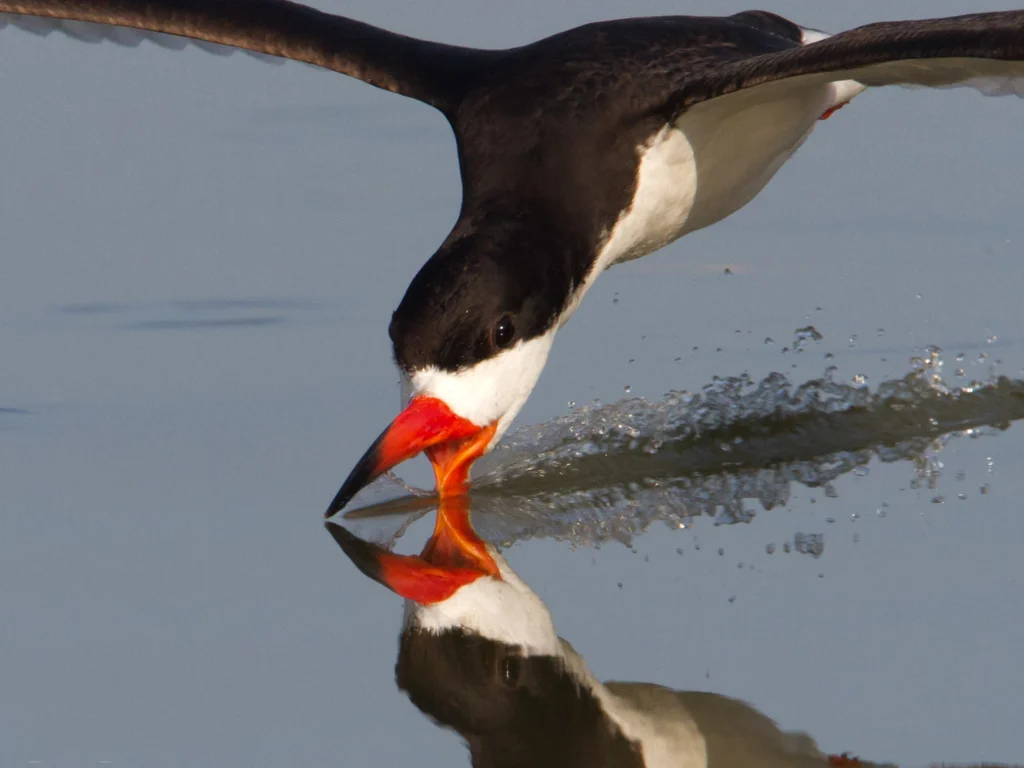
The Black Skimmer’s most striking feature is its gaudy red-and-black bill: Both jaws are long and narrow like a knife blade, with the lower jutting out well beyond the upper. Its unique appearance lends the Black Skimmer a number of evocative folk names, including Scissor-bill, Cutwater (Cortagua or Corta-agua in South America), and Seadog (after its calls, often compared to dog barks).
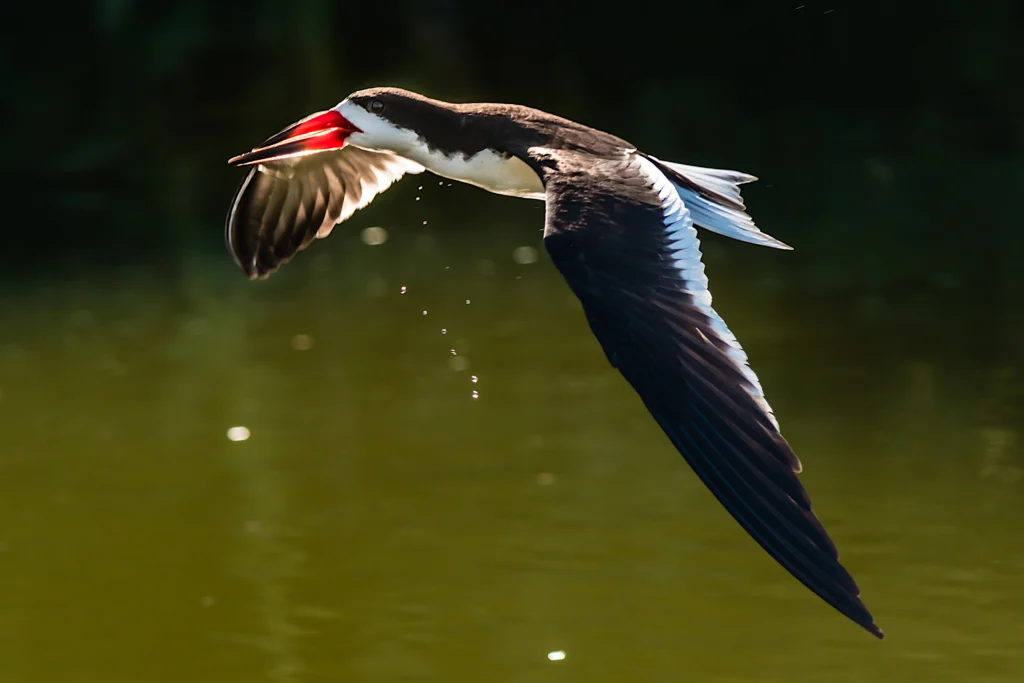
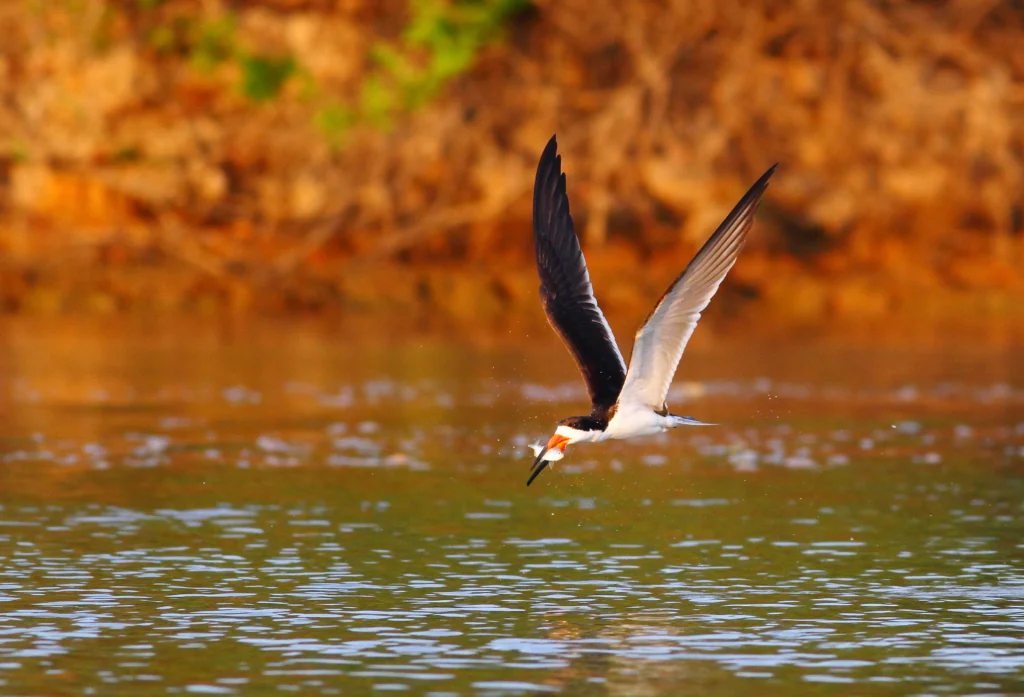
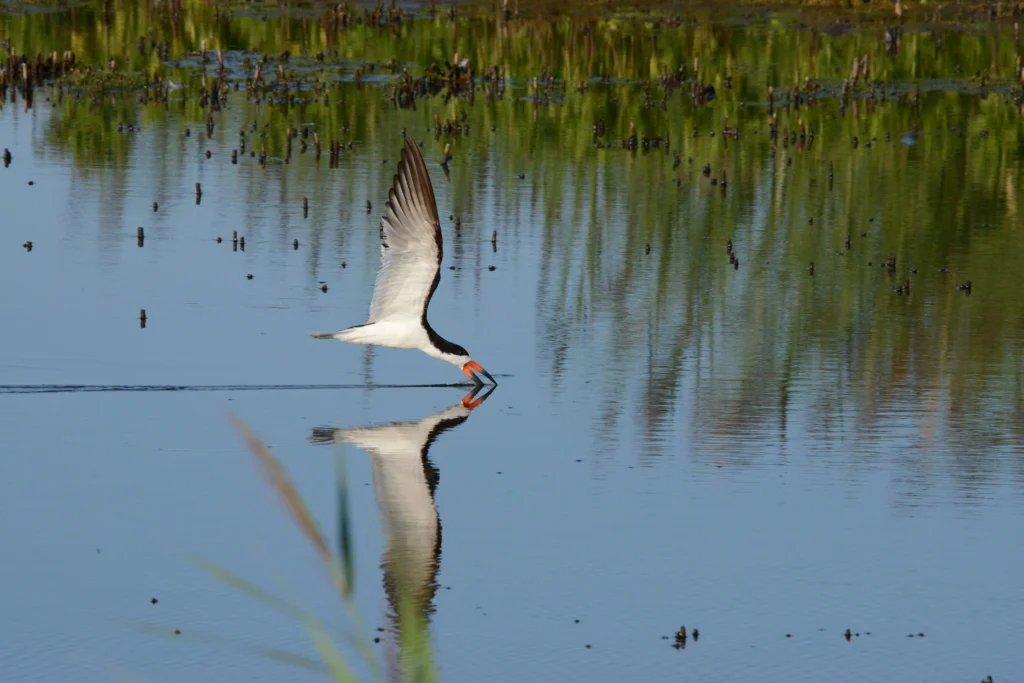
This odd bill is what affords these birds their distinctive foraging style, and the name “skimmer.” A feeding skimmer flies low over the water with its beak open and lower mandible partially submerged. Where a broader bill would send a continuous spray of seawater straight down the throat of another species, the uniquely narrow mandible of the skimmer cuts through the water like a fin. When the extended lower mandible touches prey, such as a small fish, the bill’s upper mandible snaps down, securing the bird’s meal.
Another remarkable feature of the Black Skimmer is its eyes, which have large pupils that can narrow to vertical slits, like a cat’s pupils. This adaptation compensates for glare off the water’s surface and may enhance the bird’s vision as it hunts in dim light or at night.
According to the North American Breeding Bird Survey, Black Skimmers have declined in the United States by almost 90 percent since 1966. This is largely due to habitat loss and human disturbance at nesting colonies. These birds are also affected by oil spills and chemical pollution in coastal waters, and may face additional threats during the breeding season with climate change as sea levels continue to rise.
Especially in North America, Black Skimmers rely on coastal habitat throughout the year. Unfortunately, this often puts them in conflict with people who like to recreate in many of these same areas. Coastal development can result in habitat loss, but can also bring humans closer to nesting colonies. Skimmers are sensitive to human activity near their nests, and additionally, off-road vehicles and off-leash dogs can destroy nests and eggs or kill young.
Oil spills and pollution from oil drilling in general can negatively impact seabirds like the Black Skimmer in several ways. Because they hunt without entering the water, skimmers are less vulnerable than diving birds like Double-crested Cormorants and Brown Pelicans. However, pollution that affects the skimmer’s prey species will have an immediate impact on skimmer populations as well. Additionally, because these birds nest so close to the shore, oil can end up on their eggs, closing off the pores in the egg shell that allow oxygen to reach developing young and causing them to suffocate.
The Black Skimmer and other waterbirds need our help to overcome the threats it faces. At ABC, we’re inspired by the wonder of birds and driven by our responsibility to find solutions to meet their greatest challenges. With science as our foundation, and with inclusion and partnership at the heart of all we do, we take bold action for birds across the Americas.
With our Gulf Coast program, ABC and our partners at the Gulf Coast Bird Observatory are working to identify and implement protective measures for the Black Skimmer, Least Tern, Snowy Plover, and other vulnerable beach-nesting birds. This includes monitoring nesting colonies and placing signage and fencing around important nesting habitat to reduce disturbance from beachgoers, which can cause birds to abandon their nests.
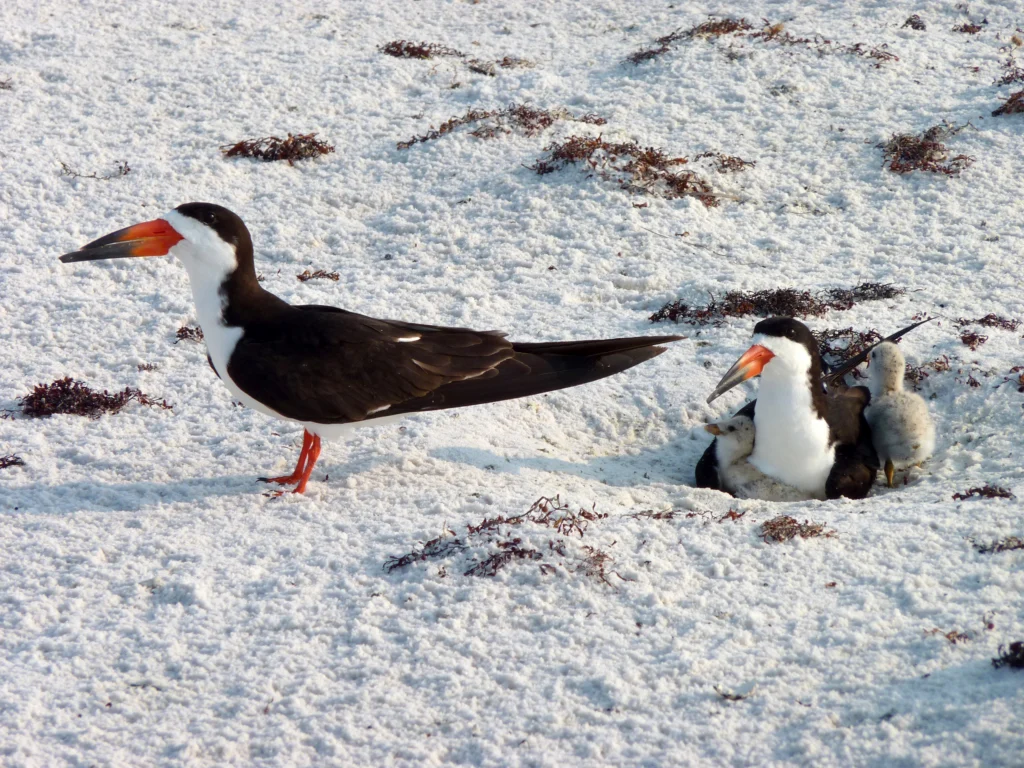
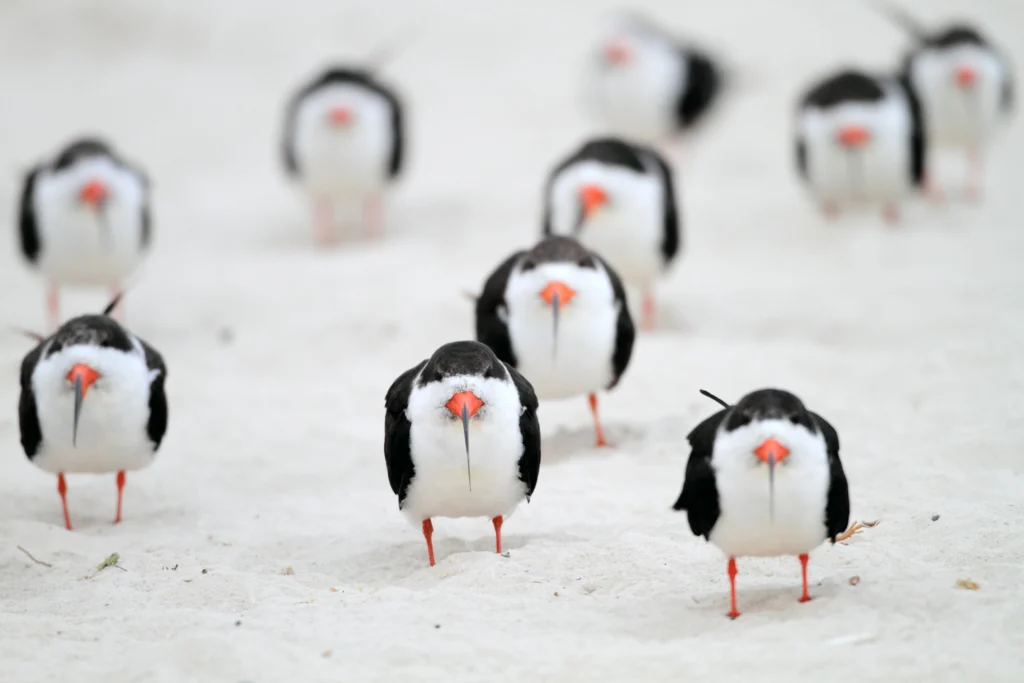
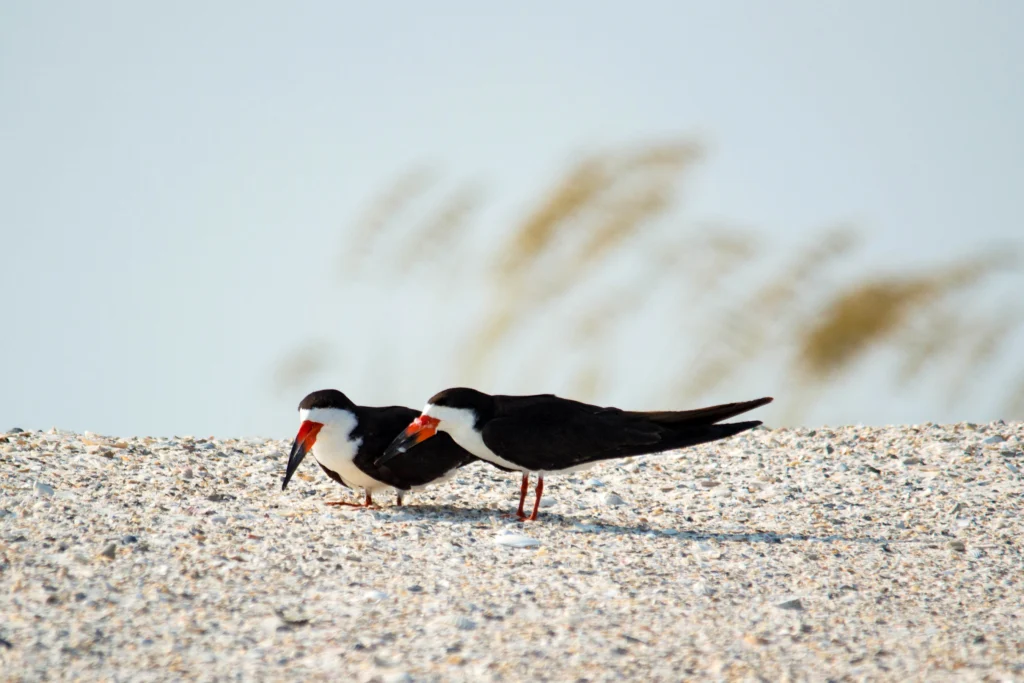
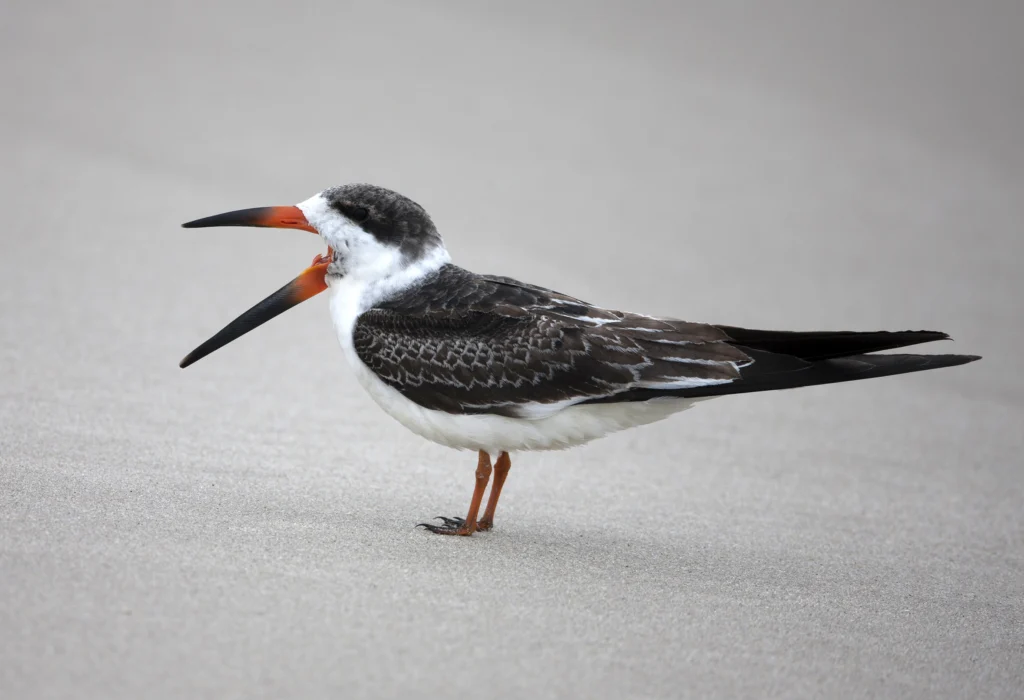
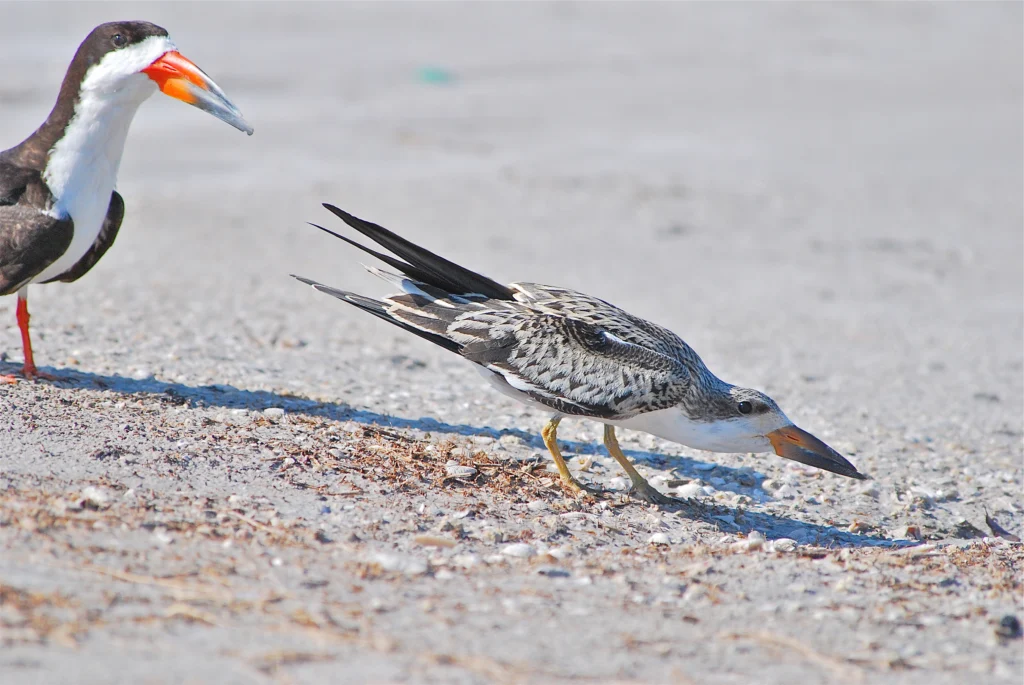
The Black Skimmer is unique in the Western Hemisphere: No other bird has a bill with an obviously longer lower mandible. However, even at a distance, this bird stands out. The bill is quite long, mostly black, but transitions to bright orange-red closer to the head. The upperparts are primarily black, except for the white trailing edges of the wings and the tail, which is mostly white with a black stripe down the center. The black plumage on the head conceals the eye, but the rest of the face is white, as are the underparts overall.
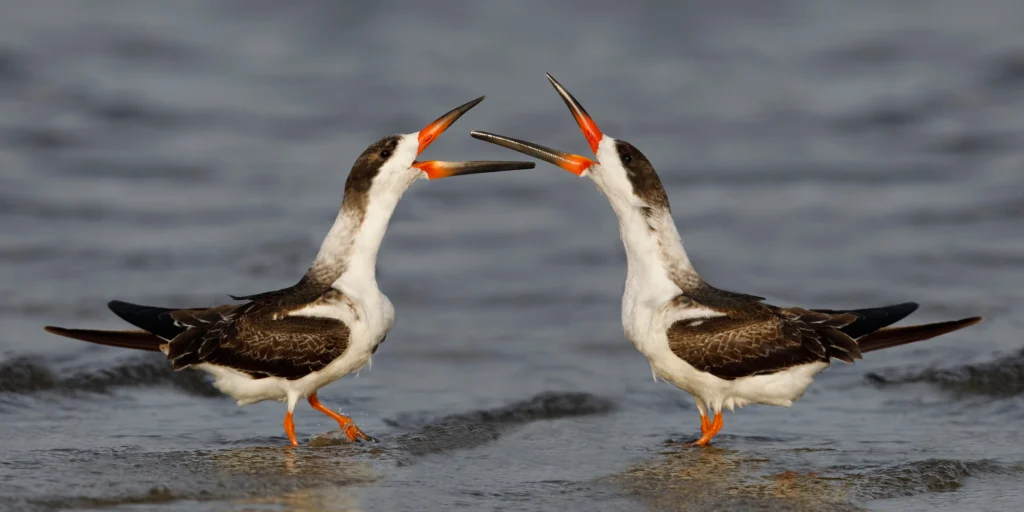
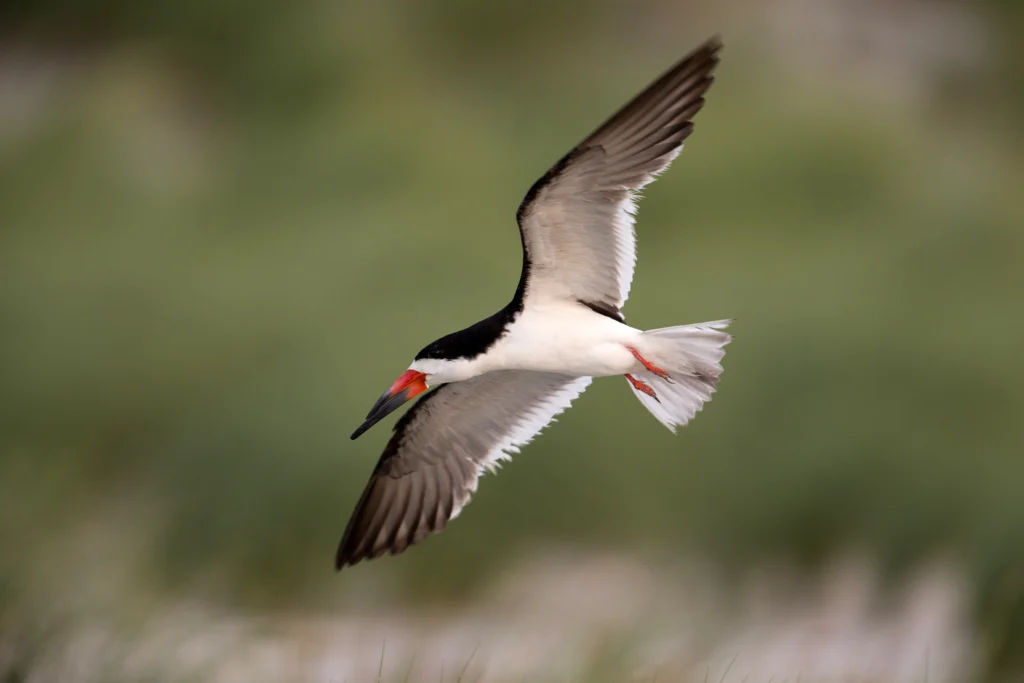
Though mostly silent, Black Skimmers are highly vocal at their breeding colonies. Calls are short and range from nasal whines to brief, sharp barks, similar to those of a small dog.
Credit: Paul Marvin, XC452970. Accessible at www.xeno-canto.org/452970.
The Black Skimmer forages in shallow waters and comes to land on exposed dry areas such as beaches and sandbars.
Specific Area
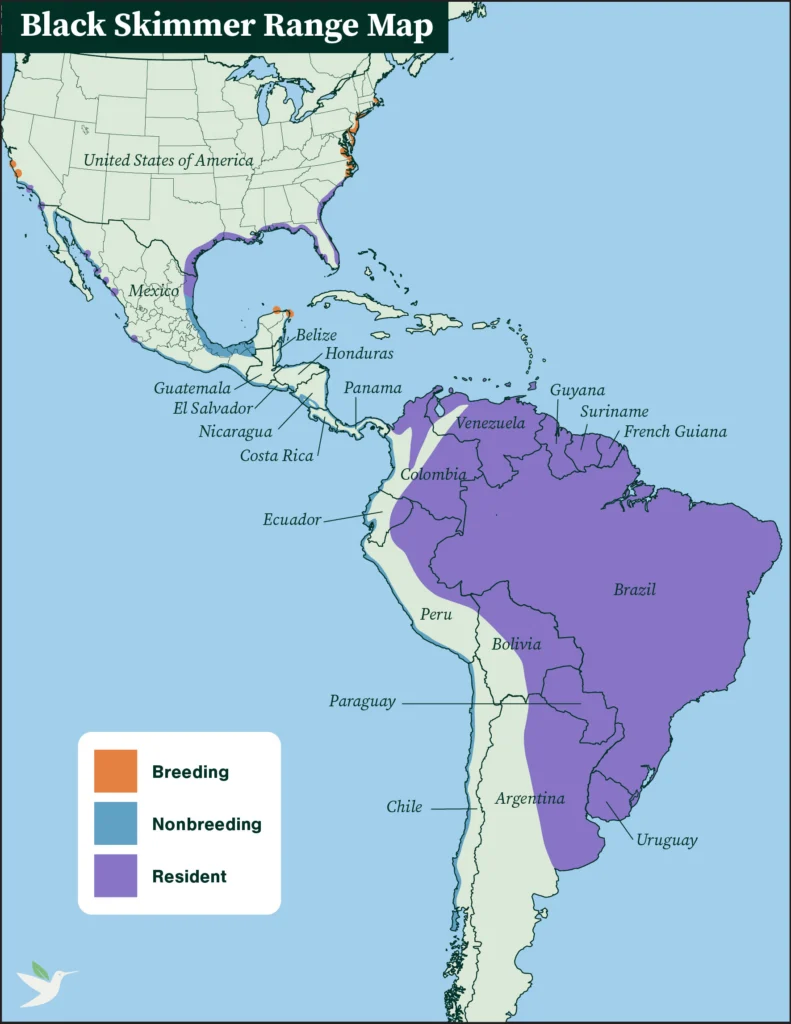
Coasts of North and South America; rivers in the South American Amazon Basin
Range Detail
The Black Skimmer is only found in the Americas, although two related species in the same genus are found in South Asia and Africa. There are three recognized Black Skimmer subspecies: The North American subspecies is the largest and most migratory, breeding along the Atlantic, Gulf, and lower Pacific coasts, and moving as far south as the Central and South American coasts for the nonbreeding season. Some remain year-round from North Carolina’s Outer Banks to Florida, and around the Gulf Coast to Mexico. Small numbers winter in parts of California as well. Two other subspecies of Black Skimmer inhabit South America, occurring along both coasts and along interior rivers, particularly in Amazonia.
Did you know?
Black Skimmers’ unique foraging strategy also leads them to follow different patterns of activity throughout the day, strongly influenced by tidal movements that concentrate small fish near the surface of the water. This stands in contrast to the majority of birds, which forage most actively at specific times of day or night.
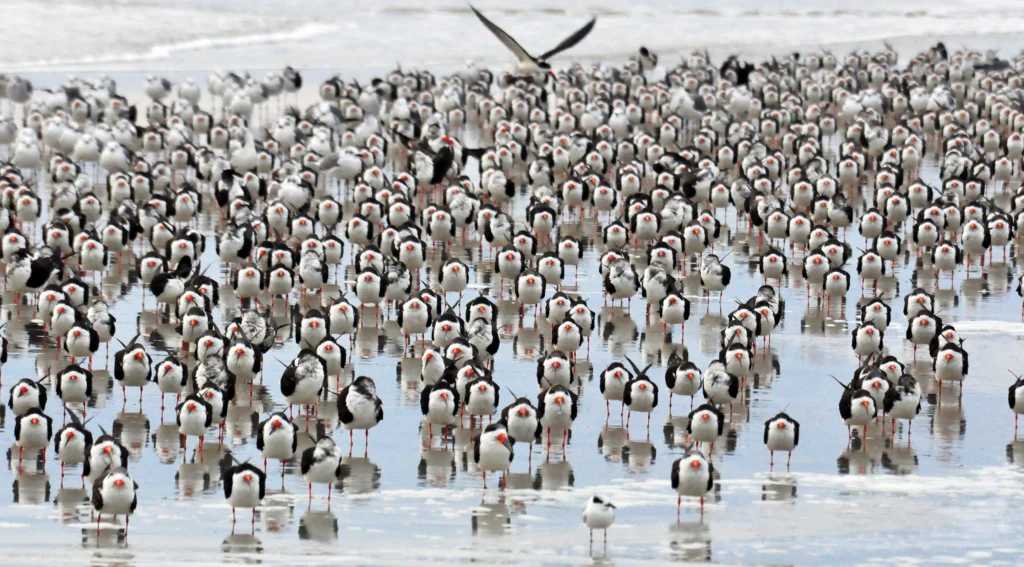
The Black Skimmer is a social bird, roosting and breeding in large colonies, often alongside gulls and terns, benefiting from the protection of their more aggressive neighbors. Successful colonies usually occupy the same nest sites each year, although skimmers will readily colonize a new site if an old one becomes unavailable.
The Black Skimmer feeds mainly on small fish, but also shrimp and other small invertebrates. It is usually a solitary hunter, preferring to forage in calm, shallow water, where small fish concentrate near the surface and are easier to capture. Black Skimmers are one of the few seabirds that regularly hunt at night, using their finely tuned sense of touch to catch prey in the darkness.
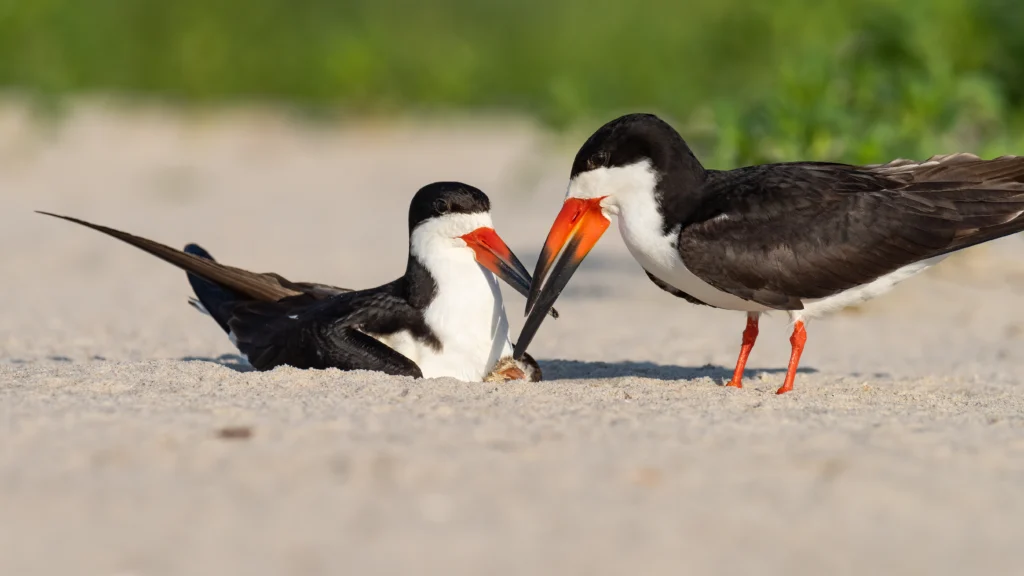
The mating system is not well known in this species, but pairs seem to be monogamous. Earlier in the season, males will bring their mates a fish or other object as a prelude to copulation. During copulation, males raise one of their wings. This display will often induce other pairs to copulate as well.
Males and females take turns excavating a simple scrape in the sand, which is ritualized into a display where the tail and bill are raised in the air while the bird kicks sand backwards, rotating to create an even, dish-shaped depression. Black Skimmers do not add any material to their nests, but may make several scrapes before deciding on a final site to nest.
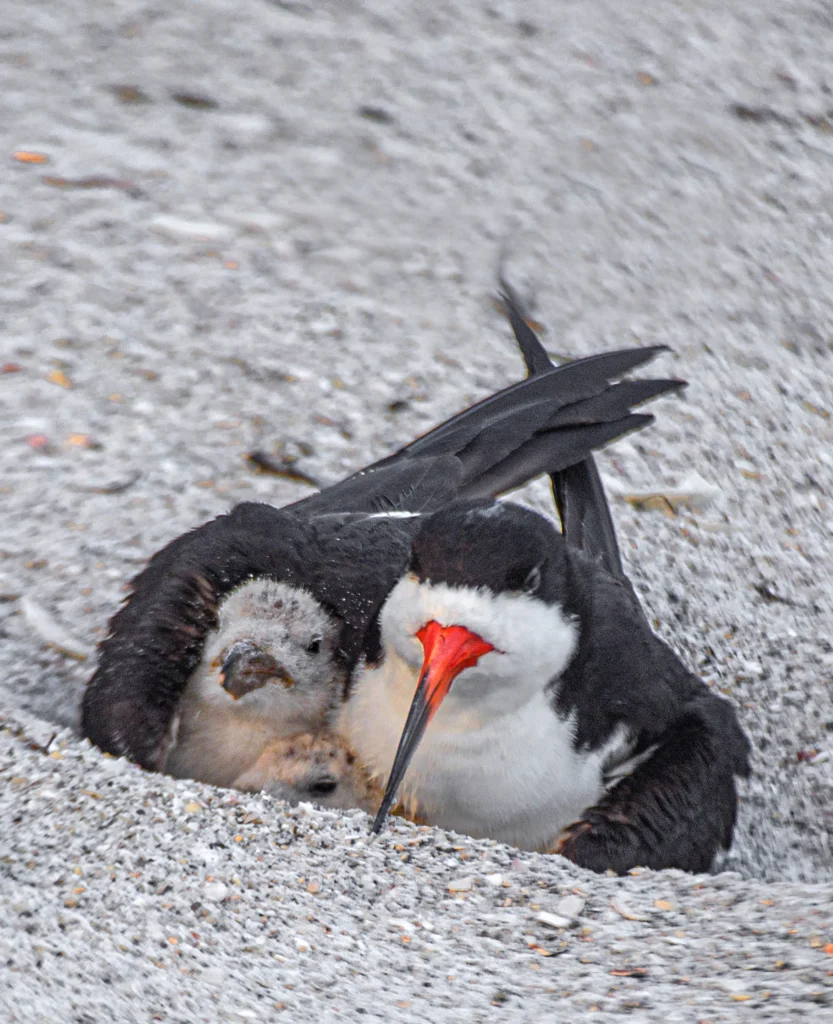
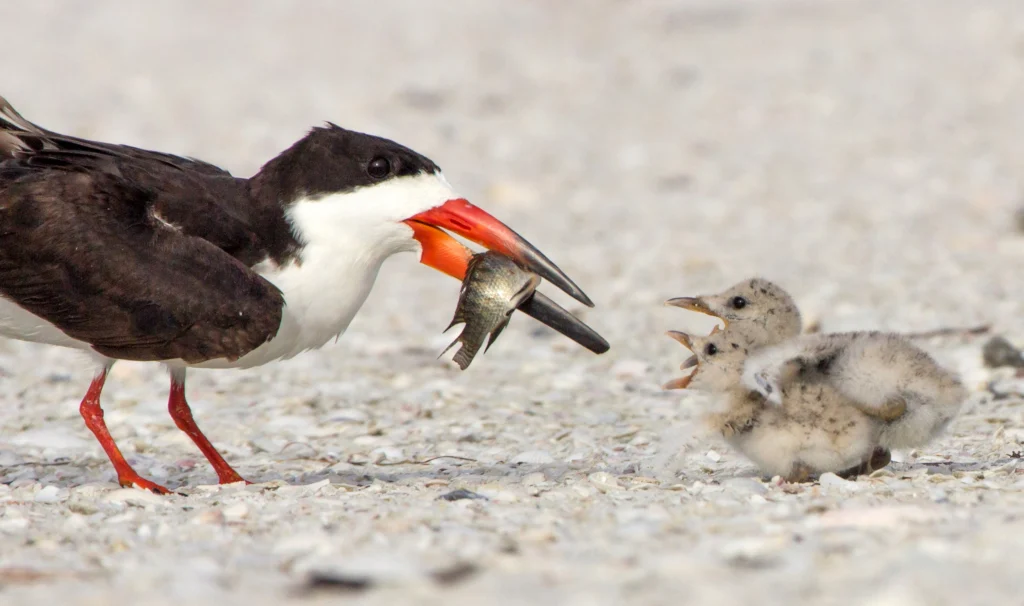
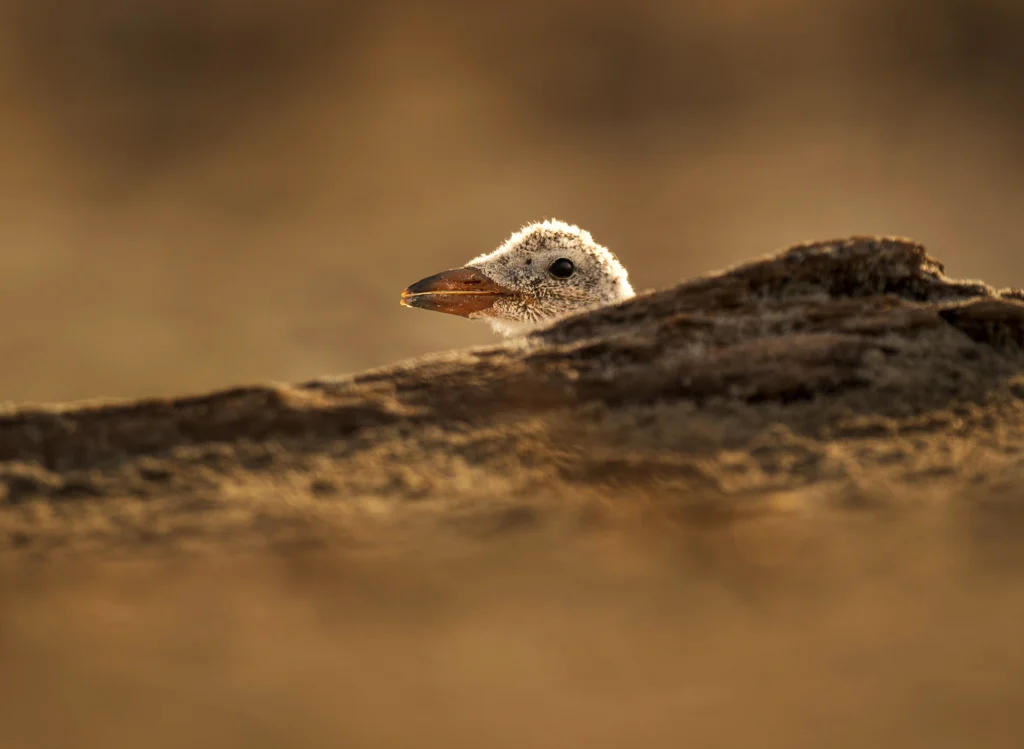
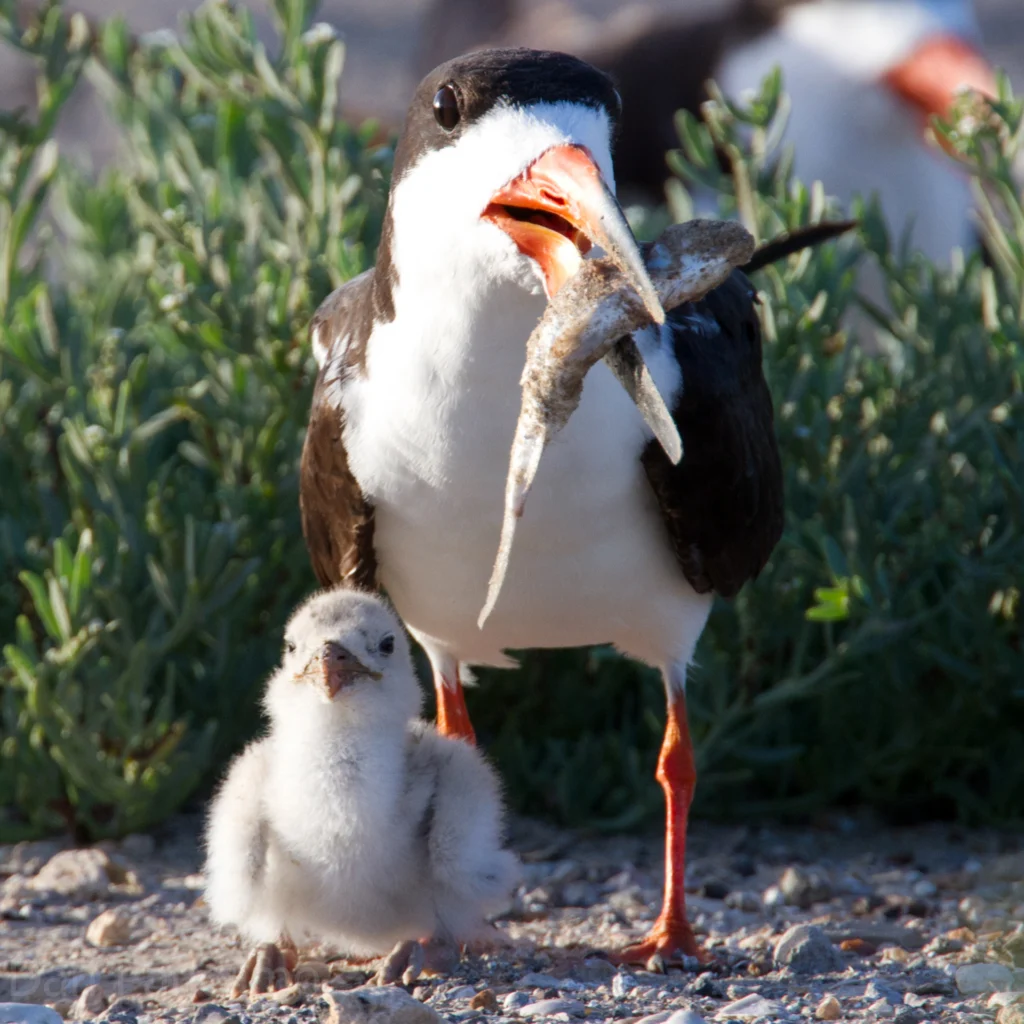
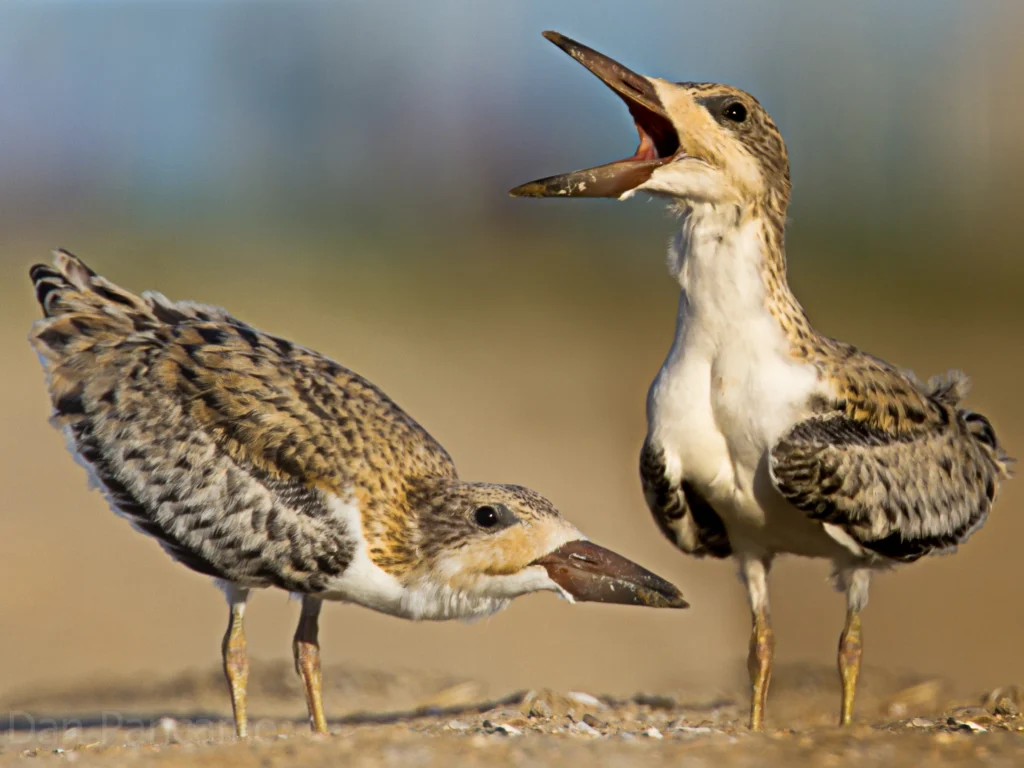
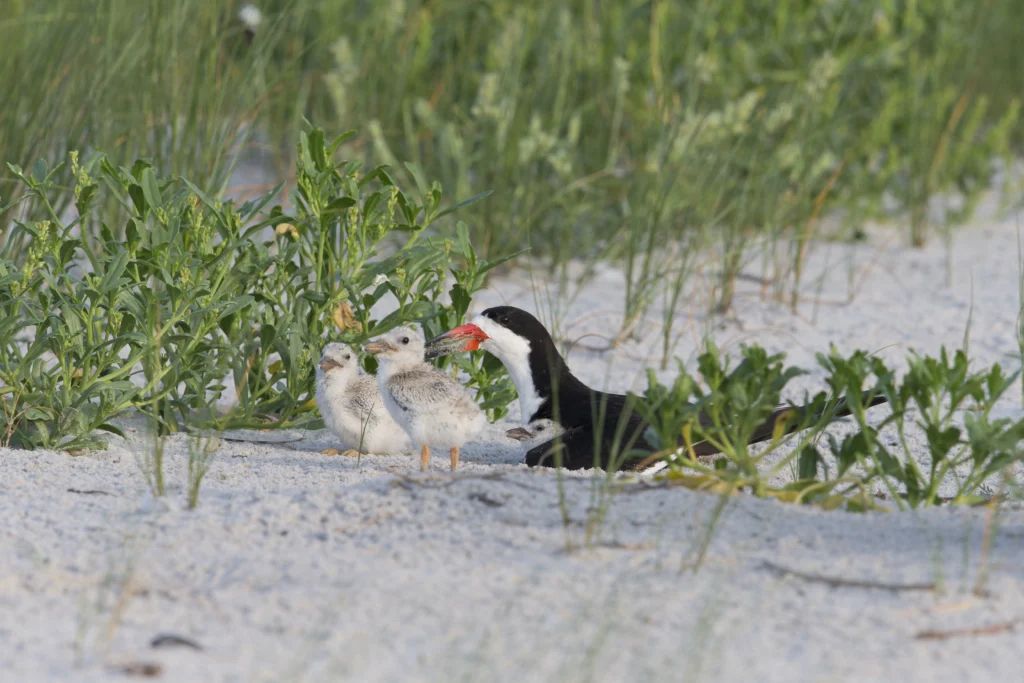
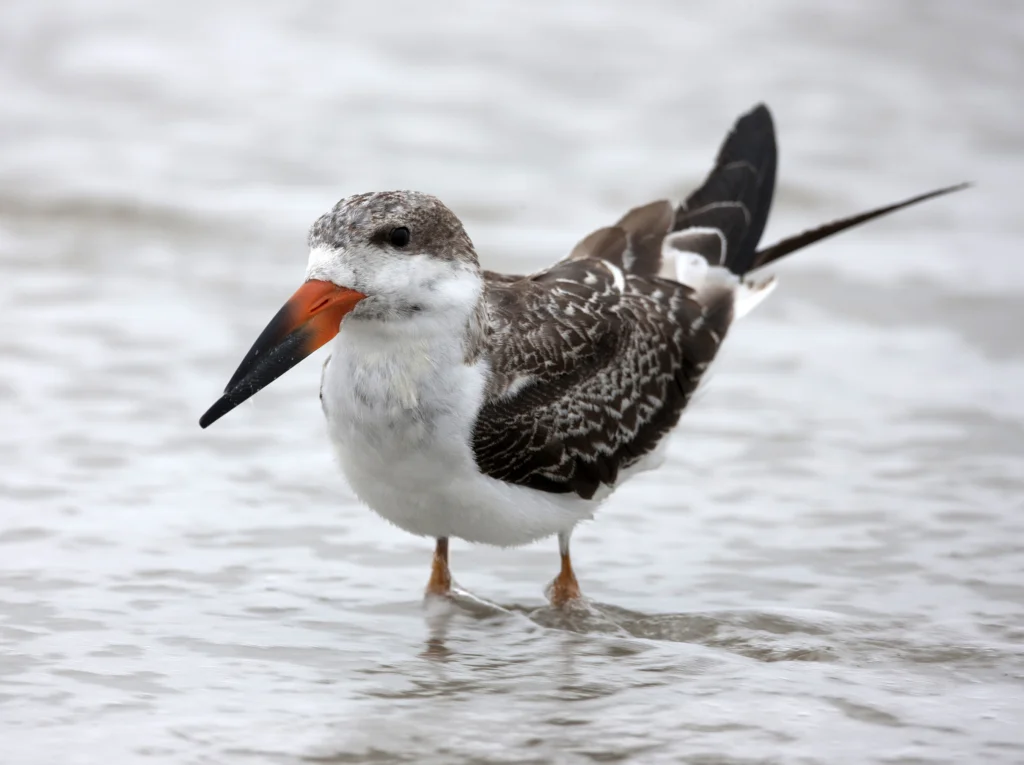
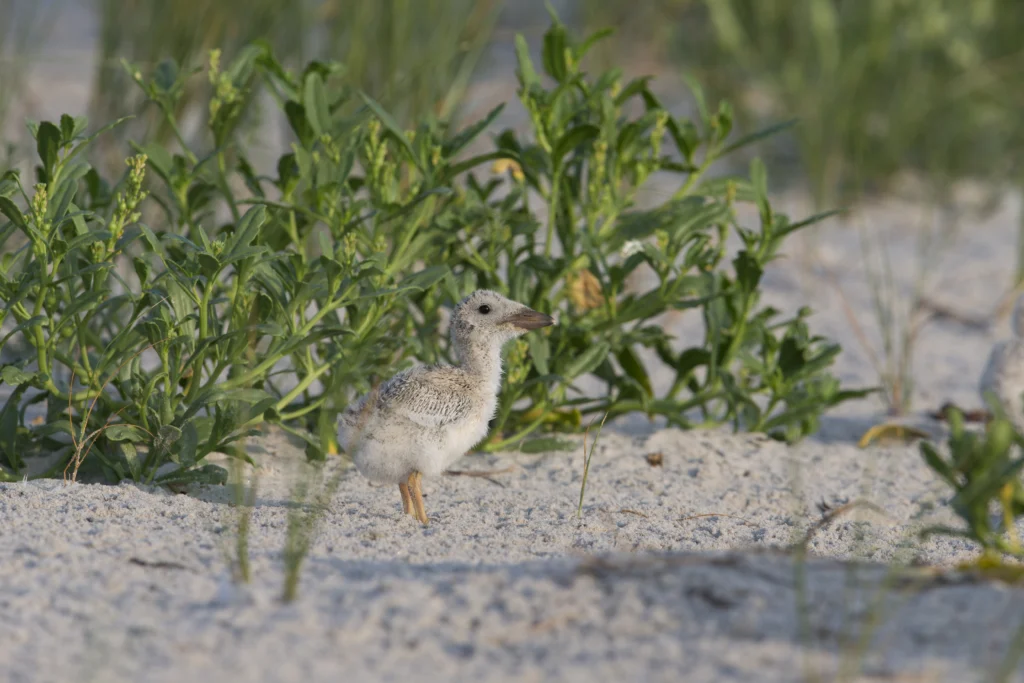
Both male and female take turns incubating the typical clutch of four eggs. As with other ground-nesting birds, skimmer chicks hatch with open eyes and downy juvenile plumage. Although the chicks leave the nest soon after hatching, they remain dependent upon their parents for food until they learn to hunt. Young Black Skimmers initially have “normal”-looking bills, which quickly grow to match the unequal proportions of adult beaks.
Related News & Stories

Join the flock! Your donation helps preserve the habitats that birds need to survive.