Overview
About
A handsome bird of open landscapes, the Chocolate-vented Tyrant is an unusual species to be included among the so-called “flycatchers.” Inhabiting flat grassland and scrub, this bird is primarily a ground-dweller, rarely seen higher than a fencepost or tussock. Furthermore, this flycatcher is not one to catch insects on the wing (to “fly-catch” in ornithology lingo), preferring instead to hunt its prey on the ground. In keeping with this terrestrial lifestyle, the Chocolate-vented Tyrant has notably long legs and is more likely to run or walk than to hop or fly. In combination with its large size and rusty belly, the tyrant’s appearance and behavior are reminiscent of birds in the thrush family, such as the American Robin.
The Chocolate-vented Tyrant breeds in the cold, dry, and infamously windy Patagonian Steppe, also known as the Patagonian Desert. In an environment largely devoid of trees, this bird takes advantage of the open sky to perform an expansive aerial display, similar to other birds like the Red Knot and American Woodcock that use flat, open habitat in the breeding season. The Chocolate-vented Tyrant is also known to forage alongside wintering shorebirds — yet another habit unusual for its family, but typical of others, like the groups of sandpipers and plovers it sometimes joins.

Threats
Birds around the world are declining, and many of them, including the Chocolate-vented Tyrant, are facing urgent threats. Throughout the tyrant’s range in South America, livestock grazing, agricultural expansion, and invasive species all hinder this bird’s ability to thrive. Furthermore, sparse protected areas may be insufficient to support the species, particularly on its nonbreeding grounds in the Pampas, the vast grasslands region east of the Andes.
Habitat Loss
The Chocolate-vented Tyrant is losing habitat in both its breeding and nonbreeding ranges. On the Patagonian Steppe, where this species breeds, overgrazing by sheep disrupts the limited vegetation afforded by a dry climate, resulting in erosion and eventually desertification. The Pampas faces similar threats from overgrazing by cattle, as well as the clearing of native habitat in favor of agriculture.
Cats & Invasive Species
While invasive predators like domestic cats and dogs may prey directly on Chocolate-vented Tyrants and their nests, wild boar and European hares level the tussocks and shrubs that these ground-nesters rely on for cover. Additionally, invasive woody plants change the habitat structure of grasslands, potentially making habitat unsuitable for these primarily terrestrial birds.
Conservation Strategies & Projects
The Chocolate-vented Tyrant is a habitat specialist, making it particularly vulnerable to threats like habitat loss and degradation. In addition to protecting habitat through our network of reserves, ABC also works to reduce the threat of invasive species and restore habitat. At ABC, we’re inspired by the wonder of birds and driven by our responsibility to find solutions to meet their greatest challenges. With science as our foundation, and with inclusion and partnership at the heart of all we do, we take bold action for birds across the Americas.
Creating & Maintaining Reserves
Habitat is the foundation for birds’ survival. Working with dozens of partners and local communities throughout Latin America, ABC supports a growing network of protected areas in more than a dozen countries. Totaling more than 1.3 million acres, nearly one-third of the world’s birdlife (more than 3,000 species) is protected by an ABC-supported reserve.
Bird Gallery
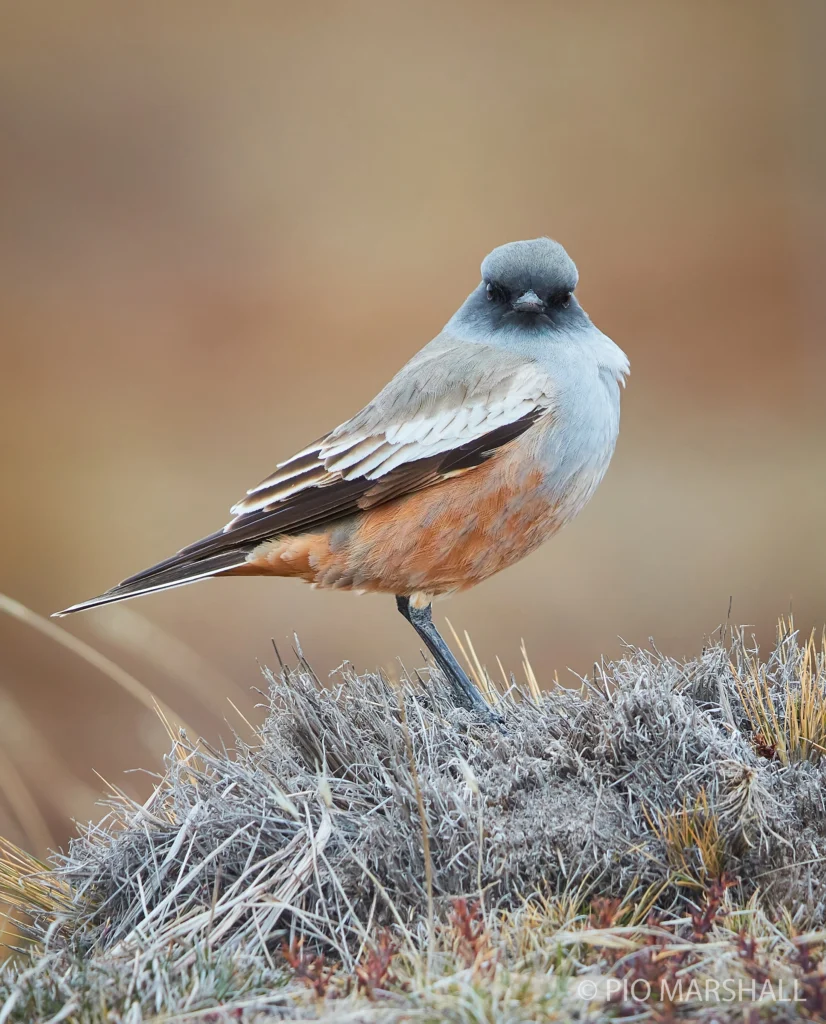
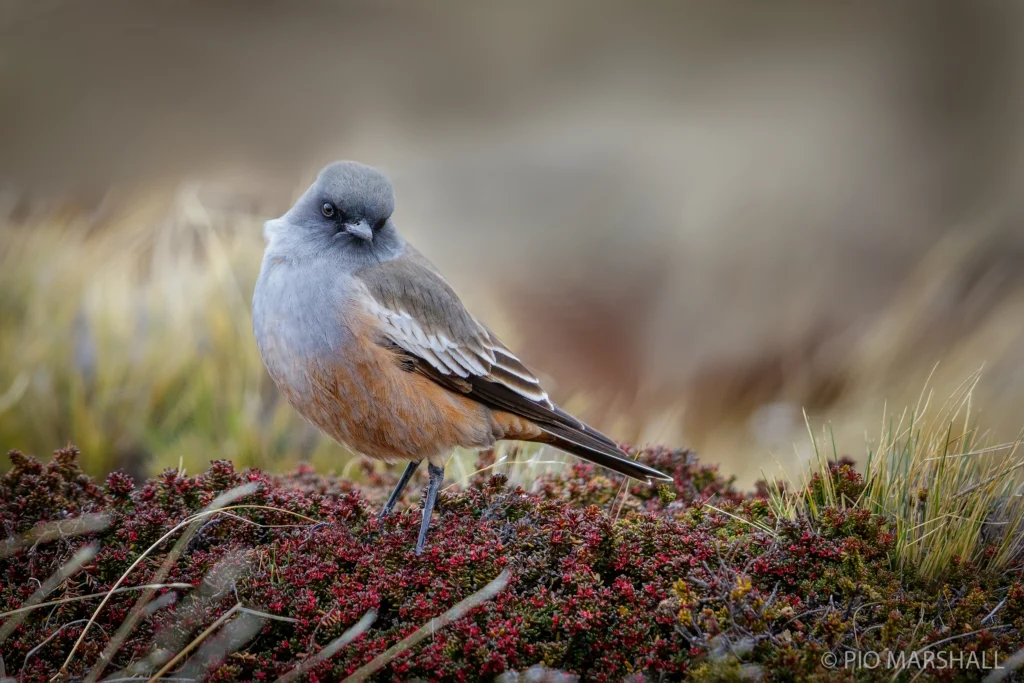
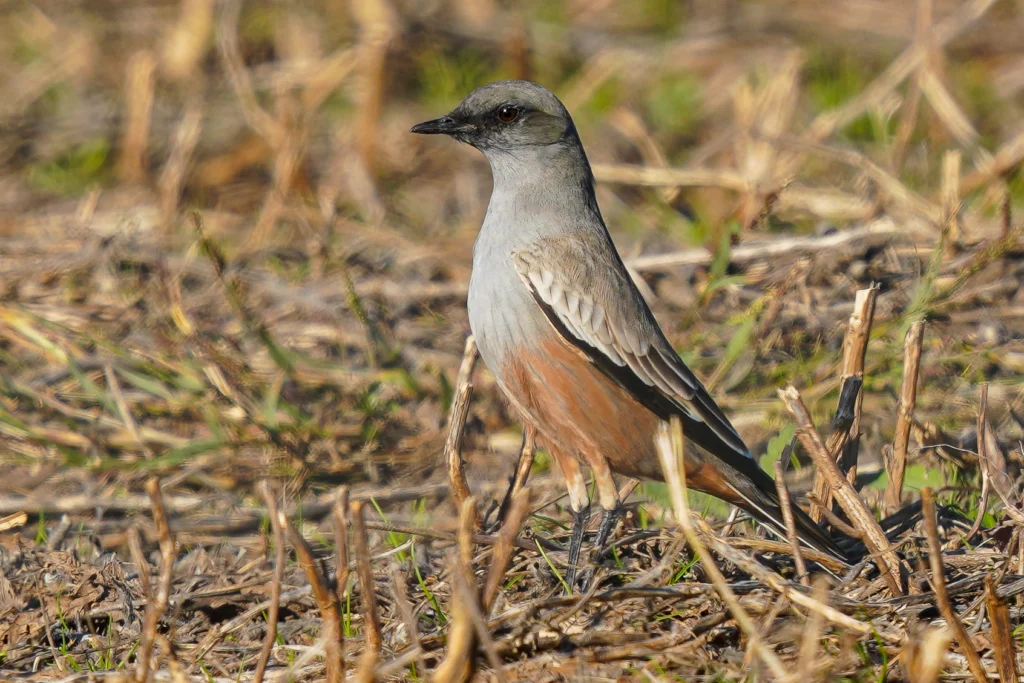
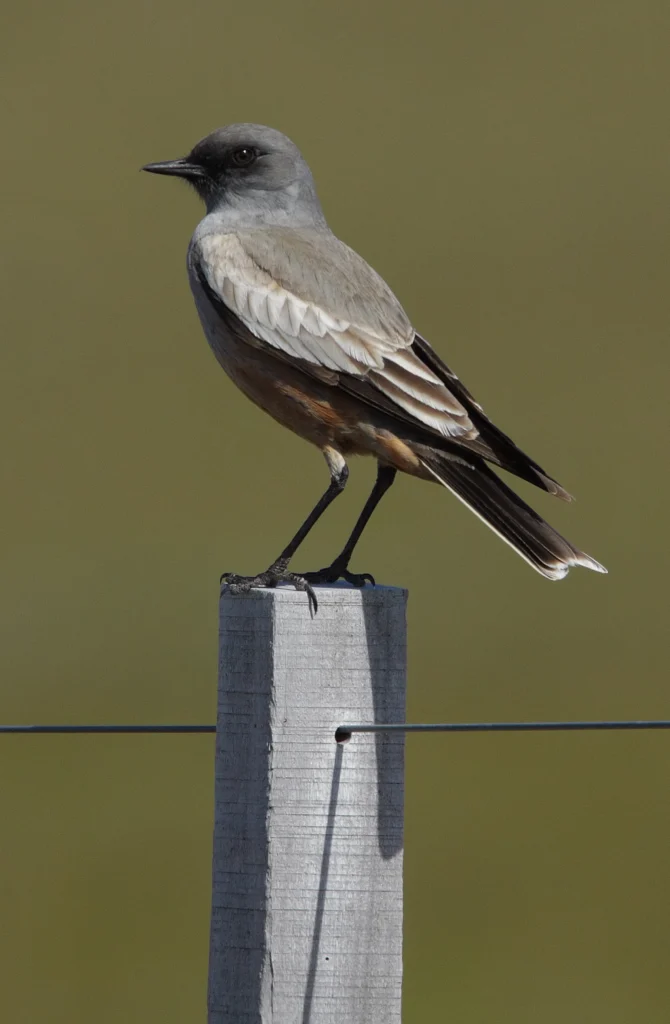
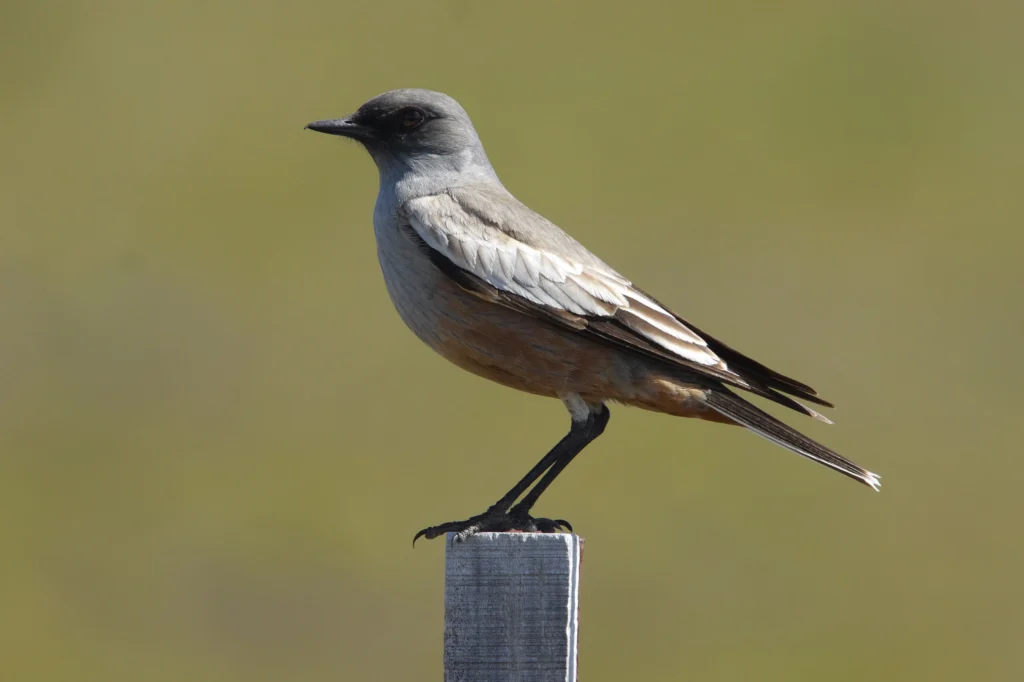
Simple and elegant, the Chocolate-vented Tyrant has a subtle beauty that might be easily missed, serving to camouflage this unusual flycatcher against the dry grasslands of its home. The back, head, neck, and breast are a slaty- to bluish-gray, grading to black around the eyes and bill. The tail and primary feathers are a dark chocolate-brown, and the gray feathers covering the wing are edged in white. The bright rusty to peach-colored underparts are somewhat reminiscent of the American Robin. In flight, the inner flight feathers are the same striking rusty color, set off by a bold white trailing edge. Appropriate to a bird that spends much of its life on the ground, the legs are quite long. Males and females are alike, and plumages are the same in all seasons. Juveniles are paler overall, with no black around the eyes, rufous coloring on the face and neck, and dark streaks on the breast and belly.
Sounds
The typical song of the Chocolate-vented Tyrant is a simple whistled phrase, one note descending followed by another rising, the second whistle nearly identical to the first but in reverse. The song is tonal and musical, with a lazy and relaxed air to it. Calls include a quick whit, and occasional high, slowly descending whistles.
Credit: Bernabe Lopez-Lanus, XC45199. Accessible at https://xeno-canto.org/45199.
Credit: Andrew Spencer, XC89300. Accessible at https://xeno-canto.org/89300.
Habitat
The Chocolate-vented Tyrant spends both the breeding and nonbreeding seasons in open, flat grassland with few or no trees.
- Breeds in dry steppe with open grassland or scrub
- Nonbreeding season spent in fertile Pampas plains
- Can use agricultural land and pastures
Range & Region
Range & Region
Specific Area
Pampas and Patagonian Steppe
Range Detail
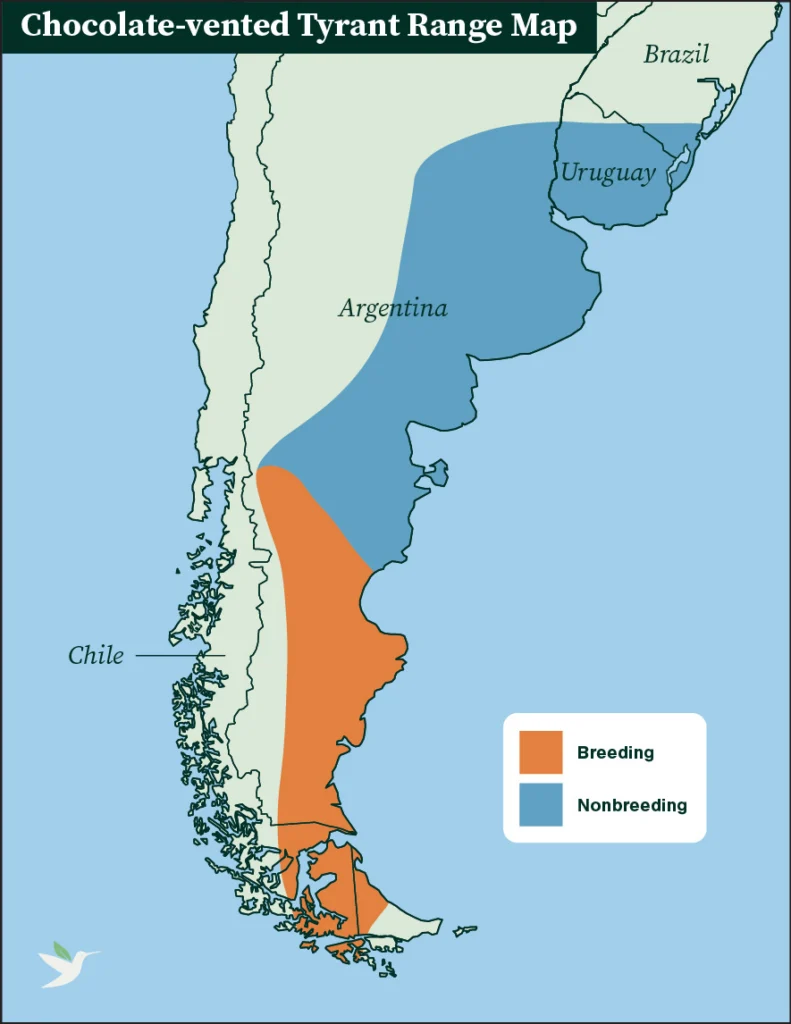
The Chocolate-vented Tyrant breeds in grassland and scrub on the Patagonian Steppe, from southeast Argentina to Tierra del Fuego. At the end of the Southern Hemisphere’s austral summer (from December through February), this species moves northward to the more temperate Pampas region of Argentina, Uruguay, and southeastern Brazil.
Did you know?
Although this species is not known to prey on other birds or their eggs, researchers have observed other bird species mobbing Chocolate-vented Tyrants in flight. Researchers have suggested this may be because these tyrants, with their pointed, triangular wings and fast, direct flight, resemble the predatory American Kestrel, and startle other species into thinking they’re at risk.
Life History
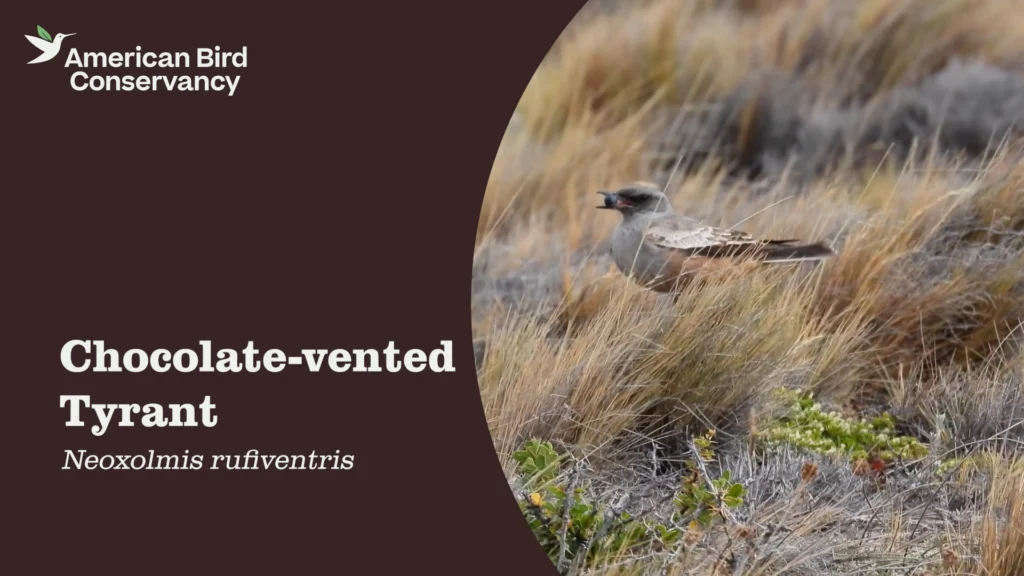
Well-camouflaged on the ground, Chocolate-vented Tyrants are most often spotted flying low across the ground or perched on a shrub or fencepost. Otherwise, they can typically be found moving slowly through short grasses, running briefly, then stopping suddenly to stand erect and vigilant before continuing on. This species typically forages alone or in pairs, but will form small flocks during the nonbreeding season. The life history of the Chocolate-vented Tyrant is not well-studied, but this confounding flycatcher certainly merits more attention!
Diet
Though the diet of this species has not been thoroughly studied, the Chocolate-vented Tyrant eats mostly terrestrial invertebrates, especially beetles, along with some smaller vertebrates such as lizards.
Courtship
Courtship in this species is not well-described, although aerial displays may play a role. Pairs are frequently observed chasing each other as well, although the function of this behavior is unknown.
Nesting
Nesting habits are poorly known, with only a handful of nest records in peer-reviewed literature. However, observations consistently describe an open cup nest placed on the ground, concealed by a grass tussock, shrub, or rock. The nest is built of sticks and dry grass, and lined with feathers.
Eggs & Young
Females may lay one to three eggs, with two being the most common in the handful of nests described. Eggs are pale pink to cream, with gray, brown, or reddish spots at the larger end. Other details are largely unknown for this species and others in the genus Neoxolmis, although incubation and nestling stages are each about two weeks for the Black-crowned Monjita (Neoxolmis coronatus).