Overview
About
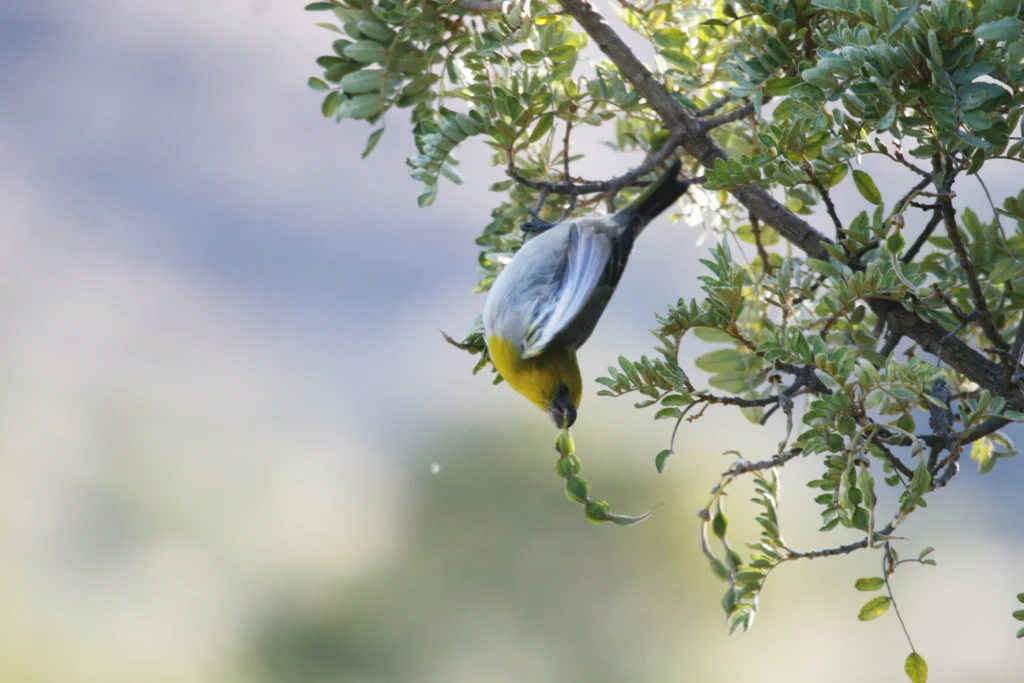
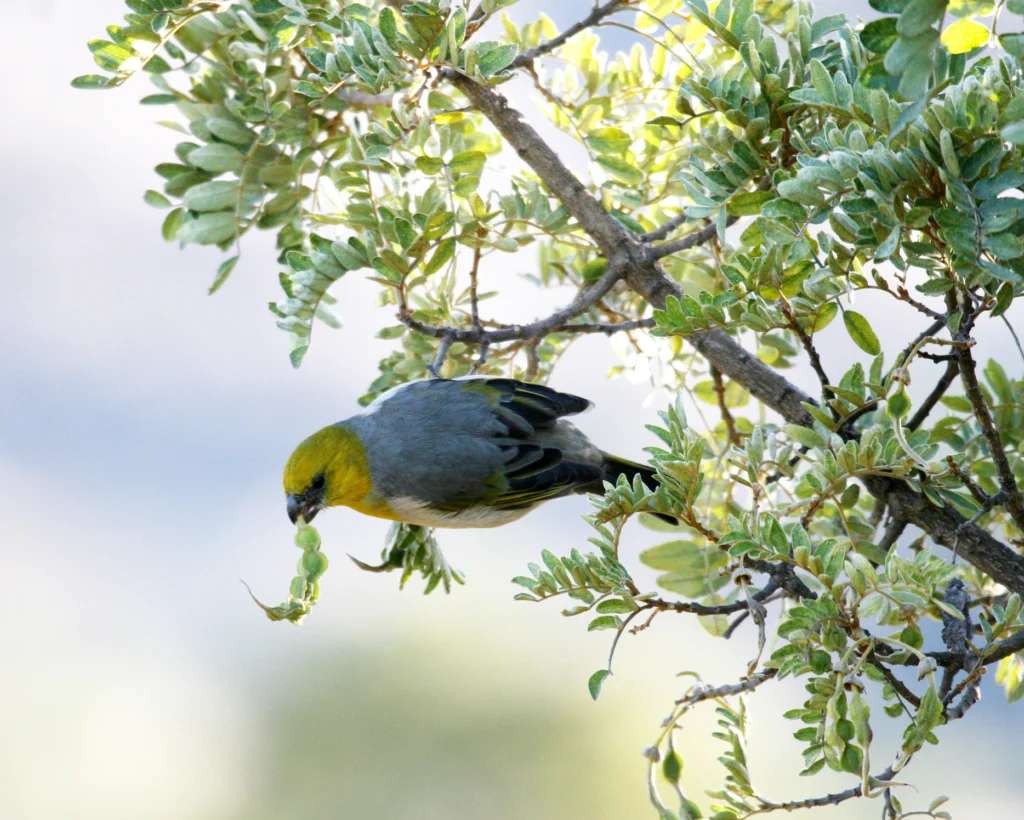
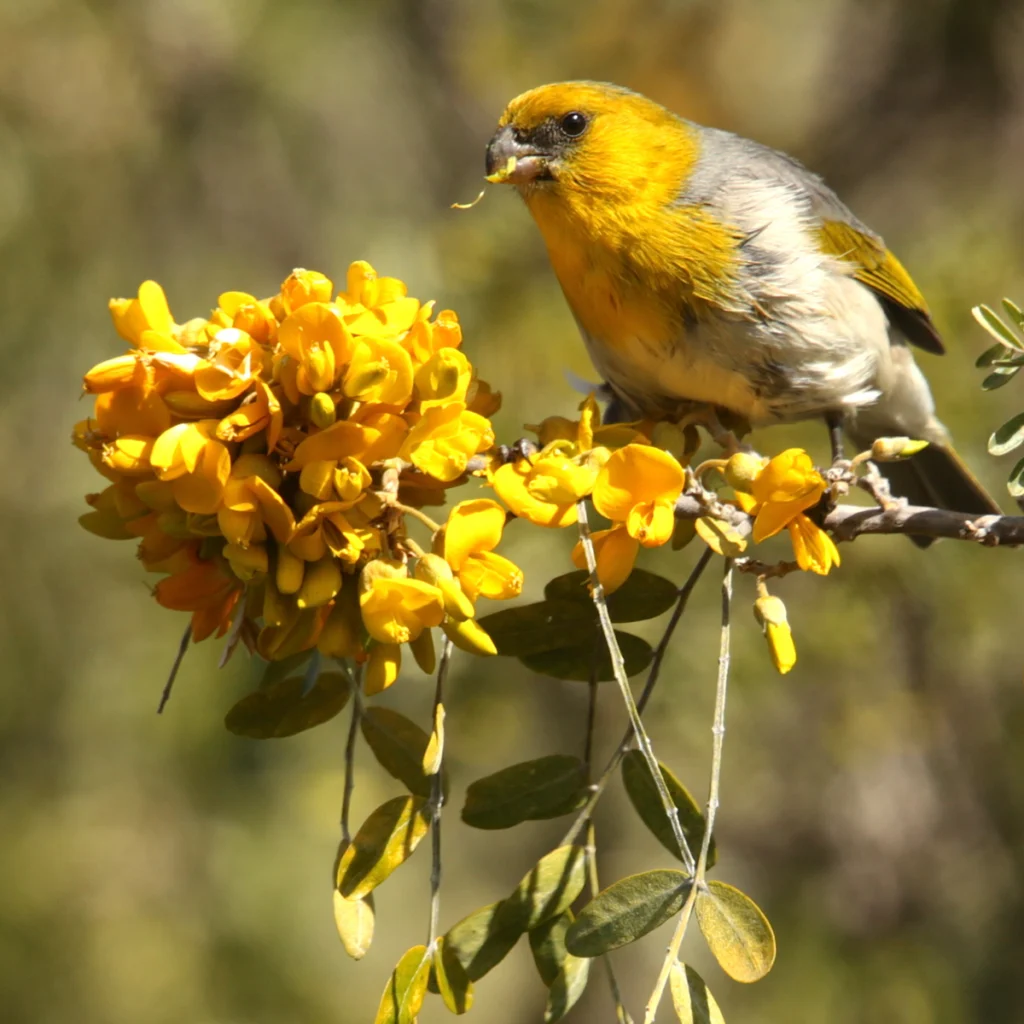
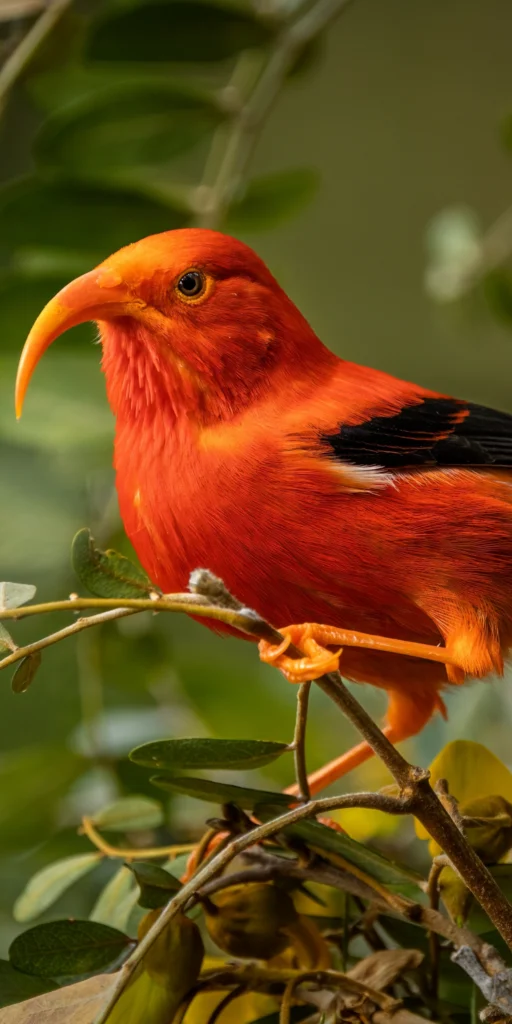
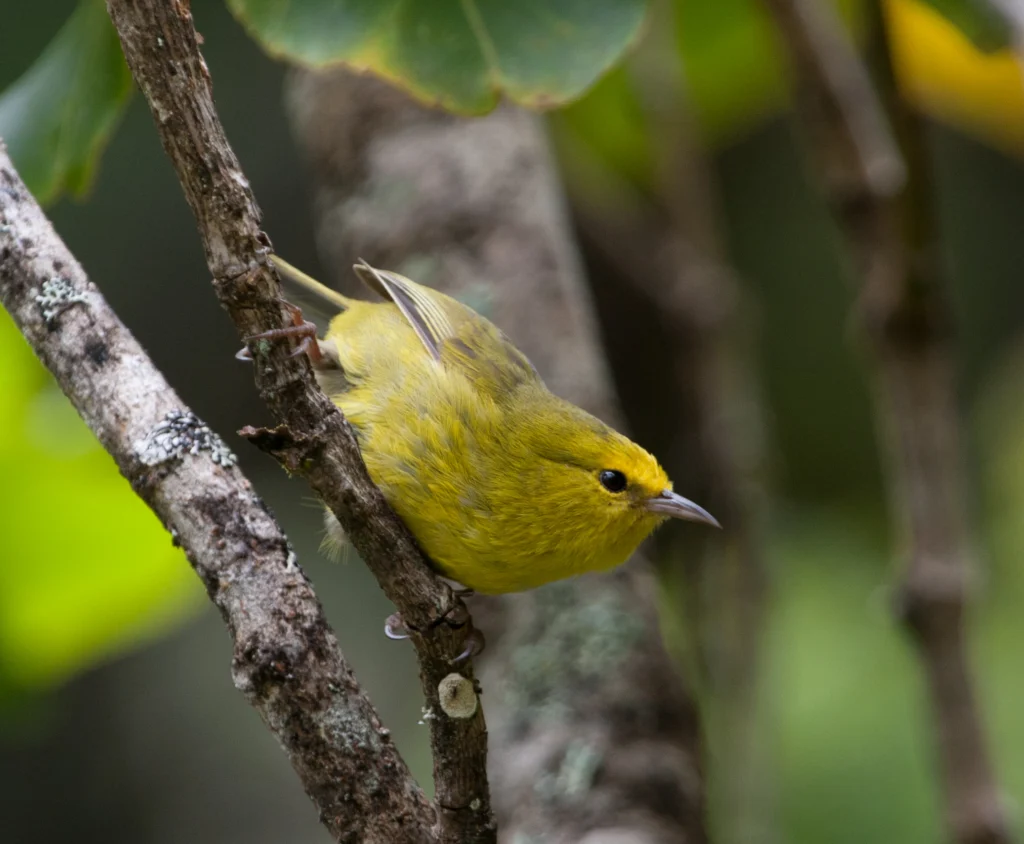
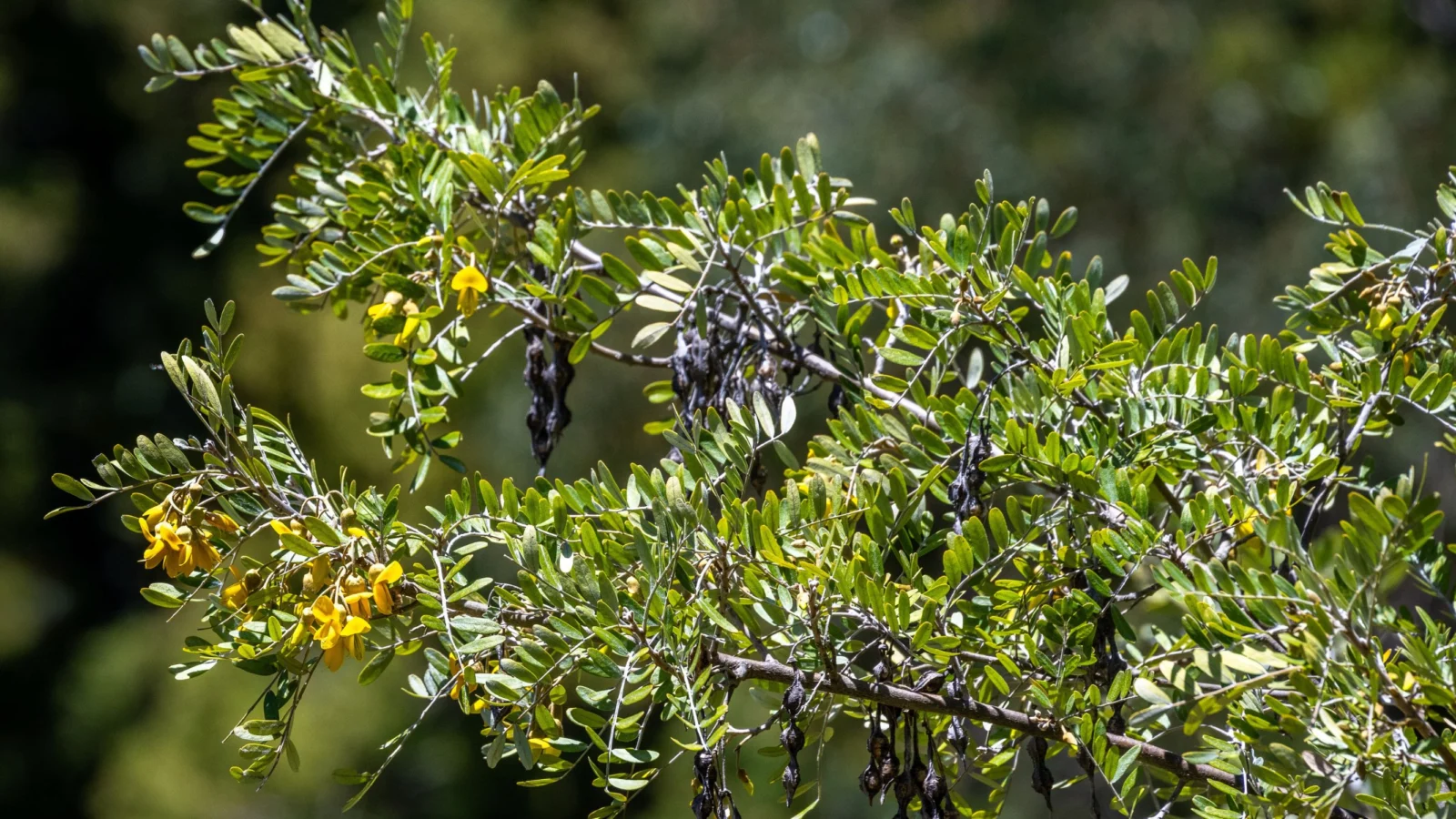
One of Hawaiʻi’s endemic honeycreepers, the Palila lives in dry, open māmane forests high on the slopes of Mauna Kea. This species is a standout in an already unique group of island birds: Most Hawaiian honeycreepers spend their days seeking nectar and insects, gathering food using rather thin, straight, or curved bills. But unlike species such as the ʻIʻiwi and Maui ʻAlauahio, the Palila has a thick, finch-like bill. This bulky beak is perfectly suited for foraging in the endemic māmane (Sophora chrysophylla) tree. The yellow-breasted songbird uses its hooked, sharp-edged bill to strip open the tree’s leathery seedpods and reach unripe seeds, the bird’s primary food source. This Palila’s survival and reproductive success depend on the success of the māmane. During drought years when the tree’s seed crop is low, most Palila do not attempt to breed.
Surprisingly, the seeds of the māmane are extremely toxic, and few other animals can eat them. Among these select few are the māmane codling moths, in the genus Cydia, which, as caterpillars, provide a key source of protein for Palila, especially their young. However, in addition to being poisonous, these seeds are also quite challenging to access. Even after young Palila leave the nest, their parents continue to care for them for another 3 to 4 months, teaching them how to extract the seeds from māmane pods. The lengthy parental care period means that the Palila has very low reproductive capacity, and populations take a long time to recover.
Threats
As with most native Hawaiian bird species, Palila face threats from invasive species which cause habitat loss, degradation, and predation. Climate change is also increasing the frequency of drought and the risk of wildfire to the dry māmane forests upon which Palila depend. Invasive mosquitoes and avian disease are serious threats to most of the Hawaiian honeycreepers, but Palila live so high on Mauna Kea, where it is too cold for these threats to survive. However, as temperatures warm and mosquitoes move upslope across the state, the increasing risk to Palila is of grave concern to conservationists and land managers.
Invasive Herbivores & Habitat Loss
Several livestock species were released or escaped onto the Hawaiian landscape. There are no native land mammals in Hawaiʻi, so the native plants and ecosystems did not have any defenses. As a result, there were widespread, significant impacts on native species across the islands. Domestic sheep and goats were introduced at the end of the 18th century and spread quickly, destroying and altering the native habitat. Mouflon sheep were introduced in the 1960s, further exacerbating the destruction of the māmane forest. Native forest was also converted for agriculture, pastureland, and military uses. The more than 200 years of habitat degradation and loss caused by these non-native animals and human development were major factors in the Palila’s decline.
Invasive Predators
Non-native predators are a huge problem for native Hawaiian birds, including the Palila. Cats and mongooses are extremely effective hunters able to kill Palila adults and nestlings. Rats usually eat their eggs, but will take adult birds on occasion as well. In addition, Palila typically lay only two eggs, and may not attempt to renest or even to nest at all in years when māmane produce fewer seed pods. This makes any lost eggs or young particularly impactful on the population as a whole.
Fire
As Palila have declined, so has their range. The entire species is only found in a small area high on Mauna Kea, totalling less than 5 percent of their historic distribution. The dry māmane forest where Palila live experiences frequent fires due to both lightning strikes and human activities. With climate change, the subalpine zone is also experiencing more frequent droughts, further increasing the risk of fire.
Invasive Invertebrates
Hawaiʻi has an incredible diversity of endemic insects and other arthropods, which are also under threat from non-native species. In addition to the larger, invasive vertebrates such as cats that directly kill native birds, there are also invasive arthropods such as yellowjackets and ants that disrupt native food webs. Some of these arthropods kill the Cydia caterpillars that Palila depend on for protein. Many of these invasive invertebrates can only inhabit the warmer lower elevations of Mauna Kea, but as temperatures rise, these species are slowly moving up the mountain.
Conservation Strategies & Projects
Bringing back the Palila is one of the top priorities of ABC’s Hawaiʻi Program. To improve the forest and protect the bird, ABC works with partners including the Mauna Kea Forest Restoration Project (MKFRP) to plant thousands of native trees each year and remove non-native predators. We also work with partners to maintain a fence around most of the federally designated Palila Critical Habitat to keep out sheep and goats and prevent further land degradation.
Improve Habitat
ABC works with Mauna Kea Forest Restoration Project and other partners to protect and restore habitat for the Palila. MKFRP staff and community volunteers have planted thousands of native seedlings, removed invasive plants, and worked to restore the health and resilience of the Palila’s māmane ecosystem. In addition, protective fencing safeguards critical habitat from introduced sheep and goats, helping native trees and shrubs recover from decades of damage.
Keep Cats Indoors
Cats make wonderful companions, but they’re safest (and birds are, too) when they’re kept indoors or under the control of their owners outdoors. ABC advocates for responsible cat ownership, encouraging millions of pet owners to take steps to keep their cats supervised and advocating for policies that benefit birds, cats, and human health. Unfortunately, cats have been allowed to roam widely, and their populations have become self-sustaining on the main Hawaiian Islands. Because they have no predators or other factors keeping them in check in Hawaiʻi, the feral population has devastating consequences on the native birds. ABC works to protect the highly endangered Palila by removing these invasive predators from the native forest.
Bird Gallery
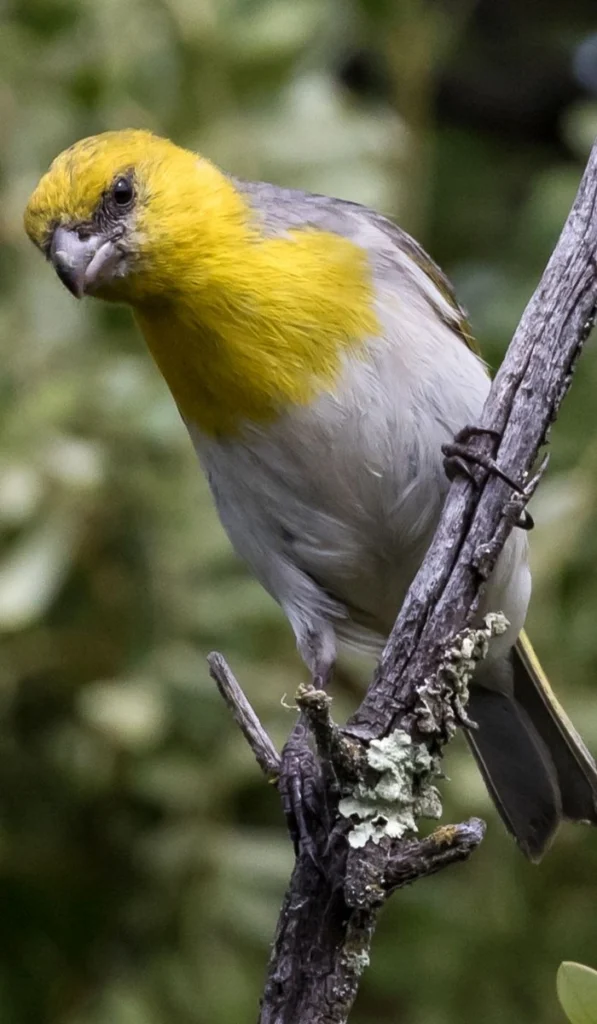
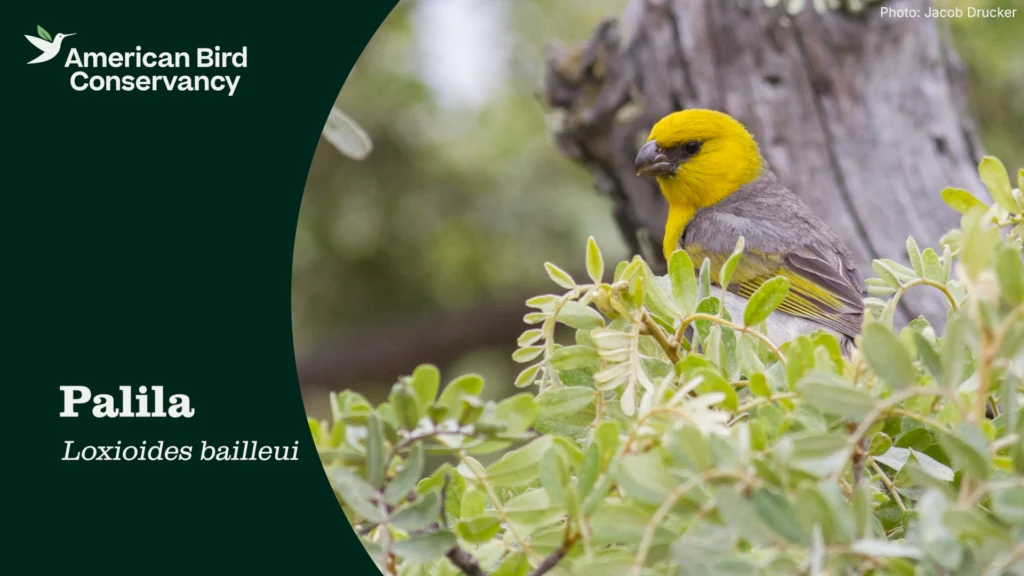
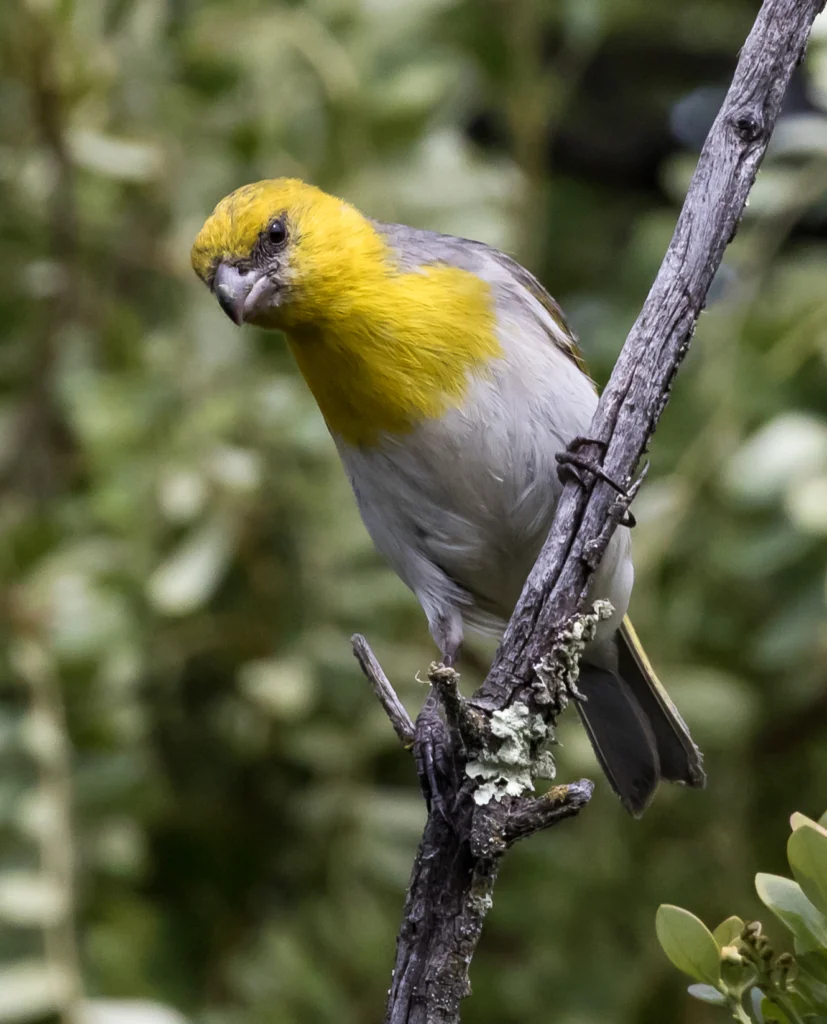
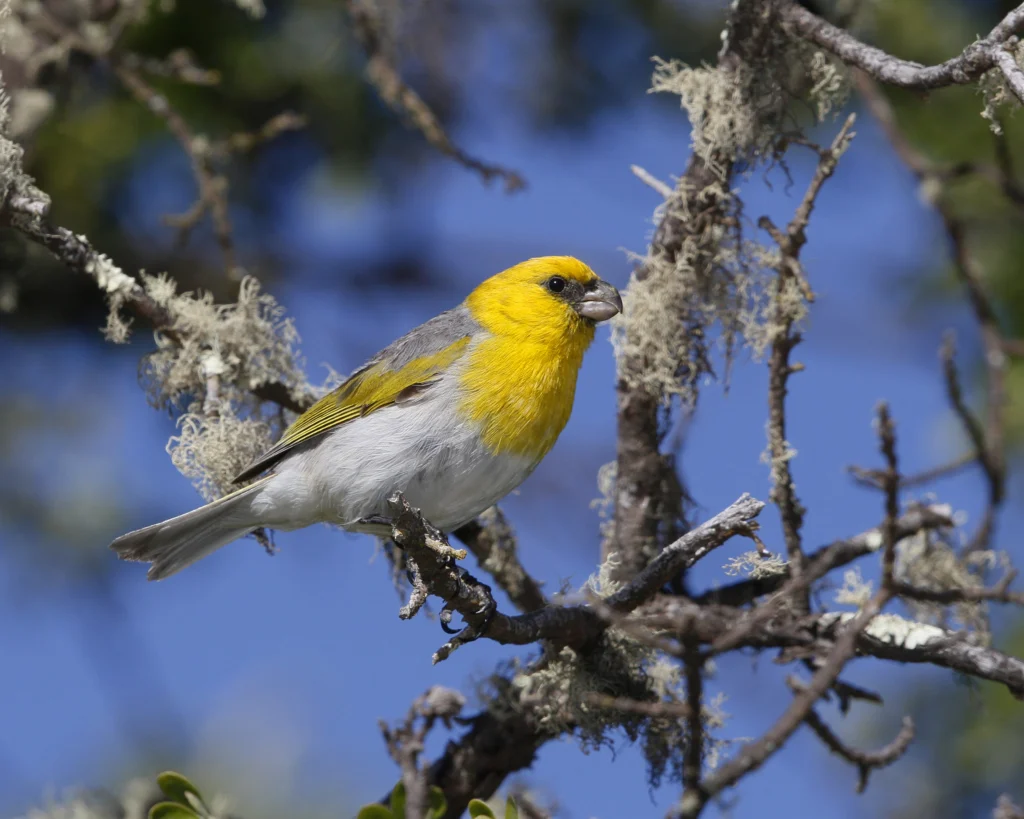
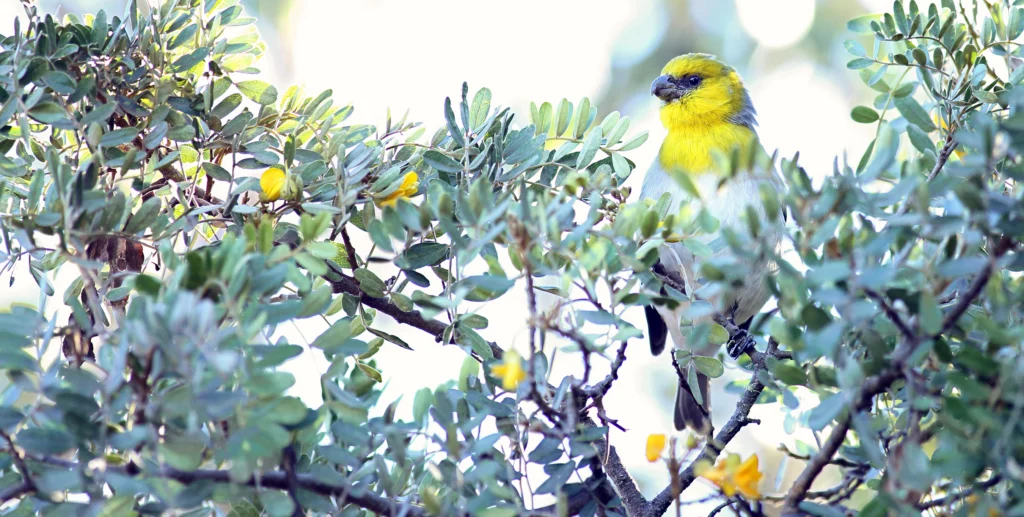
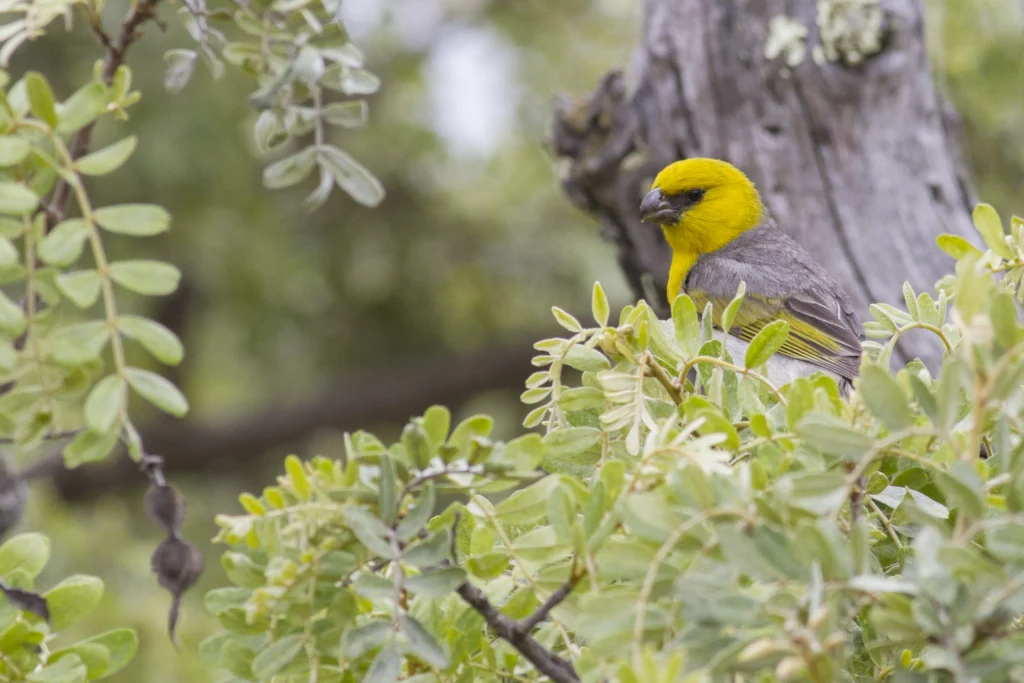
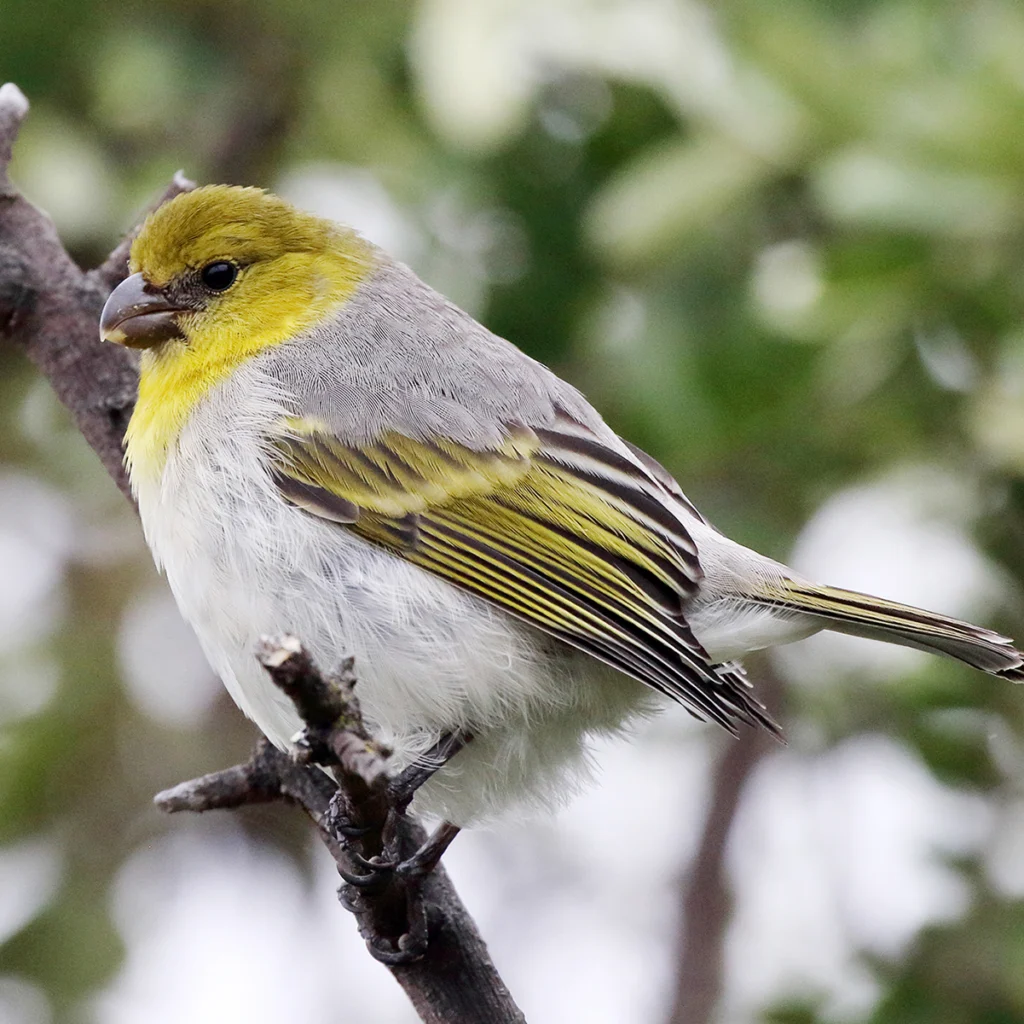
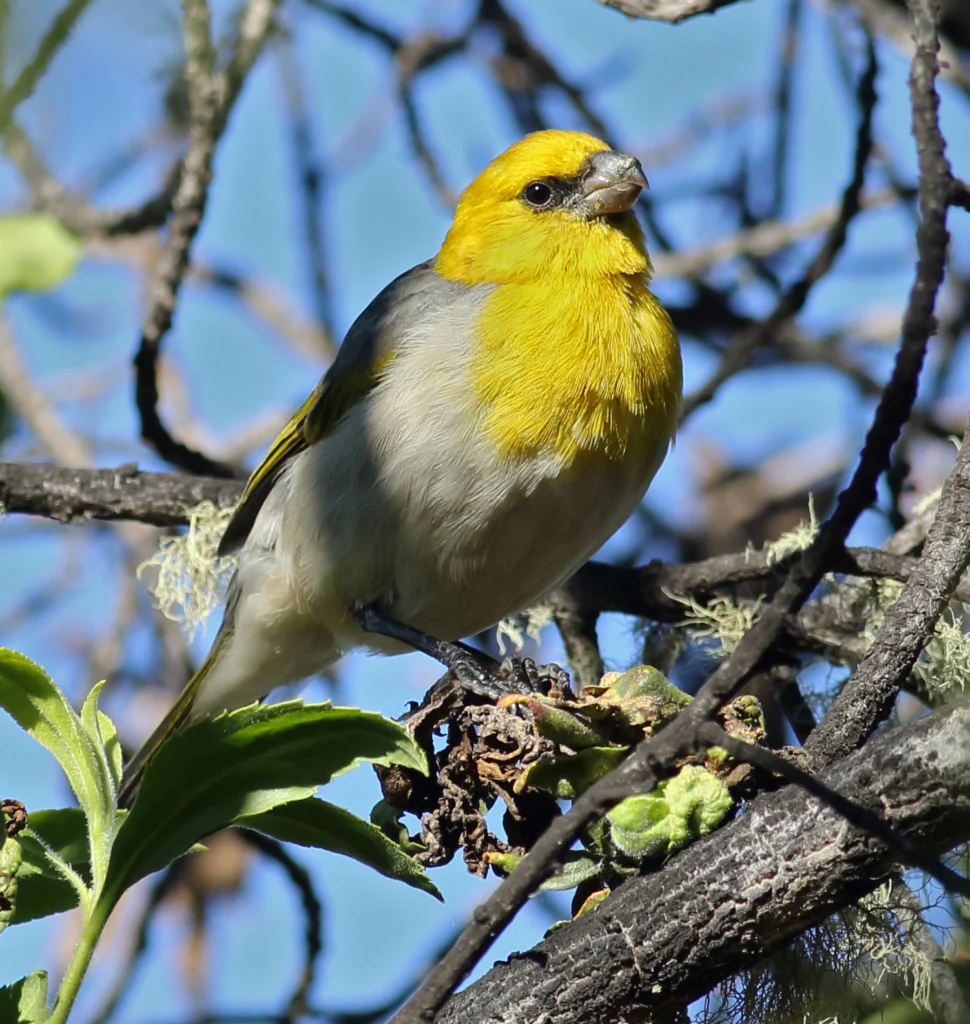
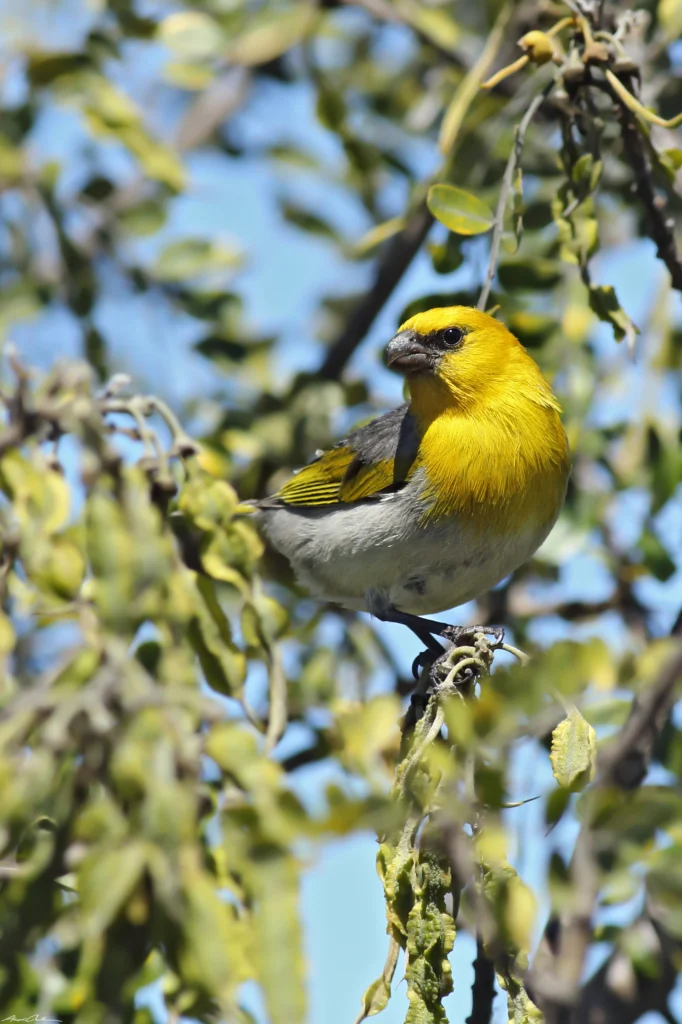
The Palila is truly a unique species, even among the many beautiful and distinct birds endemic to Hawaiʻi. Simply and boldly patterned, the head and breast are a rich sunflower-yellow, contrasting with the clean, pale gray underparts and dark gray wings, back, and tail. Vibrant yellow highlights brighten the tail and wings, and a black mask runs from the eyes to the bill. Extremely bulky, tall, and rounded, the dark gray bill ends in a prominent hook, very similar to a parrot’s. In fact, the Palila was once placed with the extinct ʻŌʻū in the genus Psittirostra, Latin for “parrot-beak.”
Sounds
The Palila’s song is a brief, quick jumble of rich, warbled notes and clear whistles. This song may also include nasal or whining notes, very similar to those of finches such as the American Goldfinch, Pine Siskin, or House Finch. The calls are similar: Clear, whistled, and reminiscent of those of the North American finches mentioned above.
Credit: Tim Burr, XC146104. Accessible at www.xeno-canto.org/146104.
Credit: Brooks Rownd, XC122383. Accessible at www.xeno-canto.org/122383.
Habitat
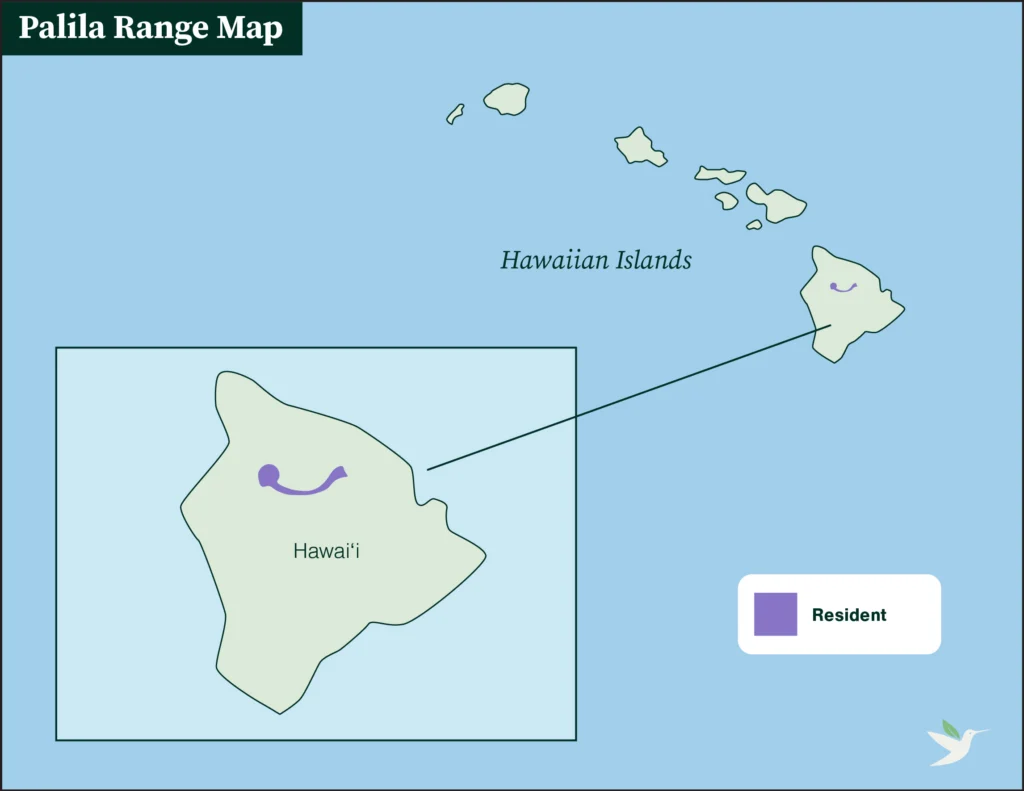
The Palila is found in dry subalpine māmane (Sophora chrysophylla) and naio (Myoporum sandwicense) forests on the island of Hawaiʻi.
- Remaining māmane and naio forests are at higher elevations on Mauna Kea, from about 6,500 to 9,800 feet elevation
- This species formerly occupied māmane forests all the way down to sea level
Range & Region
Range & Region
Specific Area
Hawaiʻi Island
Range Detail
Palila were once found on Oʻahu, Kauaʻi, and across Hawaiʻi Island. Today, this species clings to life in a tiny patch of habitat of only about 25 square miles on the upper slopes of the dormant Mauna Kea volcano on Hawaiʻi Island. This remaining dry-forest habitat represents less than five percent of the Palila’s historic range.
Did you know?
Though this species doesn’t migrate and currently has an extremely restricted range, Palila move up and down in elevation as they track the seasonal abundance of the māmane seeds that make up the majority of their diet.
Life History
The Palila is one of only three remaining “finch-billed honeycreepers” — birds in the Hawaiian honeycreeper family with large, finch-like bills designed for crushing seeds. Palila have been noted since the early 1900s to be fairly social, commonly grouping up into small flocks. In fact, their sociality goes one step deeper, as pairs will often have an additional “helper” bird involved in raising their young. This helper, almost always a second-year male, helps to defend the nest, feed the young, and will even feed the female of the pair.
Diet
Fully grown but not-quite-ripe māmane seeds are this bird’s main food source. Palila pluck the tough seed pods, pin them with one foot, then rip them open with their specialized bill. When seeds aren’t available, Palila munch māmane flowers and buds, or even young leaves and leaf buds. They will also take some other foods, including fruits of another endemic tree, the naio (Myoporum sandwicense), and caterpillars — which are especially important as a protein source for their nestlings.
Courtship
In addition to his song, the male Palila performs a courtship flight to attract a mate, flying low and alternating between a slow flutter and a glide. Males will also chase females, a courtship behavior common to many birds. Before and during nesting, males feed their mates, but switch to “billing” close to when the eggs will hatch. “Billing” refers to a behavior where the male and female touch the sides of their bills together repeatedly without exchanging food.
Nesting
The female Palila does most of the nest-building, usually high up in a māmane or sometimes a tree of another species. She builds the nest base of sticks, grasses, and leaves, within which she weaves a bowl of grasses. The inner cup is lined with fine materials, such as lichens, rootlets, and thin grasses.
Eggs & Young
Females typically lay two eggs. The female incubates her clutch for a bit longer than two weeks. After the eggs hatch, both parents work to feed the growing young. Palila eggs and nestlings develop slowly compared to many other songbirds, whose young generally fledge from 10 to 20 days after hatching. In contrast, most Palila nestlings spend at least 25 days in the nest, so remain vulnerable for longer to predators, harsh weather, and other dangers. Once the young Palila fledge, they stay with their parents for another 3 to 4 months.