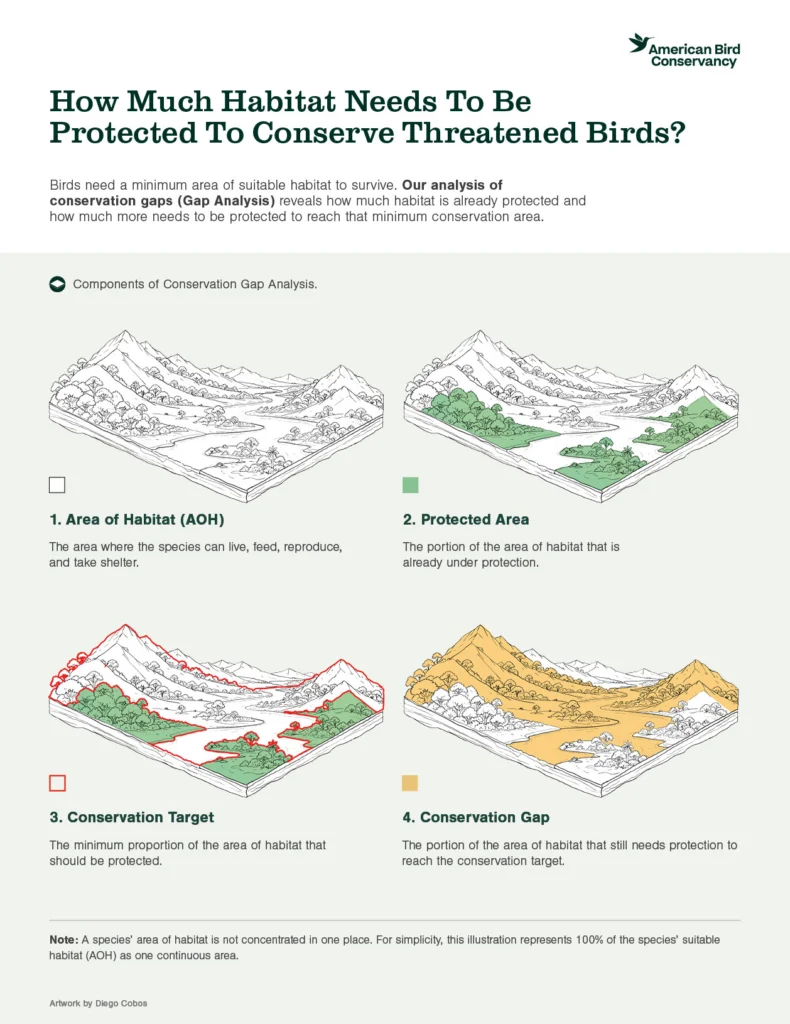
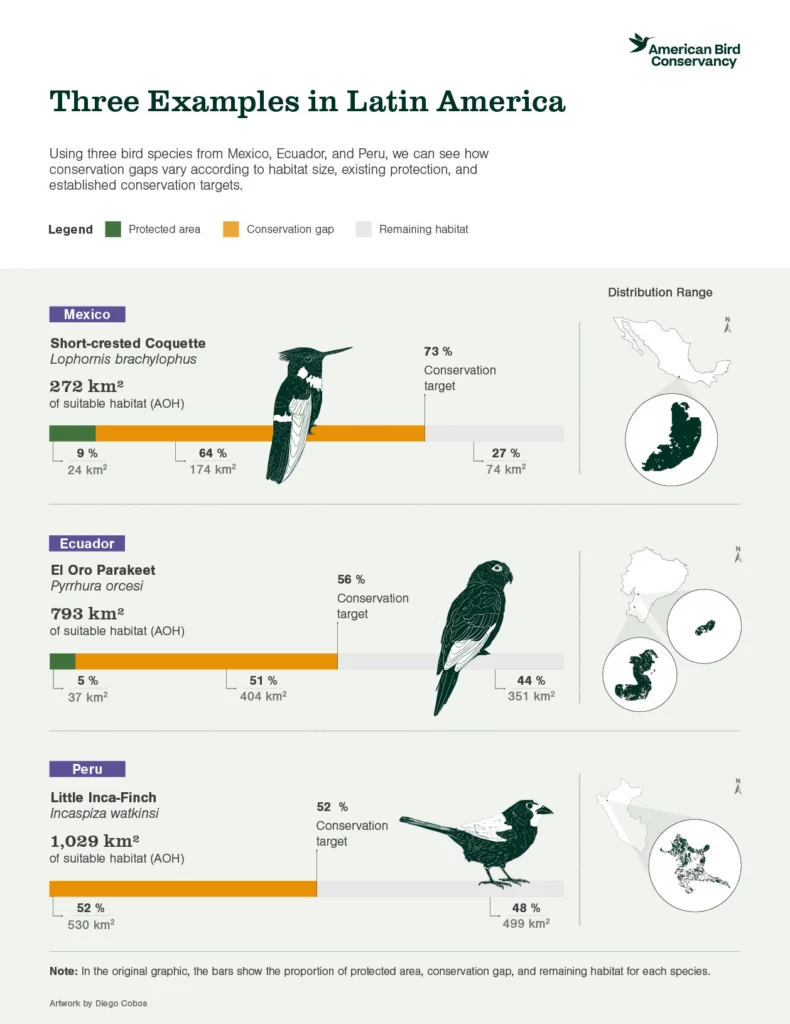
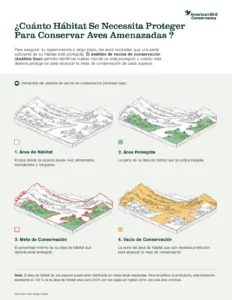
Many of the priority areas are quite small and already overlap with Key Biodiversity Areas, internationally recognized sites important for the persistence of biodiversity. Protecting these locations could benefit not only threatened birds, but also hundreds of other wildlife species facing extinction risk.
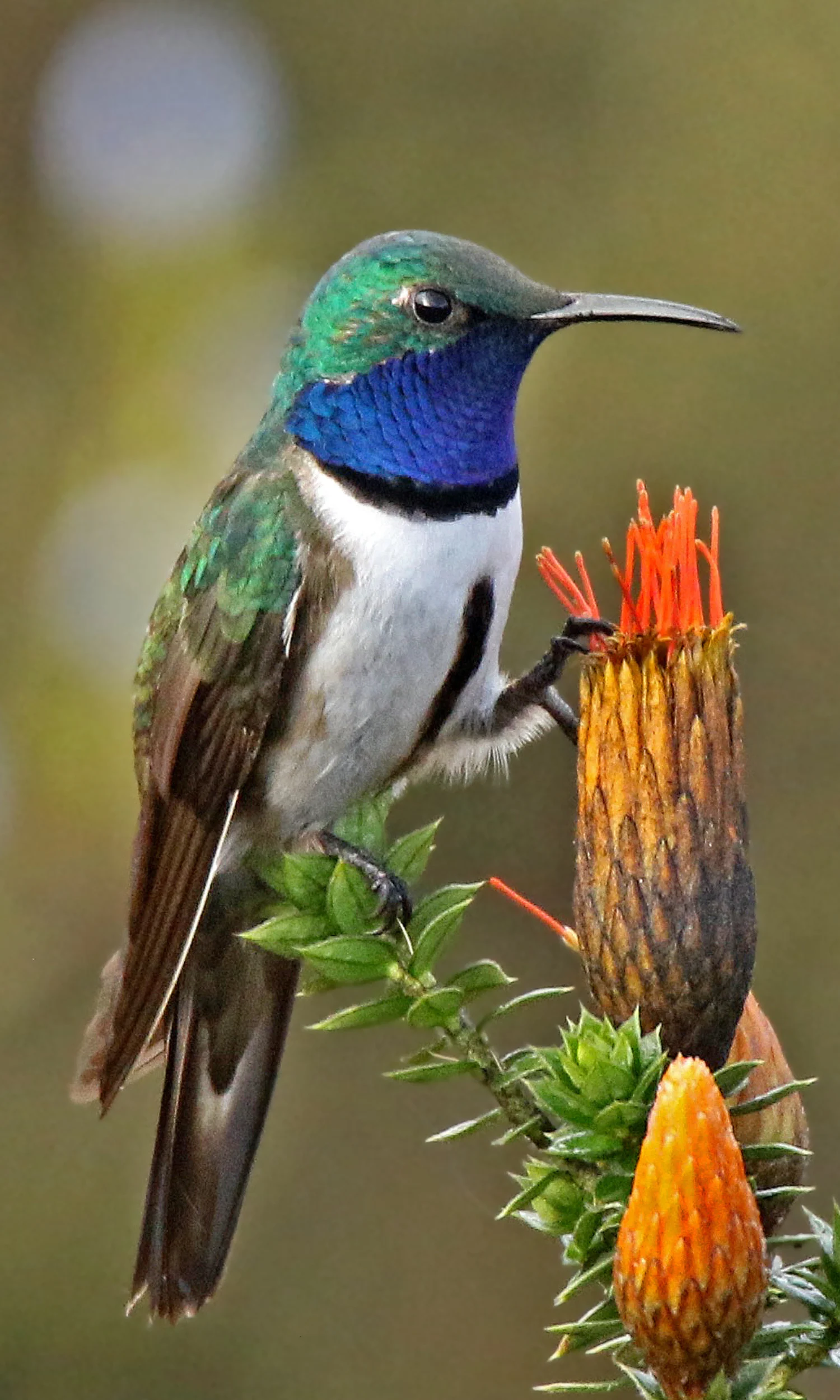
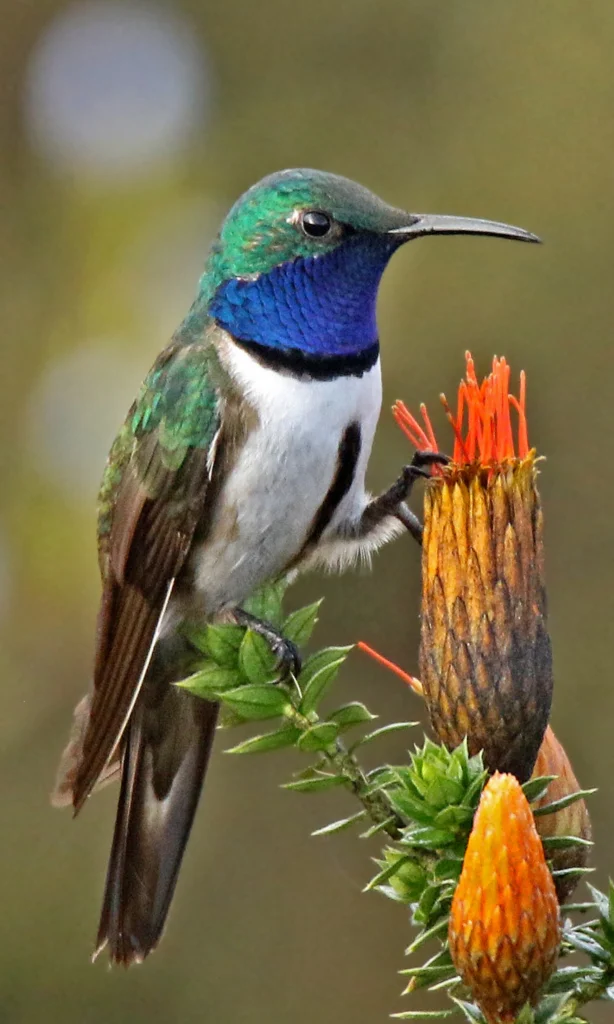
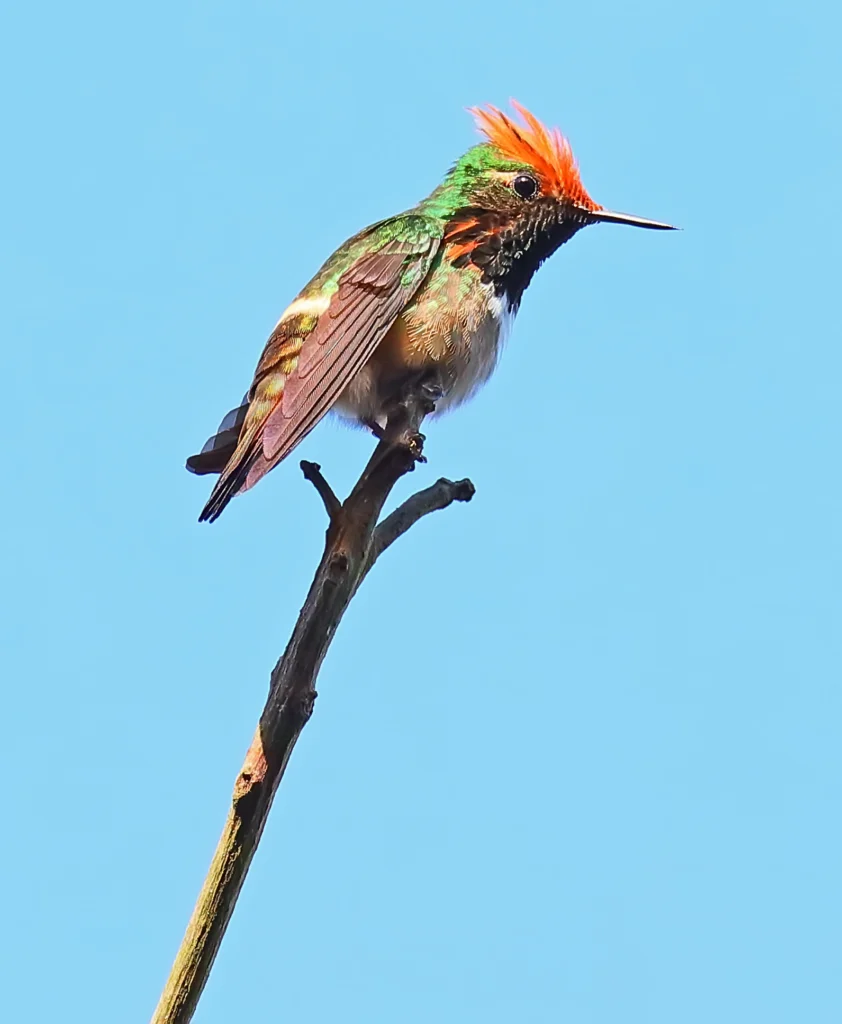
For example, the research found that Ecuador’s Blue-throated Hillstar, numbering no more than 110 individuals, could likely avoid extinction if an additional 2,051 acres of its habitat were protected. Starting with an initial 100 acres, ABC and partners have already grown a dedicated reserve for the species, the Cerro de Arcos Reserve to 1,520 acres. Strategically protecting targeted areas can benefit multiple species. One priority conservation area in northeastern Brazil, an unprotected 12,745-acre forest near the town of Murici in the state of Alagoas, would help conserve suitable habitat for nine vulnerable bird species, including the Alagoas Antwren and Long-tailed Woodnymph.
The Blue-throated Hillstar is one of 10 species, among the 55 under-protected species identified in the study, facing the most immediate protection gaps. The research shows that, for these 10 birds, an additional 164,000 acres of protected habitat could be enough to meet a minimum population-based conservation target designed to reduce their risk of extinction.
“These resident species tend to have smaller and more restricted distributions than migratory species, and therefore are more prone to be impacted by habitat loss,” said Amy Upgren, coauthor and ABC’s Director of International Programs. “Though there are conservation challenges, there is also reason for optimism. The remaining gaps are identifiable, measurable, and in many cases, surprisingly small. That means there is still an opportunity to act before it is too late.”
Many other species identified in the study already benefit from conservation efforts from ABC and partners in Latin America. One notable success is the Pale-headed Brushfinch, rediscovered in Ecuador’s Yunguilla Valley in 1998 when only an estimated 15 pairs remained worldwide. Through the expansion and management of the Yunguilla Reserve by ABC partner Fundación de Conservación Jocotoco, the species has recovered sufficiently to be downlisted from Critically Endangered to Endangered. The reserve now protects an estimated 204 of the roughly 240 birds remaining globally, demonstrating the powerful and lasting impact of targeted habitat protection and restoration.
“Our vision is quite simple,” added ABC President and coauthor Michael J. Parr. “Every globally threatened bird species in Central and South America should have at least one well-managed reserve where its habitat is protected at the scale needed for the species to persist.”
Since its founding in 1994, ABC has worked with dozens of local partners throughout the Western Hemisphere to protect more than 1.3 million acres of habitat, conserving some of the world’s most threatened birds by closing critical conservation gaps. More than 3,000 bird species, almost one-third of the world’s birdlife, have benefited from ABC-supported reserves and protected areas.
The study’s findings provide a practical roadmap for governments, conservation organizations, and local partners working toward bird habitat conservation and other global goals such as protecting and effectively conserving 30 percent of land and water by 2030. Read more and watch to learn about ABC’s Gap Analysis.
Read the full paper at: Cambridge University Press
How to cite the paper: Tognelli MF, Wiedenfeld DA, Lebbin DJ, Upgren A, Parr MJ. Identifying conservation priority areas for the most under-protected globally-threatened birds in Latin America. Bird Conservation International. 2026;36:e52. doi:10.1017/S0959270926100690