Overview
About
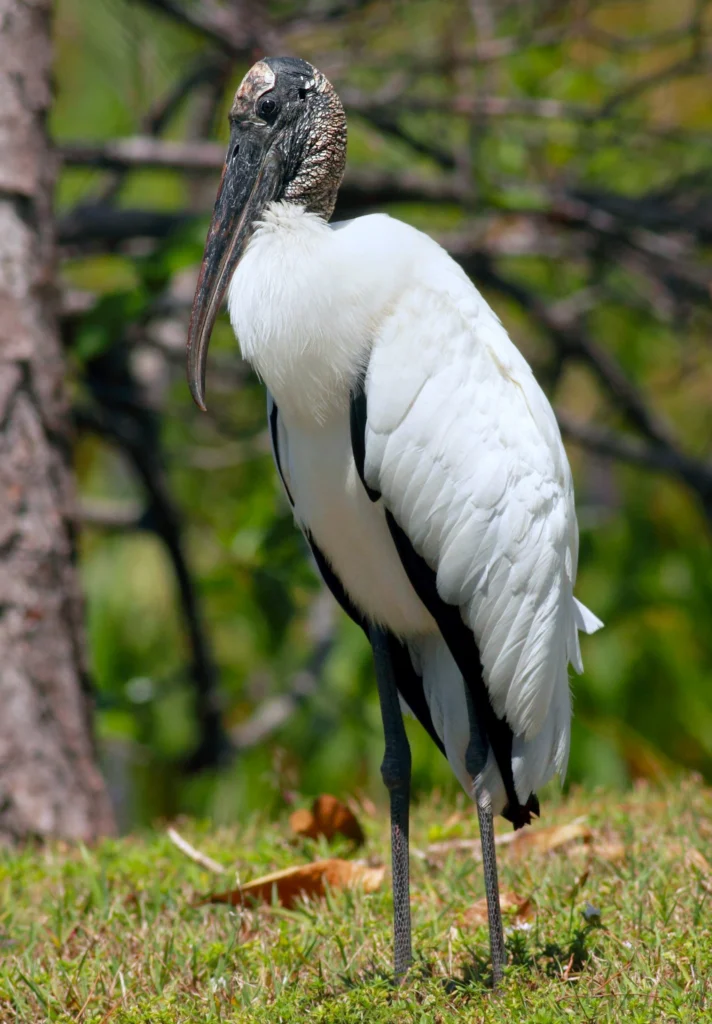
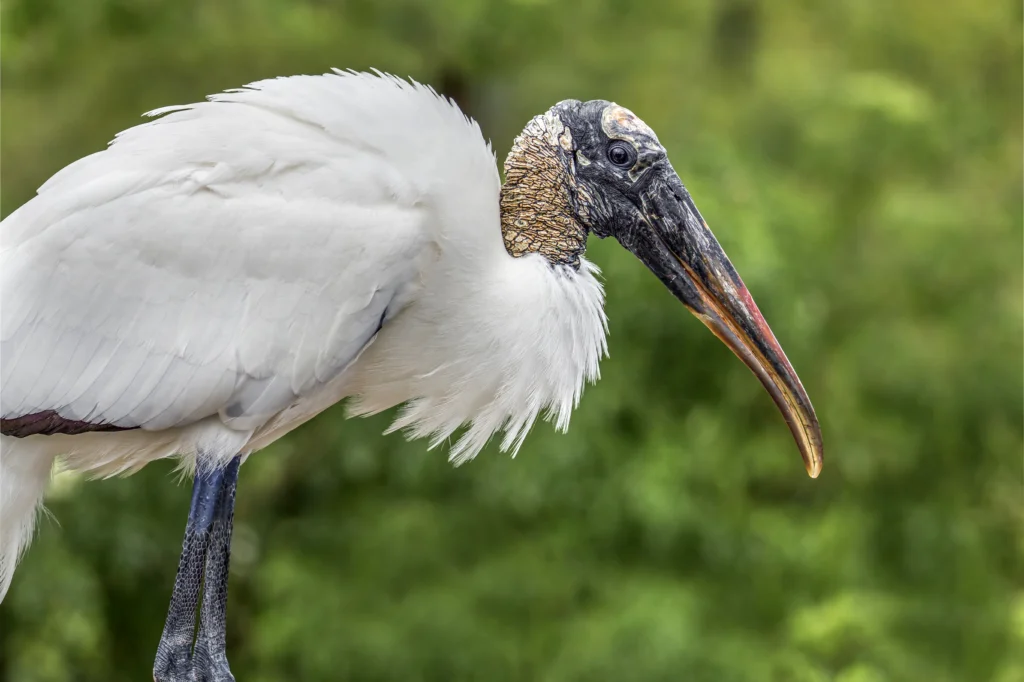
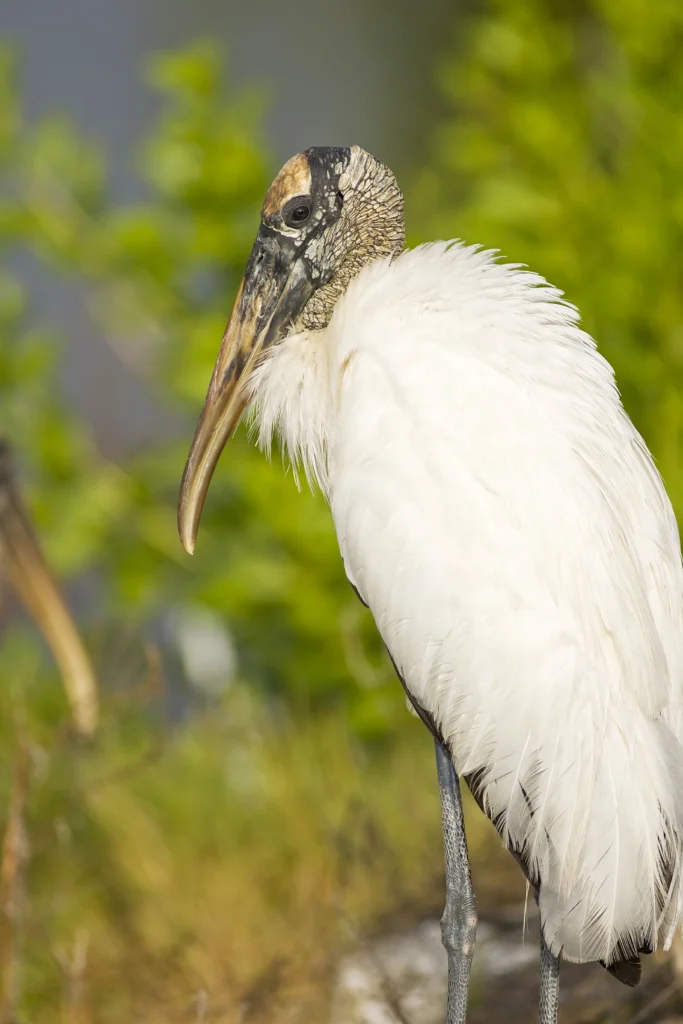
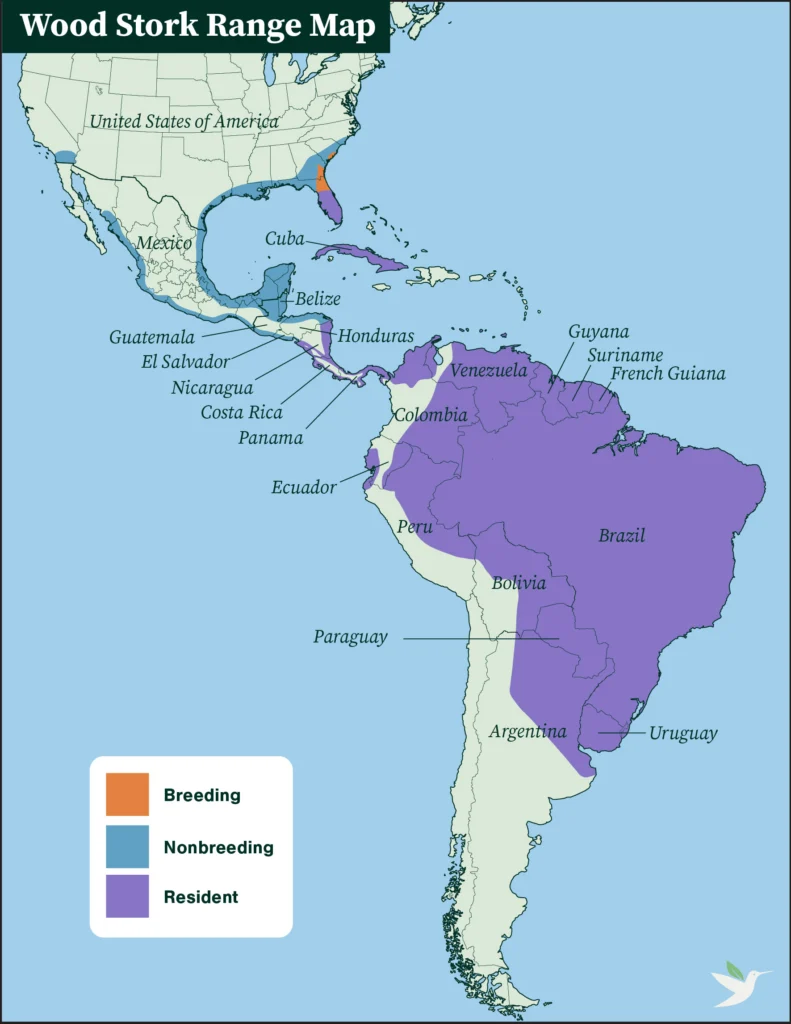
The Wood Stork is the only stork to breed in the United States, and the largest wading bird. They occupy a small range within the U.S., concentrated mostly along the coasts in the Southeast, with a year-round population in parts of Florida. A majority of Wood Storks are found outside of the U.S. along the coasts in Mexico and Central America, and throughout Cuba and much of South America.
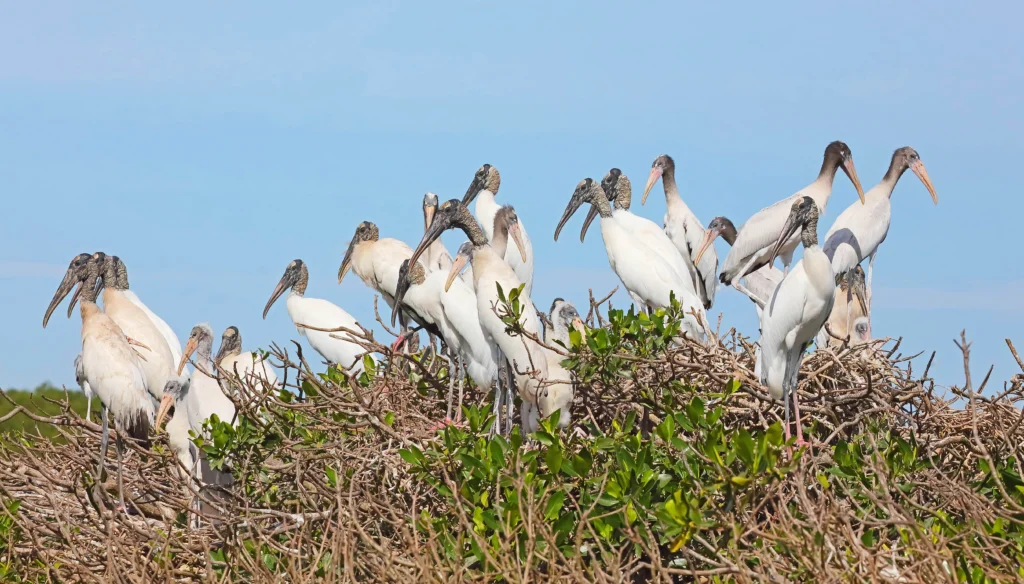
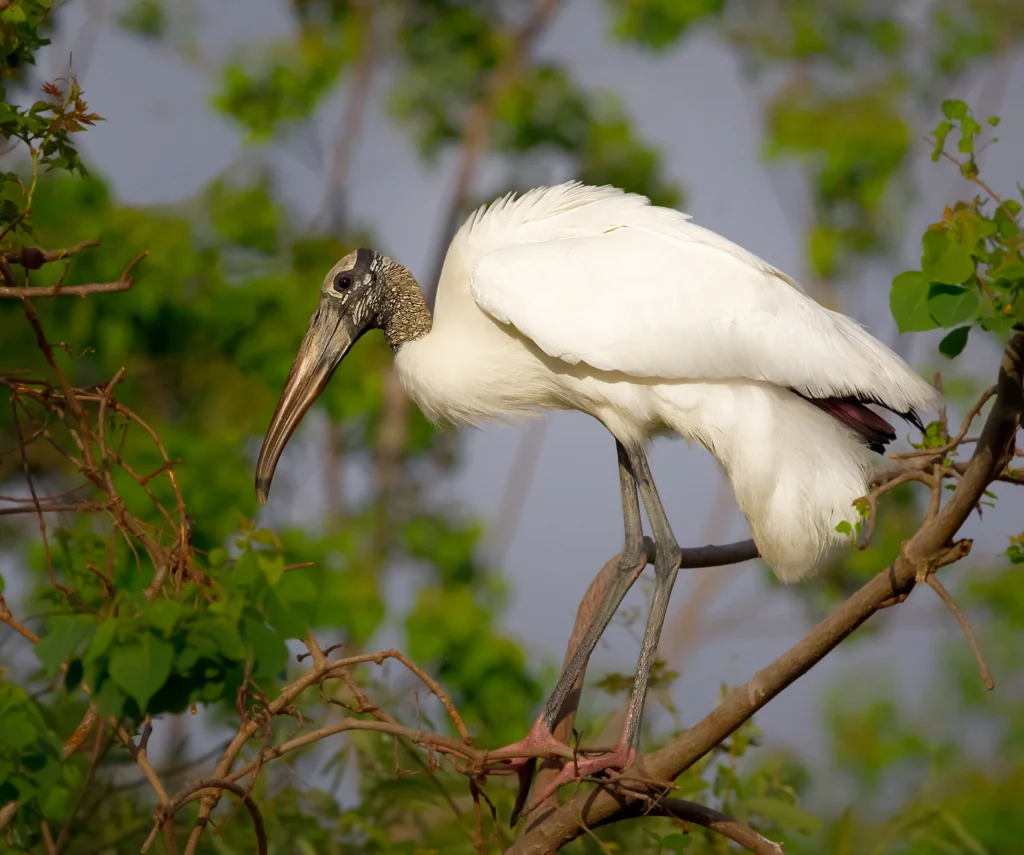
Wood Storks nest colonially, with up to 25 nests in one tree. Pairs often mate for life. In Florida, Wood Storks breed during the late winter dry season, when their fish prey are concentrated in shrinking pools. They regularly fly up to 12 miles from the nesting colony while foraging and will go much farther during droughts in search of food. Given their reliance on shallow bodies of standing water, Wood Storks are sensitive to changes in water levels brought on by water diversion projects.
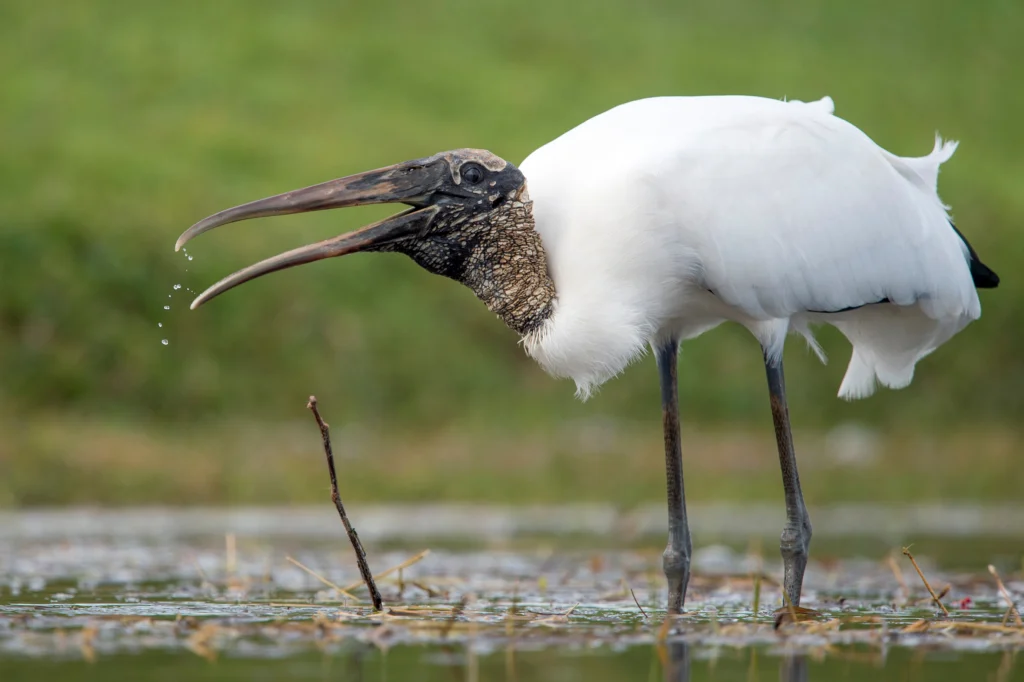
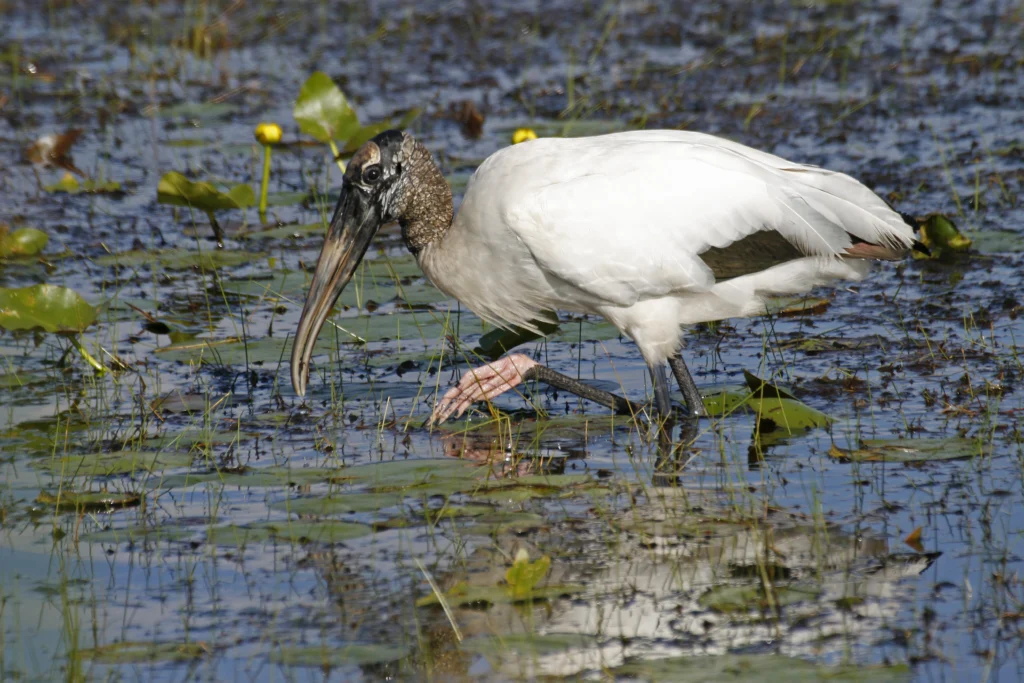
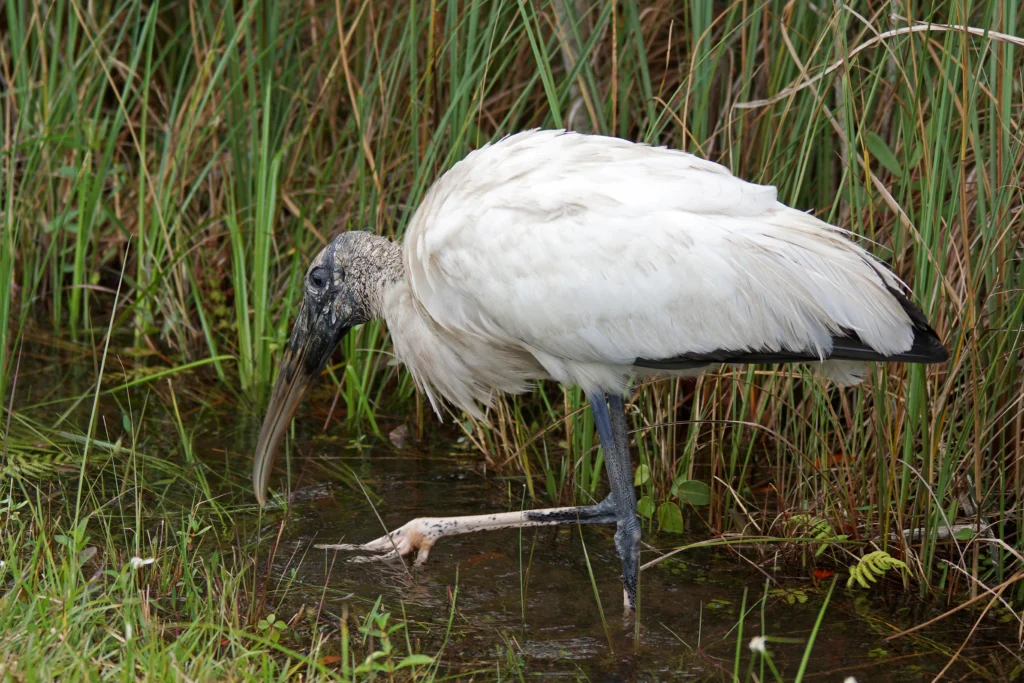
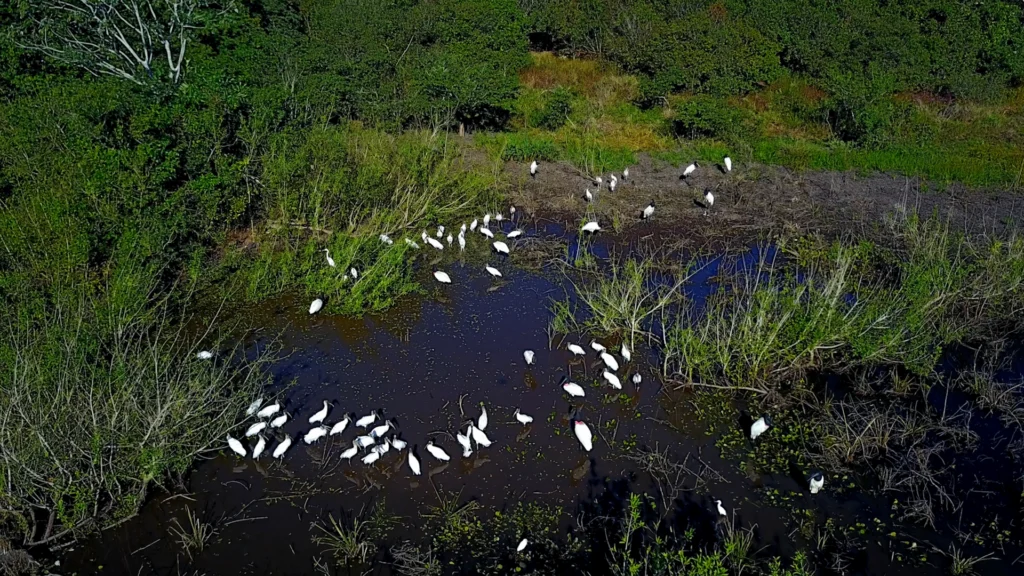
Wood Storks have a specialized style of feeding, relying on touch to catch fish. A group feeds by slowly wading through the water with open bills; when a bird’s bill touches a fish, it quickly snaps it shut to secure the meal.
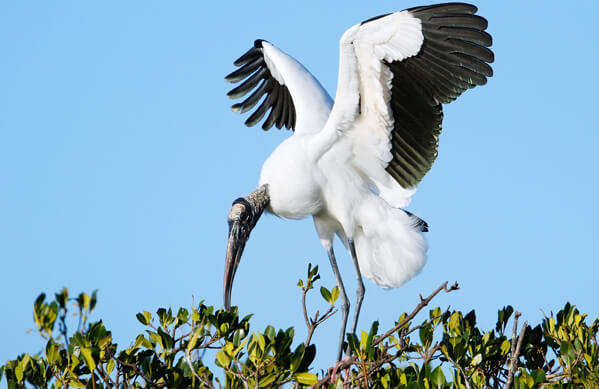
Although not considered truly migratory, juvenile Wood Storks disperse northward after the breeding season, and adults move in response to food availability. They are impressive fliers, with flocks soaring as high as 6,000 feet on warm air thermals.
Threats
Birds around the world are declining, and many of them, like Hawaiian honeycreepers, are facing urgent, acute threats. But all birds, from the rarest species to familiar backyard birds, are made more vulnerable by the cumulative impacts of threats like habitat loss and invasive species.
Habitat Loss
Conservation Strategies & Projects
Birds need our help to overcome the threats they face. At ABC, we’re inspired by the wonder of birds and driven by our responsibility to find solutions to meet their greatest challenges. With science as our foundation, and with inclusion and partnership at the heart of all we do, we take bold action for birds across the Americas.
Creating & Maintaining Reserves
Bird Gallery
Sounds
Habitat
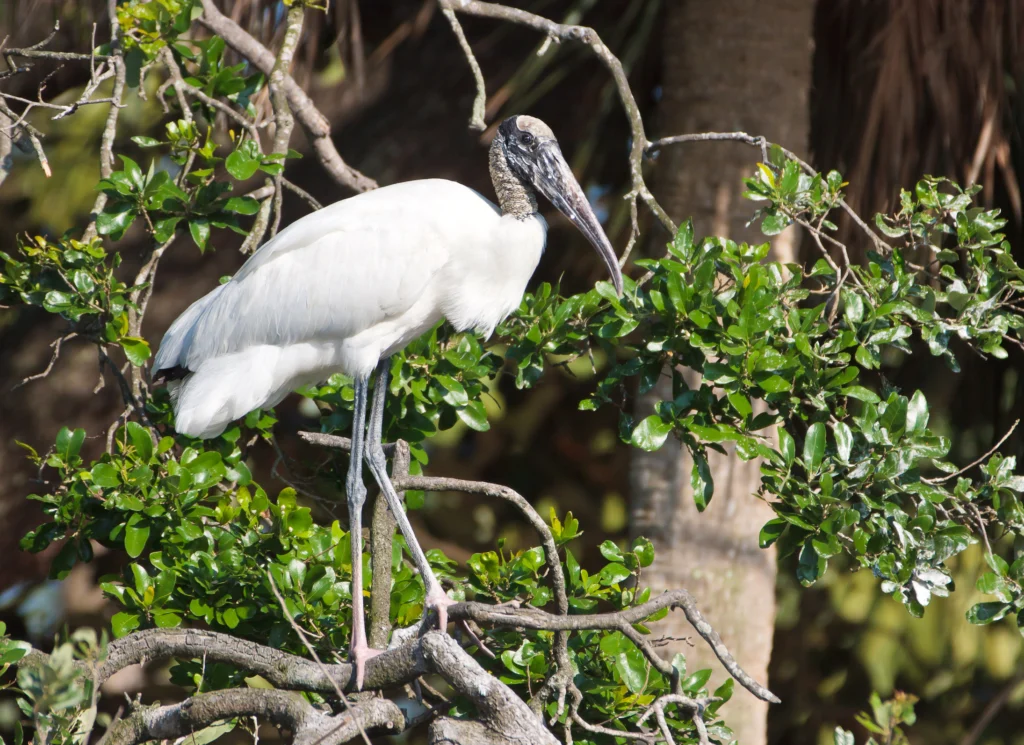
Wood Storks breed in both brackish and fresh wetland forests and forage in shallow wetlands, marshes, ponds, and swamps.
Region & Range
Specific Area
Southeastern United States, Cuba, Central America, South America from Colombia south to Argentina and east to Atlantic Coast
Range Detail
The Wood Stork lives year-round in forested wetlands across South America east of the Andes and mostly north of the grasslands of Paraguay and Argentina. Other populations inhabit subtropical forests in Ecuador and Venezuela, southern Central America, Cuba, and parts of Florida, Georgia, and South Carolina. While not truly migratory, birds will range widely in search of food, including the Atlantic Coast from North Carolina through Mexico, as well as the Pacific Coast of Mexico.