Escuchando a los pájaros de la ciudad de Nueva York
American Bird Conservancy está utilizando unidades de grabación de audio en el puerto de Nueva York para comprender y documentar el regreso de las aves al área a medida que esta se recupera.
Aulacorhynchus prasinus
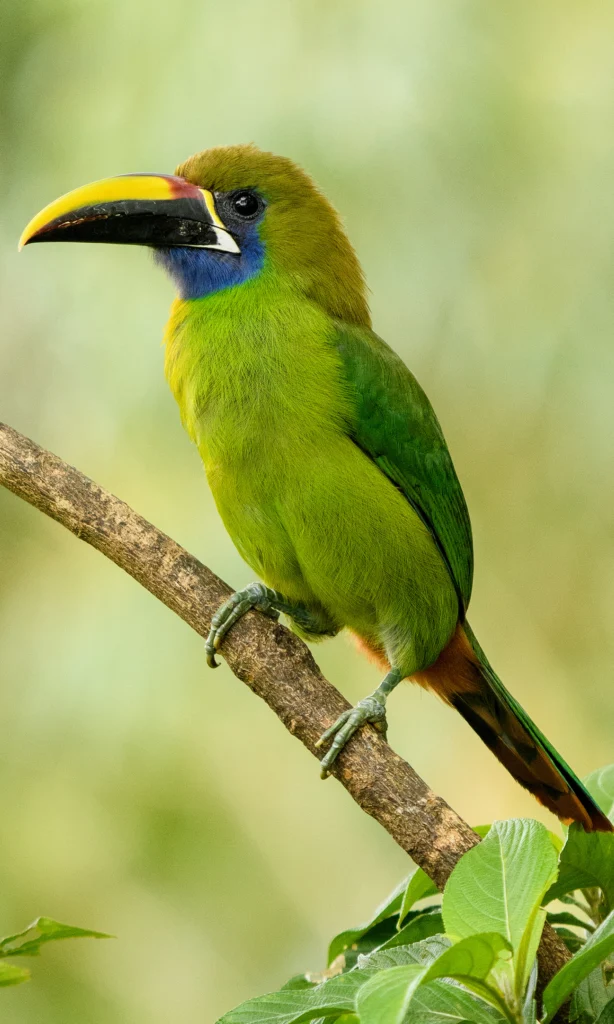

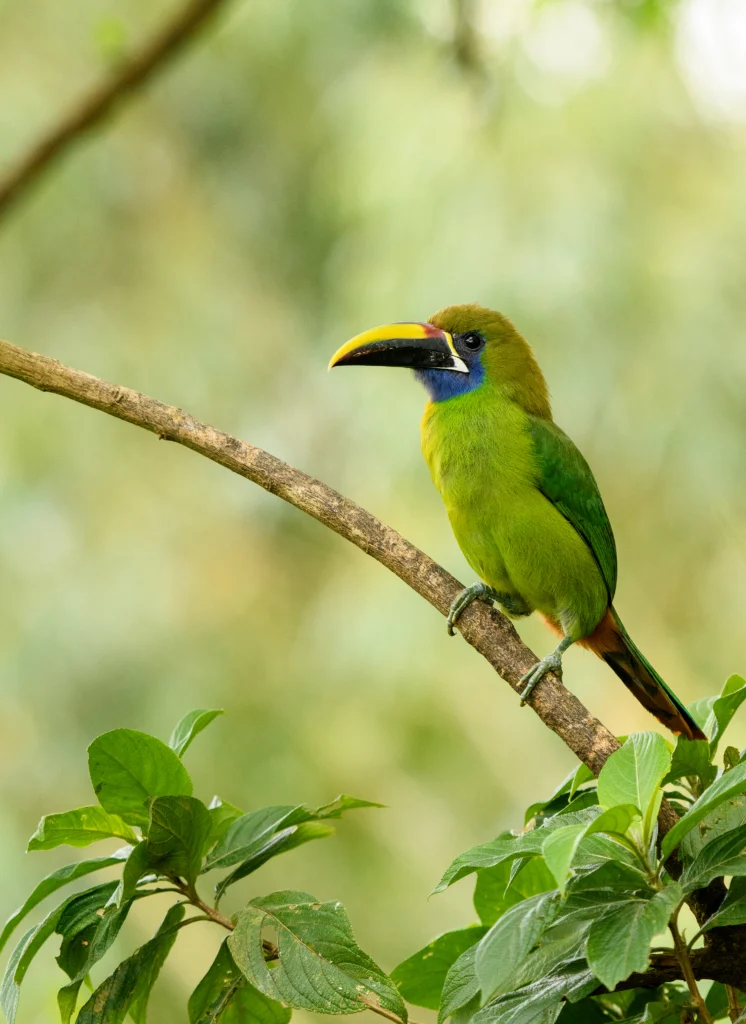
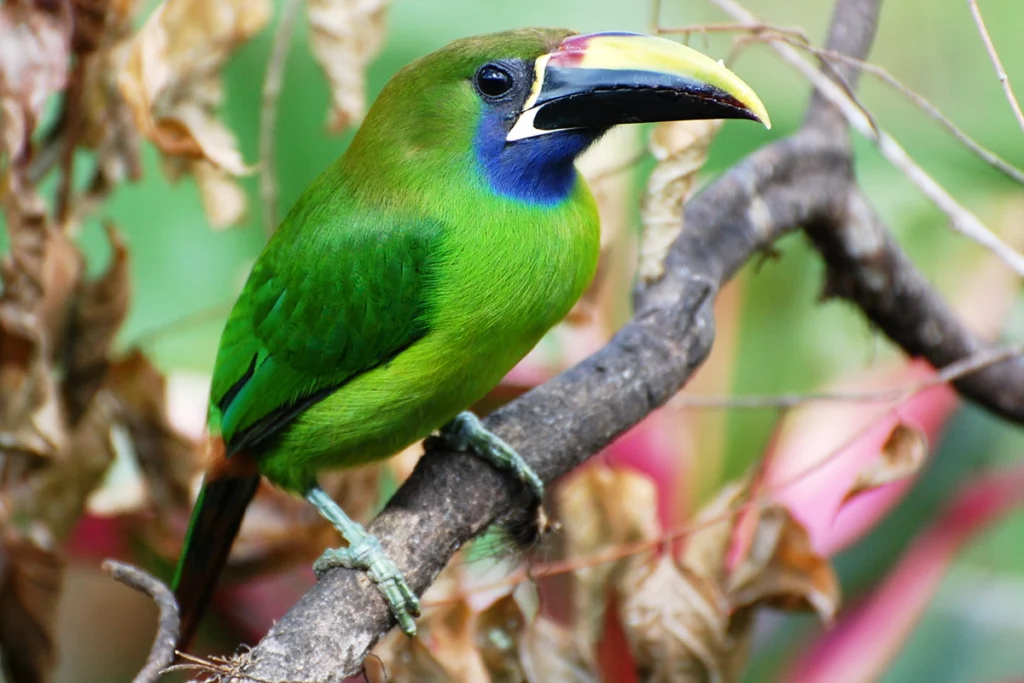
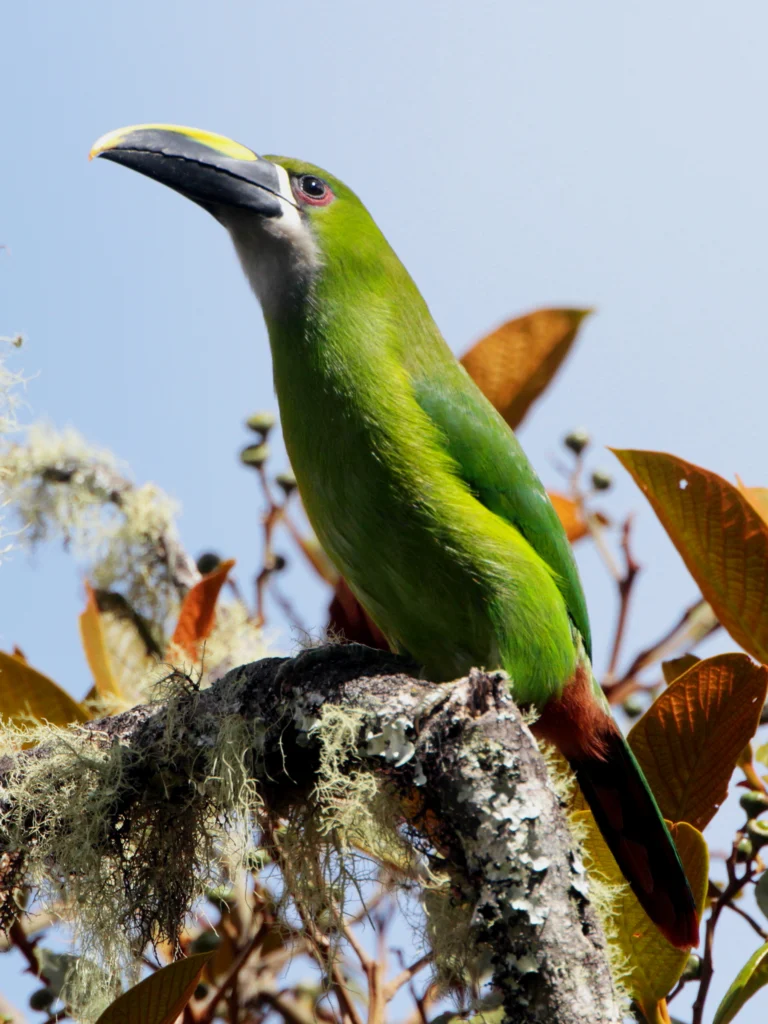
El tucán esmeralda del norte, cuyo nombre se debe a su llamativo plumaje verde, se camufla perfectamente en los frondosos bosques donde habita. Con su contracolor tropical —verde más oscuro en el dorso y las alas, y verde amarillento más claro en la parte inferior—, esta ave combina a la perfección con la paleta de colores de las hojas del bosque, tanto desde arriba como desde abajo. Con sus matices castaños, azules y blancos, y un gran pico negro y amarillo, esta ave, del tamaño de una paloma, es una auténtica belleza.
Al igual que otros tucanes, los tucanes esmeralda del norte se alimentan principalmente de frutas, aprovechando la amplia diversidad de árboles frutales en los bosques húmedos de su hogar en Centroamérica. Estas aves suelen tragar su alimento entero, incluyendo algunos frutos con semillas más grandes, que regurgitan y tragan repetidamente hasta consumir la pulpa. Ya sea por regurgitación o defecación, estas aves esparcen las semillas de sus árboles de alimentación por todo el bosque. Muchos árboles tropicales han evolucionado para dar frutos específicamente para este propósito, aprovechando las alas de las aves para esparcir sus semillas a lo largo y ancho. De hecho, el proceso de moverse a través del tracto digestivo de un animal ayuda a que las semillas de muchos de estos árboles germinen. En efecto, estos tucanes, junto con una cohorte de otras aves y mamíferos frugívoros, son jardineros de sus propios bosques de alimentos.
Las aves en todo el mundo están disminuyendo, y muchas de ellas enfrentan amenazas urgentes y graves. El tucán esmeralda del norte vive exclusivamente en hábitats boscosos, y su supervivencia está directamente relacionada con la persistencia de los bosques de Centroamérica. Aunque no se considera una especie de interés para la conservación, esta ave está en declive. Además, se captura y vende a nivel nacional para el comercio ilegal de mascotas.
El tucán esmeralda del norte se alimenta principalmente de frutas, que recolecta de árboles tropicales. Por ello, esta y otras especies frugívoras dependen de una diversidad de árboles frutales tropicales y son particularmente vulnerables a la pérdida de hábitat, ya que los bosques de los que dependen son talados para favorecer la agricultura.
Aves como el tucán esmeralda del norte necesitan nuestra ayuda para superar las amenazas que enfrentan. Para garantizar que esta y otras especies tengan el hábitat que necesitan para sobrevivir, ABC y nuestros socios crean y mantienen reservas en Centroamérica y Sudamérica. Con la ciencia como base, y con la inclusión y la colaboración como base de todo lo que hacemos, tomamos medidas audaces para proteger a las aves de todo el continente americano.
Las tierras agrícolas pueden gestionarse de forma que apoyen a los agricultores y las comunidades, a la vez que proporcionan hábitat para las aves y otros animales silvestres. El programa BirdsPlus de ABC apoya prácticas de conservación respetuosas con las aves, incentivando y catalizando a agricultores, ganaderos y empresas de América Latina y el Caribe para que adopten prácticas que restauren la tierra y mantengan el hábitat para que las poblaciones de aves puedan prosperar.
El hábitat es fundamental para la supervivencia de las aves. Trabajando con decenas de socios y comunidades locales en toda Latinoamérica y el Caribe, ABC apoya una creciente red de áreas protegidas en más de una docena de países. Con un total de más de 1,3 millones de acres, casi un tercio de la avifauna mundial (más de 3.000 especies) está protegida por una reserva apoyada por ABC.
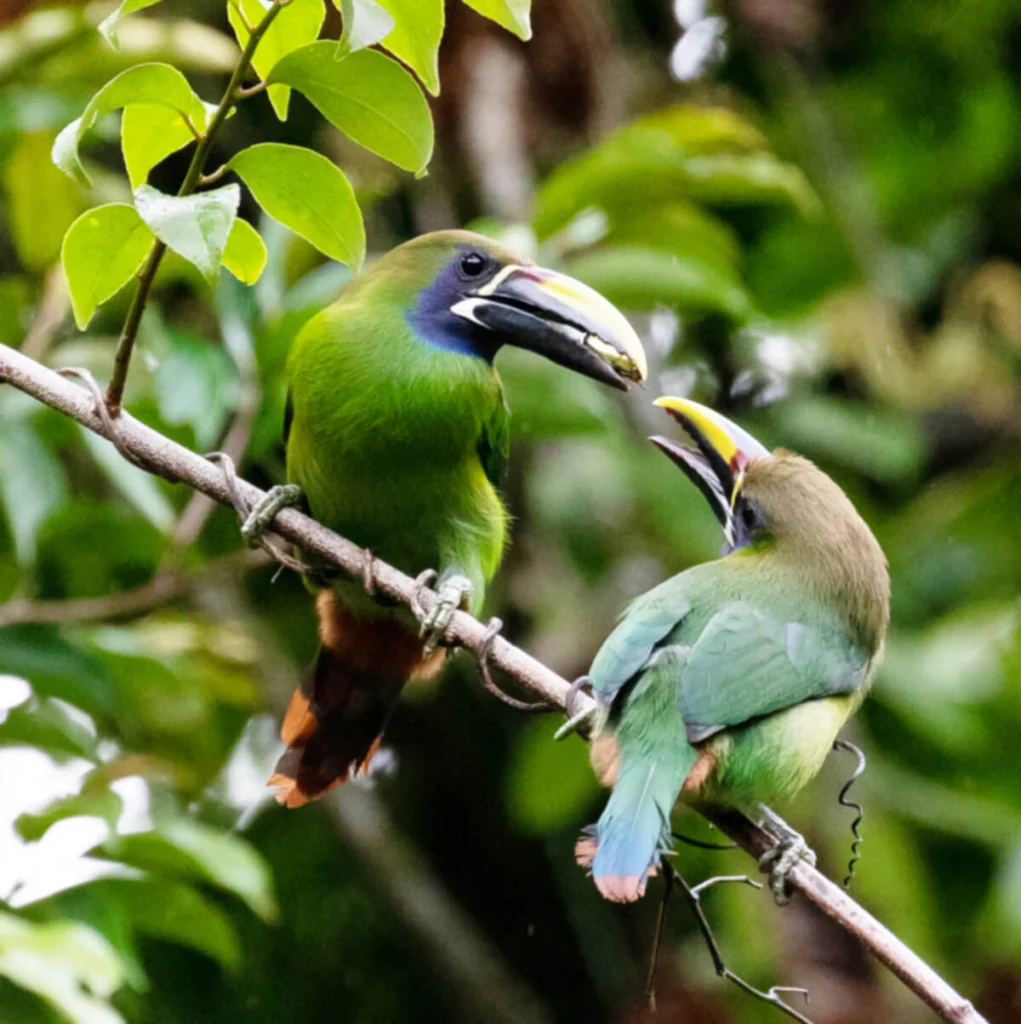
El tucán esmeralda del norte es de un hermoso y vibrante verde, tanto arriba como abajo, con el dorso de un tono más oscuro y profundo, y las partes inferiores más claras y ligeramente amarillentas. La larga cola es de color azul y verde iridiscente, con una punta color óxido o castaño que combina con las plumas cloacales debajo de la cola. Las ocho subespecies a lo largo de su área de distribución geográfica varían en la coloración de la garganta, ya sea azul o blanca, y del pico. En todas las subespecies, la mandíbula inferior es negra. La mandíbula superior también tiene algo de negro, pero puede ser casi completamente amarilla. Algunas subespecies también presentan una mancha rojiza o marrón cerca de las fosas nasales.
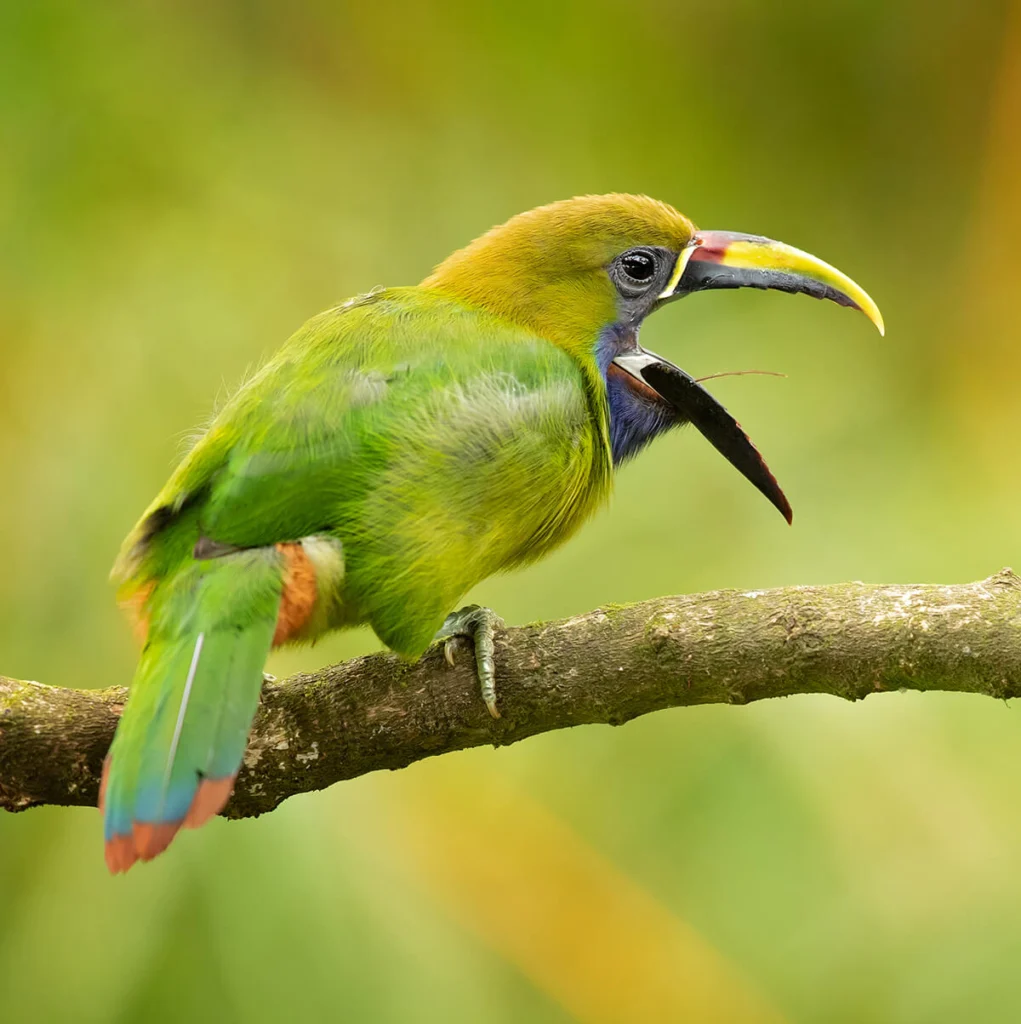
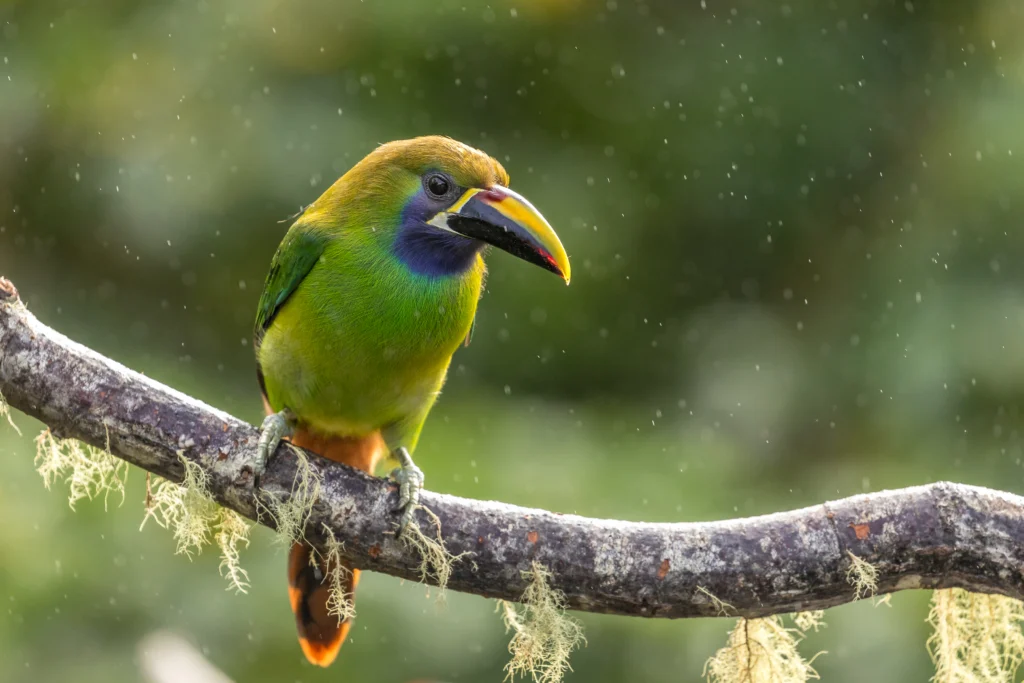
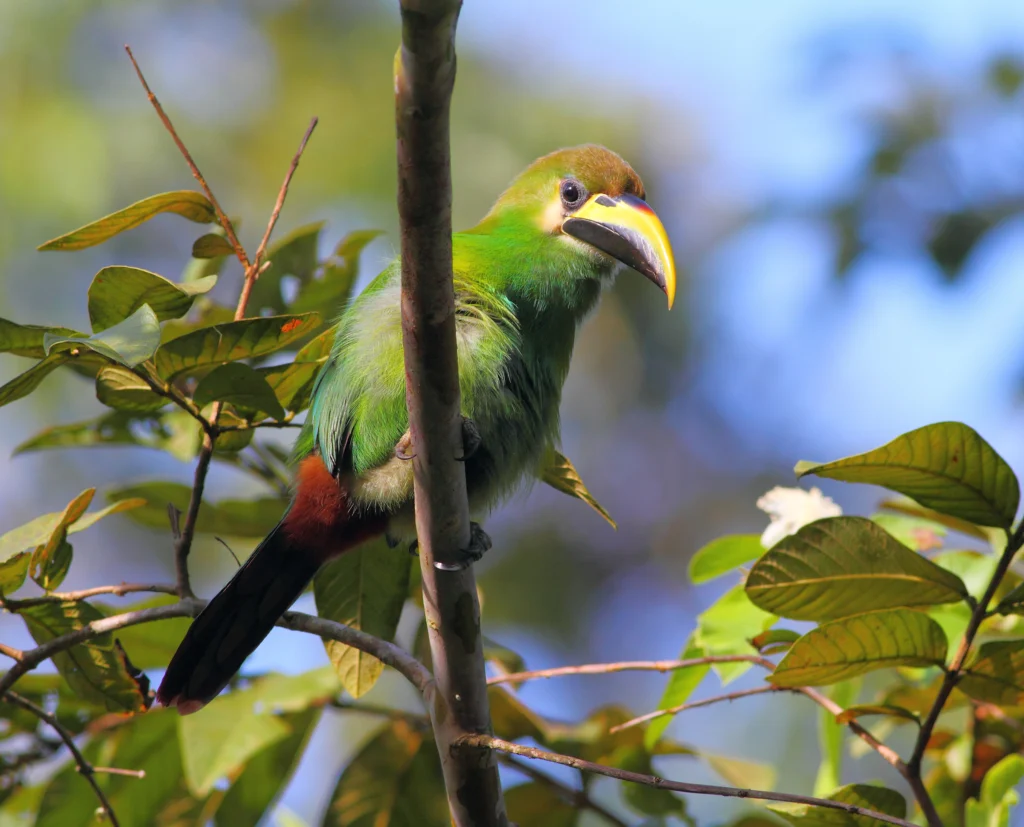
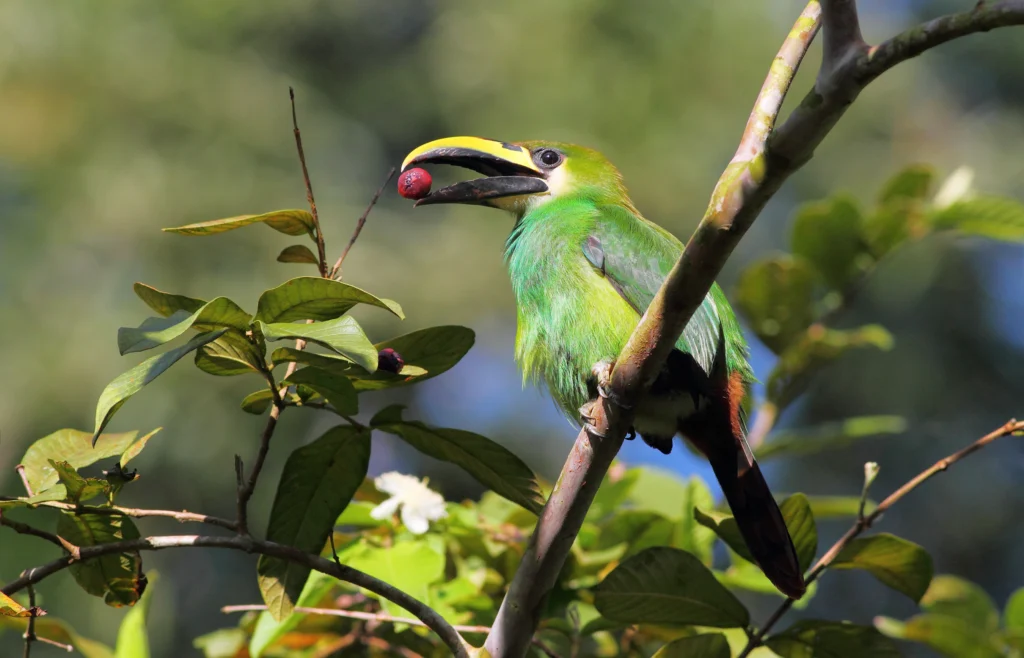
La vocalización más común del tucán esmeralda del norte consiste en una serie monótona de aullidos o ladridos espaciados uniformemente, ásperos y entrecortados, a veces con llamadas ocasionales más fuertes y agudas. Esta especie también emite un croar o gemido grave, similar al de una rana.
Crédito: Frank Lambert, XC256673. Accesible en https://xeno-canto.org/256673.
Crédito: Charlie Vogt, XC618962. Accesible en https://xeno-canto.org/618962.
Crédito: Peter Boesman, XC219393. Accesible en https://xeno-canto.org/219393.
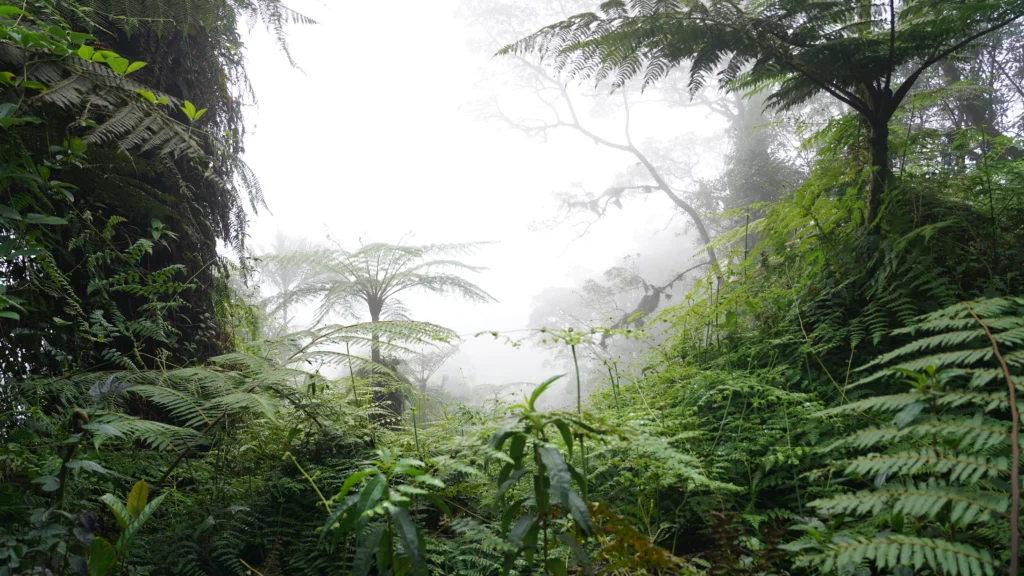
El tucán esmeralda del norte es un ave de bosque húmedo montano, que viaja y busca alimento principalmente en los árboles del dosel y del sotobosque.
Área específica
México, América Central
Detalles de la gama
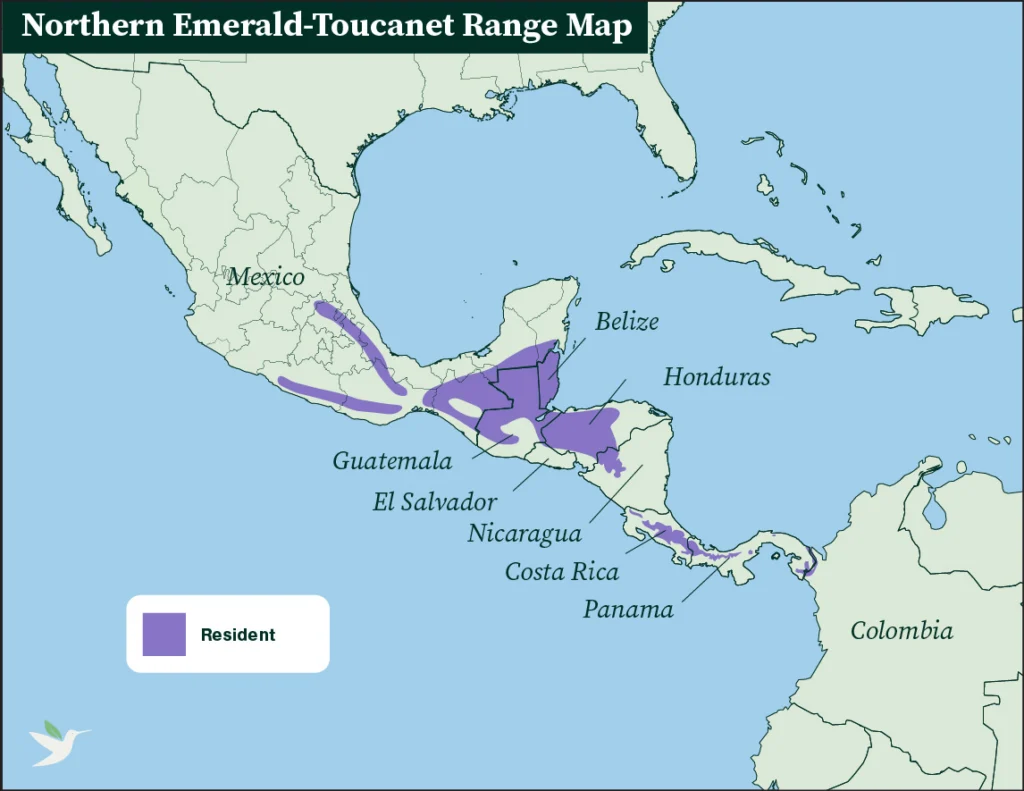
El tucán esmeralda del norte vive en las montañas desde el sur de México hasta el sur de Panamá, y apenas hasta la parte colombiana del Cerro Tacarcuna.
¿Sabías?
Aunque no todas las especies forestales se benefician de cultivos de sombra, como el café y el cacao, el tucán esmeralda del norte sí lo hace. Con la incorporación de una mayor diversidad de árboles frutales y más árboles en general, las plantaciones de monocultivo pueden proporcionar un hábitat valioso para esta y otras especies forestales frugívoras.
La biología del tucán esmeralda del norte está poco representada en la literatura científica. Aunque probablemente similar a la de otros tucanes, estas especies emparentadas han recibido aún menos atención, lo que dificulta inferir su ciclo vital.
Los tucanes esmeralda del norte consumen una amplia variedad de frutas, con 113 especies documentadas en su dieta. Estas aves también consumen insectos, ciempiés y otros invertebrados, que suelen alimentar a sus crías. Las aves adultas también consumen pequeños vertebrados, como serpientes, lagartijas y huevos y polluelos de otras especies de aves.
El cortejo en esta especie es poco conocido, pero se ha observado que las parejas intercambian alimento, lo que podría influir en el cortejo o en el mantenimiento del vínculo. Es probable que las parejas sean monógamas.
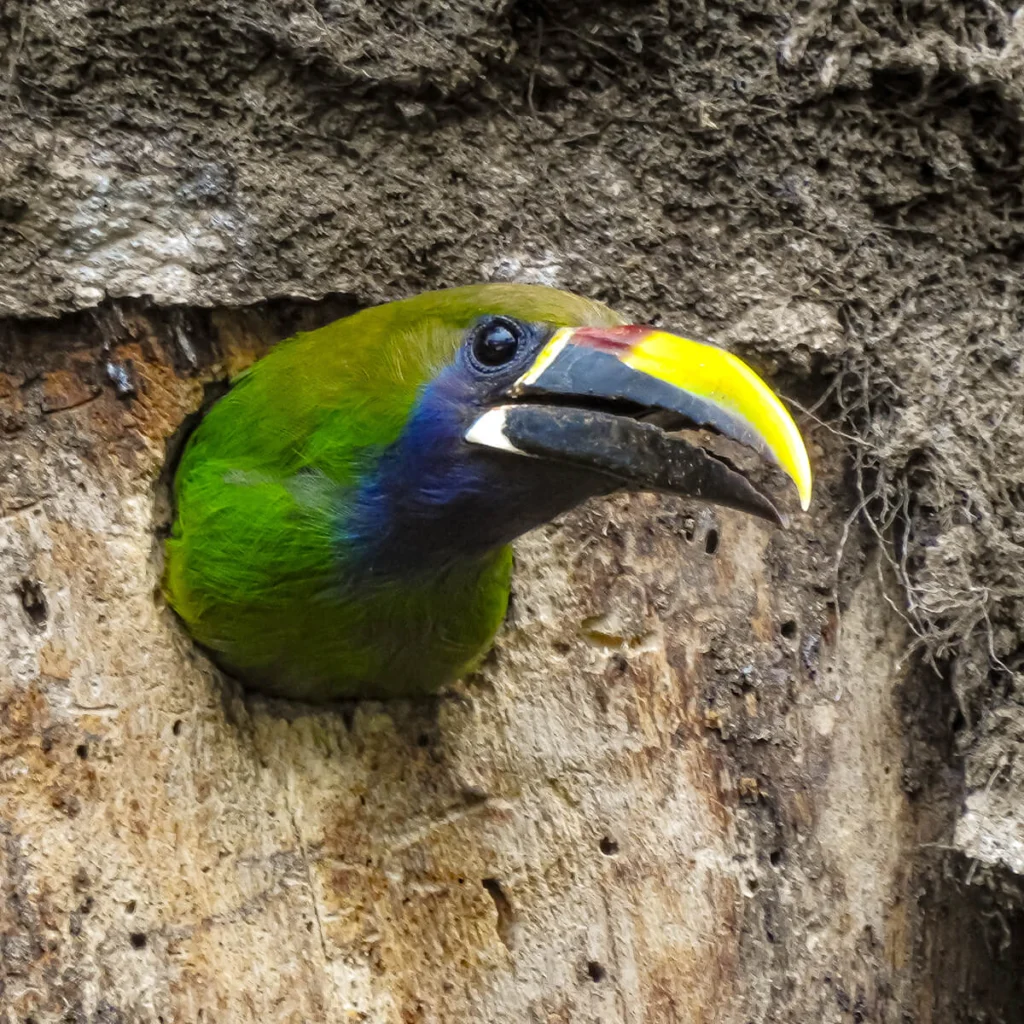
Al igual que otros tucanes, esta especie anida en cavidades de árboles, ya sean naturales o excavadas por pájaros carpinteros. Las entradas de las cavidades suelen ser más altas que anchas y estar ocultas por la vegetación.
La hembra pone de tres a cuatro huevos. Ambos padres incuban los huevos y crían a las crías, aunque la hembra se encarga de cada tarea con mayor frecuencia. La incubación dura unas dos semanas, y cuando las crías nacen, ambos padres ayudan a alimentarlas. El período de cría es extenso, con una duración aproximada de seis semanas.
Noticias e historias relacionadas


¡Únete a la bandada! Tu donación ayuda a preservar los hábitats que las aves necesitan para sobrevivir.