Las aves de pastizales de América del Norte están desapareciendo a un ritmo alarmante, y muchas se consideran en peligro de conservación.“punto de inflexión.” One of the surest ways to turn the tide in their favor could be a sweeping piece of agricultural legislation known as the Farm Bill, which happens to be the single biggest source of conservation funding in the world. The current Farm Bill has been on one-year extensions since 2023 and desperately needs to be refreshed, opening the door for new and stronger conservation measures in the next iteration of the bill.
Grassland habitats are in desperate need of conservation. What is left of these habitats that once covered hundreds of millions of acres in the central United States is vanishing, along with the birds that rely on them. American Bird Conservancy (ABC) is advocating for measures to be included in the Farm Bill that have the best chance of saving U.S. grassland bird species from extinction. The recommendations included in ABC’s Bird Saver platform would help the Farm Bill channel funds designated for conservation to the programs that would make the biggest difference for grasslands.
A Tough Time for Grasslands
Pradera ecosystems once supported an incredible diversity of life. Now, after years of agricultural expansion during which grasslands have been replaced by farming and other uses, these precious habitats are in danger of disappearing.
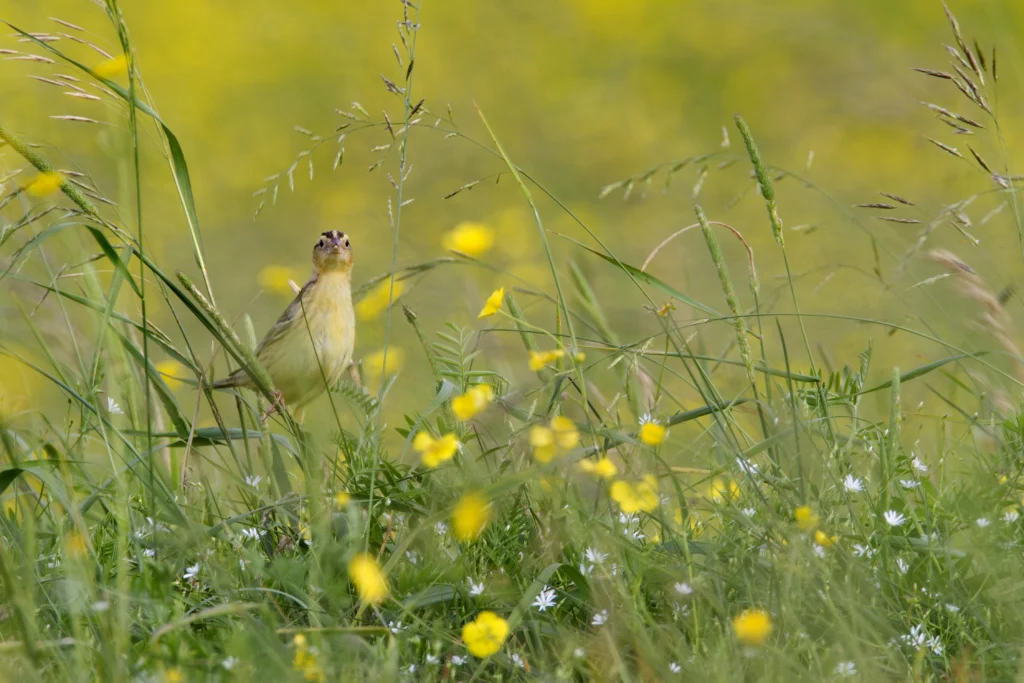
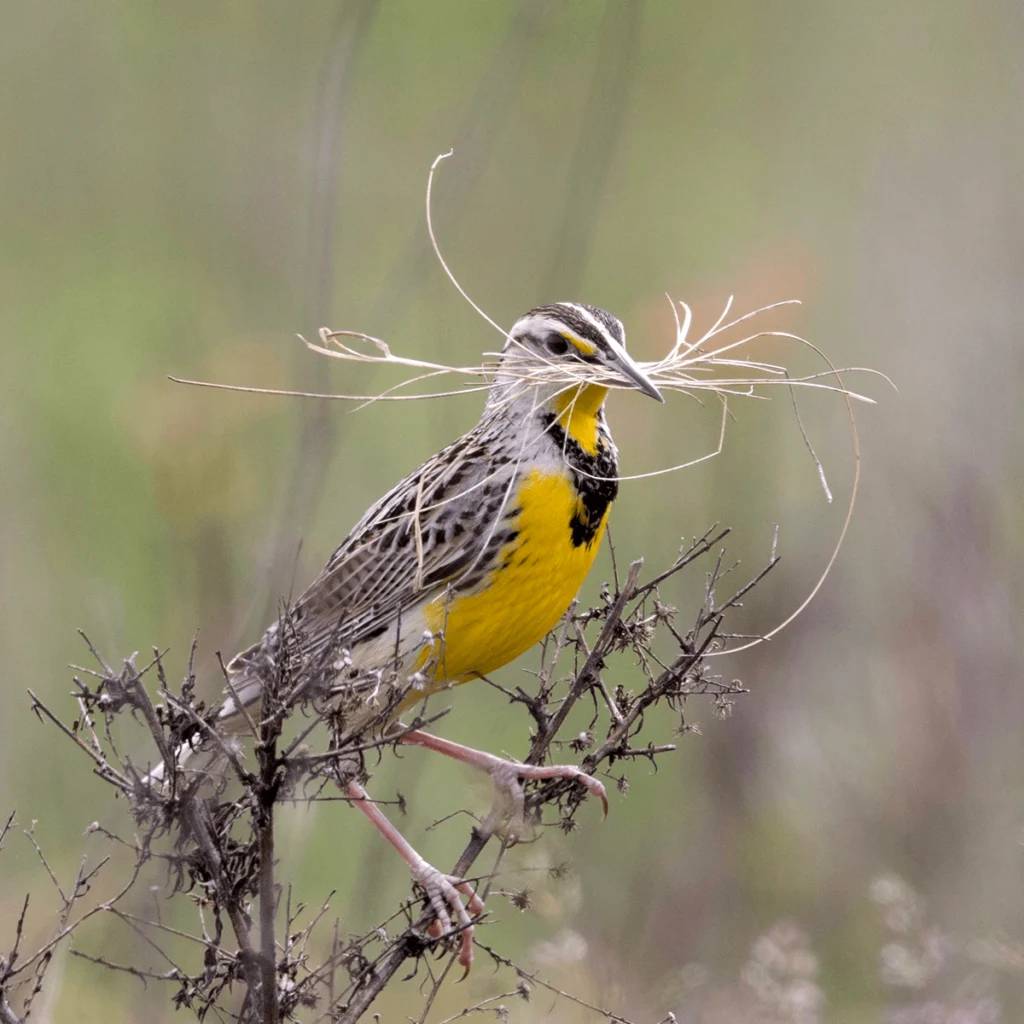
The tallgrass prairies that covered Illinois, Iowa, Missouri, and other states have been hit hardest. Plants in these wet, lush prairies support a wide range of pollinators and birds, including the Bobolink and Eastern Meadowlark. These plants also have extensive root systems that stabilize soil and store huge amounts of carbon.
Hoy en día, la mayoría de las praderas altas se han convertido en cultivos como el maíz y la soja, que sustentan solo una pequeña fracción de las especies que antaño vivían allí. La situación se ha agravado tanto que este tipo de pradera se considera uno de los ecosistemas más amenazados del planeta, con solo un 4 % restante.
The shortgrass prairie of the western U.S., which is drier and better suited to rangeland than cropland, has fared better. About half of these grasslands remain. Working rangelands can still provide excellent habitat for grassland birds and other wildlife when they use conservation strategies such as planting native grasses and using rotational grazing.
Pero en los últimos años, muchos ranchos en el oeste se han convertido en tierras de cultivo debido a las presiones económicas. Solo en 2021, un área de pastizales... equivalente al tamaño del Parque Nacional de Yellowstone fue reemplazado por cultivos en hileras. La situación es desastrosa para las especies de pastizales.
“There’s still this pervasive notion that grasslands are wasteland and should be converted to cropland, but the truth is, a lot of birds live there, and in some case,s it is the only place they can really thrive,” said Steve Riley, ABC’s Chief Conservation Officer.
Studies have shown that as grasslands have disappeared, birds have as well. Since 1970, more than half of all grassland birds have been lost. For birds that historically relied on tallgrass prairie, the situation is even more difficult — Eastern Meadowlarks are down to just one quarter of their 1970 population.
That’s why ABC is advocating for measures in the upcoming Farm Bill that would keep as much native grassland around as possible, including keeping rangelands as rangelands out West. In the Midwest, measures that incentivize setting aside some acres of cropland for native plants could be a promising way to ensure tallgrass prairies don’t disappear.
The Farm Bill’s Role in Grassland Conservation
The Farm Bill’s history goes back to the Dust Bowl of the 1930s, which was a devastating time for the nation’s farmers. It was also a wake-up call regarding the ecological consequences of plowing up the country’s prairies, which had once kept the soil in place thanks to their thick root systems. Since its early days, the Farm Bill has included some kind of conservation provision, originally to help rebuild depleted cropland, though the nature of the Farm Bill’s conservation efforts has changed over time.
In its current iteration, the Farm Bill has twelve “titles,” each acting like their own separate bill. Title II deals with conservation measures. Conservation is only a small part of the overall Farm Bill, but it still receives billions of dollars in funding collectively each year, much of which is funneled towards farmland. Conservation measures have typically involved incentivizing farmers and ranchers to set aside parts of their land to “rest” for certain periods of time.
El Congreso aprueba una versión actualizada del paquete legislativo relacionado con la agricultura cada cinco años aproximadamente, y cada vez que se somete a votación es una nueva oportunidad para mejorar la versión anterior del proyecto de ley.
ABC’s Bird Saver Platform: Strengthen Programs Known to Make a Difference
ABC has three key recommendations to strengthen the conservation section of this year’s Farm Bill: expanding one of its most effective conservation programs, increasing technical assistance to farmers interested in carrying out conservation practices on their land, and adding a new program to support ranchers in letting grazing lands “rest.”
The Conservation Reserve Program (CRP) is among the Farm Bill’s most historically successful conservation efforts. Biologists know that CRP works when properly implemented and enforced, because it has had a measurable impact on certain bird populations in the past.
CRP was written into the 1985 Farm Bill due to concerns about erosion, largely in the Great Plains. Then, as now, farmers agreed to set aside ecologically sensitive land and plant native grasses and other groundcover in exchange for a financial incentive. The end result is a benefit for wildlife and a decent income for farmers.
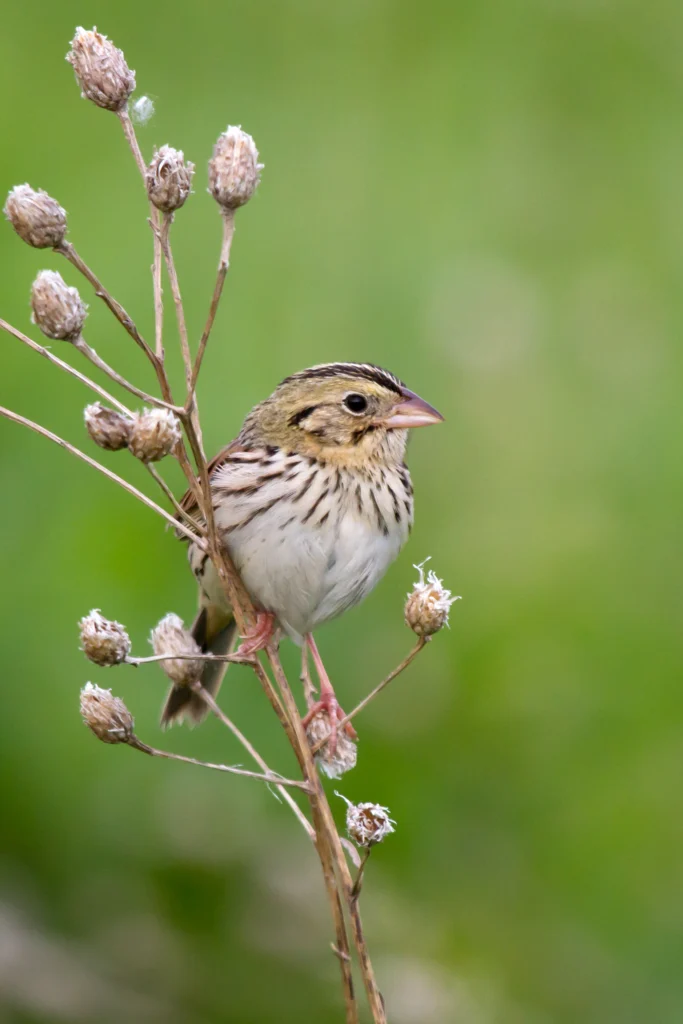
Between the mid-90s and early 2000s, the focus of CRP switched more to the cornbelt — the historic home of tallgrass prairies — and the total number of acres enrolled in the program peaked. During that same time, grassland bird populations that were declining began to noticeably recover. Henslow’s Sparrow and Bobolink numbers both increased as more acres were set aside. For Henslow’s Sparrows, about 15 years’ worth of declines were reversed in just a third of that time.
Lamentablemente, desde 2006, la cantidad de acres de tierras agrícolas inscritas en el CRP se ha reducido, y ambas especies están disminuyendo nuevamente. La buena noticia es que invertir en el CRP es una solución probada y eficaz, y el Congreso podría ampliar el programa una vez más este año.
ABC recommends increasing CRP enrollment to 40 million acres — significantly increasing its current size, providing habitat for ground-nesting birds to safely lay their eggs and a source of food and cover for a wide variety of grassland species. The Inflation Reduction Act was unable to grow CRP as it did with other conservation programs, but the Farm Bill could make this a reality.
Going hand in hand with expanding CRP, ABC also recommends expanding funds for technical assistance to farmers looking to implement conservation strategies. NGOs can work with farmers to maximize the benefit of CRP and other programs involving native habitat, and the new Farm Bill can make it easier to connect the two groups.
ABC’s Bird Saver Platform: Add a New Program Dedicated to Resting Land
ABC is also advocating for a brand-new addition called Rest-Restore-Recapture to the conservation section of the Farm Bill. This would be targeted specifically at ranchers, incentivizing them to let parts of their grazing lands rest for a period of time, rather than continuously grazing cattle on all of their land. Since rest can also be achieved under current Farm Bill authorities, ABC is also calling for stepping up efforts within those programs. Either or both of these solutions can provide a boon for birds.
Approximately 30 percent of the U.S. is rangeland, mostly in the West, which still contains hundreds of thousands of acres of shortgrass prairie. Rangelands are highly diverse and provide livestock foraging areas and habitat for many wildlife species. Healthy rangelands provide conservation services, including carbon storage, water filtration, erosion control, and nutrient cycling. They are vital to recovering grassland bird populations in the West.
Periodic rest has a number of benefits for ranchers and birds alike. It improves plant species diversity, soil stability, and resilience to extreme weather. It also increases the land’s stored carbon and soil health, and helps grass grow back fuller and richer for cattle. Incentivising a rotational grazing system would be a win-win situation for western grasslands and the ranchers who manage these lands.
“We’ve got lots of land in the West that’s never been plowed and still has a basic natural soil structure and native plants,” Riley said. “A lot of making that work better for wildlife is just being nicer to it. If we take some of the pressure off of it, it’ll heal itself.”
¡Las aves necesitan una ley agrícola fuerte!
La ABC aboga por una Ley Agrícola que tome medidas contundentes para las aves, ¡y tú puedes ayudar! Insta a tus congresistas a apoyar una Ley Agrícola con fuertes inversiones en conservación.
Las aves de pastizales necesitan nuestra ayuda
Cerca de 3 mil millones de aves have disappeared from the U.S. and Canada since 1970. Of those, 720 million have been grassland species. Most of these birds’ remaining habitat exists on working lands across the central and western United States. This year’s Farm Bill will be a prime opportunity to reward landowners for practices that stop the decline of grasslands and restore habitat that these birds need to thrive.