
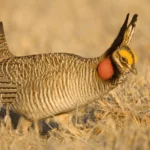
El destino del urogallo de las praderas menor, una de las especies más apreciadas e icónicas del oeste de Estados Unidos, se ha vuelto mucho más incierto después de que el Servicio de Pesca y Vida Silvestre de Estados Unidos (USFWS) anunciara su exclusión de la lista de especies en peligro de extinción según la Ley de Especies en Peligro de Extinción (ESA). El urogallo de las praderas menor ha perdido más del 90 por ciento de su población histórica y ahora cuenta con tan solo unos 28.000 ejemplares.
El fin de las protecciones federales no es solo un golpe para el urogallo menor de las praderas, sino para el hábitats de pastizales Esta especie depende de cinco estados del oeste (Colorado, Kansas, Oklahoma, Texas y Nuevo México), hábitats que comparte con otras especies de aves en declive. La pérdida, degradación y fragmentación del hábitat han reducido la distribución del urogallo de las praderas menor en un 92 % desde el siglo XIX, principalmente debido a la expansión e intensificación de la agricultura. El desarrollo energético y urbano también son factores importantes. Las especies invasoras amenazan además el hábitat restante.
La decisión de retirar las protecciones federales al asediado urogallo de las praderas revierte una Sentencia de 2022 para incluirlo en la lista de especies en peligro de extinción, el resultado de décadas de defensa por conservacionistas. La especie había sido catalogada como amenazada bajo la Ley de Especies en Peligro de Extinción (ESA, por sus siglas en inglés), y una subpoblación del sur se consideraba en peligro de extinción. La Unión Internacional para la Conservación de la Naturaleza (UICN, por sus siglas en inglés) clasifica al urogallo menor de las praderas como vulnerable.
Investigadores y conservacionistas saben qué medidas se pueden tomar para apoyar a las poblaciones de urogallo de las praderas en peligro, como la restauración de pastos nativos en terrenos convertidos a la agricultura. La pérdida de la protección que la Ley de Especies en Peligro de Extinción (ESA) otorga al urogallo menor de las praderas conlleva la posible pérdida de recursos para socios clave en la conservación del hábitat: agricultores, ganaderos y terratenientes.
“Es más importante que nunca abordar la pérdida de hábitat de pastizales y ayudar a los ganaderos a gestionar los hábitats restantes”, declaró Steve Riley, director de conservación de American Bird Conservancy (ABC). “ABC trabaja en estrecha colaboración con agricultores y ganaderos para fomentar una gestión de pastoreo compatible y sostenible, así como el control de plantas invasoras (como el cedro rojo oriental y el mezquite); aún es posible revertir la situación”.”
La Ley de Especies en Peligro de Extinción es una de las leyes de conservación más eficaces de Estados Unidos, con un historial comprobado de prevención de la extinción del 99 % de las especies incluidas en su lista. Si bien el urogallo de las praderas menor se enfrenta a grandes dificultades sin la protección de dicha ley, aún existen medidas que pueden ayudar a la especie y a sus hábitats de pastizales.
Sin la Ley de Especies en Peligro de Extinción (ESA, por sus siglas en inglés), a los agricultores, ganaderos y terratenientes les resultará más difícil acceder a la asistencia técnica y financiera necesaria para implementar prácticas de conservación en sus tierras. Podrían perderse beneficios como el programa SAFE (State Acres for Wildlife Enhancement, SAFE) de la Agencia de Servicios Agrícolas (FSA), que permite a los terratenientes arrendar sus tierras a la FSA con el fin de mejorar el hábitat de las aves. Los estados dentro del área de distribución del urogallo de las praderas menor tenían prioridad para este programa, pero con la pérdida de la protección de la ESA, también pierden su lugar entre los primeros en la lista de espera para programas como SAFE.
“Podemos mejorar las cosas muy rápidamente en los pastizales mediante prácticas de manejo de tierras apropiadas. Podemos elegir situaciones beneficiosas para todos que proporcionen los alimentos, la fibra y la energía que necesitamos al tiempo que conservamos el hábitat para nuestras especies en peligro”, dijo Riley. “Mantener los pastizales lado verde arriba y ayudar a los ganaderos en este proceso es de suma importancia. Si no hacemos más para ayudar al urogallo de las praderas menor, será imposible revertir el declive de su población.”
ABC y sus socios continuarán trabajando con agricultores, ganaderos y otros socios para mitigar la pérdida de hábitat de pastizales y restaurar el hábitat Es vital para el urogallo de las praderas menor y otras especies que necesitan urgentemente conservación, al tiempo que se insta a su reincorporación a la lista de especies en peligro de extinción. La Ley de Especies en Peligro de Extinción abre la puerta a una mayor asistencia para los propietarios de tierras, lo cual será fundamental para la conservación de esta emblemática especie.
¡Alza la voz por el urogallo de las praderas!
Pida al Servicio de Pesca y Vida Silvestre de los Estados Unidos que incluya al urogallo de las praderas menor en la lista de especies protegidas.


