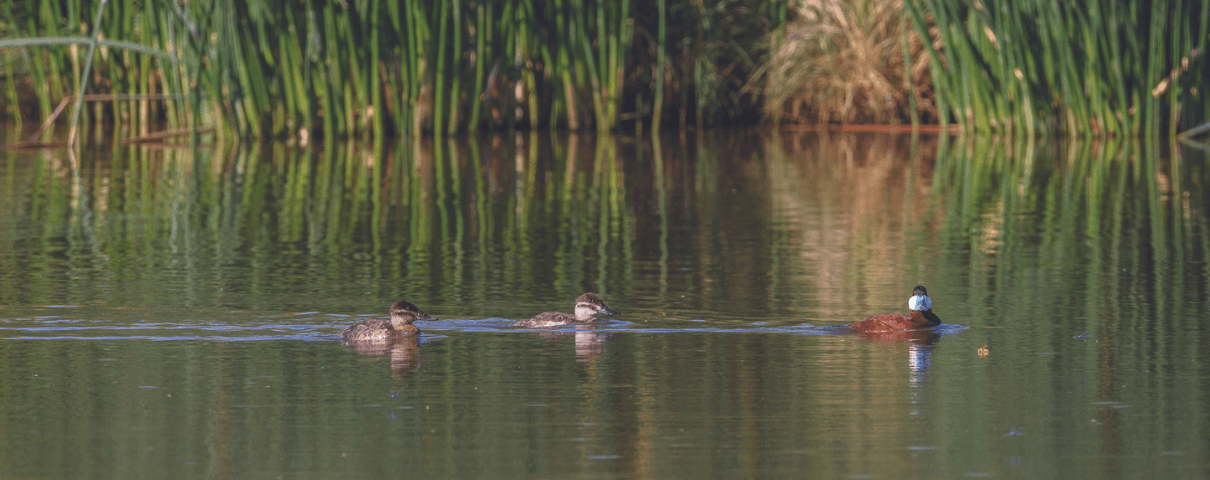
Los humedales son lugares maravillosos para las aves gracias a su abundante oferta de alimento, agua y refugio.
The long grasses of marshes offer a hideaway to secretive birds like the Saltmarsh Sparrow, which nests just above the tide line on the Atlantic coast of the United States and synchronizes its breeding season with the phases of the moon. The Baldcypress trees that tower over the swamps of the southeastern United States provide an ideal nesting place for the elegant Milano colilargo. Even North Carolina’s Coastal Plain peat bogs, with their acidic waters and carnivorous plants, provide a haven for birds including the Swainson’s Warbler and Pájaro carpintero de cresta roja (en algunos pantanos con pinos de estanque maduros).
América del Norte cuenta con más de 950.000 millas cuadradas de estos ecosistemas dinámicos, un área mayor que la de los estados de Alaska y Texas juntos. Los humedales se encuentran por todo el continente, desde las turberas boreales del norte de Canadá hasta los manglares que se extienden hasta Centroamérica y el Caribe.
En este artículo, abordaremos tres tipos principales de humedales: marismas, pantanos y turberas. Cada uno ofrece sus propias ventajas para las aves y presenta desafíos y oportunidades de conservación. Una vez que sepa qué buscar, ¡quizás descubra que un humedal local, lleno de aves increíbles, está más cerca de lo que cree!
Marismas
Marshes are the quintessential “wetlands.” These lush ecosystems are dominated by grasses and sedges that provide ideal cover for stealthy wading birds like the American Bittern. Their nutrient-rich waters and organic soils allow them to host an array of life, including the crustaceans and insects favored by marsh birds like the chicken-sized King Rail. Marshes are often — but not always — close to an ocean, river, or lake, and they are excellent at absorbing and storing flood waters from these systems. There are two broad subgroups of marshes: tidal and non-tidal.
Las marismas, como su nombre indica, se encuentran junto al océano y se ven influenciadas por las mareas. Suelen ser salinas o salobres, pero ocasionalmente contienen agua dulce. Son especialmente frecuentes a lo largo de la costa atlántica baja de Norteamérica y del Golfo de México. También se encuentran en la costa pacífica del continente, incluyendo grandes extensiones del norte de Canadá. Estas marismas sirven como paradas de descanso cruciales a lo largo de las rutas migratorias del Atlántico y del Pacífico, rutas migratorias aviares con gran tráfico a lo largo de ambas costas, utilizadas por cientos de especies de aves y millones de ejemplares cada año.
Desafortunadamente, muchas de las marismas de América del Norte se ven amenazadas por la doble presión del desarrollo costero y el aumento del nivel del mar. Sin embargo, cuando se les da espacio para expandirse tierra adentro, las marismas son sistemas dinámicos y adaptables que pueden ajustarse al aumento del nivel del mar.
ABC staff members in the southeastern United States are hard at work helping to restore and protect coastal wetland habitats and the birds that depend on them. This includes monitoring and restoring marsh habitat crucial to the Endangered Black Rail and secretive Saltmarsh Sparrow.
Las marismas no mareales, como ya habrás adivinado, no se ven afectadas por las mareas. Estas marismas se encuentran más al interior y suelen estar compuestas de agua dulce (aunque algunas son salobres, una mezcla de agua salada y dulce). Las marismas no mareales constituyen la mayoría de los humedales en los 48 estados contiguos. Al igual que los sistemas costeros mareales, las marismas no mareales son importantes zonas de descanso para las aves migratorias.

Cuando los glaciares se retiraron de gran parte de América del Norte hace unos 10.000 años, dejaron depresiones poco profundas, o simas. Hoy en día, estas se encuentran dispersas por las Grandes Llanuras de Estados Unidos y Canadá. Más de la mitad de las aves acuáticas migratorias de América del Norte —millones de aves, incluyendo Canvasbacks and Northern Shovelers — breed and nest in the wetlands of this “Prairie Pothole Region.” These scattered non-tidal marshes also provide key migratory stopovers for many birds following the Central Flyway migratory route, such as the Aguja hudsoniana.
Desafortunadamente, aproximadamente la mitad de los baches de las praderas —y hasta el 90 % en algunas zonas— se han rellenado para dar paso al desarrollo agrícola o comercial. Los grupos de conservación de aves consideran de suma importancia salvar y restaurar los humedales de esta región.
ABC is working to restore marshes in parts of North America where they have largely disappeared. This includes another important Central Flyway rest stop, the Big Bend region of Texas. Many wetlands associated with the Rio Grande have dried up or become disconnected from the larger river system, and bringing them back can aid migratory shorebirds like the Snowy Plover and Buff-breasted Sandpiper.
Pantanos
Al igual que las marismas, los pantanos son ecosistemas increíblemente productivos que albergan una amplia variedad de vida vegetal y animal. Sus suelos, ricos en nutrientes, siempre están saturados y suelen estar cubiertos de agua estancada durante al menos una parte del año. Al igual que las marismas, los pantanos actúan como barreras para absorber el exceso de nutrientes y las aguas de inundación de los sistemas hídricos cercanos. A diferencia de las marismas, que generalmente tienen un aspecto abierto y juncal, los pantanos suelen contener muchos árboles grandes y arbustos leñosos.

Two iconic swamp ecosystems illustrate the importance of swamps to birds. The Baldcypress-dominated bottomland hardwood swamps of the southeastern United States are home to cavity-nesters like the Prothonotary Warbler and wading birds such as the Wood Stork.
In many areas, bottomland hardwood swamps, with their forests of gum, oak, and Baldcypress, have been heavily impacted by unsustainable cutting. ABC works with the forestry industry in the Southeast to develop sustainable logging plans that accommodate nesting habitat for birds like the Red-headed Woodpecker and acrobatic Swallow-tailed Kite.
Mangroves are the salty seadogs of the tree world. In the subtropical and tropical coastal regions where they grow, these marine-adapted trees act as invaluable nurseries for shellfish and fishes, and provide a first line of defense against hurricane storm surges. In North America, mangrove swamps begin as far north as Florida and parts of the U.S. “mainland” Gulf Coast and carry on south through Central America and the Caribbean islands. They provide cover for stealthy tropical birds like the Mangrove Cuckoo and White-crowned Pigeon, and harbor many nesting wading birds, including the Reddish Egret and Roseate Spoonbill.
Turberas
Peatlands, as their name suggests, are distinguished from marshes and swamps by their accumulation of “peat.” Organic matter builds up into spongy layers over time thanks to waterlogged soils where decay occurs very slowly. Canada’s boreal peatlands make up the vast majority of these wetlands in North America.
Boreal peatlands are important to birds for two big reasons: They provide key habitat for a huge number of bird species, and they serve as natural carbon stores that help fight climate change. Migratory songbird species that use them for summer nesting include the Rusty Blackbird and the Common Yellowthroat. Smaller pockets of peatlands appear further south as well. In the Appalachian Mountains, peatlands support birds including the Swamp Sparrow, Wilson’s Snipe, and Wood Duck.
Las turberas se dividen en pantanos y ciénagas. Los pantanos suelen encontrarse en regiones bajas y obtienen su humedad del agua subterránea que fluye ladera abajo. Ayudan a absorber las aguas de inundación y a filtrar los nutrientes para mejorar la calidad del agua. A veces, con el tiempo, los pantanos pueden convertirse en ciénagas.
Bogs are similar to fens, but they have a shag-carpet-like layer of sphagnum moss that turns their waters acidic. Bogs are also the lowest-nutrient wetlands, fed primarily by rain rather than by streams or groundwater. Most plants can’t handle this harsh environment, but certain hardy trees and shrubs thrive there. Cranberry and blueberry bushes have adapted to the challenges posed by bogs, and these provide tasty food to migratory birds like the Sandhill Crane.
Desafortunadamente, muchas ciénagas y pantanos se han rellenado para el desarrollo y la agricultura, y su turba rica en carbono se extrae intensivamente para obtener combustible y fertilizantes. Con el tiempo, estas actividades han reducido la cantidad de ciénagas y pantanos en América del Norte, reduciendo así este importante hábitat para las aves.
ABC and other conservation groups are working across North America to protect and restore the continent’s marsh, swamp, and peatland habitats for the wetland birds that call these places home. There are plenty of ways for you to help wetland birds, too! You can make your home more bird-friendly for migrating wetland species, or Dígaselo a los legisladores to prioritize wetland birds and their habitats. Visit ABC’s website for more ideas about how to get involved.