

For this effort, replacement species include Burr Oak, White Spruce, Northern White-cedar, Yellow Birch, Balsam Fir, Silver Maple, and a tree currently found to the south that is anticipated to march north with warming winters. “Swamp White Oak is not native here but is found 200 miles to the south,” Fogard says. “We’re sort of experimenting here with assisted migration,” he adds.
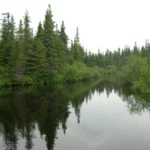
The work involves careful planning and several stages of execution. Mark Westphal, the forester for the Carlton County Land Department, explains how the collaboration has worked in his area: “Duane got the trees from the Minnesota Department of Natural Resources when they became available. Prior to planting our site, the Carlton County Land Department (my boss Greg and myself) spent copious hours mowing the planting area to give the tree seedlings a fighting chance of establishing themselves,” he adds. When the best time for spring planting arrived in late April and early May, Westphal came back with a tree-planting crew. He and colleagues followed the crew, marking the hundreds of saplings with flags. “Then we came back after the fact with tree tubes and cages,” Westphal says, “to protect the young trees from deer.”
A year later, most of the trees are well established. Westphal believes this joint tree-planting campaign began not a moment too soon. “We now have Emerald Ash Borers approximately 8 miles as the crow flies from that location,” he says. This means that in a few years, many of the Black Ash trees may be dead. “It’s sad and initially you want to put your head in the sand. But our collaboration gives me hope. We’re a small county with a small land base. Being able to have groups like ABC come in to facilitate this tree-planting is important. It makes economic and ecological sense to us. And we think it will make a difference.”
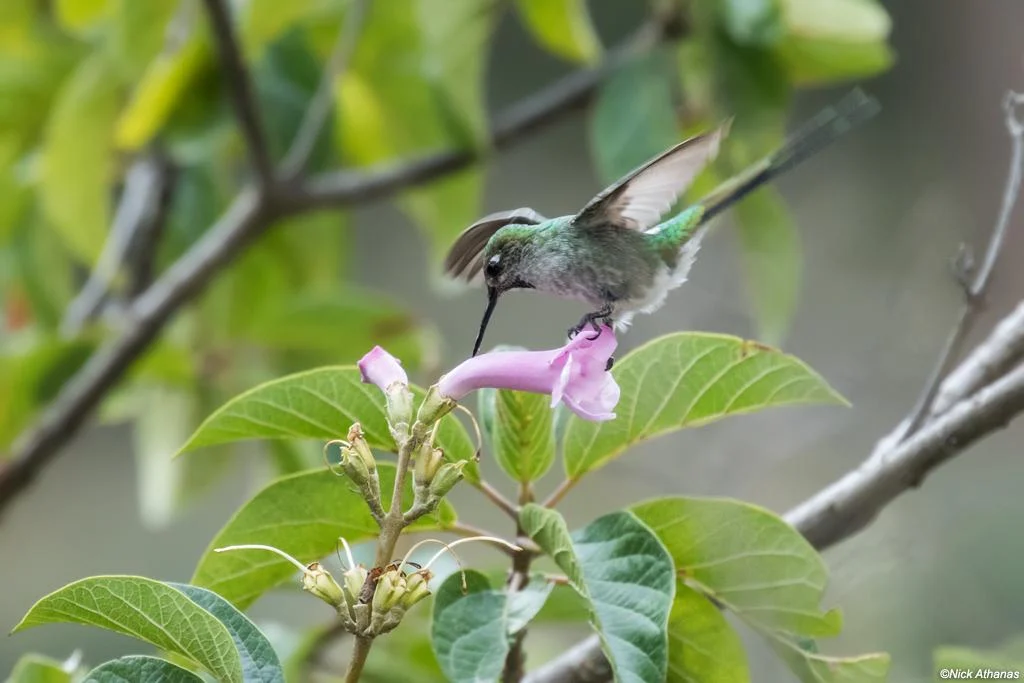
ABC thanks George and Cathy Ledec, Kathleen Burger, Andrew Goodwin, and Larry Thompson for supporting Gray-bellied Comet habitat restoration efforts.
ABC’s work in the Septentrional BirdScape has been generously supported by the U.S. Fish and Wildlife Service and the Neotropical Migratory Bird Conservation Act grant program; Environment and Climate Change Canada; Richard and Nancy Eales; and Andrew and Patricia Towle.
The Black Ash project is funded by a Great Lakes Restoration Initiative grant through the U.S. Department of Agriculture, Forest Service, and the U.S. Environmental Protection Agency.