Overview
About
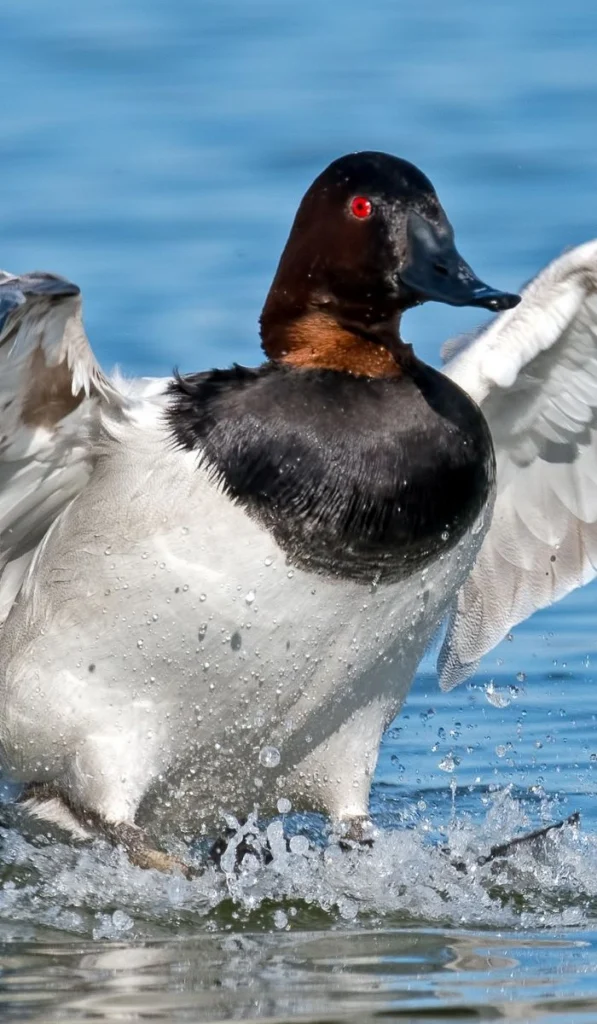
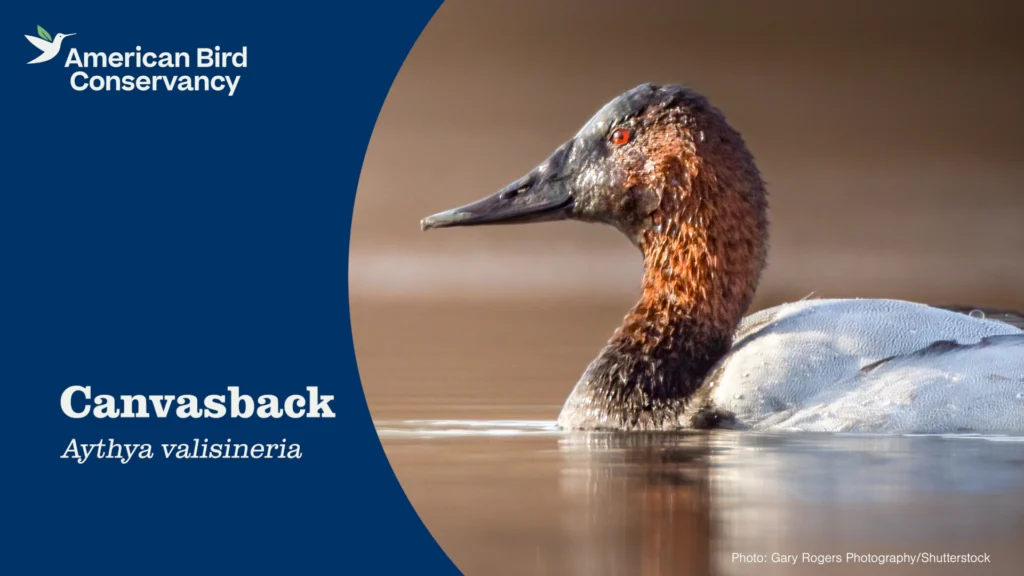
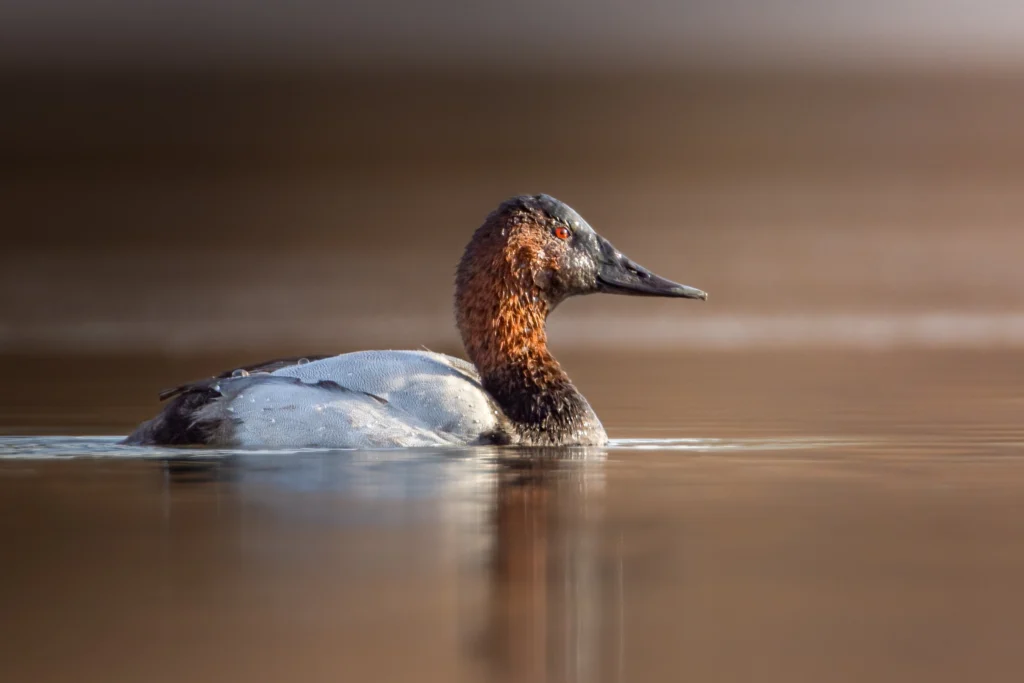
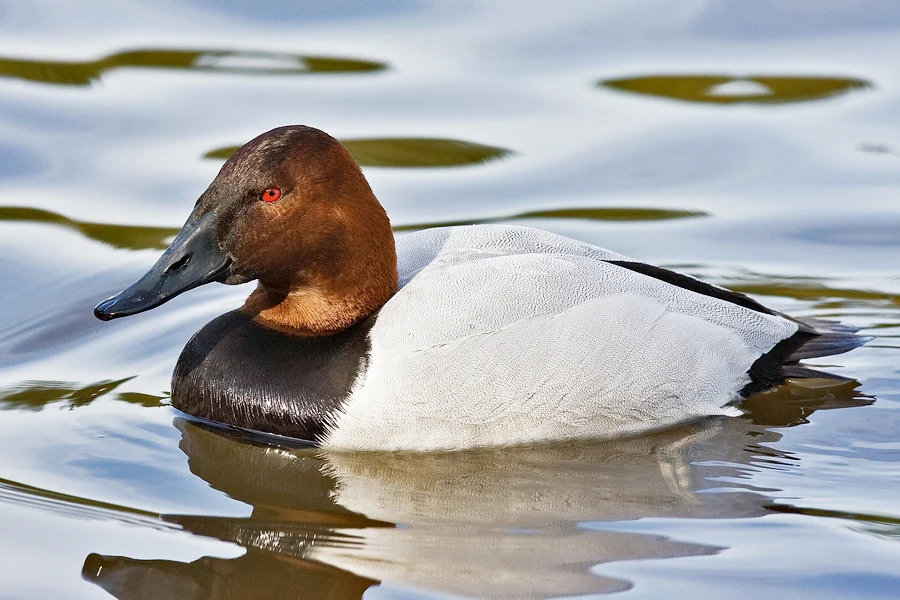
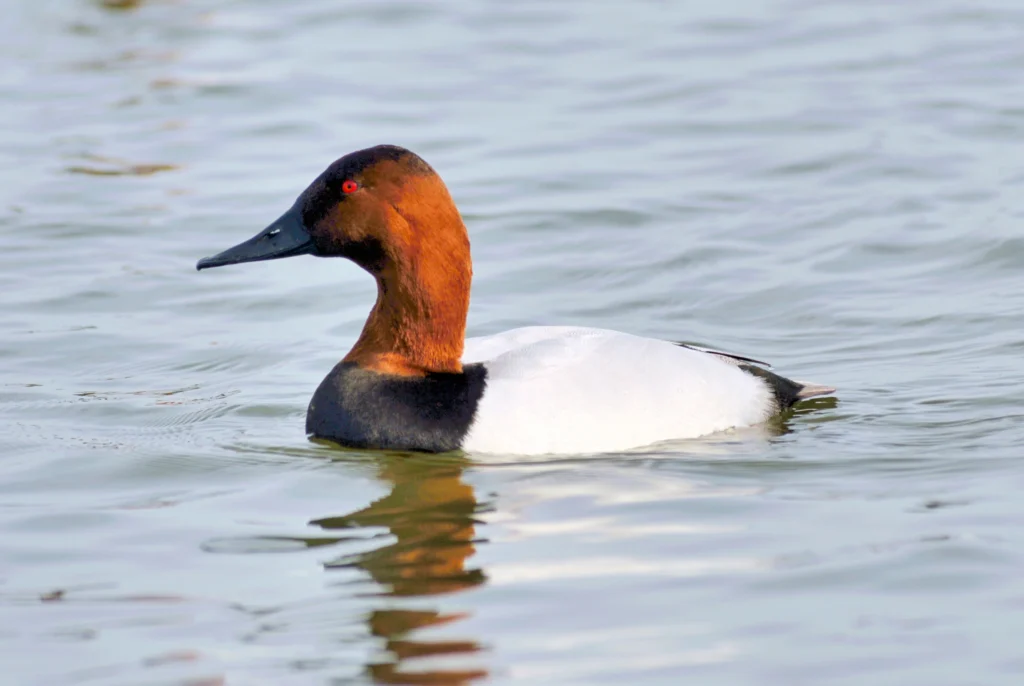
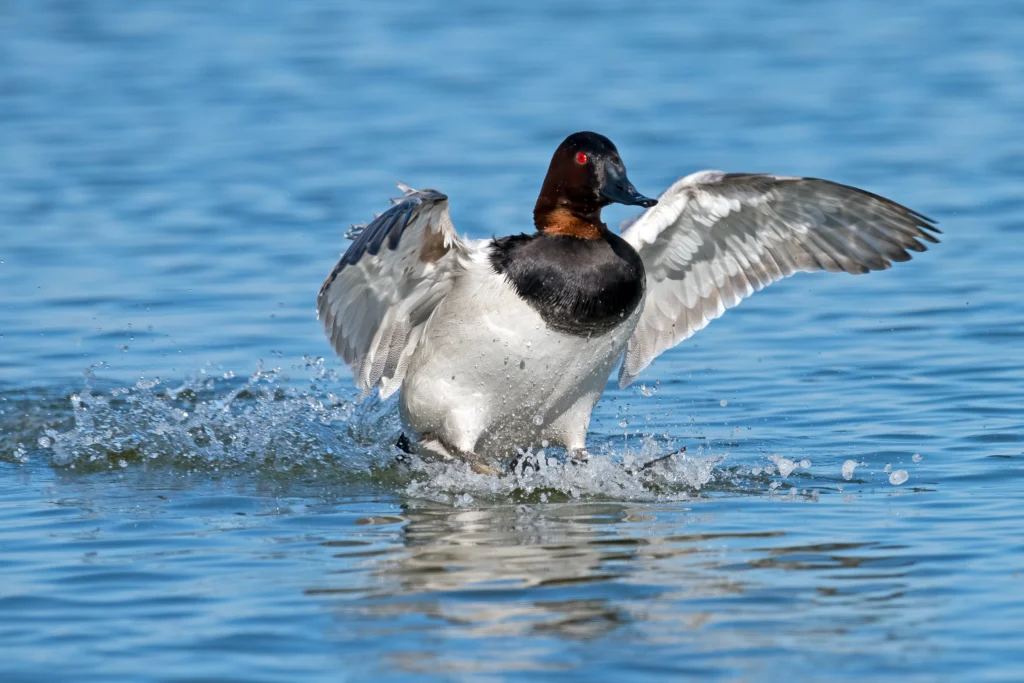
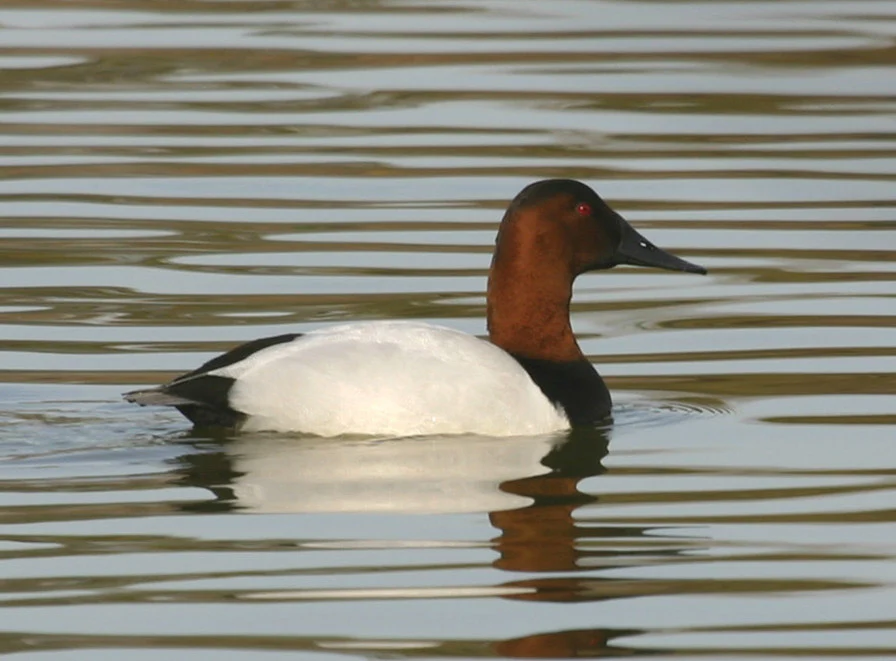
The regal-looking Canvasback is the largest North American diving duck. Its English name was inspired by the male’s white back and sides, which reminded English settlers of canvas fabric. The drake (male) is an arresting sight, with a red-brown head and gleaming red eyes. As in the Wood Duck, the hen (female) has less conspicuous plumage, but all share the same long, sloping profile and dark bill.
The Canvasback’s species name comes from aquatic wild celery, Vallisneria americana. Canvasbacks and other diving ducks feast on the roots and seeds of this native plant during the winter, which gives their flesh a delicate, celery-like flavor. Many duck hunters consider “King Can” to be one of the tastiest game birds, and commercial market hunting in the 19th century nearly sent this big duck the way of the Passenger Pigeon.
Fortunately, the Migratory Bird Treaty Act of 1918 outlawed market hunting, an important step toward the Canvasback’s eventual recovery. The creation of the National Wildlife Refuge System conserved wetland habitat for waterfowl, particularly in the Prairie Pothole Region of the North American Great Plains. Many of these refuges were purchased with funds generated by the Duck Stamp, another important conservation program.
Threats
Although Canvasbacks are no longer subject to commercial hunting pressure, they continue to face threats on their breeding grounds, especially wetland drainage and filling in the Prairie Pothole Region, and wintering areas, including water pollution, sea level rise, and the disappearance of aquatic plants. Canvasbacks are also vulnerable to lead poisoning from spent shot, as well as fatal exposure to oil spills and uncovered oil pits that they may mistake for ponds.
Vanishing Wetlands
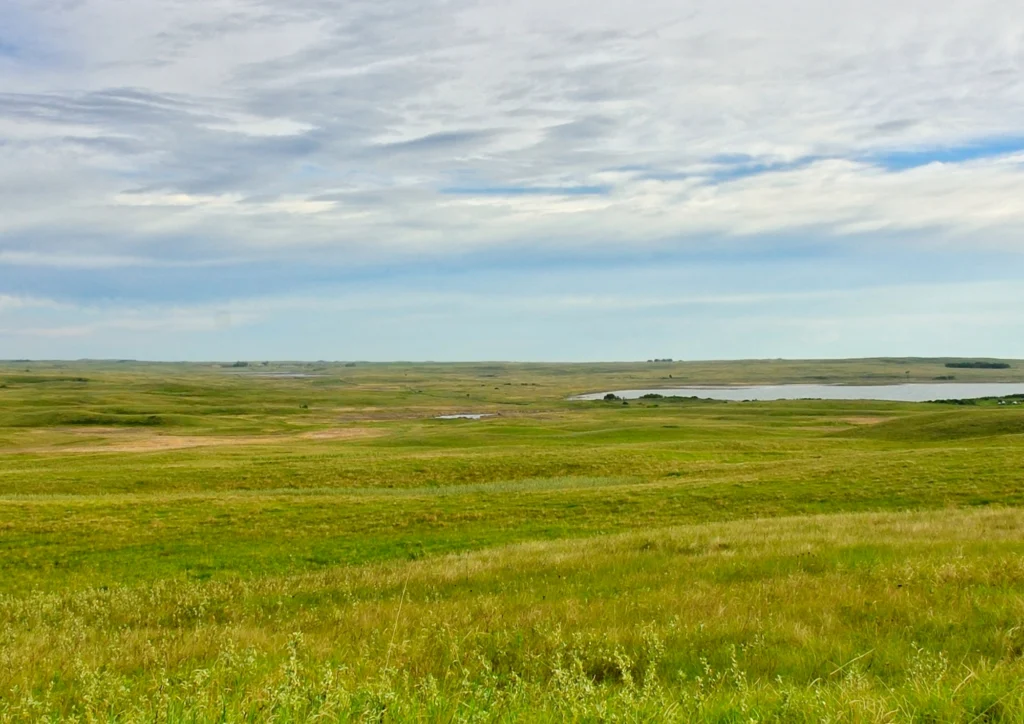
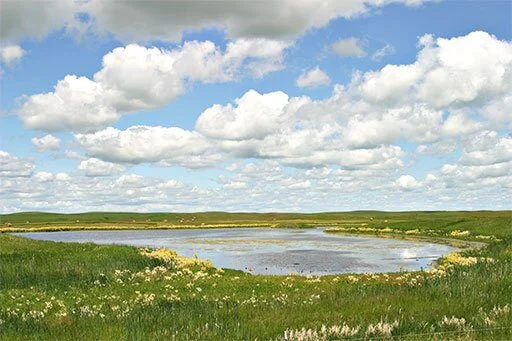
One of the biggest challenges facing the Canvasback is agricultural conversion and development in the Prairie Pothole Region. The region was managed sustainably for millennia, but European agriculture has decimated much of this vital landscape. In the last 200 years, more than half of these essential pothole waterbodies have been filled, and almost 70 percent of the prairie has been replaced by intensive farming.
Polluted Waters
Many lakes and wetlands serve as reservoirs for various environmental pollutants, and submerged, underground plant parts accumulate these pollutants. Foraging extensively on aquatic underground roots and tubers, Canvasbacks are particularly prone to ingesting chemicals such as pesticides, hydrocarbons, and mercury.
Conservation Strategies & Projects
Birds like the Canvasback need our help to overcome the threats they face. At ABC, we’re inspired by the wonder of birds and driven by our responsibility to find solutions to meet their greatest challenges. With science as our foundation, and with inclusion and partnership at the heart of all we do, we take bold action for birds across the Americas.
Improve Habitat
Although little of the Prairie Pothole Region is protected from development, large patches of potholes and prairie still exist. ABC’s Northern Great Plains team, along with our partners in the Prairie Pothole Joint Venture, work to maintain the vitality and continuity of this landscape. We support sustainable agricultural practices and create the tools and resources that land stewards need to keep this crucial biome of the Western Hemisphere rich in birds, including waterfowl like the Canvasback.
Supporting Petitions & Advocacy
ABC supports clean coastal habitats and improvements of water quality for wintering Canvasbacks and other waterfowl. We opposed the Environmental Protection Agency’s loosening of regulations on the designation of Waters of the United States, changes that allow the drainage and filling of many small wetlands important to ducks. ABC also advocates for the North American Wetland Conservation Act.
Avoid Pesticides & Toxins
ABC works with partners at the state and federal levels in the U.S. to call for the regulation or cancellation of the pesticides and toxins most harmful to birds. We develop innovative programs, like working directly with farmers to use neonicotinoid coating-free seeds, advancing research into pesticides’ toll on birds, and encouraging millions to pass on using harmful pesticides.
Bird Gallery
Habitat
The Canvasback nests on small marshy ponds and winters on lakes, bays, and estuaries.
- Many birds nest in wetland habitats in dry environments, such as prairie potholes
- Brackish estuaries, bays, and marshes rich in aquatic vegetation and invertebrates are favored wintering habitats
Range & Region
Range & Region
Specific Area
Alaska; northern and western Canada; United States; northern Mexico
Range Detail
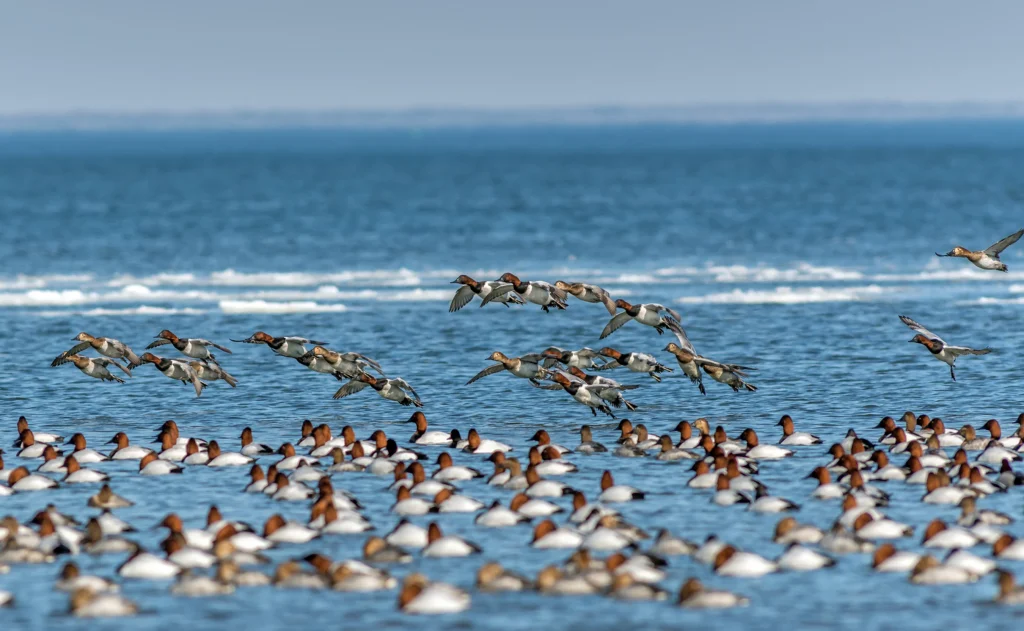
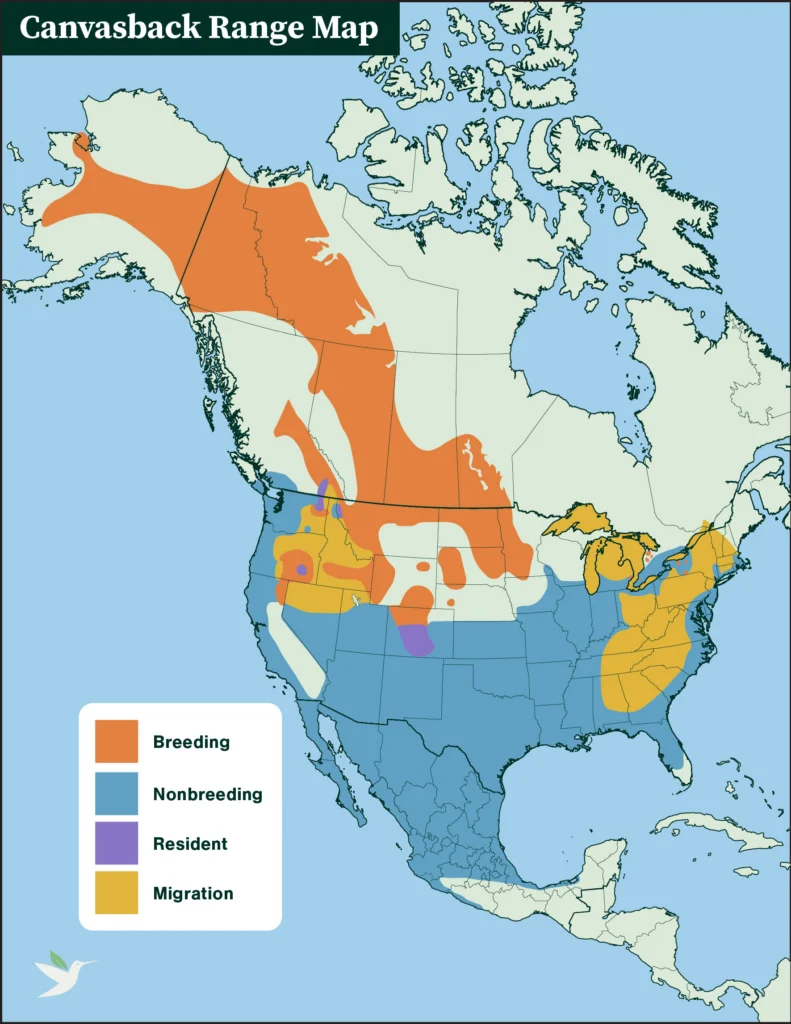
Canvasbacks breed mostly in the Prairie Pothole Region of North America, a rich complex of wetlands and grasslands that stretches over five U.S. states and three Canadian provinces. Each fall, Canvasbacks migrate south along the Mississippi Flyway to wintering grounds in the Mid-Atlantic and the Lower Mississippi Valley. Other Canvasbacks migrate south along the Pacific Flyway to winter along the California coast. From November to March, they are fairly common along the Texas coast as well, and occur patchily at inland lakes across the West, reaching, in small numbers, as far south as central Mexico. There have been some sightings in northern Central America and the Caribbean. Historically, the Chesapeake Bay harbored the majority of wintering Canvasbacks, but the continued loss of submerged aquatic vegetation in the Bay led to declining numbers of Canvasback and other waterfowl there.
Did you know?
Millions of waterfowl breed in the Prairie Pothole Region, earning it the nickname of “America’s duck factory.” Many songbird species, including Sprague’s Pipit and Baird’s Sparrow, also breed in the area’s extensive grasslands.
Life History
The normally gregarious Canvasback becomes monogamous and secretive during its breeding season. Pairs establish and maintain their bond through mutual displaying, although the female makes the final choice of mate. Hens sometimes lay eggs in the nests of other Canvasbacks, and Redhead ducks, well-known brood parasites, often lay their eggs in Canvasback nests. This phenomenon depends on a variety of factors, including habitat and nest site quality and availability, as well as the parasitizing female’s fitness. Ducks do not defend their nesting areas during egg-laying, which makes it easy for another female to sneak in and lay eggs. And since ducklings are precocial — they hatch covered in down and able to move about and feed themselves — the burden on the host hen is not too high.
Diet
Canvasbacks are diving ducks, typically searching out their food to depths of 7 feet while foraging — but they will go as deep as 30 feet! They also may dabble on or just below the water’s surface. Canvasbacks feed during both day and night. During migration and winter, much of their diet consists of the rhizomes (roots) of aquatic plants, particularly wild celery and sago pondweed. Strong-muscled necks and bills allow these ducks to open their bills even under the mud — a helpful adaptation for excavating plant roots. During the breeding season, Canvasbacks switch to eating both plant and animal matter, including aquatic insects and larvae, mollusks, and small fish.
Courtship
Male Canvasbacks typically outnumber females, so females can afford to be choosy about who they pick as their mate. A female typically attracts multiple males, sometimes referred to as “courting parties,” who follow her around, display to her and to each other, and attempt to hold a position beside her. Once a male can consistently accomplish this, the two begin to solidify their bond by synchronizing their activities and displaying together as a pair.
Nesting
Canvasback hens prefer to build their nests over deeper water amidst the protective cover of emergent marsh vegetation such as cattails. The nest itself is a bulky structure of dead reeds and grasses, anchored to the stems of marsh plants and lined with down.
Eggs & Young
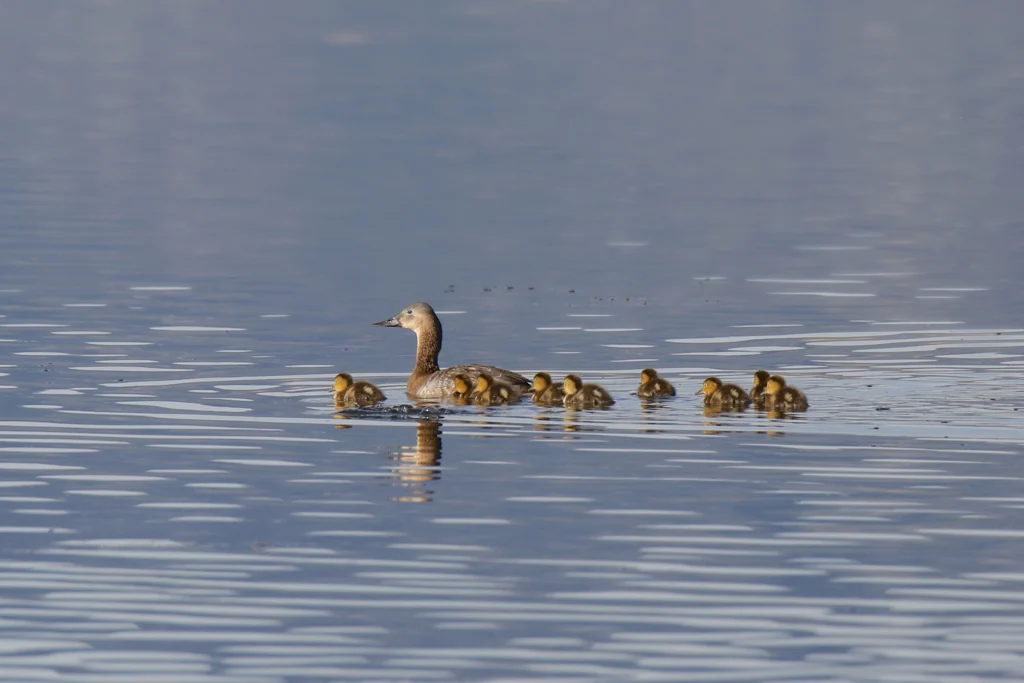
Canvasback clutches are typically between 5 and 11 greenish or buffy colored eggs. While a given nest may contain eggs from other neighboring Canvasbacks, clutch size doesn’t differ much between nests that have been parasitized and those that have not; both average about eight eggs. Females incubate alone for about three weeks while males defend the area near the nest. The young are precocial, and start preening shortly after they hatch. Once they are dry, they are ready for the water, following their mother around to learn the ways of being a duck.