Overview
About
The vibrant colors and soft, musical warbles of the Eastern Bluebird are a welcome sight on a cold, snowy day. Bluebirds have long been considered harbingers of spring, from Mexico to the eastern United States, and their willingness to nest in open, human-modified habitats makes them popular among birders and non-birders alike.
Eastern Bluebird populations plunged in the early 20th century, when non-native House Sparrows and European Starlings were introduced into the United States. Both of these invasive species are also cavity-nesters and much more aggressive than bluebirds, so they quickly took over suitable nest cavities and habitats.
Fortunately, concerned citizens stepped in to halt bluebird declines. Organizations such as the North American Bluebird Society and Sialis have been instrumental in encouraging bluebird conservation through education, promotion of artificial nest boxes, and establishment of bluebird nest box trails, which are protected and monitored by a network of volunteers.

Threats
While Eastern Bluebird populations are healthy and increasing, this species still faces numerous threats. Birds living in developed areas, whether agricultural or urban, are at higher risk from pesticides as well as predation from outdoor cats.
Pesticide Poisoning
Eastern Bluebirds are common in agricultural areas, which provide them with their ideal foraging habitat, as well as convenient perches in the form of fences, from which they fly to the ground to capture their insect prey. However, insects are often poisoned with pesticides, which Eastern Bluebirds end up consuming and feeding to their young.
Predation by Outdoor Cats
Outdoor cats are one of the leading human-caused drivers of bird population declines. Cats kill billions of birds each year, and species like the Eastern Bluebird that live near humans are especially vulnerable.
Conservation Strategies & Practices
Birds need our help to overcome the threats they face. At ABC, we’re inspired by the wonder of birds and driven by our responsibility to find solutions to meet their greatest challenges. We work to protect the Eastern Bluebird and other species from the effects of pesticides, particularly lethal varieties such as chlorpyrifos and neonicotinoids. Other ABC programs, including Cats Indoors and Collisions, recommend measures to benefit bluebirds and many other bird species.
Avoid Pesticides & Toxins
ABC works with partners at the state and federal levels in the U.S. to call for the regulation or cancellation of the pesticides and toxins most harmful to birds. We develop innovative programs, like working directly with farmers to use neonicotinoid coating-free seeds, advancing research into pesticides’ toll on birds, and encouraging millions to pass on using harmful pesticides.
Keep Cats Indoors
Cats make wonderful companions, but they’re safest (and bluebirds are, too) when they’re kept indoors or under the control of their owners. ABC advocates for responsible cat ownership, encouraging millions of pet owners to take steps to keep their cats contained and advocating for policies that benefit birds, cats, and human health.
Bird Gallery
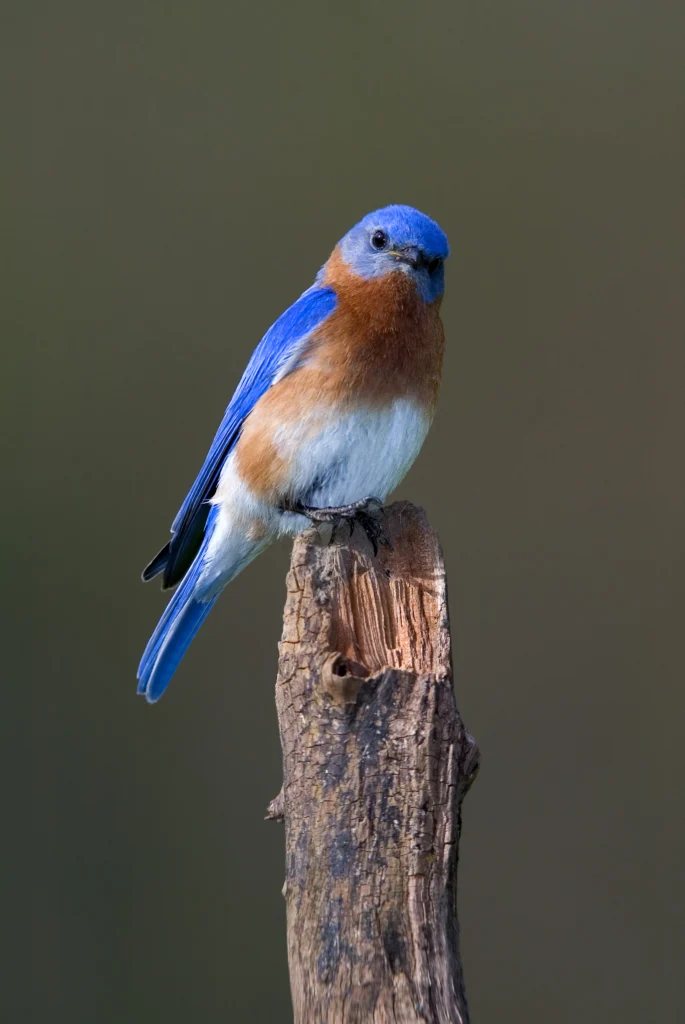
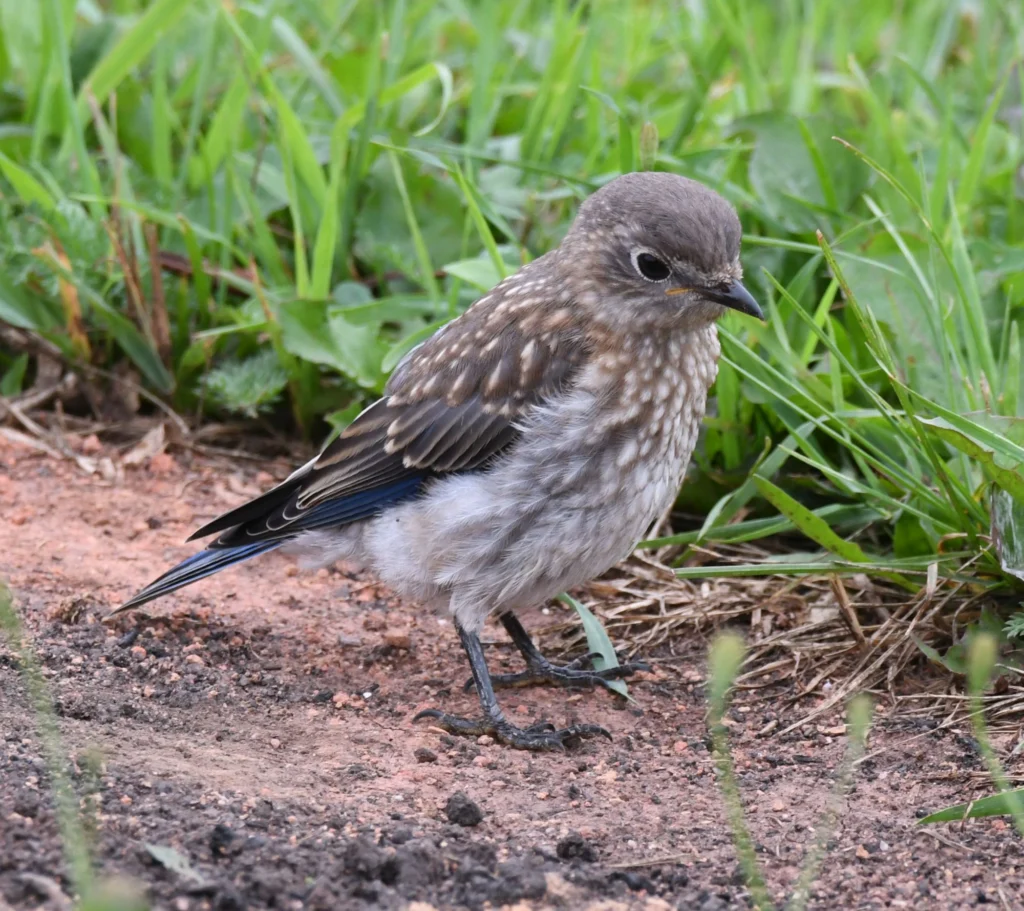
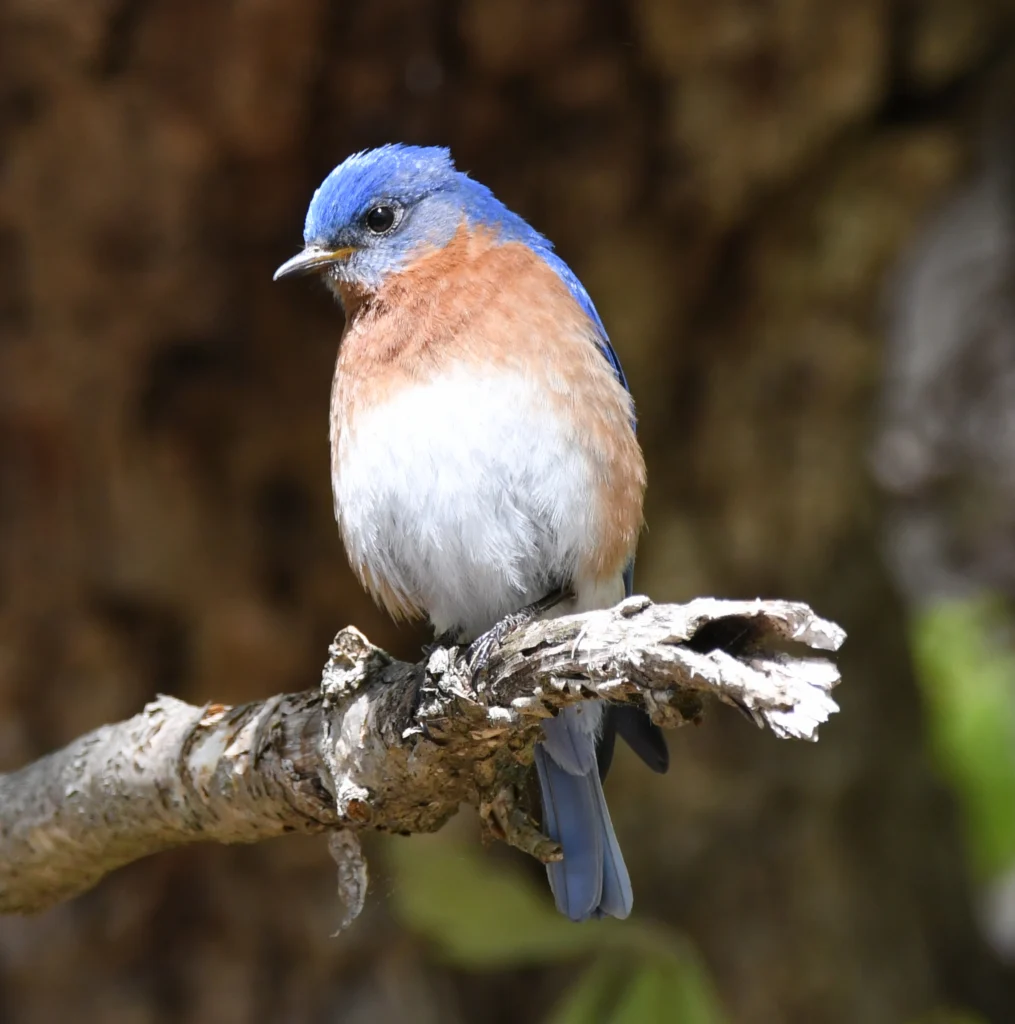
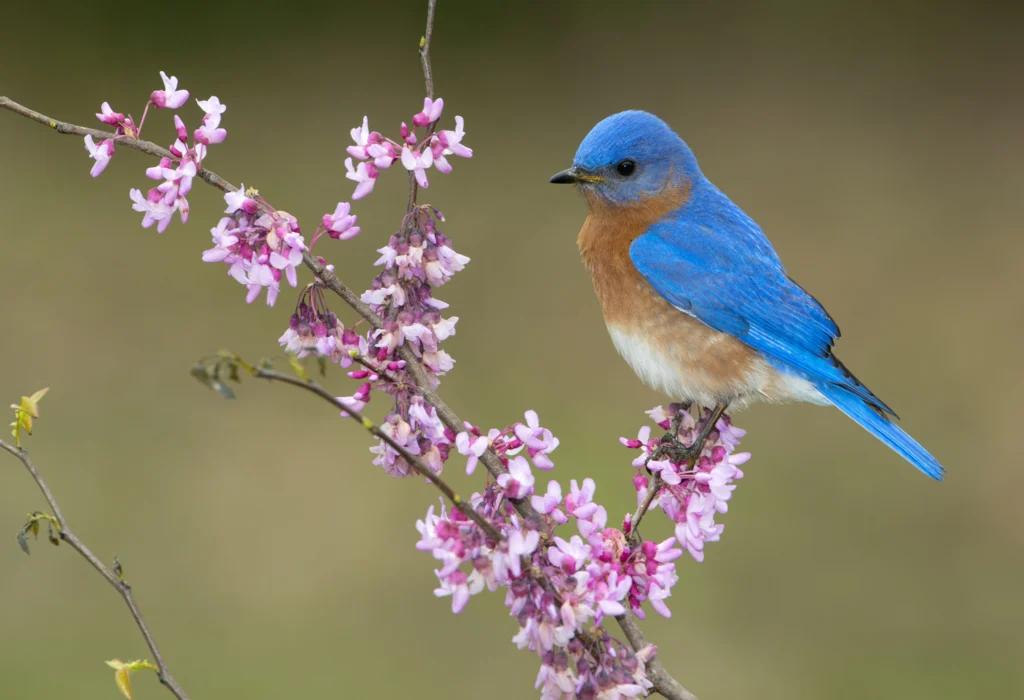
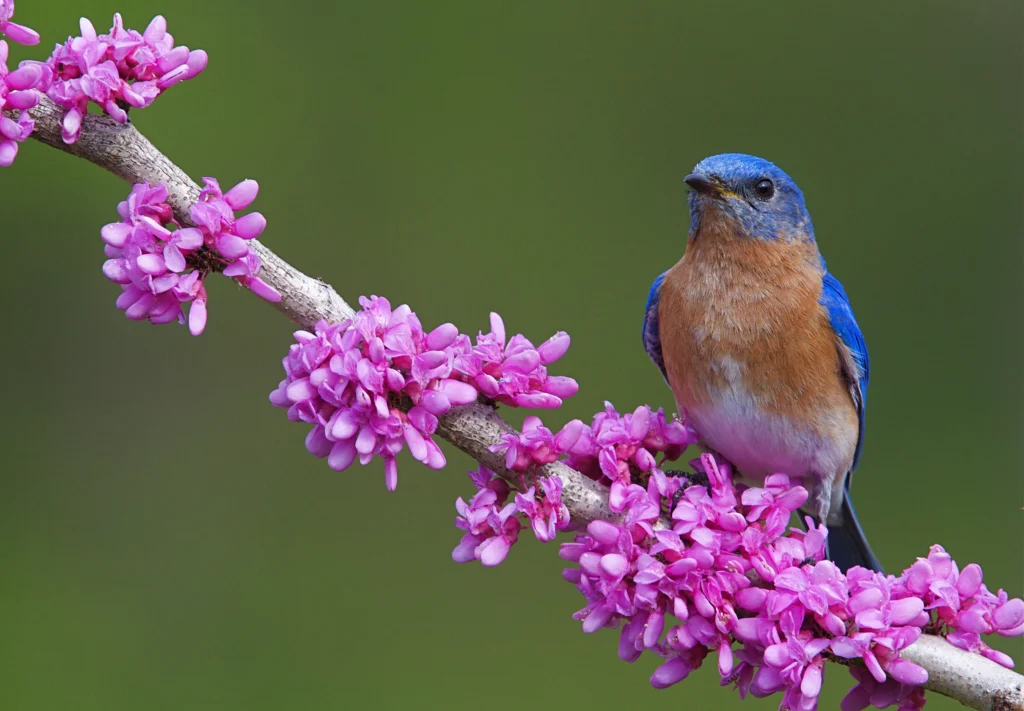
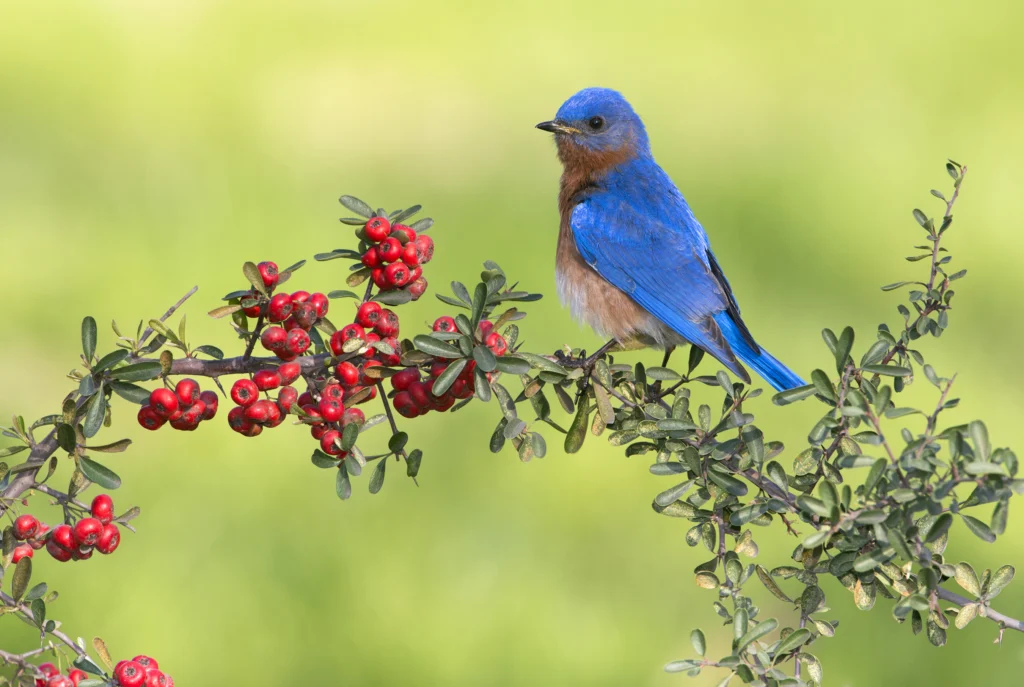
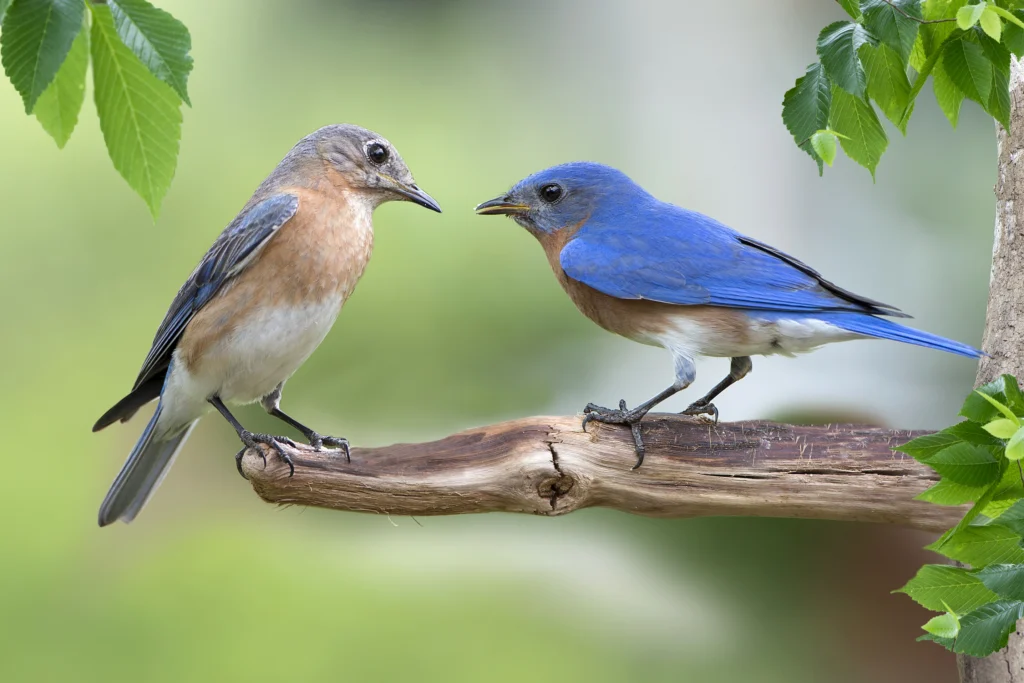
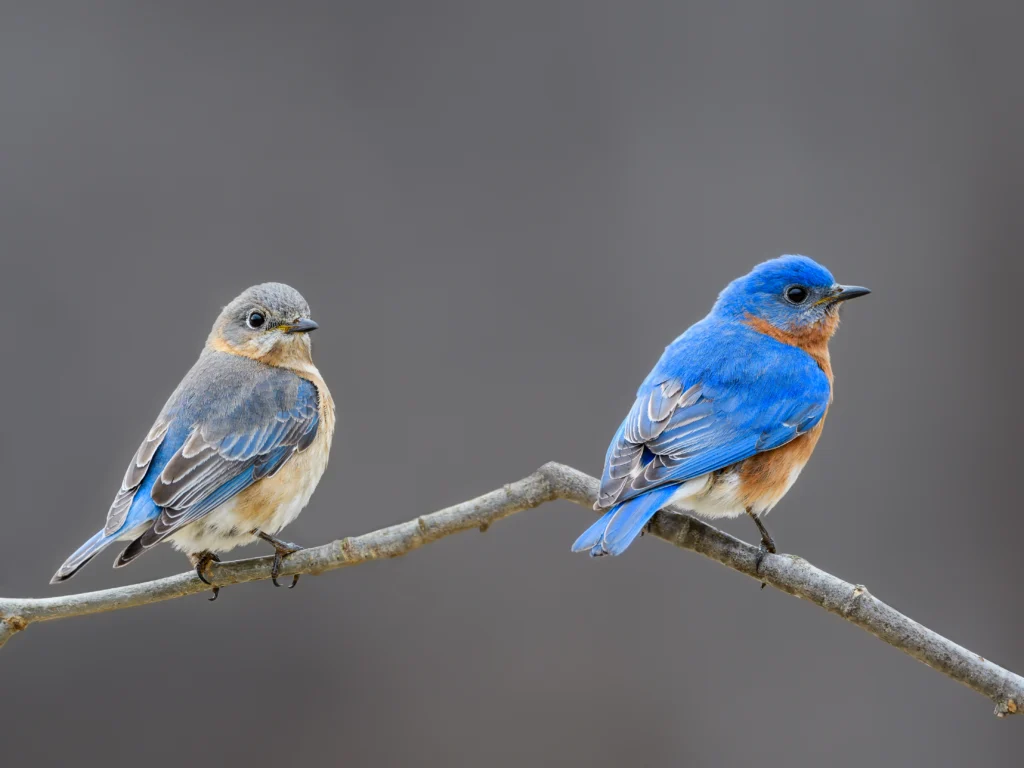
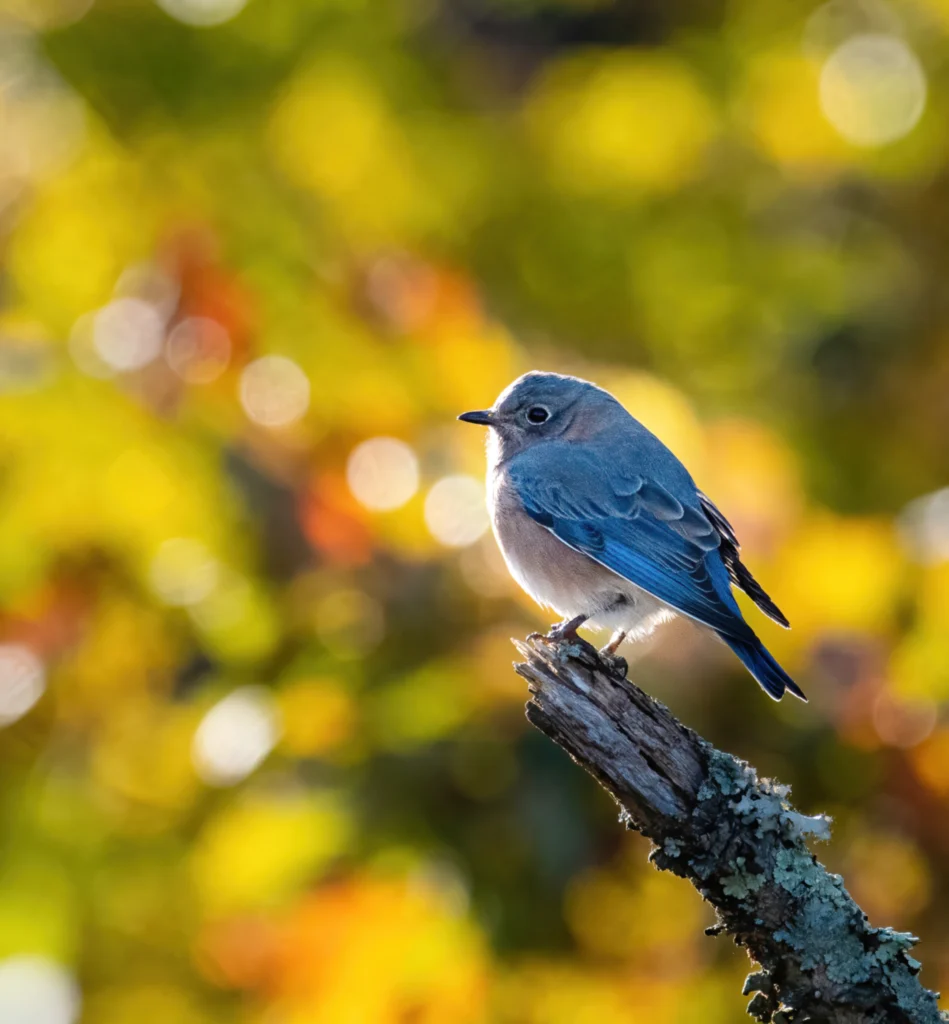
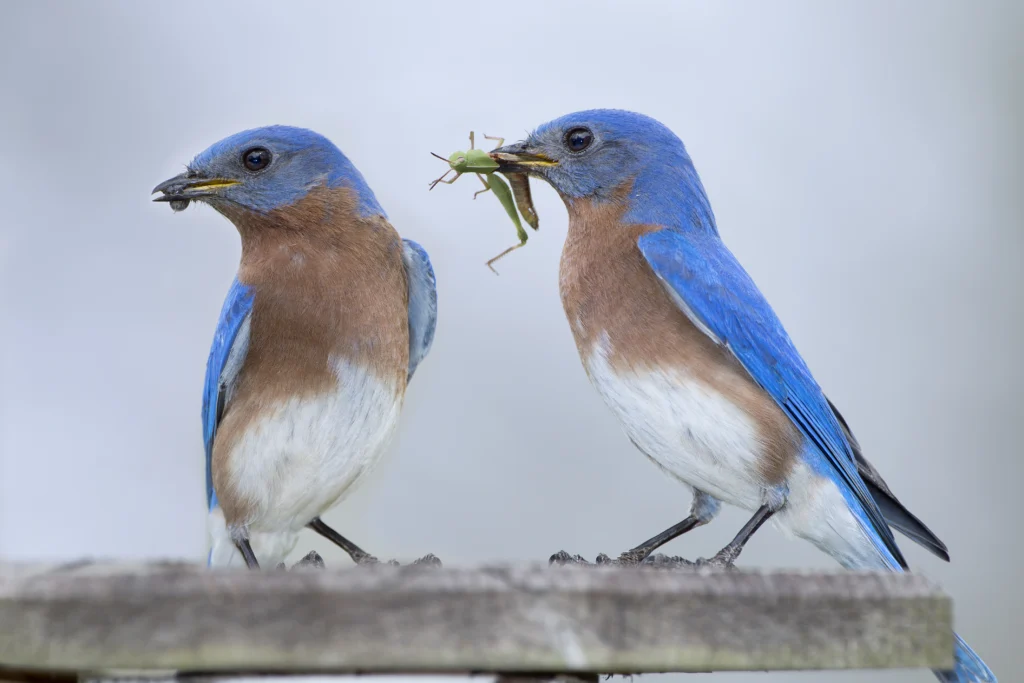
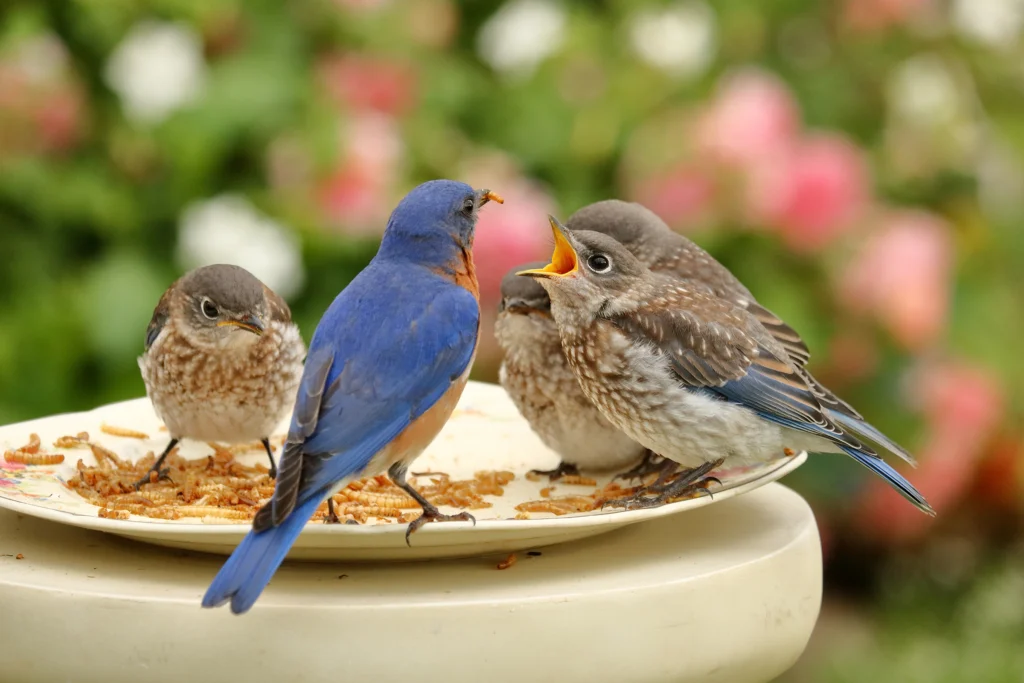
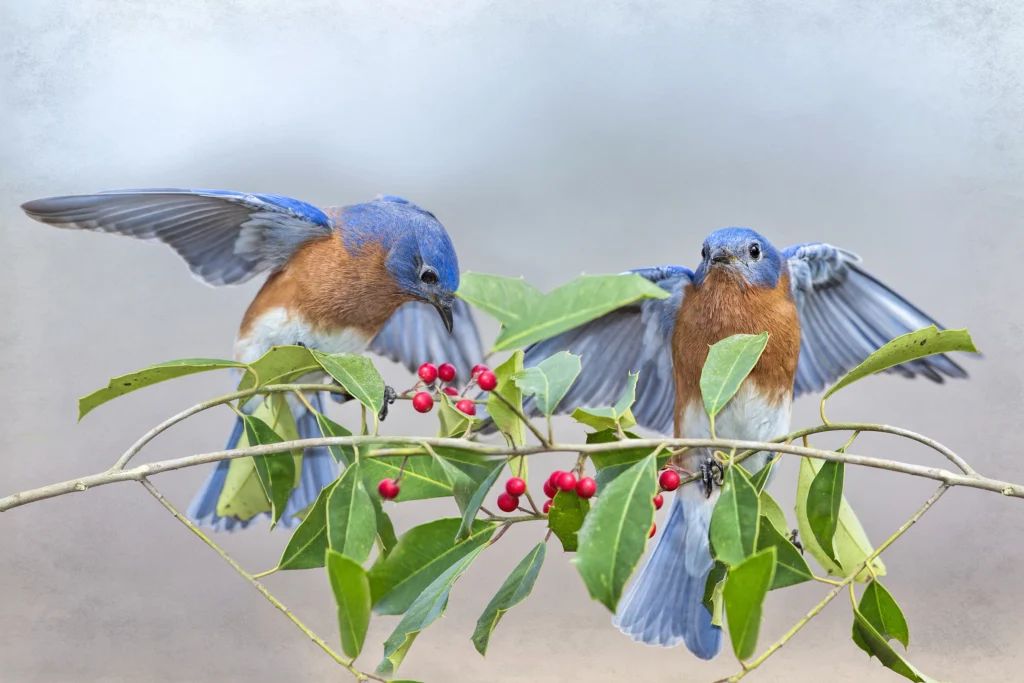
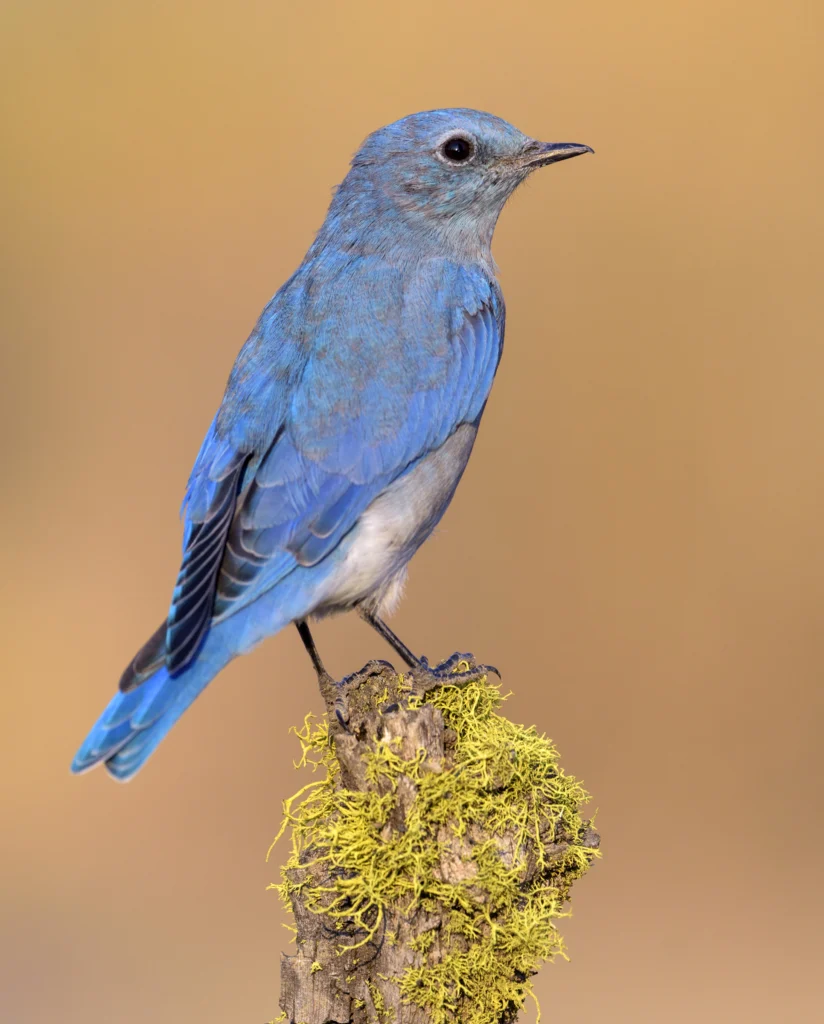
With a limited palette of rufous, white, and stunning sky blue, the Eastern Bluebird is beautiful and iconic. Males are a bright, almost glowing shade of blue above, owing to the microstructures on the surfaces of their feathers that filter incoming light and selectively reflect only a narrow bandwidth of the most brilliant blue. The male’s throat, breast, and flanks are a rusty orange-brown, and the rest of the underparts are white. Females are largely gray above, but the tail, wings, and rump match the breathtaking blue of the male. The patterning on the female’s underparts is similar, but the throat may be white and the rufous breast and sides are usually a subtler peach hue. In the southern portions of their range where Eastern Bluebirds may overlap with their cousins, the Western Bluebirds, Easterns can be differentiated by their rufous or white throats, white bellies, and gray or blue backs.
Sounds
Somewhat unusual among songbirds in the Northern Hemisphere, both male and female Eastern Bluebirds sing. Song has not been extensively studied in this species, but singing behavior can be broken into three general categories depending on performance and context. Loud Song predominates early in the breeding season, and serves the typical functions of birdsong: to attract females and establish territories. Soft Song is much quieter, and given between paired birds close together, such as when a male perches outside the nest cavity while the female is laying. The Predator, Alarm, or Anger Song is similar to Loud Song, but is interspersed with harsh call notes. Anger Songs are usually given when a mammalian predator is on the territory. Eastern Bluebirds also give a variety of simpler calls in different contexts, some soft and musical, some loud and harsh. The Chatter Call is given in mild alarm, and is composed of a series of sharp, harsher notes similar to those included in the Loud Song.
Credit: Michael Hurben, XC844282. Accessible at www.xeno-canto.org/844282.
Credit: Stanislas Wroza, XC1014698. Accessible at www.xeno-canto.org/1014698.
Credit: Christopher McPherson, XC608740. Accessible at www.xeno-canto.org/608740.
Habitat
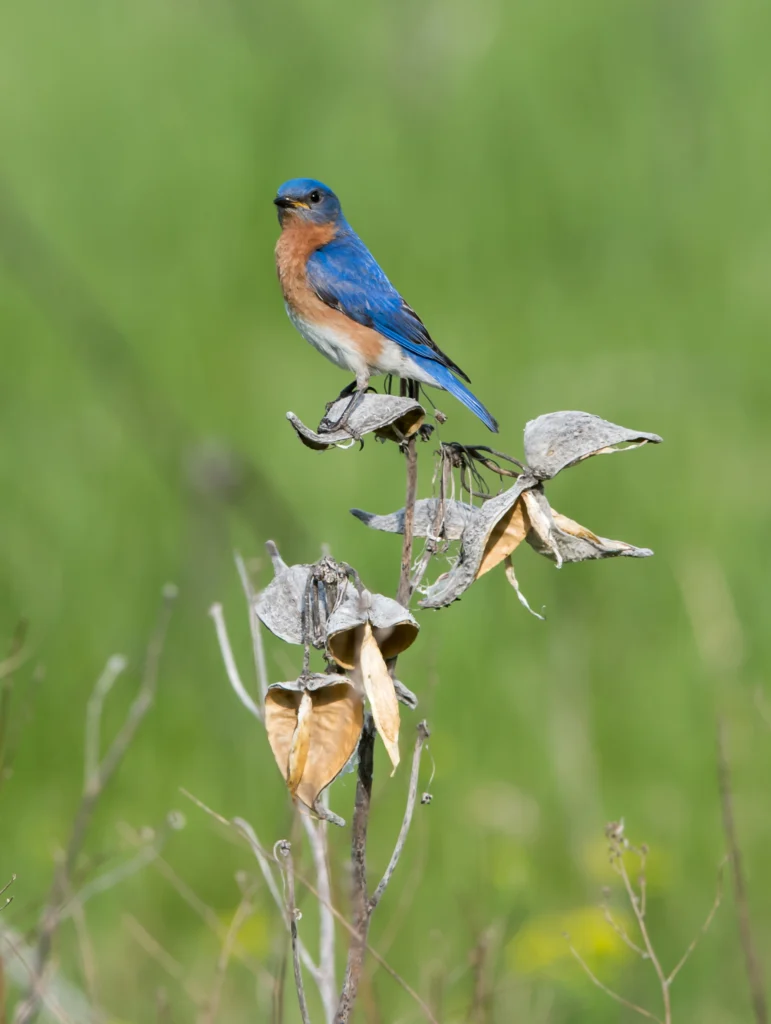
The Eastern Bluebird forages in open habitat near trees, such as savannas and forest clearings, as well as pastures, parks, golf courses, and backyards. Though this species probably occupied a wide range of habitats before colonization, they have adapted well to large-scale agriculture and development, especially where nest boxes are provided.
- Open canopy with little understory and ground cover
- Ancestral habitats probably included burned forests, exposed hilltops, and beaver ponds
- In nonbreeding season, birds often use habitat corridors as well
Range & Region
Specific Area
Mexico, northern Central America, eastern United States, southeastern Canada
Range Detail
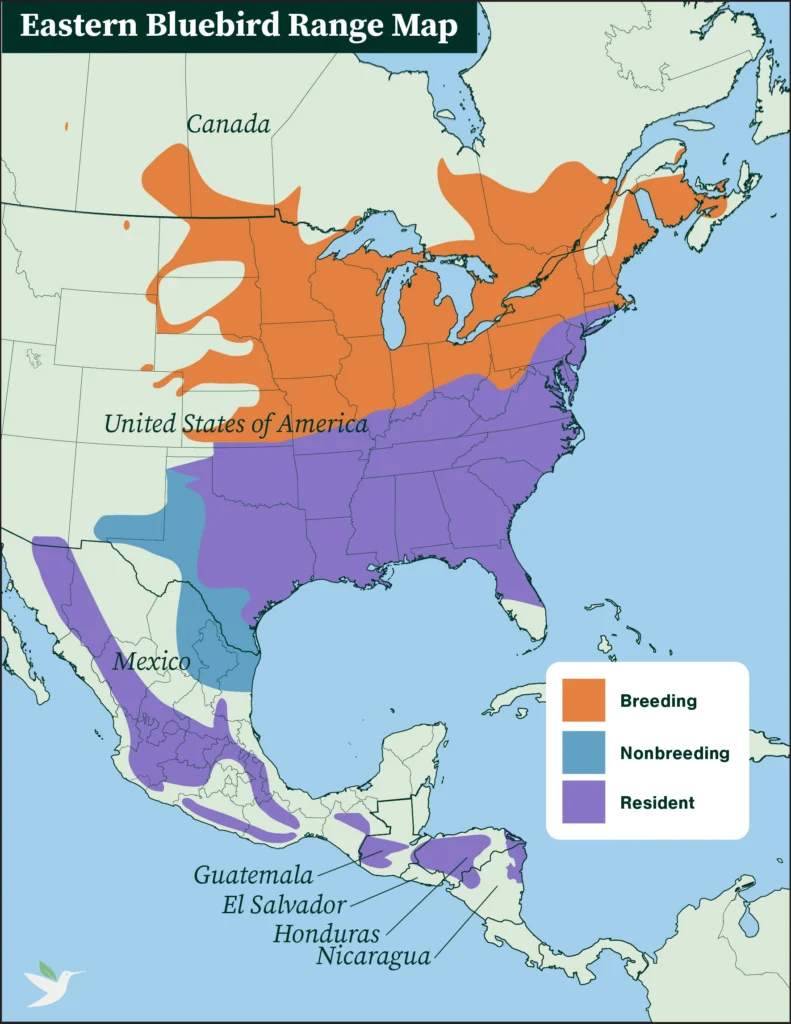
The Eastern Bluebird has the largest range of the three bluebird species, covering the eastern half of the U.S., southeastern Canada, and portions of Mexico south to Nicaragua. In the U.S., the Eastern Bluebird’s range extends to eastern Colorado. Those in the northern portion of the range migrate south following the breeding season.
Did you know?
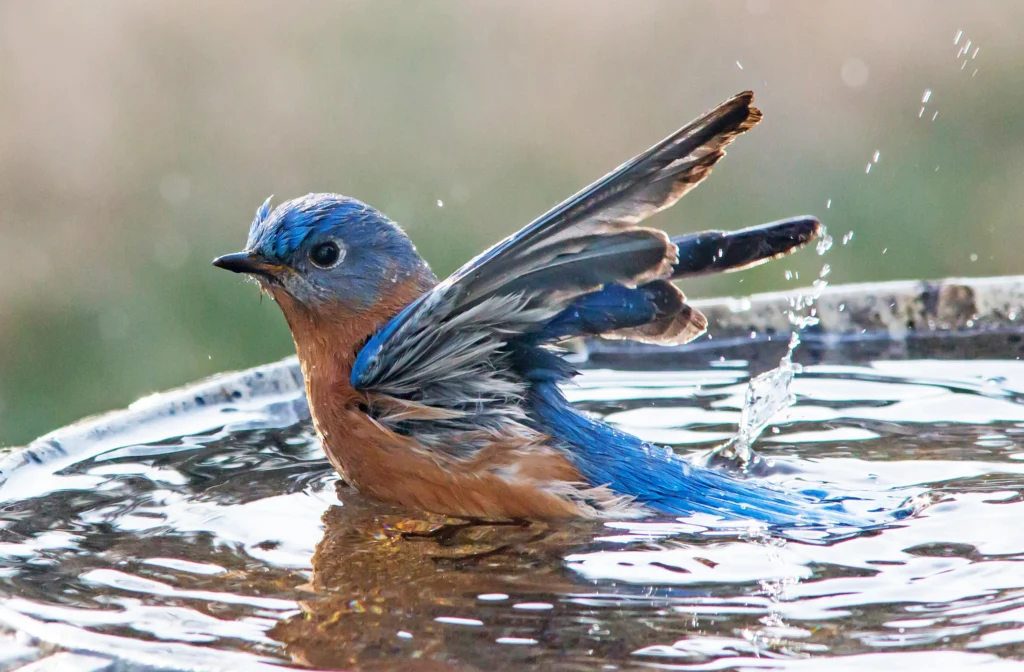
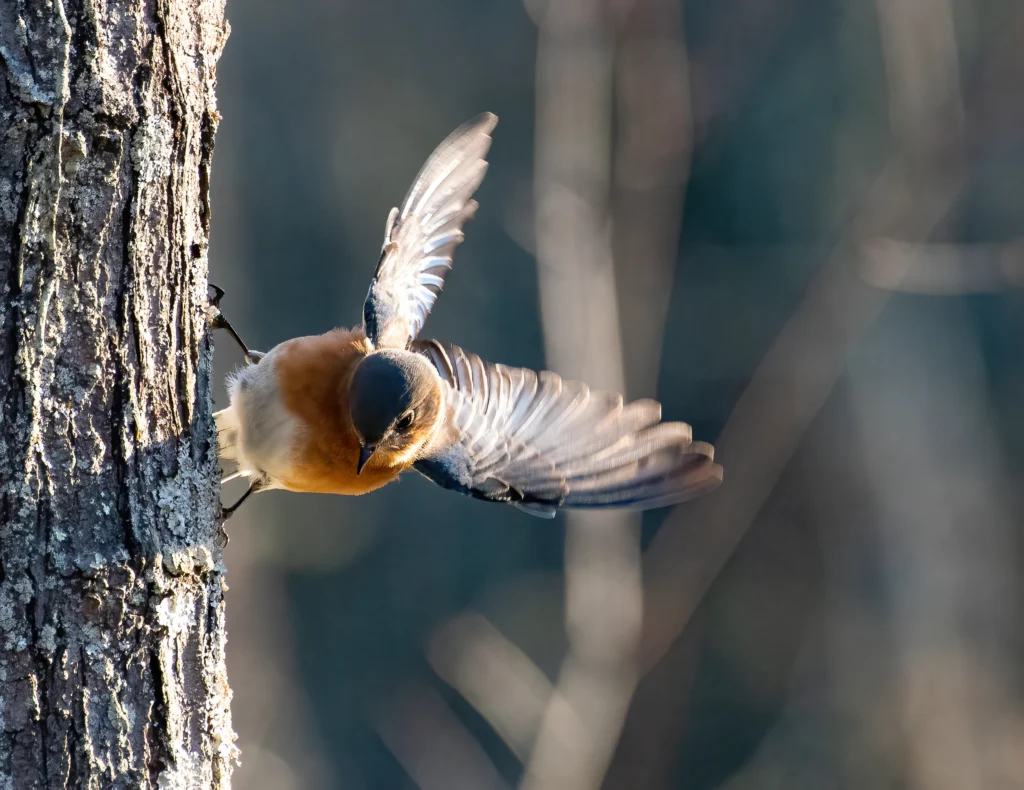
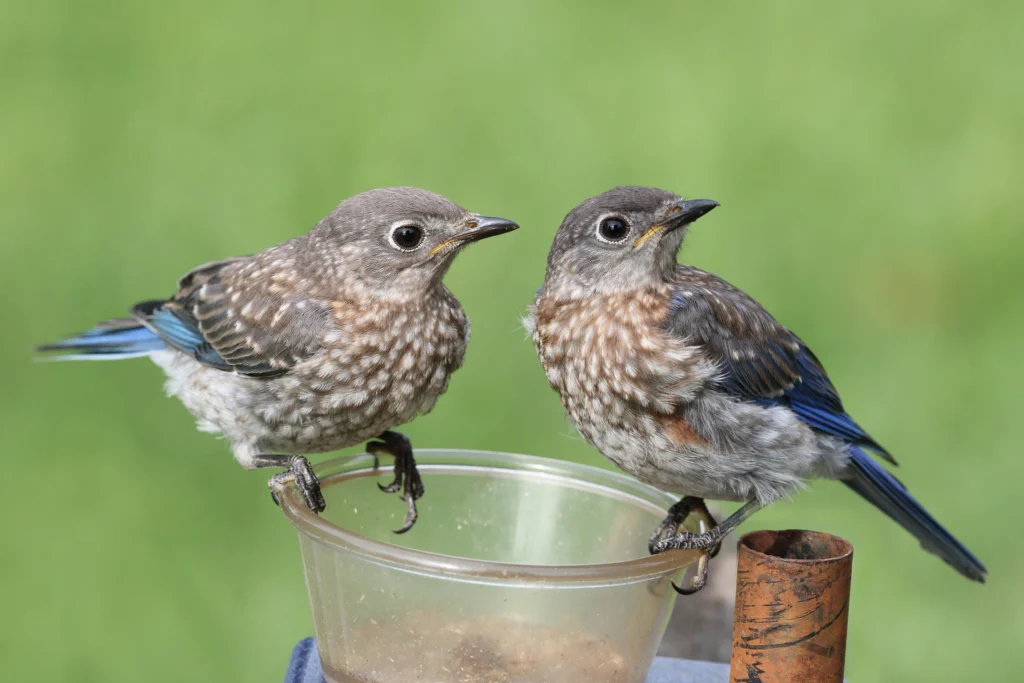
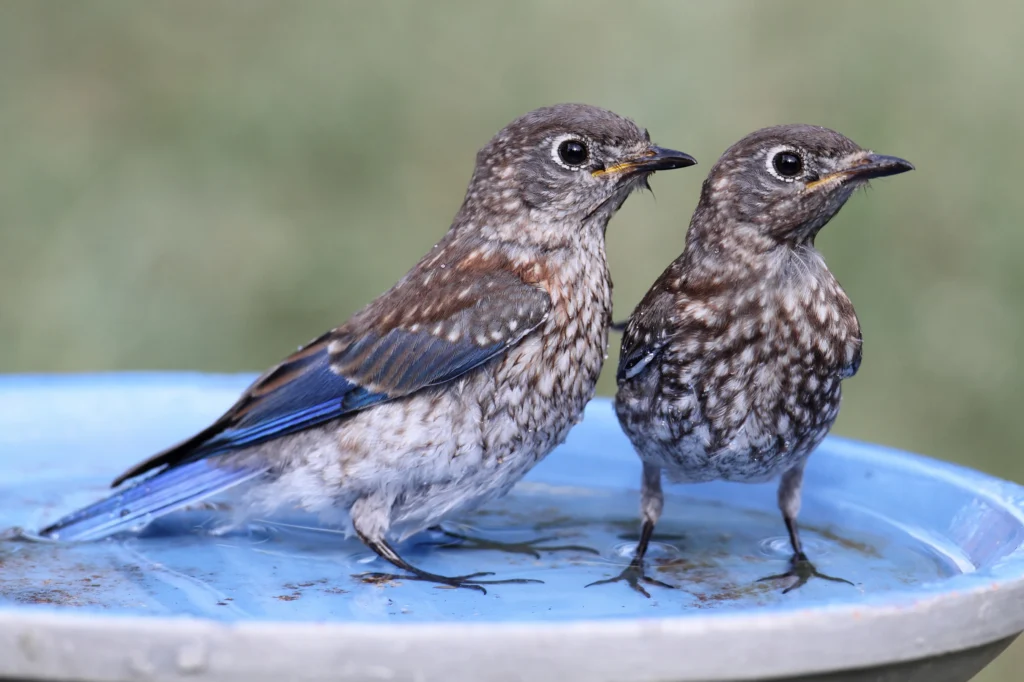
If young Eastern Bluebirds fledge or are startled out of the nest a few days before they can fly, they are able to climb into a tree for safety. Similarly, bathing adults that are completely drenched will climb into trees if they are too soaked to fly!
Life History
With their vibrant colors, buoyant songs, and active foraging style, Eastern Bluebirds are often thought of as sweet, cute, or joyful. Their courtship and pair behavior is often highly visible, giving a sense of congeniality, as well. However, these lovely little thrushes can also be shockingly aggressive, frequently attacking and occasionally even killing each other in disputes over territory, mates, and nesting cavities. They will also vigorously defend against other species that might try to usurp a hard-won nest site. Indeed, nest cavities are in high demand — a good reason to leave dead trees standing whenever possible!
Diet
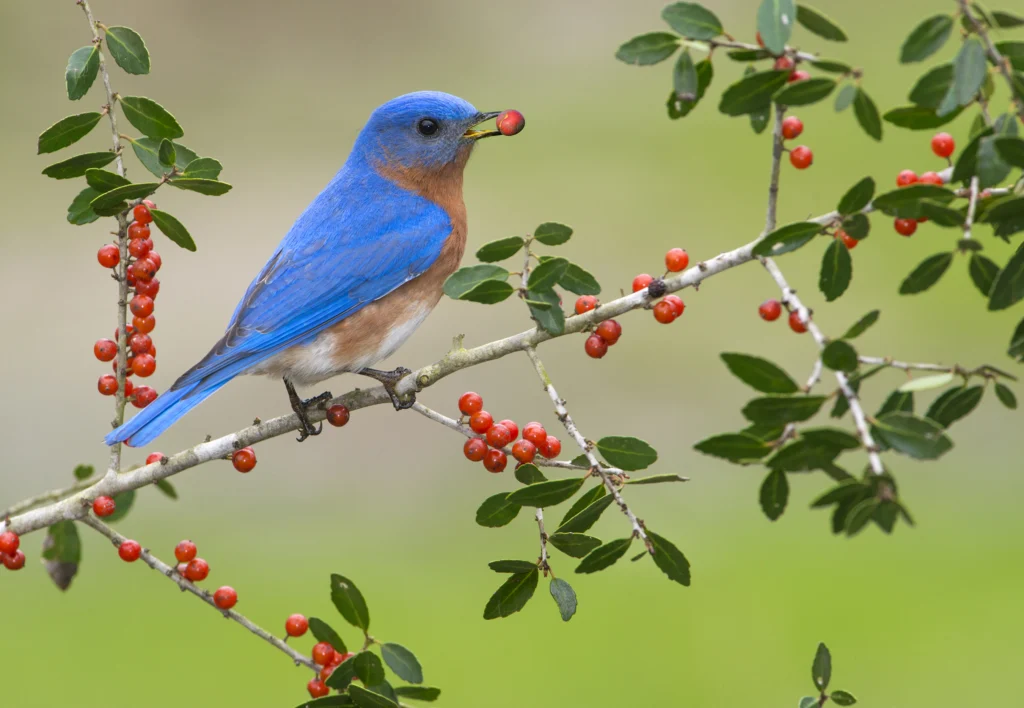
The Eastern Bluebird’s diet is made up of insects such as crickets, grasshoppers, and beetles, as well as fruit, especially during the winter. The birds hunt for insect prey using a “sit and wait” strategy, similar to flycatchers like the Black Phoebe. Once a bluebird spots prey, it drops down from its perch to snatch it from the air or the ground. Bluebirds also love mealworms, sunflower seeds, and suet, and will readily visit feeders for them.
Courtship
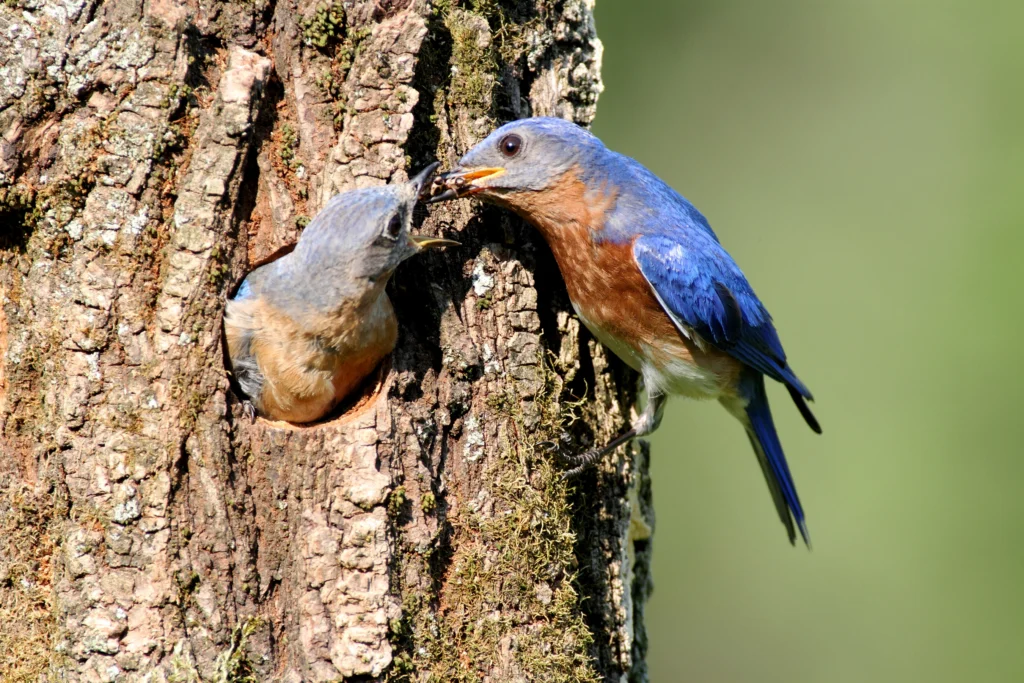
Male Eastern Bluebirds attract a female by advertising a cavity on their territory. He does this by taking nesting material to a potential nest site and carrying it in and out of the cavity, then perching above the cavity and waving his wings. In some populations, males also feed their mates frequently, even before females begin incubating.
Nesting
The Eastern Bluebird, like the Mountain Chickadee and Red-faced Parrot, is a “secondary” cavity-nesting species. Since their beaks and feet are not strong enough to dig out nesting holes, they simply reuse cavities created by bigger birds such as woodpeckers. Bluebirds will also accept artificial nest boxes, a habit which was instrumental in rescuing the species. Within the cavity, the female builds a nest of grasses, pine needles, hair, and other soft materials.
Eggs & Young
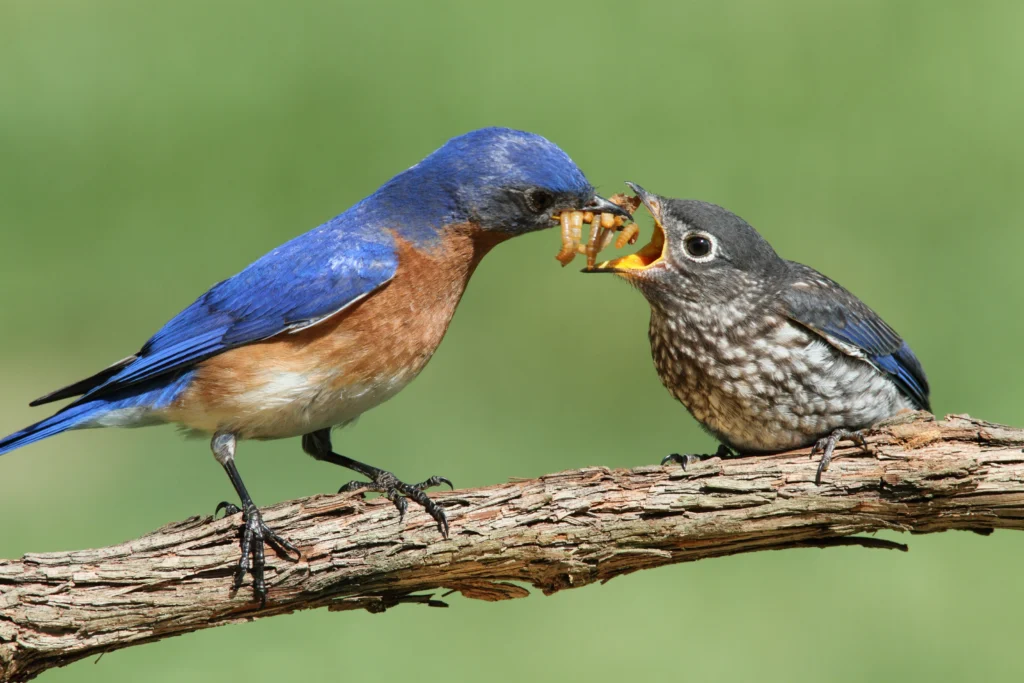
Clutch sizes are variable, with females typically laying between two and seven pale blue eggs. Bluebirds usually raise two broods per season. The female incubates alone, but both male and female feed the nestlings. Occasionally, the adults are assisted by a son from the previous year.