A Look Inside the Nest: Male Birds and Parenting
Male bird parents run the gamut, too, and sometimes defy expectations. In the bird world, some male parents contribute only genetics to the next generation, as is the case with male hummingbirds.
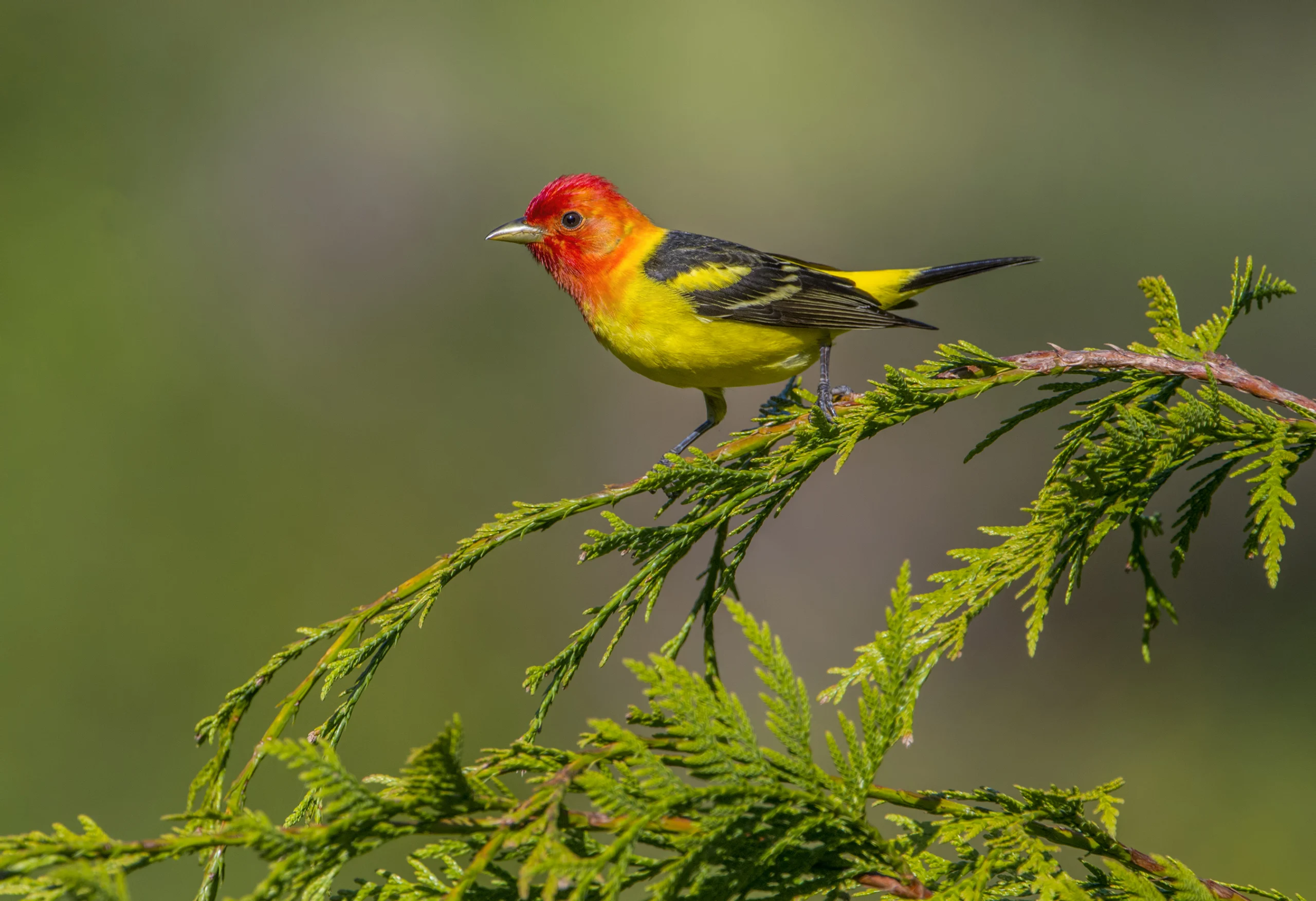
Although only four tanager species are found in the United States, these birds hold a special place in the hearts of many thanks to their dazzling plumage. Given these vivid colors and the fact that most U.S. tanagers occur here only seasonally, it may come as no surprise that these are warm-weather birds. With the exception of the Hepatic Tanager, which maintains a small year-round toehold in southern Arizona, all retreat to Mexico, Central America, or South America during the winter months.
While none of our tanagers can claim a coast-to-coast breeding range in the U.S., several occupy large regions and, taken as a whole, one tanager or another can be found throughout most of the continental U.S. Seeing them, however, isn’t always easy. Even the most brilliantly colored of the group, the Scarlet Tanager, can be elusive given its preference for high forest canopies.
Despite the name, tanagers found in the U.S. aren’t really tanagers — at least not scientifically speaking. Based on DNA analysis, scientists recently placed members of the Piranga genus (including the species listed here) in the Cardinalidae family. These tanagers, it turns out, have more in common with cardinals than with true tanagers (Thraupidae), which inhabit the tropics.
Even though the Cardinalidae and Thraupidae families descend from different branches of the avian family tree, they share several similarities. The first is ecology. Several species in both groups have evolved to occupy similar ecological roles. More evident to casual observers, though, are their flashy colors.
Tanagers in the Cardinalidae family are medium-sized songbirds with several key traits. All sport bright red, orange, or yellow plumage. They like to stay high up in the treetops. They are less social than many other birds, even on their breeding grounds, and they are mainly insectivores, picking insects off leaves or snatching them in mid-flight.
The alphabetical list below includes all tanagers that breed regularly in the U.S. and Canada. For this reason, we excluded the Flame-colored Tanager from Mexico and Central America, which appears in the U.S. only rarely. The Partners in Flight population and conservation data we use are exclusive to the U.S. and Canada and do not reflect global numbers.
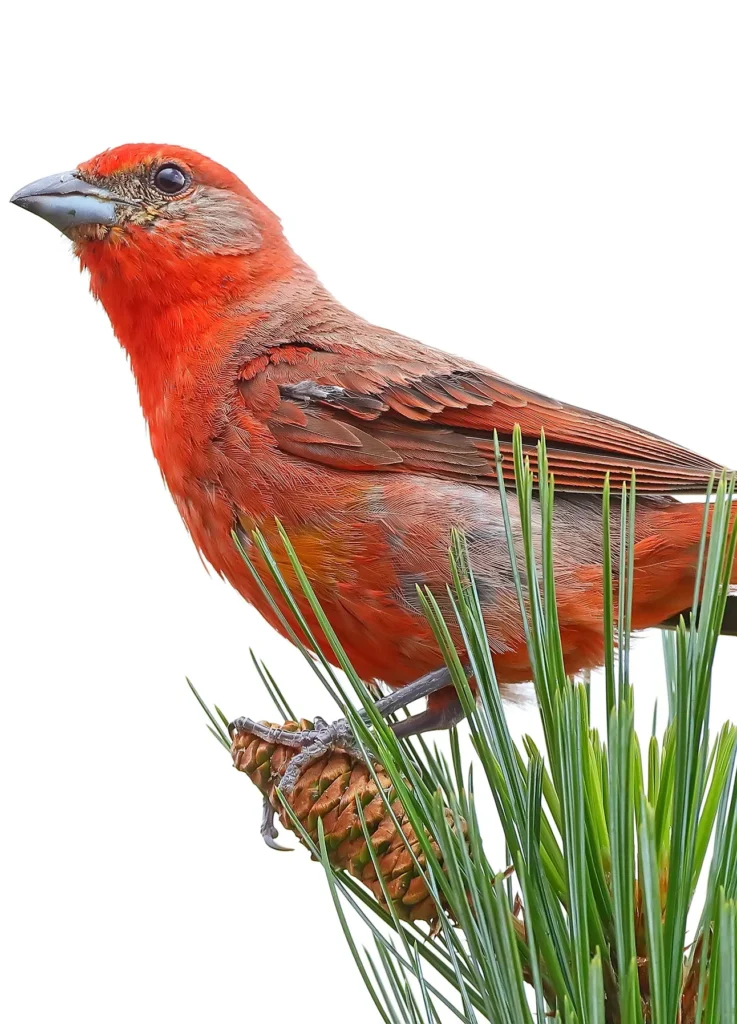
U.S. Population Estimate: 410,000
Population Trend: Increasing
Habitat: Pine-oak forest
Major threat: Habitat loss
After spending the nonbreeding season south of the border, U.S.-breeding Hepatic Tanagers migrate north each spring to breed in the mountains throughout the Southwest. A small resident population is found year-round in southern Arizona, and the species is resident in Mexico, Central America, and South America. Although populations are on the rise, Hepatic Tanagers have been negatively impacted by fire, drought, and deforestation in parts of their range.
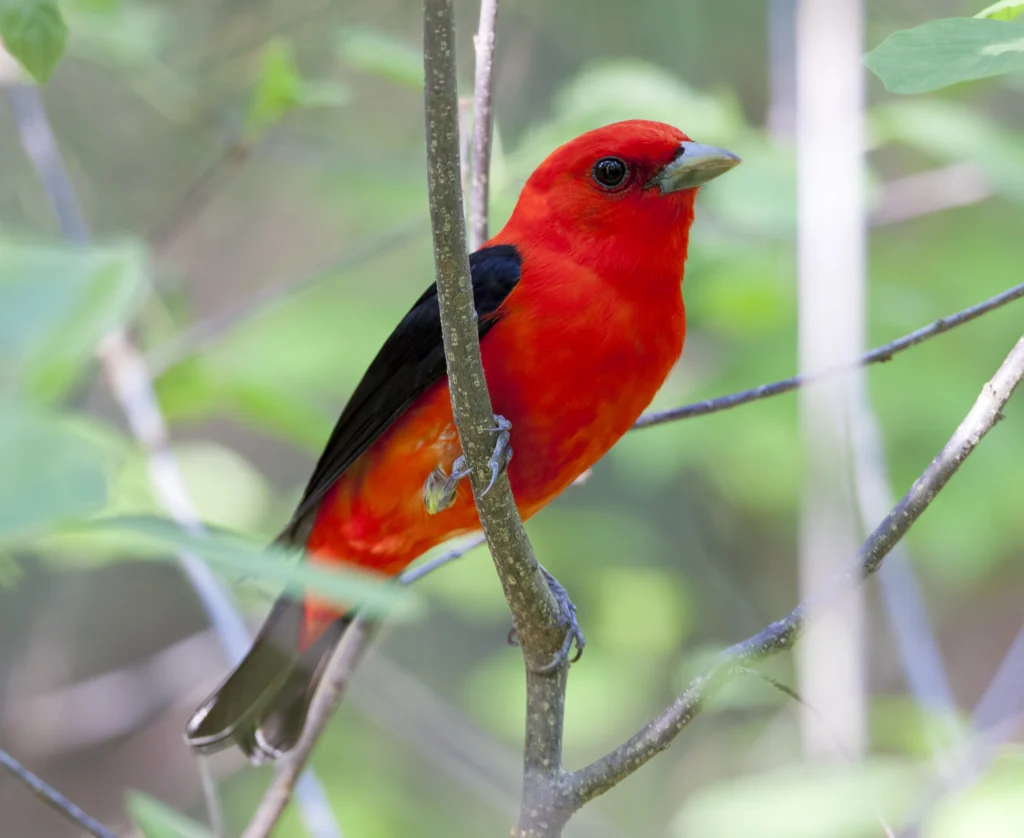
U.S./Canada Population Estimate: 2,600,000
Population Trend: Stable
Habitat: Eastern forests
Major threat: Habitat loss
Scarlet Tanagers are long-distance migratory birds, traveling from South America to their breeding grounds in the eastern U.S. and southeastern Canada. Over the last 50 years, populations have declined by 7 percent due to forest fragmentation and loss. Habitat fragmentation exposes Scarlet Tanager nests to brood parasites (cowbirds) and predators.
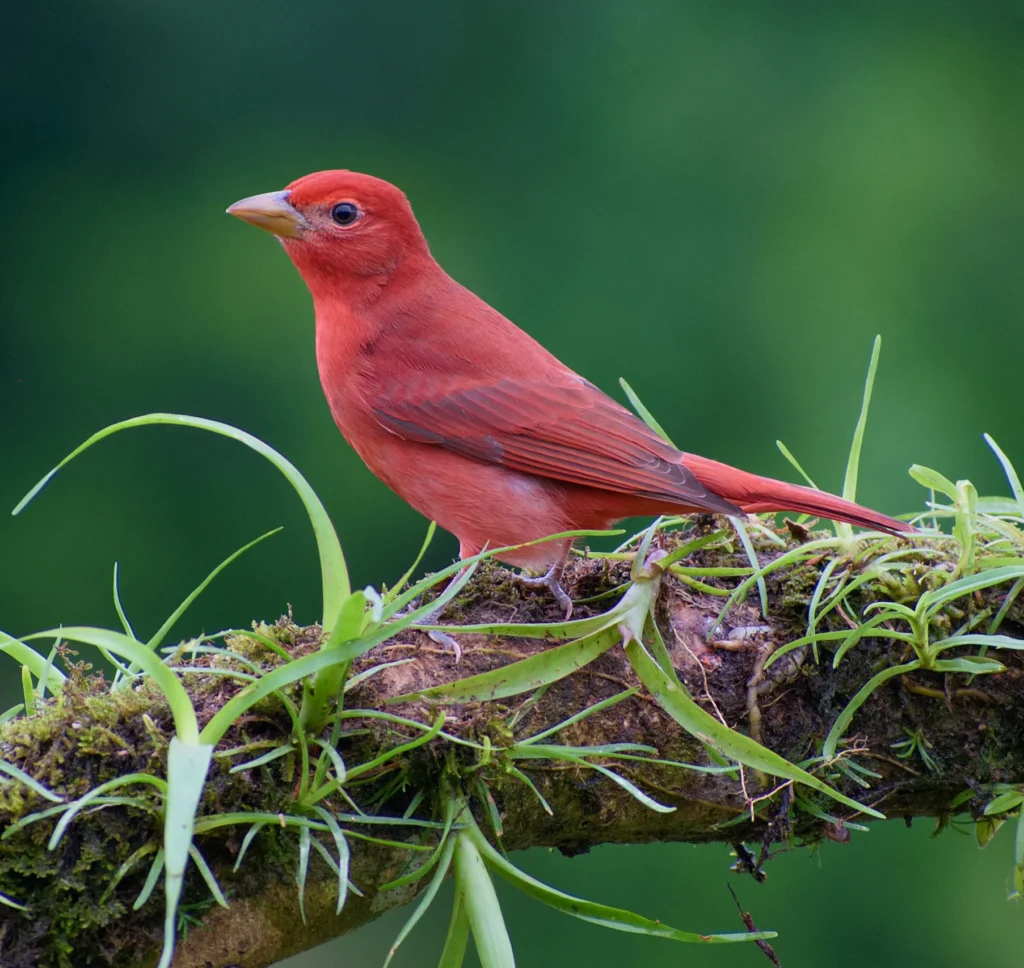
U.S. Population Estimate: 11,000,000
Population Trend: Increasing
Habitat: Eastern forests and southwestern riparian areas
Major threat: Habitat loss
A long-distance migrant, during summer months, the Summer Tanager is found widely throughout the southern U.S., reaching as far north as Ohio and Pennsylvania and as far west as southern California. Localized declines have occurred in areas where riverside forests have been converted to agricultural and other uses.
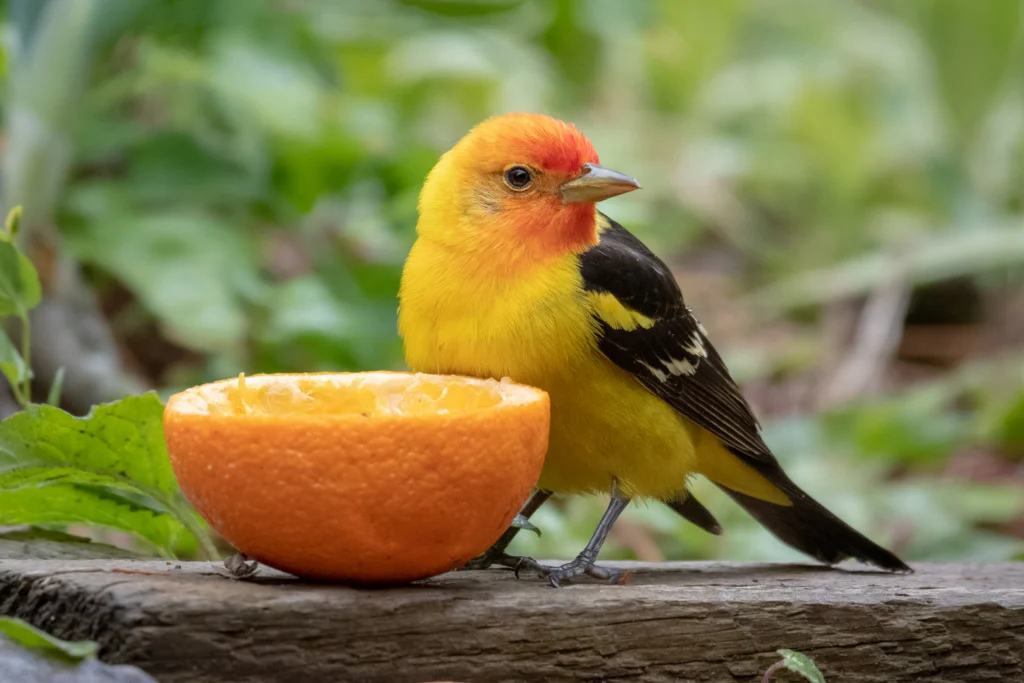
U.S./Canada Population Estimate: 15,000,000
Population Trend: Increasing
Habitat: Western forests
Major threat: Mismanagement of Douglas-fir habitat
From their nonbreeding grounds in Mexico and Central America, Western Tanagers migrate north, occupying a broad swath of the western U.S. and Canada, from Arizona to the Northwest Territories. Because Western Tanagers prefer open habitat and edges, they have been less impacted by deforestation than other birds. However, they have a close relationship with Douglas Fir forests and will be impacted by the future management of these trees.
Most tanagers, like other Neotropical migratory species, benefit from the conservation and restoration of large forested areas on their North American breeding grounds. Conservation of sufficient forest habitat along major migratory corridors and on wintering grounds is another high-priority management strategy.
ABC and its regional partners in the United States, the Migratory Bird Joint Ventures, manage upwards of 9.9 million acres for birds, including both public and private lands. Several of these joint ventures, such as the Appalachian Mountains Joint Venture, are responsible for ongoing habitat conservation projects that directly benefit breeding tanagers in the U.S.
Working with partners throughout Latin America, ABC has helped to establish a network of bird reserves that spans more than 1.3 million acres in 15 countries. These reserves protect remaining habitat for rare tropical birds as well as critical wintering grounds for migratory species, including several of the tanagers listed above. Keeping this reserve network strong and growing is a major undertaking, and you can help by making a gift today.
If you enjoy coffee, you can support bird conservation efforts by buying certified bird-friendly coffee, which is grown on farms that meet several stringent criteria and provide wintering habitat for tanagers and other migratory species. For example, Colombia’s Cerulean Warbler Reserve, which was created with ABC support, includes a 37-acre shade-grown coffee plantation that helps cover the reserve’s operating costs.
Featured News & Stories

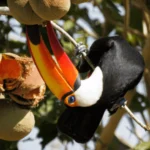
What is a bird beak? Is it just a funny-looking version of a nose, or is it something else entirely? Birds use their beaks for a wide variety of functions, including communication and defense, as well as eating. These amazing appendages might seem simple, but they hold plenty of surprises. If you...