Canadian Rockies in Lake View. Photo by Timm Stein, Pexels.

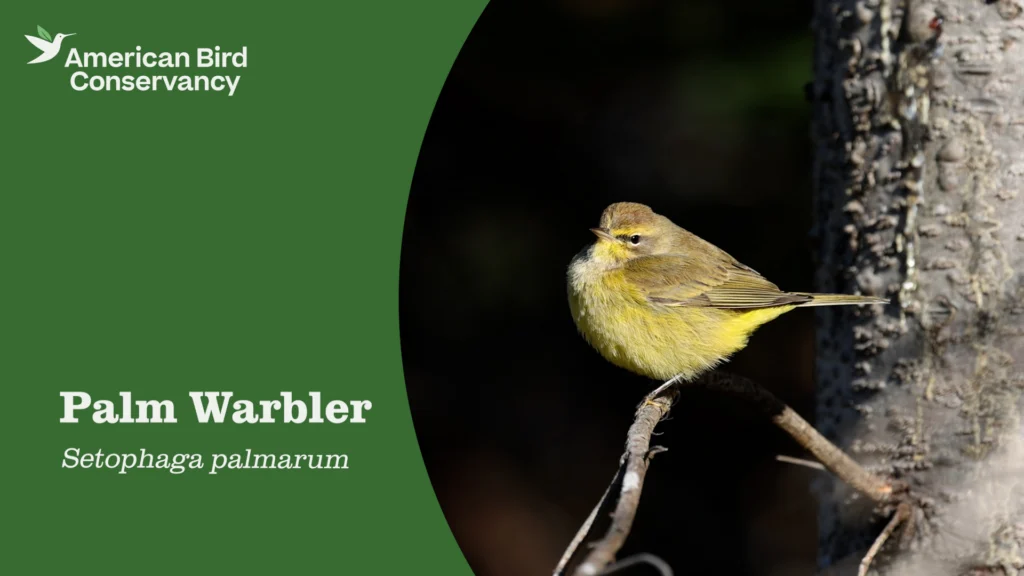
Palm Warbler

Setophaga palmarum

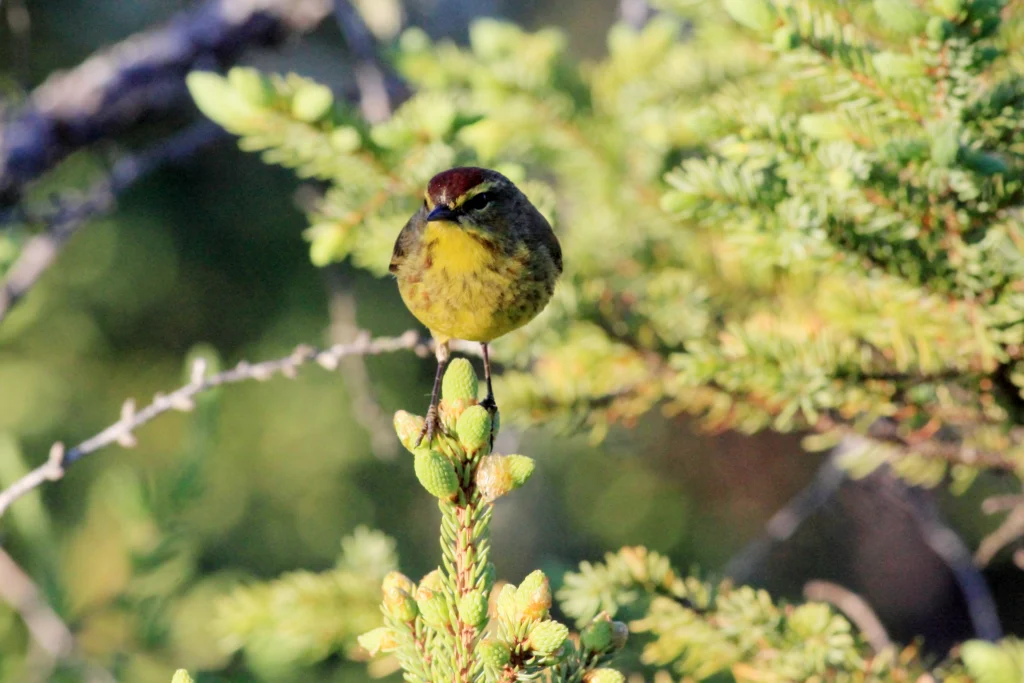
Palm Warbler. Photo by FotoRequest, SS.

Palm Warbler

Palm Warbler. Photo by FotoRequest, SS.

Setophaga palmarum

Descripción general

Estado de conservación
Tendencias demográficas
Creciente
Tamaño de la población
13 millones
Familia
currucas
Ubicación
caribe
América del norte
Patrón de migración
Latitudinal
Distancia de migración
Larga distancia
También conocido como
  • Wagtail Warbler
  • Tip-up Warbler
  • Bijirita común (Spanish)
  • Reinita coronicastaña (Spanish)

Acerca de

The Palm Warbler is unusual among the Western Hemisphere’s wood-warbler family. While the majority of warblers are sexually dimorphic, with males noticeably brighter in the breeding season, the male and female Palm Warbler are nearly identical, and can be impossible to tell apart. Warblers, in general, spend a majority of their time in trees and shrubs, but the Palm Warbler is quite comfortable on the ground. Rather than hopping like their arboreal relatives, these birds take to walking or running. Like other warblers, the Palm Warbler often joins mixed-species flocks outside of the breeding season. However, though most warblers tend to flock up with other arboreal species, the Palm Warbler is just as likely to be found foraging with sparrows along hedgerows and in open weedy fields.

Palm Warblers share another habit more typical of ground-dwelling birds in that they continuously bob their tails. This behavior is also seen in other birds typical of open habitats, including the Andarríos maculado y Phoebe negra, where the rate of bobbing is thought to vary with the bird’s level of excitement, and thus plays a role in communication. In many ways, the Palm Warbler behaves more like a sparrow or pipit than a typical wood-warbler — even its monotonous trilled song is remarkably similar to that of a Dark-eyed Junco or Chipping Sparrow. Though perhaps an oddball among its own family, this unique bird has found a niche all its own, somewhere between a sparrow and a warbler.

Amenazas

Birds around the world are declining, and even common species like the Palm Warbler face a suite of threats. Palm Warblers are especially vulnerable to habitat loss on their breeding grounds, as well as hazards during migration.

Collisions with Communications Towers

Communication towers with steady-burning lights pose a real threat to migratory birds, killing 7 million annually. Although tower collisions threaten all birds — especially when skies are overcast or foggy — they pose a special danger to songbirds migrating at night. Palm Warblers are one of the most frequent casualties. Making matters worse, the number of communication towers in the U.S. is expected to continue growing in the coming years.

Extraction in the Northern Forests

Almost all Palm Warblers nest in the Canadian boreal forest, a bioregion subject to a range of extractive industries, including timber logging and peat harvesting. Palm Warblers often nest in areas dominated by bogs, and studies have shown that peat harvesting in these habitats negatively impacts breeding Palm Warblers.

Pérdida de hábitat

Collisions with Glass Windows

Window collisions take an enormous toll on birds, especially migratory songbirds like the Palm Warbler. While collisions with reflective windows in city centers during migration take center stage, they are a year-round threat to birds, both migratory and resident. More than a billion birds die in the U.S. each year alone, but the threat of collisions persists anywhere windows go untreated.

Choques de vidrio

Outdoor Cats

Domestic cats are one of the leading human-caused drivers of bird population declines. Free-roaming cats kill an estimated 2.4 billion birds each year in the United States. Birds are especially vulnerable during migration, when large numbers, often hungry and exhausted after flying through the night, descend on the patchy resources available in urban and suburban areas. All these factors make small migratory birds, like the Palm Warbler, particularly vulnerable to predation by cats.

Gatos y especies invasoras

Estrategias y proyectos de conservación

Birds like the Palm Warbler need our help to overcome the threats they face. At ABC, we’re inspired by the wonder of birds and driven by our responsibility to find solutions to meet their greatest challenges. With science as our foundation, and with inclusion and partnership at the heart of all we do, we take bold action for birds across the Americas.

Hacer que las torres de comunicaciones sean más seguras

The simple solution to reducing bird fatalities from communications towers is to use flashing lights. Unlike steady-burning lights, which can attract and disorient birds, flashing lights pose little danger. In fact, their use can reduce nighttime bird fatalities by as much as 70 percent.

Hacer que las torres de comunicación sean más seguras

Prevención de colisiones de vidrio

ABC ha sido líder en el esfuerzo por reducir el devastador impacto de las colisiones con cristales en las aves. Hemos desarrollado métodos innovadores para evaluar la eficacia de los dispositivos de prevención de colisiones, creado recursos para mejorar nuestra comprensión colectiva de las colisiones y facilitar el acceso a soluciones, y promovido políticas que protejan a las aves en Estados Unidos.

Prevención de colisiones de vidrio

Mantenga a los gatos dentro de casa

Los gatos son compañeros maravillosos, pero están más seguros (al igual que las aves) cuando viven dentro de casa o bajo el control de sus dueños. ABC promueve la tenencia responsable de gatos, alentando a millones de dueños de mascotas a tomar medidas para mantener a sus gatos dentro de casa y abogando por políticas que beneficien la salud de las aves, los gatos y las personas.

Mantenga a los gatos dentro de casa

Galería de aves

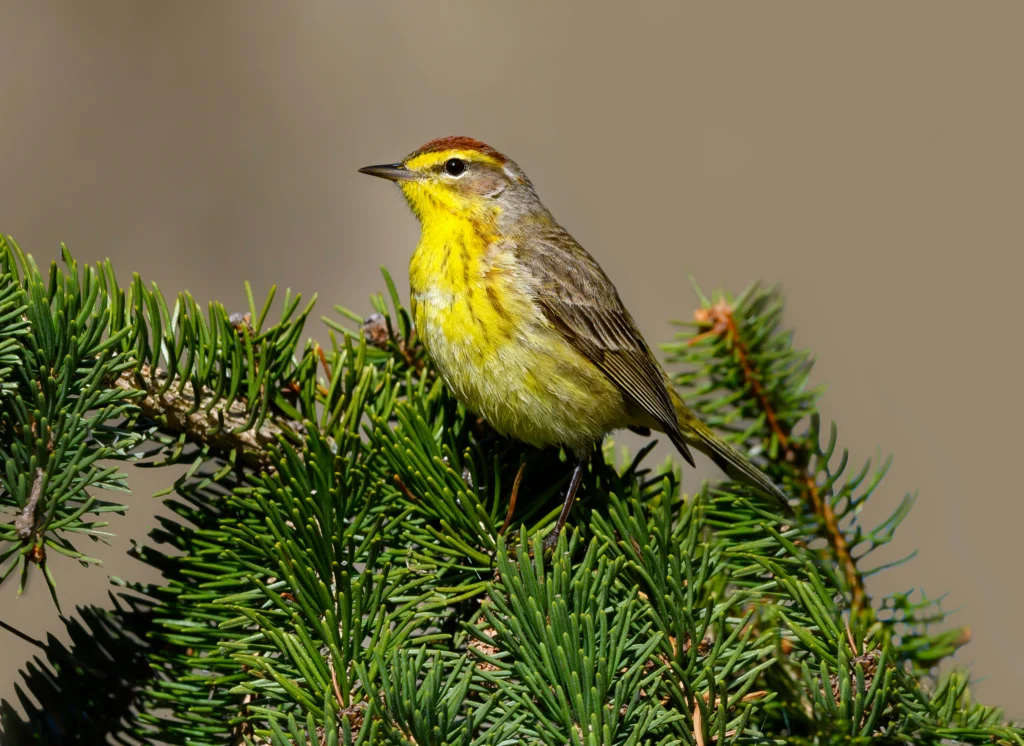
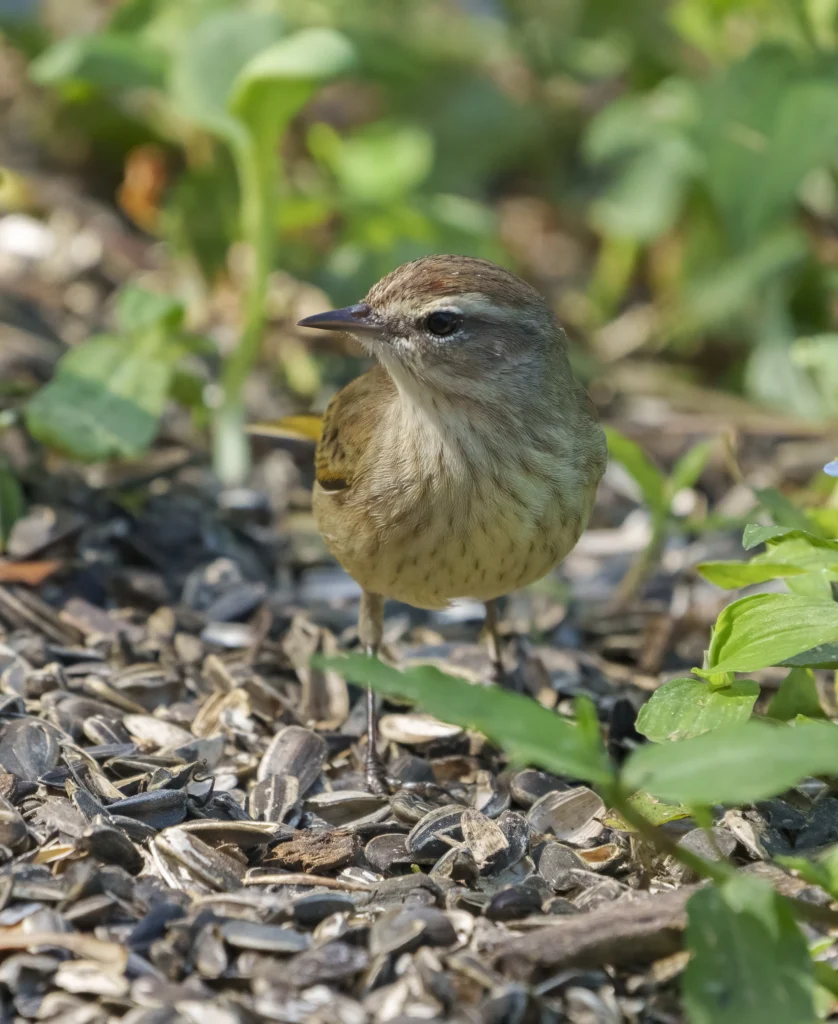
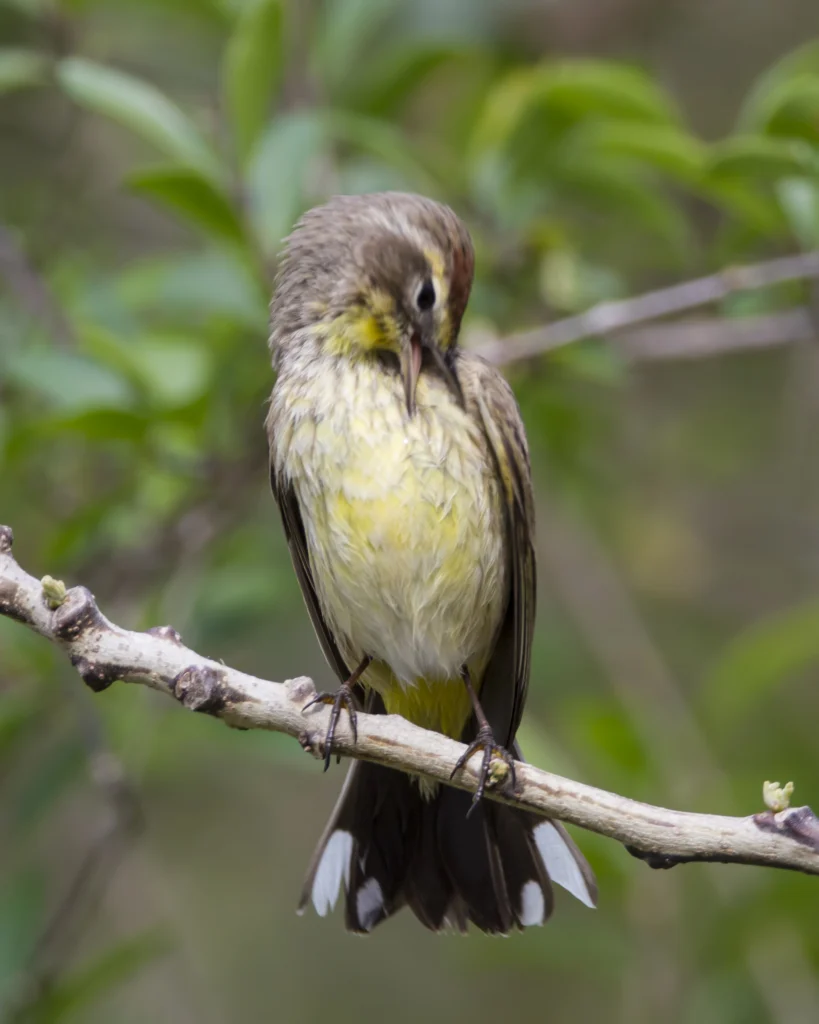
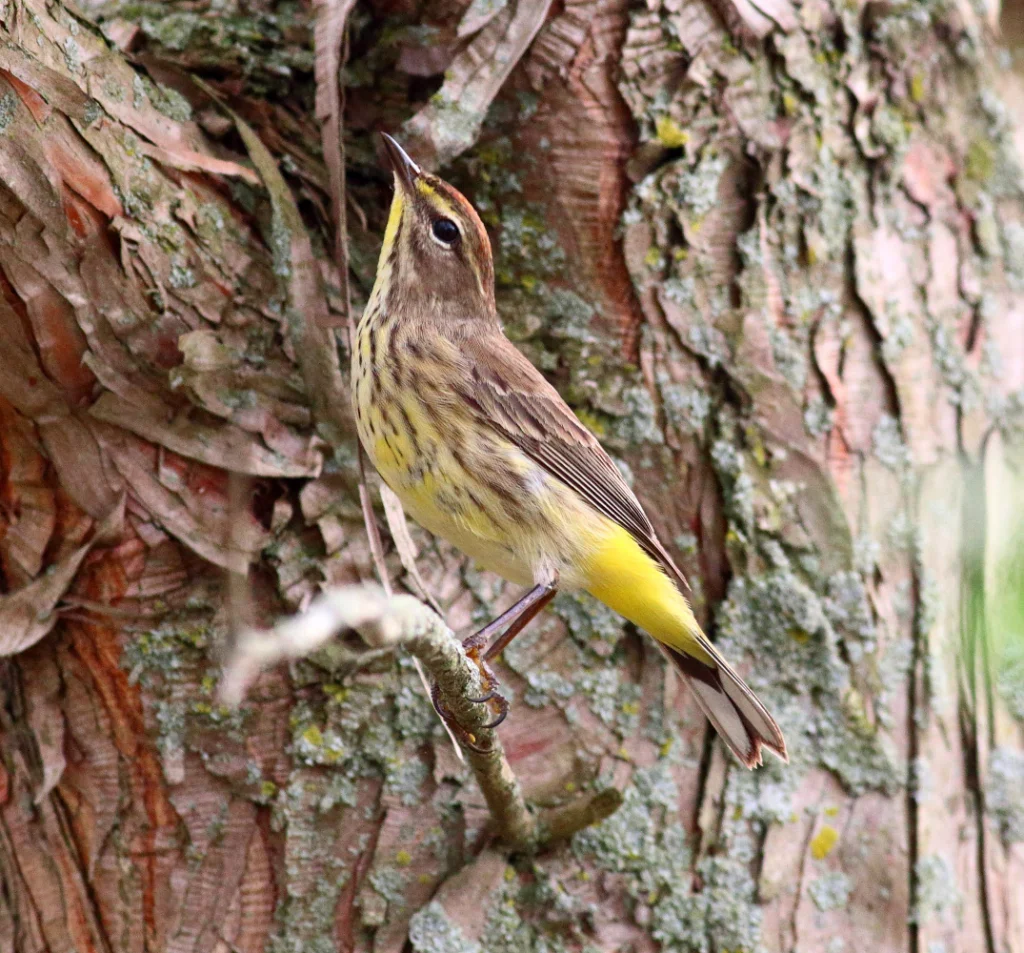
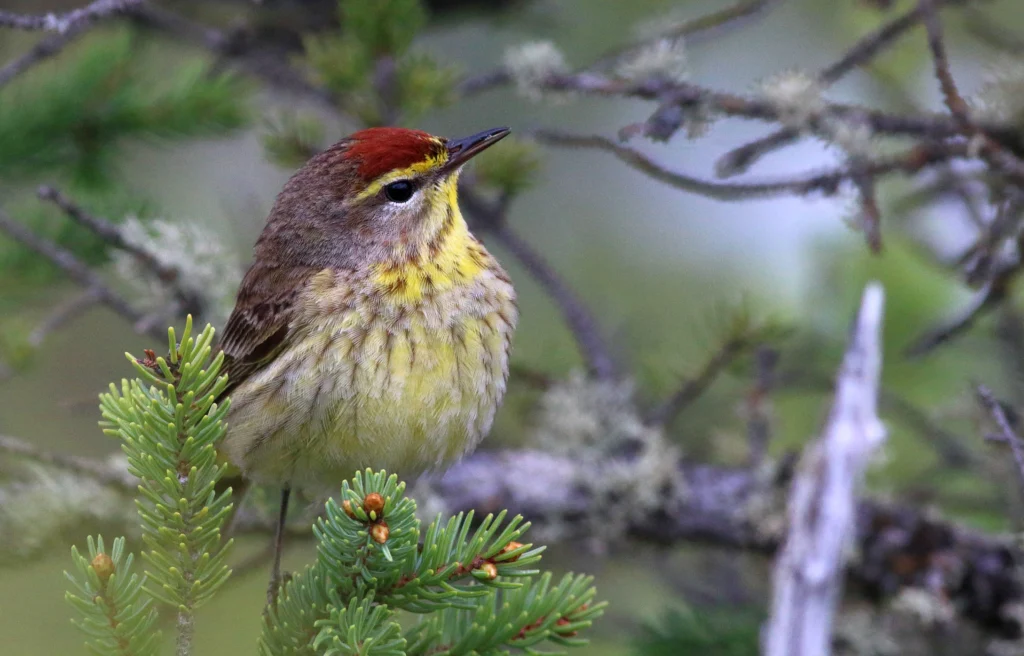
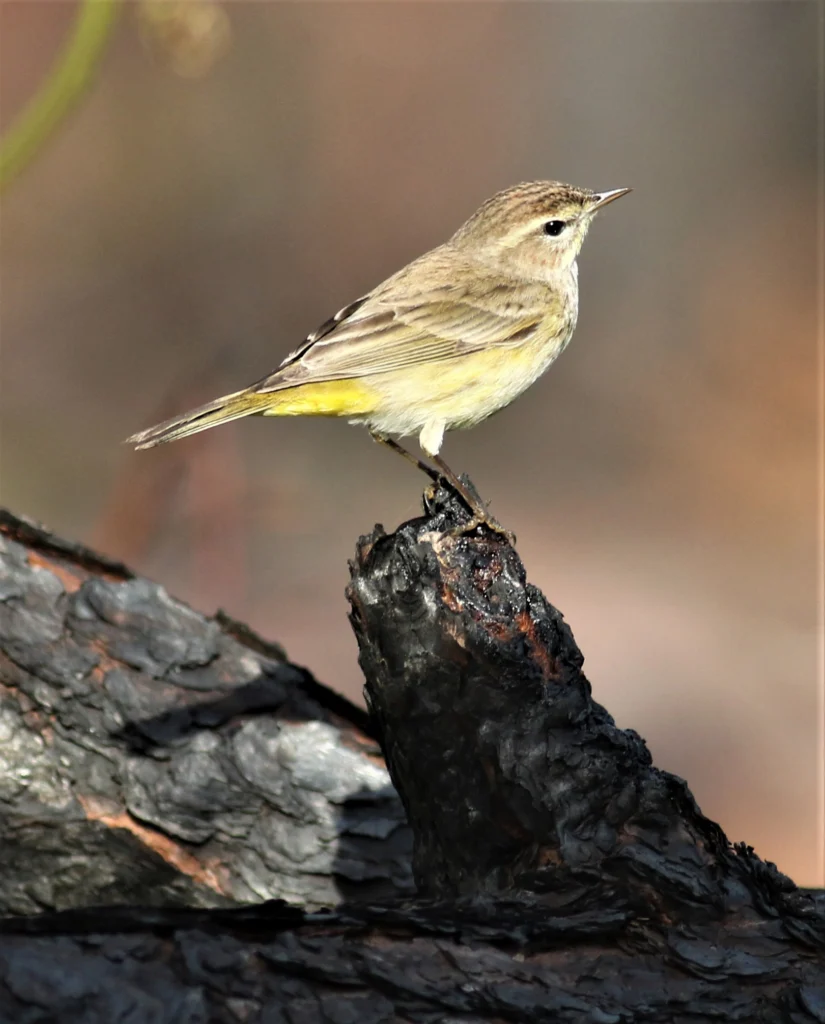
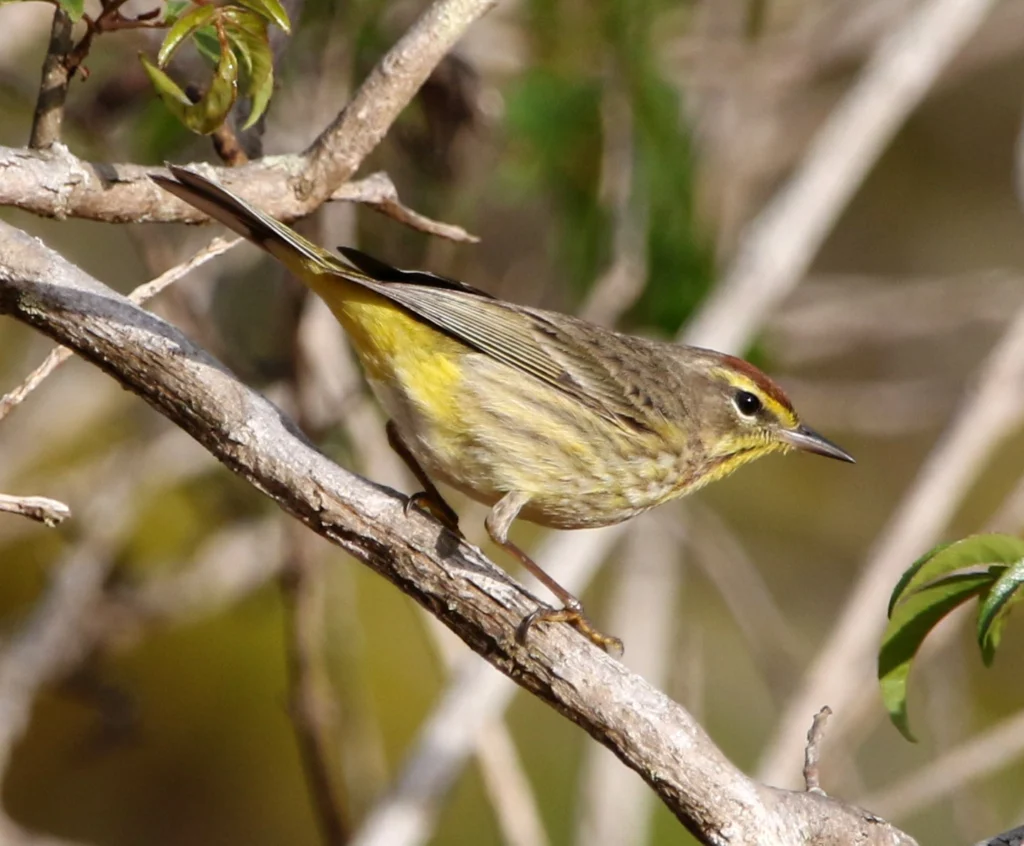
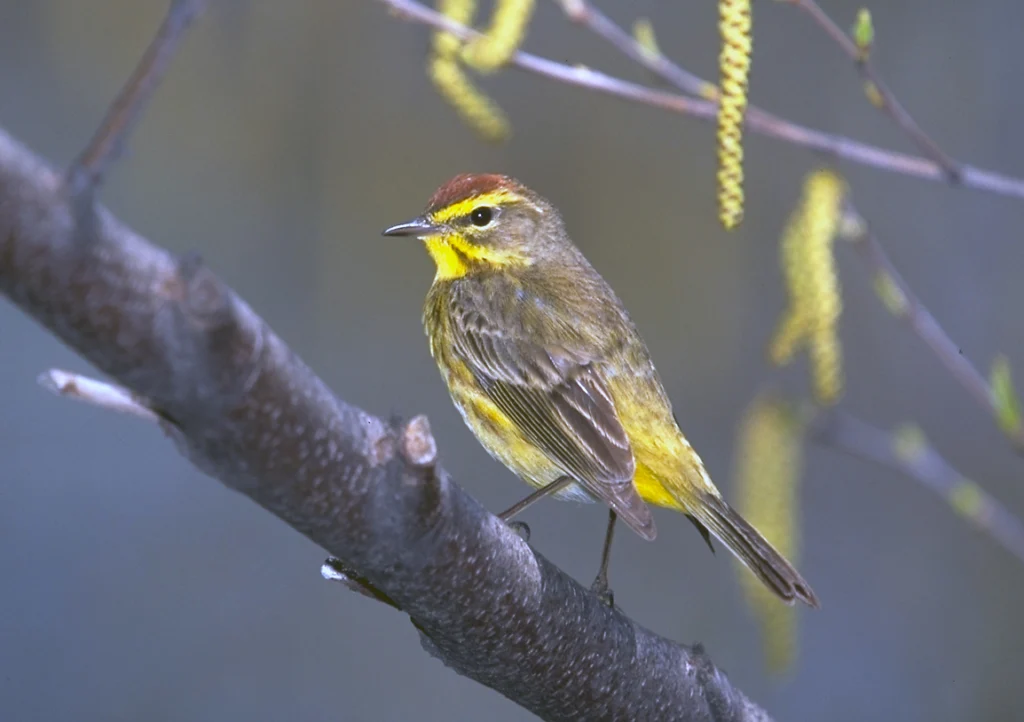
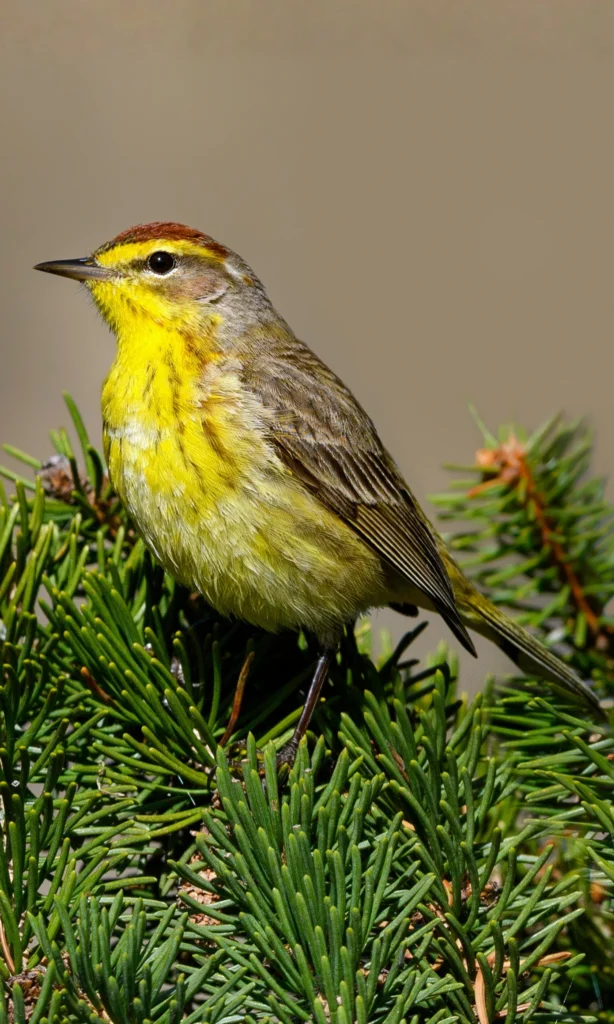
The Palm Warbler is unusual among warblers in the genus Setophaga in that males and females have essentially the same plumage during both the breeding and nonbreeding seasons. However, the two subspecies, the Western Palm Warbler and the Yellow Palm Warbler, are noticeably different. The breast and belly of the Western subspecies are white or extremely pale yellow, with dark reddish-brown streaking. The throat may be yellow or pale, and the undertail coverts, the fluffy feathers beneath the tail, are lemon-yellow and unmarked. In the Yellow Palm Warbler, the throat and underparts are entirely yellow, with dark red streaks on the breast. Both subspecies are pale gray-brown above, with a large dark rufous cap, dark cheeks, and a yellow “eyebrow,” the latter brighter in the Yellow subspecies. Nonbreeding birds are similar, with more muted shades of yellow and lacking the rufous cap.

Sonidos

Palm Warbler songs range from a rapid trill to a musical warble, sometimes rising steadily in volume but generally not varying in pitch over the course of the song. Trilled songs are composed of a single, simple repeated element and sound thinner and faster, similar to a Chipping Sparrow’s or Dark-eyed Junco’s song. Warbled songs, on the other hand, consist of two or more elements repeated in quick succession, producing the rising and falling pitch contour that is typical of many warbler songs. Palm Warblers also give a sharp chip call in alarm, as well as softer tsip contact calls.

Canción

Credit: Stanislas Wroza, XC1015037. Accessible at https://xeno-canto.org/1015037.

Llamada de chip

Credit: Ray Cooke, XC923856. Accessible at https://xeno-canto.org/923856.

Hábitat

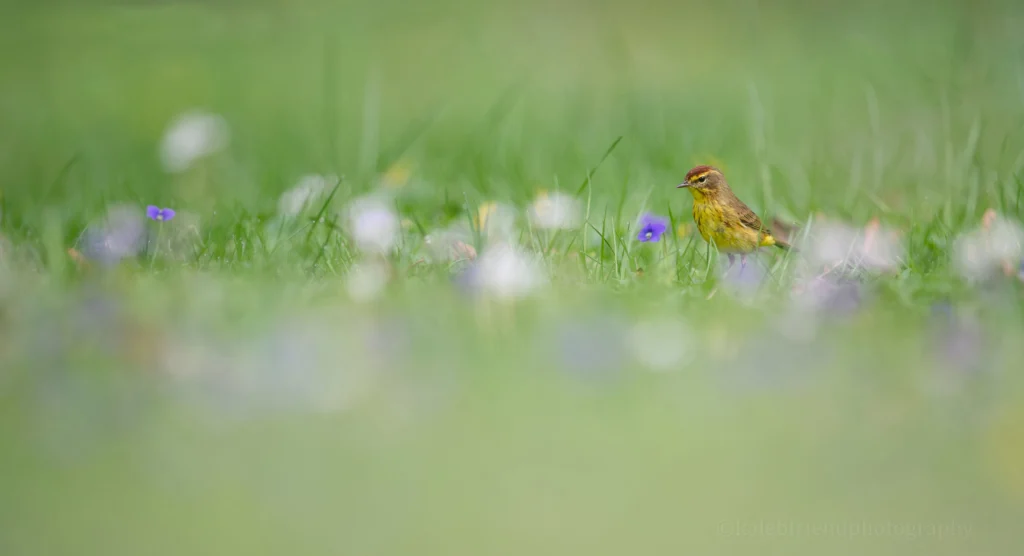
Year-round, the Palm Warbler prefers open forest or scattered trees with dense shrubs.

  • Breeds in open areas surrounding bogs in the boreal forest
  • Spends the nonbreeding season in open woodland, young forest, savanna, mangroves, and other open habitats with ample cover

Rango y región

Rango y región


Área específica
Eastern Canada and United States, Mexico, Central America, and the Caribbean

Detalles de la gama
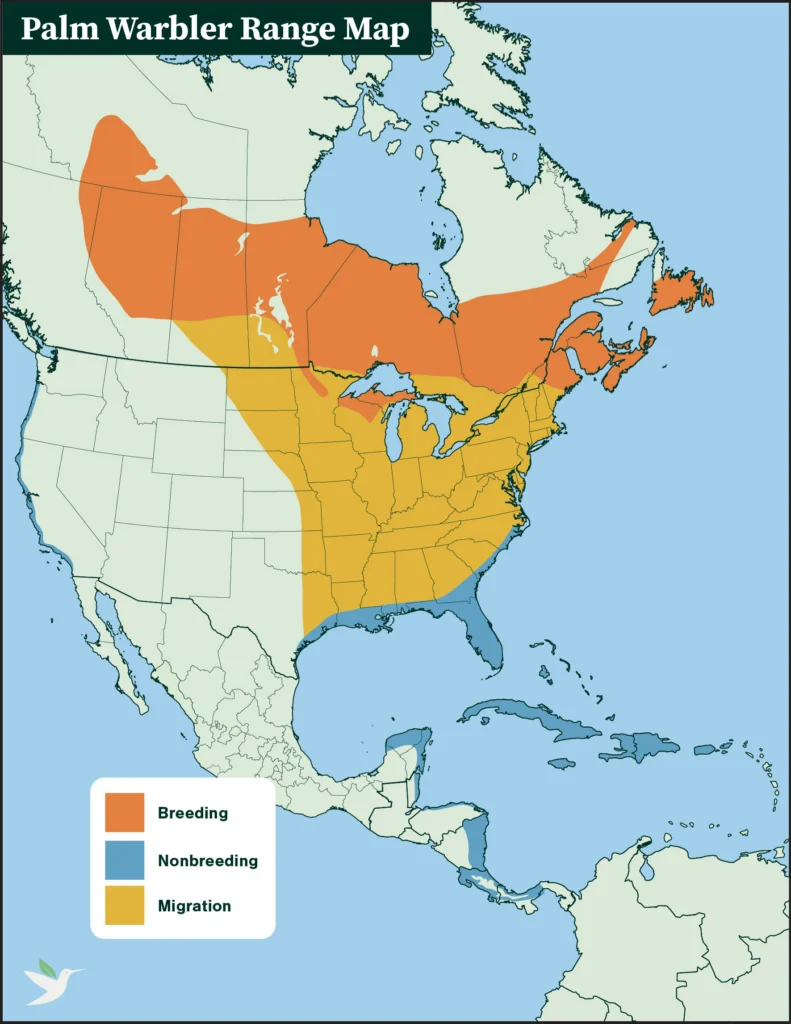
The Palm Warbler breeds in the boreal forests of North America, across much of Canada and the northeastern United States in Maine, and around the Great Lakes. They are common migrants across the eastern United States as they make their way between their northern breeding grounds and the southern coastal regions where they spend the nonbreeding season. Through winter in the Northern Hemisphere, Palm Warblers can be found along the Atlantic Coast from Maryland south through Florida, and the Gulf Coast through Texas. Others fly to the Caribbean, southern Mexico, and Central America.

¿Sabías?
The two subspecies of Palm Warbler, Western and Yellow, are separated most of the year. In spring, they migrate north on opposite sides of the Appalachian Mountains, at different times, to arrive in separate breeding regions. However, in the nonbreeding season, the two subspecies overlap in the southeastern United States.

Rango
caribe
América del norte
Patrón de migración
Latitudinal
Distancia de migración
Larga distancia

Historia de vida

Despite being fairly common in populated areas during migration, the Palm Warbler breeds in the remote Canadian boreal forest, and its nests are infrequently seen or studied. As a result, the breeding biology of this species is, surprisingly, quite poorly known. In some ways, Palm Warblers behave more like sparrows than wood-warblers, spending much of their time on the ground and even foraging in mixed-species flocks with sparrows, kinglets, and other birds.

Dieta

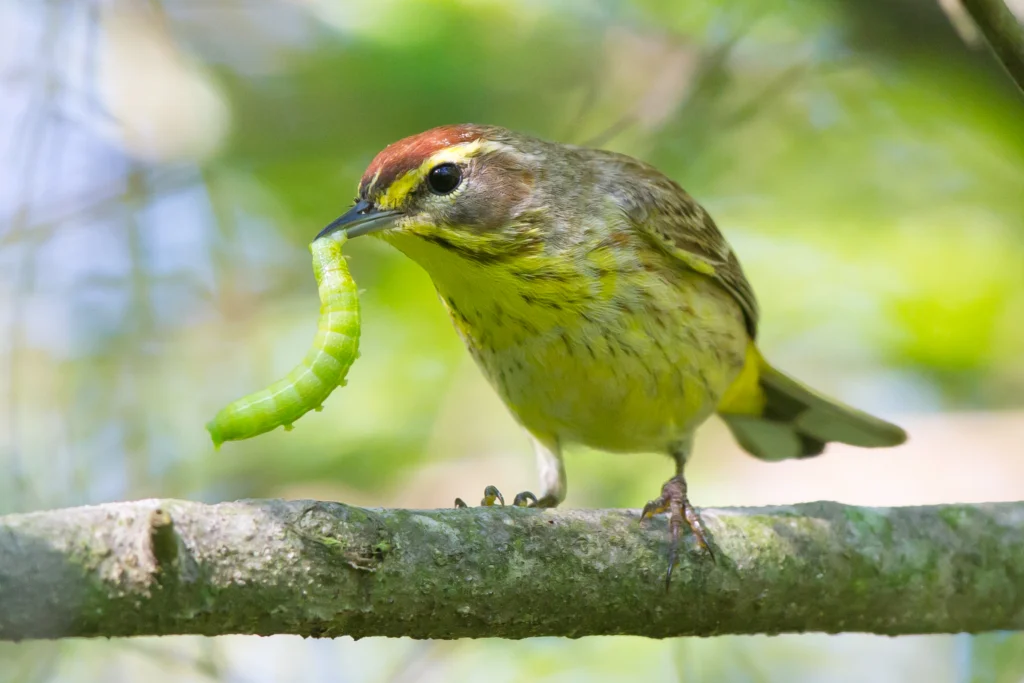
Palm Warblers mostly eat insects, although in winter and fall, they may supplement their diet by taking seeds and berries as well. Mayflies, beetles, and caterpillars are especially important prey insects. These warblers are also fond of nectar, particularly in the nonbreeding season, and will actively defend flowering plants from competitors.

Noviazgo

No courtship, copulation, or pair bond behaviors have been documented for the Palm Warbler. However, courtship documented in other warblers in the genus Setophaga typically involves some combination of chases, display flights, and fluffing or erecting certain feather patches, including colorful crown feathers like the Palm Warbler’s.

Anidación

There are no records of nest building in this species, so we don’t know if males are involved. The nest is an open cup made of grass and stems, lined with fine grasses and feathers. Nests are usually situated on the ground, embedded in peat moss (Sphagnum sp.) at the edge of a bog, under cover beneath a tree or shrub.

Huevos y crías

Females lay four or five eggs, white or creamy in color with reddish-brown markings around the larger end. Females incubate for 12 days. Males will feed females while incubating, but males themselves have not been documented incubating. Females are alone in brooding as well, but both parents feed their young. The young typically fledge at about 12 days after hatching.