


¿Los colibríes migran?
Durante los meses de verano, se pueden encontrar colibríes en casi toda Norteamérica. La gran mayoría de los colibríes migran a México o Centroamérica durante la temporada no reproductiva.

Selasphorus rufus
Saasin (Nuu-chah-nulth/Nootka)
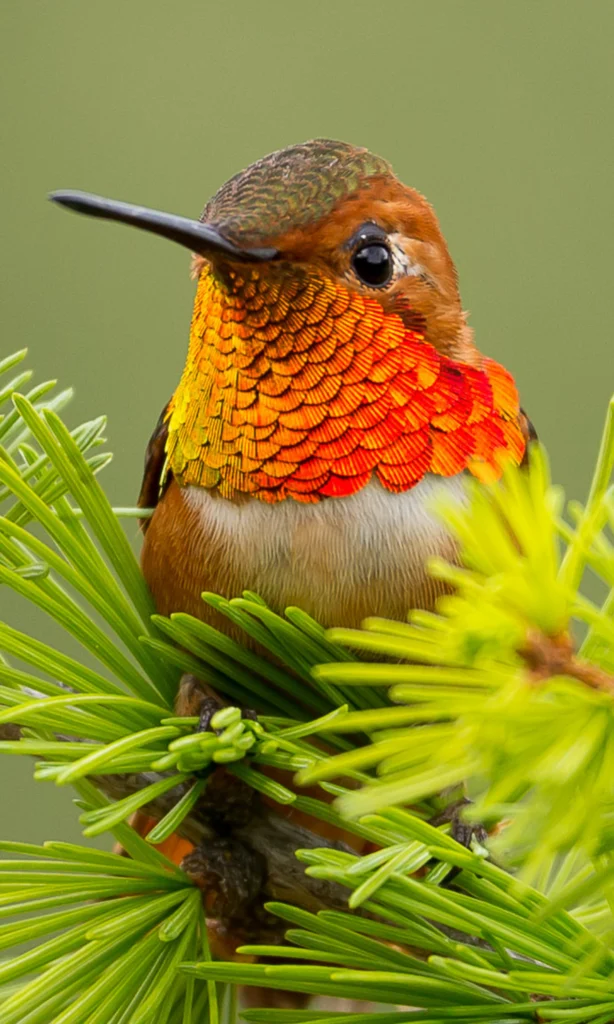
At a tad over 3 inches long, the feisty red-and-orange Rufous Hummingbird is a tiny warrior, readily attacking birds many times its size, as well as large insects or anything else it perceives as a threat to its territory. It dominates feeders and choice flower patches, chasing away other hummingbird species such as the Calliope Hummingbird.
The Rufous Hummingbird is the most northerly breeding member of the family Trochilidae. It nests from Oregon and Idaho north through much of British Columbia and into southern Alaska, where it is that state’s only hummingbird. The Rufous also holds the “tiny bird” record for one of the longest migratory journeys of any bird its size, traveling up to 3,000 miles to wintering grounds in western Mexican pine and oak woodlands.
Research has revealed that the area of a hummingbird’s brain related to learning and spatial memory — the hippocampus — is proportionately the largest of any bird group studied to date, occupying a percentage of “brain volume” up to five times larger than that found in songbirds, for example. With enhanced spatial memory, the Rufous and other hummingbirds pinpoint prime locations of nectar, their main food source, and keep track of which blooms are at peak, visiting only when the flower provides its richest nectar supply. Remarkably, hummingbirds can also remember feeder locations from previous years, both on their home territories and along their migratory pathways.
Although the species is still considered common, the Rufous Hummingbird’s population is declining due to habitat loss on both breeding and wintering grounds, as well as threats along the long migratory route. These minuscule birds regularly fall prey to outdoor cats and other predators, while others die after window collisions.
Domestic cats are among the leading human-caused drivers of bird population declines. Cats kill billions of birds each year in the United States alone. Despite their speed and feisty nature, tiny birds like the Rufous Hummingbird are frequent targets of outdoor cats.
Collisions take an enormous toll on birds. While collisions with reflective windows in city centers during migration take center stage, they are a year-round threat to birds, both migratory and resident. Territorial birds often attack their reflections, and highly reactive and aggressive species like the Rufous Hummingbird can easily be tricked into a fatal crash.
Even common birds like the Rufous Hummingbird need our help to overcome the threats they face — many common birds are declining rapidly, and will continue to do so if we do not act decisively to help them. At ABC, we’re inspired by the wonder of birds and driven by our responsibility to find solutions to meet their greatest challenges. With science as our foundation, and with inclusion and partnership at the heart of all we do, we take bold action for birds across the Americas.
Cats make wonderful companions, but cats and birds are both safest when cats are kept indoors or under the control of their owners. ABC advocates for responsible cat ownership, encouraging millions of pet owners to take steps to keep their cats contained and advocating for policies that benefit birds, cats, and human health.
ABC ha sido líder en el esfuerzo por reducir el devastador impacto de las colisiones con cristales en las aves. Hemos desarrollado métodos innovadores para evaluar la eficacia de los dispositivos de prevención de colisiones, creado recursos para mejorar nuestra comprensión colectiva de las colisiones y facilitar el acceso a soluciones, y promovido políticas que protejan a las aves en Estados Unidos.
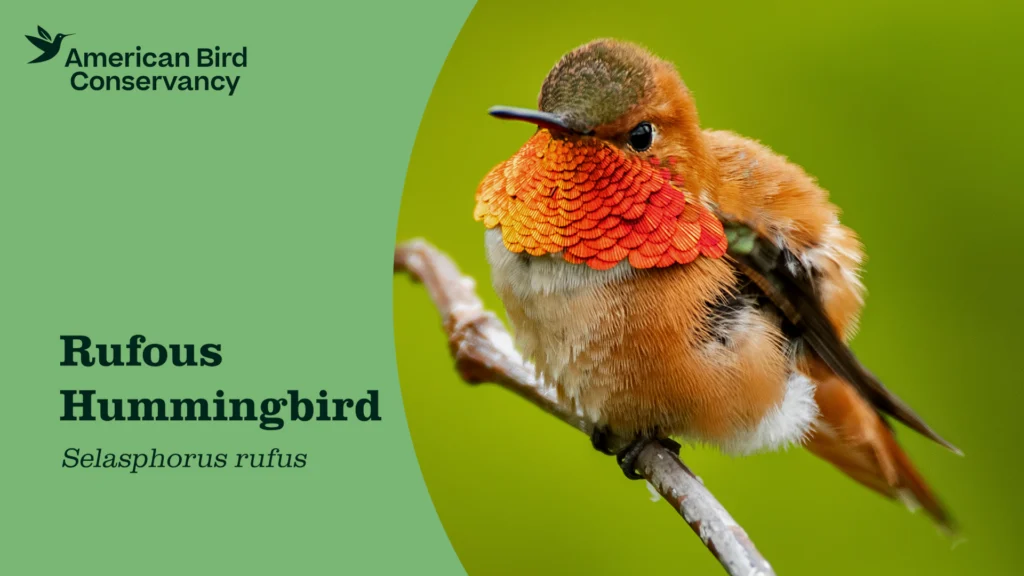
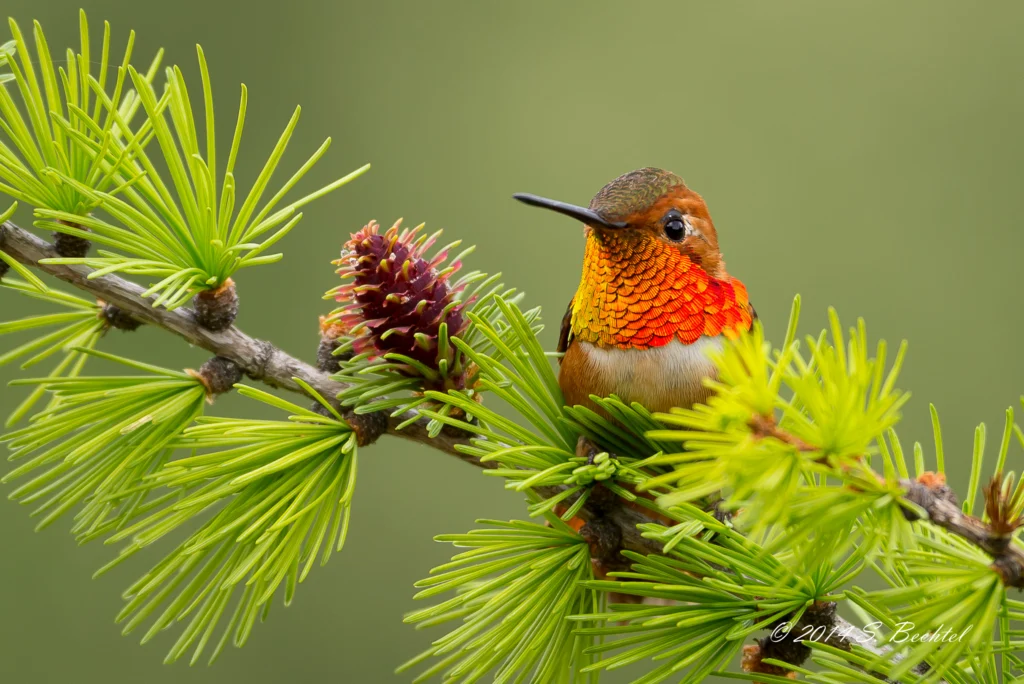
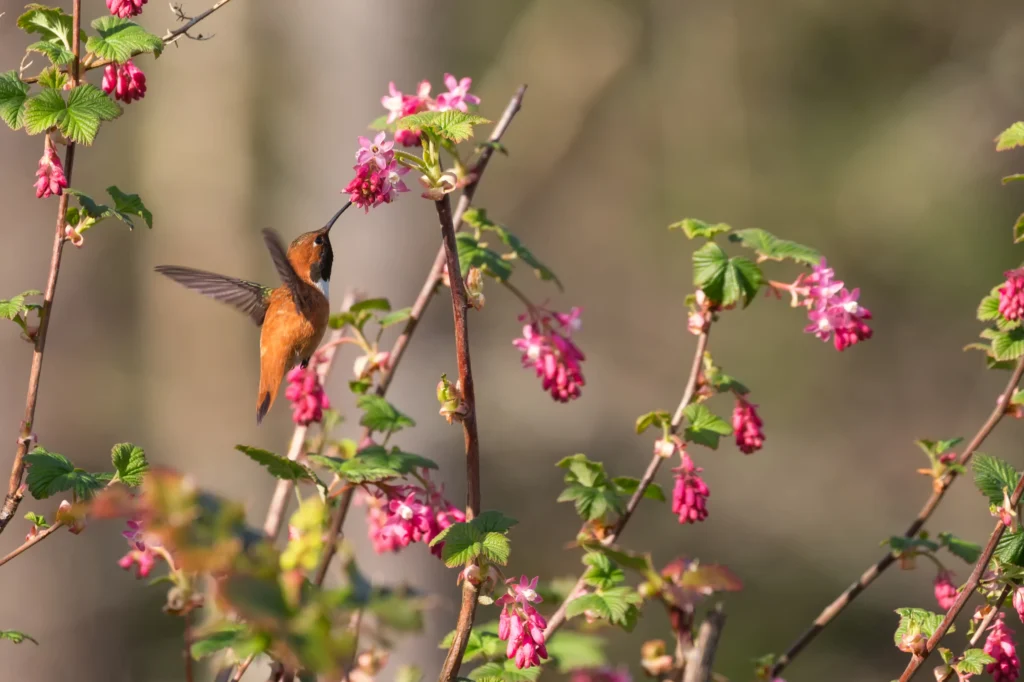
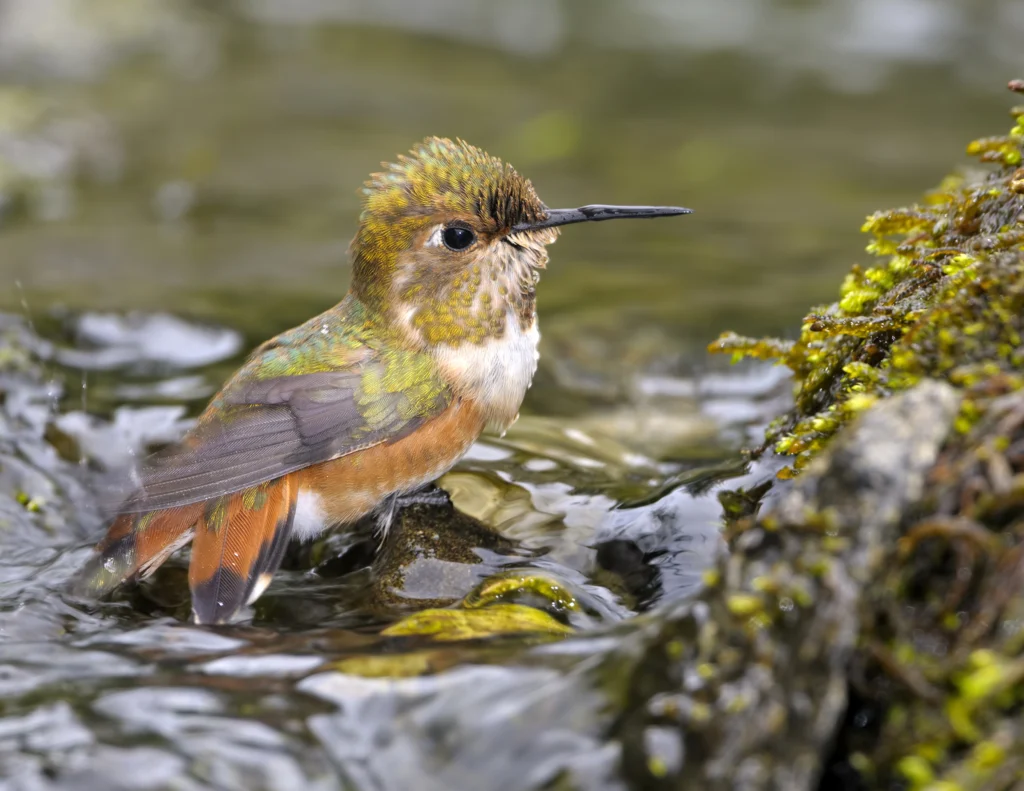
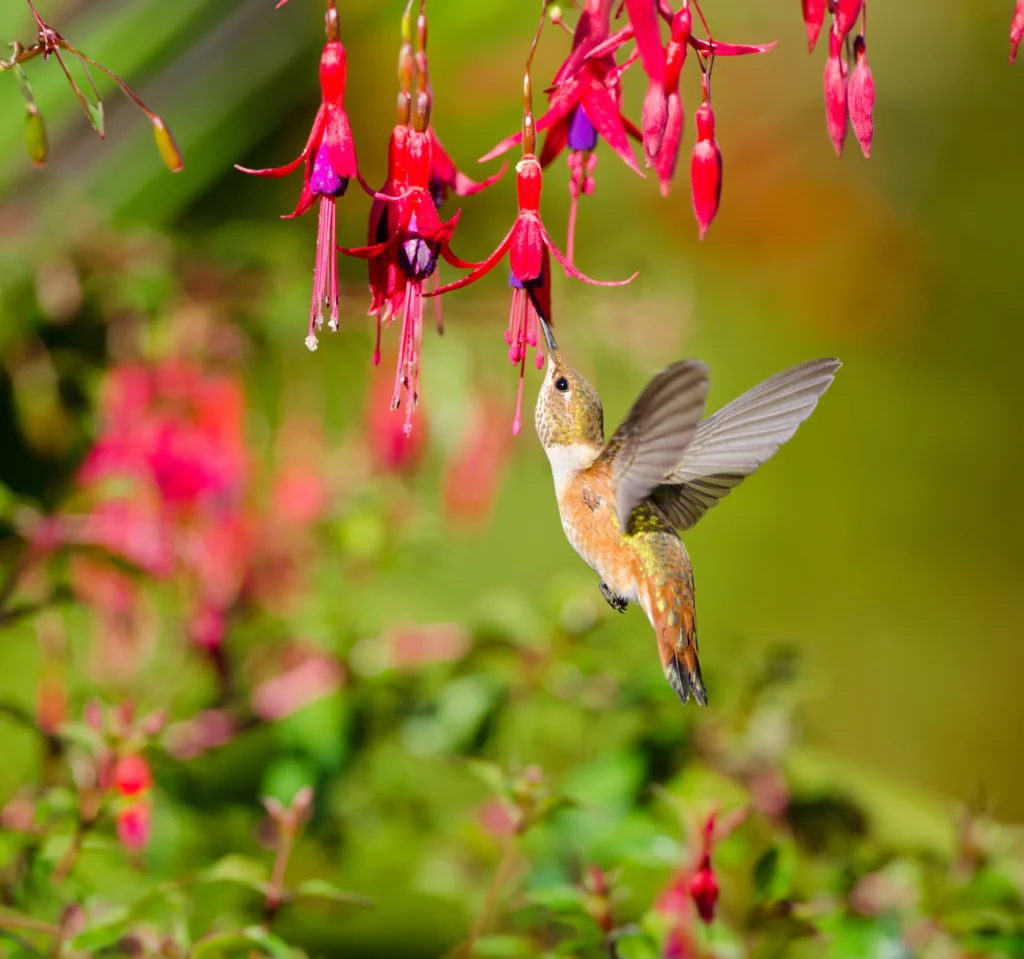
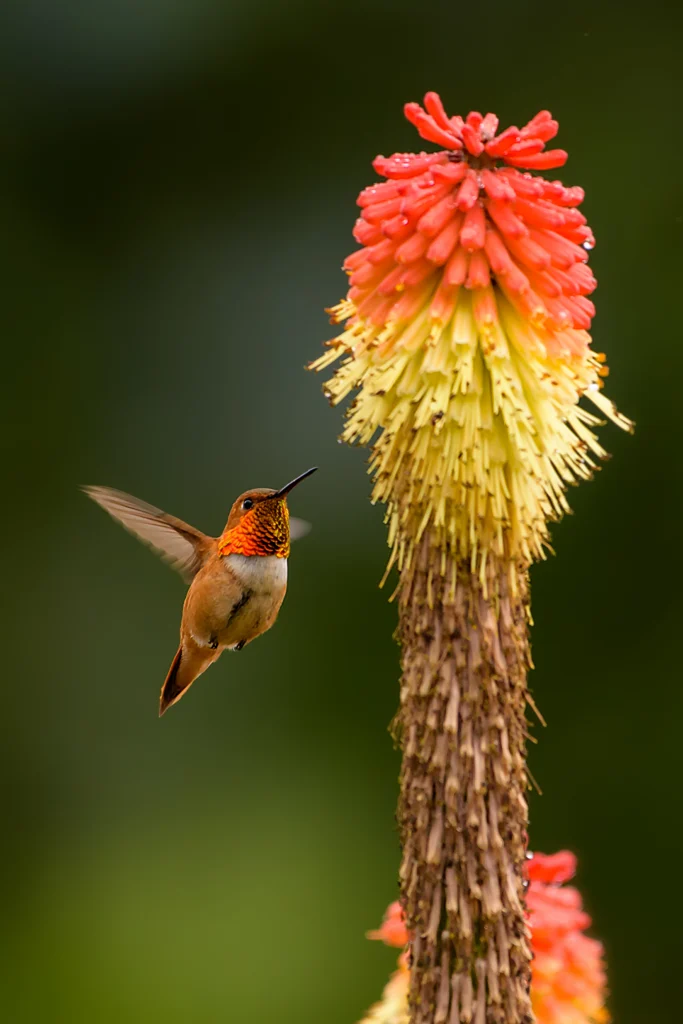
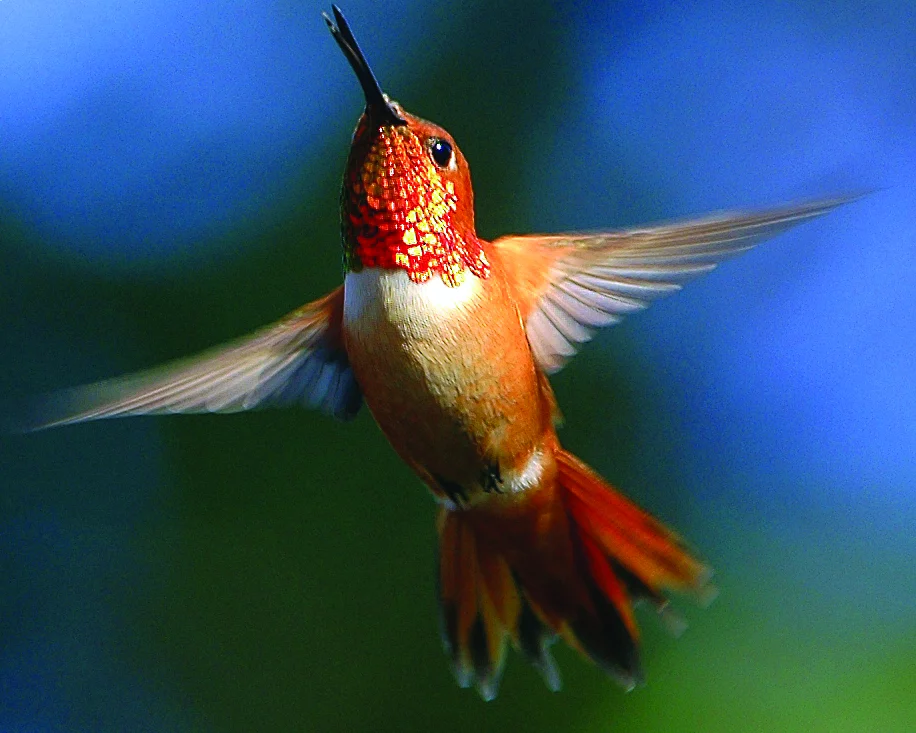
Aptly named, mature male Rufous Hummingbirds are almost entirely a rusty brick red, with a brilliant throat patch, or gorget, of shining orange-red. The forehead is iridescent green, and similar green feathers may show up on the back and shoulders. A white patch on the throat below the gorget may extend down into the breast. The wings and ends of the tail feathers are dark chocolate brown. Females and young males are paler overall, with a dark gray-brown forehead, white undersides and rusty flanks, and more extensive green on the back. The throat is white, streaked with dark brown or iridescent green, and sometimes has a small central red gorget patch similar in color to that of adult males.
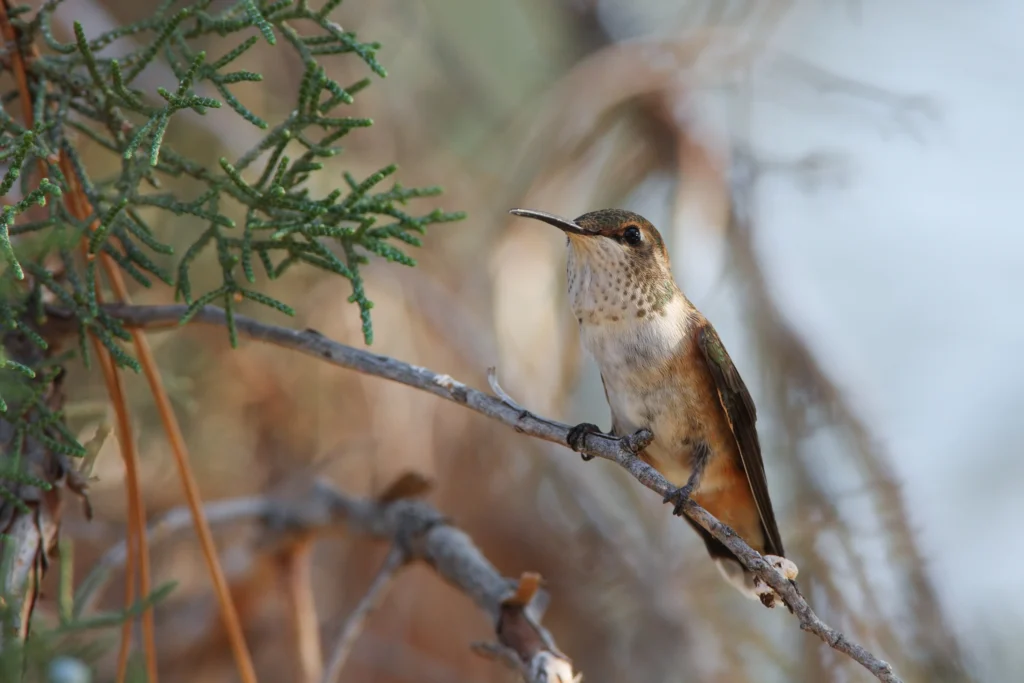
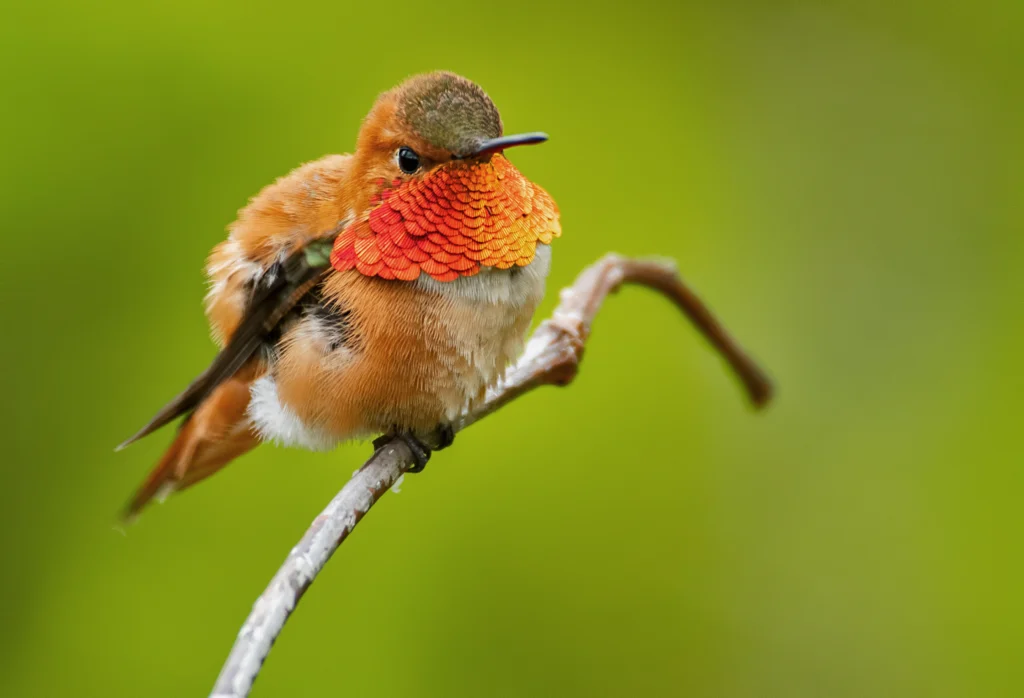
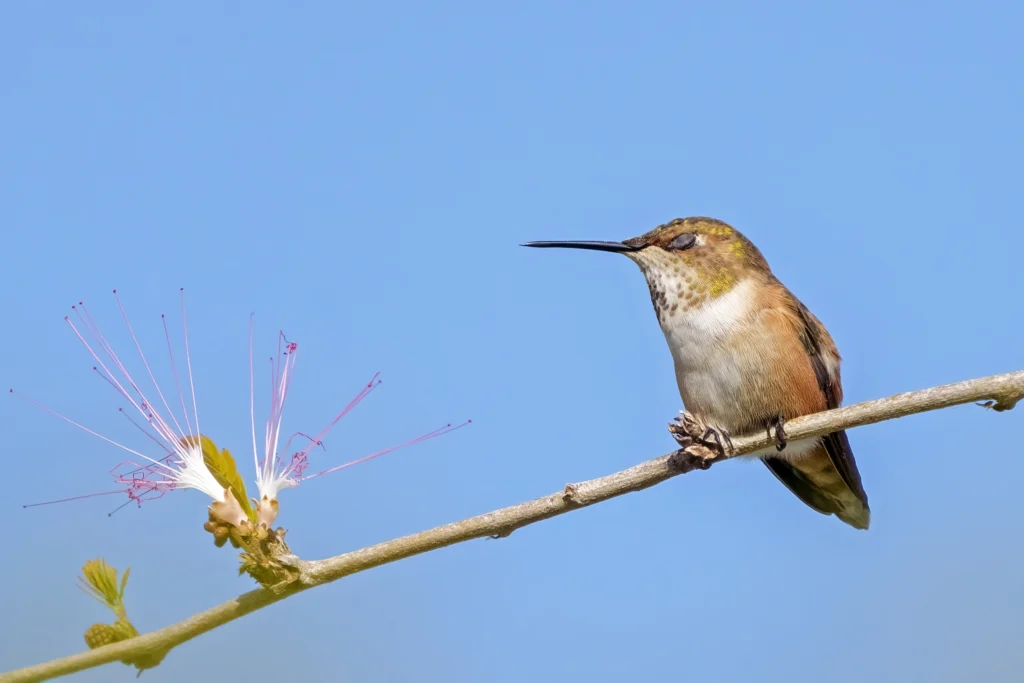
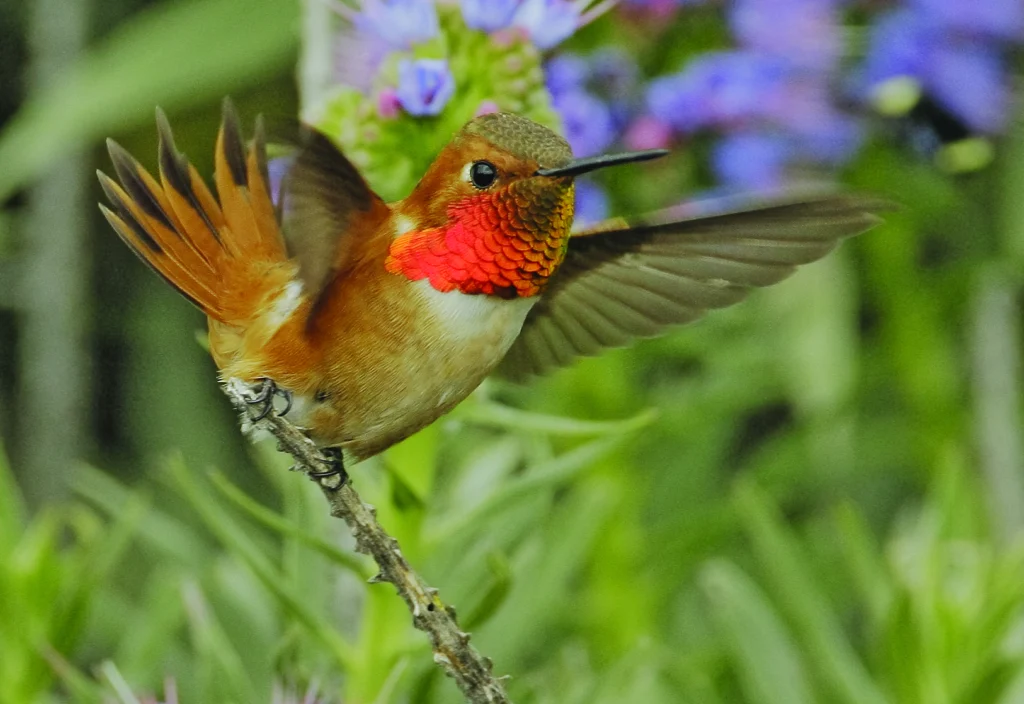
Male Rufous Hummingbirds do not sing in the typical sense, but instead rely on dramatic flight displays to entice potential mates. During these flights, air rushing through the wings and tail produces a variety of buzzy, chattering noises that enhance the performance. They also give a wheezy whine and abrupt stuttering calls. Their wing whine is distinctive, combining a low-pitched whirring, like an enormous insect, and a much higher-pitched sibilant hiss.
Credit: Andrew Spencer, XC76412. Accessible at https://www.xeno-canto.org/76412.
Credit: Eric DeFonso, XC581027. Accessible at https://xeno-canto.org/581027.
Rufous Hummingbirds prefer shrubby areas or open forest, but use a wide range of habitats, including thick forests, meadows, swamps, orchards, and urban areas from sea level to 6,000 feet!
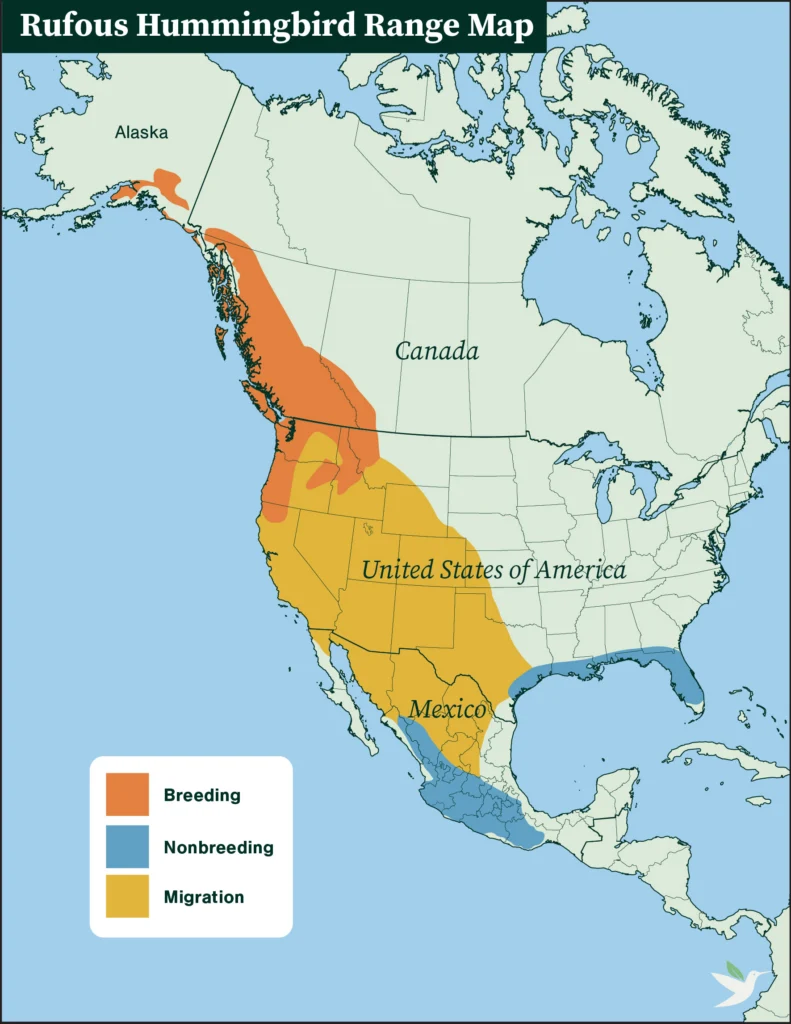
Área específica
Western U.S. and Canada, Mexico, U.S. Gulf Coast
Detalles de la gama
The Rufous Hummingbird breeds in the northwestern forests of the United States and Canada, from coastal southern and southeast Alaska, British Columbia, and southwest Alberta east to the northern Rocky Mountains into Idaho, and the Coast Ranges into northern California. They are found throughout the western states and parts of the Midwest during migration. In the fall, these hummingbirds migrate south to spend the nonbreeding season in the central Mexican highlands south of the Gulf of California, as well as sparsely along the Gulf Coast of the United States from Texas to Florida.
¿Sabías?
Rufous Hummingbirds follow an unusual elliptical migratory pathway each year. Birds migrating north from Mexico take a coastal route, following the Coast Ranges and Sierra Nevada to their breeding grounds in the Northwest. Then, on their southward migration, these hummingbirds follow the Rocky Mountains to Mexico and the Gulf Coast. In following these different pathways at different times of year, Rufous Hummingbirds are also following the abundance of their primary food source — nectar — as flower blooms peak in different regions across western North America.
Rufous Hummingbirds are extremely energetic, darting from flower to flower and bush to bush, and constantly engaged in aerobatic chases and duels. Like all in its family, from the Colibrí de garganta rubí hacia Cometa de vientre gris, Rufous Hummingbirds need a lot of fuel to sustain their nonstop daily activity. To keep their “tanks” full, they must feed almost continuously throughout the day in short spurts of less than a minute at a time, often visiting more than 1,000 flowers in a day.
Rufous Hummingbirds mainly subsist on flower nectar, but they also need protein, both for themselves and for their fast-growing young. They get this nutritional mainstay from tiny insects and spiders that they capture in the air and glean from foliage and flowers. Rufous Hummingbirds are also known to steal sap and insects from sap wells maintained by sapsuckers.
Male Rufous Hummingbirds court females with dramatic diving displays, including steep, J-shaped dives and buzzing figure-eights, performed above the female while she is stationary on a perch. As with other hummingbird species, the male Rufous aggressively defends a breeding territory, which may contain several nesting females. After mating, the female does all the work of nesting and raising the young.
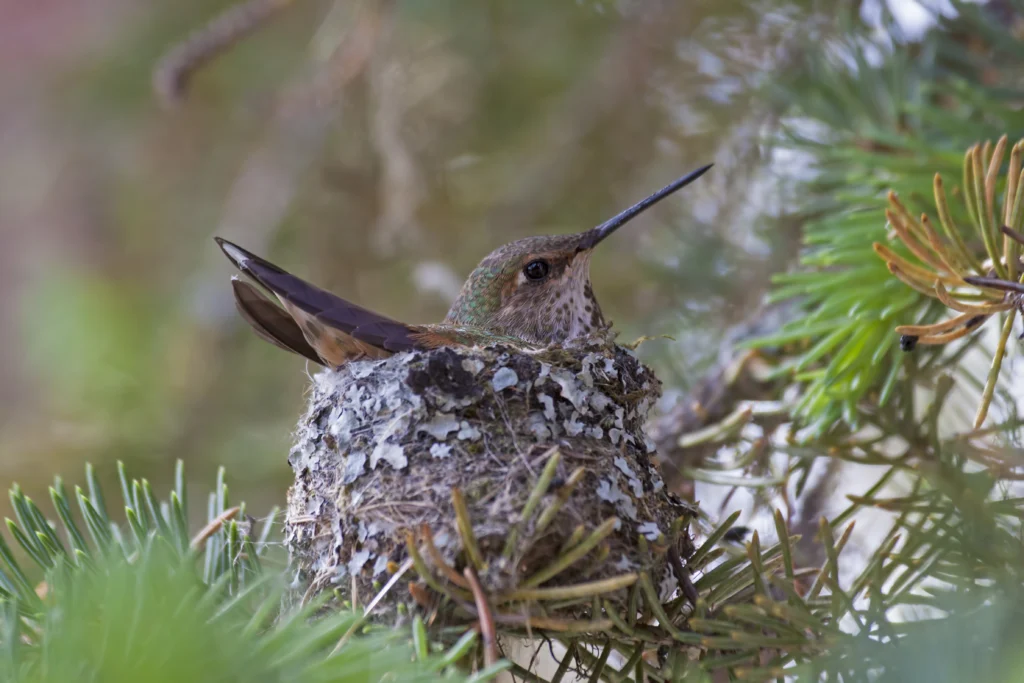
The female alone builds the nest in dense vegetation, often on a sheltered conifer branch or in dense shrubbery. The nest is a small cup of soft material, held together with spiderweb and decorated with pieces of moss, lichen, or bark. Females may use old nests or build new nests directly on top of old ones.
Females lay two tiny white eggs, which they incubate for two weeks or slightly longer. Nestlings fledge after a further three weeks in the nest. The female is alone in incubating, brooding, and feeding the young birds.
Noticias e historias relacionadas


¡Únete a la bandada! Tu donación ayuda a preservar los hábitats que las aves necesitan para sobrevivir.