It’s a warm, humid spring evening on South Padre Island, a thin, 34-mile-long barrier island sheltering the southernmost tip of Texas. The skies are filling with the sharp silhouettes of birds — wings, beaks, tails of all shapes and sizes — as they make their way from their wintering grounds in the southern latitudes to their summer breeding grounds farther north.
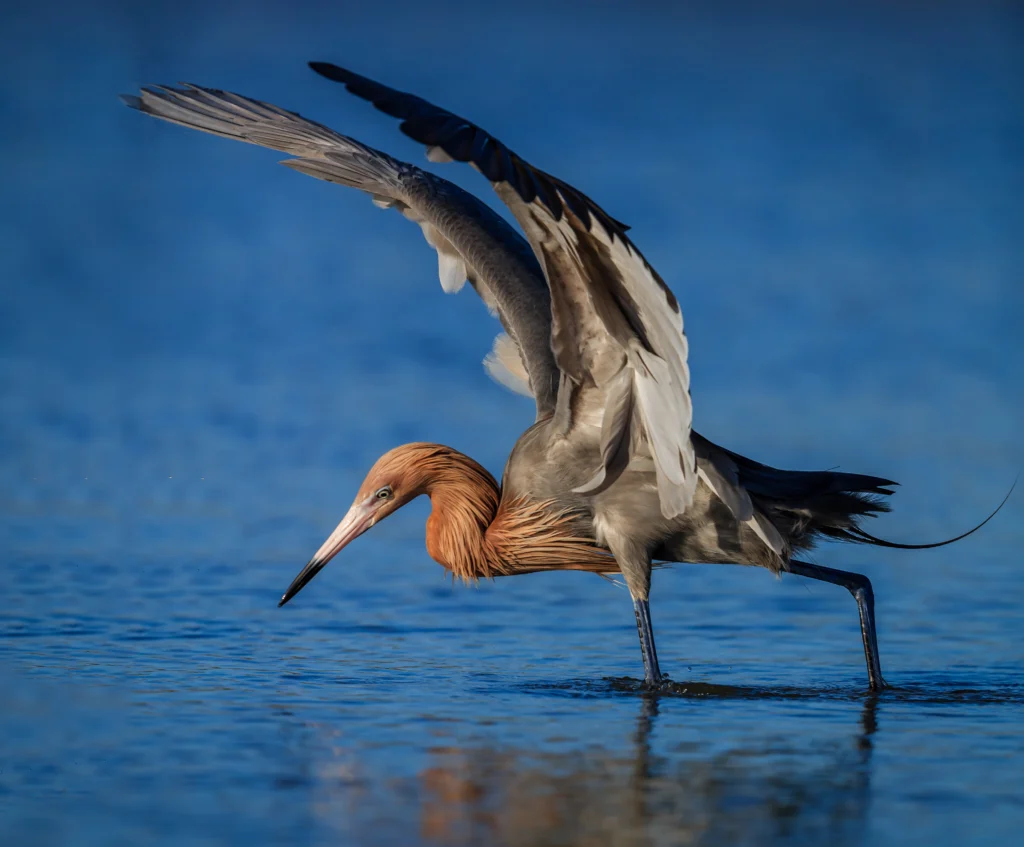
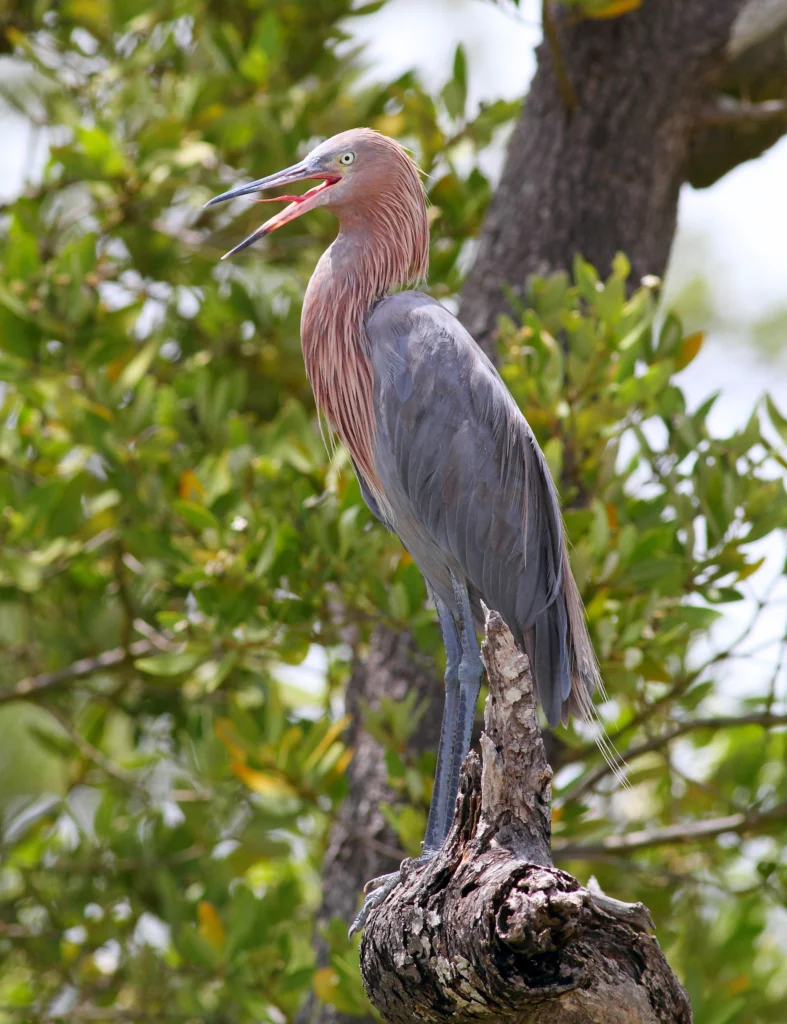
As Hooded Warblers, Painted Buntings, Peregrine Falcons, and a suite of other migratory bird species stop at South Padre to rest and refuel, a solitary bird wades through the shallow water. It’s tall and slender, with the distinctive shape of an egret, but with a dark belly and a rusty-colored neck. Even more notable is how it moves.
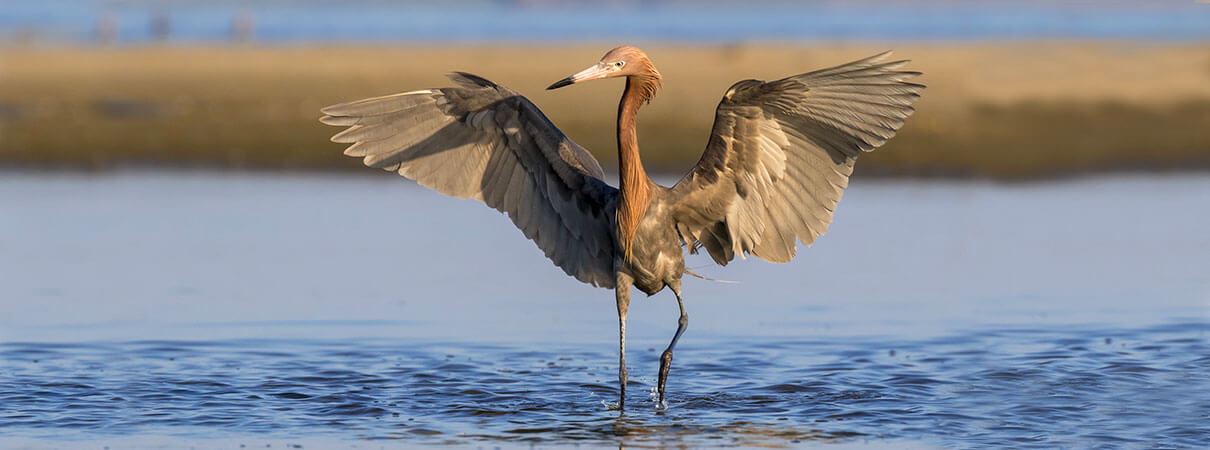
Zig-zagging back and forth on long black legs, running in crazy circles, the Reddish Egret suddenly tucks in its head and raises smooth charcoal wings over itself like an umbrella. With a sudden, precisely timed jab at a passing fish, the bird plunges its sharp pink-and-black beak into the water — and emerges with dinner.