Forest Assist
Working in concert with a diverse array of partners that includes American Bird Conservancy, many landowners nationwide are turning their properties into de facto wildlife sanctuaries.

Leuconotopicus borealis
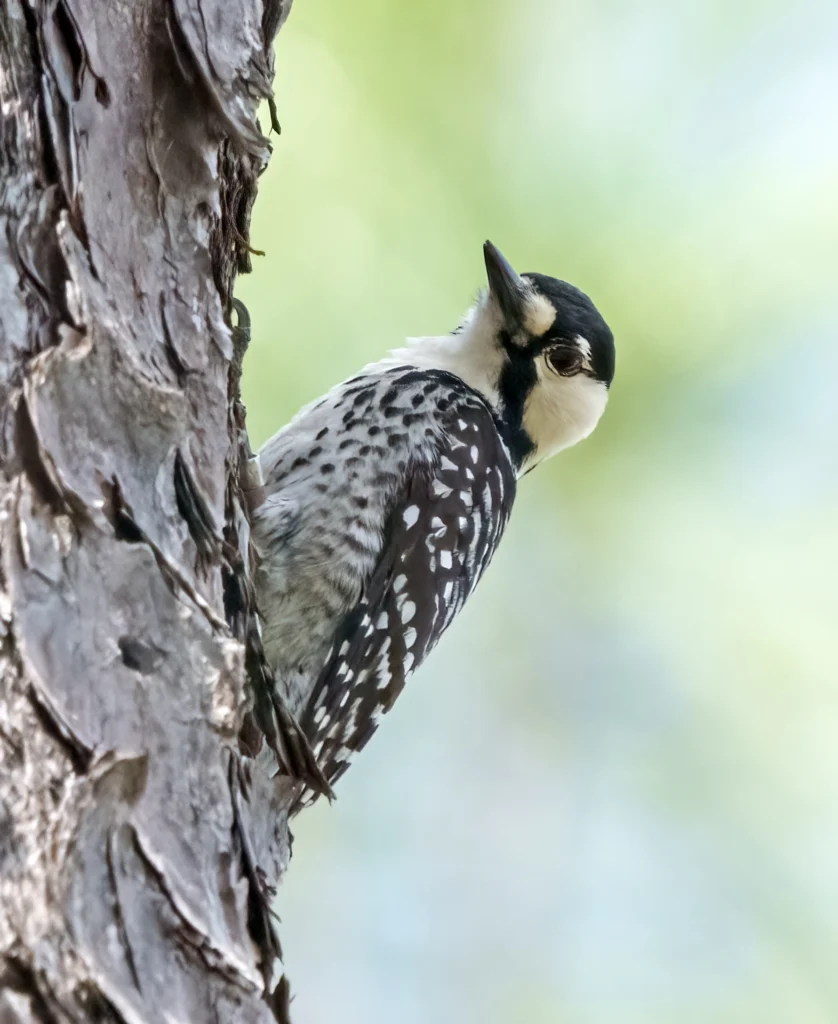
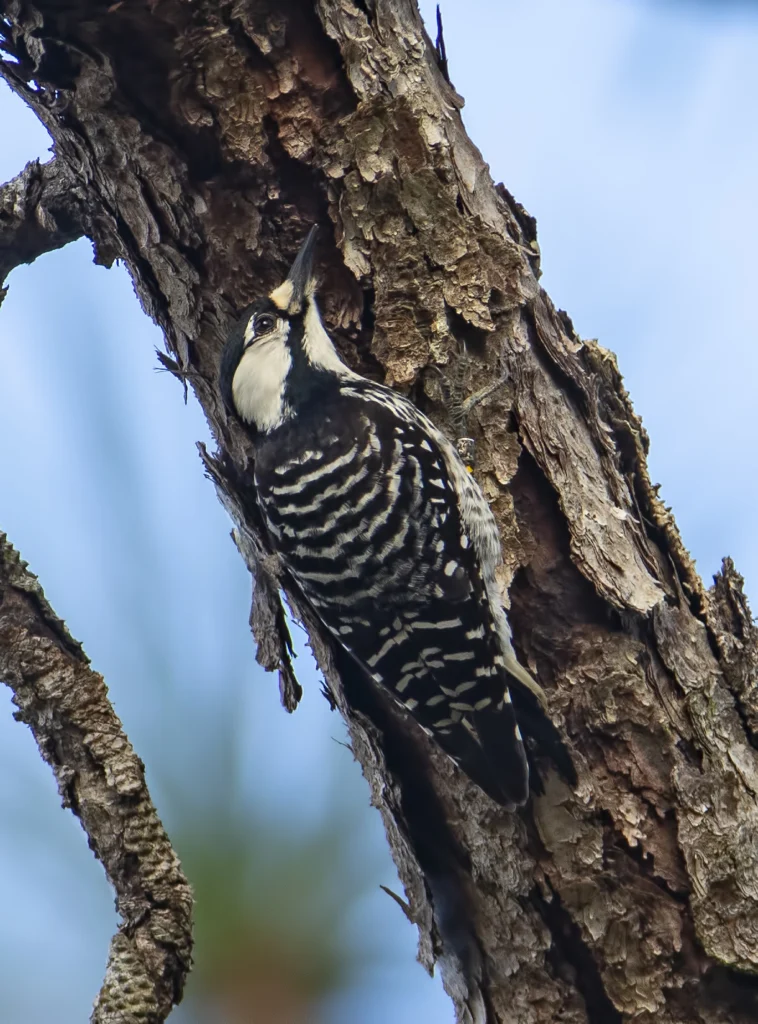
The dapper Red-cockaded Woodpecker was once a common sight throughout the mighty longleaf pine forests of the southern United States. Only the male sports the small red mark, or “cockade,” on the nape; this term harkens back to the early 1800s and refers to a ribbon or other ornament worn on a hat.
A specialist of open pine forests with large, old trees, the Red-cockaded Woodpecker requires habitat normally maintained by periodic natural burns. Due to years of fire suppression and large-scale clearing, great swathes of southern pine forest have been lost, leaving the Red-cockaded Woodpecker dangerously close to extinction.
When the Endangered Species Act was passed in 1973, the Red-cockaded Woodpecker was designated as Endangered. Thanks to decades of hard work, this species’ population has grown and it is no longer in the dire situation it once was. However, the issues that led to these woodpeckers being listed as Endangered in the 1970s continue to threaten them today.
The gradual disappearance of mature, fire-adapted pine ecosystems across the southern states presents the greatest challenge to the Red-cockaded Woodpecker. Fire suppression has allowed hardwoods to grow and compete with pines, eventually replacing pine forests with hardwood forests in the process of ecological succession. Logging and land conversion eliminate forests altogether.
Major hurricanes, such as Hurricanes Hugo and Rita, can have outsized impacts on the sparse, isolated patches of pine forest that remain. Furthermore, Red-cockaded Woodpeckers take several years to build their nest cavities, so when hurricanes topple these trees, the impact on the local Red-cockaded Woodpecker population is much higher than for other cavity nesters. With climate change, hurricanes are becoming larger and more frequent, which does not bode well for this vulnerable species.
Since the Red-cockaded Woodpecker’s initial listing as Endangered, the U.S. Fish and Wildlife Service has worked with a range of partners on public and private lands to support populations of the species, which have increased. Public lands agencies now use controlled fires to mimic the burns that historically maintained Red-cockaded Woodpecker habitat. By maintaining older trees on the landscape, building artificial nest cavities, and translocating birds to support genetic diversity, conservationists have also helped boost populations and establish new colonies.
The Lower Mississippi Valley Joint Venture, which ABC supports and staffs, has already improved 30,500 acres of pine forest and savanna in Arkansas and Louisiana, working with landowners to implement conservation practices to benefit birds and other wildlife. In 2025, the LMVJV secured another five years of funding to expand its work across at least 70,000 acres.
ABC works with the Sustainable Forestry Initiative to help inform forest management practices that benefit landowners while maintaining habitat for birds. We work to ensure that timber harvest is done thoughtfully and sustainably, keeping forests on the landscape to support Red-cockaded Woodpecker and other birds such as the Wood Thrush and Swallow-tailed Kite.
ABC addresses climate change in three key areas: mitigation, resilience, and adaptation. We have planted millions of trees throughout the Western Hemisphere, protected more than 1 million acres of land in Latin America and the Caribbean, and continue to improve and restore bird habitat.
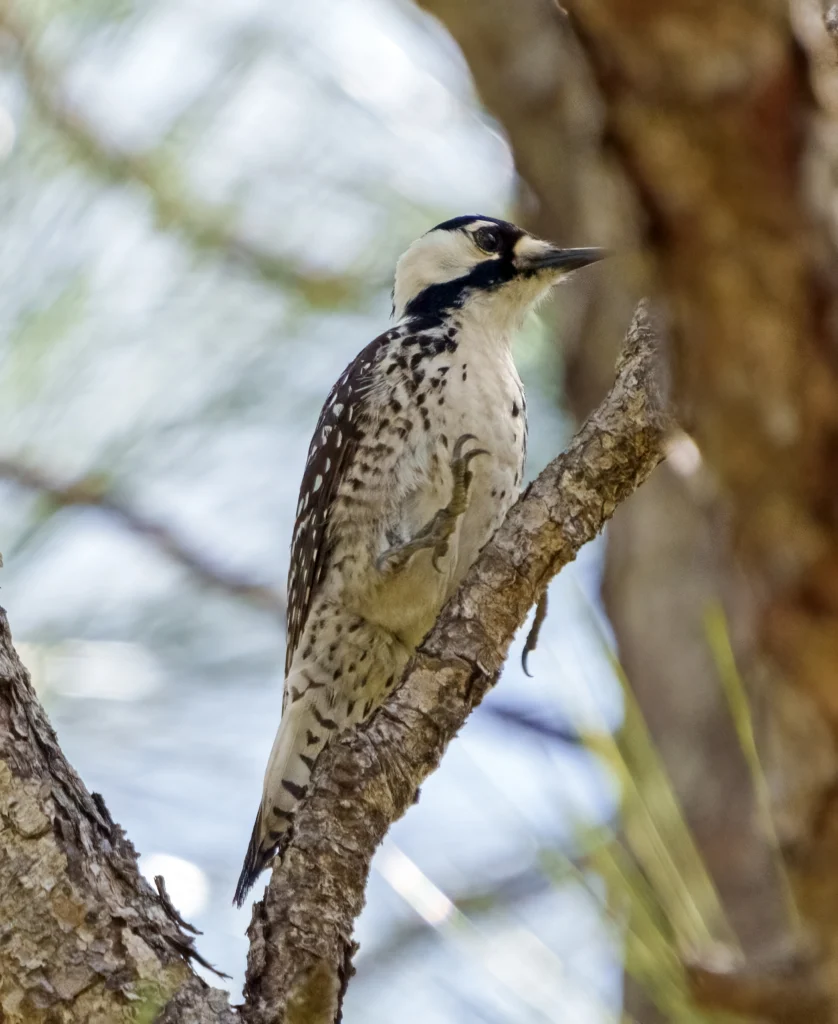
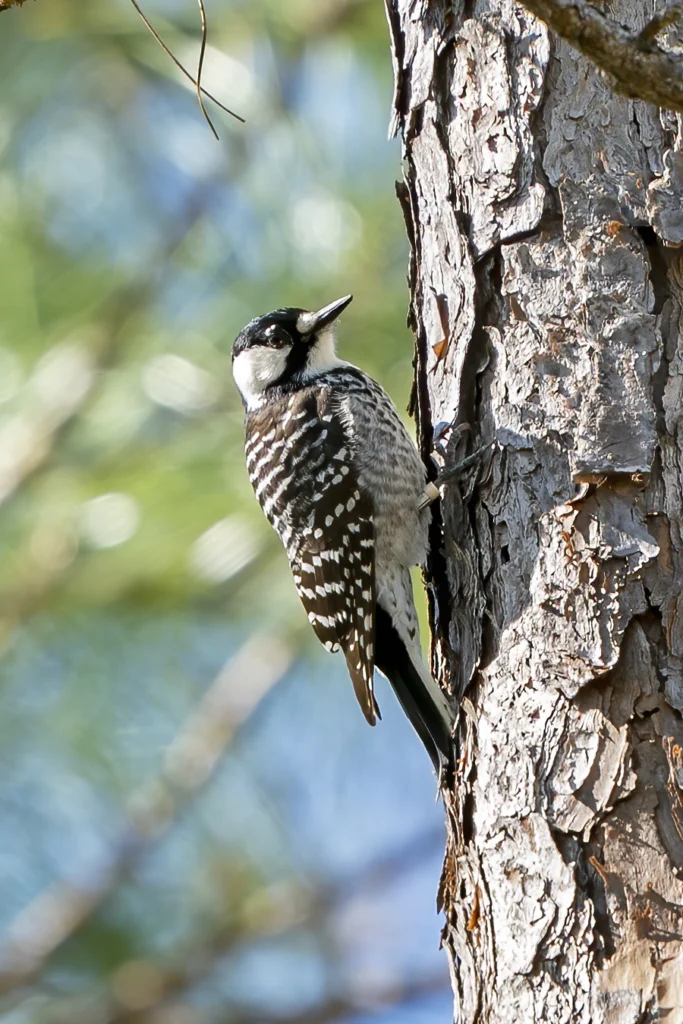
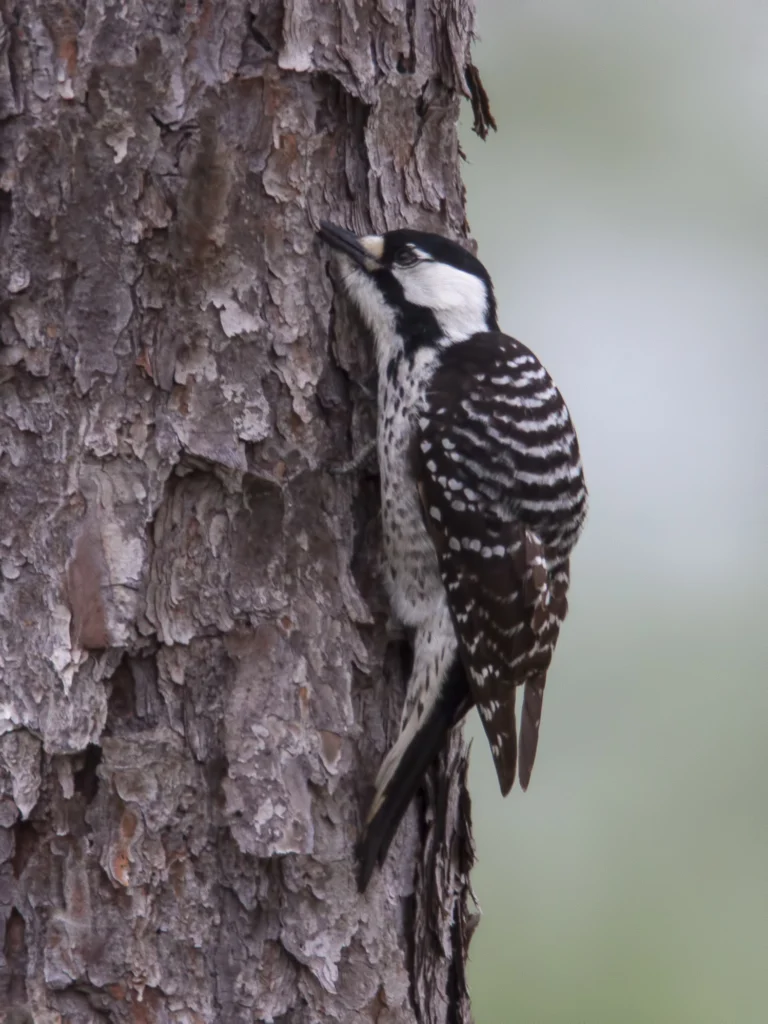
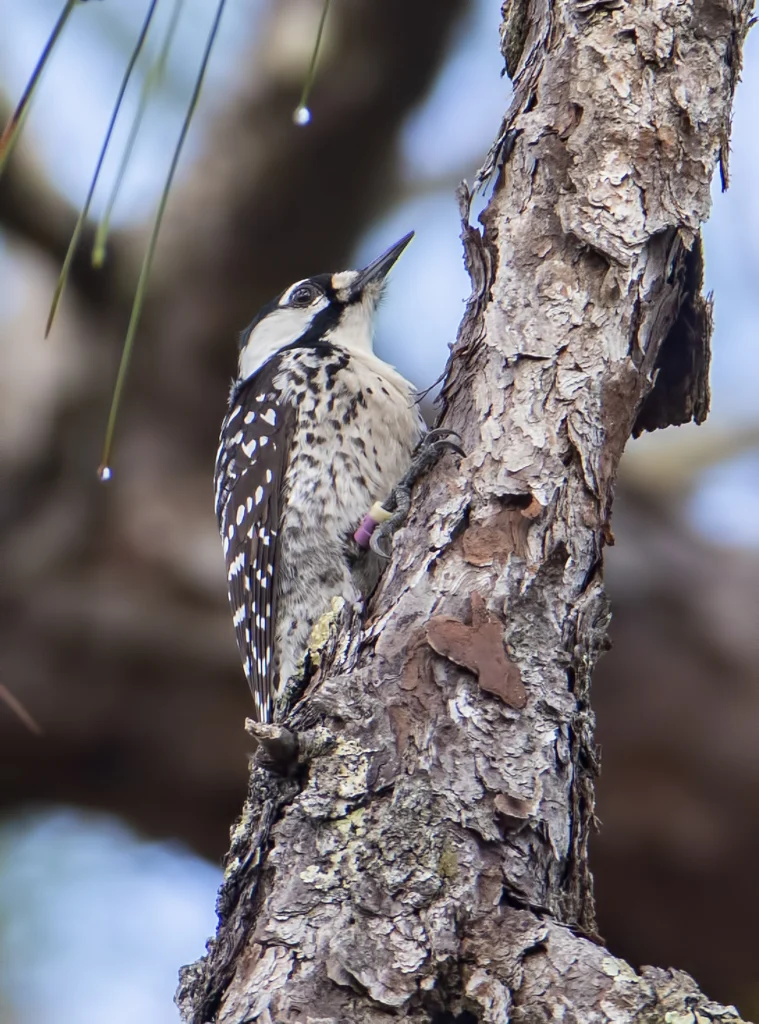
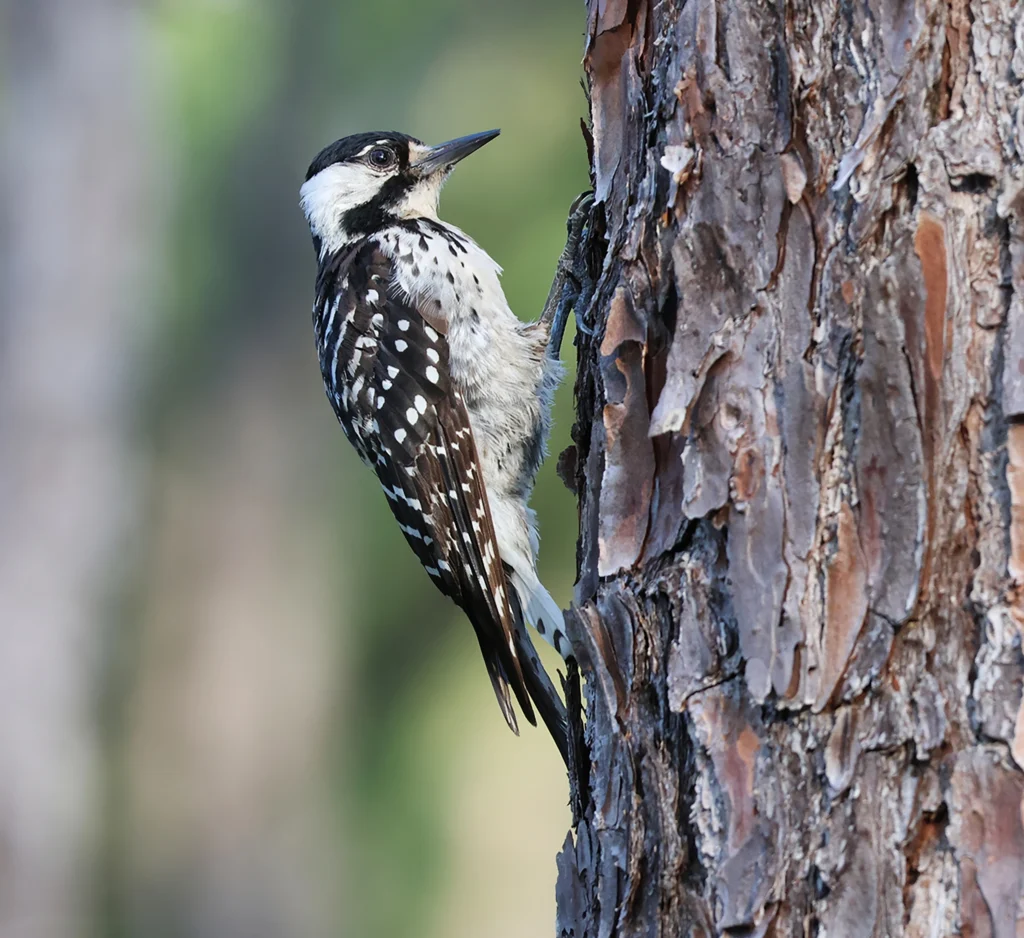
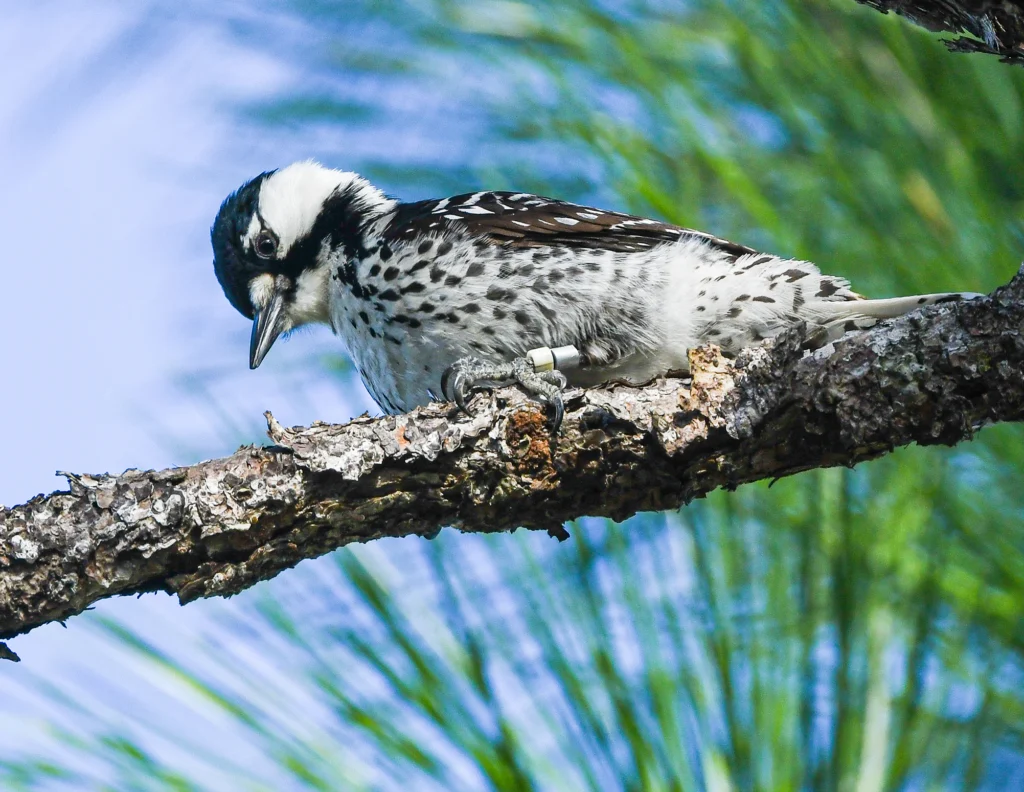
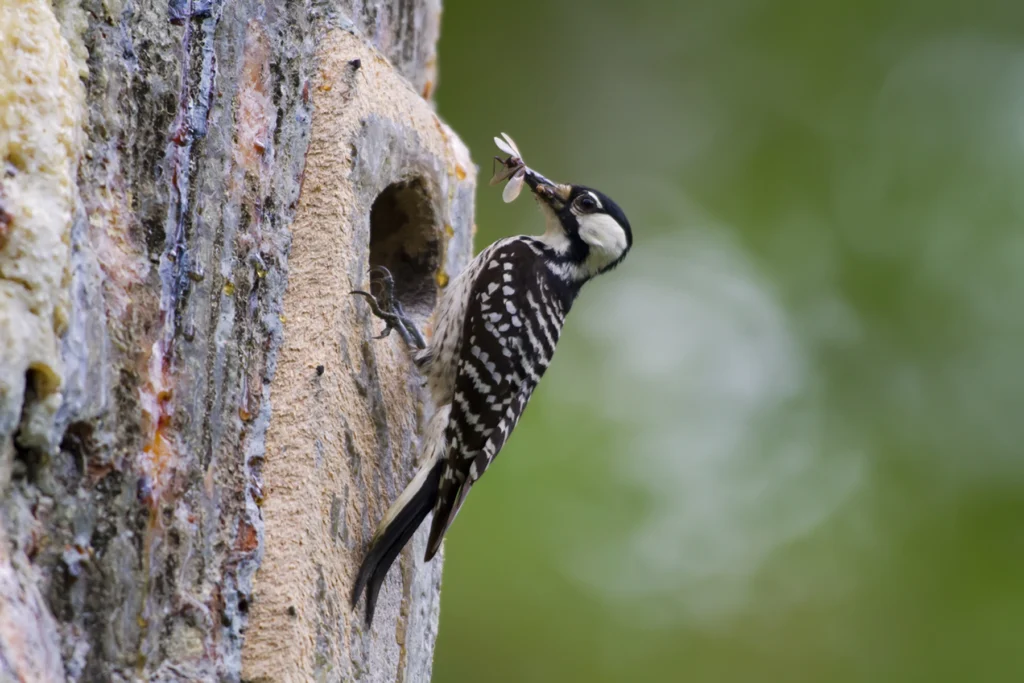
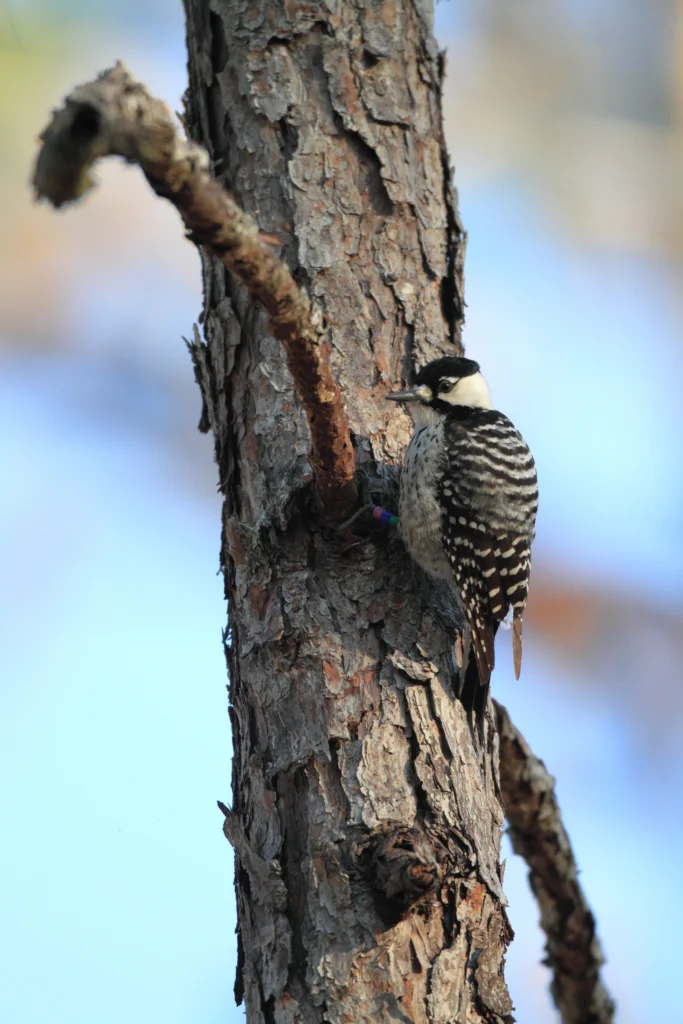
At first glance, the intricate black and white patterning of the Red-cockaded Woodpecker is similar to many other North American Woodpeckers: white below and largely black above, with white outer tail feathers and white stippling over the wings. Similar to the Nuttall’s and Ladder-backed Woodpeckers, thin white bars run down the Red-cockaded’s black back. However, this species stands out from other similar woodpeckers thanks to the large white cheek patch covering the area from behind the eye to the shoulder. Though rarely visible, in males, a small red patch adorns this white patch just below the crown.
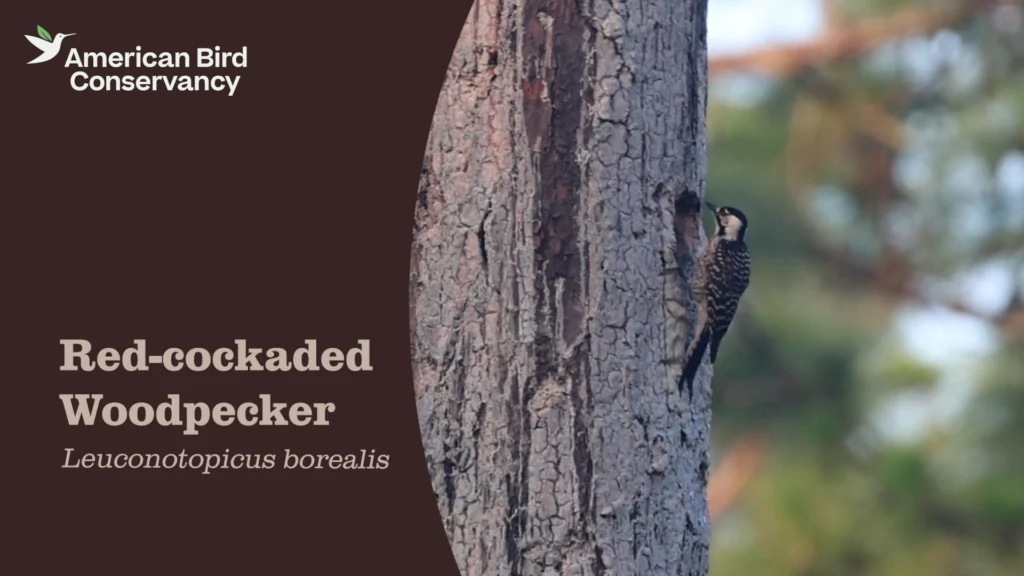
As with many social species, the Red-cockaded Woodpecker is highly vocal and possesses an extensive repertoire of calls. These birds are known to produce high-pitched squeaks, chortles, rattles, and a range of other vocalizations. Both sexes also drum, although the drum of this species is notably softer than that of many other woodpeckers, and is assumed not to function in long distance communication.
Credit: Matt Wistrand, XC752671. Accessible at https://xeno-canto.org/752671.
Credit: Andrew Spencer, XC109890. Accessible at https://xeno-canto.org/109890.
The Red-cockaded Woodpecker is a habitat specialist, relying on mature pine forest with large trees, abundant snags, and sparse understory.
Specific Area
Southeastern and south-central United States
Range Detail
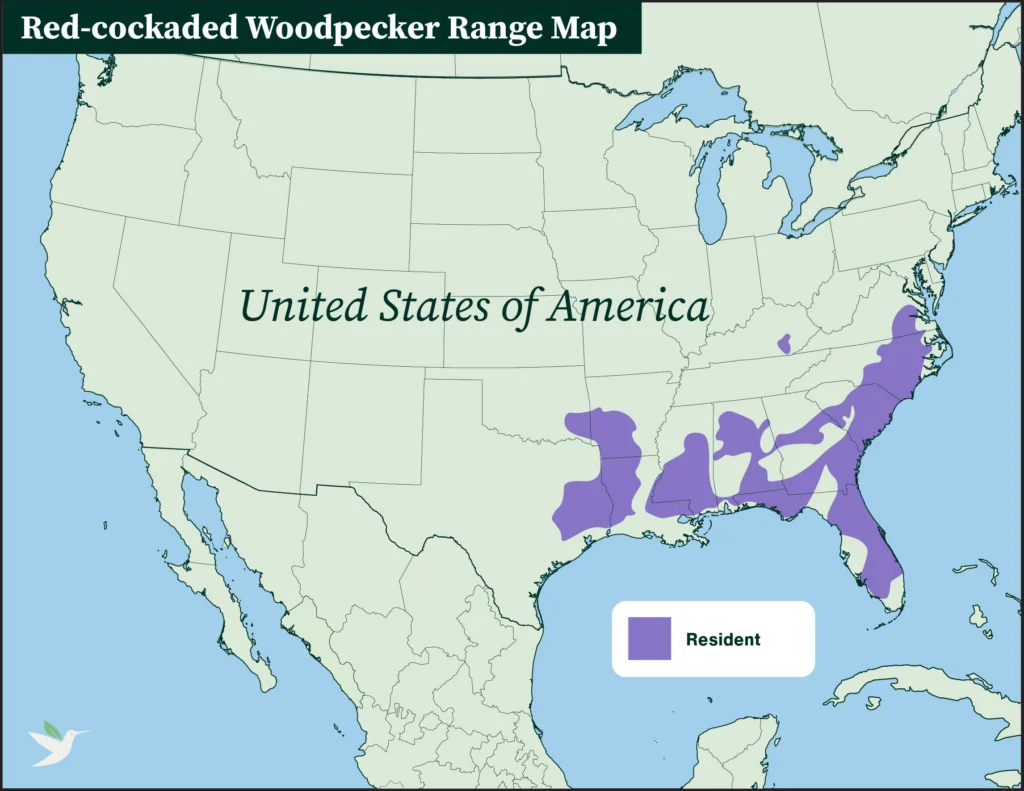
This species is found only in the continental United States, with a range that originally included the entire southeast. Red-cockaded Woodpeckers are now found in a reduced area from Oklahoma east to Virginia, and south to Florida and Texas. The species is nonmigratory, although individuals may wander in response to habitat loss.
Did you know?
The Red-cockaded Woodpecker is a “keystone” species of southern pine forests — one with an outsized influence in the ecosystem, and that other species depend upon. The birds excavate their own nest cavities, which later provide nesting habitat for other cavity-users that can’t make their own, including Wood Ducks and Eastern Bluebirds, along with mammals such as the southern flying squirrel.
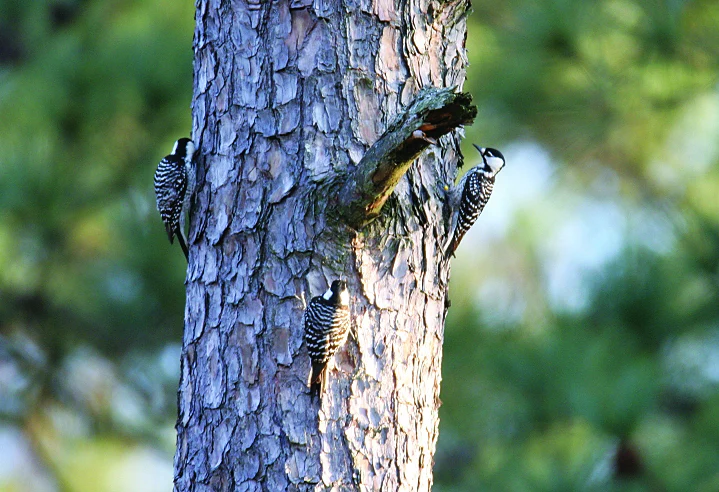
The Red-cockaded Woodpecker is one of only a handful of woodpeckers that form small family groups or “clans,” which share the responsibilities of raising young and defending a breeding territory. Though some breeding pairs operate on their own, a clan will generally consist of a breeding male and female and as many as five helpers, usually male offspring from previous years. Surprisingly, unrelated birds will sometimes join clans as well. The clan often forages together as a group, and may be joined by other species as well in the nonbreeding season.
Red-cockaded Woodpeckers eat a wide variety of insects, which they find by flaking off and probing under the bark of large pine trees. Male and female Red-cockaded Woodpeckers exhibit different foraging behaviors, with males favoring the tree limbs and upper trunk and females foraging on the trunk below the crown. This specialized foraging strategy is most noticeable in winter when insects are scarce, and may help reduce competition between individual birds.
The Red-cockaded Woodpecker is socially and sexually monogamous, and usually mates for life. However, unlike many birds that form long-term pairs, courtship and pair-bond maintenance are largely limited to a fairly simple flight display. In what researchers refer to as the floating flight, flutter aerial display, or even moth flight, the male chases the female through the canopy with his wings held at an angle above his body. This display is not limited to courtship, however, and is also used in antagonistic interactions between males.
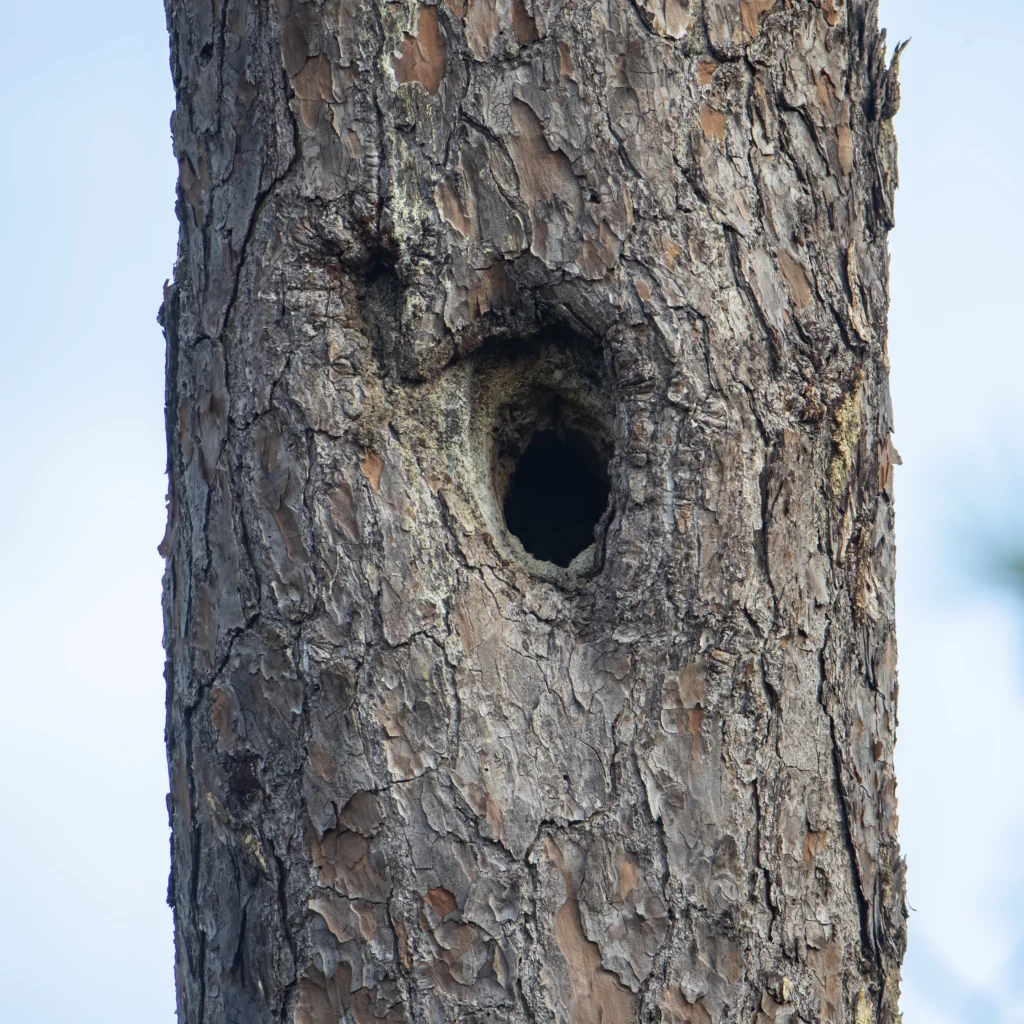
The Red-cockaded is very unusual among woodpeckers in that it excavates cavities in living pines; most species will only excavate in dead trees or dead parts of trees. Red-cockaded Woodpeckers prefer older trees with red heart disease, a fungus that softens the wood and allows for easier excavation. Even so, the birds typically need several years to complete a nesting or roosting cavity. As the birds excavate, the live pine tree “bleeds” sticky sap around the hole opening, discouraging tree-climbing snakes that could take eggs and young birds. Apparently well aware of the sap’s benefits, the woodpeckers actively reopen the wounds in the tree to maintain their nest defenses.
The breeding female will lay three to five white eggs, sharing incubation duties with the breeding male and helpers. The eggs are usually laid in the breeding male’s roosting cavity, where he incubates them each night. The eggs hatch after only 10 to 11 days, an unusually short period for any bird species. All members of the clan assist with brooding and feeding the young. Throughout the nesting period, the clan works together to defend the territory against intruders and predators.
Related News & Stories
Join the flock! Your donation helps preserve the habitats that birds need to survive.