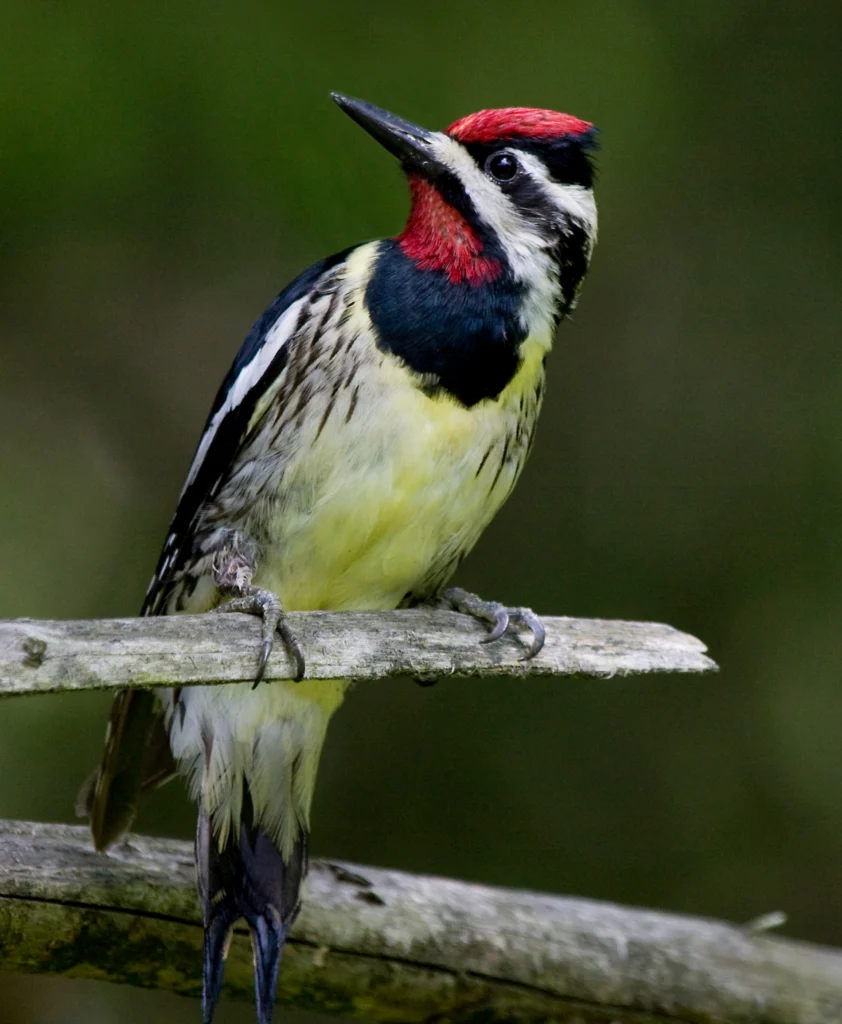
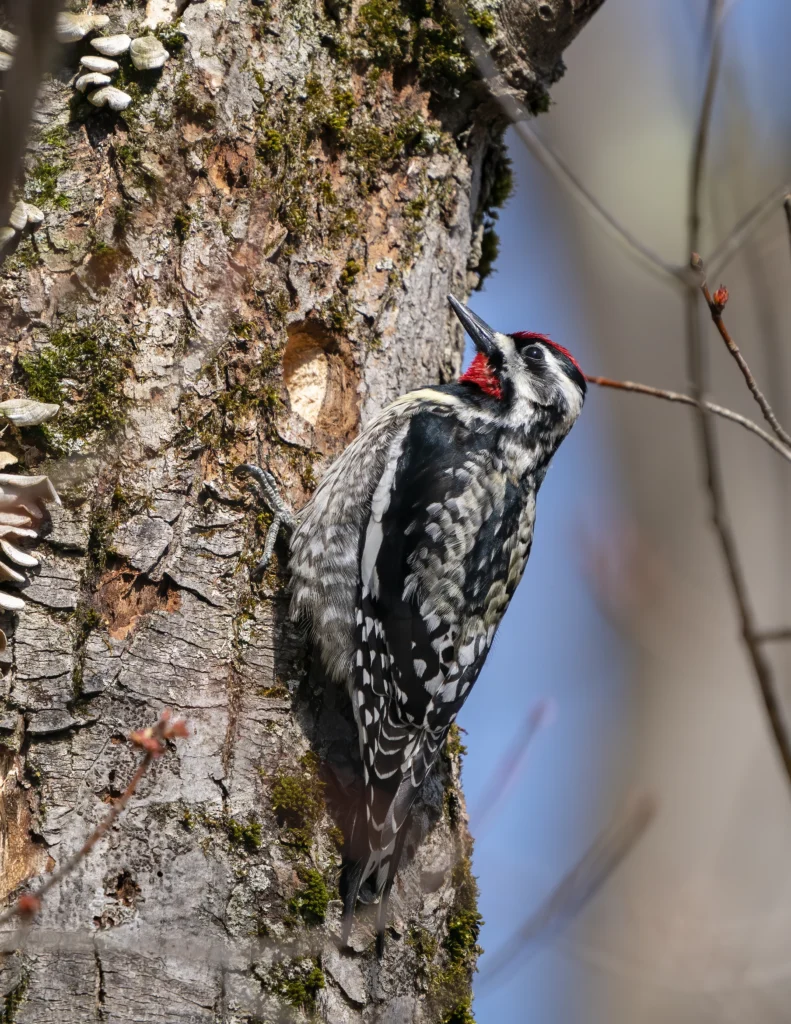
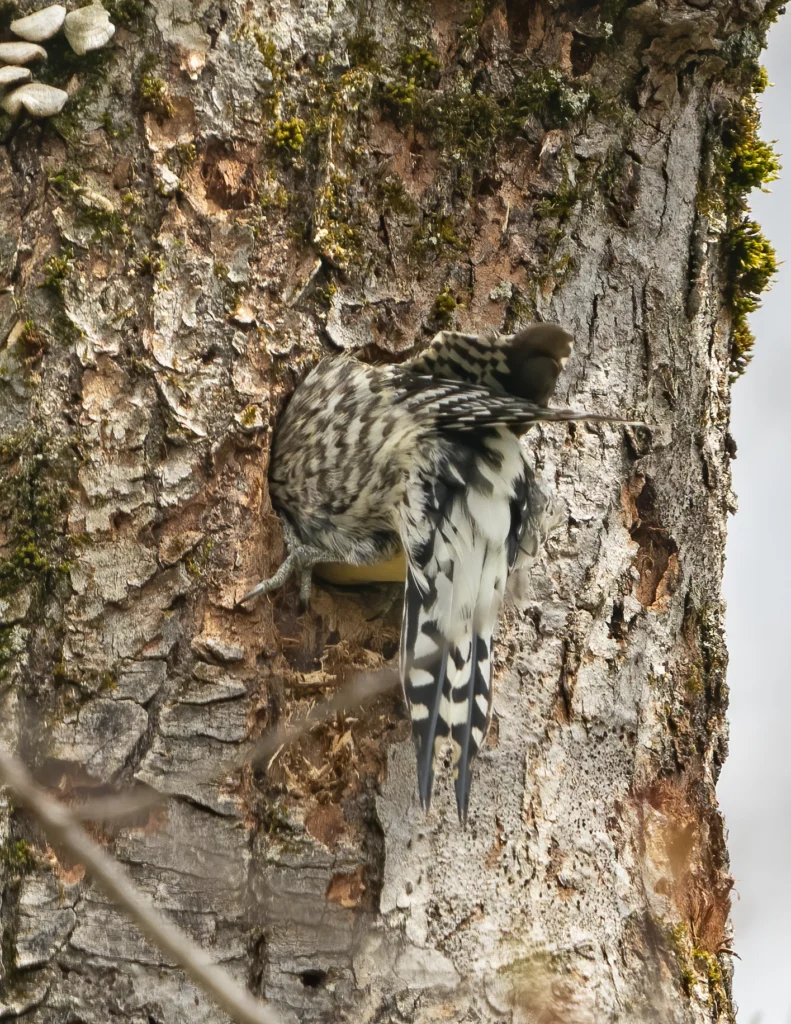
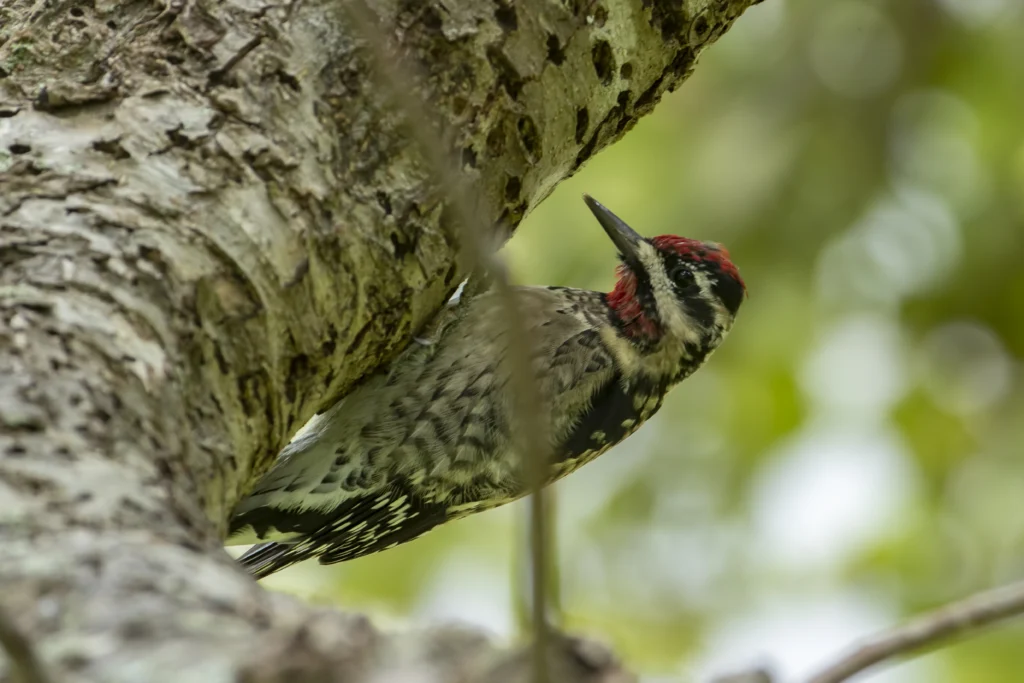
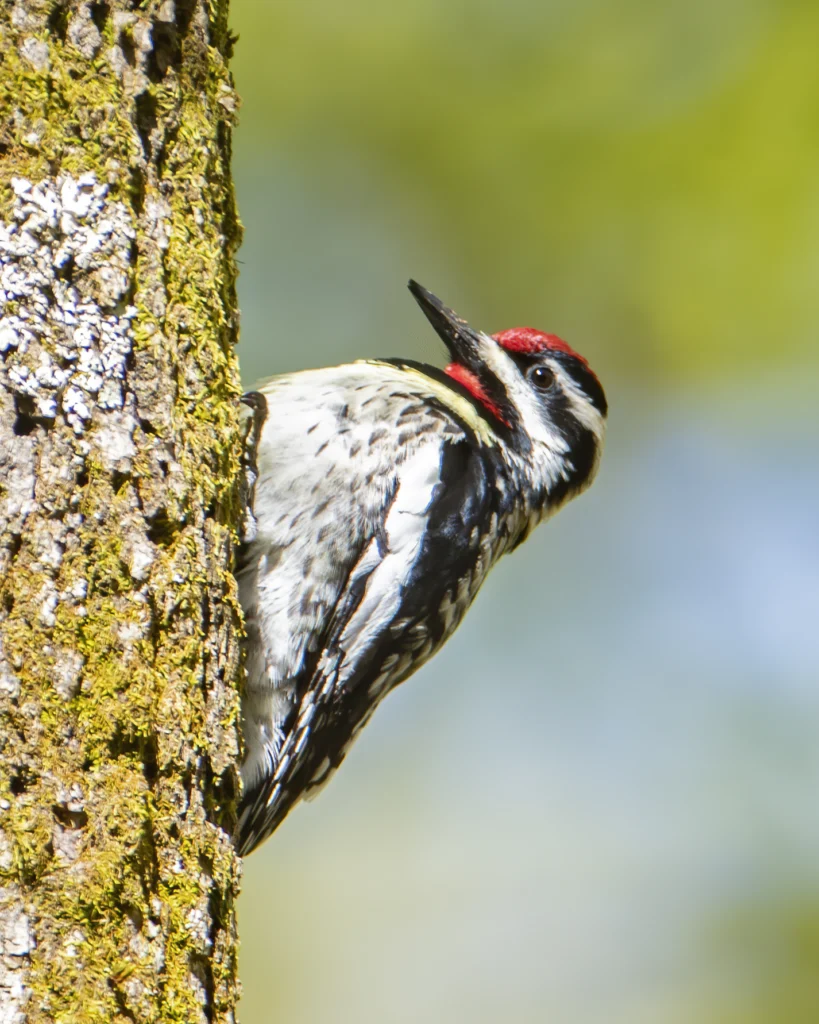
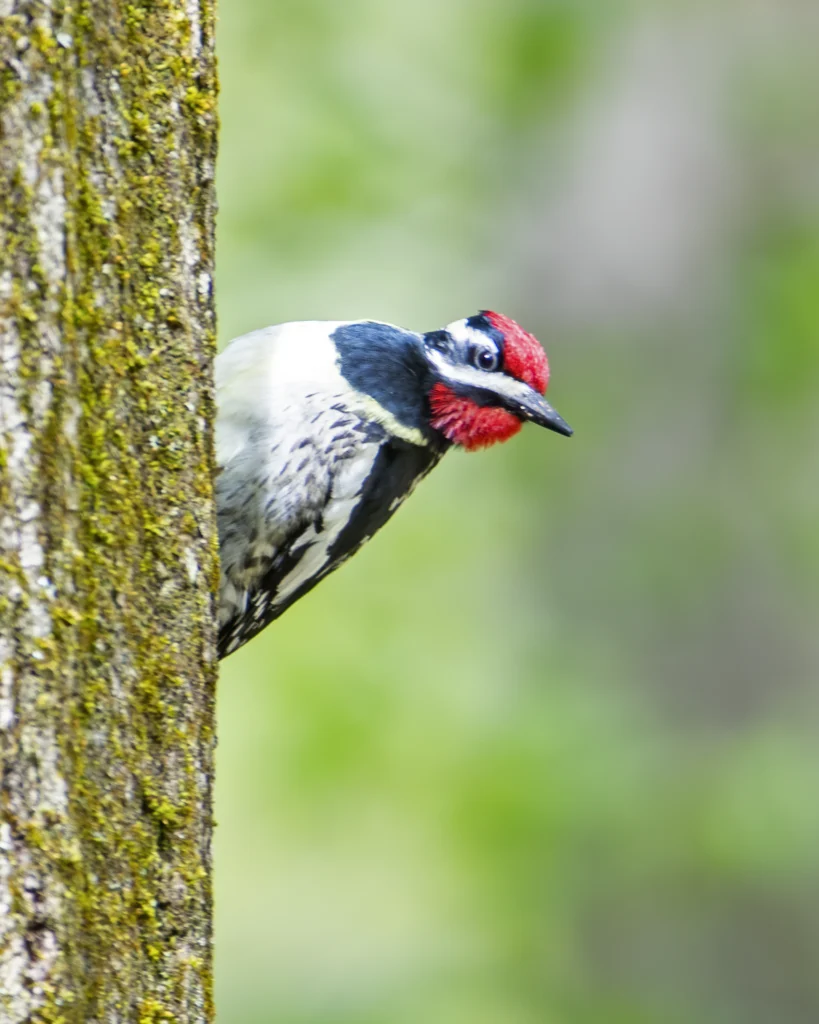
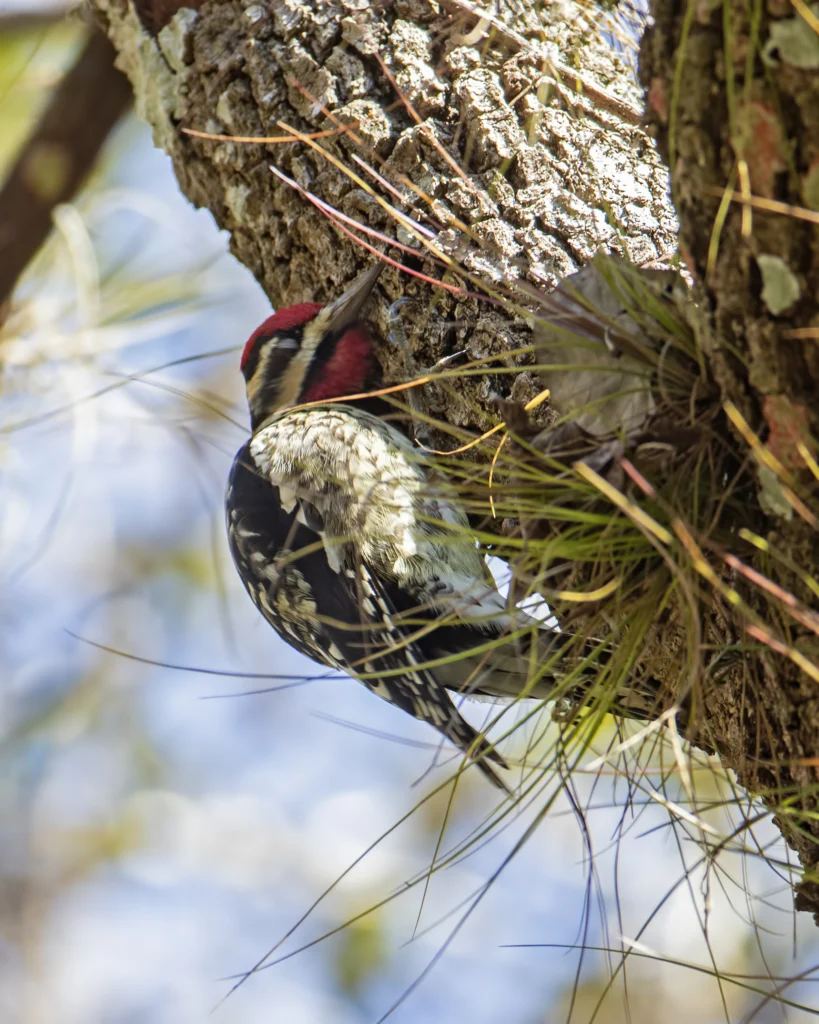
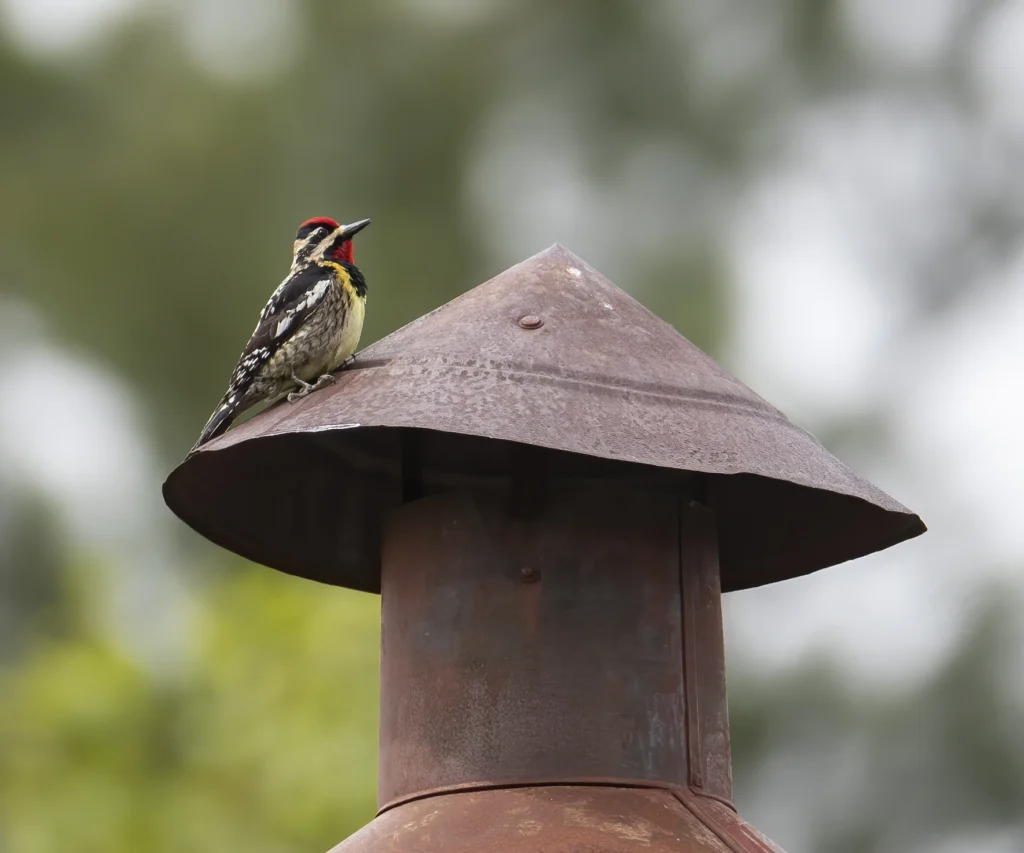
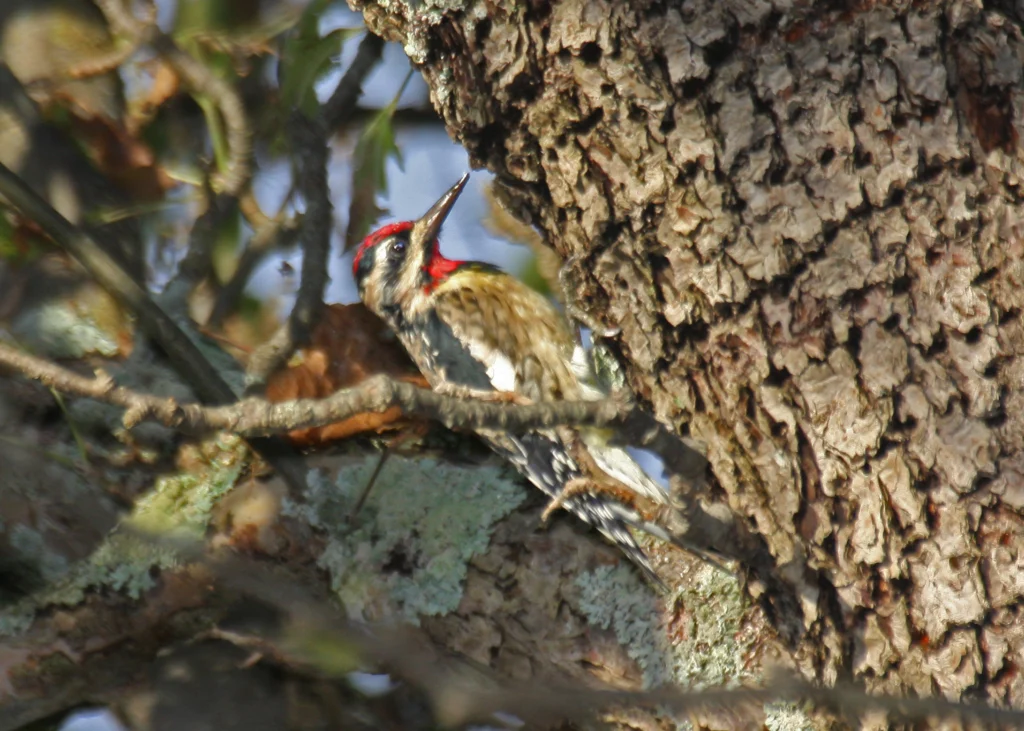
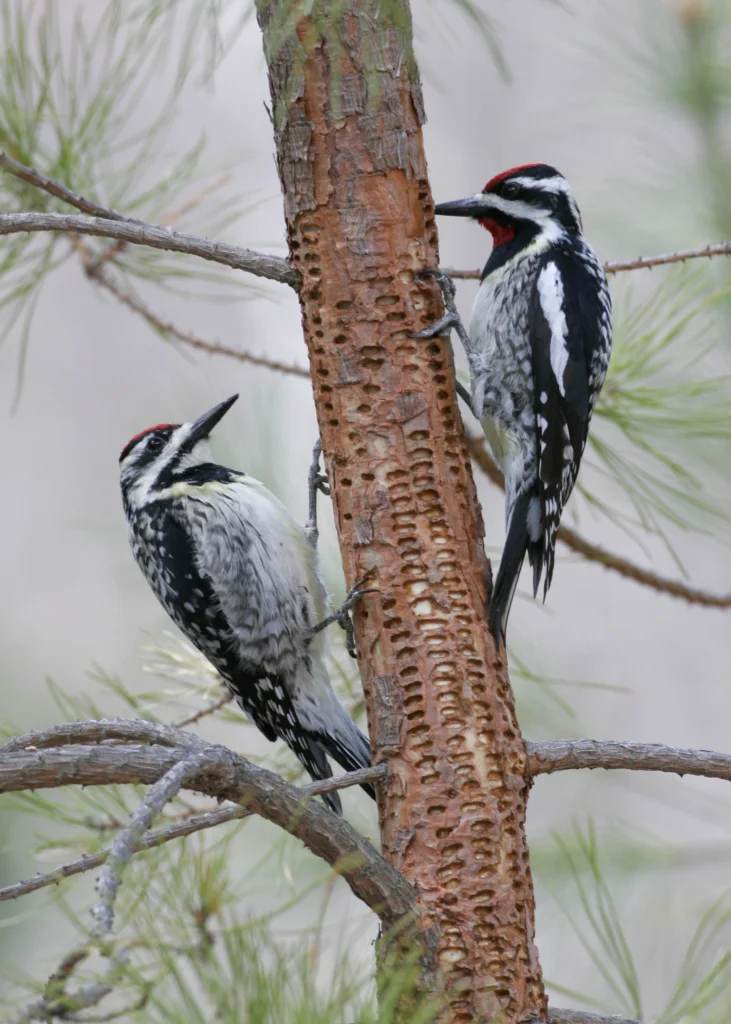
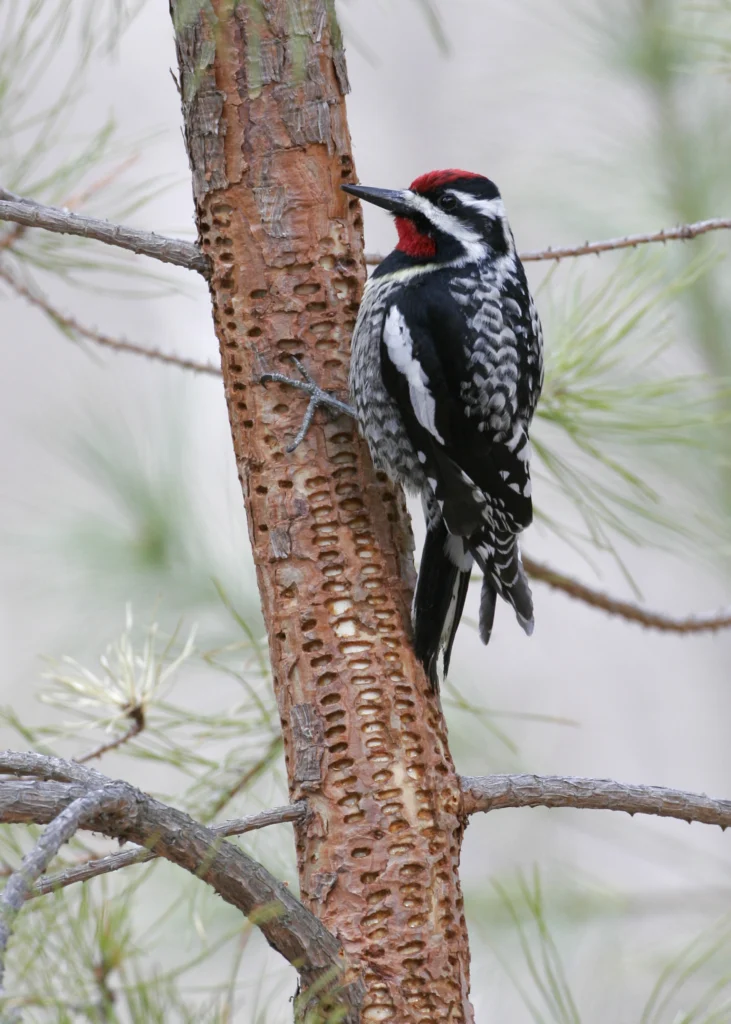
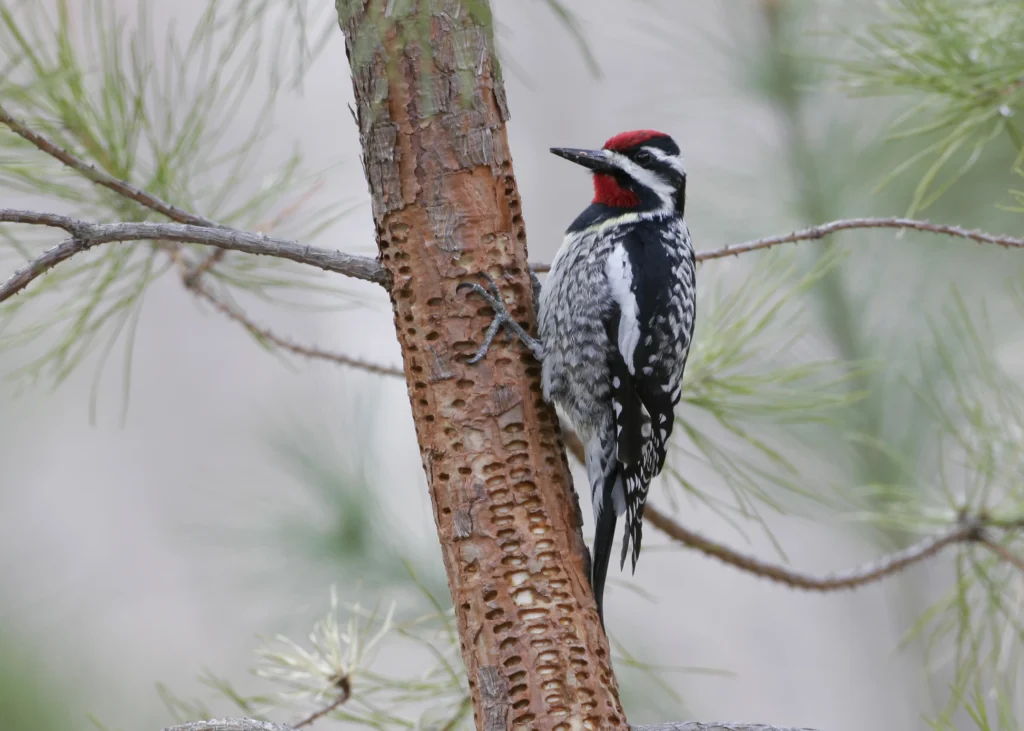
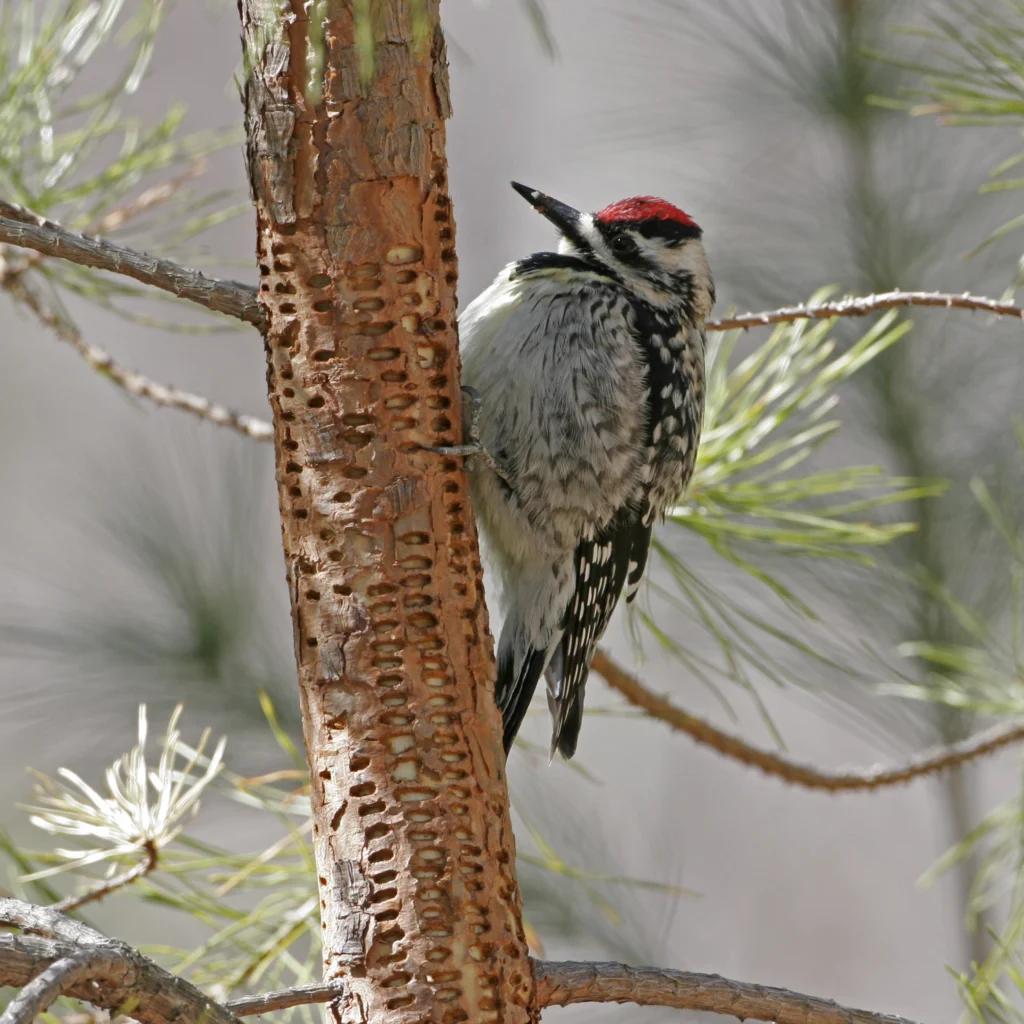
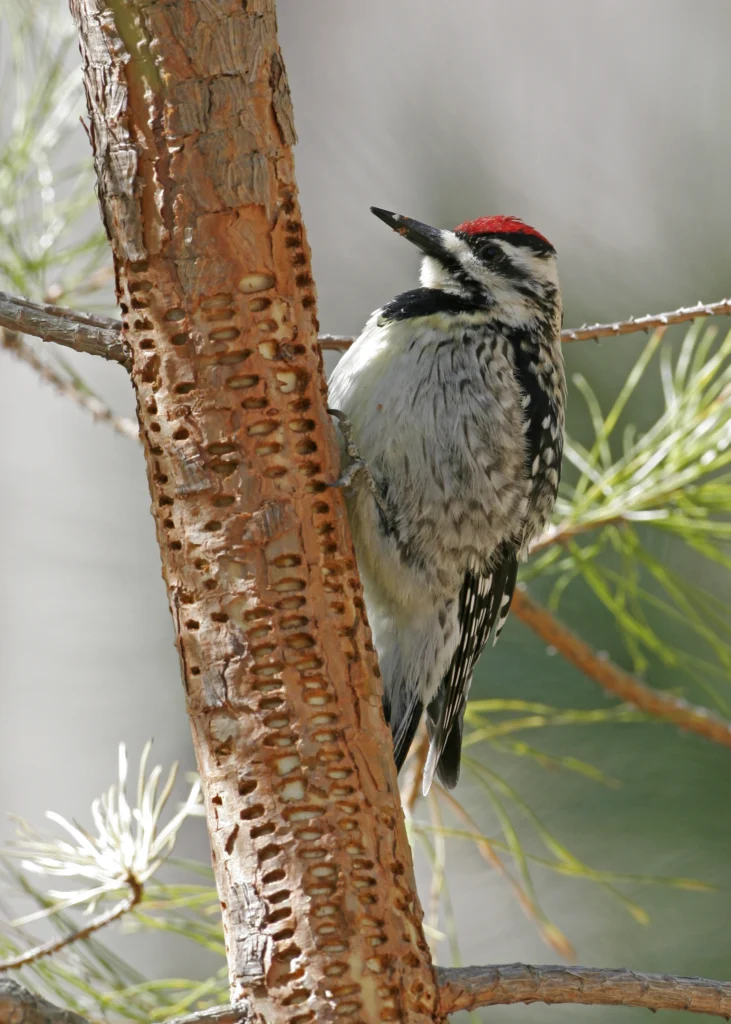
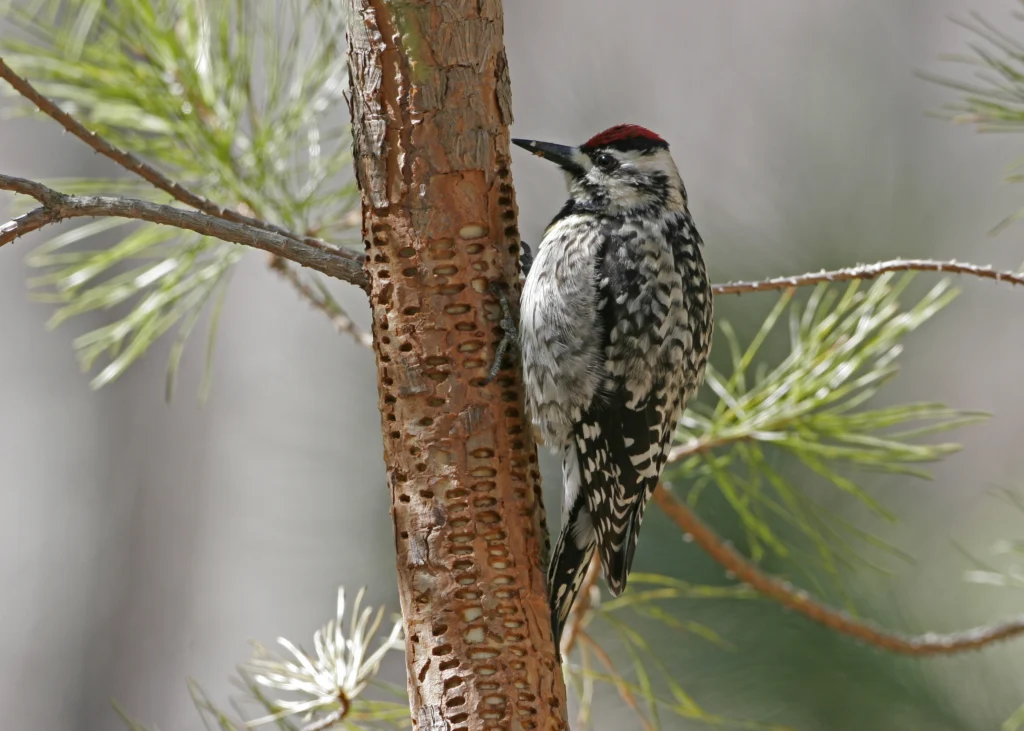
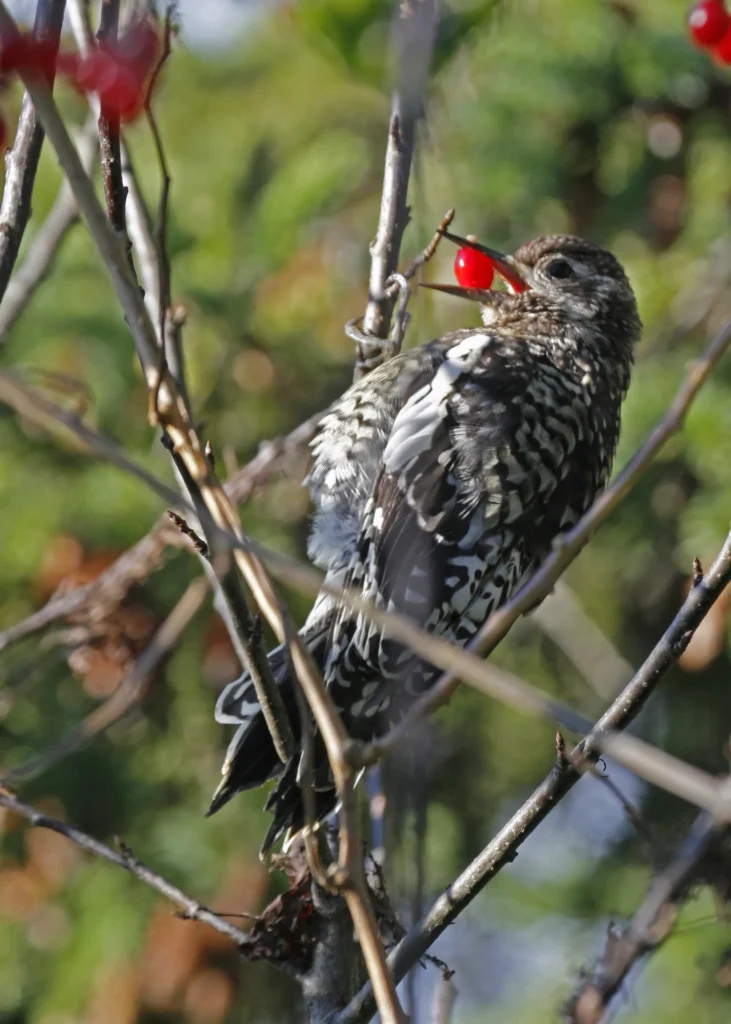
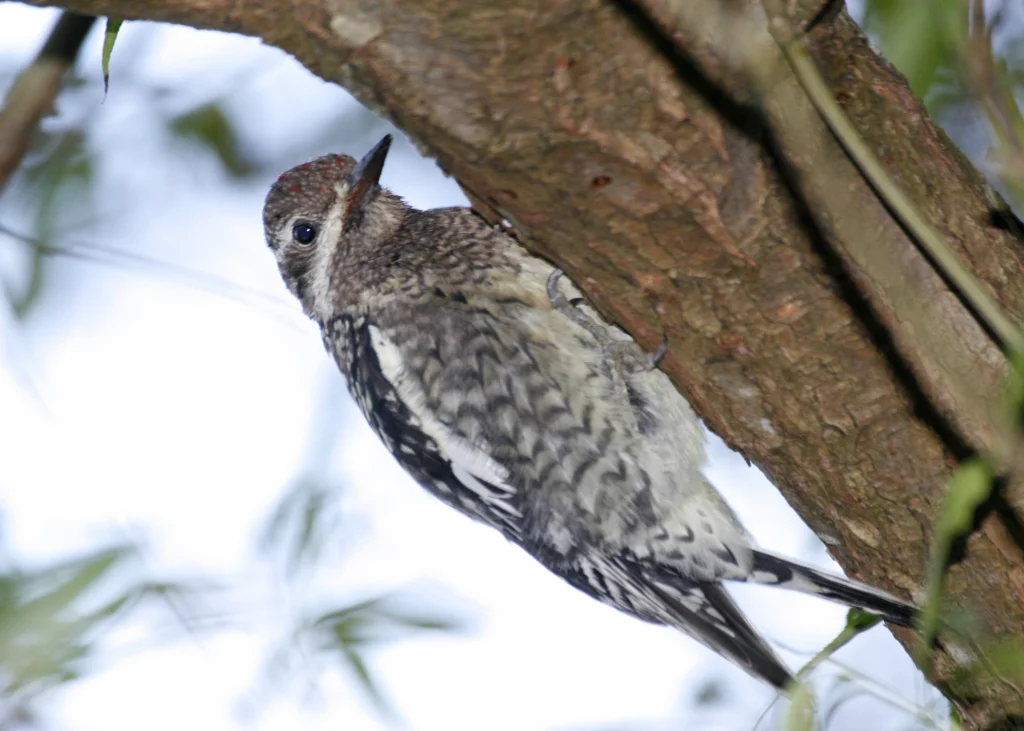
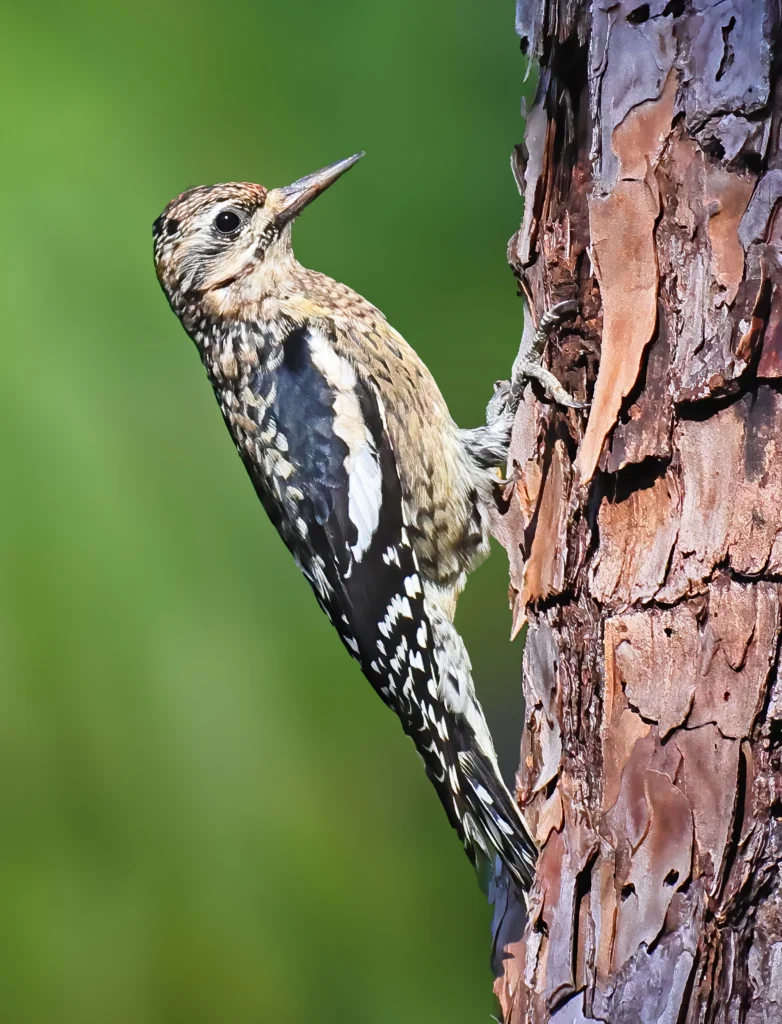
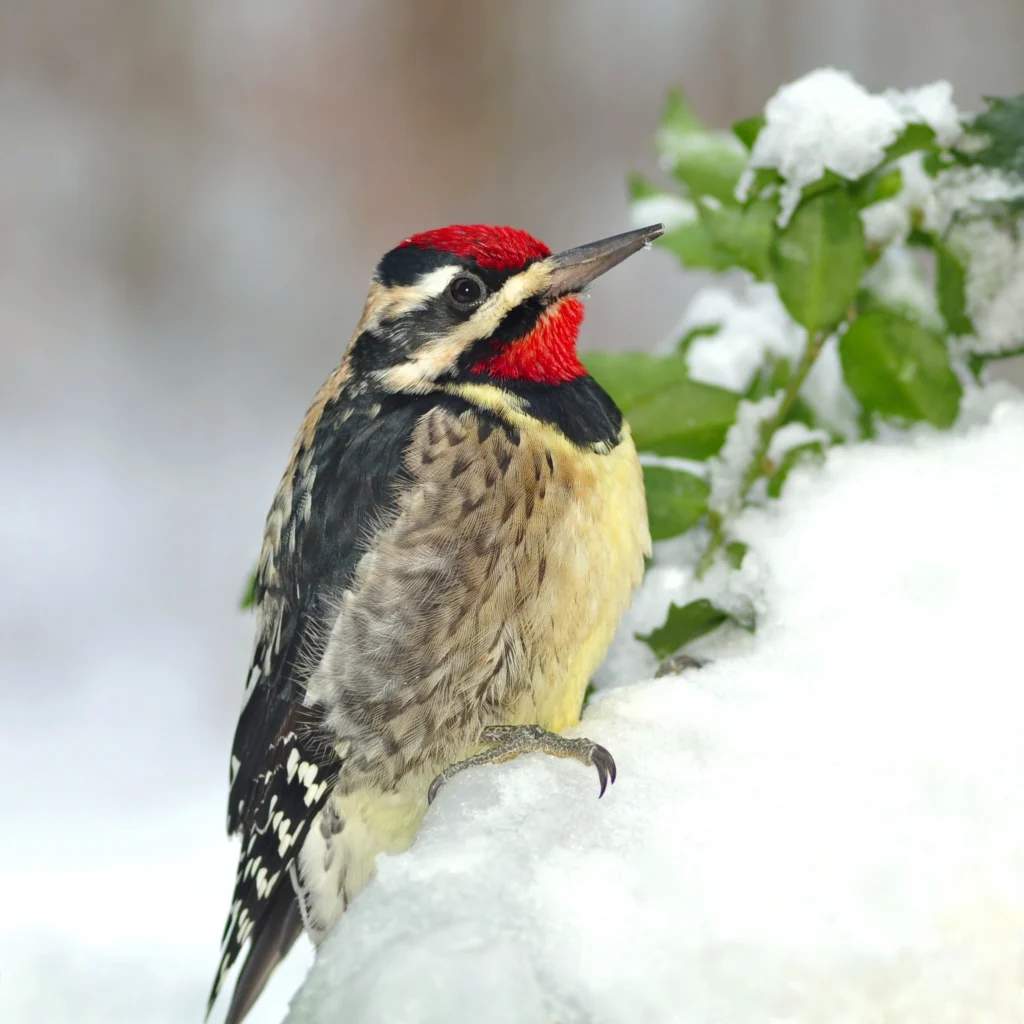
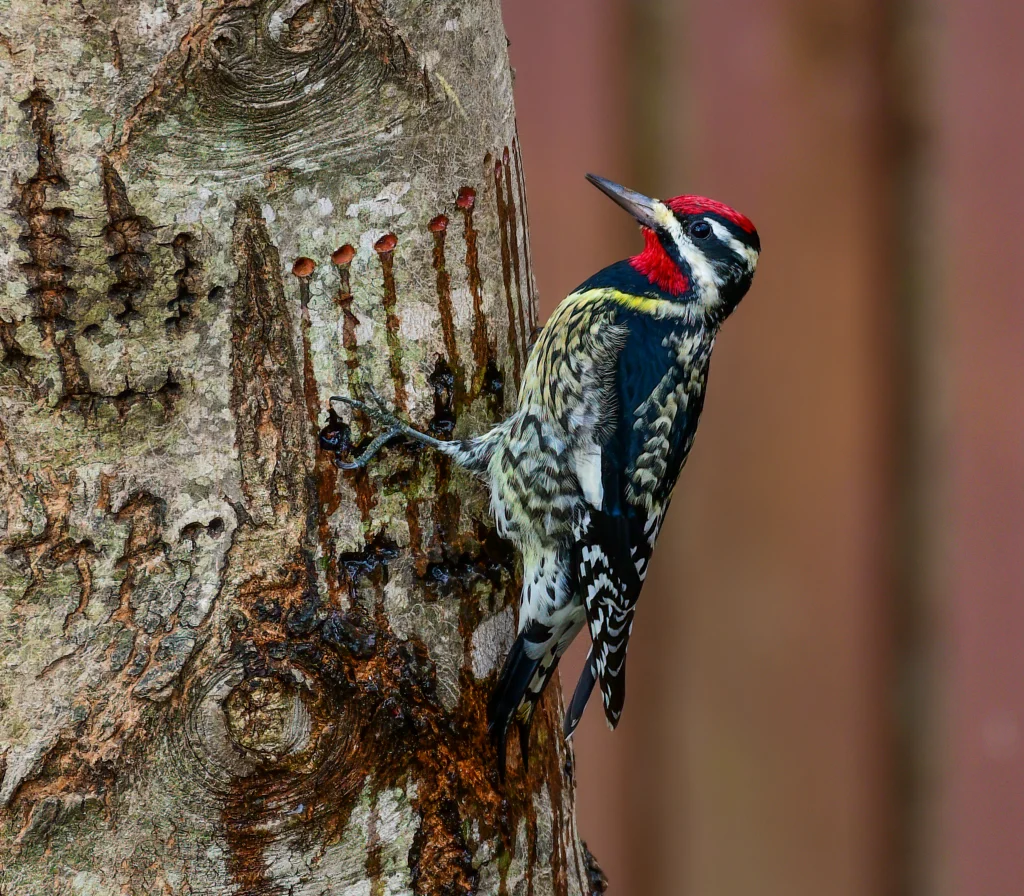
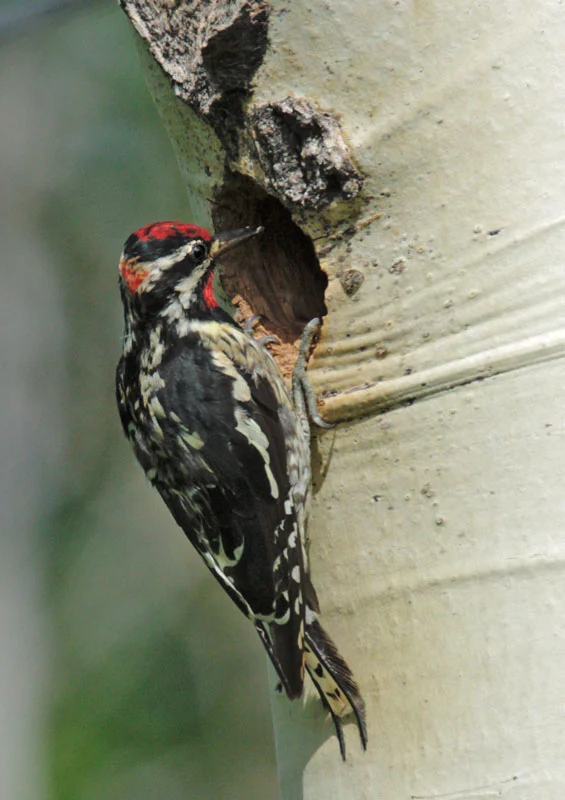
Although the Yellow-bellied Sapsucker is a perennial punchline in jokes about birders and the funny names of their quarry, this interesting, boldly patterned woodpecker is quite real. Despite its name, the yellowish tint on the Yellow-bellied Sapsucker’s underside is subtle, and not always what first catches the eye. More often, what stands out are the vertical white stripe along this woodpecker’s folded wing and its black-and-white face. Both males and females have bright red foreheads, but males also have red throats.
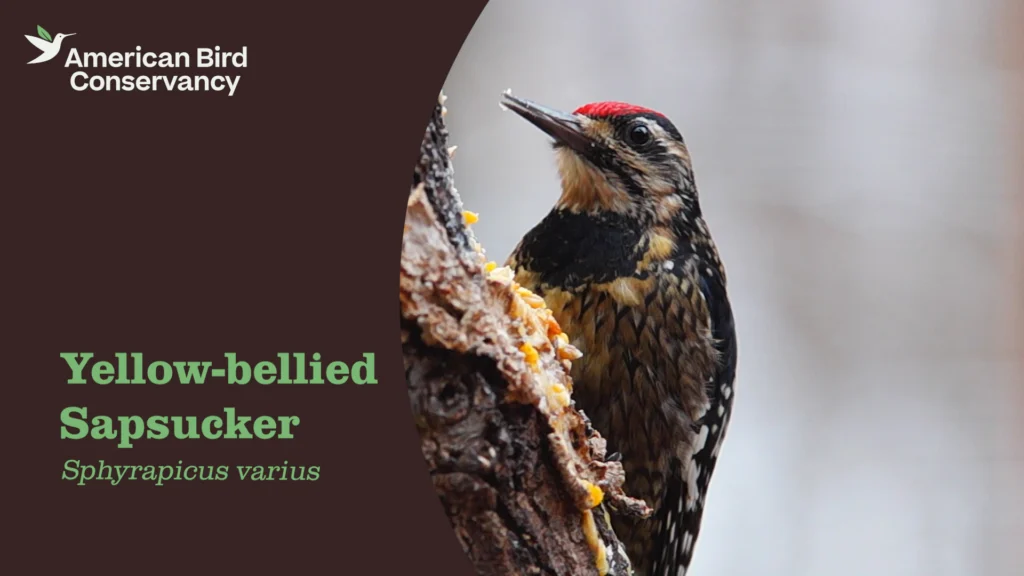
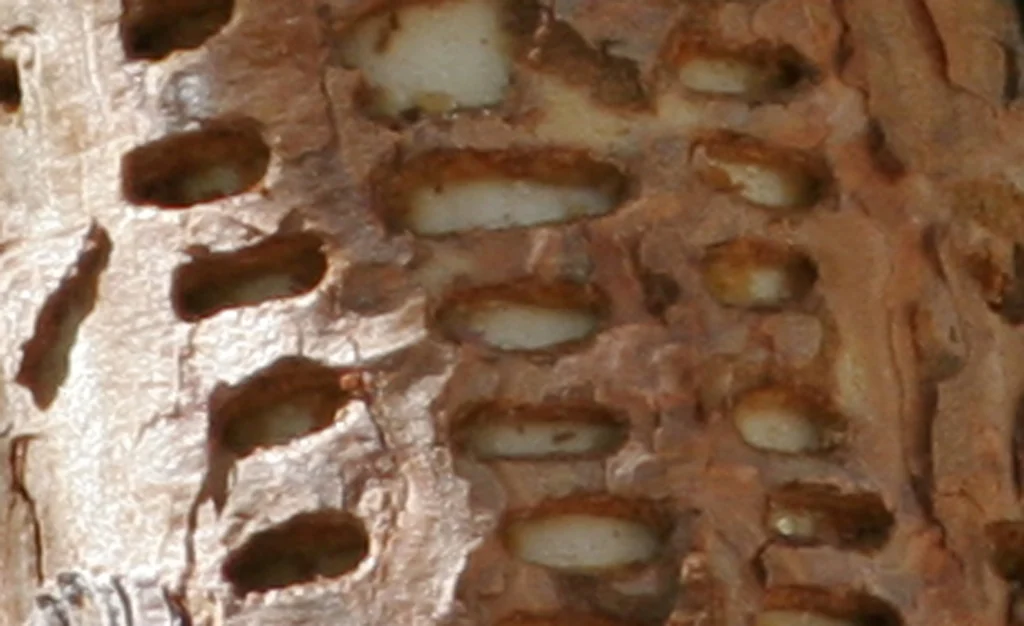
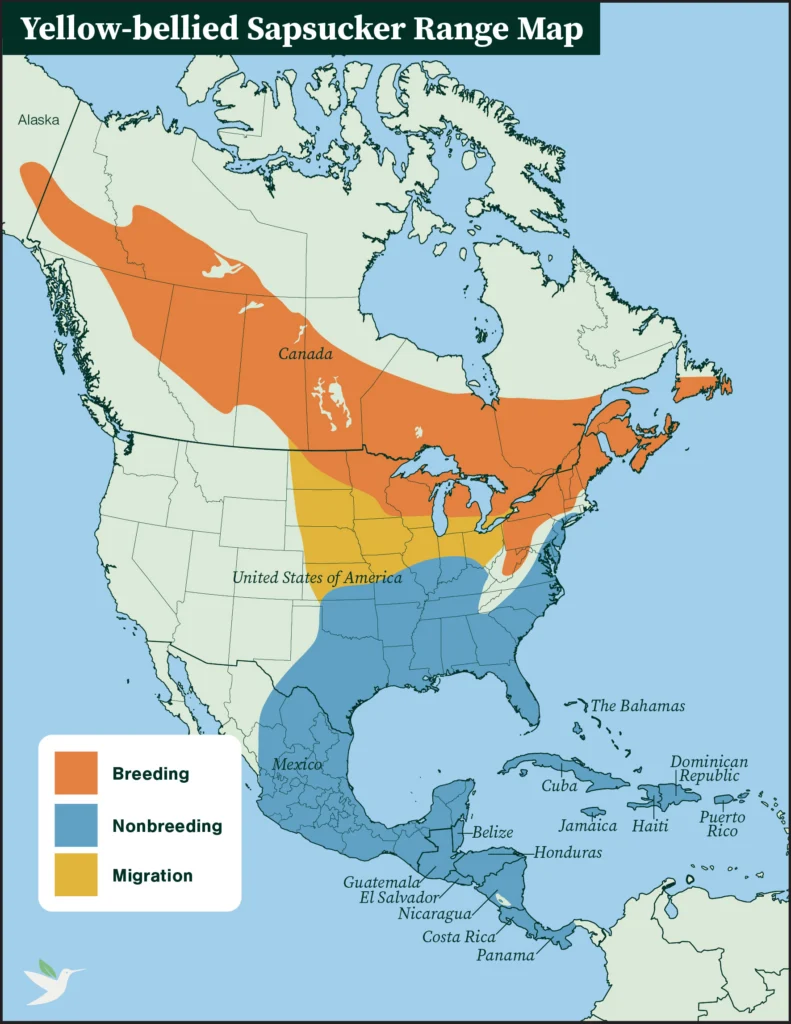
Sapsuckers are a small, specialized group of woodpeckers found only in North America. The Yellow-bellied is the only one found in eastern North America; the other three species, including the closely related Red-naped Sapsucker, inhabit the West. Sapsuckers are unique among woodpeckers in drilling neat rows of holes, known as sap wells, into the inner bark layer and cambium of tree trunks. Sap wells have been noted in more than 1,000 species of trees and other woody plants, but these birds prefer trees with sweet sap, such as birches and maples.
Ruby-throated Hummingbirds depend on Yellow-bellied Sapsucker wells early in spring, before many of their usual sources of nectar, flowering plants, are available. These tiny birds time their spring migrations to coincide with those of the sapsuckers, and even nest near sap wells.
A wide variety of other birds and animals also take advantage of sapsucker wells, from tiny Ruby-crowned Kinglets, nuthatches, and chickadees to mammals such as bats and squirrels. Insects, including moths, bees, and wasps, also feed at the wells.