
Six States Joining Bird City Network
In 2025, more than 275 communities participated in BCN within its 16 programs. They completed more than 3,500 actions to improve habitat, reduce threats, engage people, and promote sustainability.

Megascops asio
Gaakaabishiinh (Ojibwe)
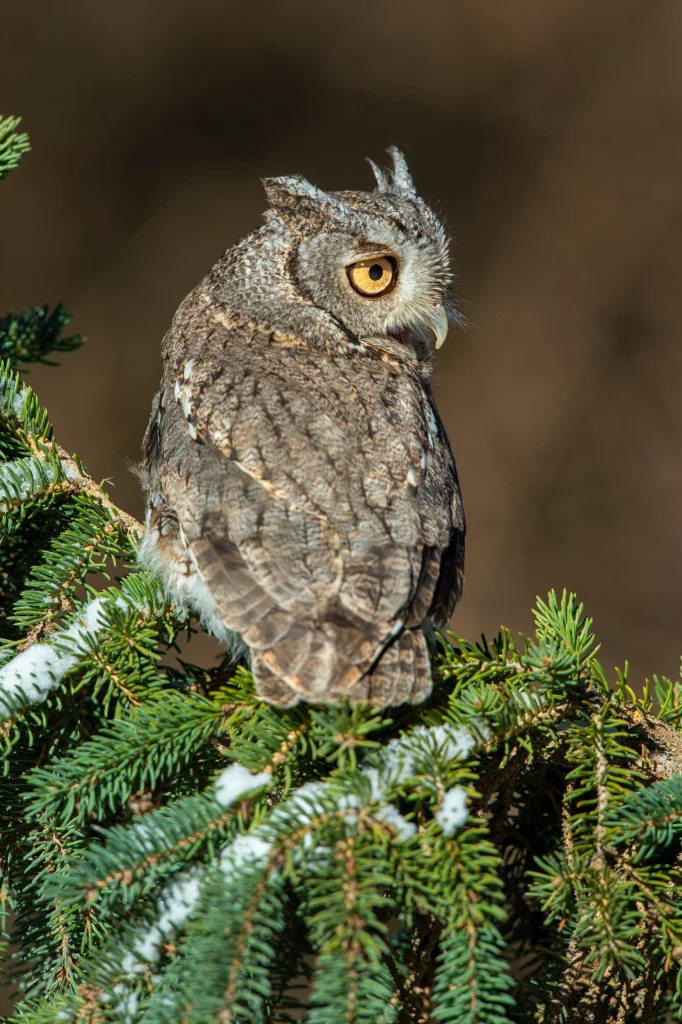
The little Eastern Screech-Owl lives alongside people in many suburban and even urban settings throughout the eastern United States, stashing extra food in the rafters of buildings and hunting in patios and lawns. Although widespread and amenable to developed landscapes, this nocturnal bird often goes unseen and is best detected by its vocalizations.
Eastern Screech-Owls have a rather eclectic diet, including vertebrates and invertebrates that they snatch from the vegetation, the ground, or even shallow water. Their young benefit from this adventurous diet as well, as the parents provision them with a wide range of prey. This may include worm-like reptiles called blind snakes, which adults bring to the nest live. The owl chicks eat some of them, but other blind snakes escape by burrowing beneath the wood chips, pellets, and other debris on the nest cavity’s floor. The surviving blind snakes dine on insect larvae that would otherwise parasitize the owl nestlings. A estudiar in Texas showed that screech-owl chicks grew faster and healthier in nests kept parasite-free by these “helper” blind snakes.
Although the Eastern Screech-Owl is still considered a common species, Partners in Flight data show a decline in populations in some areas. This owl is often the victim of collisions with glass and vehicles. Screech-owls that nest in suburbs and orchards are also vulnerable to pesticides, and like so many other birds, they are affected by habitat loss.
Living in urban and suburban environments provides many benefits, but comes with particular risks as well. While collisions with reflective windows in city centers during migration take center stage, they are a year-round threat to resident species, like the Eastern Screech-Owl, as well. More than one billion birds die from striking reflective glass each year in the U.S. alone, but the threat of collisions persists anywhere windows go untreated.
Eastern Screech-Owls’ use of orchards can also be risky when farmers use pesticides. In addition to killing insect prey, pesticides can be incidentally consumed by screech-owls and other birds that eat insects. Rodenticides used in homes and businesses can also put owls and other raptors at risk when they consume poisoned rodents.
While Eastern Screech-Owls can make do without a lot of tree cover, they do require some trees, and cutting too many can make habitat unusable. However, it is also extremely important for these owls to have nest cavities, whether in the form of natural holes, old woodpecker cavities, nest boxes, or even crevices in old buildings. Woodpeckers often prefer to nest in dead or dying trees, and the removal of these trees can force these owls to move elsewhere in search of a suitable place to breed.
The Eastern Screech-Owl needs our help to overcome the threats it faces. We encourage taking action at home to help backyard birds like screech-owls — treating windows to prevent collisions, avoiding pesticides, and leaving dead or drying trees standing in yards can all benefit these fascinating nocturnal neighbors. At ABC, we’re inspired by the wonder of birds and driven by our responsibility to find solutions to meet their greatest challenges. With science as our foundation, and with inclusion and partnership at the heart of all we do, we take bold action for birds across the Americas.
ABC ha sido líder en el esfuerzo por reducir el devastador impacto de las colisiones con cristales en las aves. Hemos desarrollado métodos innovadores para evaluar la eficacia de los dispositivos de prevención de colisiones, creado recursos para mejorar nuestra comprensión colectiva de las colisiones y facilitar el acceso a soluciones, y promovido políticas que protejan a las aves en Estados Unidos.
ABC colabora con socios a nivel estatal y federal en EE. UU. para exigir la regulación o la prohibición de los plaguicidas y toxinas más dañinos para las aves. Desarrollamos programas innovadores, como trabajar directamente con agricultores para que utilicen semillas sin recubrimiento de neonicotinoides, impulsar la investigación sobre el impacto de los plaguicidas en las aves y alentar a millones de personas a dejar de usar plaguicidas dañinos.
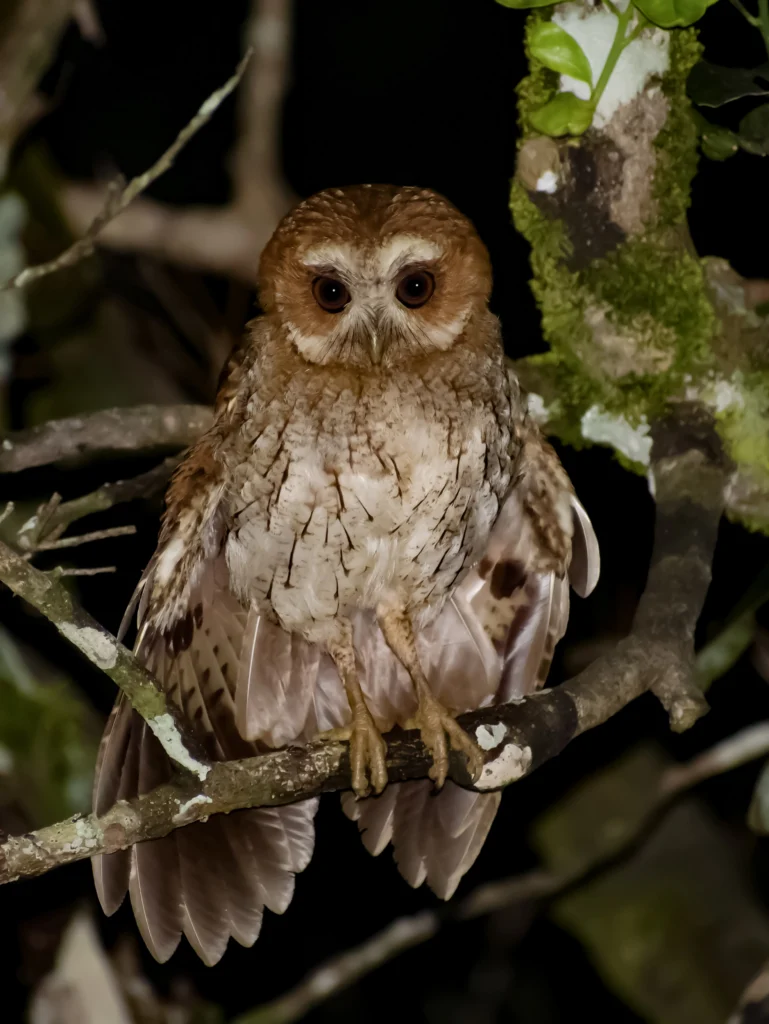
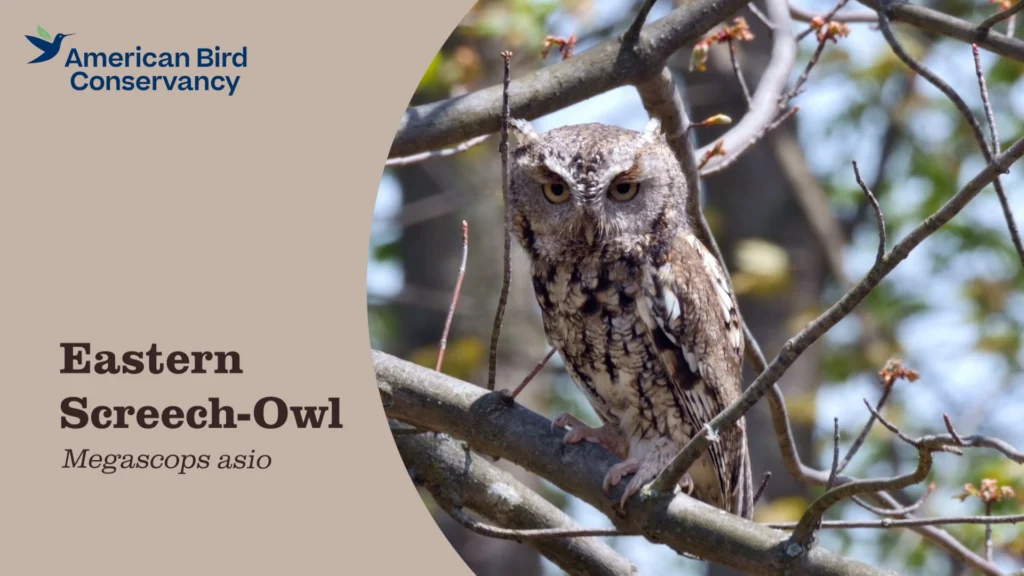
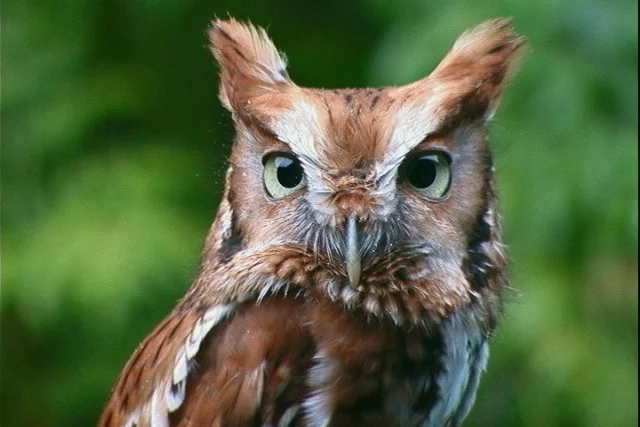
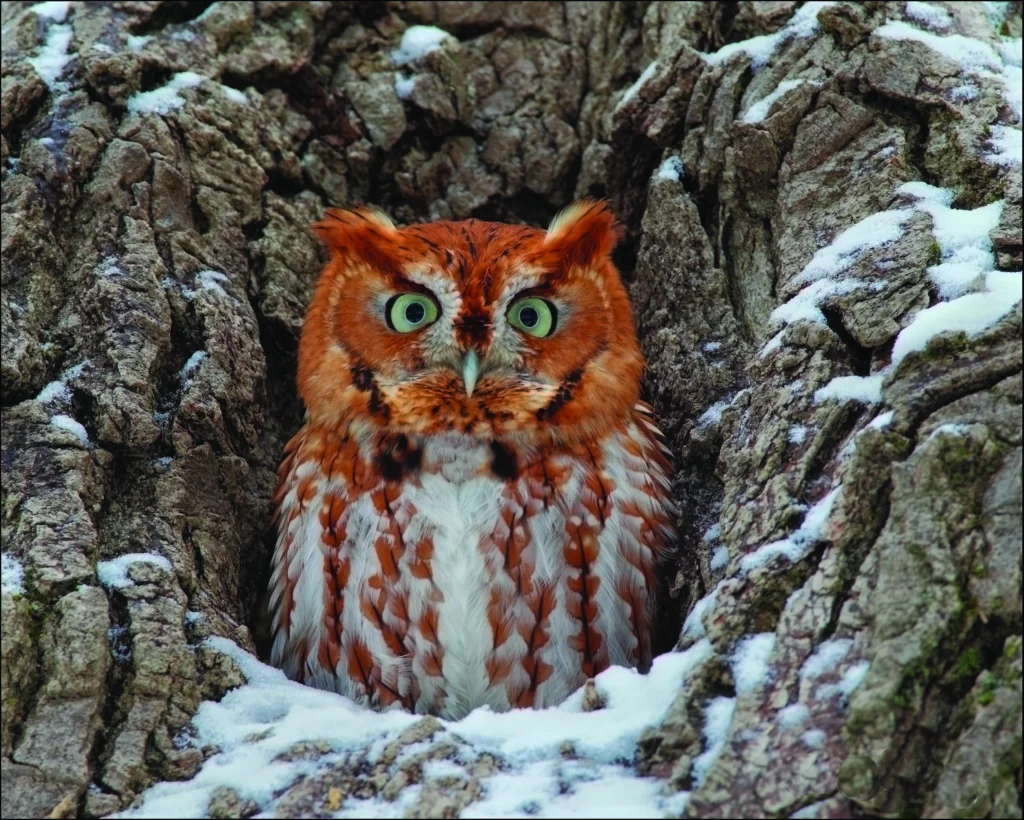
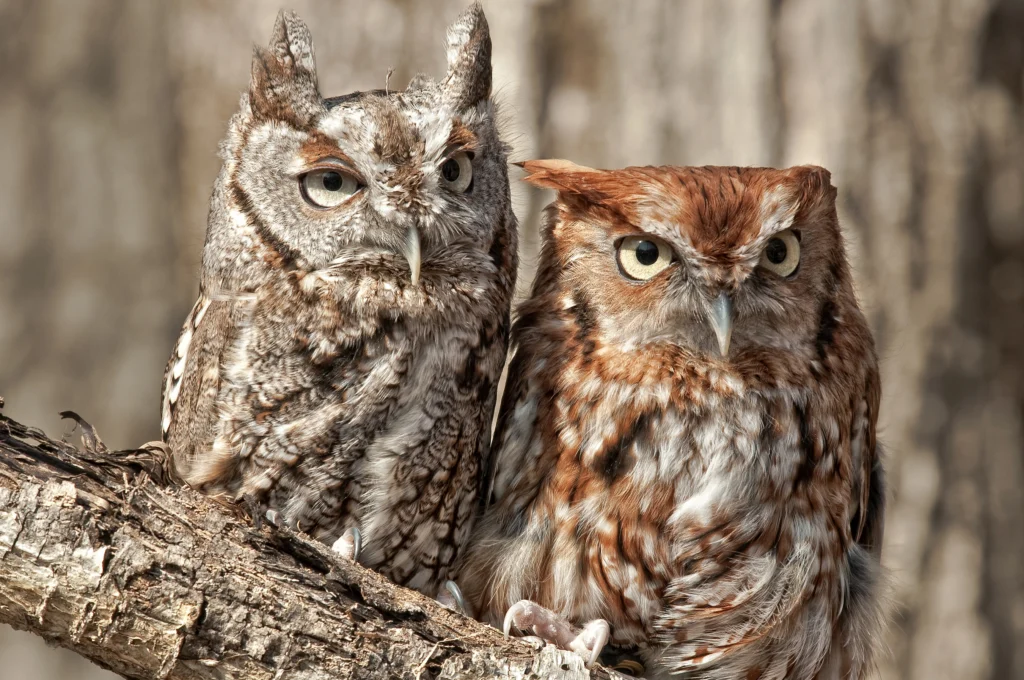
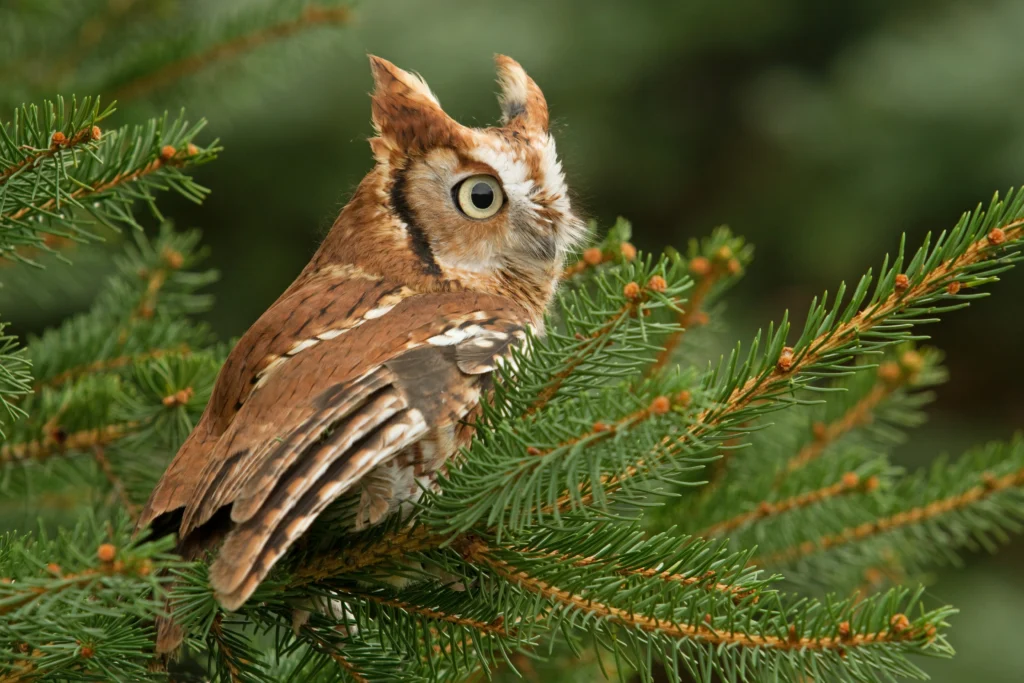
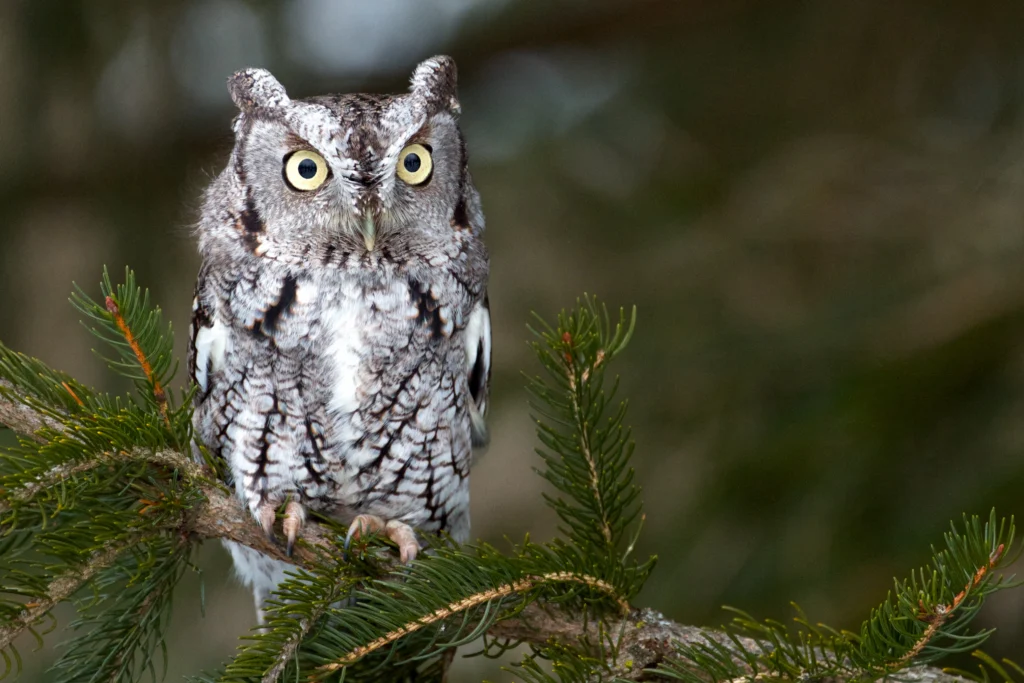
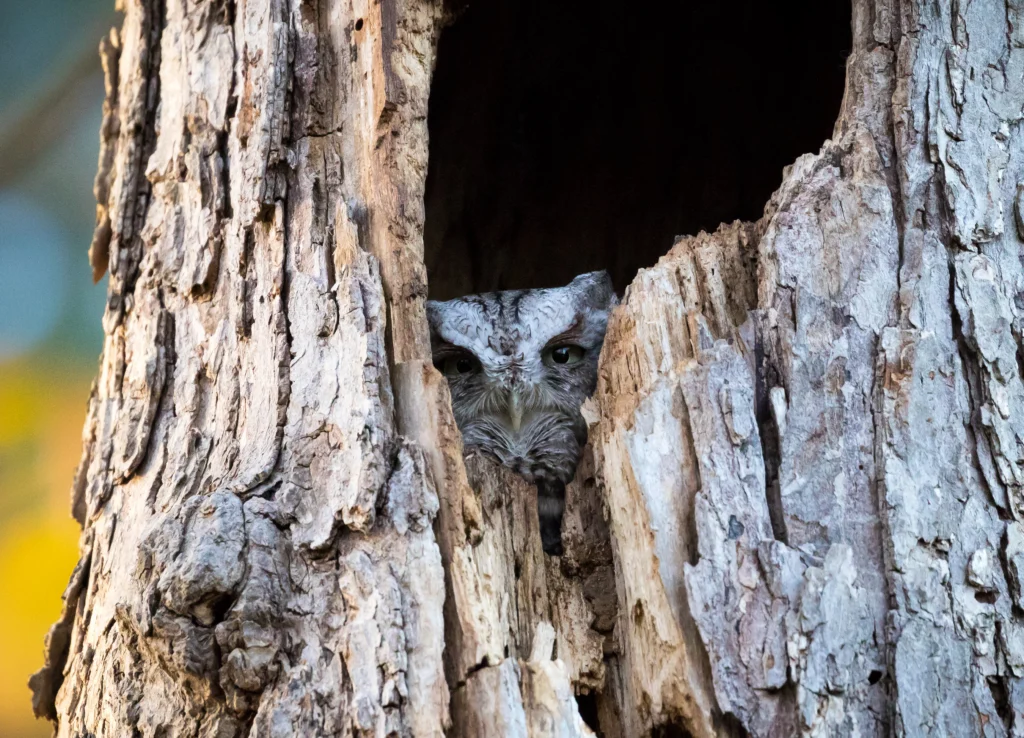
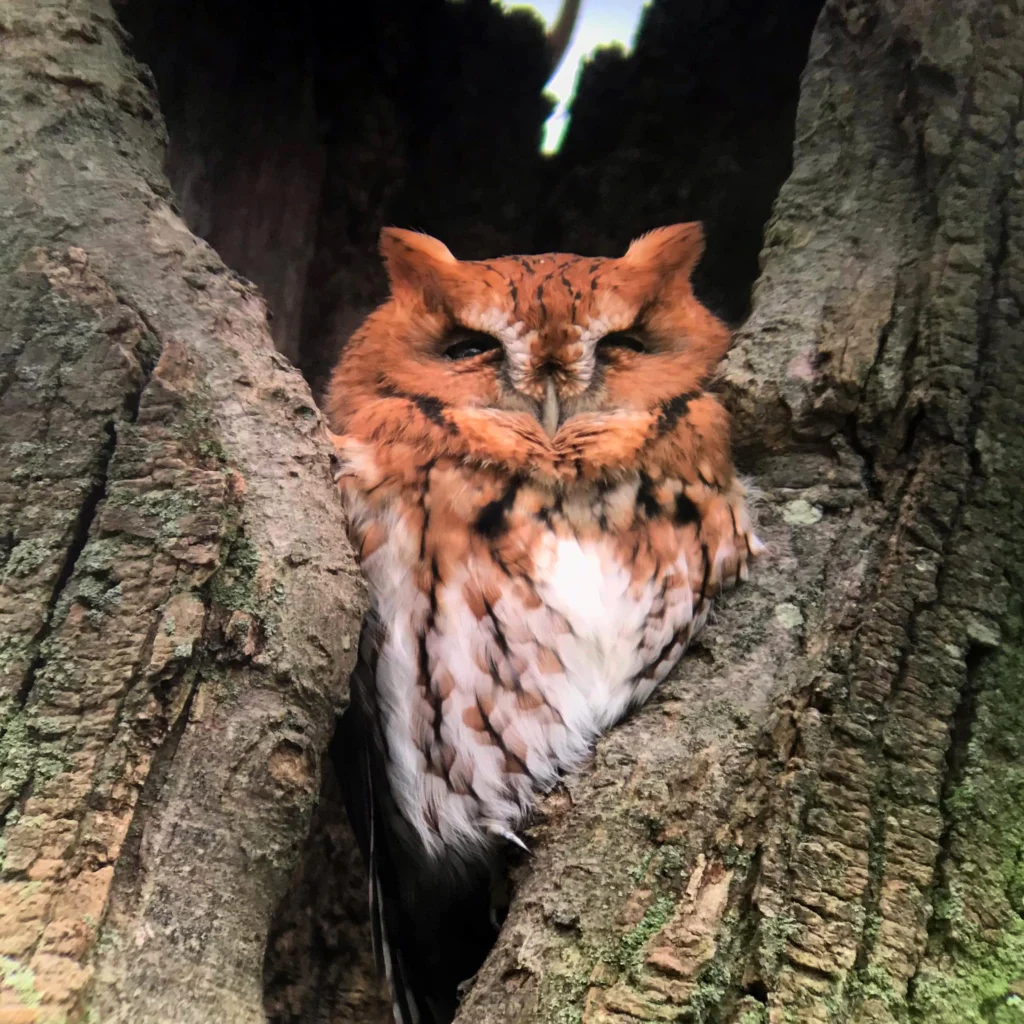
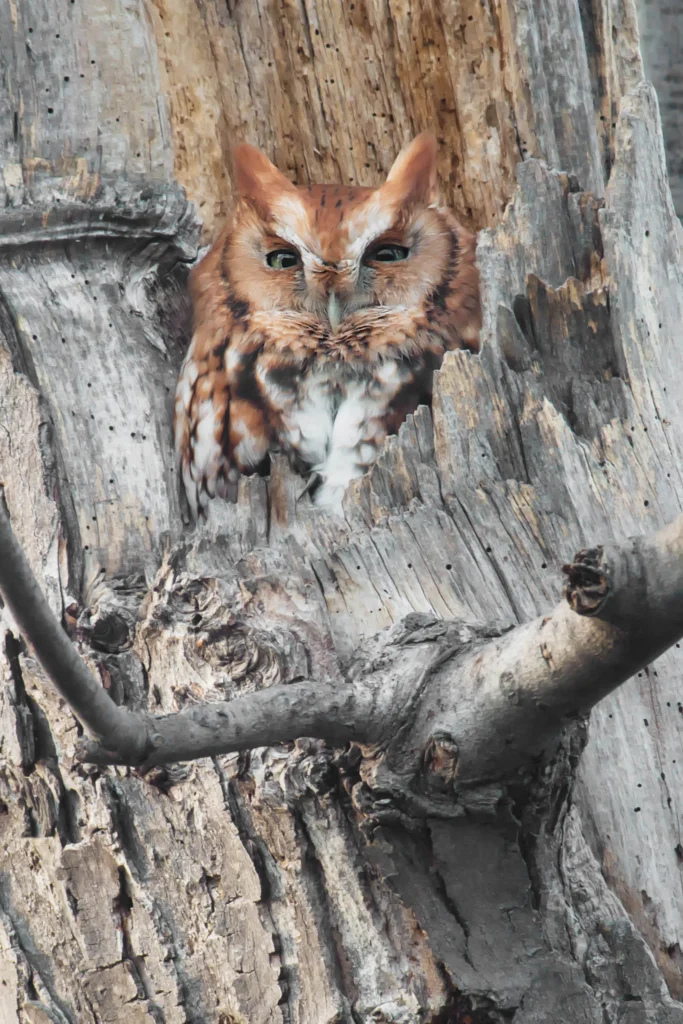
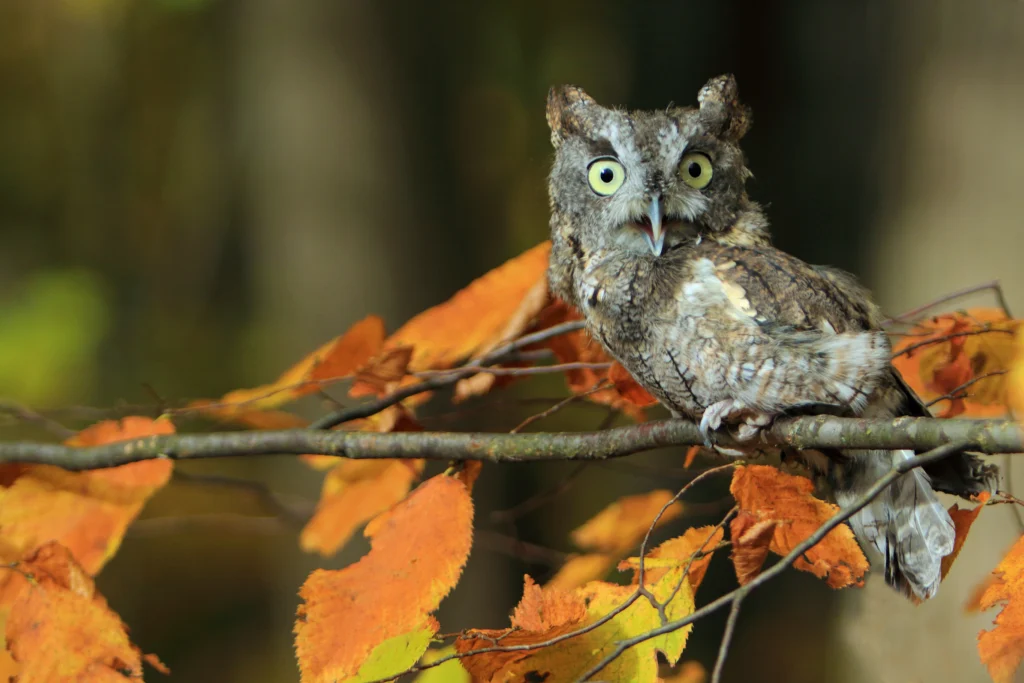
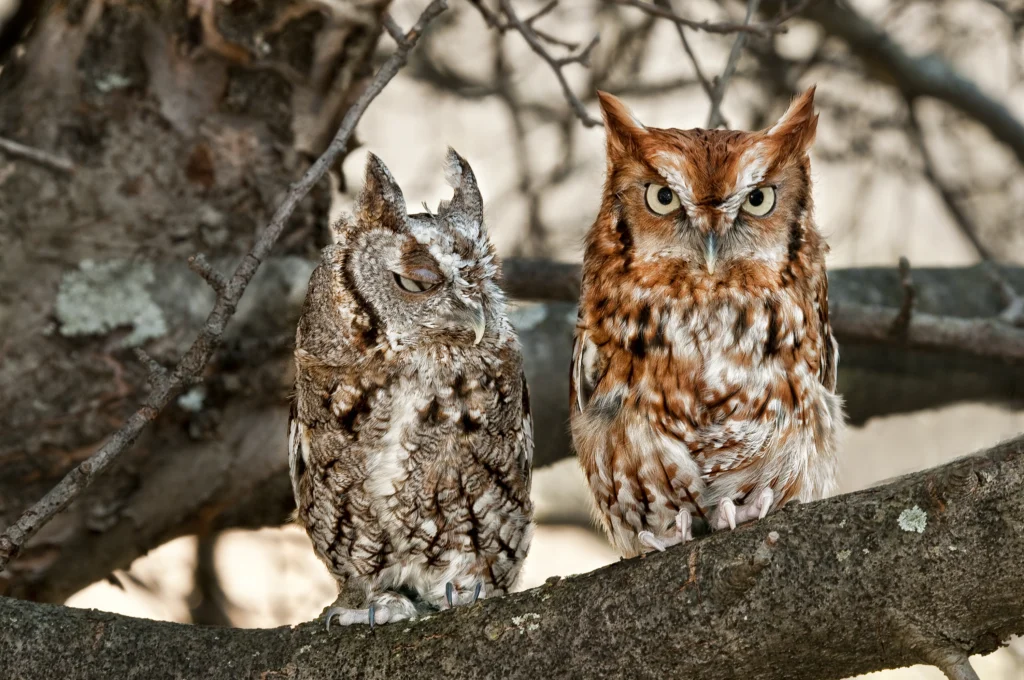
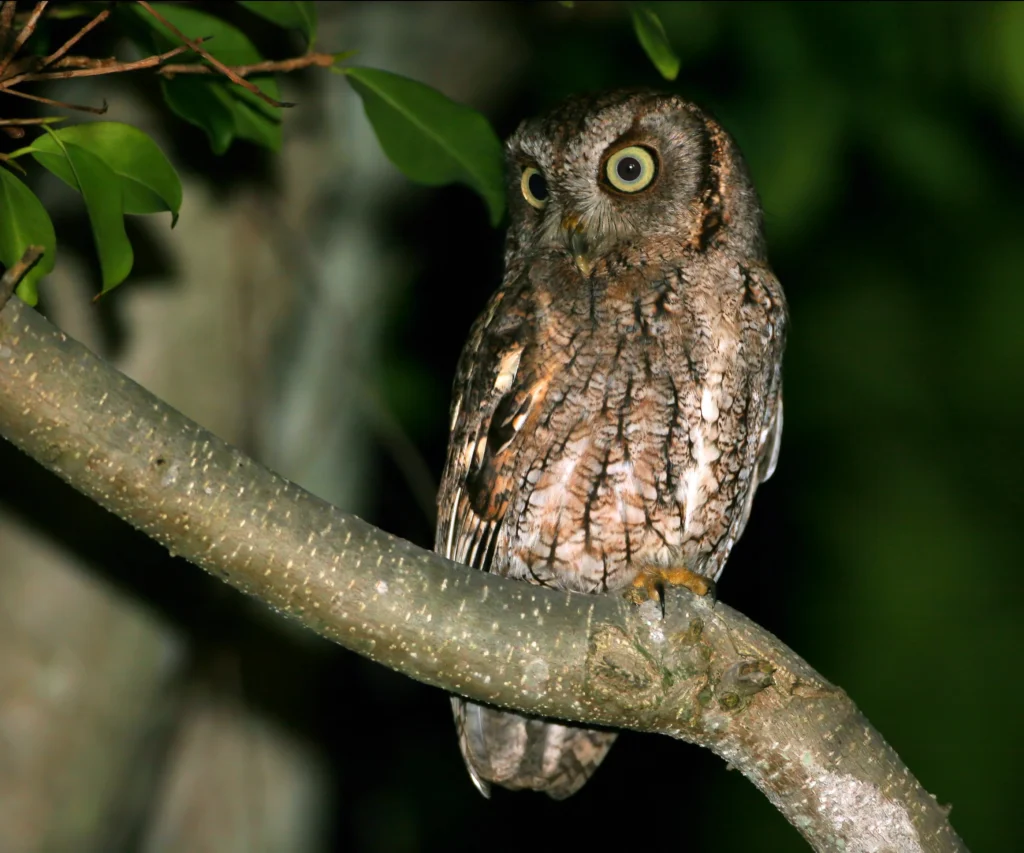
Eastern Screech-Owls are fairly small among owls, ranging from about 6 to 10 inches. Like most owls, they are cryptically colored, with darker vertical streaks and narrow cross-hatching. This owl has two common and distinct plumage types or “color morphs;” some birds are gray while others are a rusty red-brown. With their small size, stocky posture, and ear tufts, the Eastern Screech-Owl is distinctive within most of its range. In the narrow band where it overlaps with the Western Screech-Owl, the Eastern Screech-Owl has a notably paler bill, and the Western has no equivalent rufous color morph. Gray morph birds, however, are best distinguished by voice.
Both male and female Eastern Screech-Owls sing a low-pitched, evenly paced trill during their breeding season, which they use in a broad range of contexts: maintaining pair and family bonds, attracting mates, and during aggressive interactions with neighbors. Western Screech-Owls, though closely related and similar in appearance, have a noticeably different song that starts slow and rapidly speeds up, like a bouncing ball. Eastern Screech-Owls also give an eerie and distinctive whinny-like call, primarily when defending their territory against a potential intruder. If you’ve heard these odd sounds, you may have an Eastern Screech-Owl as a neighbor!
Credit: Michael & Katie LaTour, XC624995. Accessible at www.xeno-canto.org/624995.
Credit: Todd Wilson, XC153434. Accessible at www.xeno-canto.org/153434.
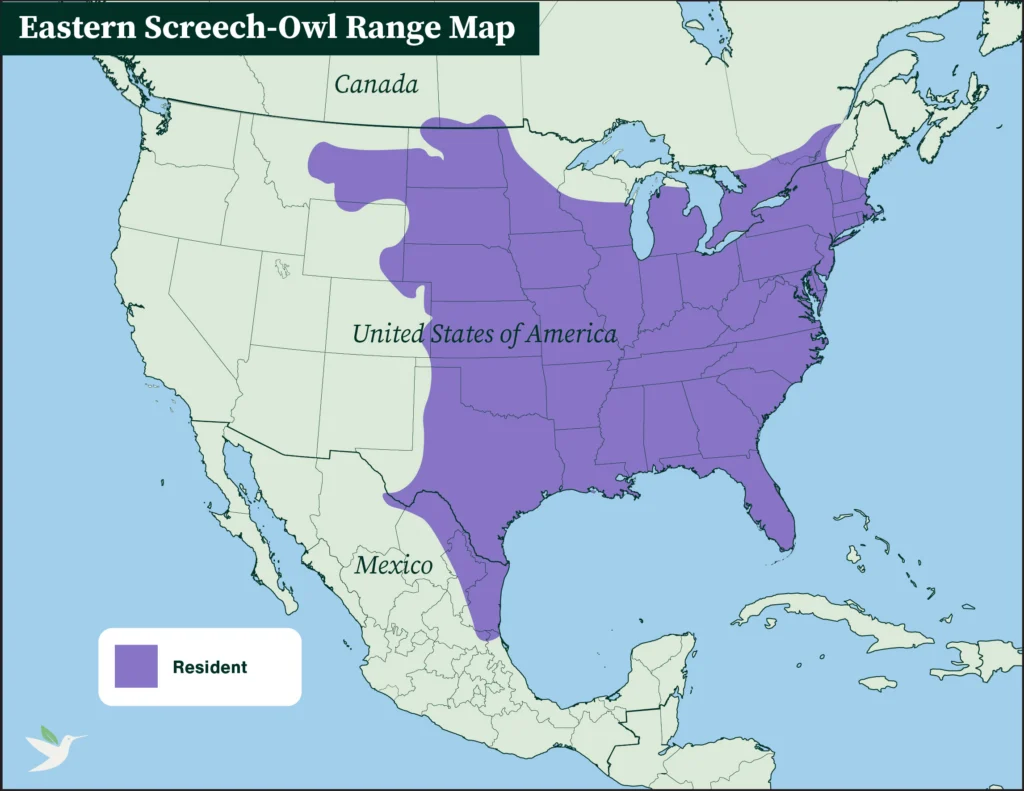
The Eastern Screech-Owl is a permanent resident in a wide variety of habitats, both natural and those modified by people.
Área específica
Eastern North America
Detalles de la gama
The Eastern Screech-Owl is widespread in the United States east of the Rocky Mountains. Its range also reaches into southern Canada around the Great Lakes and Great Plains, and to northeastern Mexico.
¿Sabías?
Though Eastern Screech-Owls do not migrate, they may sometimes move far beyond their typical range limits in particularly harsh winters, or when food becomes scarce.
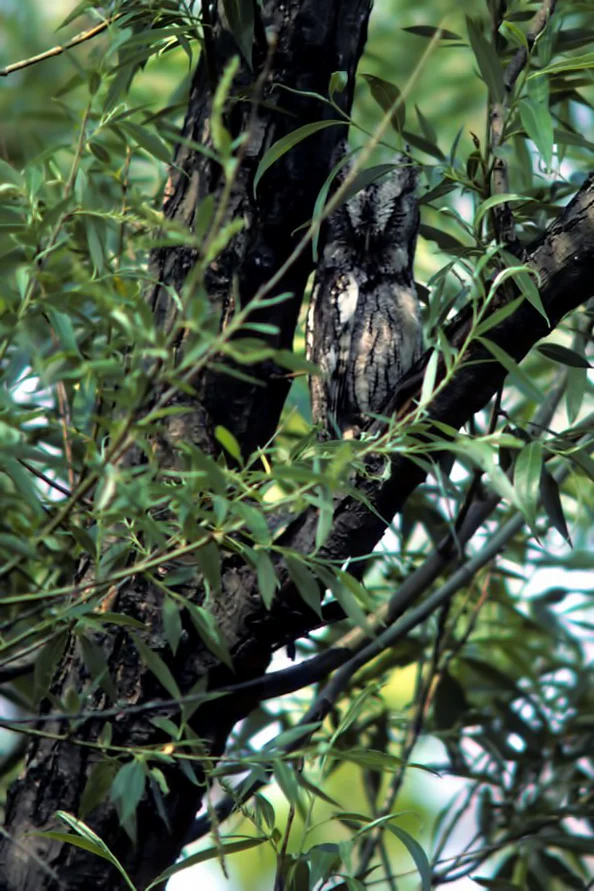
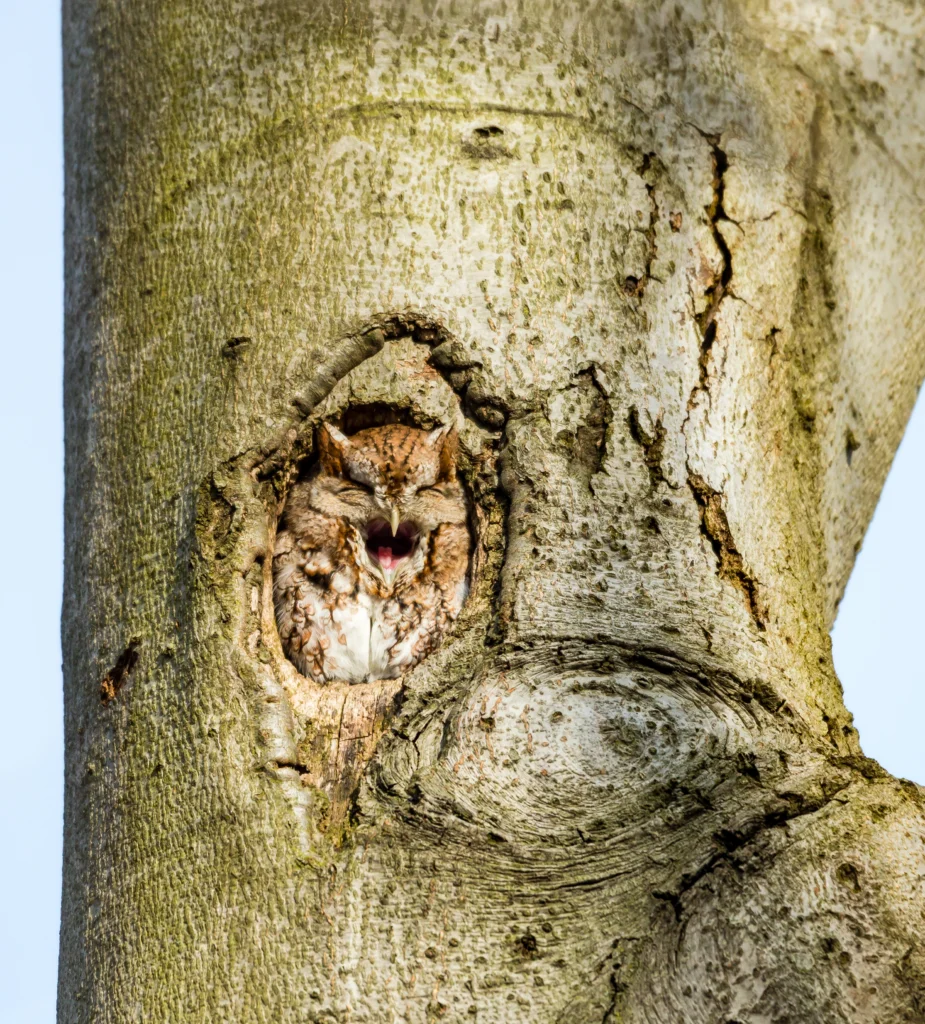
The Eastern Screech-Owl is widespread, fairly common, and highly adaptable, making use of a broad spectrum of urban and natural habitats and eating essentially any animal they are able to catch. They are also remarkably well-camouflaged and spend the daylight hours roosting silently among the trees. They can even ramp up their camouflage when approached, squinting their eyes, raising their ear tufts, compressing their wings and body feathers, and angling their body sideways, presenting an asymmetrical profile that further obscures their shape.
Eastern Screech-Owls mostly hunt in the forest understory or in adjacent openings and edges, but will also take advantage of suburban areas. They take a wide range of prey, including small birds and mammals, reptiles, frogs, insects, crayfish, and earthworms. Indeed, this species has the most diverse diet of any North American owl.
The Eastern Screech-Owl has an elaborate courtship ritual. A courting male approaches a female while calling, then bobs and swivels his head and entire body, even slowly winking his eyes as part of this performance. If the female accepts him, the pair will touch bills and preen each other. These owls are socially and genetically monogamous, and mates usually stay together for life.
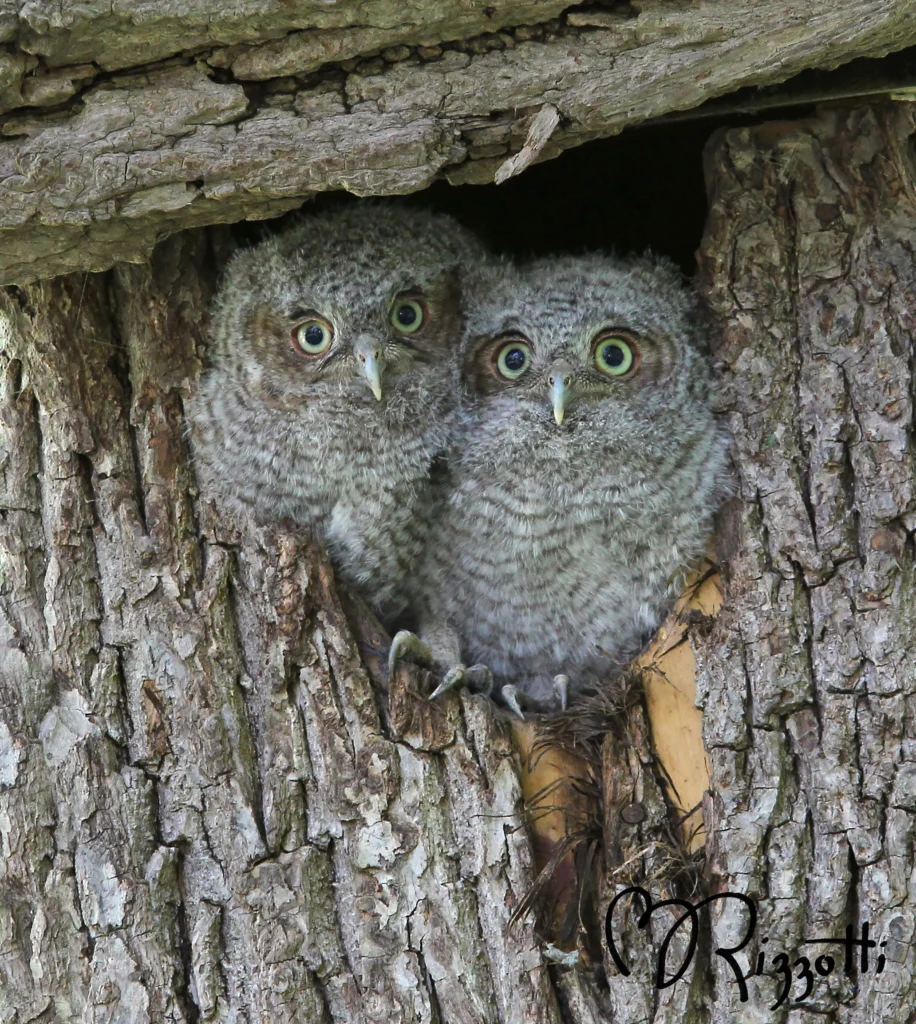
Eastern Screech-Owls nest in tree cavities, either naturally formed or old woodpecker holes. They will also use nest boxes and may even nest behind loose boards on abandoned buildings or barns. Like most owls, Eastern Screech-Owls don’t add any nesting material but instead lay their eggs directly on the floor of the cavity. Pairs often reuse nest sites in consecutive years.
Females usually lay three or four round white eggs, which they incubate for about four weeks. Males provide all the food for their mates throughout incubation, and when the young first hatch, the male feeds them as well, while the female is brooding. He will often cache extra food in the nest cavity as well. Past brooding and for a few weeks after fledging, both parents provision the young.
Noticias e historias relacionadas
¡Únete a la bandada! Tu donación ayuda a preservar los hábitats que las aves necesitan para sobrevivir.