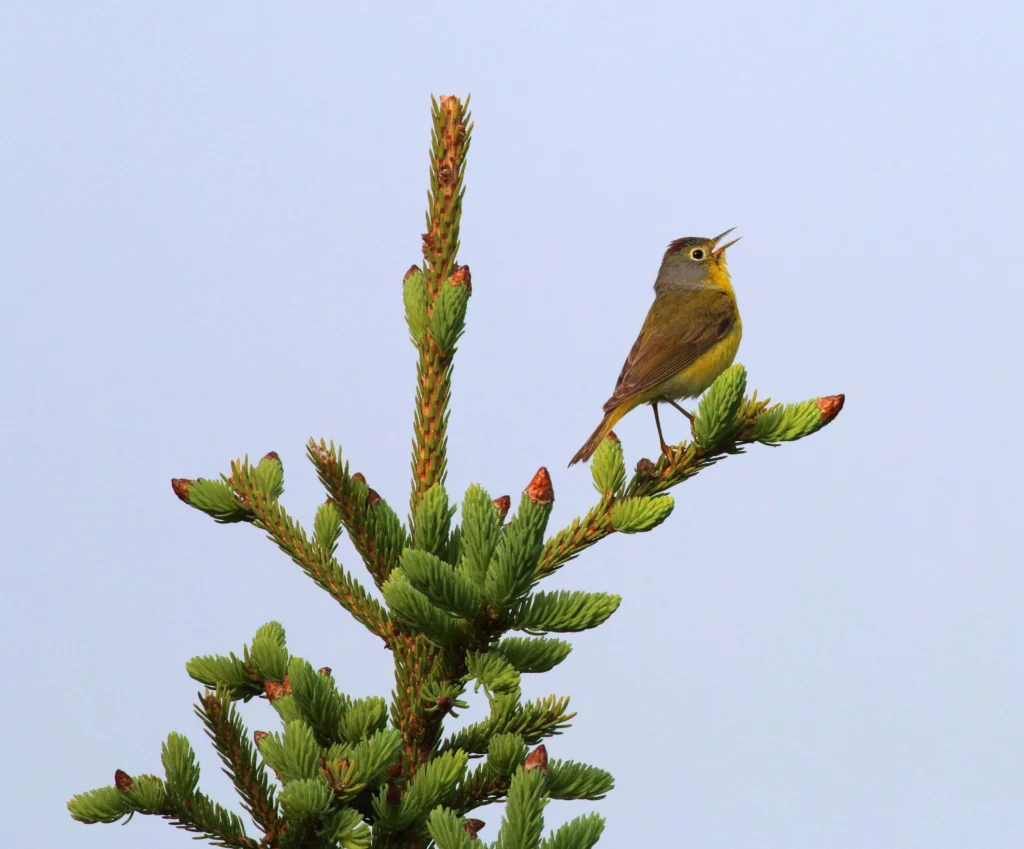
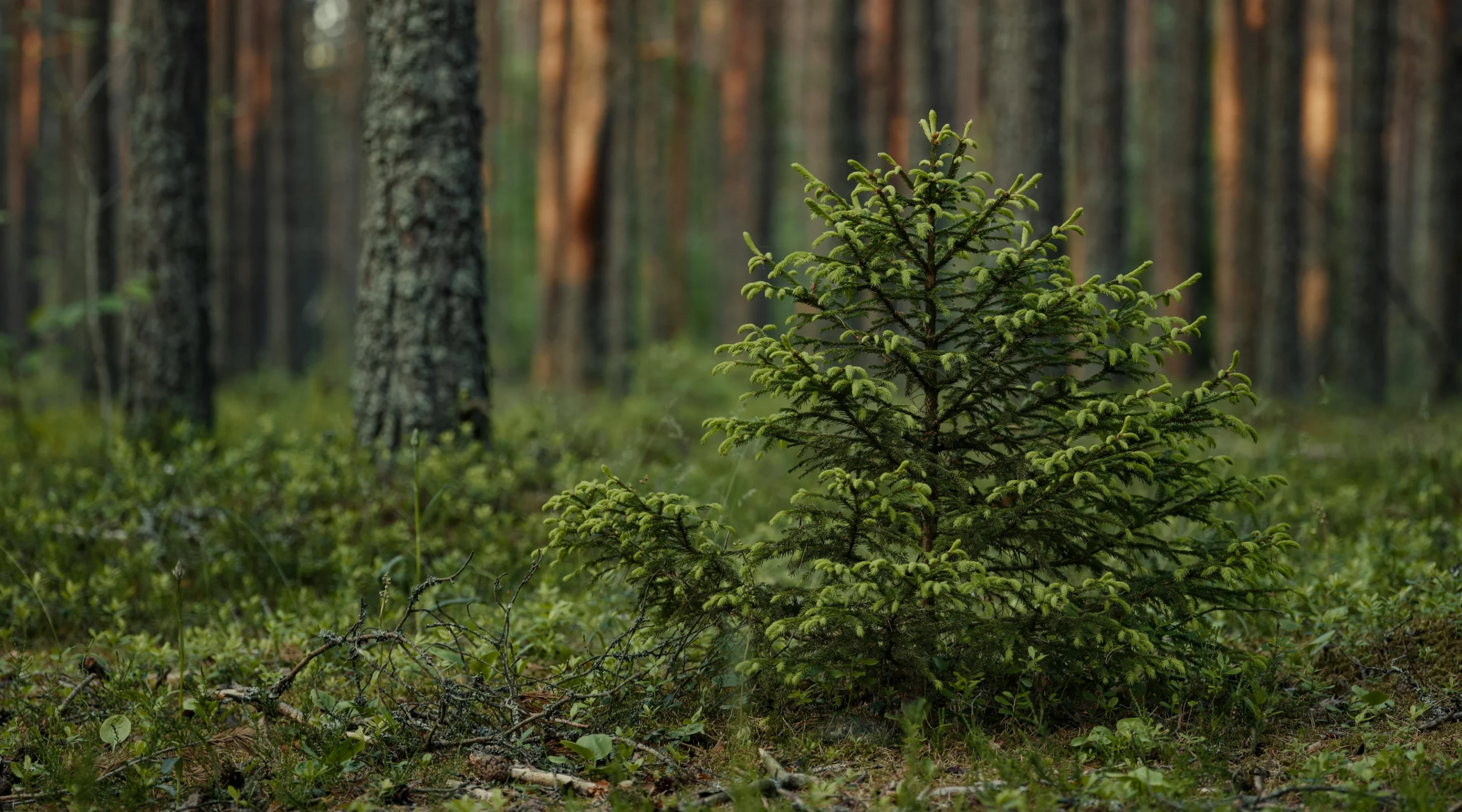
Serene Boreal Forest with Young Spruce Tree by Lauri Poldre, Pexels

Nashville Warbler

Leiothlypis ruficapilla

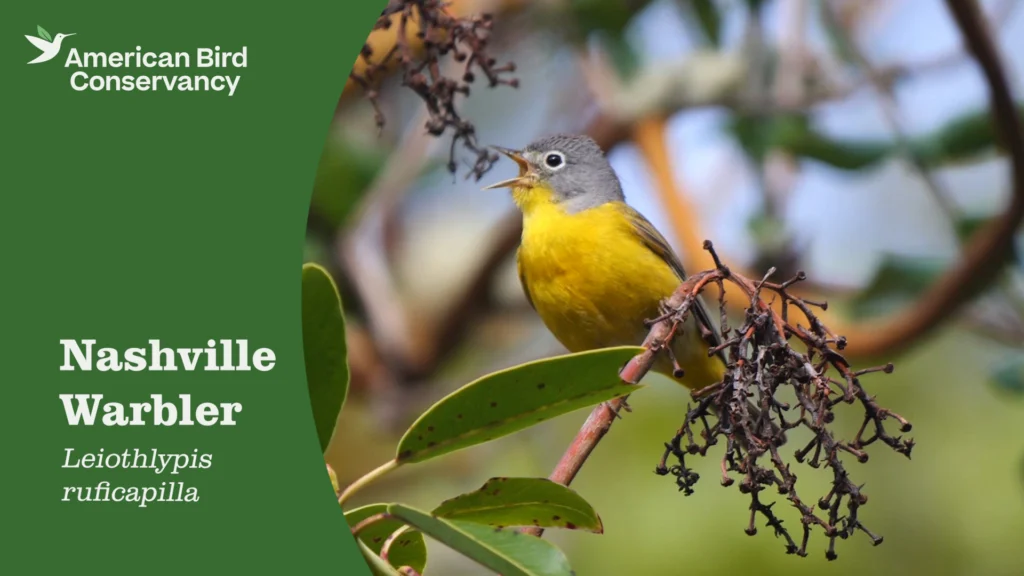
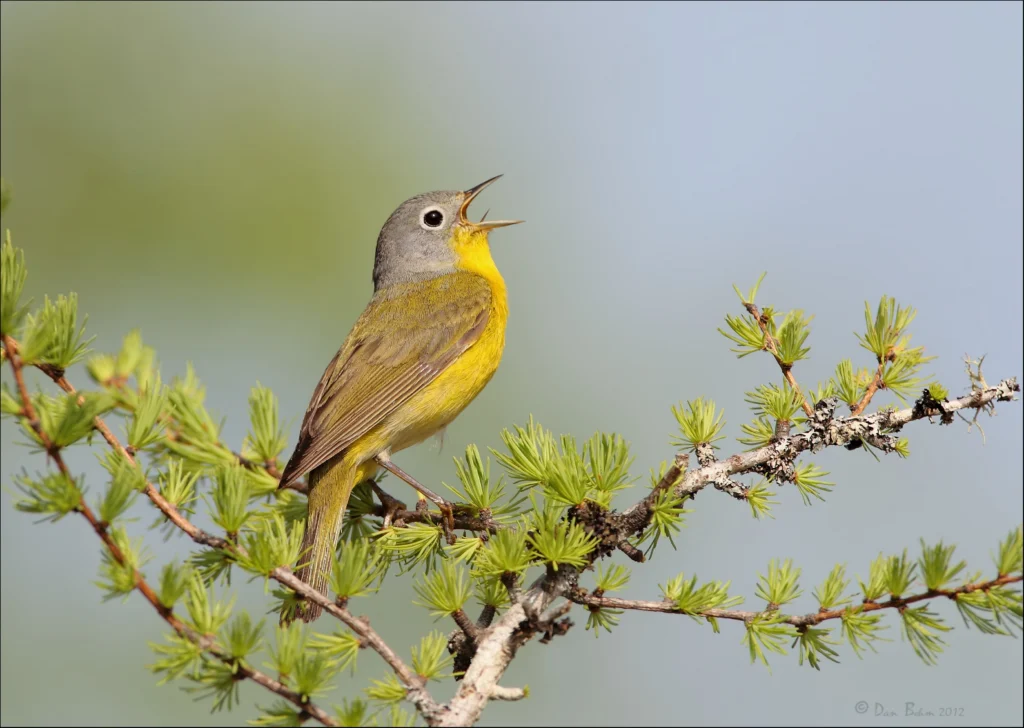
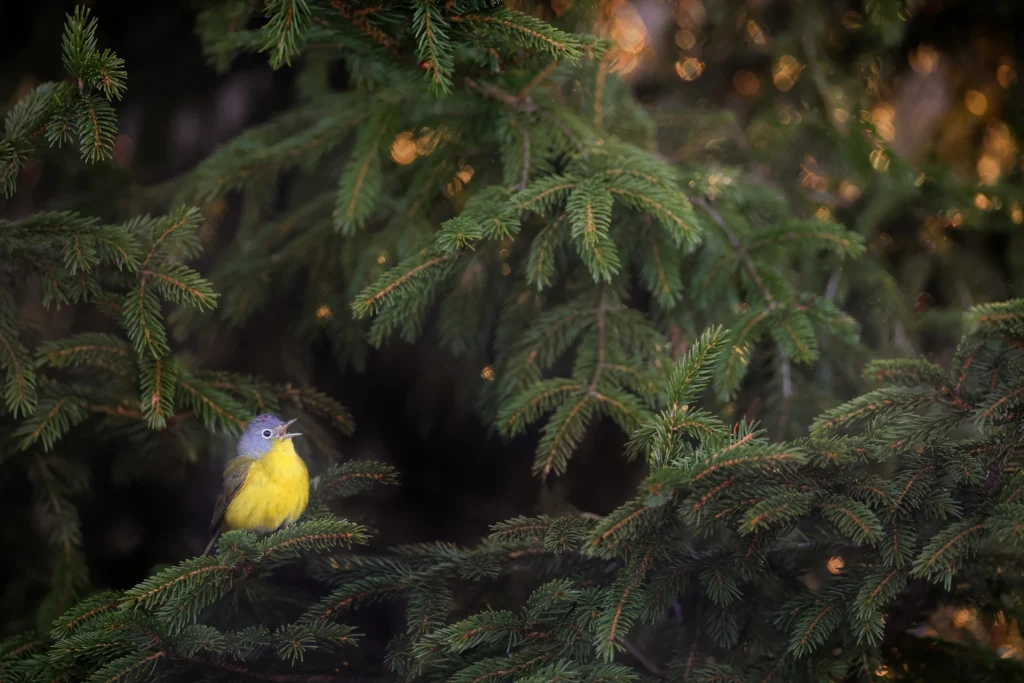
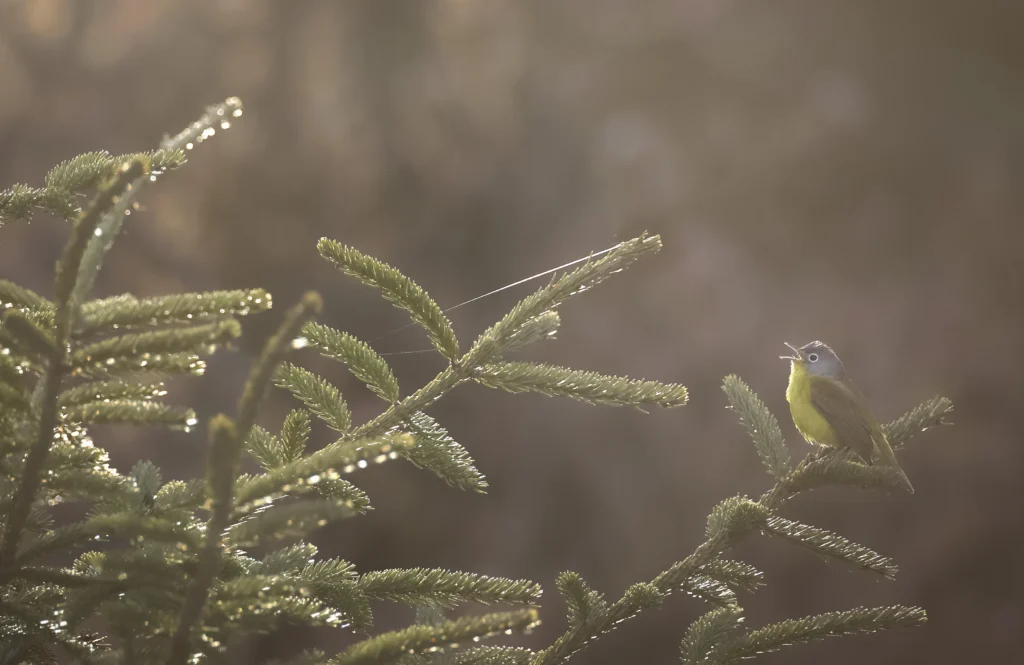
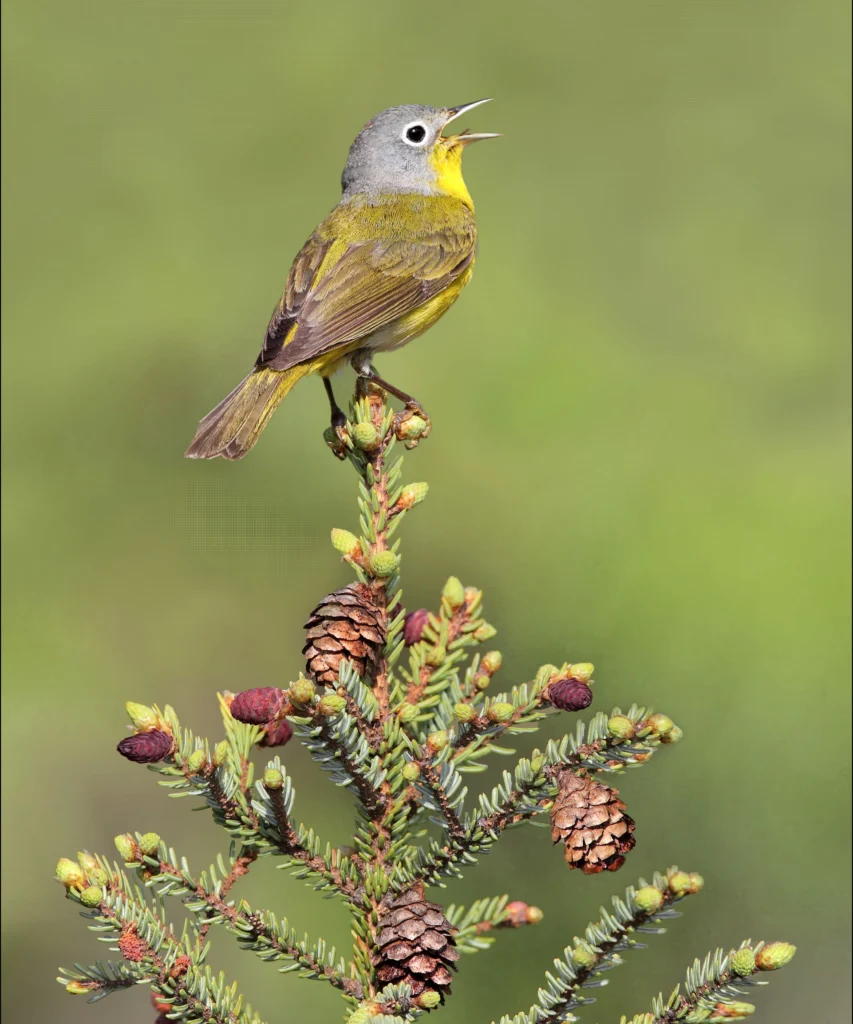
Nashville Warbler singing. Photo by Dan Behm.

Nashville Warbler

Nashville Warbler singing. Photo by Dan Behm.

Leiothlypis ruficapilla

Descripción general

Estado de conservación
Tendencias demográficas
Decreciente
Tamaño de la población
40 million
Familia
currucas
Ubicación
América del norte
Patrón de migración
Latitudinal
Distancia de migración
Media Distancia
También conocido como
  • Chipe Cabeza Gris (Spanish)

Acerca de

The Nashville Warbler is a lively songbird with elegant, understated plumage and a special fondness for sunny forests, brushy undergrowth, and juicy caterpillars. It is also one of several birds in the Western Hemisphere with a rather misleading name. This bird is only in the southeastern United States for a few weeks during migration on its way between the northern forests where it breeds and its wintering grounds in Mexico, Central America, and the California coast. The species was first discovered in Tennessee, and the “Nashville” name stuck, although it only stops over in the area during migration.

The Latin name is also rather misleading to anyone watching this bird in the field — the species epithet ruficapilla refers to a small patch of reddish feathers on the bird’s crown, usually invisible among the gray feathers of the rest of the head. Like the Ruby-crowned Kinglet, Orange-crowned Warbler, and Yellow-rumped Warbler (scientific species name coronata, for the rarely seen yellow crown), this name may be mystifying to beginning birders, but it might also provide an avenue into the secret social life of the bird.

The ability to hide and reveal this bright, contrasting color patch allows these birds to produce a striking visual signal, which they use to communicate agitation and excitement, particularly in aggressive interactions between males at close range. The closely related Lucy’s and Virginia’s Warblers also have hidden reddish crowns, apparently used in similar contexts. In fact, colorful hidden crown patches have also evolved in distantly related species, like the Tirano occidental, suggesting they may play important roles in these birds’ lives. However, birds are rarely seen actually raising their crowns, and our understanding of their social use is only rudimentary.

Nashville Warblers are quite social. Once the young of the year are independent from their parents, these warblers begin to form large foraging flocks, numbering up to 100 birds. On their nonbreeding grounds, these birds are often at the center of equally large flocks with dozens of species, their persistent contact calls allowing other birds — and birders — to locate them in the forest canopy. In fact, Nashville Warblers may be a “nuclear species,” facilitating the formation of these large and diverse flocks with help from another energetic northern migrant, the Mosquero azul grisáceo. Typically, nuclear species are resident birds, not migrants. But when this warbler-gnatcatcher pair comes to town, they bring the party.
Amenazas

With its large population size, the Nashville Warbler is not a species of imminent conservation concern. However, this species is declining in many areas due to habitat loss and changes in land use. Additionally, these birds, like many migratory species, face numerous challenges as they travel between their breeding and nonbreeding ranges.

Collisions with Communications Towers

Communications towers with steady-burning lights pose a real threat to migratory birds, killing 7 million birds annually. Although tower collisions threaten all birds — especially when skies are overcast or foggy — they pose a special danger to songbirds migrating at night. Mourning Warblers are one of the most frequent casualties.

Loss of Riparian Areas to Development

Riparian areas are crucial for populations of Nashville Warblers in the drier parts of their western range. In many areas, thin riparian corridors provide the only available stopover habitat during migration. However, these are also some of the habitats most frequently modified and destroyed by humans. Loss of crucial stopover habitat in harsh environments, such as the Southwestern deserts, creates additional barriers as these birds attempt to complete their annual cycle.

Pérdida de hábitat

Estrategias y proyectos de conservación

Despite having a broad geographic range and a large population, the Nashville Warbler faces significant threats and is declining as a result. At ABC, we’re inspired by the wonder of birds and driven by our responsibility to find solutions to meet their greatest challenges. With science as our foundation, and with inclusion and partnership at the heart of all we do, we take bold action for birds across the Americas.

Mejorar el hábitat

Habitat is the foundation for birds’ survival. ABC works across vast landscapes in North America where many of our priority species breed. Working closely with the Migratory Bird Joint Ventures (JVs) and other partners, we have improved more than 10 million acres of bird habitats in the places where birds need us most — from the Great Lakes to the Chihuahuan Desert.

Restaurando el hábitat

Hacer que las torres de comunicación sean más seguras

The simple solution to reducing bird fatalities from communications towers is to use flashing lights. Unlike steady-burning lights, which can attract and disorient birds, flashing lights pose little danger. In fact, their use can reduce nighttime bird fatalities by as much as 70 percent.

Hacer que las torres de comunicación sean más seguras

Galería de aves

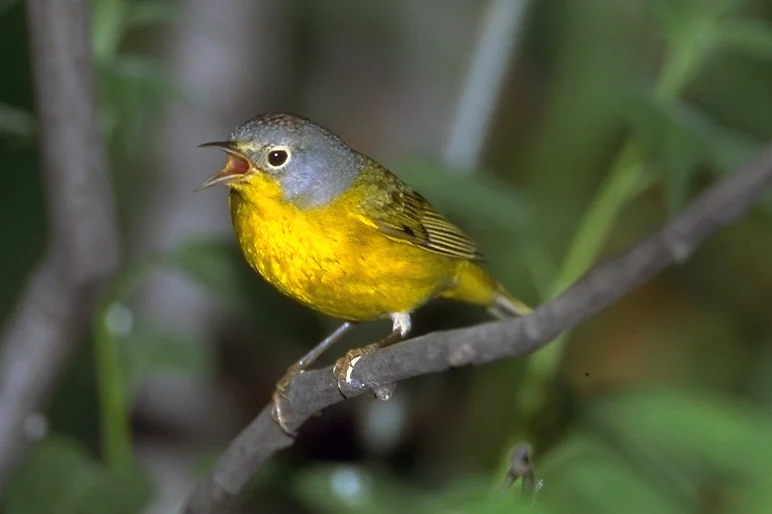
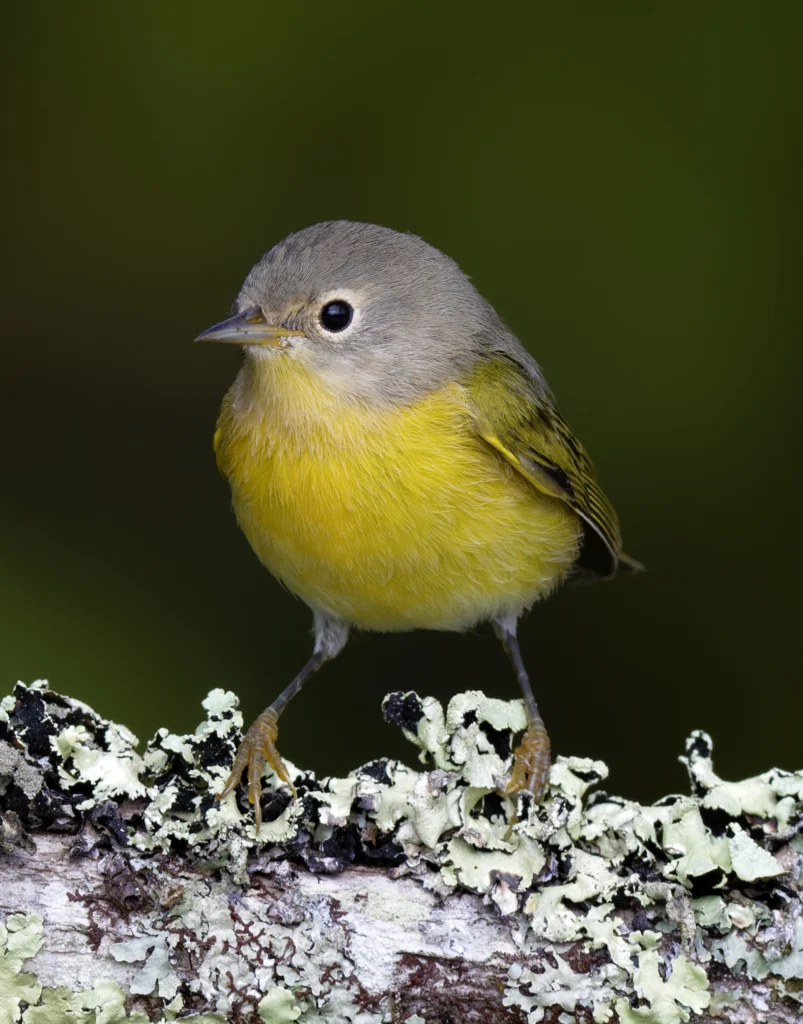
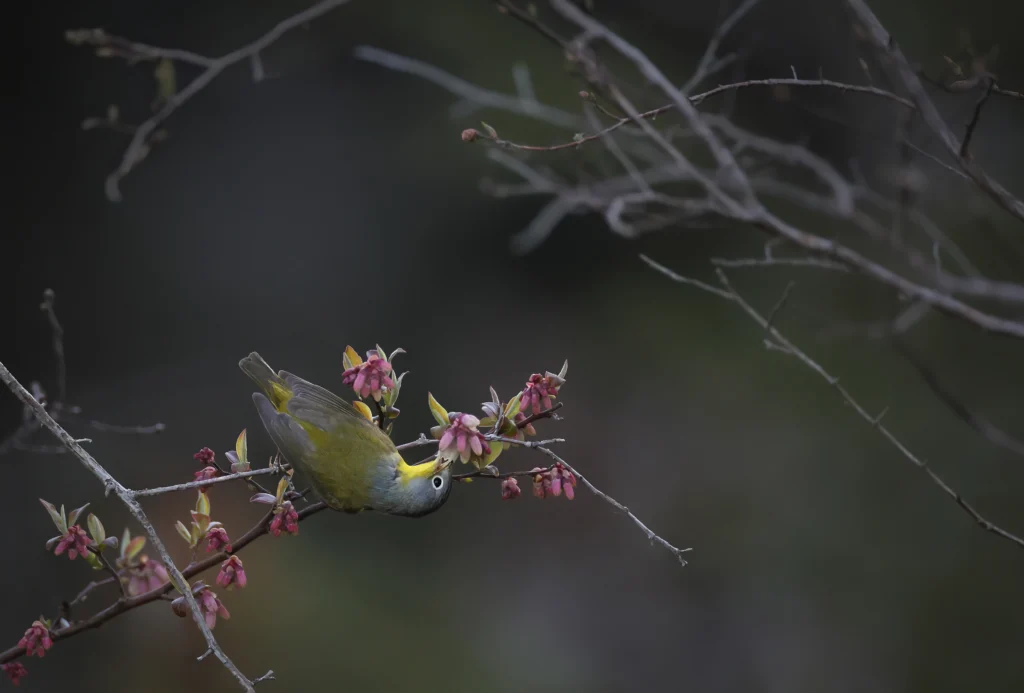
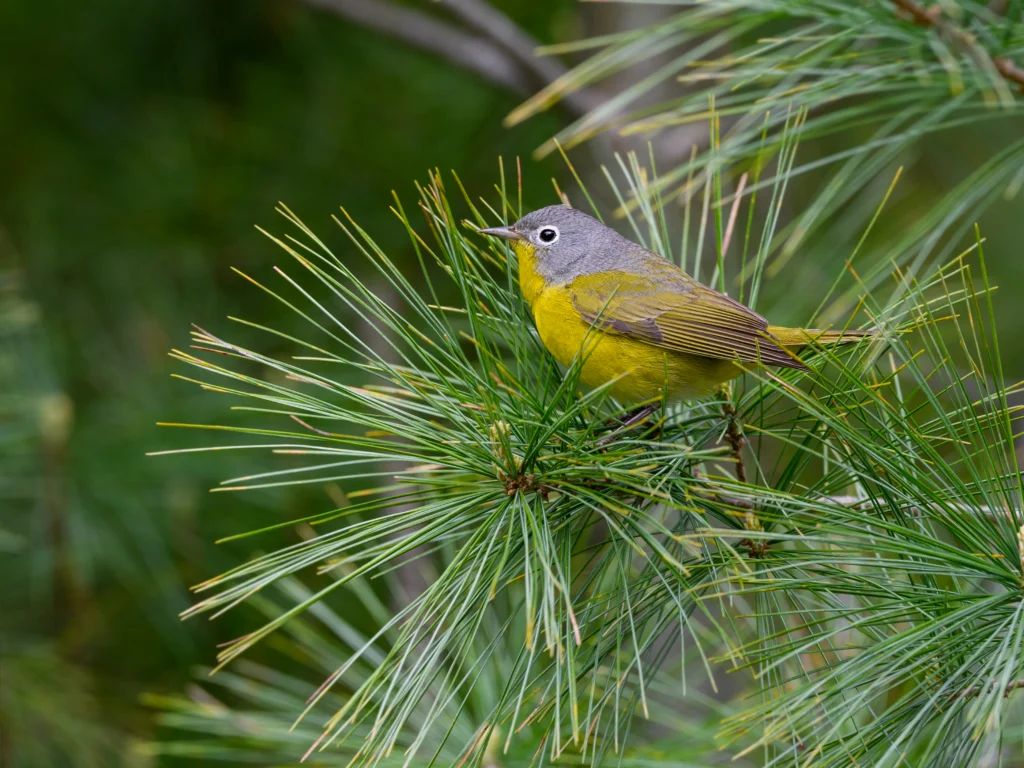
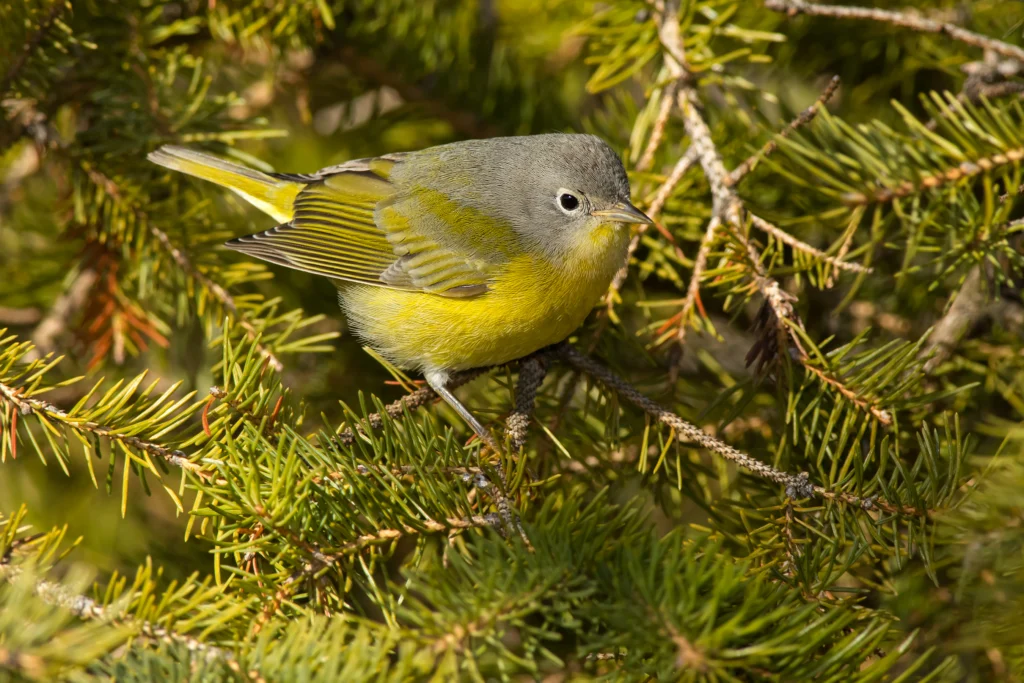
The Nashville Warbler is distinctive among the wood-warblers of the Western Hemisphere, with its complete white eyering, gray head, contrasting yellow throat and underparts, and white patch on the lower belly between the legs. The upperparts are olive-green to gray — grayer in birds in the western part of its range and greener in those in the east. Though difficult to see in the field, mature birds have a small patch of rufous feathers on the crown. Females and males are alike, although in females the colors tend to be more muted, with less contrast between color patches.

Sonidos

The typical Nashville Warbler song is high and clear, and composed of two distinct parts: a sequence of quick two-note phrases, followed by a rapid series of single notes at a lower pitch. Only males sing, but both sexes give a high, quick, upslurred pink, most often in alarm.

Canción

Credit: Paul Marvin, XC744264. Accessible at https://xeno-canto.org/744264.

Pink Call

Credit: Stanislas Wroza, XC1013980. Accessible at https://xeno-canto.org/1013980.

Hábitat

Year-round, the Nashville Warbler prefers young forest with an open canopy and thick undergrowth.

  • Breeds in recovering forest areas, such as clear cuts, old burns, and overgrown fields
  • In the nonbreeding season, often found in suburban gardens, as well as cloud forest
  • During fall migration, western birds may use dry habitats, including sagebrush and desert

Rango y región

Rango y región


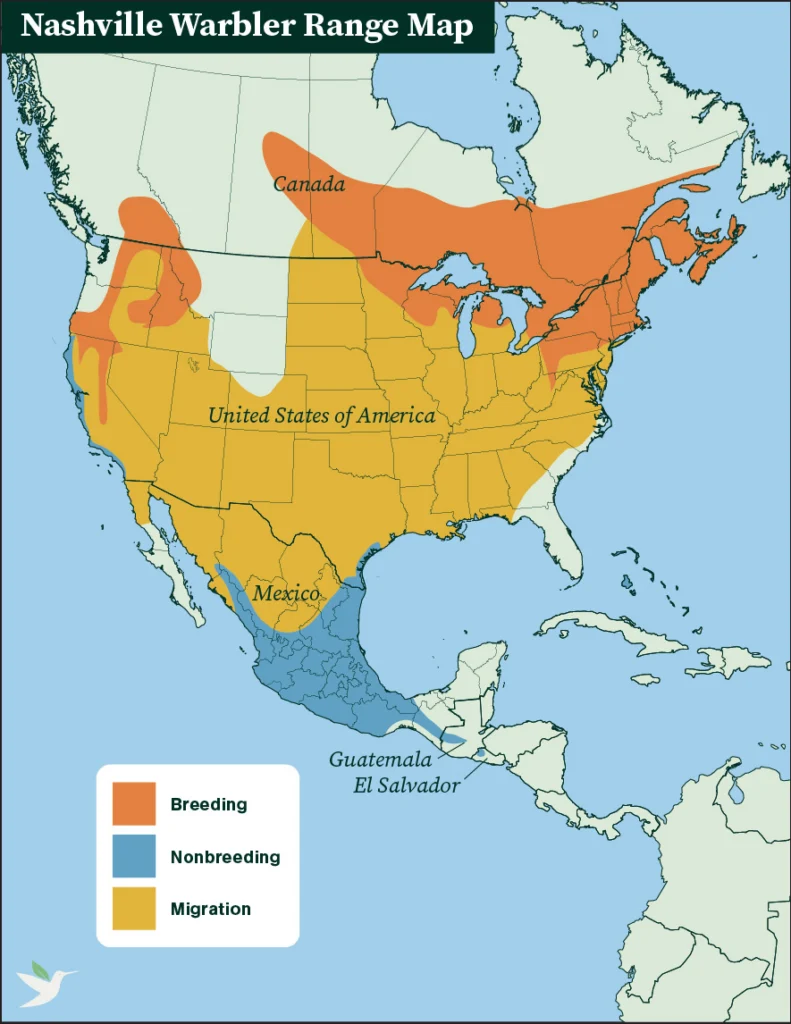
Nashville Warbler range map

Área específica
Northeastern United States and eastern Canada, western United States and British Columbia, central and southern Mexico

Detalles de la gama
Despite its name, the Nashville Warbler spends very little of its annual cycle in the southern United States, though this species may be found almost anywhere in the continental United States during migration. Nashville Warblers breed in two disjunct populations, one in eastern and one in western North America. The eastern population breeds in the northern Great Lakes, New England, and eastern Canada. The western population breeds in the northern Rocky Mountains of British Columbia, Idaho, and Montana, and in the Cascade and Sierra Nevada ranges, from Washington south into California. Most birds spend the nonbreeding season across central and southern Mexico, with some birds migrating to the California coast.

¿Sabías?
The eastern and western breeding populations are sufficiently isolated to have become two distinct subspecies, with differences in plumage, behavior, and voice. Compared to the eastern subspecies, western birds have a duller mantle (the feathers on the back between the wings), a brighter rump, and longer legs and tail. Western birds are also said to give a louder, sharper call note, and to frequently bob their tails — a rare behavior among eastern birds.

Rango
América del norte
Patrón de migración
Latitudinal
Distancia de migración
Media Distancia

Historia de vida

The Nashville Warbler is a welcome sight, simple and elegant in plumage and song, and quite adaptable to a variety of landscapes and habitat types. During migration and in the nonbreeding season, these sweet little warblers show up in parks and gardens, and will breed in recently logged forests when brushy undergrowth starts to return.

Dieta

The Nashville Warbler is a strict insectivore throughout the year, gleaning its prey from the leaves and flowers of trees and shrubs. These birds will eat a range of insects, including flies, leafhoppers, young grasshoppers, and especially the larvae and pupae of moths and butterflies.

Noviazgo

Courtship in this species is poorly known. However, researchers have observed that Nashville Warbler songs broadly fall into two categories — slower songs are given in the day and seem to play a role in interactions with females, while faster songs are given more often at dawn in male-male interactions.

Anidación

The female Nashville Warbler builds her nest on the ground, often in a shallow depression with overhanging vegetation. The nest is a tidy cup made of fibrous plant materials, including grasses, rootlets, leaves, and shredded bark, lined with fine strips of the same along with animal hair. She often lines the rim of her nest with moss, possibly as camouflage. Though the female builds the nest alone, her mate usually stays close by and sings while she does.

Huevos y crías

Females lay four or five white eggs, ringed around the larger end with reddish-brown to brick red speckles. She incubates for 11 to 12 days, her mate occasionally bringing her food and accompanying her while she takes breaks to forage. Though the female alone broods, both parents feed the young, primarily on caterpillars. The young leave the nest after only 9 to 11 days.