
Thirteen Tips to Make the Journey Safer for Migrating Birds
Right now, millions of birds are on their way north to their breeding grounds, drawn by the abundant food sources and nesting sites that await them.
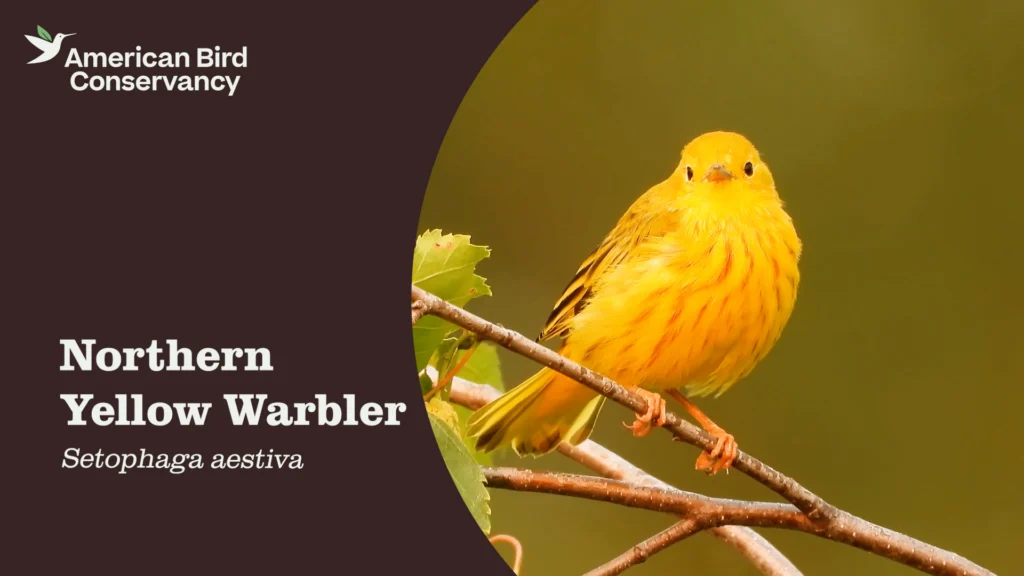
Setophaga aestiva
ᐅᓵᐏ ᐱᔦᓰᐢ
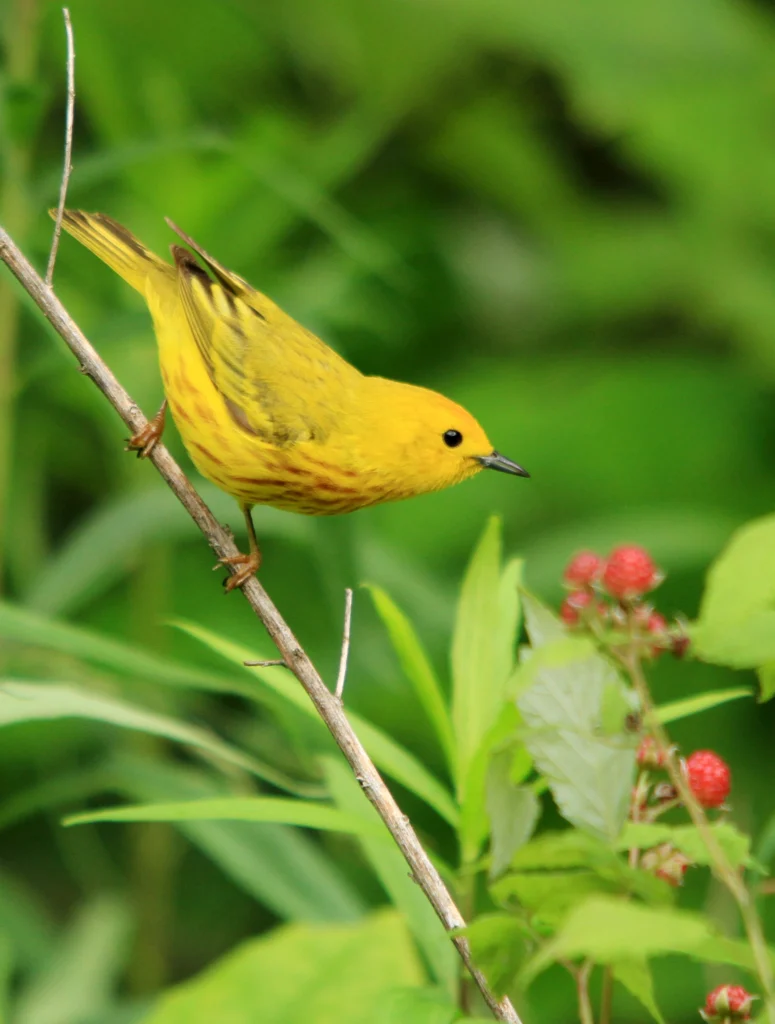
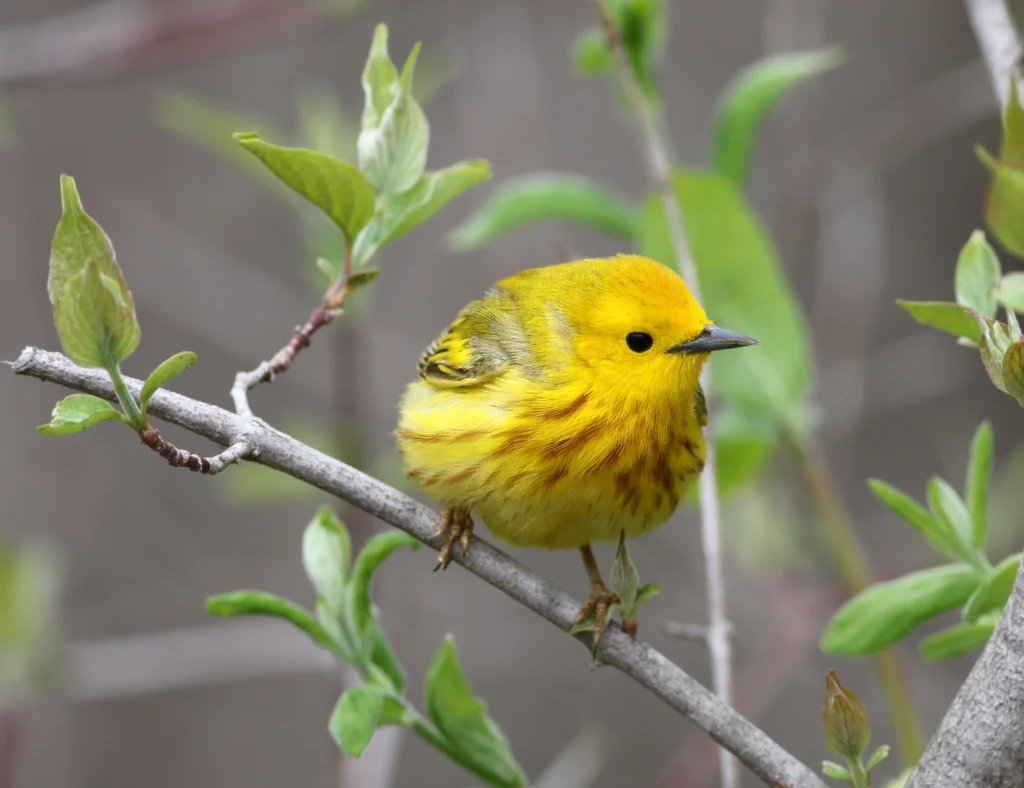
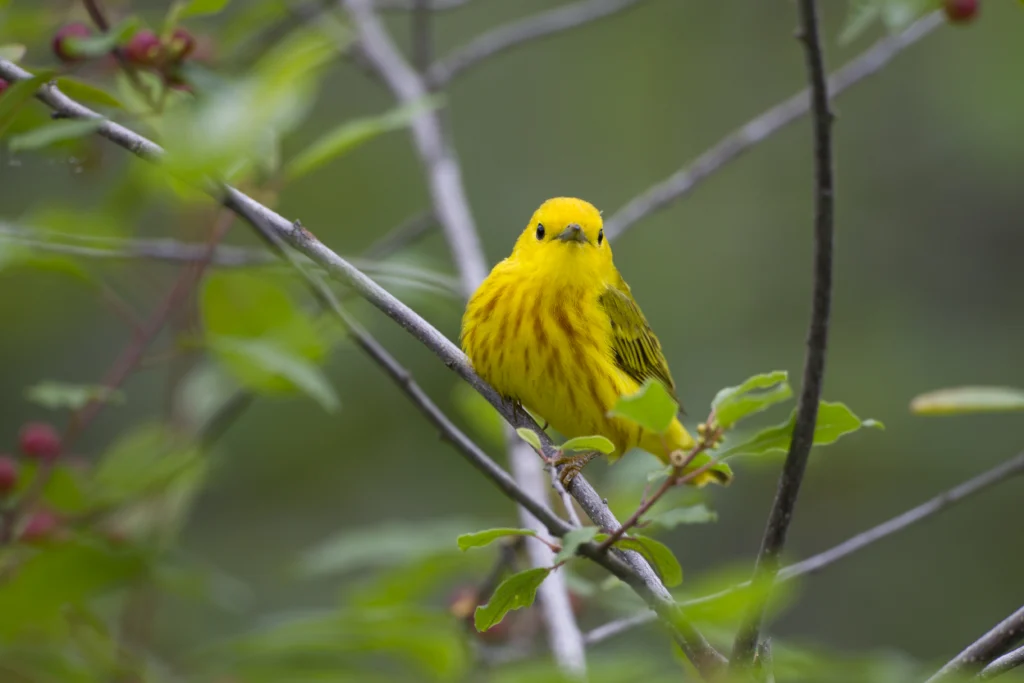
The Northern Yellow Warbler is the most widespread wood-warbler in the Americas. It nests from Alaska to central Mexico, and winters as far south as Peru. Tail tip to forehead, this is also the yellowest North American warbler, even more so than the Prothonotary or Blue-winged. Cinnamon streaks running down his breast embellish the male’s gleaming plumage.
In 2025, the bird previously known as the Yellow Warbler was split into two separate species, the Mangrove Yellow Warbler and the Northern Yellow Warbler. While similar in many ways, the male Mangrove Yellow Warbler has a reddish crown, or sometimes even a complete hood, to match his breast streaks. The Northern Yellow Warbler is a long-distance migrant, and its long, narrow wings and streamlined body shape are adapted for sustained flight. The Mangrove Yellow Warbler, on the other hand, is resident year-round, and its rounded wings are better suited for maneuverability in the thickets and dense shrubs that both species prefer. Compared to the southern species, the Northern Yellow Warbler also forages more in flight. The Northern species also has a slightly smaller bill, and only males sing.
The Northern Yellow Warbler’s cheerful sweet sweet sweet, I’m so sweet song is familiar to most North American birders. But it voices a distinctive alarm note in response to one specific danger.
Like many other birds, such as the Reinita de Kirtland y Zorzal de bosque, the Northern Yellow Warbler is frequently parasitized by Brown-headed Cowbirds, which only lay their eggs in the nests of other birds. To combat this, Northern Yellow Warblers give a specific call, a repeated seet, that serves specifically as a Brown-headed Cowbird alert. When a female hears another Northern Yellow Warbler make this call, she rushes back to her nest to prevent the cowbird, a notorious nest parasite, from laying eggs there. Other birds, including Red-winged Blackbirds, also understand this warning; when they hear it, they zip back to their own nests to protect their eggs.
If a cowbird does manage to get an egg in her nest, the female Northern Yellow Warbler has another way to fight back. She can, in fact, recognize the foreign eggs, and often covers over the cowbird-parasitized clutch with new nesting material. If the cowbird returns and re-lays, the warbler will cover them again — sometimes resulting in nests with up to six tiers!
Birds around the world are declining, and many of them are facing urgent, acute threats. Although still numerous, Northern Yellow Warblers are threatened by habitat loss, especially in riparian areas. Though the population size of the newly named Northern Yellow Warbler is still being assessed, it is thought that the species’ population is stable. Prior to being split into two species, Yellow Warblers numbered around 97 million.
Domestic cats are one of the leading human-caused drivers of bird population declines. Free-roaming cats kill an estimated 2.4 billion birds each year. Birds are especially vulnerable during migration, when large numbers descend on patchy resources in urban and suburban areas, often hungry and exhausted after flying through the night. All these factors make small migratory birds, like the Northern Yellow Warbler, particularly vulnerable to predation by cats.
Across most of its range, the Northern Yellow Warbler breeds almost exclusively in willow thickets in riparian areas. However, riparian habitat has given way to agriculture and housing. Invasive, non-native vegetation such as saltcedar displaces native willows along western rivers, while wildfire and drought exacerbated by climate change also degrade this essential habitat.
Birds like the Northern Yellow Warbler need our help to overcome the threats they face. At ABC, we’re inspired by the wonder of birds and driven by our responsibility to find solutions to meet their greatest challenges. With science as our foundation, and with inclusion and partnership at the heart of all we do, we take bold action for birds across the Americas.
ABC’s work helps to conserve the Northern Yellow Warbler and other migratory birds across their full annual life cycle through its BirdScapes approach to conservation. Several BirdScapes in the southwestern United States protect riparian areas for the Endangered western subspecies of the Yellow-billed Cuckoo, and these BirdScapes also shelter the Northern Yellow Warbler and other birds.
Los gatos son compañeros maravillosos, pero están más seguros (al igual que las aves) cuando viven dentro de casa o bajo el control de sus dueños. ABC promueve la tenencia responsable de gatos, alentando a millones de dueños de mascotas a tomar medidas para mantener a sus gatos dentro de casa y abogando por políticas que beneficien la salud de las aves, los gatos y las personas.
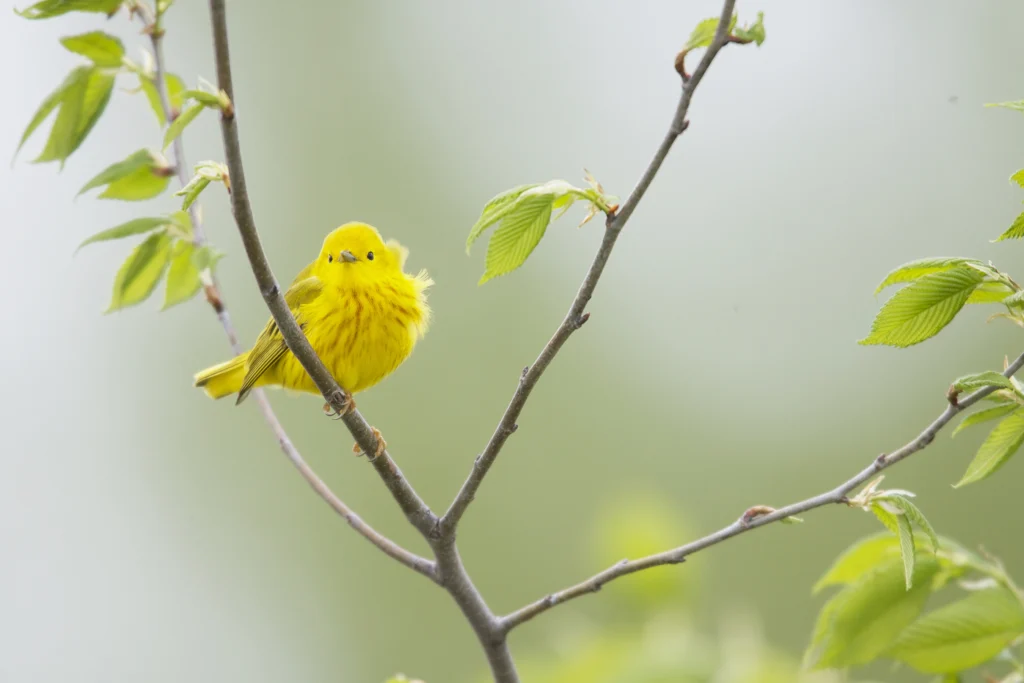
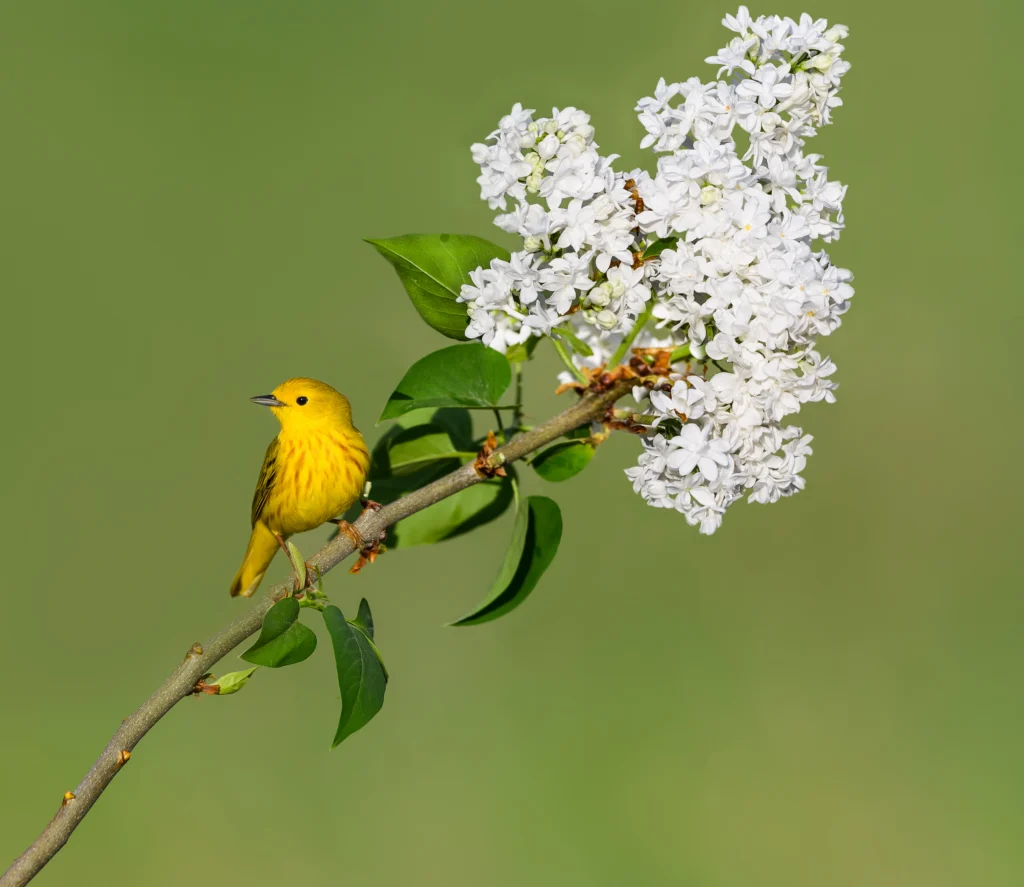
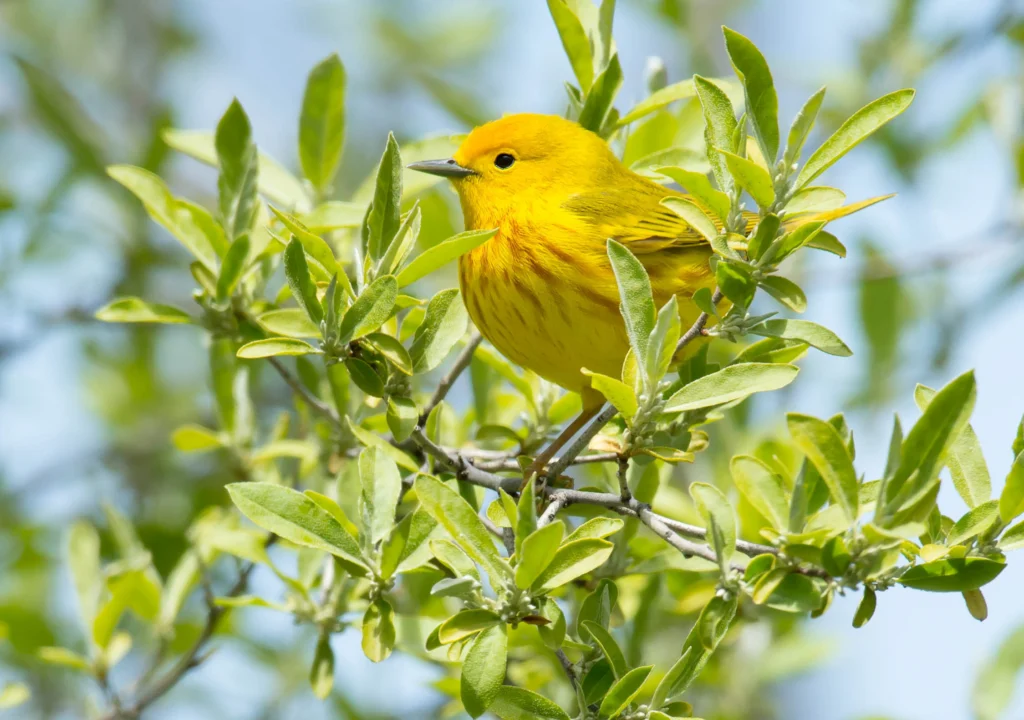
True to its name, the Northern Yellow Warbler is almost entirely yellow. Except for some gray to brown mixed in on the wings and tail, and the thin red stripes on the breast of the male, this bird’s feathers are entirely yellow. Males and females differ slightly in hue, with males a bright, rich sunflower yellow and females usually a subtler lemon yellow.
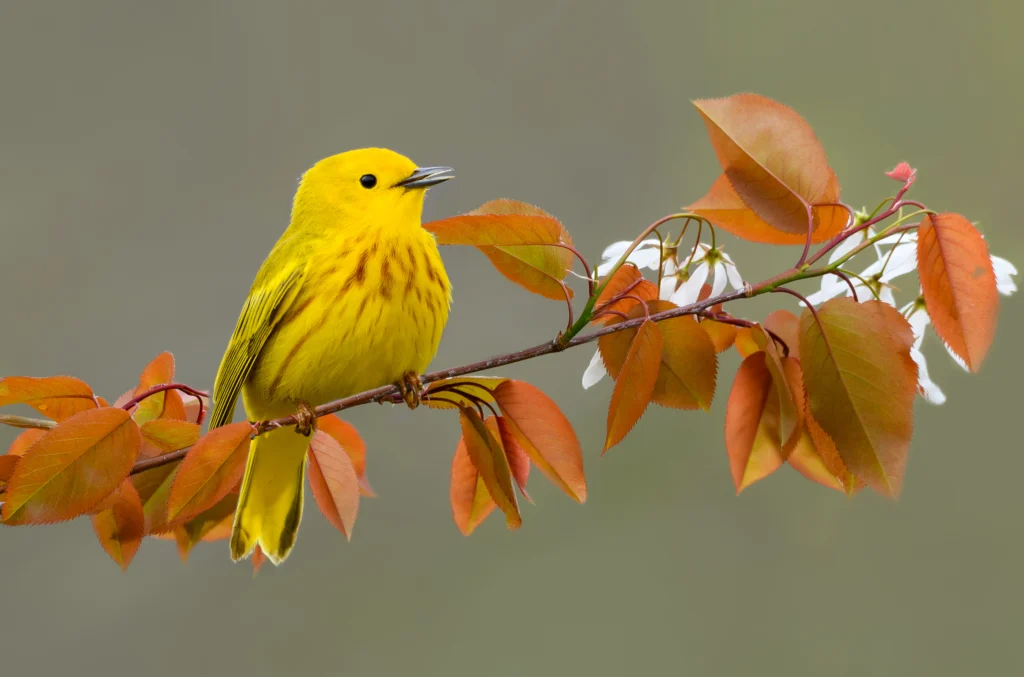
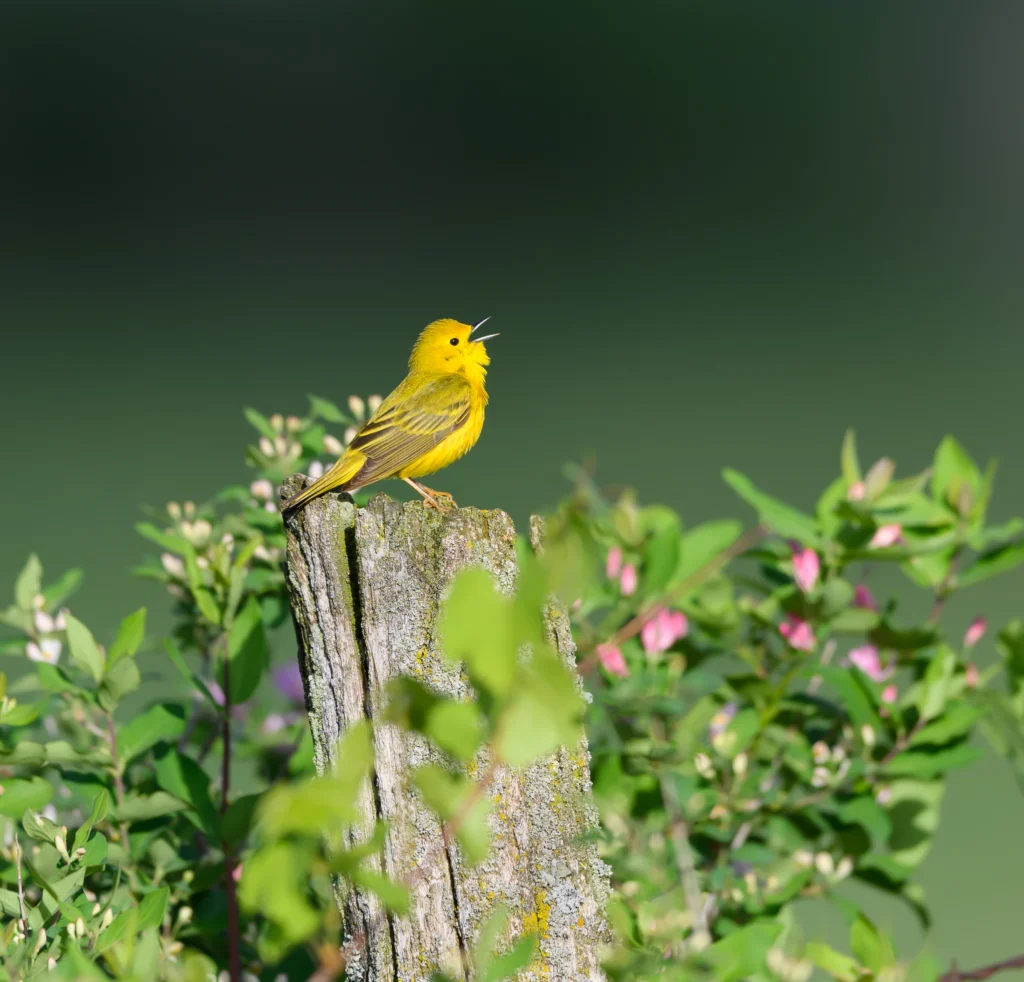

The song of the male Northern Yellow Warbler will be familiar to many North Americans: a high, musical sweet sweet sweet I’m so sweet composed of several phrases of rapid repeated notes, the second faster than the first, and ending with a final emphatic rising note. Like many other warblers, the Northern Yellow Warbler also gives a short, sharp chip note in a variety of contexts, including nest and territory defense.
Credit: George Wagner, XC56040. Accessible at www.xeno-canto.org/56040.
Credit: Russ Wigh, XC584793. Accessible at https://xeno-canto.org/584793.
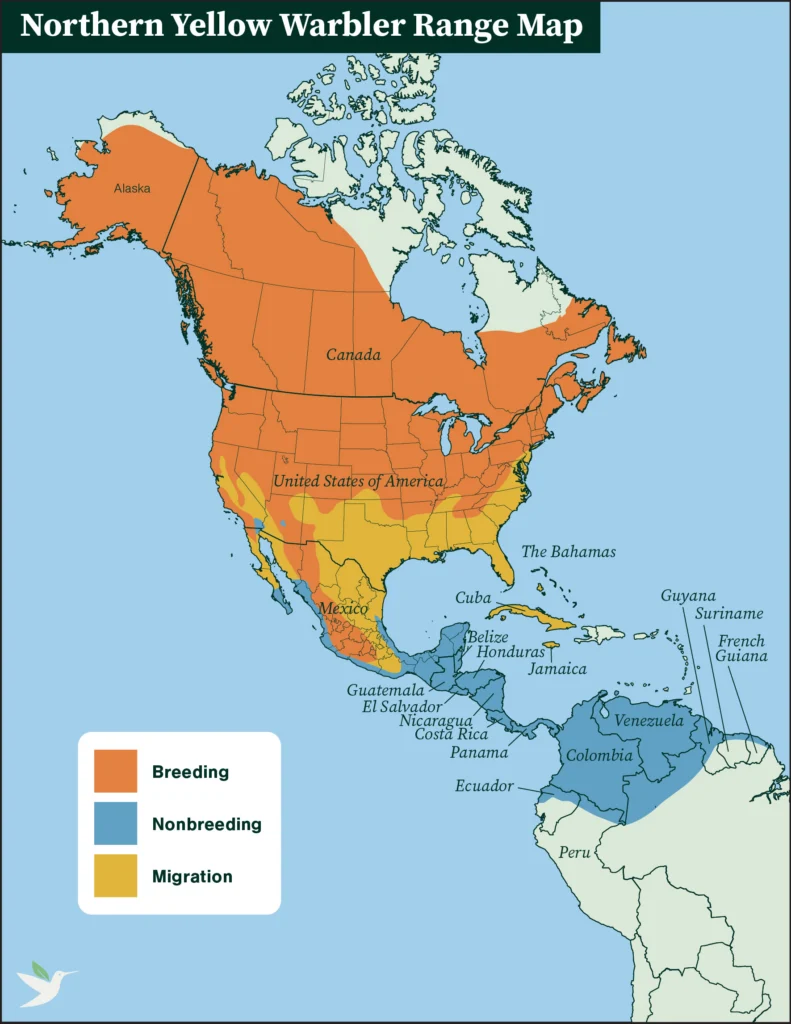
The Northern Yellow Warbler breeds in wet woods, thickets, and especially riparian areas. In the nonbreeding season, these birds are solitary in open woodlands, on farms and gardens with scattered trees, and in mangrove forests.
Área específica
Northwestern South America, Central America, and most of North America
Detalles de la gama
The Northern Yellow Warbler is the most widespread wood-warbler in the Western Hemisphere, breeding throughout North America from Alaska and the northern Canadian territories, nearly reaching the Arctic Circle. Its breeding range extends south through the central United States and further along the Coast Ranges into northern Baja California, the Appalachian Mountains to northern Georgia and Alabama, and the North American Cordillera through the Rocky Mountains into Central Mexico. In the nonbreeding season, these warblers can be found throughout Central America and into Colombia, Venezuela, Ecuador, Peru, Guyana, Suriname, French Guiana, and Brazil.
¿Sabías?
Winter or summer, this warbler provides valuable pest control. One study, conducted on its Costa Rican wintering grounds, showed that the Northern Yellow Warbler and other insectivorous birds ate large quantities of invasive coffee berry borer beetles, helping reduce infestations on coffee plantations in that country by 50 percent.
The Northern Yellow Warbler is a delight, bouncing through thickets as they forage and singing their bright, cheerful song. These spritely little birds, though socially monogamous, are also quite promiscuous. To guard their nests from neighbors, males have a suite of agonistic displays and behaviors they can use to signal aggression, threaten rivals, or show submission in order to mediate disputes. When these fail, physical fights are common. Even on their nonbreeding grounds, Northern Yellow Warblers hold exclusive territories that they defend from other species as well as their own.
The Northern Yellow Warbler feeds mainly on insects and spiders, gleaning them from shrubs and tree branches or sallying out from a perch to grab winged insects in mid-air. This diminutive hunter sometimes hovers while seeking prey that might be hiding on the undersides of leaves. Like many other migratory songbirds, the Northern Yellow Warbler adds fruit to its diet in winter.
A male Northern Yellow Warbler quickly claims a territory on the breeding grounds, chasing off intruding males. He courts prospective mates through incessant singing. In fact, one Northern Yellow Warbler may sing more than 3,000 times in a day to attract a female! Once he has her interest, the resident male will chase a female around his territory over a period of several days, while also performing various displays to demonstrate his plumage and vigor.
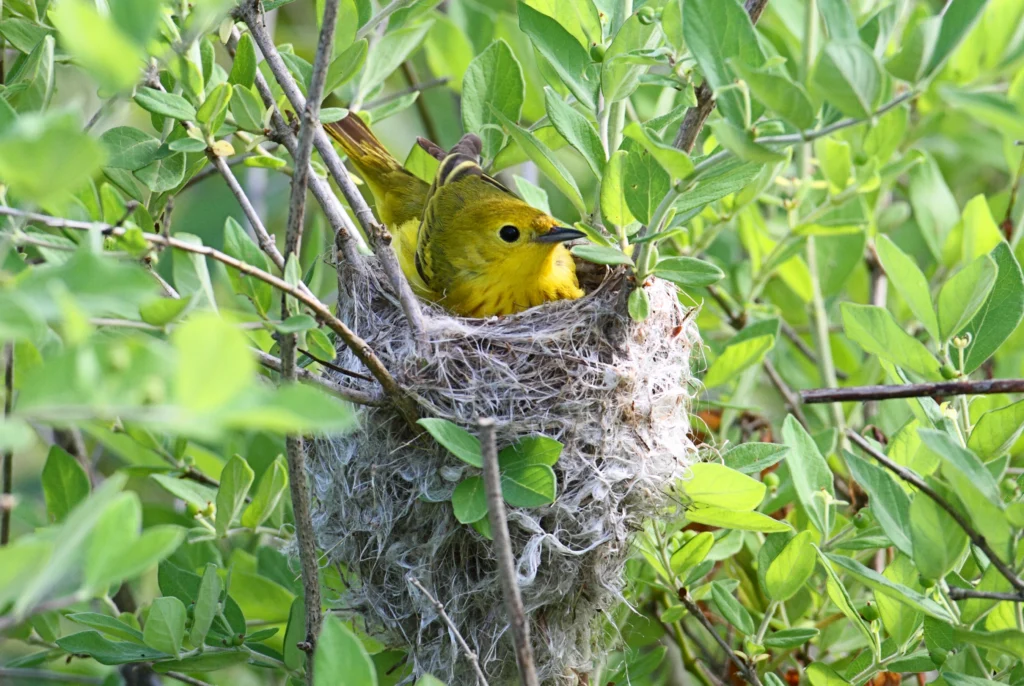
The female builds her nest in the upright fork of a tree or shrub, a loose cup of grasses and stems, lined with soft material which may include feathers, hair, fur, or downy seeds from plants such as cottonwoods and cattails. Uniquely, Northern Yellow Warbler nests typically include a sturdy platform of dry stems, and may also include a frame of grass around which the rest of the nest is built. Nests can be quite tall, especially when they contain buried cowbird eggs. The male attends the female closely as she builds her nest, wary of other males, which often invade established territories and attempt to mate with resident females.
The female builds and maintains the nest, incubates the eggs, and broods the hatchlings. She lays four or five eggs, pale gray to greenish white with dark red blotches. Male Northern Yellow Warblers aggressively guard nest sites and bring food to females sitting on eggs or young. Both sexes share chick-rearing duties: After the nestlings fledge, some may follow the mother, while the rest remain with the father.
Noticias e historias relacionadas

¡Únete a la bandada! Tu donación ayuda a preservar los hábitats que las aves necesitan para sobrevivir.