Descripción general
Acerca de
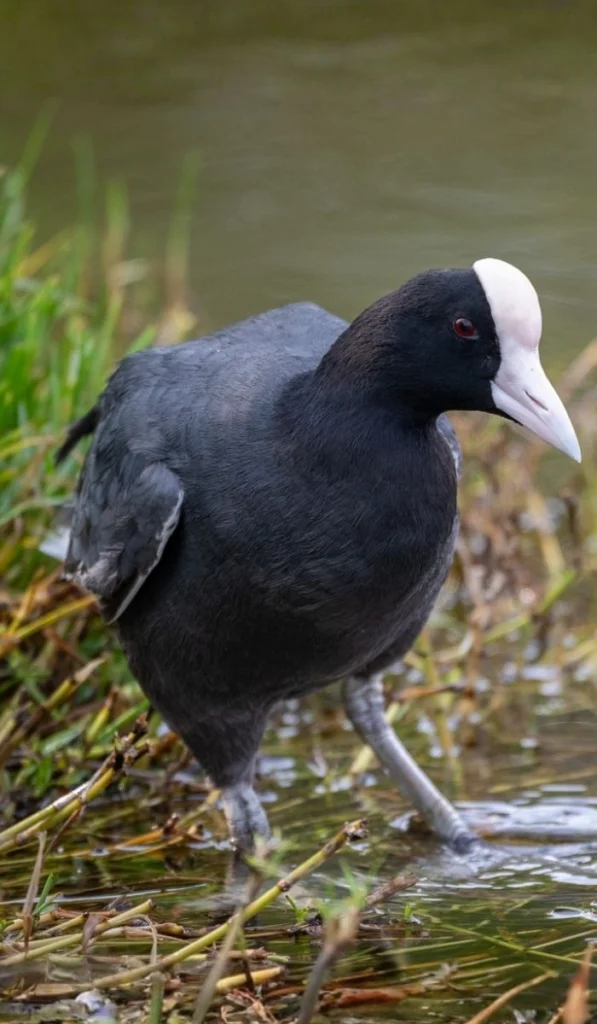
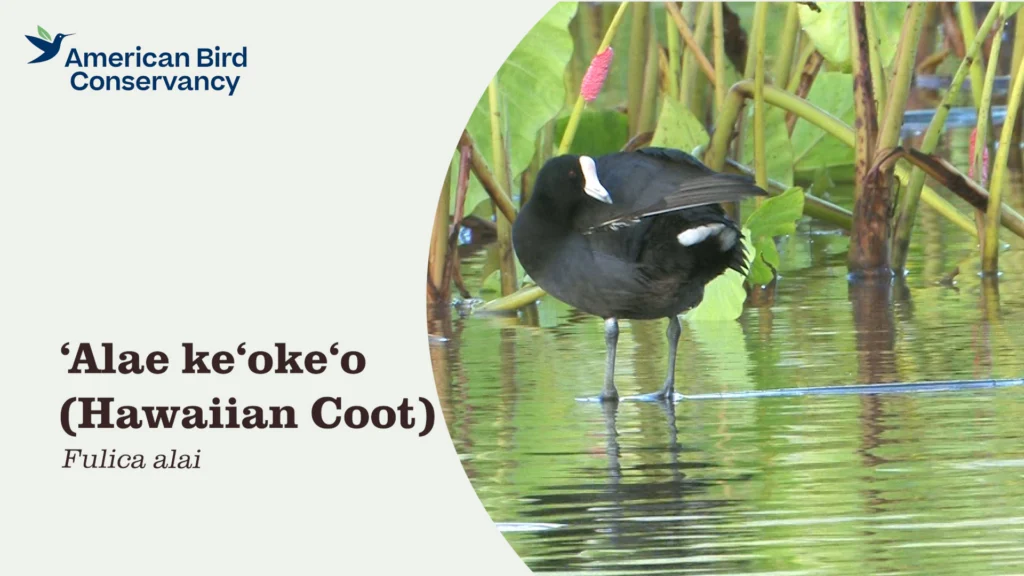
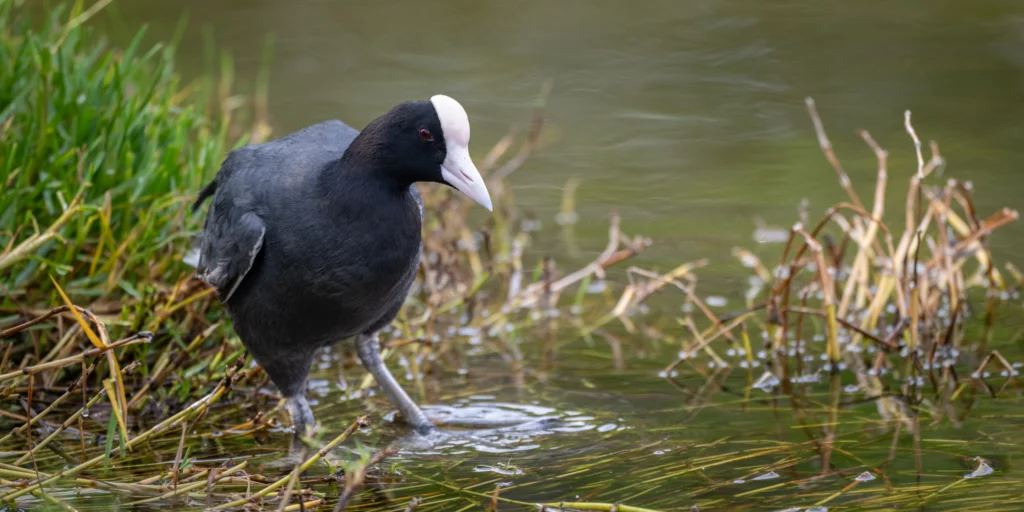
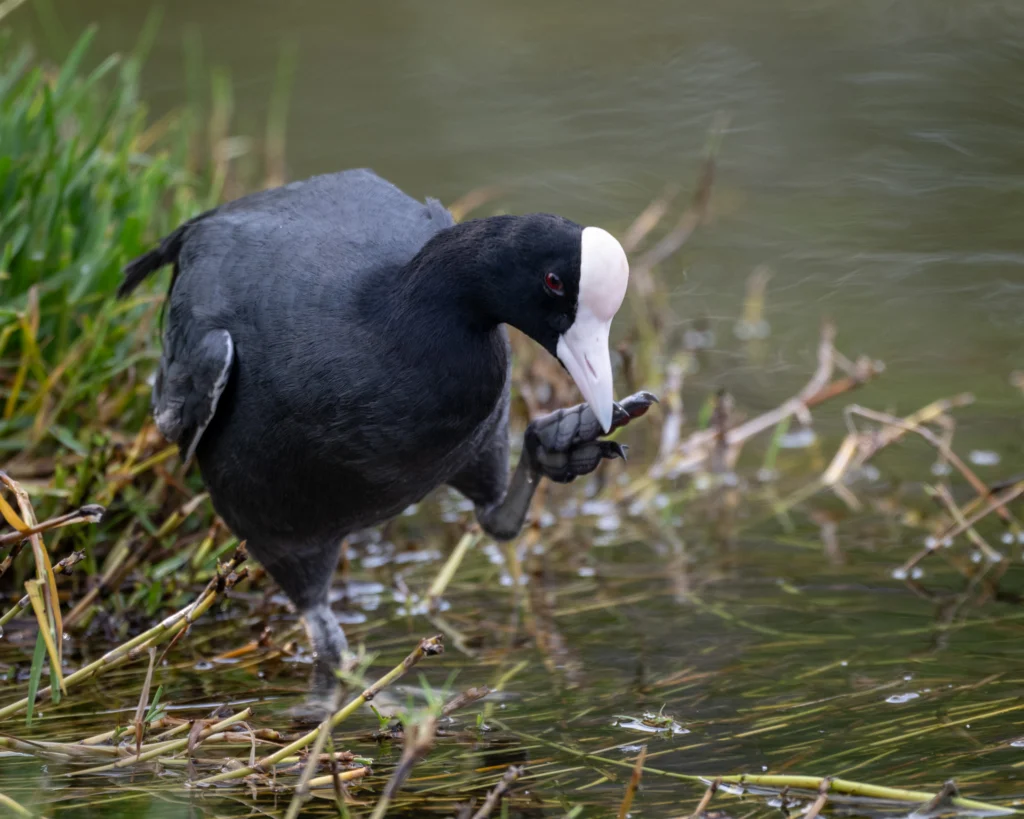
Once considered a subspecies of the familiar American Coot, the ʻAlae keʻokeʻo is similar to its mainland cousin in many ways, but one feature is markedly different: the prominent, bulbous, white lump on the ʻAlae keʻokeʻo’s forehead (a “frontal shield” in ornithology lingo). American Coots have a frontal shield as well, but theirs is flat and usually less prominent, only reaching the forehead. The ʻAlae keʻokeʻo’s shield can extend all the way onto the top of the head. Even more extreme, while the American Coot’s frontal shield is invariably white, for a small percentage of ʻAlae keʻokeʻo, the bulbous upper part of the shield is a dark blood red!
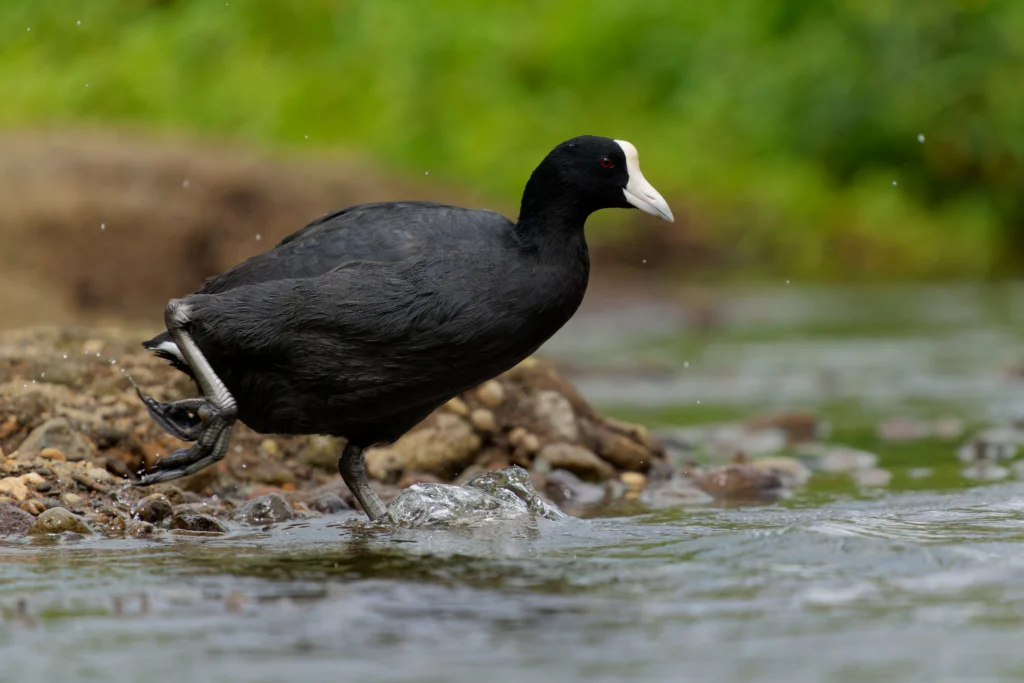
Known in Hawaiian mythology for their chattiness and hoarse warning cries, ʻAlae keʻokeʻo were historically hunted for food by Native Hawaiians. As with many coots of the world, ʻAlae keʻokeʻo also have a reputation for being noisy and rambunctious. They are highly territorial, and in winter when they may form large flocks, these spunky waterbirds constantly squawk at, chase, and fight with one another — and other bird species as well! In particularly aggressive moments, they will even turn over onto their backs and kick at intruders. These goofy birds are also notable for their awkwardness in taking flight; they usually require a long running start, where they charge across the surface of the water, rapidly stamping with their large, bizarre-looking feet.
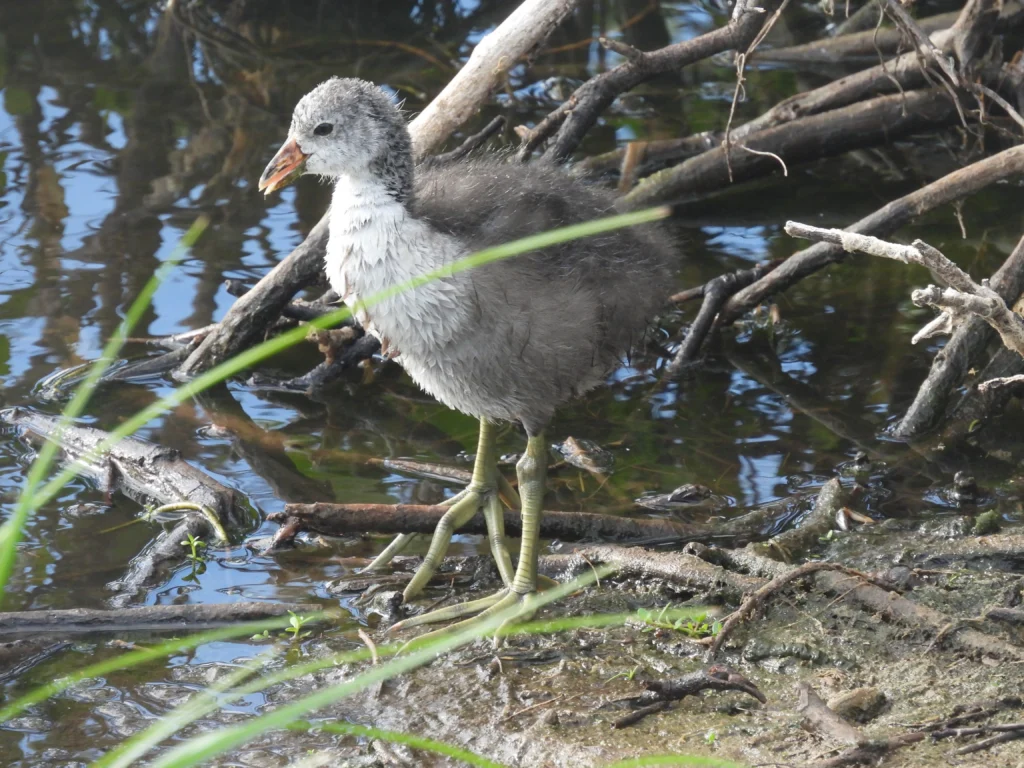
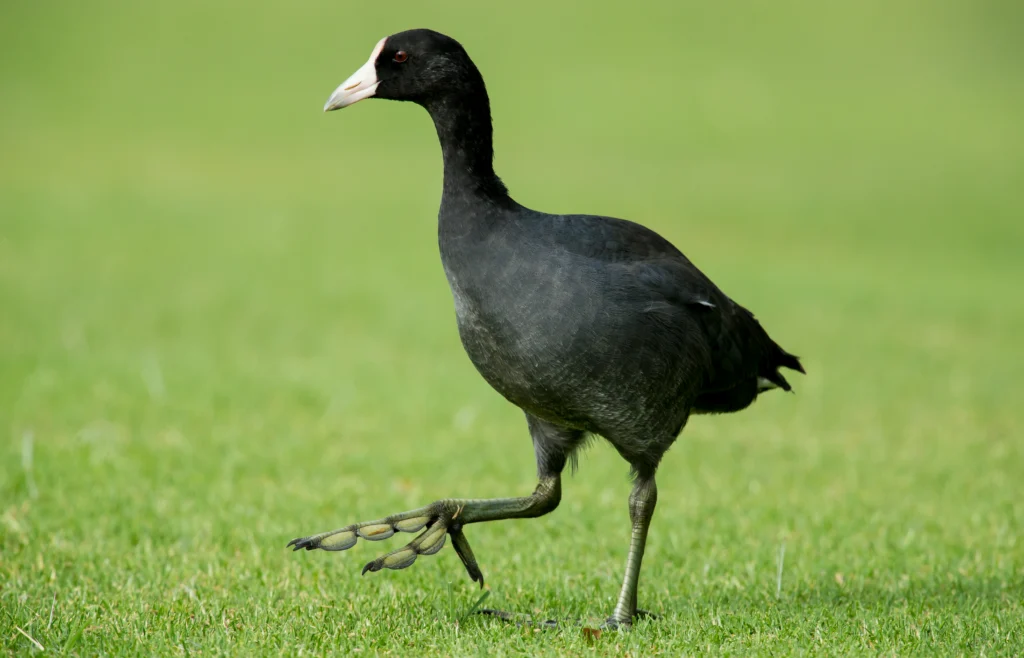
These feet are one of the ʻAlae keʻokeʻo’s many adaptations for a life in mud flats and watery marshes. The lobes — extra skin surrounding each toe — help propel the coot through the water, serving a similar function to webbing in the feet of ducks and other water birds. The broad lobes also keep the coot from sinking too deep when walking on soft mud. And when the ʻAlae keʻokeʻo leaves the wetland altogether and forages in grass or vegetation, the lobes fold back when it lifts its foot so as not to get in the way when it walks.
Amenazas
Though their population appears to be stable and they are faring better overall than many other endemic Hawaiian birds, ʻAlae keʻokeʻo are facing serious threats, the most impactful of which are habitat loss and introduced predators. Since 1780, Hawaiʻi has lost an estimated 31 percent of its coastal plain wetlands, the ʻAlae keʻokeʻo’s primary habitat. Disease outbreaks and poisoning due to pesticides can each take their toll as well.
Disappearing Wetlands
The greatest threat to ʻAlae keʻokeʻo is the steady development and degradation of their low-elevation wetland habitat on the coastal plains. Coastal areas are in high demand, and many wetlands have been drained or extensively modified for housing and tourism developments, such as hotels, subdivisions, shopping centers, and golf courses. Agriculture is another culprit, as it drastically modifies existing wetlands, although ʻAlae keʻokeʻo are able to use some aquaculture areas, such as taro. Additionally, invasive plants like mangrove trees can fill the open water and mudflat areas that these birds need, making habitat unusable.
Avian Botulism
One of the diseases that most severely impacts Hawaiʻi’s endemic and migratory waterbird populations is avian botulism. This disease is caused by a naturally occurring soil bacterium that lives in wetland sediments. Normally, these bacteria are harmless. But when temperatures rise, the bacteria in areas like stagnant marsh ponds and mudflats multiply and release botulism toxin. Wetland birds contract the disease when they eat invertebrates that carry this toxin, which paralyzes them and leads to death. As global temperatures rise, avian botulism could increase worldwide as warmer conditions favor the toxin.
Invasive Predators
All Hawaiian birds evolved without mammalian predators, and these native species are highly vulnerable when animals such as cats and mongooses are introduced to the environment. Many Hawaiian invasives are especially dangerous to eggs and nestlings, but some will hunt adult birds as well. For ʻAlae keʻokeʻo, the most dangerous introduced predators are feral rats, cats, and dogs, as well as invasive mongooses and Cattle Egrets.
Estrategias y proyectos de conservación
The ʻAlae keʻokeʻo, like other Hawaiian endemic species, needs our help to overcome the threats it faces. At ABC, we’re inspired by the wonder of birds and driven by our responsibility to find solutions to meet their greatest challenges. With science as our foundation, and with inclusion and partnership at the heart of all we do, we take bold action for birds across the Americas.
Mantenga a los gatos dentro de casa
Los gatos son compañeros maravillosos, pero están más seguros (al igual que las aves) cuando viven dentro de casa o bajo el control de sus dueños. ABC promueve la tenencia responsable de gatos, alentando a millones de dueños de mascotas a tomar medidas para mantener a sus gatos dentro de casa y abogando por políticas que beneficien la salud de las aves, los gatos y las personas.
Support Hawaiʻi’s Ecosystems
ABC, our partners, and local communities are taking action to prevent endemic Hawaiian birds from going extinct. We work to restore habitat, remove invasive mammals, and use predator-proof fencing to create safe havens for nesting seabirds and translocate species to predator-free habitats where they can thrive. We advocate for policies that protect Hawaiʻi’s birds and support innovative approaches to restoring habitat and conserving birdlife. Along with our partners, we’re creating a future for the birds of Hawaiʻi.
Galería de aves
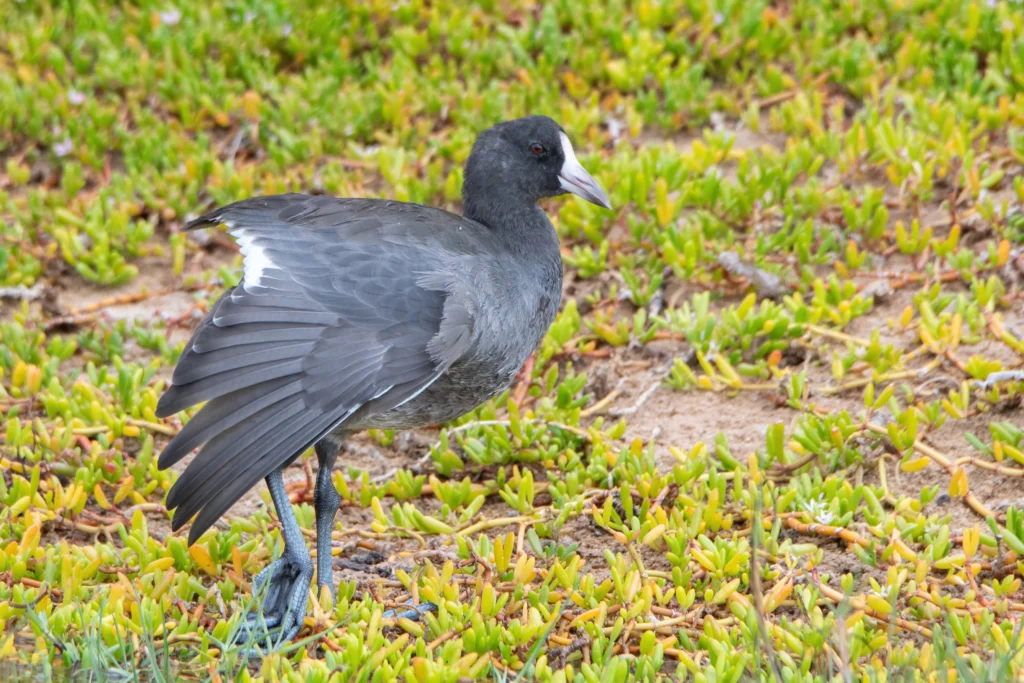
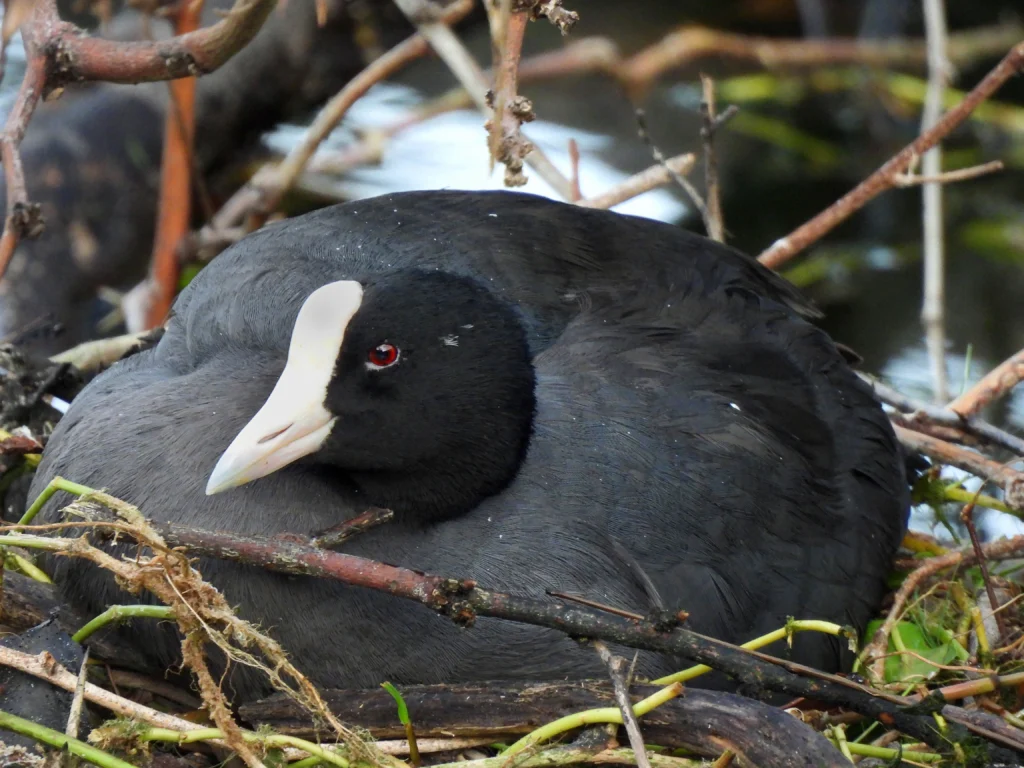
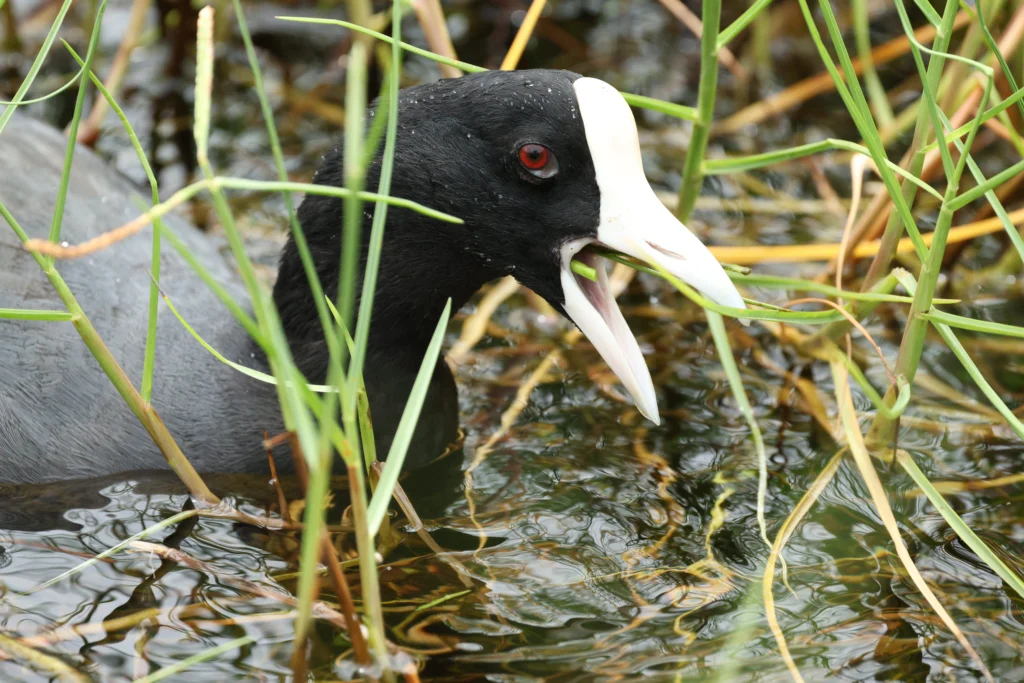
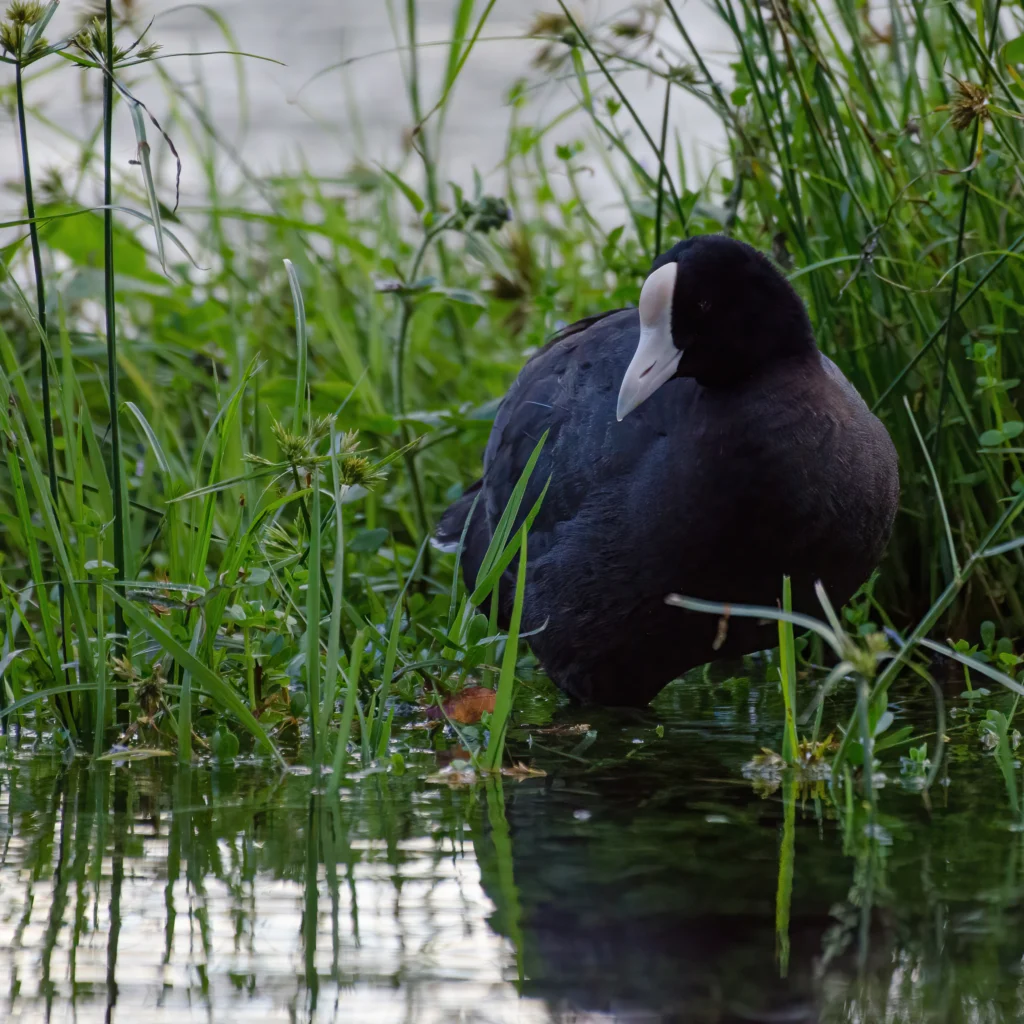
ʻAlae keʻokeʻo is visually quite similar to the American Coot, with its black head and neck, slaty body and wing feathers, striking red eye, and contrasting white beak. While both birds have a frontal shield, where the keratin of the bill extends upward between the eyes and over the forehead, ʻAlae keʻokeʻo has a larger and more bulbous shield that can reach up to and even rise above the crown of the head. In some individuals, the bulbous part of the shield can be a deep, dark red, rivalling the eye in intensity and paired with dark red spots toward the tip of the bill. Additionally, the sides of the tail are white, and the large feet are a pale shade of gray to blue-green. ʻAlae keʻokeʻo has noticeably long toes with flexible flaps of skin, or lobes, extending from the sides.
Sonidos
The ʻAlae keʻokeʻo’s voice is similar to the American Coot’s, comprising a range of sharp nasal squeaks, whines, honks, and harsh, throaty croaks. No studies have specifically described the vocalizations for this species, perhaps because it was long considered a subspecies of the common and well-studied American Coot.
Credit: Jim Holmes, XC342210. Accessible at www.xeno-canto.org/342210.
Credit: Ross Gallardy, XC207452. Accessible at www.xeno-canto.org/207452.
Credit: Ross Gallardy, XC208160. Accessible at www.xeno-canto.org/208160.
Hábitat
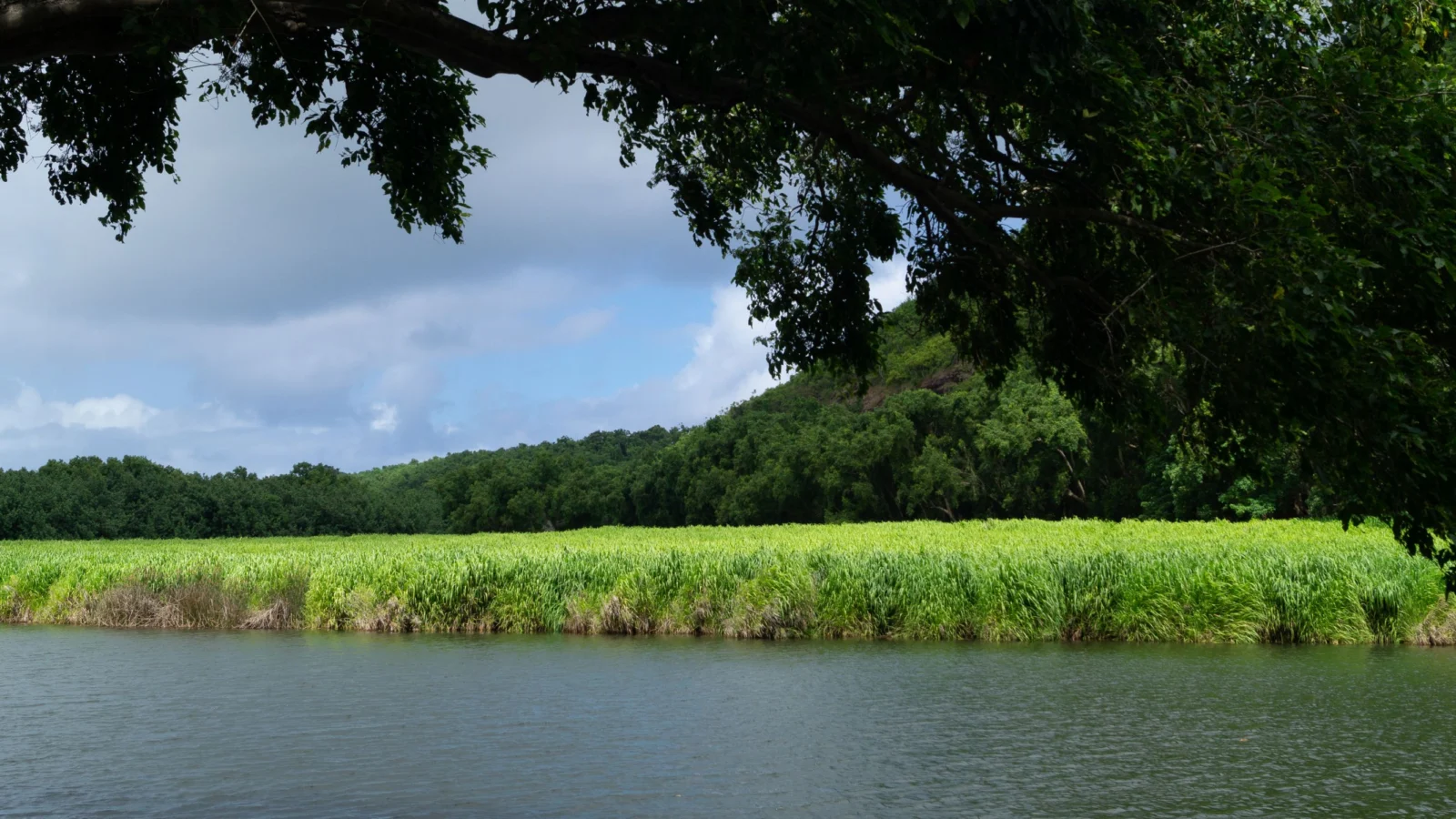
The ʻAlae keʻokeʻo’s life revolves around ponds and wetlands, natural or human-made. This coot is fairly common and can be found on almost any body of water below about 1,300 feet elevation.
- Mostly uses low-elevation marshes and ponds, as well as modified and managed areas, including aquaculture and wastewater treatment ponds
- Wandering or dispersing birds may occasionally reach higher-elevation streams, or artificial ponds such as those on golf courses
- Also sometimes uses brackish or saltwater estuaries, and occasionally flies to calm sea waters when flushed from coastal habitat
Rango y región
Rango y región
Área específica
Hawaiian Islands
Detalles de la gama
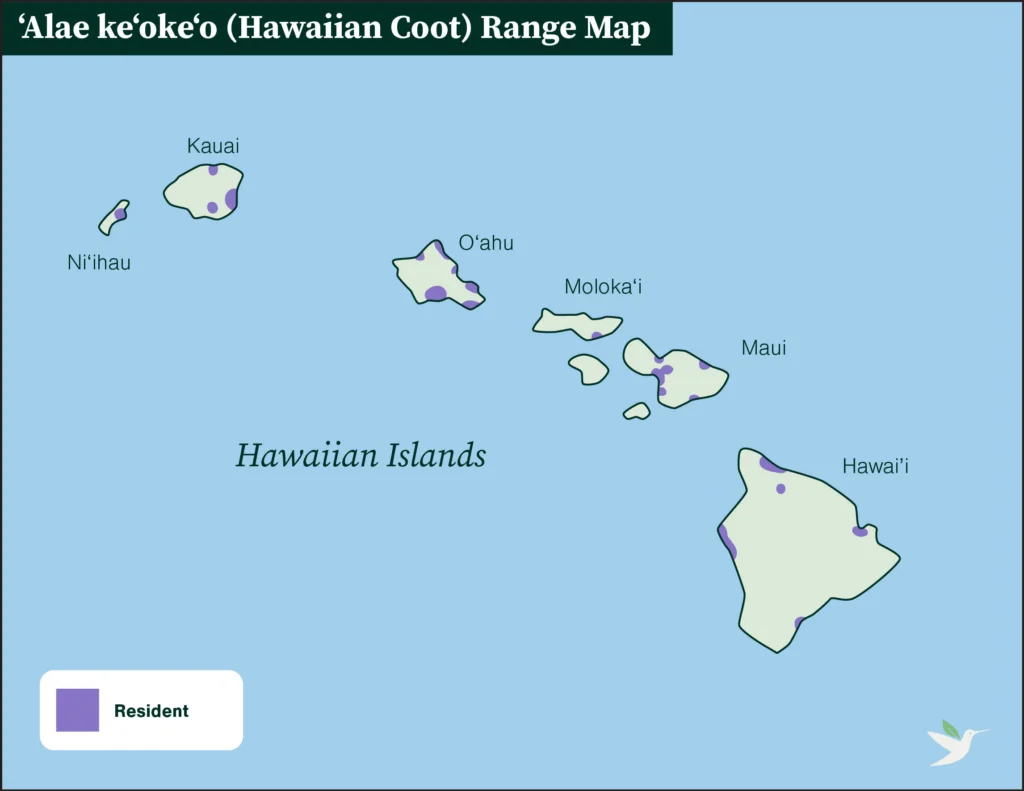
The ʻAlae keʻokeʻo breeds throughout the larger Hawaiian Islands, and visits Lanaʻi and the Northwestern Hawaiian Islands as far as Kure Atoll. However, the majority of these coots live on Kauaʻi, Oʻahu, and Maui, which all together contain around 80 percent of the population.
¿Sabías?
Though ʻAlae keʻokeʻo do not migrate, they will move widely in response to habitat conditions. These coots find temporary ponds after heavy rains, and dispersing birds will move all over the Hawaiian island chain.
Historia de vida
The ʻAlae keʻokeʻo is a common and recognizable species of low-elevation inland waters, especially on Maui, Oʻahu, and Kauaʻi. Despite being fairly common, researchers have not thoroughly studied the natural history of ʻAlae keʻokeʻo. However, much of this bird’s life history is likely very similar to that of the closely related and well-studied American Coot.
Dieta
The ʻAlae keʻokeʻo forages mostly on aquatic vegetation, including the leaves, stems, and seeds of aquatic plants, as well as small animals such as mollusks, snails, tadpoles, and small fish. They feed both on and below the surface, sometimes plucking emergent vegetation and diving after their food.
Noviazgo
The ʻAlae keʻokeʻo’s courtship behavior has not been formally described. In the American Coot, pair formation involves a series of intimate displays where two birds touch their beaks together. Then, one bird allows the other to groom its neck and breast.
Anidación
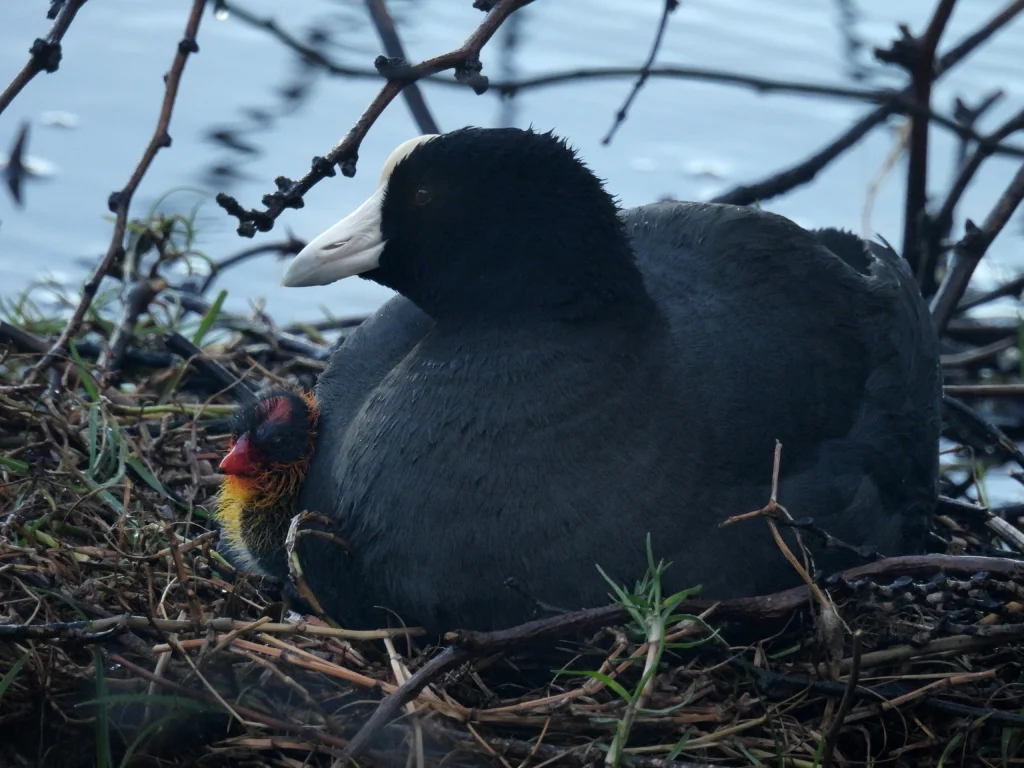
ʻAlae keʻokeʻo typically nest on floating platforms of vegetation, anchored to emergent plants (those growing out of the water), such as bulrushes and cattails, or large mats of algae. Their nests are immense — up to 3 feet thick! — and nest platforms may also have a “ramp” off of one side where coots will enter and leave. Females are likely the primary nest-builders, but in the American Coot, males help. Both species build multiple platforms, some of which may be used for roosting.
Huevos y crías
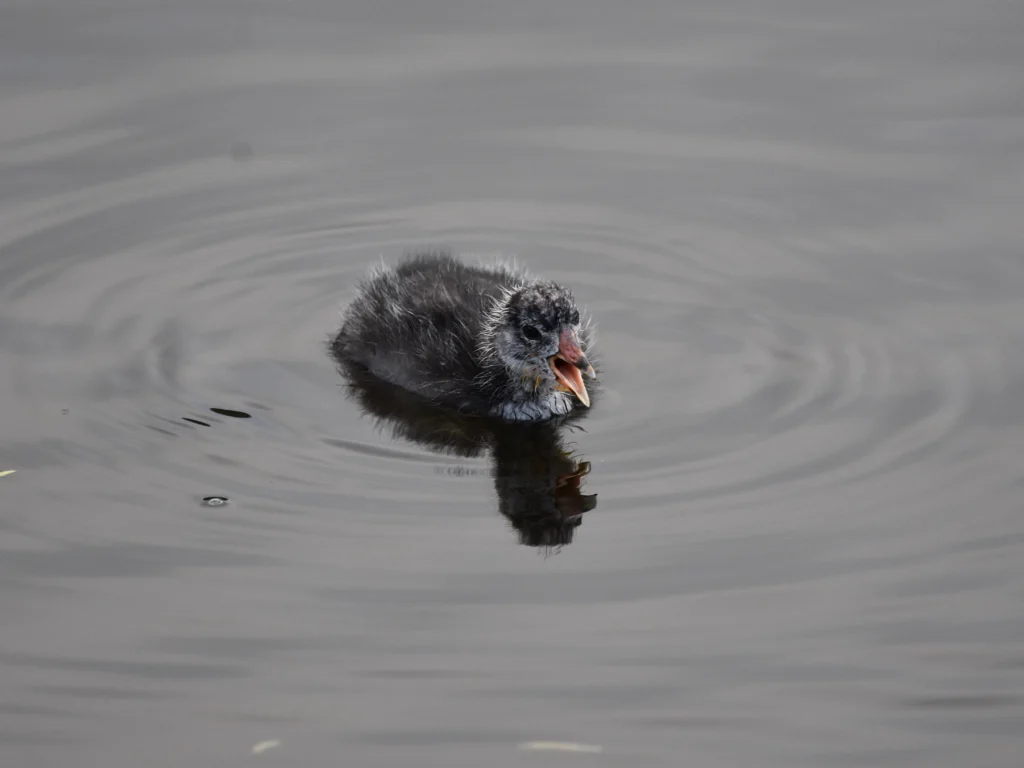
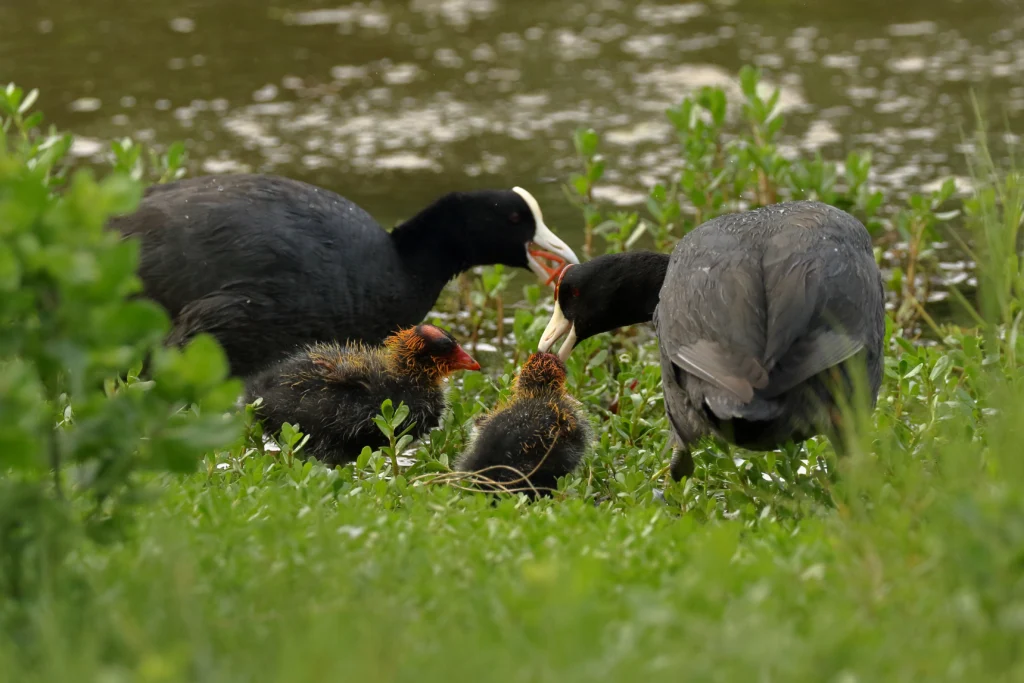
Females usually lay five or six eggs, but may lay as few as three and as many as 10. Incubation lasts about 25 days. The newly hatched chicks, dark-bodied with rather bizarre bald pink-orange heads, are able to swim almost immediately.