Open Ocean. Photo by Marianna Sigov, Pexels.

Pomarine Jaeger

Stercorarius pomarinus

Atshen-tshiashku (Innu-aimun)

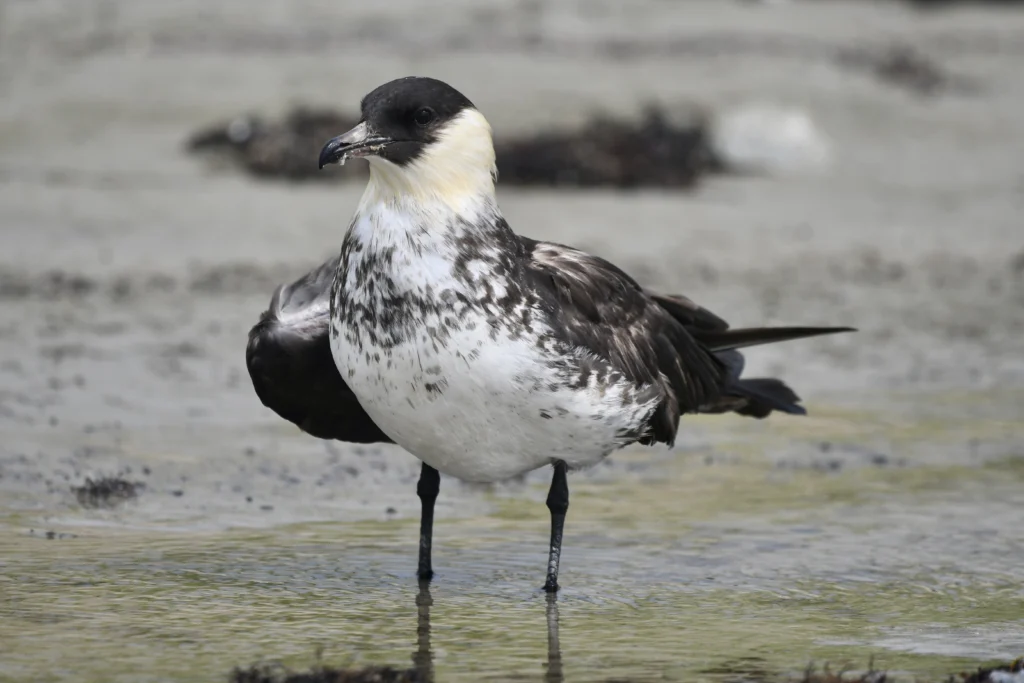
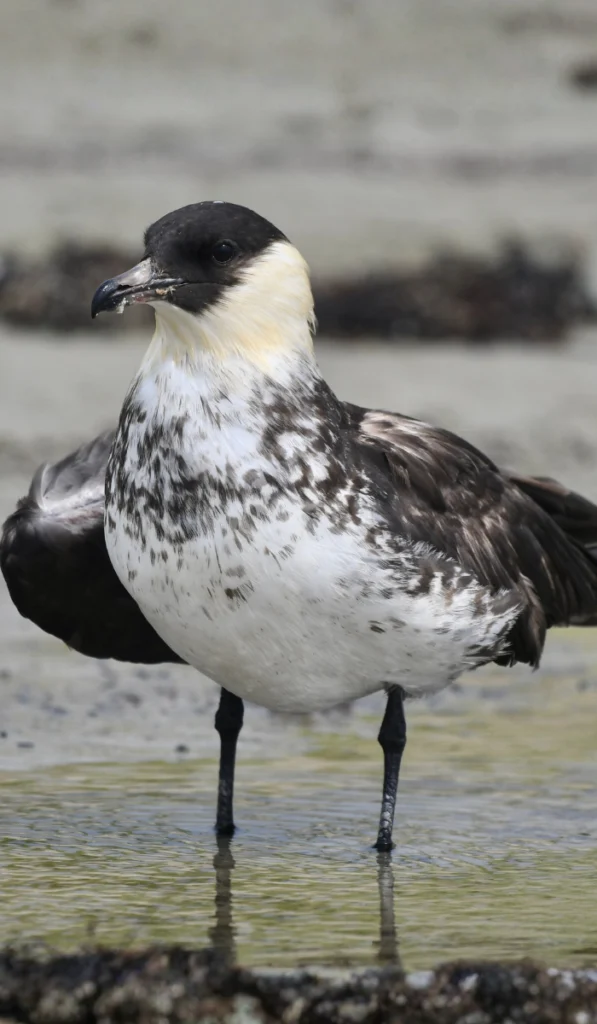
Pomarine Jaeger. Photo by Terry Little, Cornell Lab of Ornithology | Macaulay Library.

Pomarine Jaeger

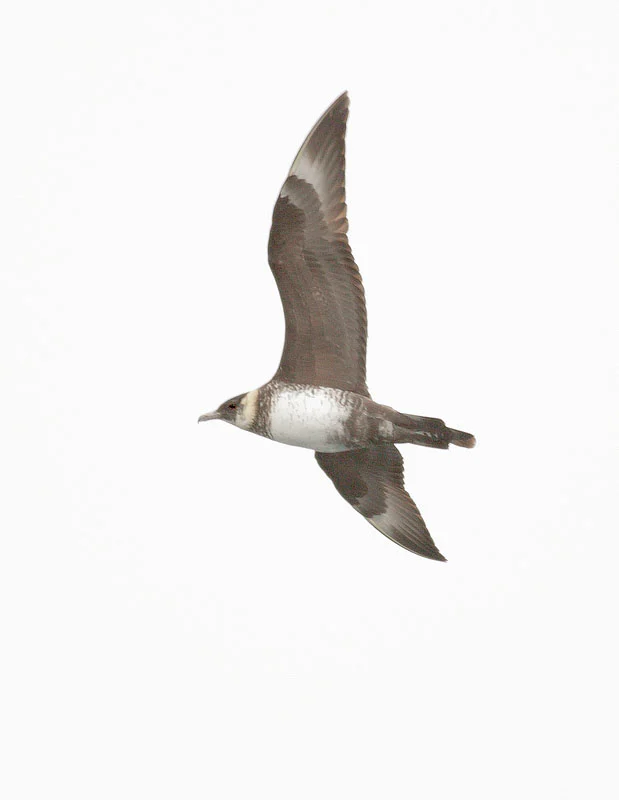
Pomarine Jaeger. Photo by Terry Little, Cornell Lab of Ornithology | Macaulay Library.

Stercorarius pomarinus

Descripción general

Estado de conservación
Tendencias demográficas
Desconocido
Tamaño de la población
400,000
Familia
Jaegers
Skuas
Ubicación
caribe
Hawai
Islas
América del norte
Sudamerica
Patrón de migración
Variado
Distancia de migración
Larga distancia
También conocido como
  • Isunngarsuaq (Greenlandic)
  • Meirleach mara (Irish)
  • Págalo Pomarino (Spanish)
  • куьаҕан хопто / Kushaghan Hopto (Yakut)
  • Iselelimsilonkezo (Zulu)
  • Burung Pelangi Sungai (Malay)

Acerca de

The Pomarine Jaeger is the largest of the three species of piratical seabirds known in North America as “jaegers,” a name taken from the German word for “hunter.” (Elsewhere, jaegers are more commonly referred to as skuas, referring to the birds that make up the family Stercorariidae.) Indeed, these aggressive and intimidating birds are notorious for attacking and chasing smaller seabirds like gulls and petrels to force them to relinquish their food — but they’re not afraid to take on larger birds, too. This behavior of stealing food from other species is known as “kleptoparasitism,” and is a foraging strategy shared with the closely related skuas as well as the Águila calva. Oddly enough, these disgorged morsels that the jaegers consume were once thought to be the fleeing bird’s poop. This odd, erroneous story is the source of the genus name Stercorarius, “of dung” in Latin, and an old common name for this bird: “Dung-hunter.”

Pomarine Jaegers may do even more to earn the name “hunter” on their breeding grounds, where they switch from a variable foraging strategy that includes scavenging, hunting, and stealing to one based purely on hunting one particular species. Across their range, these Arctic breeders rely almost exclusively on lemmings. Even though nonbreeding birds will take advantage of a variety of Arctic food sources, Pomarine Jaegers are so dependent on lemmings that if there are not enough of them at a nesting area, the jaegers will not even breed there. This can be a bit of a problem for the birds, as lemming populations follow a three- or four-year boom-and-bust cycle, characterized by extreme highs and extreme lows. This means that a given population of Pomarine Jaegers may only breed once or twice every four years! In fact, other species that depend on lemmings for food, including the Snowy Owl and the Arctic fox, seem to follow a similar pattern, breeding only in good lemming years.
Amenazas

Because Pomarine Jaegers need plenty of lemmings around to successfully reproduce, they are extremely vulnerable to changes in lemming population sizes. The jaegers are adapted to periodic fluctuations in lemming cycles, but long-term declines in lemmings mean long-term declines in Pomarine Jaegers. Any threat to the lemming is a threat to the bird as well. The International Union for Conservation of Nature (IUCN) lists the Pomarine Jaeger’s population as Least Concern, and while population trends are largely unknown, the general decline in seabirds and tundra nesters could hint at problems for the jaeger.

Warming Winters

Arctic winters are getting warmer with climate change, and this is bad news for many Arctic species. On an unseasonably warm day, winter rainfall can create a thick, icy shield on the snow’s surface, trapping lemmings below where they may starve. When lemming numbers drop, it affects all the species that depend on them, including Snowy Owls, Arctic foxes, and the Pomarine Jaeger.

Cambio climático

Estrategias y proyectos de conservación

The Pomarine Jaeger needs our help to overcome the threats it faces. At ABC, we’re inspired by the wonder of birds and driven by our responsibility to find solutions to meet their greatest challenges. With science as our foundation, and with inclusion and partnership at the heart of all we do, we take bold action for birds across the Western Hemisphere.

Abordar el cambio climático

Due to its impact on Arctic lemmings, climate change poses a major threat to the Pomarine Jaeger. ABC addresses climate change in three key areas: mitigation, resilience, and adaptation. We have planted millions of trees throughout the Western Hemisphere, protected more than 1.3 million acres of land in Latin America and the Caribbean, and continue to improve and restore bird habitat.

Cambio climático

Supporting Seabird Recovery

Outside of the breeding season, Pomarine Jaegers are heavily dependent on other seabirds for their survival, and seabirds are facing steep declines. ABC and our partners throughout the Western Hemisphere are addressing the most pressing issues facing seabirds, including plastic pollution, fisheries bycatch, and habitat loss. We support science-backed, collaborative efforts to help struggling seabird populations recover.

Abordar la pesca

Galería de aves

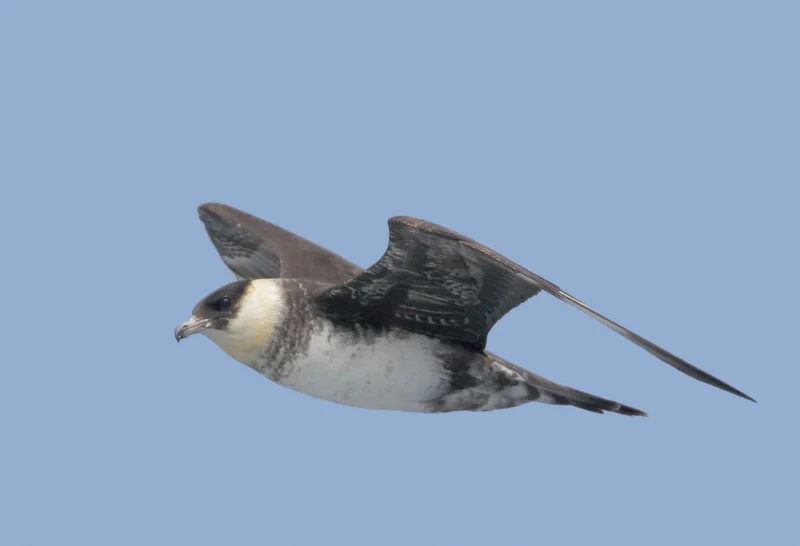
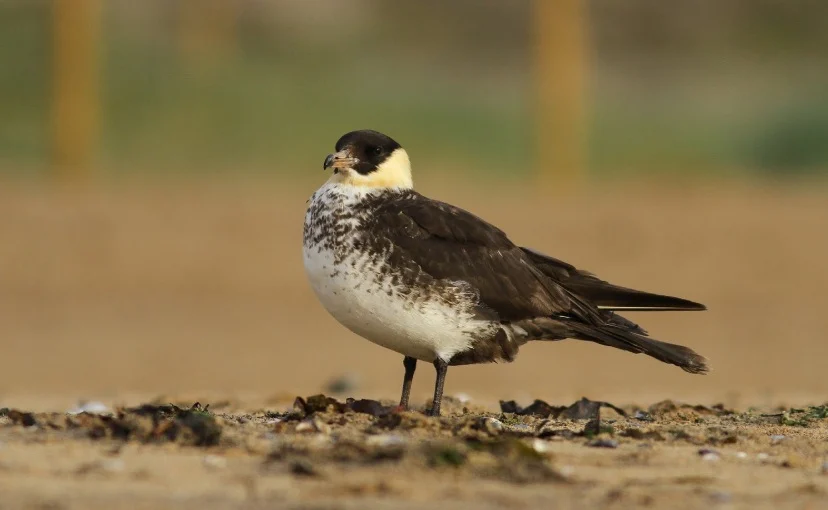
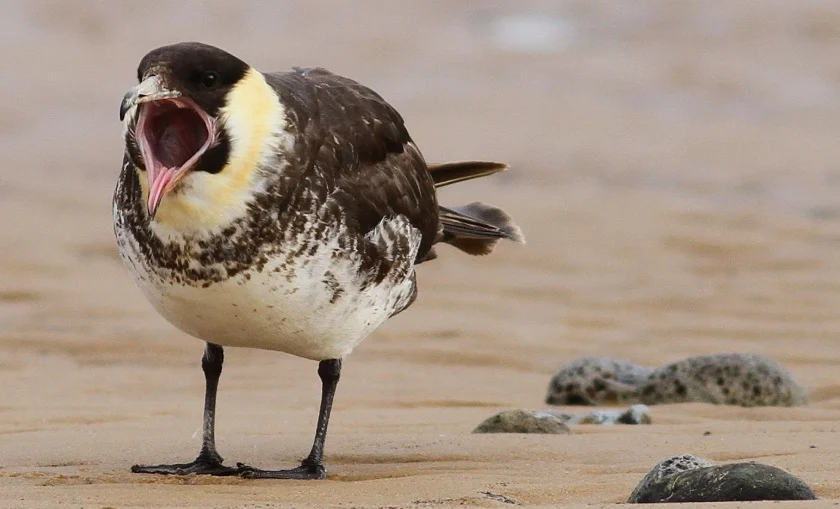
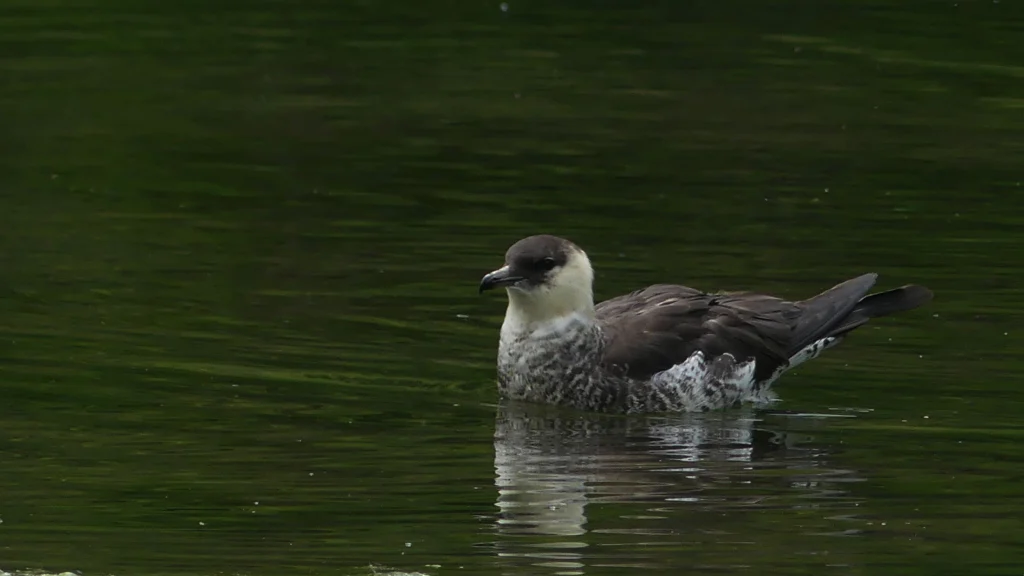
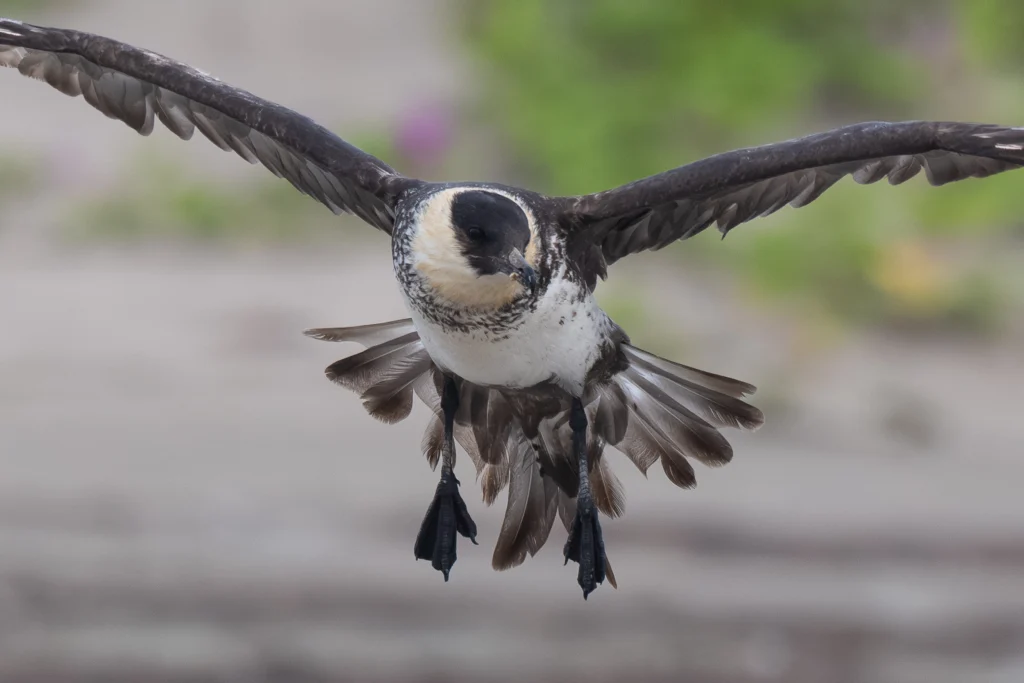
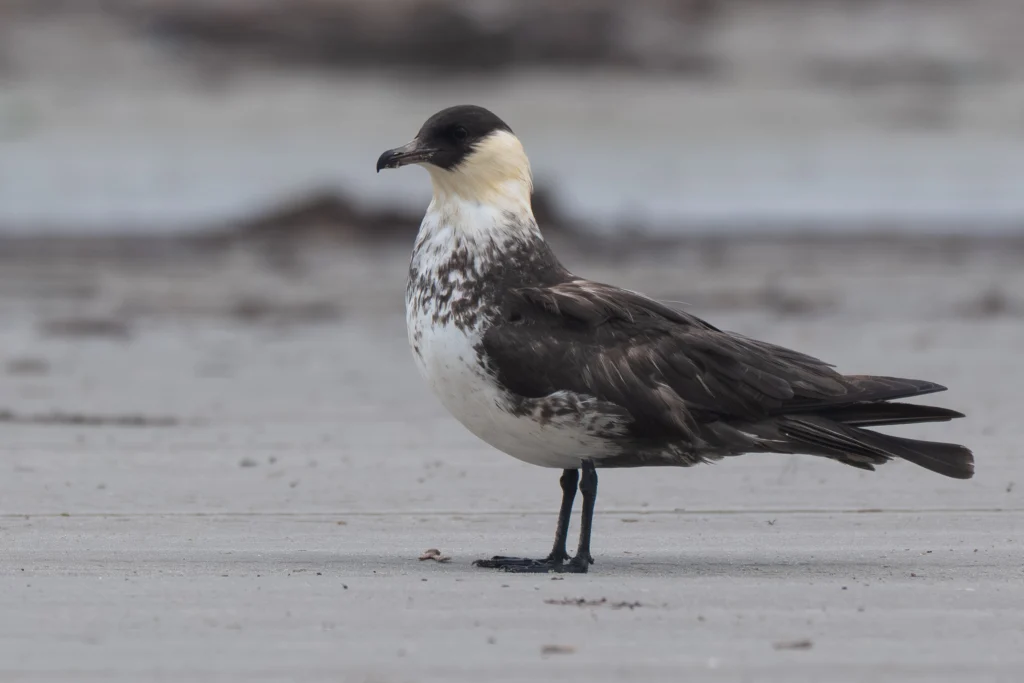
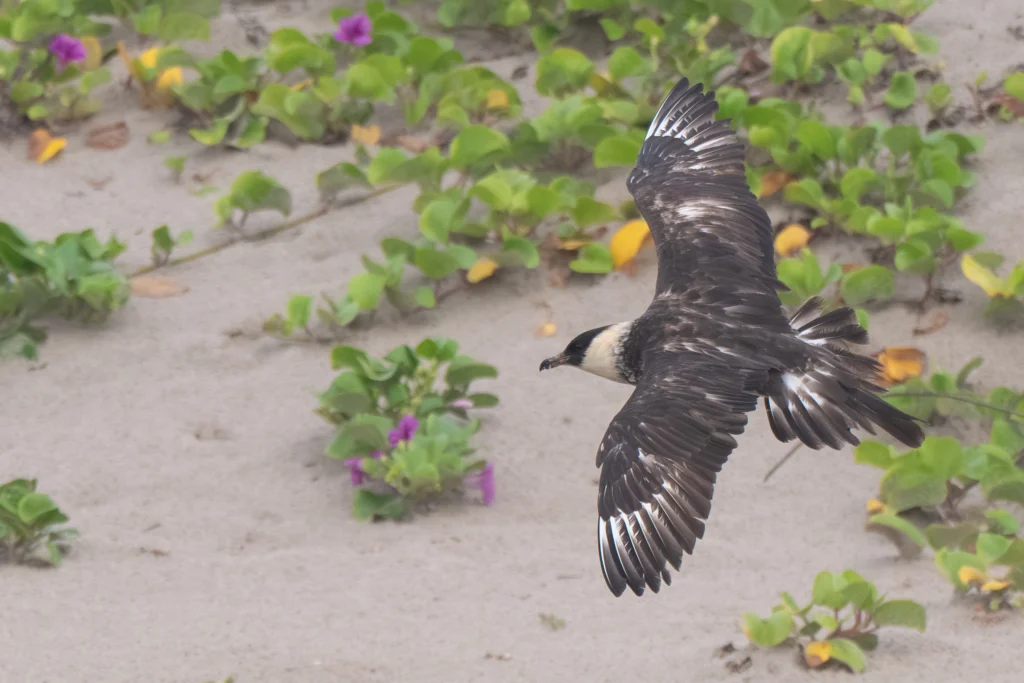
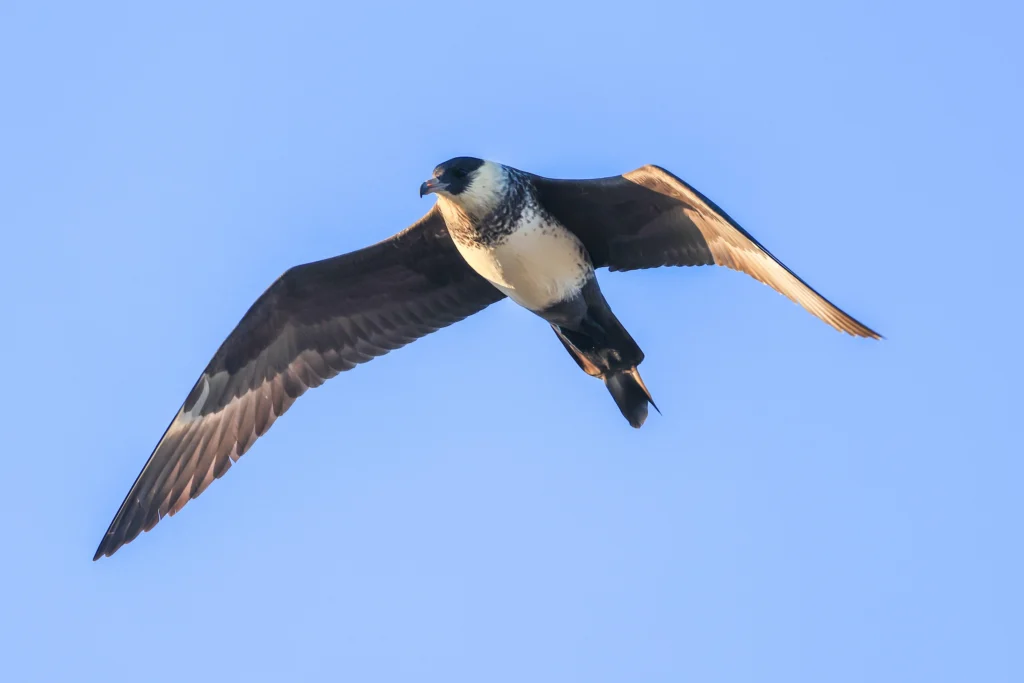
Identifying jaegers, and young jaegers in particular, can be truly challenging. The Pomarine Jaeger is a large, sturdy seabird with long, powerful wings, a bulky body, and a straight, narrow bill with a hooked tip. The species’ name, Pomarine, means “covered nose” or “lid-nosed” and refers to the flaps of skin that partially cover the bird’s nares (nostrils). In adults, the two central tail feathers (also called “retrices”) are elongated, sometimes as much as twice the length of the rest of the tail. The central retrices end in a broad tip with a half twist, leading some to call these feathers “the spoons.” The “spoons” can be a useful identification marker: A jaeger without spoons puede be a Pomarine, but the presence of spoons is indicative of a Pomarine.

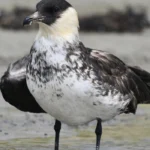
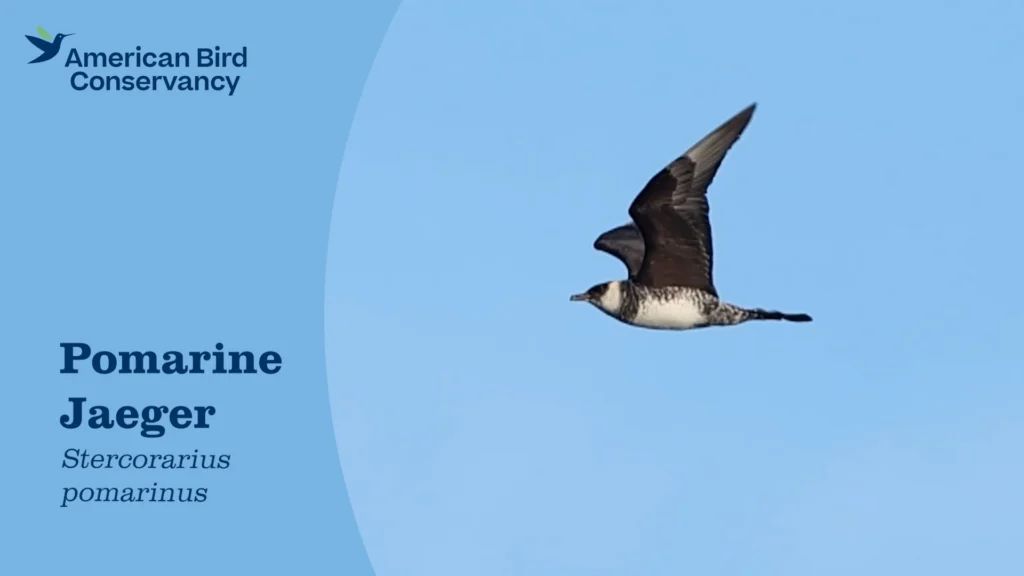
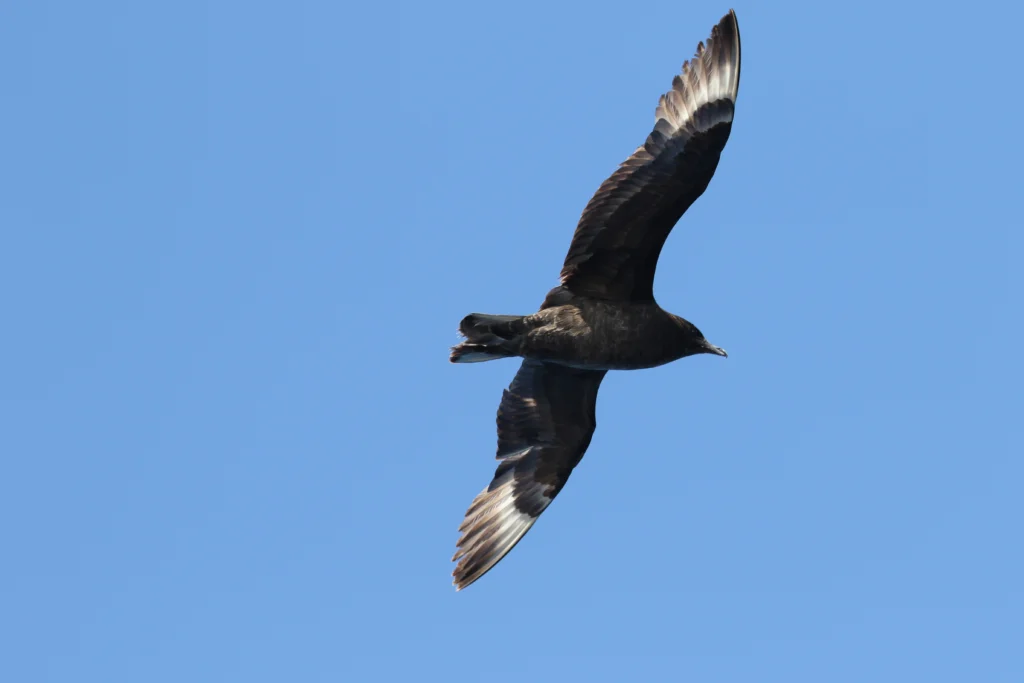
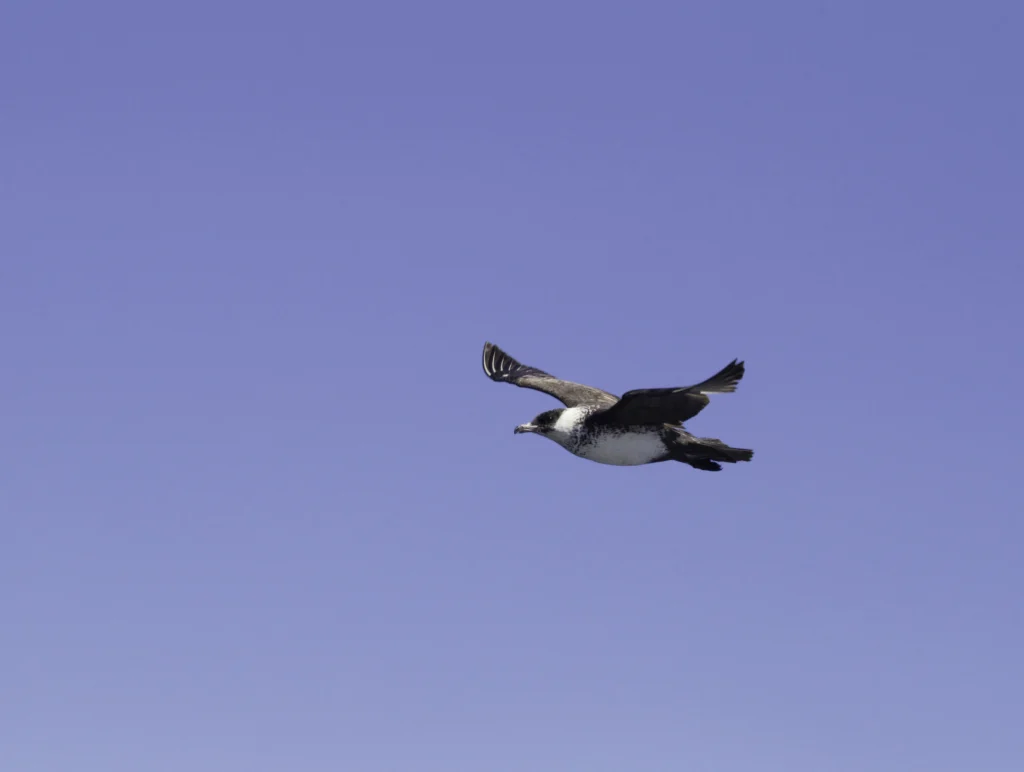
The Pomarine Jaeger has both a dark and a light color morph. While dark morph birds are entirely a deep, dark shade of brown, light morphs have a broad white belly and lower breast, with a dark band across the upper breast, and a cream to yellow patch of color that wraps from the nape and back of the head around to the throat, leaving a conspicuous dark cap over the face and top of the head. Both morphs show a white base on the underside of the outermost flight feathers on the wing. Pomarine Jaegers have more white on these feathers than other jaeger species.

Sonidos

The Pomarine Jaeger has a reedy voice, and many of this species’ calls have qualities similar to those of a gull. The Long Call is a series of short, rising whines, given mostly on the breeding grounds by territorial birds. In alarm or in defense of their nest, Pomarine Jaegers may give the Quavering Call, an eerie vibrato cry often given by both members of a pair.

Long Call

Credit: Andrew Spencer, XC184383. Accessible at www.xeno-canto.org/184383.

Quavering Call

Credit: Andrew Spencer, XC184384. Accessible at www.xeno-canto.org/184384.

Hábitat

The Pomarine Jaeger is known to most as a seabird, spending the nonbreeding season on the open ocean. In the breeding season, these seabirds head inland to the marshy tundra of the high Arctic.

  • Often far from shore in the nonbreeding season, Pomarine Jaegers can be found out to and beyond the continental shelf, but sometimes along the shoreline as well
  • Nesting birds prefer wet areas with low vegetation, including marshes, wet meadows, and bogs

Rango y región

Rango y región


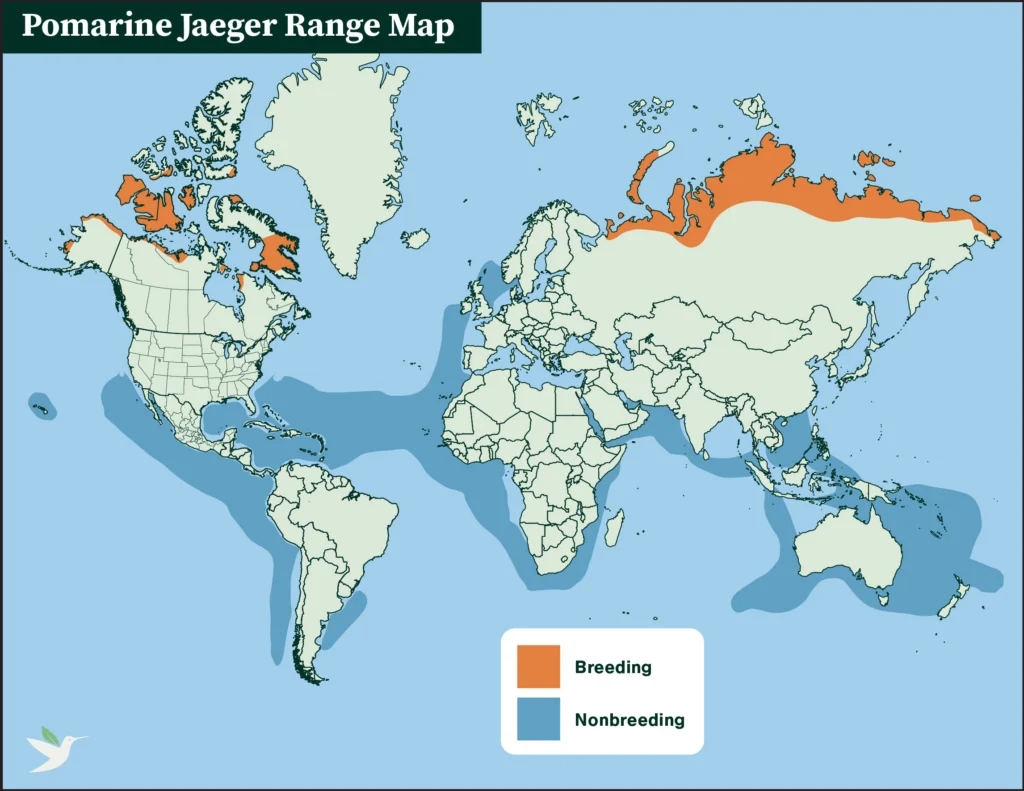
Pomarine Jaeger range map

Área específica
Arctic Alaska, Canada, and Russia; oceans surrounding Africa, Asia, Australasia, South America, Hawaiʻi, and parts of North America and Europe

Detalles de la gama
The Pomarine Jaeger breeds in the Arctic regions in Russia, including some of the larger islands, and North America, including parts of coastal Canada and Alaska as well as some of the Queen Elizabeth Islands. In the nonbreeding season, Jaegers migrate to the open seas, ranging from Finland and northern Europe as far south as New Zealand and Patagonia.

¿Sabías?
When prey populations are low, Pomarine Jaegers don’t spend much time on their usual breeding grounds. Instead, they seem to either move on in search of better prospects or forgo breeding altogether. However, the same breeding areas will be used again when there is enough of their preferred prey to support them.

Rango
caribe
Hawai
Islas
América del norte
Sudamerica
Patrón de migración
Variado
Distancia de migración
Larga distancia

Historia de vida

The Pomarine Jaeger’s breeding biology is somewhat mysterious, with few researchers following them to their Arctic breeding grounds. This is probably due in part to the unpredictability of breeding in this species: Depending on the size of the prey population in a given year, these birds may not breed at all.

Dieta

Pomarine Jaegers feed in numerous ways, and their diet changes drastically throughout their annual cycle. In the northern summer, breeding birds in a given population rely almost entirely on a single species of lemming, which they hunt from low perches or on the wing. Nonbreeding birds, however, will eat a variety of other foods as well, including insects, carrion, and other birds. In the nonbreeding season, Pomarine Jaegers hunt fish, scavenge refuse from fishing boats, or steal food from other marine birds (or eat the birds outright).

Noviazgo

Paired and courting males display by raising their wings, puffing up their breast feathers, and lifting their tails while giving the Long Call described above. The elongated central tail feathers seem to be an important element of this display, which Pomarine Jaegers accentuate by raising them above the rest of the tail. Sometimes females will join their mates in giving this display, either simultaneously or with the two taking turns.

Anidación

The female and male each contribute to forming the nest by compressing the top of an exposed mound or hummock with their feet and breast. Sometimes they will add some nearby vegetation to the interior of the nest or around the edge, but Pomarine Jaegers don’t typically carry any materials to their nests from elsewhere.

Huevos y crías

Females lay two dark olive-brown eggs with darker brown spots. Pairs usually split the incubation duties evenly, taking turns for three or four weeks until the young hatch. Jaeger hatchlings are considered semiprecocial, meaning they typically leave the nest after no more than four days, but can’t fly for at least a month. During this time, the parents attend to them as they wander about the tundra, hunting for them and tearing off pieces of prey small enough for the fuzzy little jaegers to eat.