Cigüeñuela de cuello negro

Himantopus mexicanus

Aeʻo (Hawaiian)

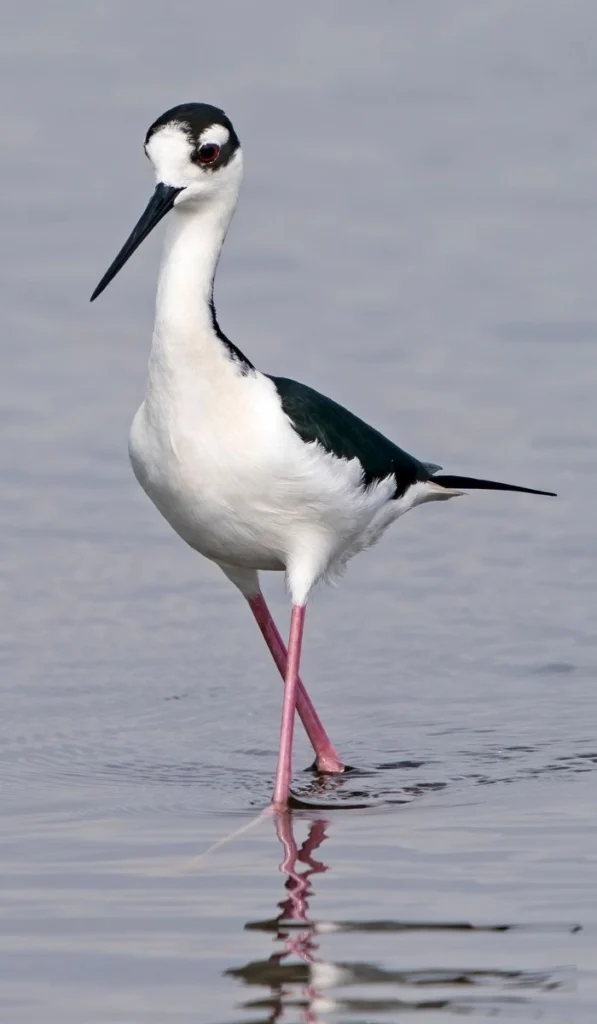
Black-necked Stilt. Photo by Larry Master, masterimages.org

Cigüeñuela de cuello negro

Black-necked Stilt. Photo by Larry Master, masterimages.org

Himantopus mexicanus

Descripción general

Estado de conservación
Tendencias demográficas
Creciente
Tamaño de la población
900,000
Familia
Avocetas
Stilts
Ubicación
caribe
Hawai
Islas
América del norte
Sudamerica
Patrón de migración
Latitudinal
Distancia de migración
Media Distancia
También conocido como
  • Pied Stilt
  • Tetéu Jagua (Guarani)
  • Pèt-pèt (Haitian Creole)
  • Cigüeñuela Cuellinegra (Spanish)
  • Viuda (Spanish)
  • Candelero Americano (Spanish)
  • Perrito (Spanish)

Acerca de

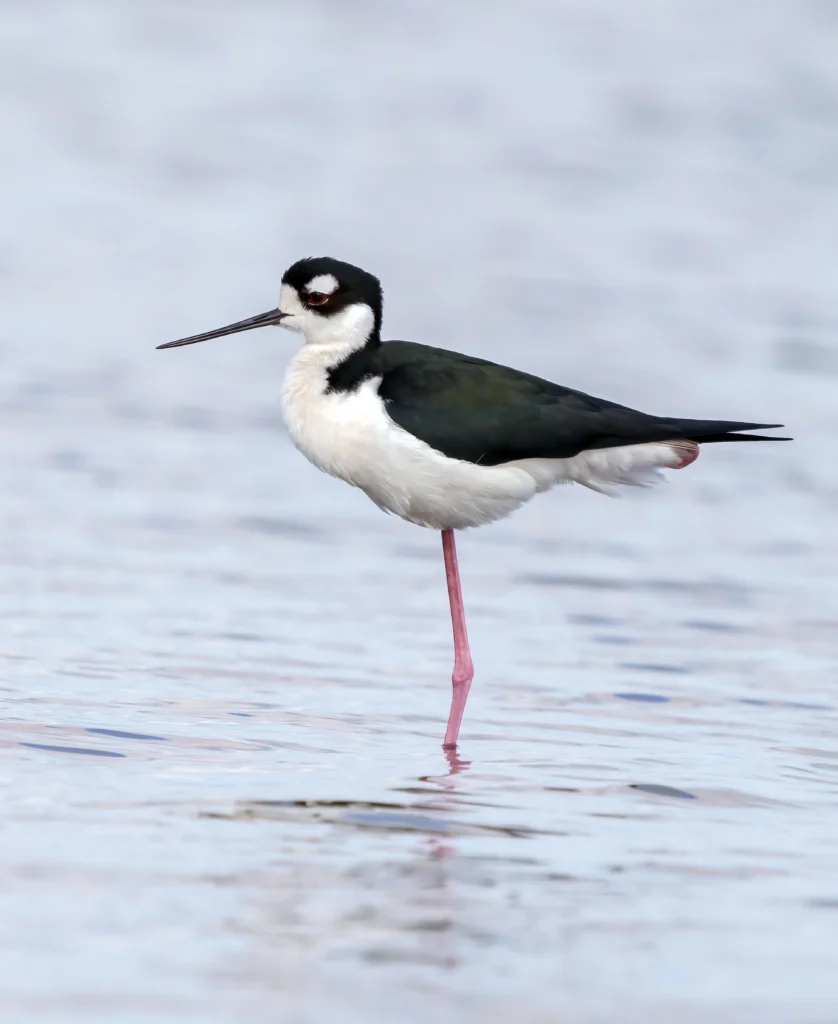
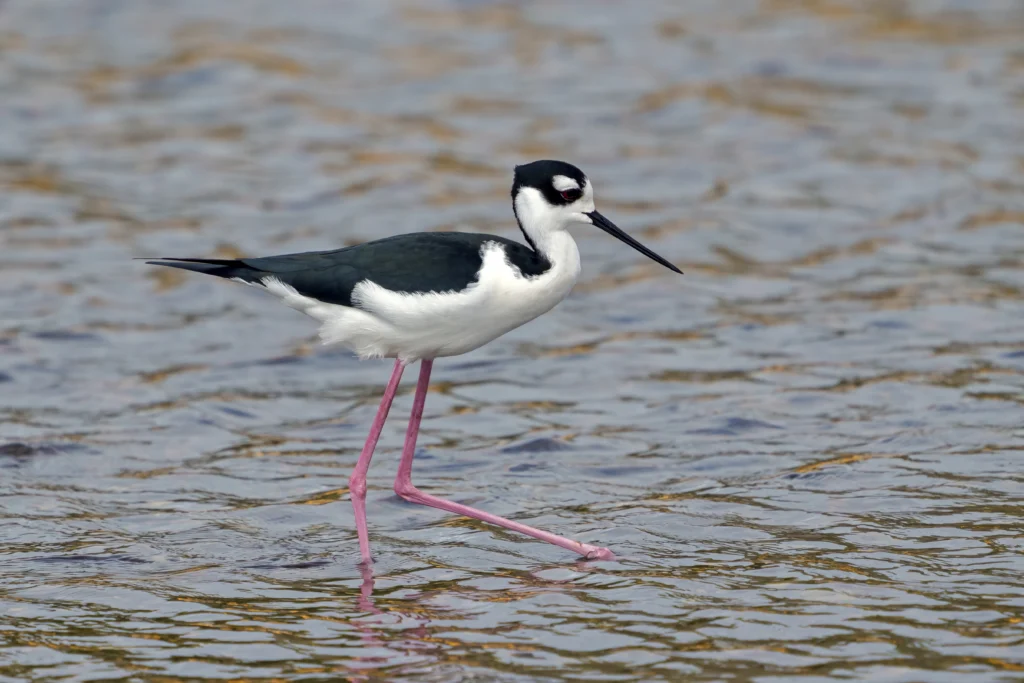
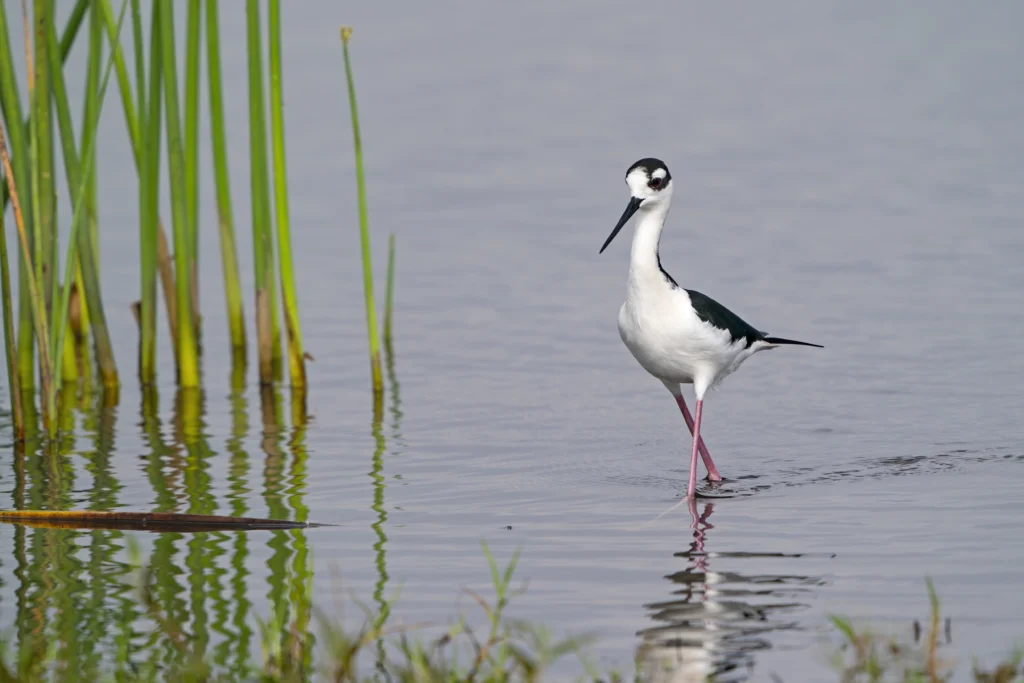
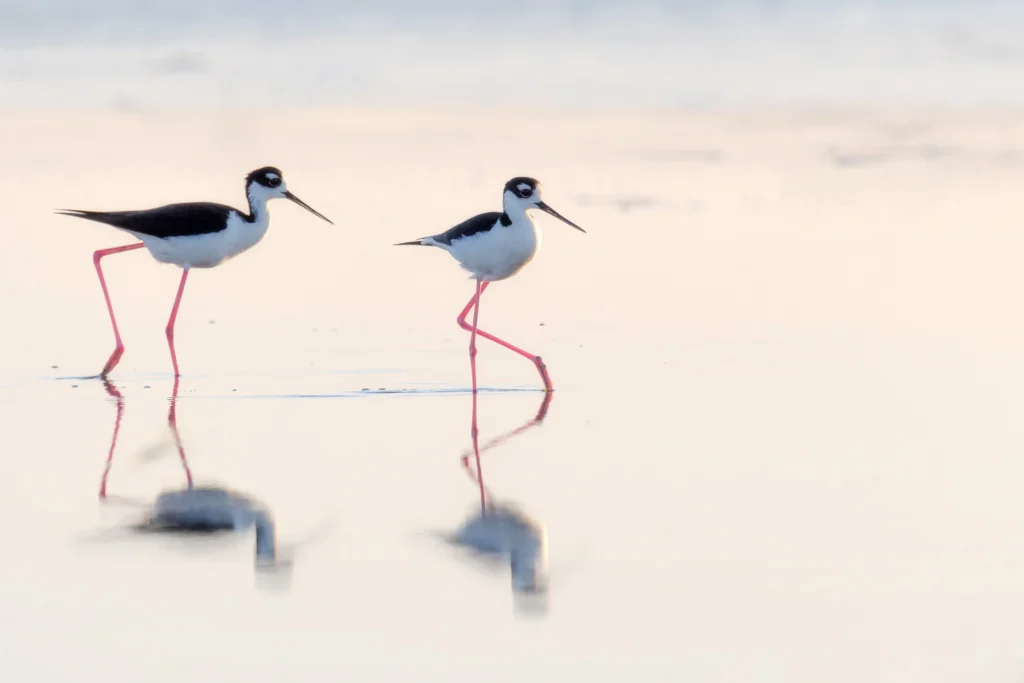
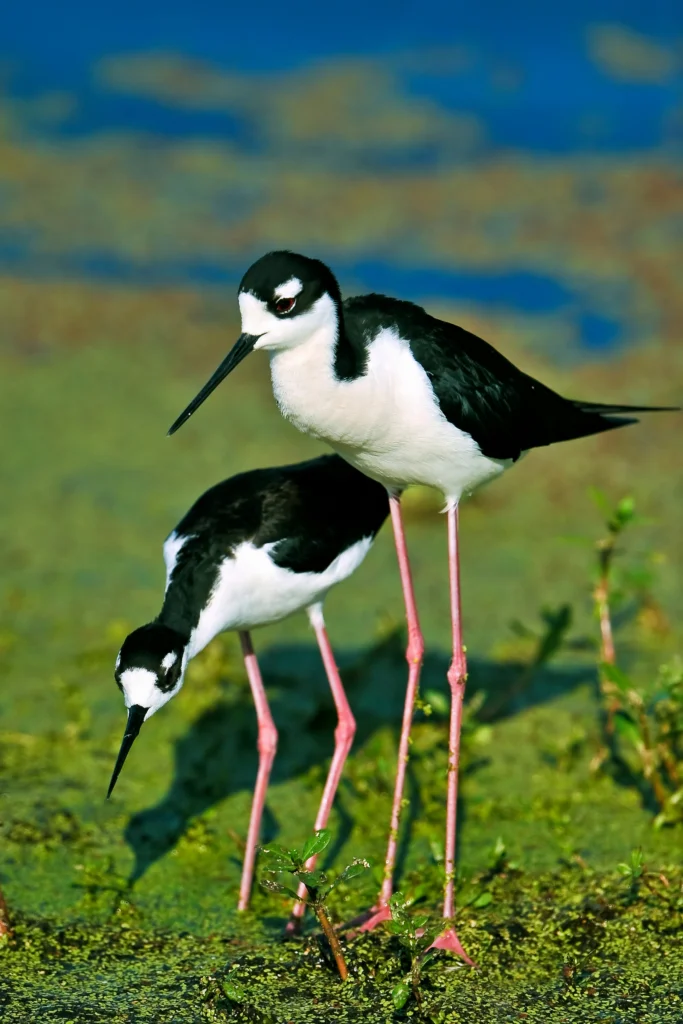
“Long” and “thin” are the best adjectives for describing this elegant black and white shorebird: long neck; needle-thin black bill; and lanky pink legs. Black-necked Stilts have the second longest legs in proportion to their bodies of any bird — only a flamingo’s are longer. One of the native Hawaiian names for this bird, Kukuluāeʻo, literally means “to walk on stilts.”

These shorebirds are strongly protective of their nests, which are fairly vulnerable as they are usually on bare ground. Like the famous Killdeer, the Black-necked Stilt has several strategies to deter potential predators, two of which are shared with Killdeer. One of these is the dramatic “broken wing” distraction display, where the bird feigns injury and calls incessantly to entice a potential nest predator, gradually leading it away from the nest. Another distraction display they deploy is “false incubation,” in which an adult crouches on the ground as if incubating eggs, then gets up, moves to another spot, and crouches again. Both types of display lure potential predators away from the birds’ actual nests and eggs. The Black-necked Stilt also uses a unique “popcorn display,” where all the adult stilts in a colony alternately hop up and down while wildly flapping their wings and calling loudly and incessantly at offending intruders. The persistent calling given during all these displays has earned this bird the endearing nickname of “pond poodle.”

Amenazas

Although Black-necked Stilt populations in the continental U.S. appear to be stable, these waterbirds are vulnerable to a number of threats, including habitat loss and pollution in waterways and wetlands. Additionally, a Hawaiian subspecies, the Aeʻo, is listed as Threatened under the Endangered Species Act. The Aeʻo is particularly vulnerable to introduced predators, including feral cats.

Pollution of Waterbodies

Pollution is a problem for wetland birds wherever they share the landscape with irrigated agriculture. Irrigating crops leads to runoff, which washes any pesticides into waterways and wetlands. For the Black-necked Stilt, however, one of the most harmful pollutants is selenium (Se), a naturally occurring element that agricultural runoff concentrates into bodies of standing water, and which can lead to a range of issues for aquatic species. In high enough concentrations, selenium causes Black-necked Stilt nests to fail, killing eggs or causing fatal deformities in young.

Pesticidas y toxinas

Increasing Drought

Black-necked Stilts need shallow water throughout the year, and so are especially sensitive to drought. Shallow wetlands and ponds are some of the first water bodies to disappear during extended dry periods, which have become more frequent with global climate change. Fortunately, this species readily adopts new breeding areas, including human-made habitats such as sewage ponds, evaporation ponds, and dikes. However, these waterbodies may also concentrate harmful chemicals, especially during the breeding season, killing eggs and young birds.

Cambio climático

Invasive Predators in Hawaiʻi

As with so many native Hawaiian birds, the Aeʻo, a unique, endemic subspecies of Black-necked Stilt found only on Hawaiʻi, faces grave threats from introduced predators. The list is long: Rats, cats, dogs, mongooses, barn owls, bullfrogs, and cattle egrets all prey on Aeʻo as either young or as adults.

Gatos y especies invasoras

Estrategias y proyectos de conservación

The Black-necked Stilt needs our help to overcome the threats it faces. At ABC, we’re inspired by the wonder of birds and driven by our responsibility to find solutions to meet their greatest challenges. With science as our foundation, and with inclusion and partnership at the heart of all we do, we take bold action for birds across the Americas.

Evite los pesticidas y las toxinas.

ABC colabora con socios a nivel estatal y federal en EE. UU. para exigir la regulación o la prohibición de los plaguicidas y toxinas más dañinos para las aves. Desarrollamos programas innovadores, como trabajar directamente con agricultores para que utilicen semillas sin recubrimiento de neonicotinoides, impulsar la investigación sobre el impacto de los plaguicidas en las aves y alentar a millones de personas a dejar de usar plaguicidas dañinos.

Pesticidas y toxinas

Mejorar el hábitat

Habitat is the foundation for birds’ survival. ABC works across vast landscapes in North America where many of our priority species breed. Working closely with the Migratory Bird Joint Ventures (JVs) and other partners, we have improved more than 10 million acres of bird habitats. With the Gulf Coast Joint Venture, we have supported the enhancement and protection of thousands of acres of coastal wetlands and marshes — ideal habitat for the Black-necked Stilt.

Restaurando el hábitat

Save Hawaiian Birds

ABC, our partners, and local communities are taking action to prevent endemic Hawaiian birds from going extinct. We work to restore habitat, remove invasive mammals, and use predator-proof fencing to create safe havens for nesting seabirds and translocate species to predator-free habitats where they can thrive. We advocate for policies that protect Hawaiʻi’s birds and support innovative approaches to restoring habitat and conserving birdlife. Along with our partners, we’re creating a future for the birds of Hawaiʻi.

Conservación de aves hawaianas

Galería de aves

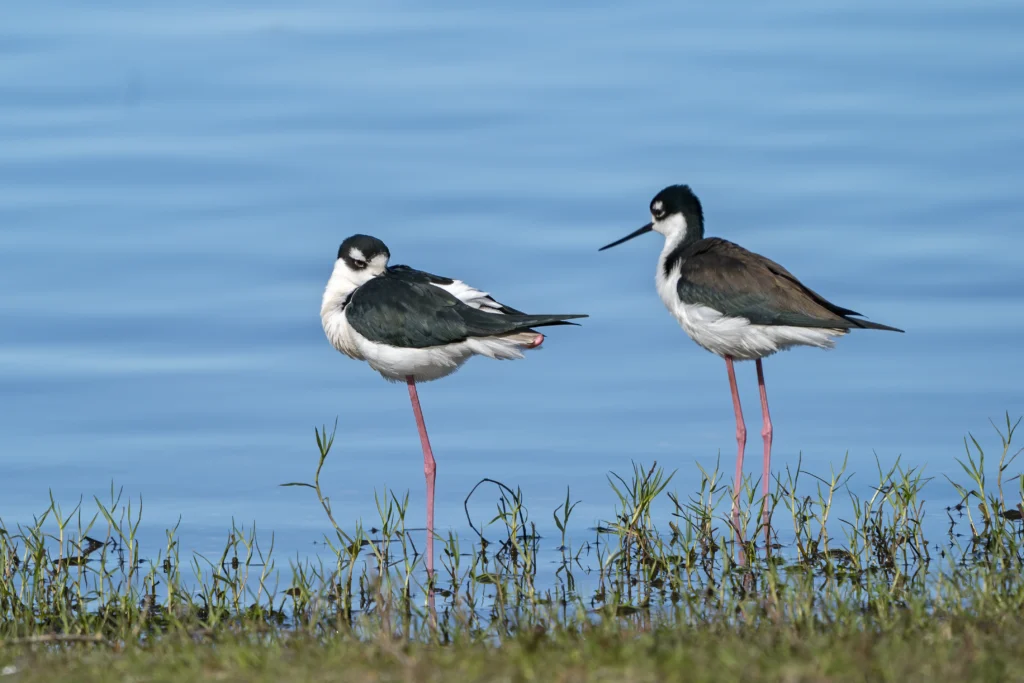
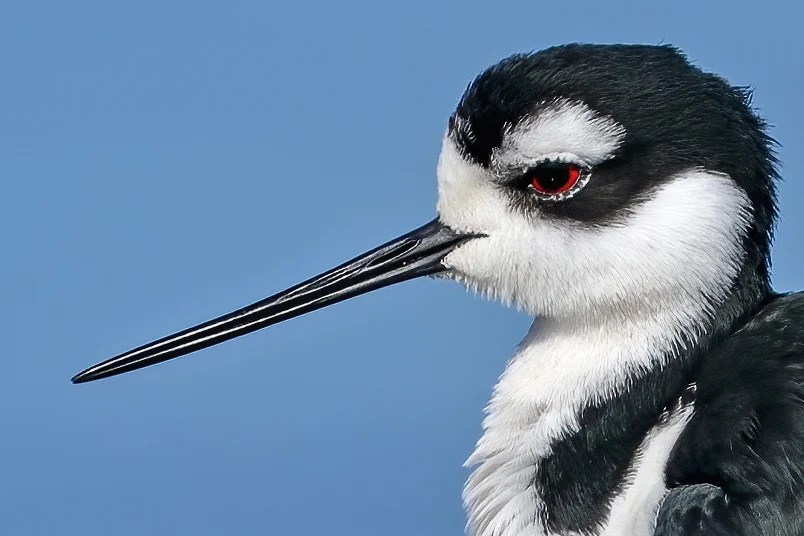
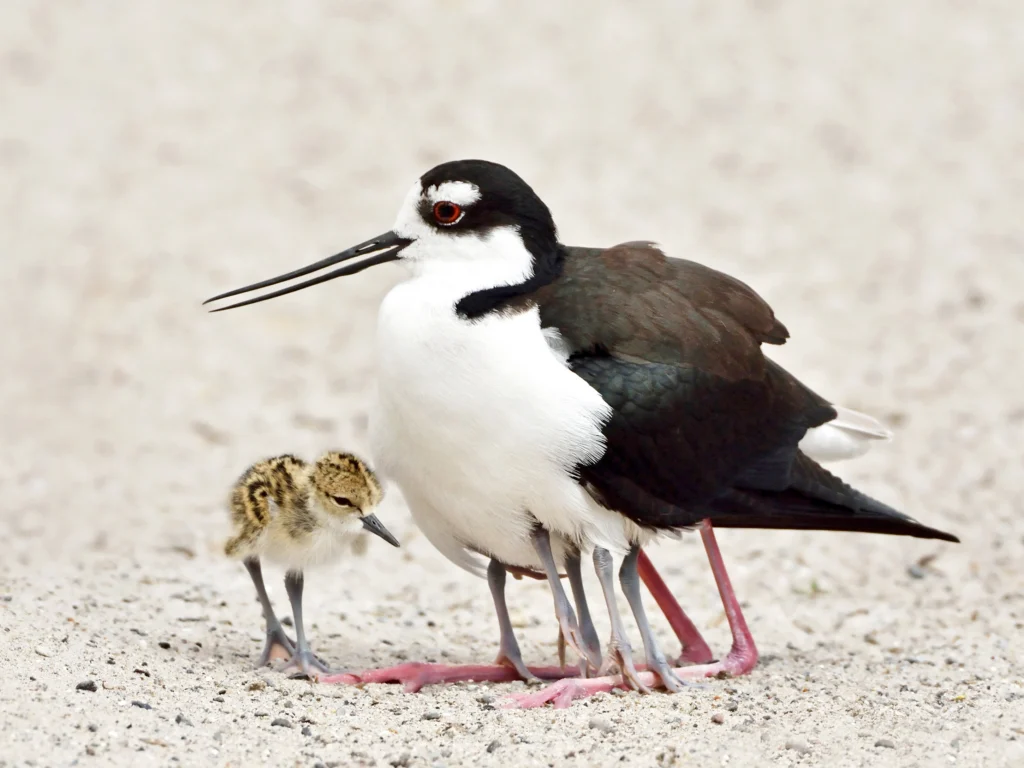
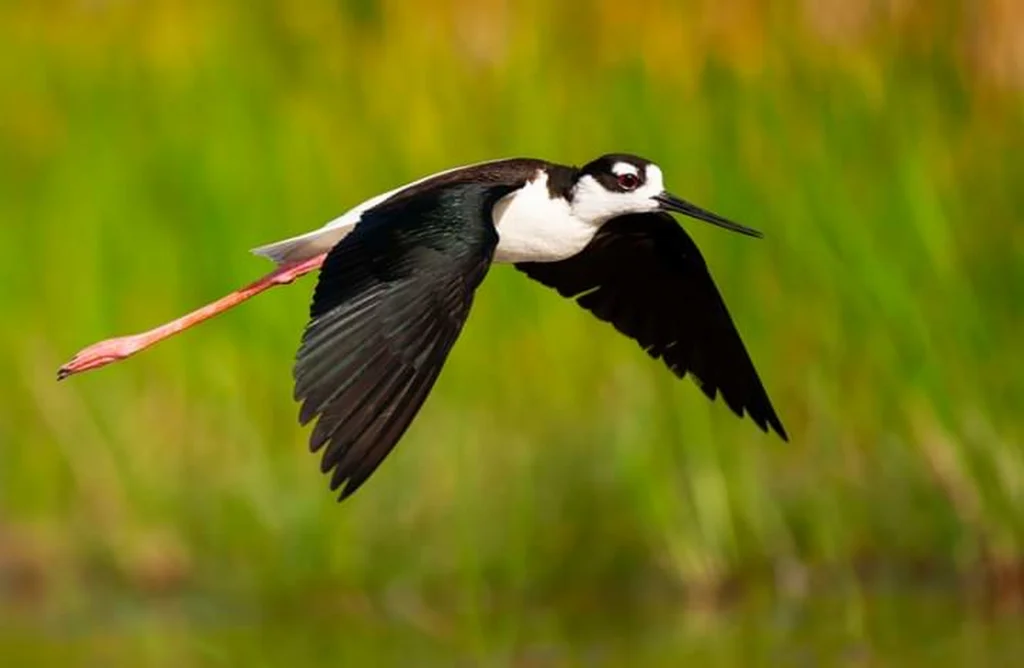
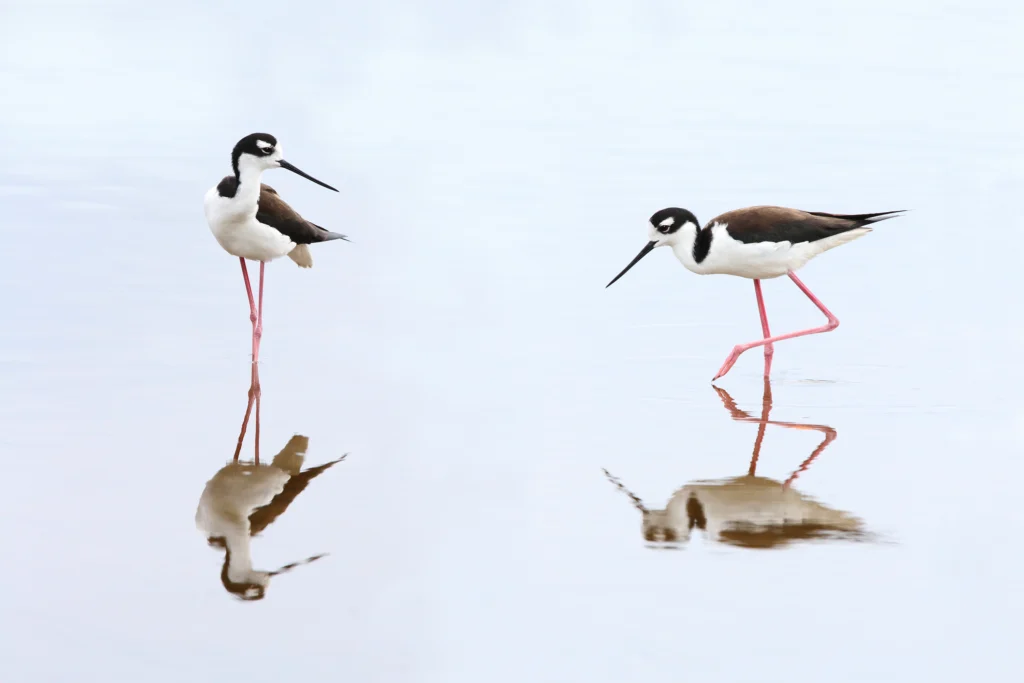
Though similar to other stilts, the Black-necked Stilt is distinctive and unique within its range. Tall and leggy with a long neck and long beak, the shape of this bird is something like a yellowlegs or other mid-sized sandpiper, but with the skinny pink legs about twice as long as they seem like they should be. The Black-necked Stilt’s bold coloration is also distinctive: pure white below and pure black above. The simple patterning on the face and neck varies between populations, but most birds have a white patch on the front of the face above the bill, and another above each eye. In Hawaiian birds, the head is mostly black and these white patches are quite small, and black coloration may extend around the sides of the neck. In South American birds, the entire front half of the face is white, with an additional white band across the back at the base of the neck.

Sonidos

The Black-necked Stilt’s shrill voice and insistent yapping have earned this bird the nickname of “pond poodle.” The most common call, which is in fact referred to as the Yap Call, is short, sharp, and very much like the bark of a small dog. This call is frequently given in alarm contexts and accompanies this stilt’s many predator distraction displays. This call varies in intensity, from high pitched to piercingly shrill, nasal to grating and harsh, and from merely repetitive to incessant.
Yap Calls

Credit: David Ricardo Rodríguez-Villamil, XC993703. Accessible at www.xeno-canto.org/993703.

Hábitat

Specific habitats are variable and depend on the local ecology, but in general the Black-necked Stilt is a bird of shallow bodies of water, whether those be natural or human-made, saltwater, freshwater, or brackish.

  • In the breeding season, migratory birds are most common on wetlands and  flooded areas as well as human-made ponds
  • Nonmigratory populations use lagoons, mangroves, aquaculture fields, and salt evaporation ponds
  • In Hawaiʻi, most birds breed in managed wetlands as others are too overgrown with invasive plants

Rango y región

Rango y región


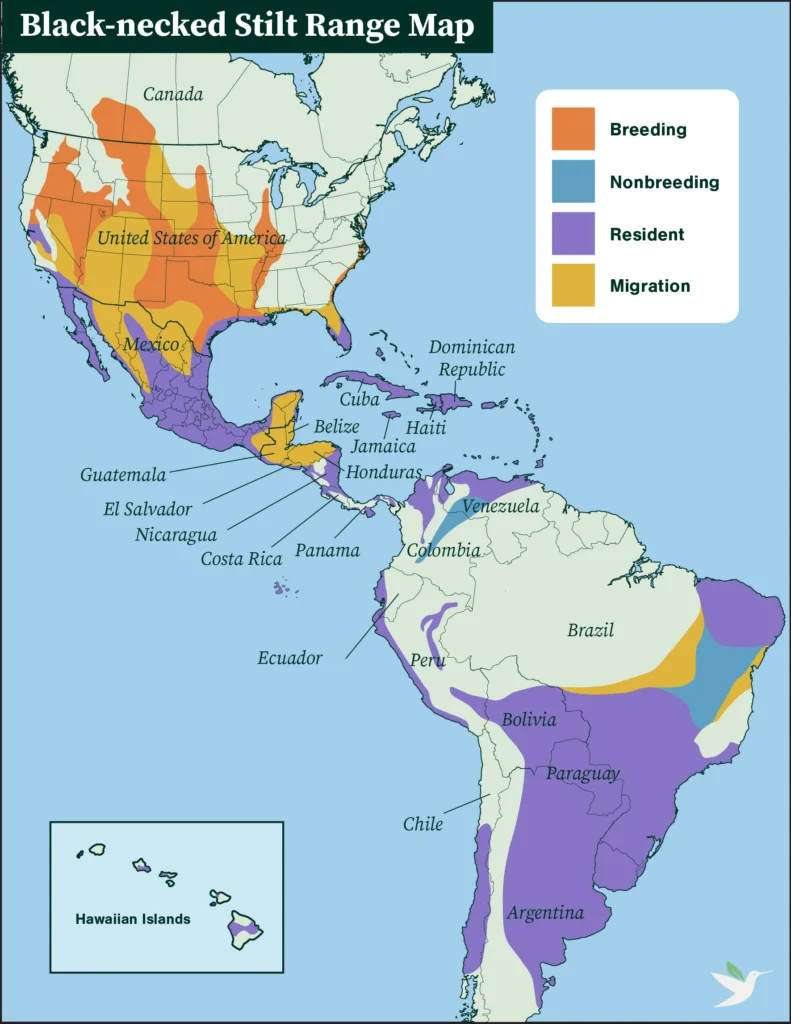
Black-necked Stilt range map.

Área específica
North America; South America; the Caribbean; the Hawaiian Islands; the Galápagos Islands

Detalles de la gama
The Black-necked Stilt is unique and widespread throughout the Americas and associated islands, the only stilt species in the Western Hemisphere. In South America, Black-necked Stilts are found year-round across much of the Southern Cone, the northern Pacific Coast, the Caribbean Coast, and the northeastern corner of Brazil (the “Natal bulge”). Some birds winter in the Llanos of Venezuela and Colombia, and the São Francisco River basin. In North America, there are year-round populations in central, southern, and Baja California, southern Florida, and throughout Mexico and Central America. Breeding populations range throughout much of the interior United States into southern Alberta and Saskatchewan, and along the Atlantic Coast from Georgia to the Chesapeake Bay.

¿Sabías?
Though the Hawaiian subspecies of Black-necked Stilt, or Aeʻo, is considered to be nonmigratory, birds will in fact move between islands to track seasonal changes in the availability of standing water.

Rango
caribe
Hawai
Islas
América del norte
Sudamerica
Patrón de migración
Latitudinal
Distancia de migración
Media Distancia

Historia de vida

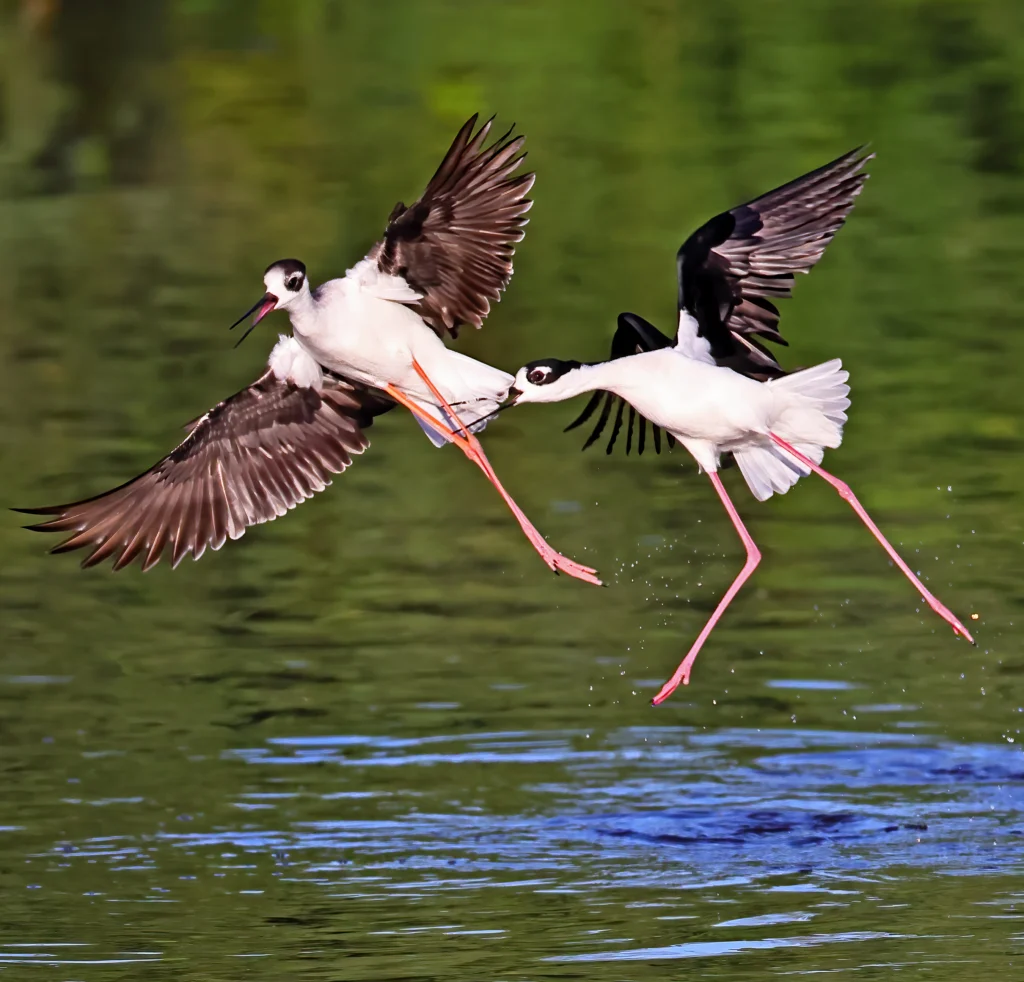
Black-necked Stilts are easy to spot in shallow waters, at the edges of ponds, or stalking through mudflats and marshes. These birds often forage, roost, and migrate in groups. Even in the breeding season, they tend to nest in loose aggregations. Despite being gregarious and though they may appear delicate, they can be quite aggressive. In the breeding season, birds are fiercely territorial; a stilt will even attack its neighbor’s young if they stray onto its territory. This extends to other species as well, including other shorebirds as well as vultures, osprey, and humans.

Dieta

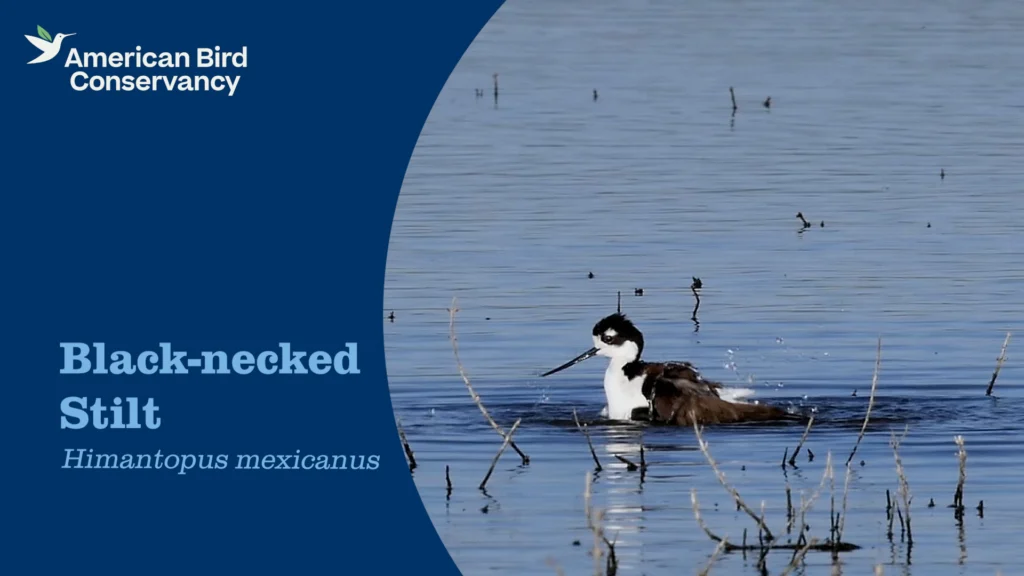
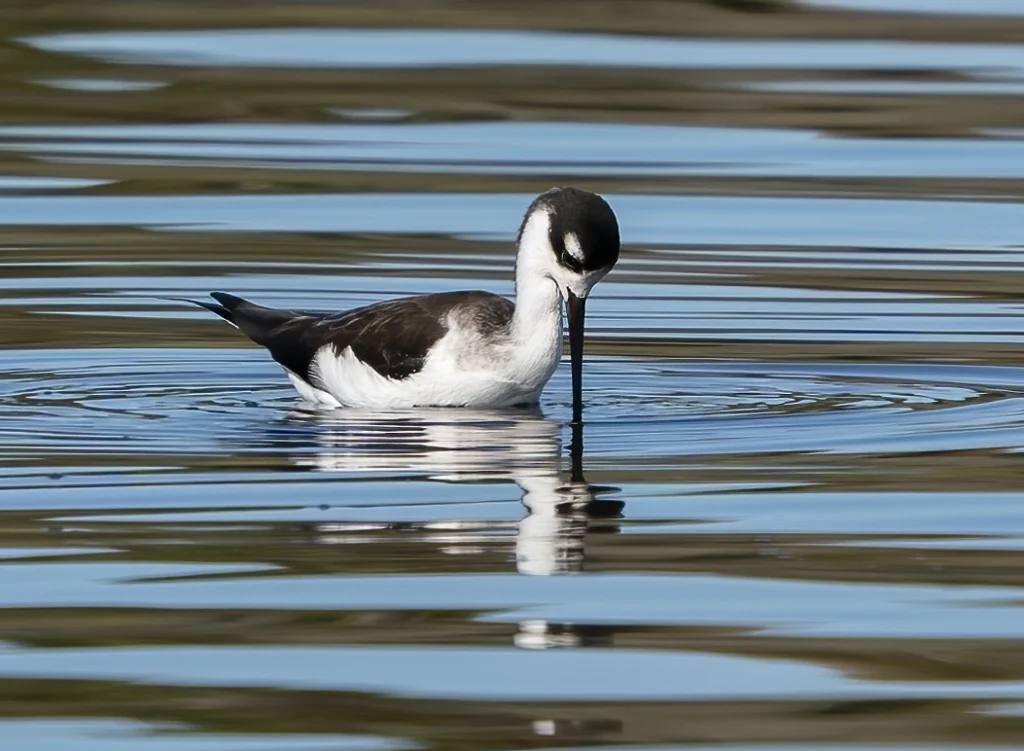
The Black-necked Stilt can swim and dive if necessary, but prefers to wade in shallow water as it feeds, probing with its long, thin bill for insects and crustaceans on or near the surface of water. It finds most of its food visually, picking insects, small crustaceans, and tiny fish from the water or mud. Stilts also eat some seeds of aquatic plants, and on some lakes, may feed heavily on brine shrimps and brine flies.

Noviazgo

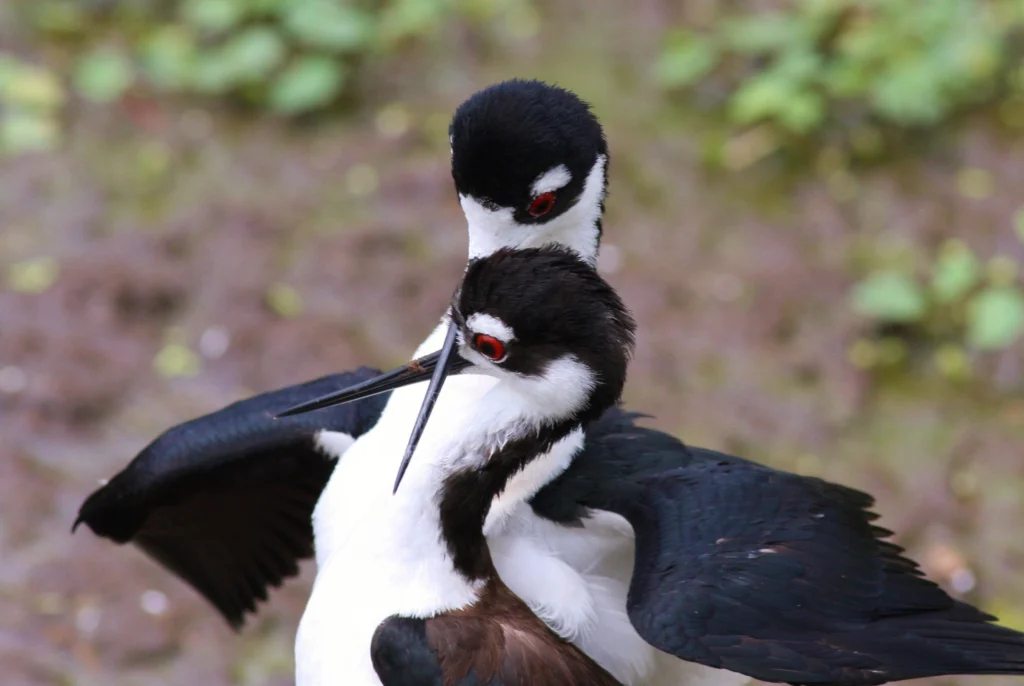
Though researchers have not described specific behaviors designed to attract mates, paired birds perform a sequence of displays both before and after mating. To initiate this series of behaviors, a female will adopt a “solicitation” posture with her neck extended horizontally, or the male and female may each preen their own breast feathers, dipping their bill into water periodically. Males preen more and more intensely, while also switching back and forth from one side of the female to the other, until eventually he stops and they mate. Afterwards, the pair stand right next to each other, cross bills, and run a few brisk steps together before parting ways.

Anidación

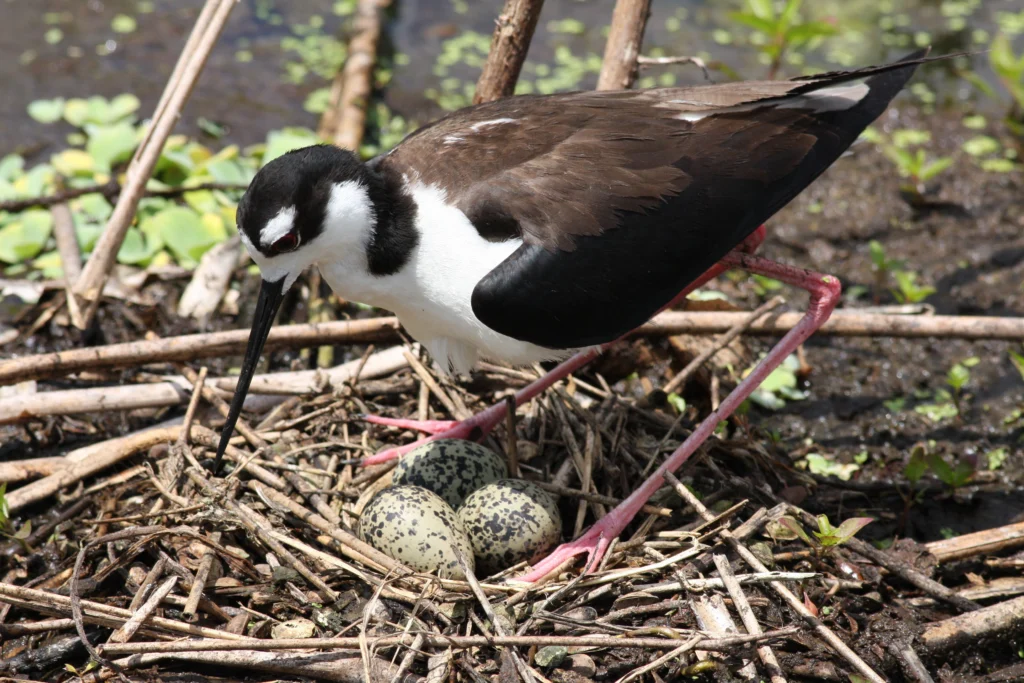
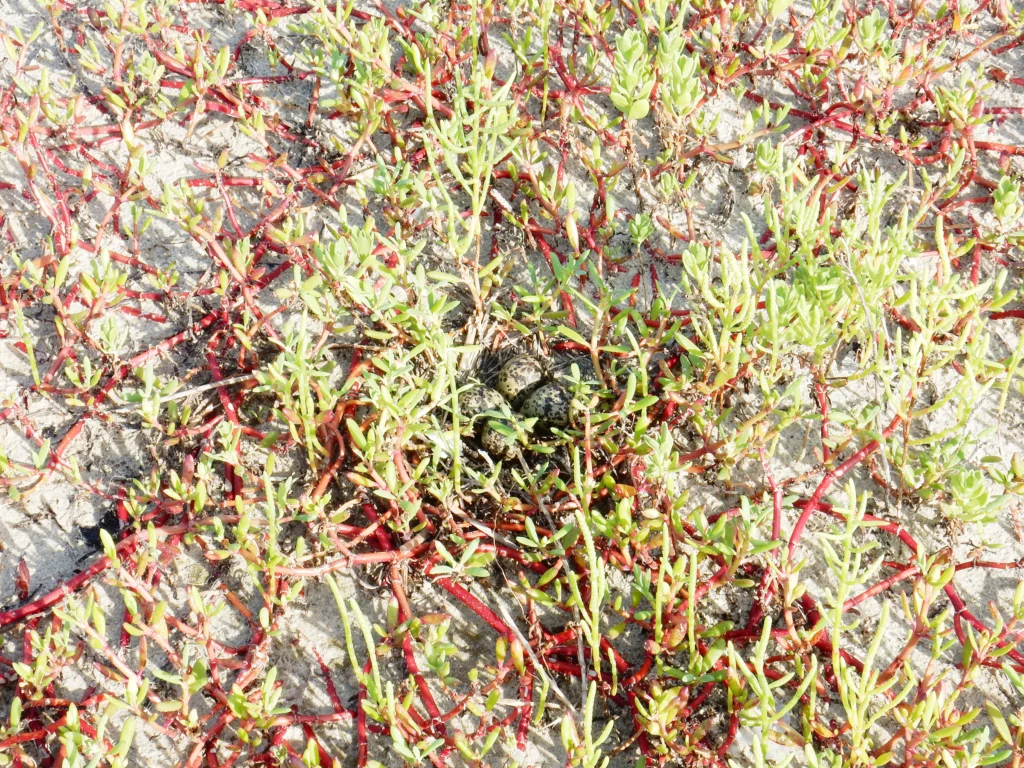
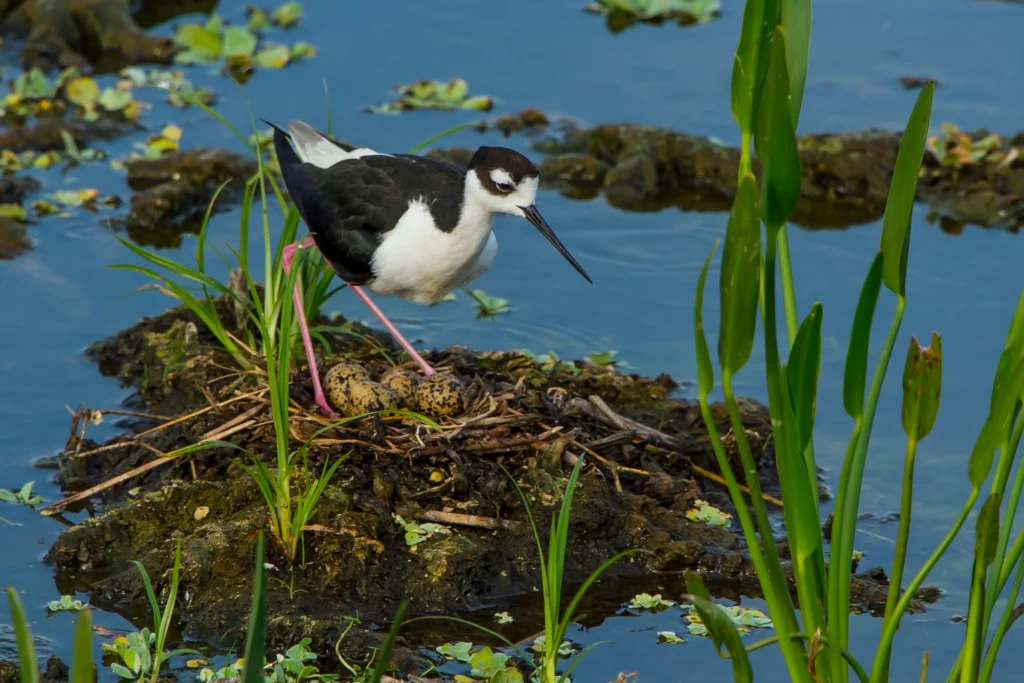
Black-necked Stilts nest in loose colonies, sometimes alongside other shorebirds such as the American Avocet. The nest site is usually located on bare open ground or in short vegetation, surrounded by water. Both sexes help build the nest, which may be a simple scrape in the soil or a mound of vegetation built up above water level and lined with pebbles, shells, and debris.

Huevos y crías

Both parents incubate the clutch consisting of anywhere from two to five olive-to-buff speckled eggs. Incubation lasts 24 to 29 days. On very hot days, stilts may soak their belly feathers to carry water to the nests, sometimes making more than a hundred trips a day to keep their eggs cool. The downy young leave the nest only an hour or two after hatching, and although both parents tend the chicks, they are capable of feeding themselves.