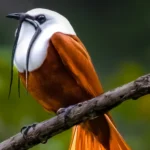
Cerro Punta, Chiriqui, Panama by Cesar Aleman from Getty Images

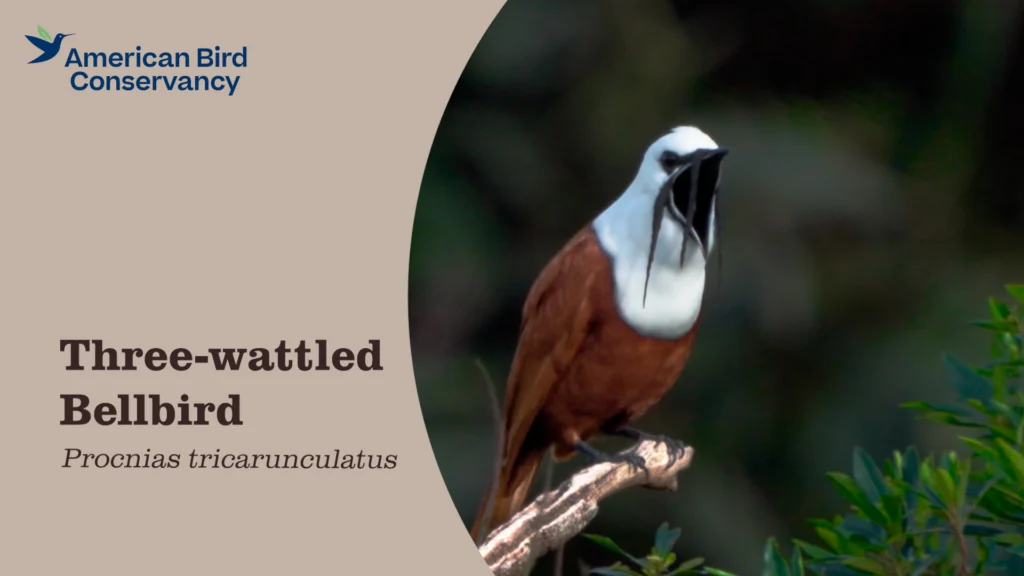
Three-wattled Bellbird

Procnias tricarunculatus

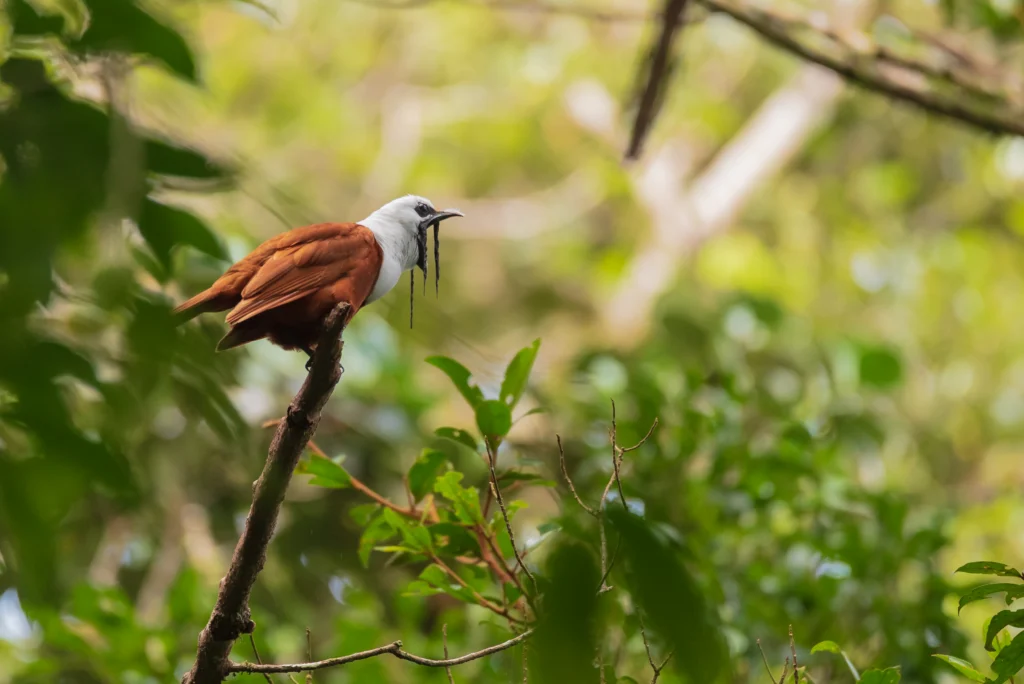
Three-wattled Bellbird. Photo by Jim Merritt, Cornell Lab of Ornithology | Macaulay Library.

Three-wattled Bellbird

Three-wattled Bellbird. Photo by Jim Merritt, Cornell Lab of Ornithology | Macaulay Library.

Procnias tricarunculatus

Descripción general

Estado de conservación
Tendencias demográficas
Decreciente
Tamaño de la población
Desconocido
Familia
Cotingas
Ubicación
América del norte
Patrón de migración
Altitudinal
Distancia de migración
Distancia corta
También conocido como
  • Campanero Tricarunculado (Spanish)
  • Pájaro Campana Centroamericano (Spanish)

Acerca de

The Three-wattled Bellbird, like other Central and South American bellbirds in the Cotinga family, is a natural history paradox. Breeding males perch on exposed branches and sing one of the loudest songs of any bird, impossible to ignore and audible from more than half a mile away. However, despite this extremely conspicuous breeding season behavior, females and nonbreeding males are notoriously difficult to observe, foraging in the higher levels of the canopy and remaining remarkably silent. As a result, this species has been subject to fascinating and in-depth studies of its song and courtship behavior, but some of the most basic aspects of its natural history are unknown. For instance, only two nests have been recorded, one in 1975 and one in 2012, and no eggs or young have been documented.

But biologists have learned a great deal from studying the Three-wattled Bellbird’s song. The bellbirds belong to a group of perching birds known as the suboscines, which also includes tyrant flycatchers like the Tirano occidental and antbirds, such as the Hormiga de pantano. While the “true” songbirds (or oscines) are famous for their song-learning abilities, suboscine songs are classically considered to be completely innate, with no learning taking place. However, the Three-wattled Bellbird shares an important feature with birds that learn their songs: dialects. Birds from Nicaragua sound noticeably different from Costa Rican birds in the Cordillera de Talamanca and the Cordillera de Tilarán, which each host populations with distinct songs.

Through careful study, researchers discovered that young birds learn from adult “tutor” males during the breeding season, eventually emulating their songs and displays when they are mature enough to hold territories of their own. Furthermore, populations of Three-wattled Bellbirds change their songs over time. Breeding males will even visit each other to stay abreast of changes in the local singing culture. Very few animals are capable of vocal learning, and this ability places the bellbirds in an elite category shared only with songbirds, parrots, hummingbirds, cetaceans, elephants, bats, and us.

Amenazas

Birds around the world are declining, and many of them are facing urgent, acute threats. As with many forest birds in the Central and South American tropics, the Three-wattled Bellbird is at risk primarily due to extensive and ongoing deforestation in the Central American lowlands.

Loss of Lowland Forests

In the nonbreeding season, Three-wattled Bellbirds move to lowland forests throughout their range, where they are particularly reliant on large trees in the laurel family (Lauraceae). These trees and the habitats that sustain them are disappearing at an alarming rate, as biodiverse forests are logged for firewood and converted into ranching land and monoculture plantations. In some areas, even protected lands are deforested and converted for agriculture.

Pérdida de hábitat

Estrategias y proyectos de conservación

Vulnerable species like the Three-wattled Bellbird need our help to overcome the threats they face. At ABC, we’re inspired by the wonder of birds and driven by our responsibility to find solutions to meet their greatest challenges. With science as our foundation, and with inclusion and partnership at the heart of all we do, we take bold action for birds across the Americas.

Crear y mantener reservas

For healthy populations of the Three-wattled Bellbird to persist, it is essential that its nonbreeding habitat in the forested Central American lowlands is preserved and protected. Working with dozens of partners and local communities throughout Latin America and the Caribbean, ABC supports a growing network of protected areas in more than a dozen countries. Totaling more than 1.3 million acres, nearly one-third of the world’s birdlife (more than 3,000 species) is protected by an ABC-supported reserve.

Crear y mantener reservas

Galería de aves

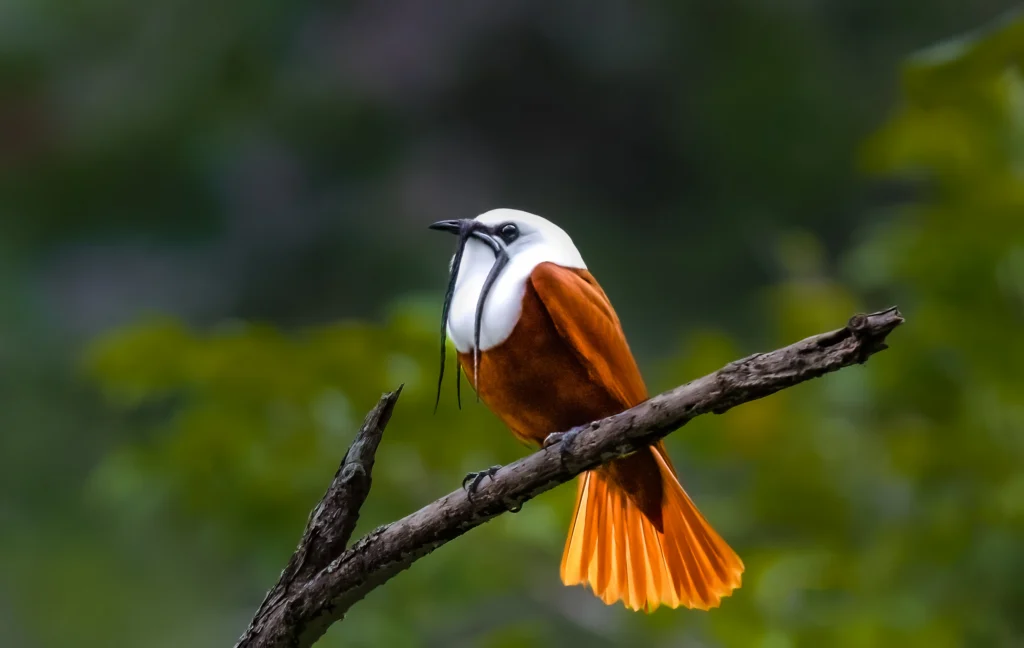
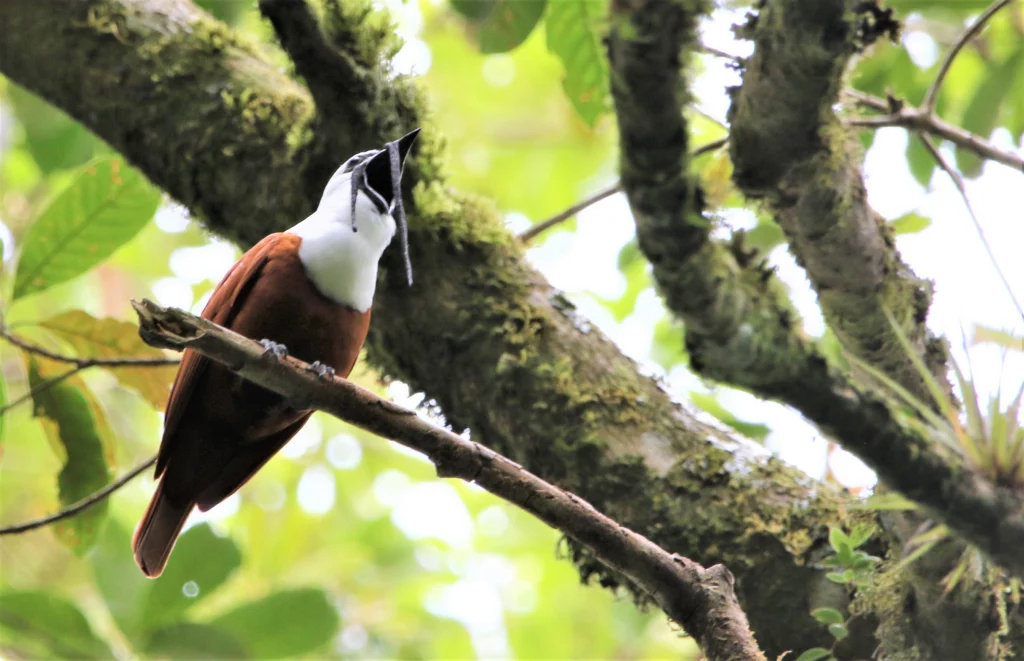
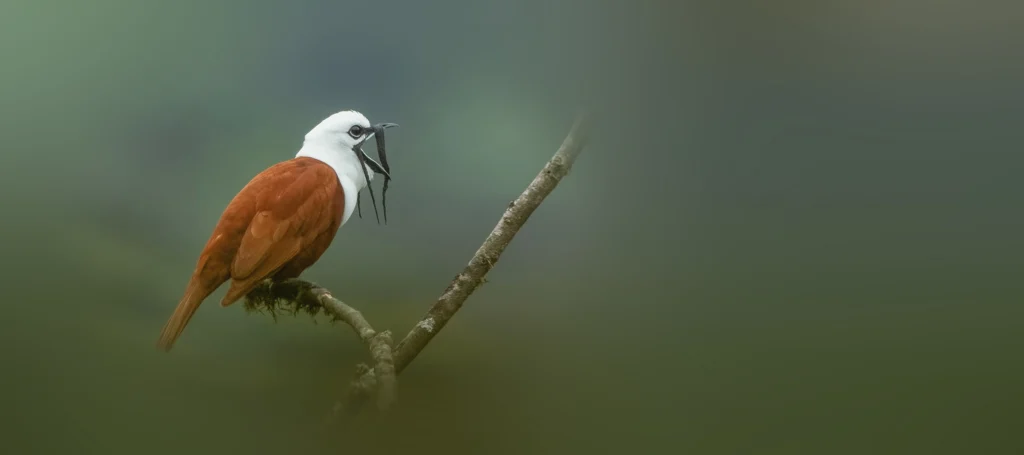
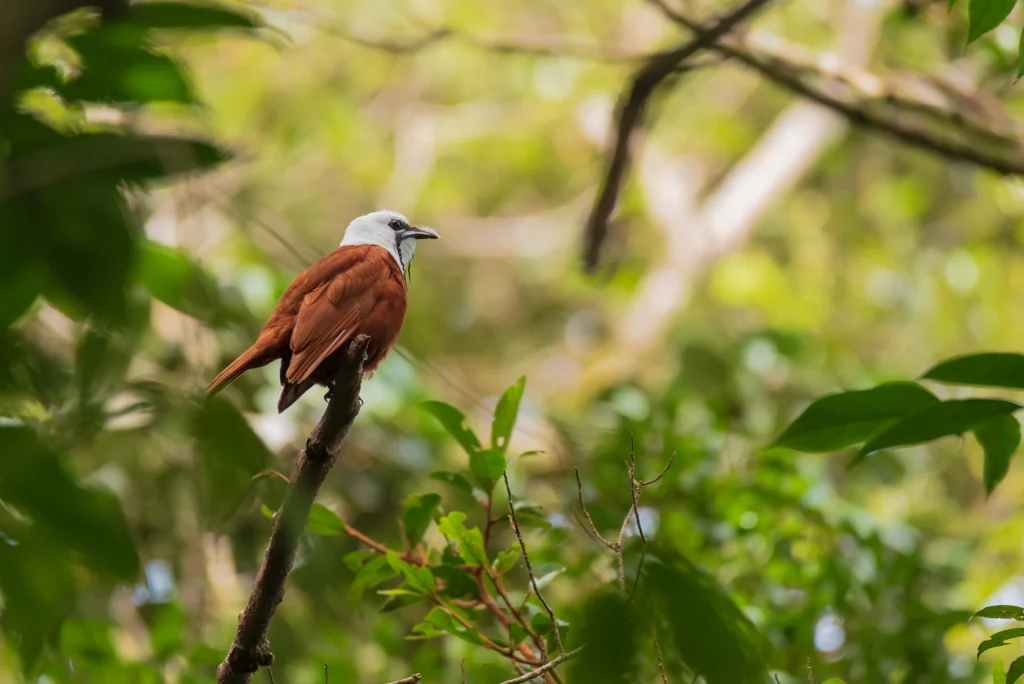
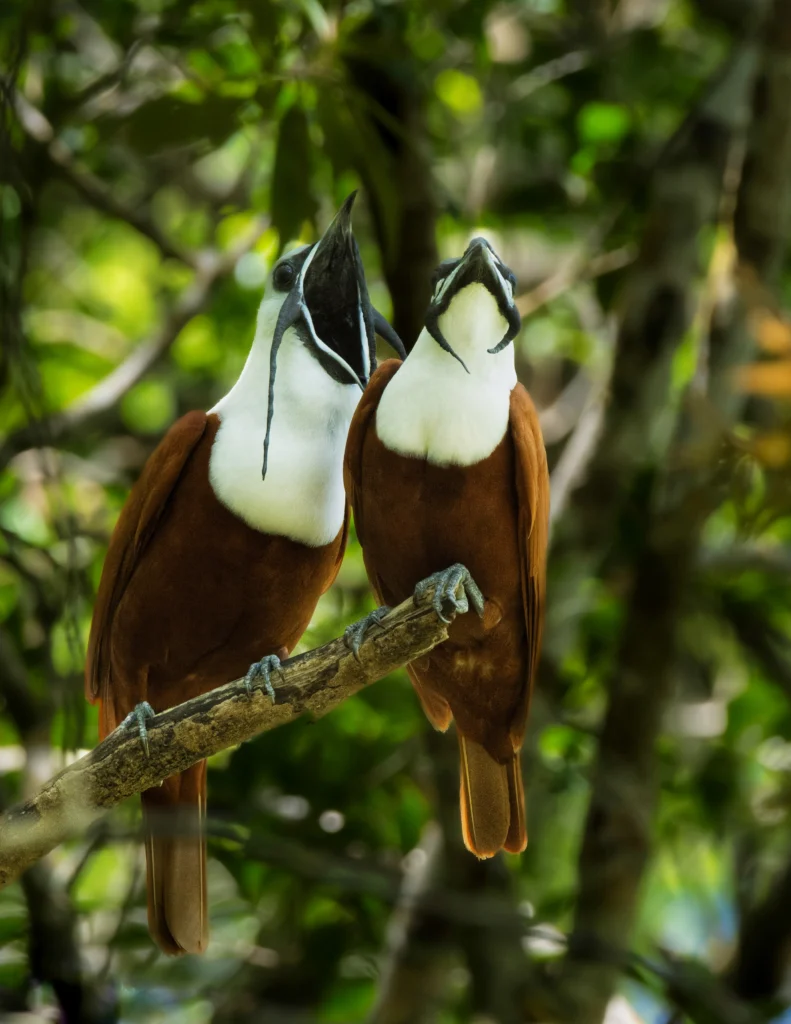
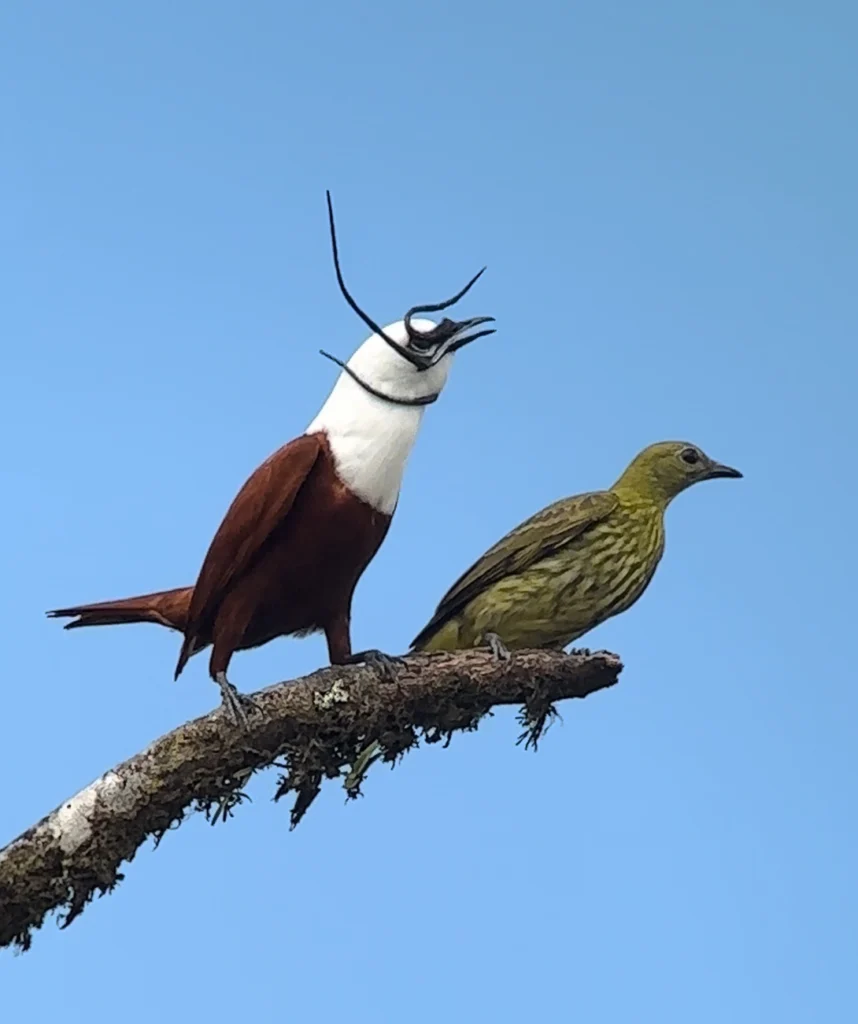
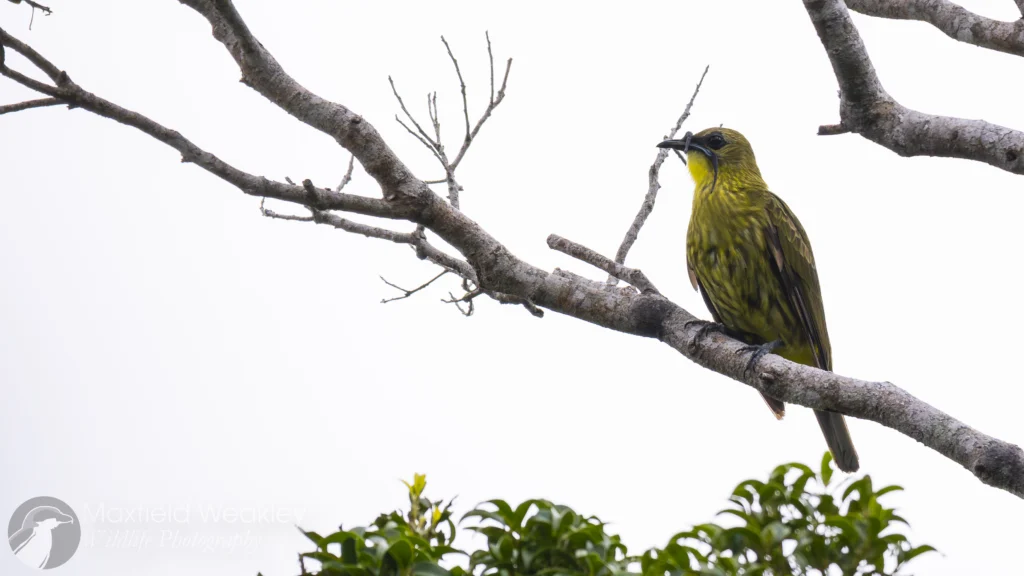
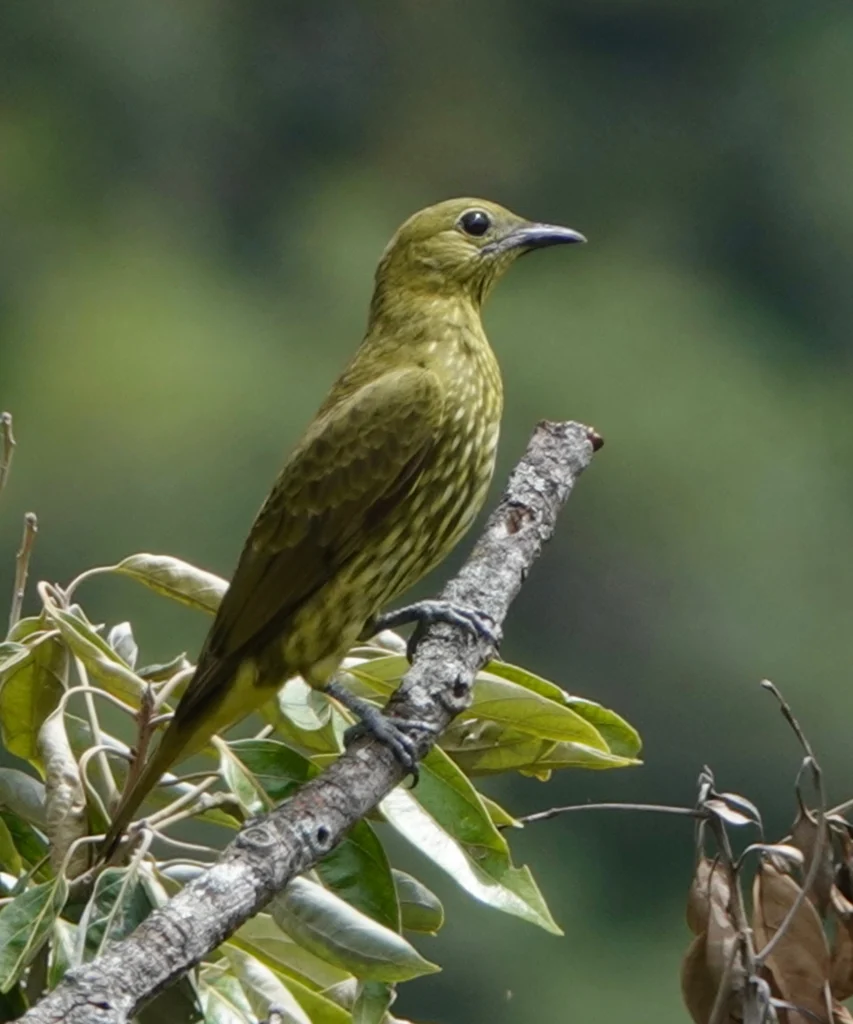
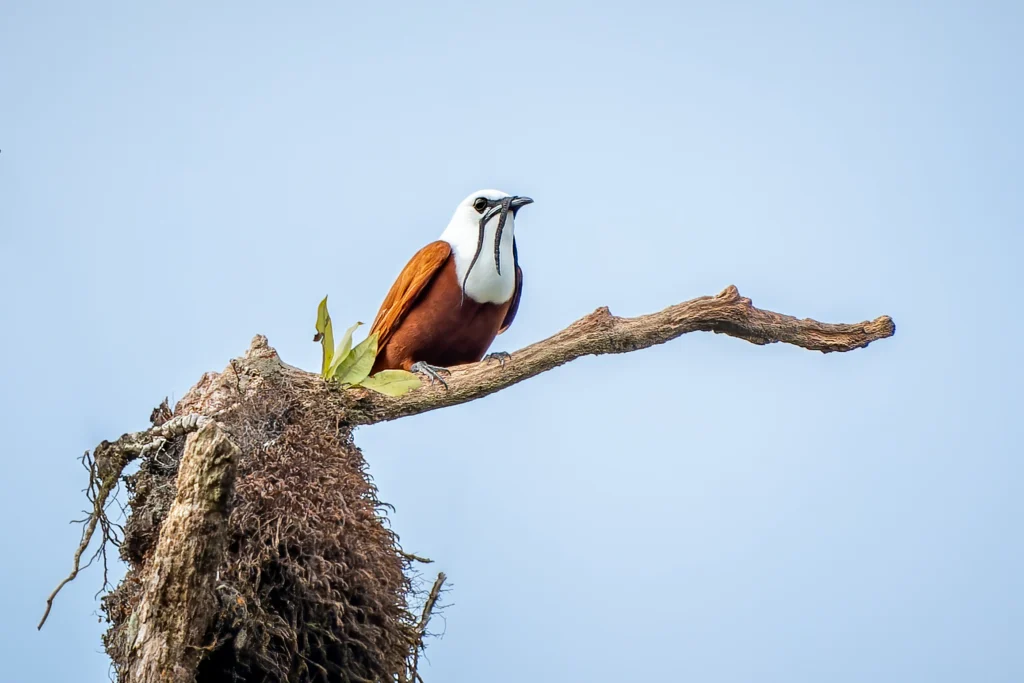
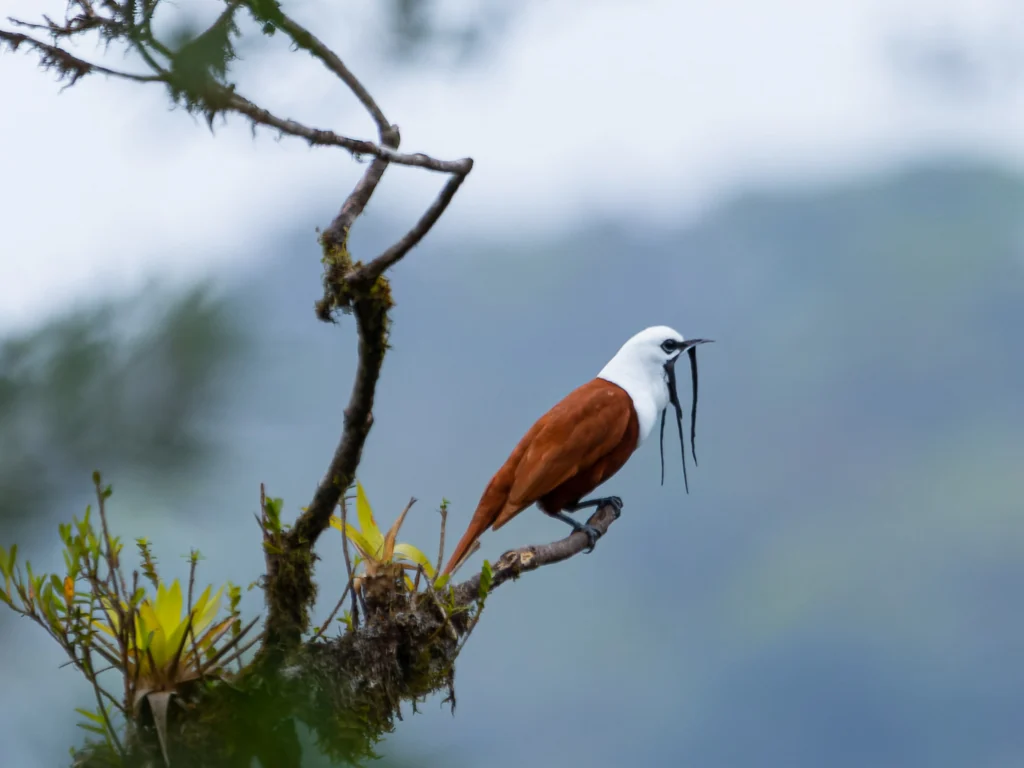
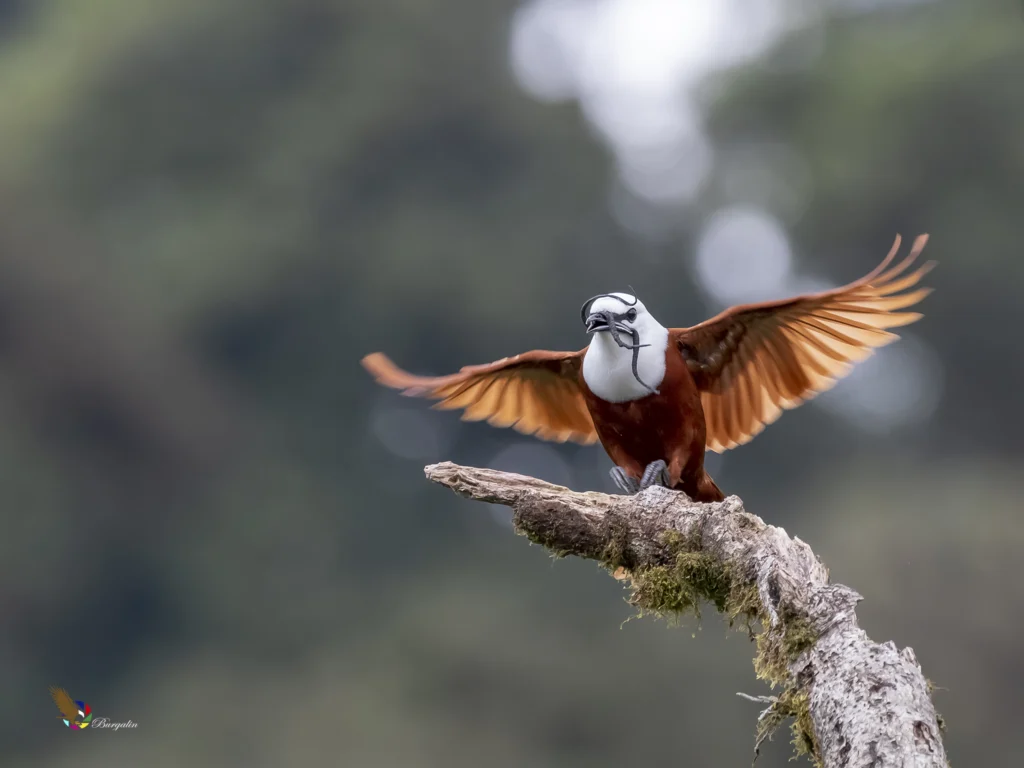
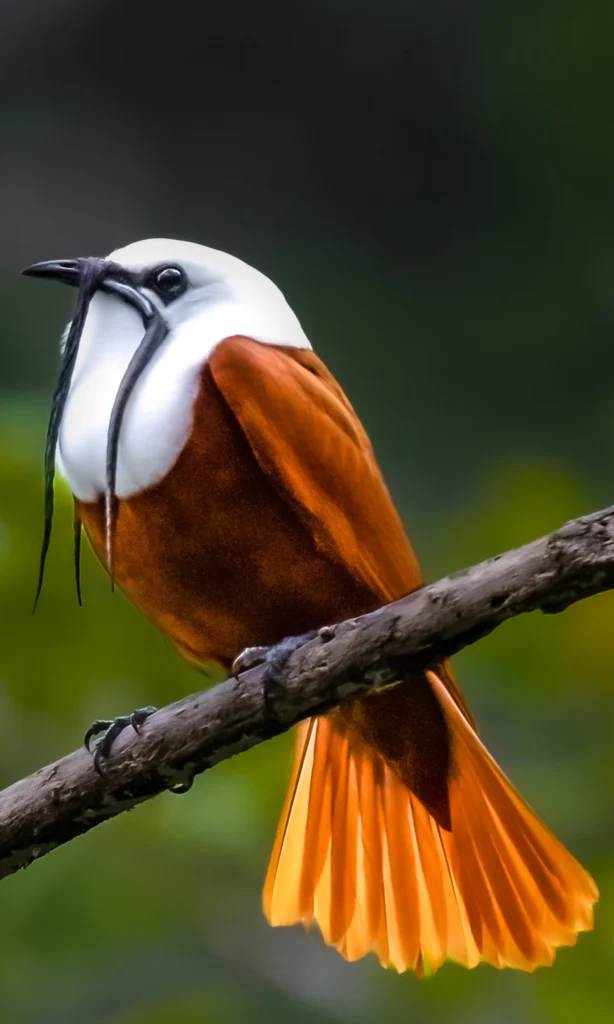
The plumages of male and female Three-wattled Bellbirds are strikingly different, a phenomenon known as sexual dimorphism. Males are boldly colored, with snow-white feathers from the head onto the upper back and breast, and the rest of the plumage a vibrant red-brown. The eye is large and black, with bare black lores connecting it to the large, broad black bill. A long, black, retractable fleshy wattle hangs from each corner of the mouth, with a third hanging from the top of the bill where it meets the head. Females are cryptically colored, uniform olive green above and greenish-yellow below with olive stripes covering the throat, breast, and belly.

Sonidos

The song of the male Three-wattled Bellbird is known around the world as one of the loudest and strangest of avian vocalizations. His song begins with an exclamatory BONK — sharp, mechanical, and somehow alien — followed by a brief pause, and then a high, ringing whistle. Reaching amplitudes of 100 decibels, these songs are about as loud as a motorcycle or jackhammer and can be heard over a great distance through the dense tropical forest. This species is also known to have three regional song dialects across their range, although some birds are bilingual where regions overlap. The Three-wattled Bellbird is only known to give two vocalizations besides its song, a whistle call and a swish llamar.

Song (Monteverde dialect)

Credit: Scott Olmstead, XC374611. Accessible at https://xeno-canto.org/374611.

Song (Talamanca dialect)

Credit: William Adsett, XC374611. Accessible at https://xeno-canto.org/30207.

Song (Nicaragua dialect)

Credit: Tom Will, XC11091. Accessible at https://xeno-canto.org/11091.

llamadas

Credit: Alfonso Auerbach, XC434702. Accessible at https://xeno-canto.org/434702.

Hábitat

The Three-wattled Bellbird primarily uses the middle and upper canopy of humid forests. These bellbirds primarily breed in montane forests, moving to lower elevations in the nonbreeding season.

  • Typically breeds at elevations between 4,000 and 7,000 feet, but recorded breeding as low as sea level
  • Will forage in small forest fragments

Rango y región

Rango y región


Área específica
Central America

Detalles de la gama
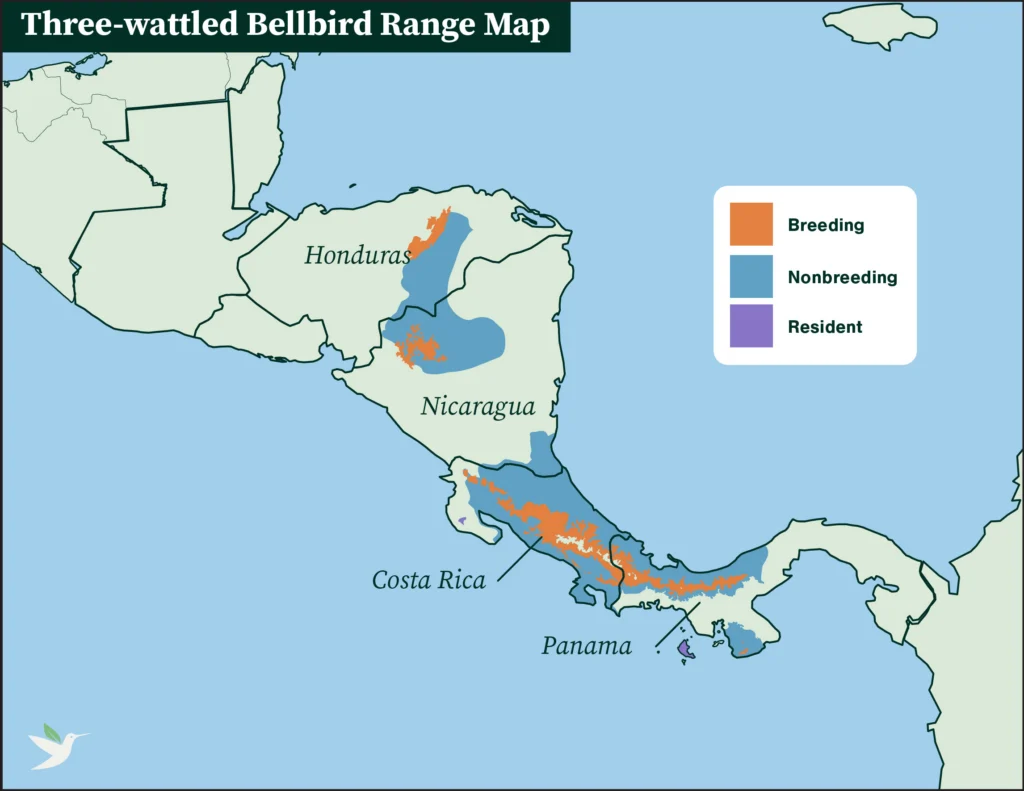
The Three-wattled Bellbird is known to breed in the mountain forests of Honduras, Nicaragua, Costa Rica, and Panama. These birds move both latitudinally and altitudinally after the breeding season, presumably following the availability of ripe fruit as they descend to the foothills and lowlands.

¿Sabías?
Bellbirds in the genus Procnias are notoriously difficult to observe, mostly staying high in the canopy and rarely vocalizing outside of the breeding season. This has made it difficult to assess all sorts of basic natural history for these species, including seasonal movements, habitat preferences, and even geographical range.

Rango
América del norte
Patrón de migración
Altitudinal
Distancia de migración
Distancia corta

Historia de vida

The Three-wattled Bellbird is a species of the high canopy, most conspicuous when vocalizing during the breeding season. However, when not singing, bellbirds are rather inconspicuous. As such, their natural history is not well-known, despite extensive research on the vocal behavior of males.

Dieta

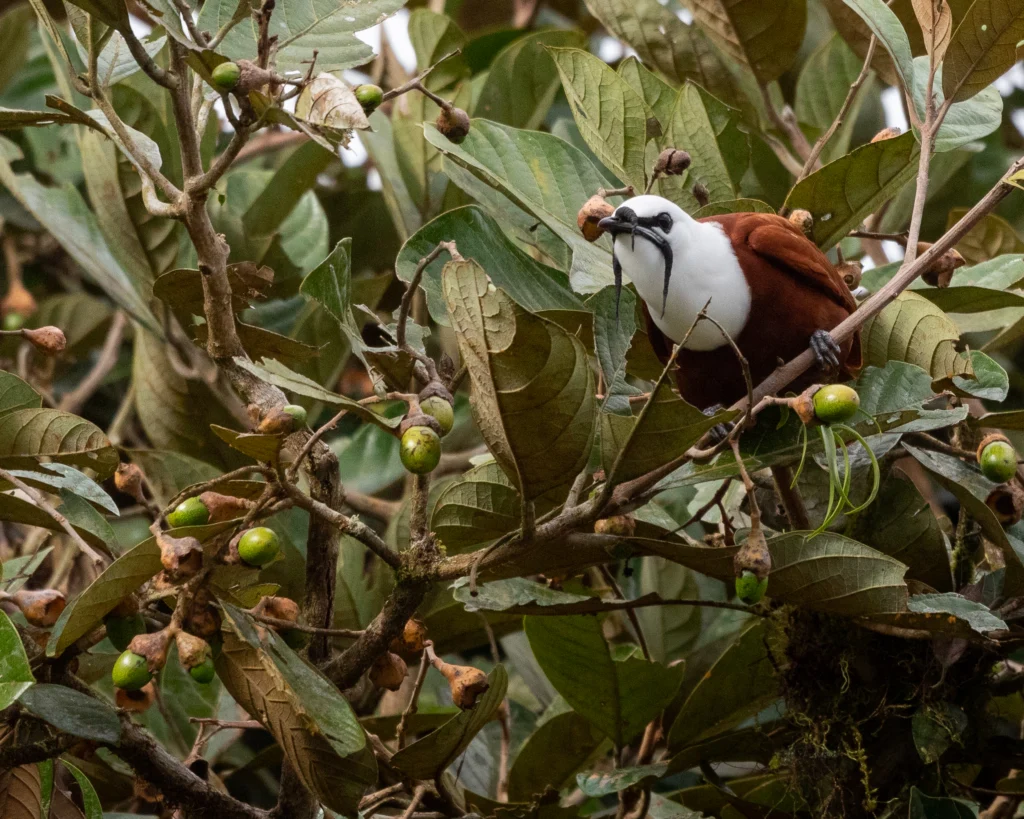
Three-wattled Bellbirds are primarily frugivores, foraging for fruits in the middle and upper canopy of old-growth and older second-growth forests. They take a wide variety of smaller fruits, which they consume one at a time and swallow whole. Before ingesting a fruit, the seed or pit from the previous is regurgitated. This behavior makes Three-wattled Bellbirds important seed dispersers of their preferred fruit trees in the Laurel family.

Noviazgo

Males call continuously through the day to attract females to a specific “visiting perch,” which males lead them to. Once a female is on the visiting perch, males have three distinct displays with which to woo her. Two of these involve specific flight patterns, body postures, and vocalizations, while a third centers around a ritualistic shaking of his tentacle-like wattles.

Anidación

There are only two observations of Three-wattled Bellbird nests in the peer-reviewed literature, one from 1975 and another in 2012. Both nests were woven of narrow dry twigs in the fork of an understory tree. The 2012 nest was described as a loose platform. Nests of this family are cryptic and notoriously difficult to find and study.

Huevos y crías

Researchers believe that the female is responsible for the care of eggs and young. No eggs were observed in one nest, and in the other, there were only white shells. However, most birds in the Cotinga family lay only one or two eggs. In the closely related Bearded Bellbird, eggs hatch after about three weeks, and young leave the nest after another four weeks. Females feed their young exclusively on fruit.