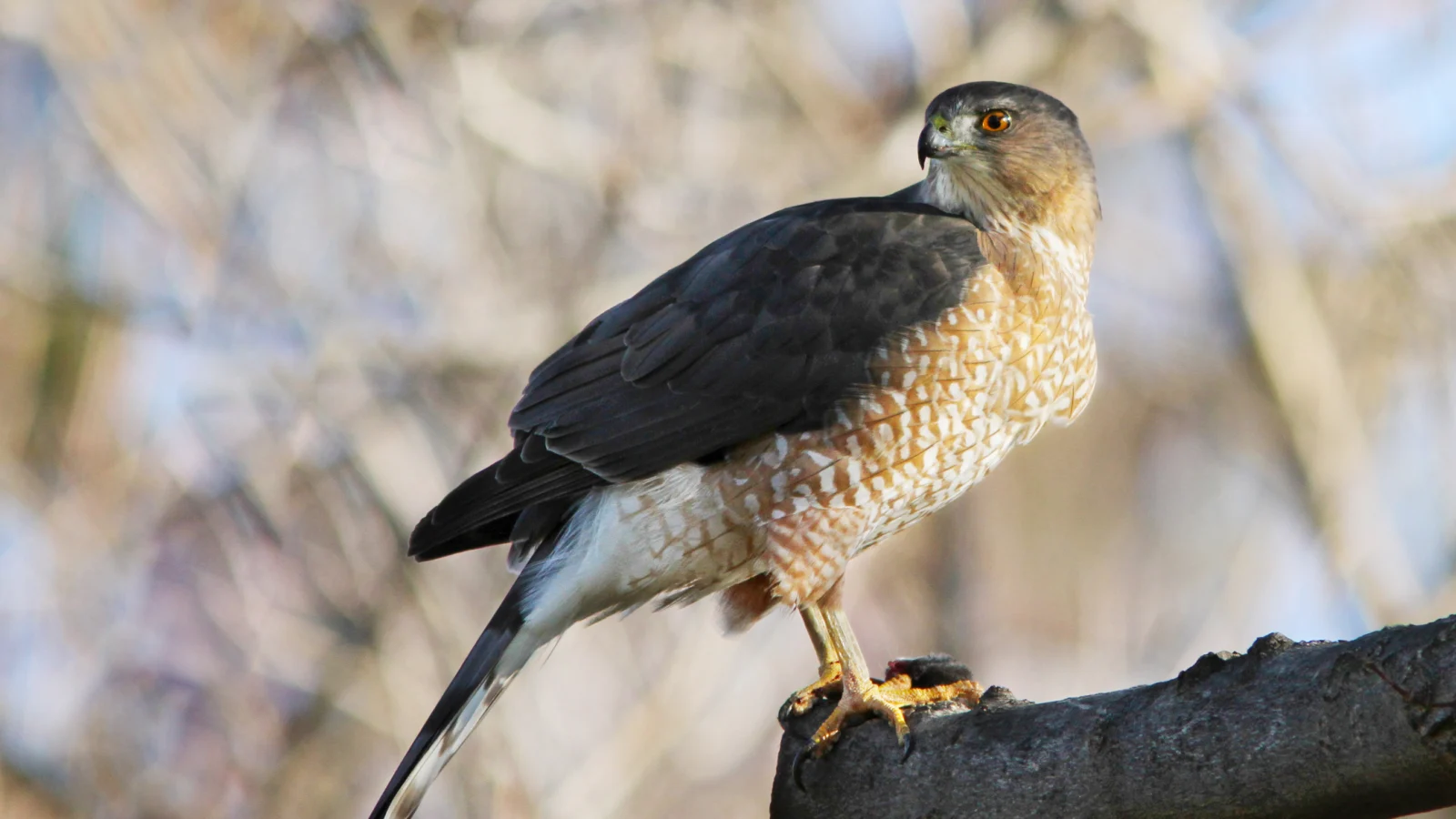
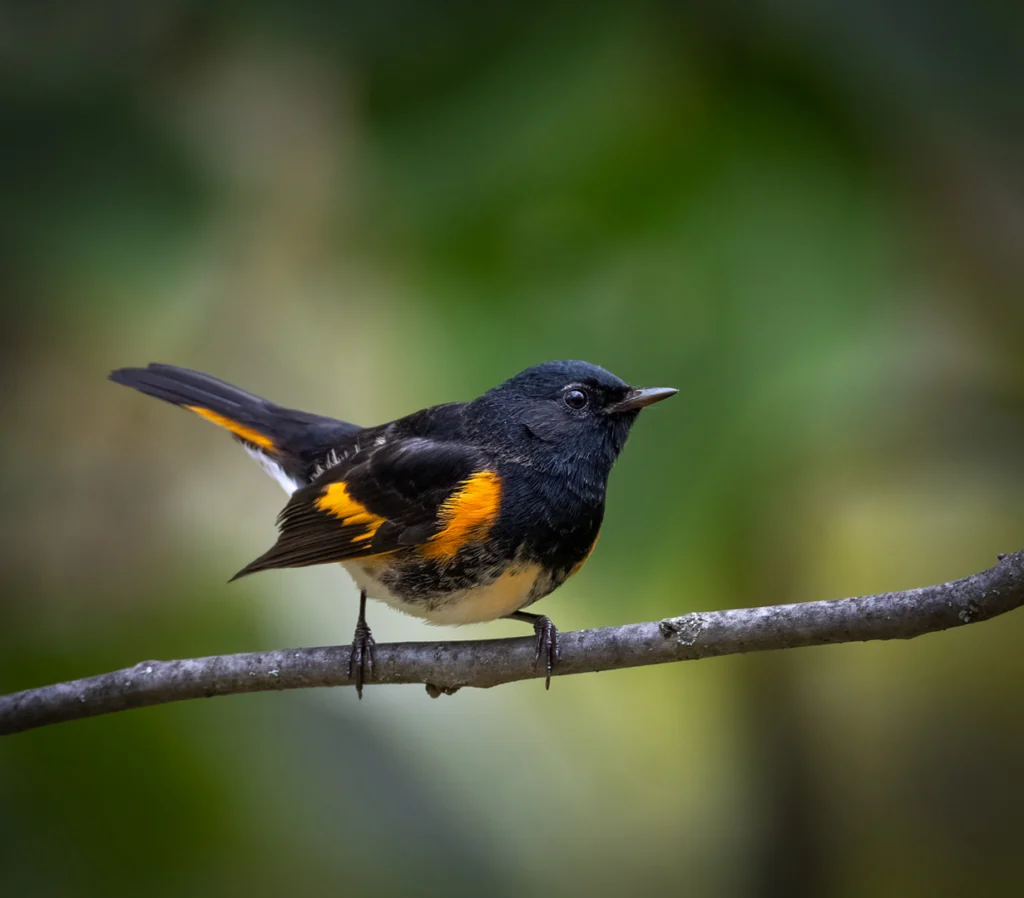
As I birded with old pals in New York City’s Central Park, the fall migration just getting started, we watched a Cooper’s Hawk blast through the forest on its rounded wings, long tail ruddering it expertly between the trees. The singing of crickets and the arrival of waterthrush and redstart signaled the shift in seasons, but other changes were in the air, and this familiar hawk sat at the center of them.
For one thing, Cooper’s Hawk and its look-alike, the Sharp-shinned Hawk, aren’t sister species and actually belong to two different genera. Cooper’s has been moved to the genus Astur, so it’s not even an accipiter anymore! I know, I know — crazy talk. But it doesn’t end there.
Soon, we won’t be calling this bird a Cooper’s Hawk. Over the next few years, North American birds whose English-language names include honorifics — the names of people — will be changed. No more birds named after people. More crazy talk.
Or is it?
In the first instance, genetic studies back up the change. Blame convergent evolution for the Coop/Sharpie resemblance. It may be disorienting and counterintuitive to us longtime birders, but a shifting awareness of the world around us necessitates some adaptation on our part.
In the second case, it’s not that the science has changed. But our awareness of the world has indeed shifted. Facts about the people behind those names have come to light, and some (but by no means all) are ugly. Rather than try to parse who’s “good” and who’s “bad” using subjective values that change over time, the smart move is to ditch all honorific names. The history is still there, for good and ill, for anybody who’s interested to learn; but the birds will be free of our human baggage.
Moreover, context matters. Most of the honorific names come from the 19th century, an era of expansionist conquest when the only people deemed worthy were white and (almost exclusively) male, while everybody else got steamrolled under slavery, manifest destiny, gender inequality…. There’s little reason to carry forward in perpetuity the legacies of old injustice.
Especially not when the fix is rather easy, with a compelling motivation: It will help save our birds. With a third of North America’s bird populations gone just since I started birding as a kid, we need all hands on deck. We don’t have the luxury of leaving anybody in any community out, of having doors slammed closed because the bird we mentioned was named for the architect of the Trail of Tears that killed thousands of someone’s kin.
Besides, we have a once-in-a-lifetime opportunity: binding the hordes of new pandemic birders to our cause, with bird names that are actually useful to them. The name Thick-billed Longspur (formerly McCown’s) at least gives an idea of what to look for!
So will I be sorry to see “Cooper’s Hawk” go? As a Cooper, absolutely. But as I watch the bird fly, neither the name change nor the reclassification come to mind; it’s still the same skilled predator stalking our woods and bird feeders, a wonder untroubled by whatever name or genus it’s given. The challenge is on us, and having managed the switch from Oriole de Baltimore to Northern Oriole and back again without much trouble, I have confidence we’ll navigate these changes as skillfully as that hawk flashes through the forest.
Christian Cooper is the author of Better Living Through Birding: Notes from a Black Man in the Natural World, and a member of the NYC Bird Alliance Advisory Council.
This article originally appeared in the Summer 2026 issue of Bird Conservation, the member magazine of American Bird Conservancy.