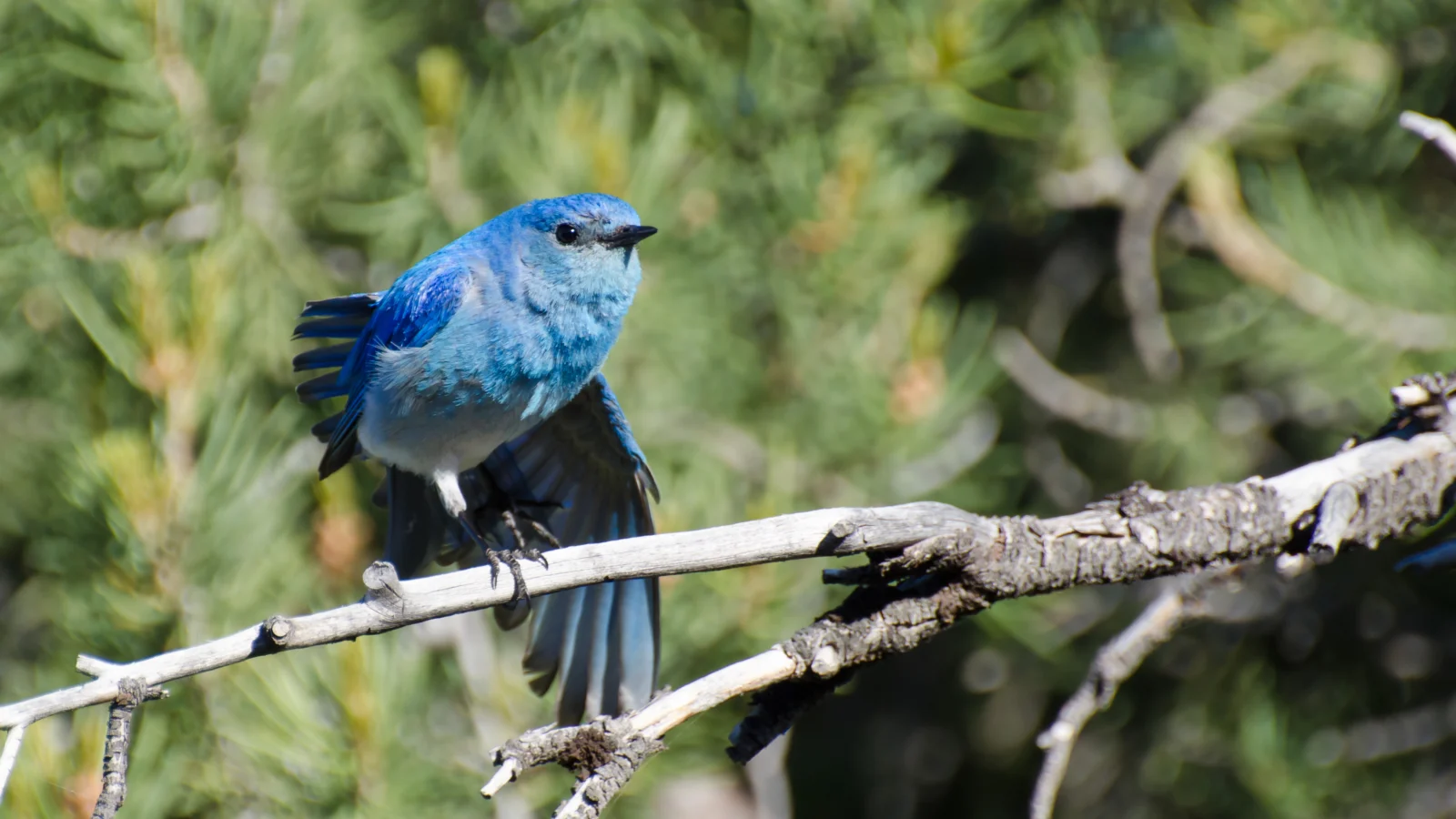
Mountain Bluebird. Photo by rck_953, Shutterstock.

Hollow Pipes Pose a Deadly Threat to Birds

Azulejo de montaña. Foto de rck_953, Shutterstock.

Hollow Pipes Pose a Deadly Threat to Birds

Read in English
Noticias
Escuchar este articulo

Across the vast open lands of the western United States, miners often use uncapped plastic pipes to designate the locations and boundaries of their mining claims. But these millions of open polyvinyl chloride (PVC) pipes are deadly for small birds: Attracted to the openings as potential nesting cavities, the birds get stuck within the pipes’ smooth, narrow walls.

Cavity Nesters Are Frequent Victims

Mine claim markers threaten birds across a huge swath of public lands from Oregon to New Mexico. According to a 2014 Bureau of Land Management estimate, there were 3.5 million mining claims on lands the agency manages in 11 contiguous western states and Alaska. Nevada had the most (1.1 million claims), followed by Utah (412,000); Wyoming (314,000, including small numbers from Nebraska); California (311,000); and Colorado (285,000).

One examination of 854 pipes in Nevada revealed 879 dead birds, along with 113 reptiles and 20 mammals. The Nevada Department of Wildlife has recovered 43 species of birds from the markers. Some pipe-pulling efforts have revealed as many as 30 dead birds in a single pipe.

Most of the trapped birds are cavity nesters: The Ash-throated Flycatcher and the Mountain Bluebird are the most frequent victims, but also at risk are woodpeckers, sparrows, shrikes, kestrels, and owls.

A single pipe can be disastrous. In 2011, Bureau of Land Management (BLM) specialists in Oregon documented alarming rates of bird fatalities at claims in the eastern part of the state, near Burns. In a written report, one specialist stated that the toll to birds “could be enormous…a single uncapped, vertical PVC cylinder can potentially entrap and kill dozens of native birds from multiple species.”
Advocacy to Reduce Threats from Pipes

American Bird Conservancy (ABC) has been a leading voice in the effort to mitigate the dangers posed to birds by uncapped pipes. In 2011, ABC urged citizens of Nevada, home to one of the country’s biggest mining industries, to act on a state law that enabled anyone to pull up claim marker stakes that are improperly set and could be a risk to birds.

ABC also sounded the alarm at the federal level, issuing a letter in 2012 to the BLM and the U.S. Forest Service, arguing that the continued use of uncapped pipes should be rectified to avoid continued violations of the Migratory Bird Treaty Act. Following this action, the BLM and Forest Service worked with ABC to identify and implement solutions to avoid bird deaths from uncapped pipes associated with 3.4 million mining claims on public lands.

Federal Action for Safer Public Lands for Birds

Federal agencies have taken some steps to mitigate the threat. In 2015, BLM created a flyer — endorsed by American Bird Conservancy (ABC) and the National Mining Association — that will be mailed to mine claim holders, alerting them to the problem and urging them to replace or remediate hazardous markers. Meanwhile, Forest Service staff are covering open vent pipes on outhouses that were trapping birds.

In 2016, the BLM issued a memorandum to its field offices across the nation with guidance on how to eliminate the threat of open pipes on public lands. The memorandum calls for BLM staff to identify all vertical pipes on BLM-managed lands and to cap, close, remove, or screen them to prevent wildlife from becoming trapped. In addition, all vertical pipes on future facilities must have permanent caps or screens to prevent harm to wildlife. Mine-claim holders are also being encouraged to voluntarily remove PVC pipes used as mine markers and to replace them with wildlife-safe markers.

Since 2016 thanks to the BLM guidance, there has been steady progress as new mine claims use non-open pipe markers that avoid the entrapment risk. In addition, conservation and citizen groups of all kinds, have pulled hundreds of thousands of pipes so that they no longer pose a threat to wildlife. Friends of Nevada Wilderness and Audubon chapters have led these efforts.