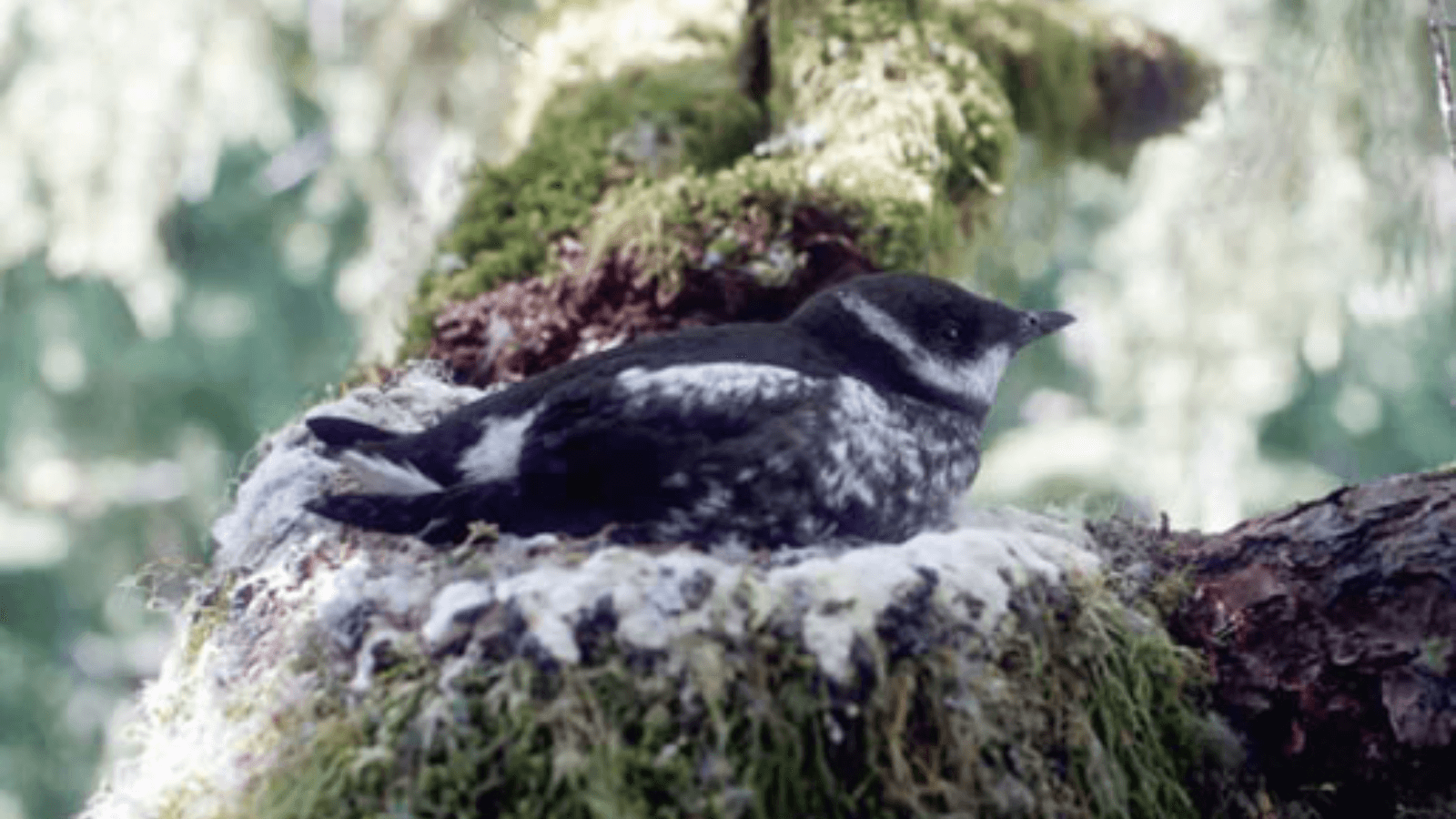
Corvids like the Common Raven or Steller’s Jay might seem to humans to be interesting birds, or annoying nuisances at worst. But for federally Threatened Marbled Murrelets and Western Snowy Plovers, these opportunistic predators can have a serious impact on nesting success. Studies indicate that corvids are one of the leading causes of nest failure in both species. Discarded food and other trash in campsites make the problem worse by inviting crows, ravens, and jays to congregate and linger in areas where they would normally be scarce.
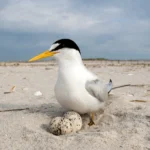
Since the two species of concern are so secretive, campers likely don’t even know they’re around. Marbled Murrelets nest high in large trees, as far as 50 miles inland. Most people will never see one of these birds’ nests in person. Western Snowy Plovers nest on sparsely vegetated coastal dunes, where their eggs and chicks blend seamlessly into the sandy surroundings.
Luckily, there is evidence that cleaner campsites deter corvids. California State Parks launched a “Crumb Clean” campaign in 2013 — offering camper education and better ways to dispose of waste, including wildlife-proof garbage cans, food lockers, and dishwashing stations. The program substantially reduced the presence of Steller’s Jays in areas where it was implemented. Without such easy pickings, the birds opted to move on to more fruitful foraging sites.
“It’s natural for corvids to prey on nests, but the balance is thrown off when predator populations increase because of access to food from humans,” said Lindsay Adrean, ABC’s Northwest Program Officer. “For murrelets, keeping predators in check is particularly important because they only raise one chick in a breeding season.”
Adrean is leading the expansion of the Crumb Clean program into Oregon, building on the “Keep Wildlife Wild” program developed by Oregon’s Siuslaw National Forest. This summer, ABC completed a preliminary survey of priority campsites for the program. ABC is also partnering with the Oregon Department of Forestry, along with Environment for the Americas, to adapt signs and other materials used in the California campaign.
If all goes well, the effort could be expanded to Washington state as early as next year. The program serves as an important reminder that even a seemingly simple action, like washing a plate, can have life-saving consequences for imperiled wildlife.