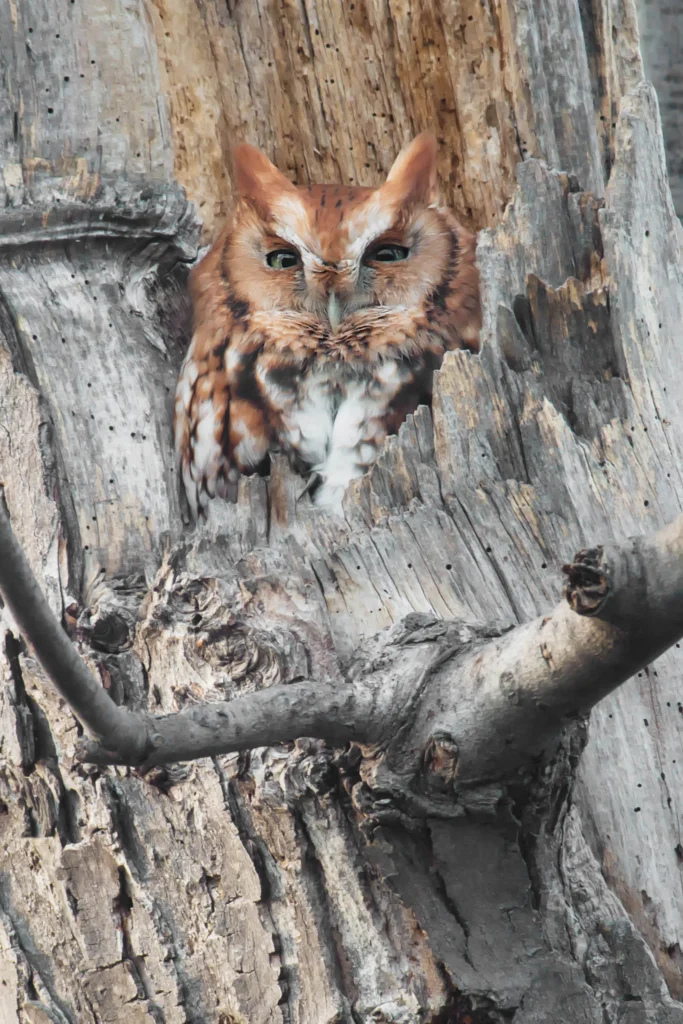
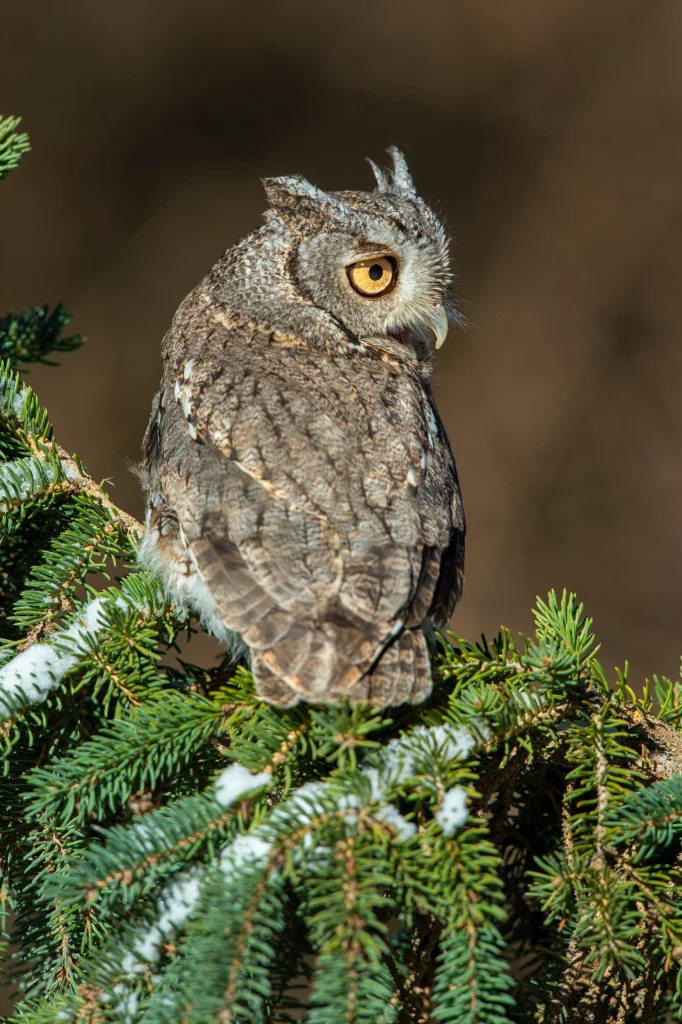
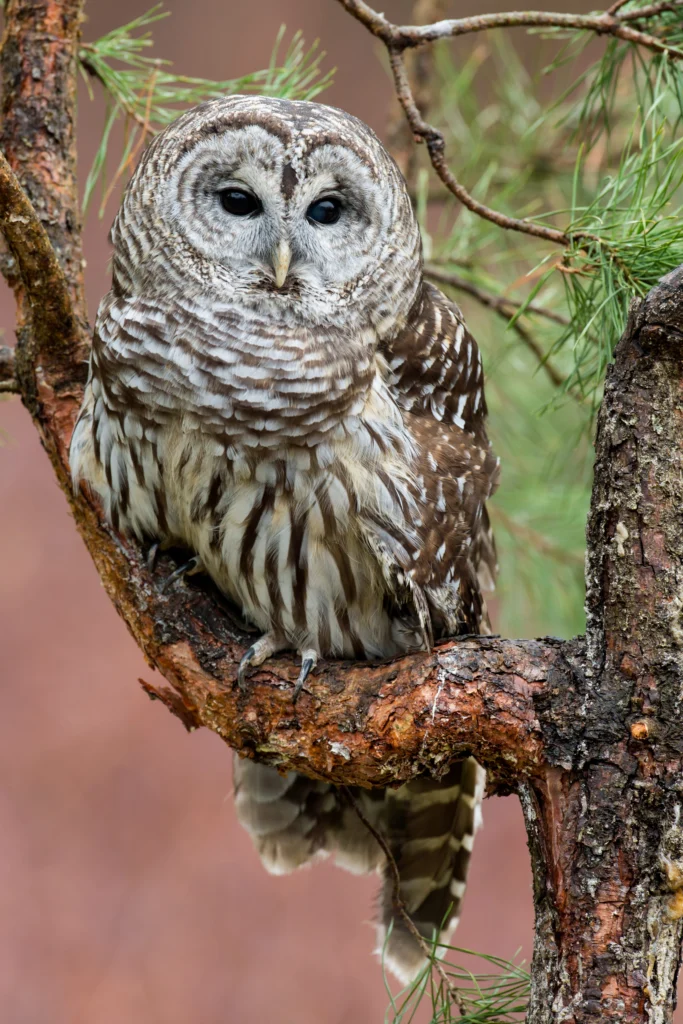
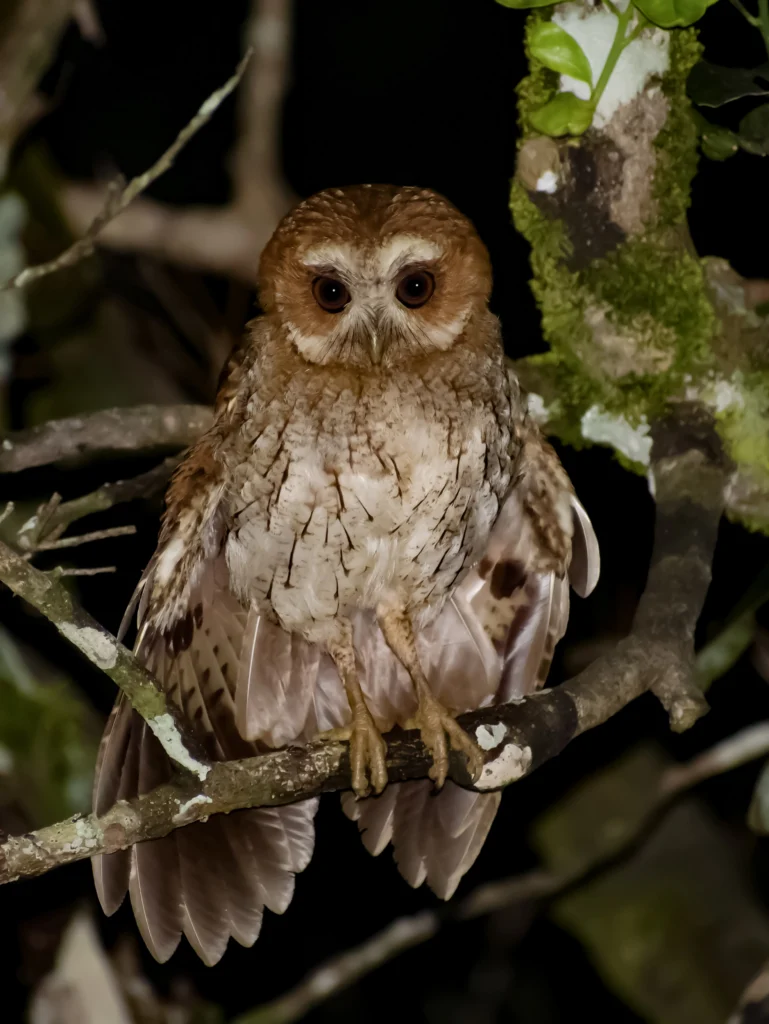
Owls are quintessential creatures of the night (with a few exceptions mentioned below). Beautiful and formidable predators, they inspire admiration, fear, and a sense of mystery.
There are more than 200 species of owls around the world. They are divided into two families, Tytonidae (Barn Owls) and Strigidae, which includes all other owl species. Owls in both families have evolved outstanding hunting adaptations, including silent flight and incredible night vision, that allow them to catch their prey with quiet precision.
Exclusively Carnivorous
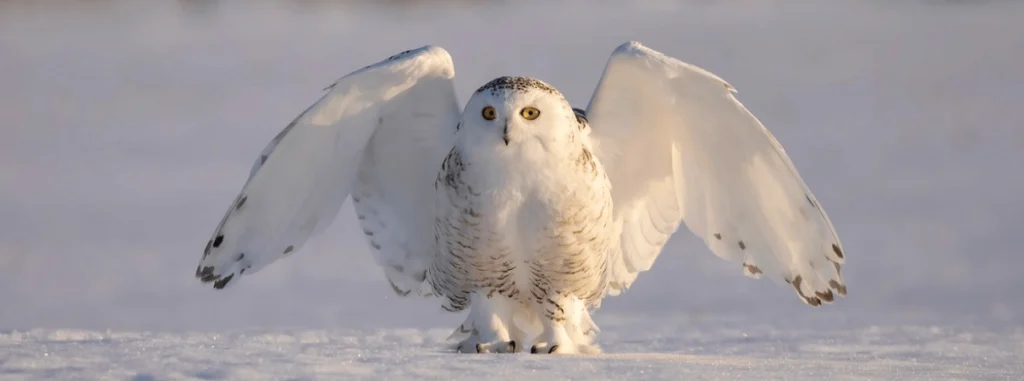
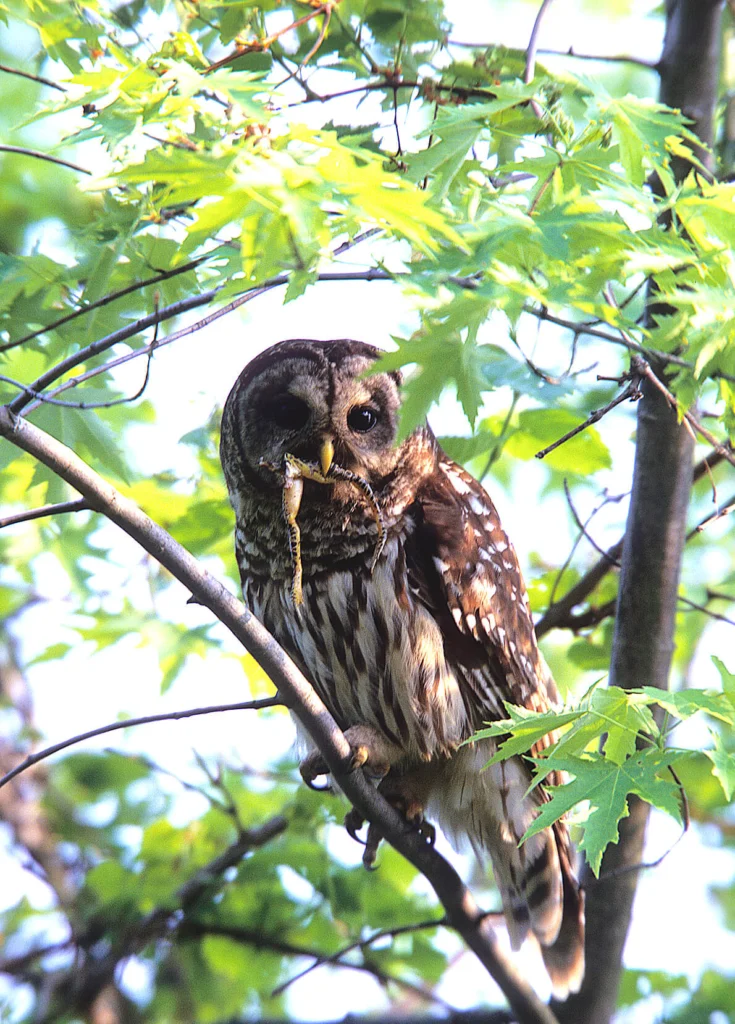
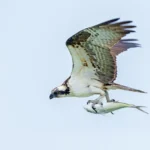
Owls eat other animals, from small insects such as moths or beetles to large birds, even as large as an Osprey. A few species of owls mostly eat fish, such as Ketupa (fish-owl) and Scotopelia (fishing-owl) species, found in Asia and Sub-Saharan Africa, respectively. Owls spend much of their active time hunting for food. The Snowy Owl, for example, may have to try quite a few times, but can catch three to five lemmings a day.
Owls Cannot Chew
Like other birds, owls do not have teeth to chew their food. They use their sharp, hooked bills to tear the flesh of prey into pieces, often crushing their skulls and other bones. They can also swallow small prey whole, usually head-first. Any body parts that owls are not able to digest, such as bones and fur, are regurgitated hours later in the form of a pellet.
Owls have two stomach chambers. One, the glandular stomach, is where acids and enzymes liquify the digestible parts of an owl’s prey (the flesh and organs, primarily). What they’ve swallowed then passes into the bird’s muscular stomach (sometimes called the “gizzard”), where the digestible food gets squeezed into the bird’s intestines. The fur, bones, and teeth get pressed down into a tight, compact pellet.
Not All Owls Are Nocturnal Feeders
Although we typically associate them with the night, some owls are diurnal, or active during the day. Species in northern latitudes, such as Snowy Owls, must be able to hunt throughout the continuously bright days of summer. In western mountain forests, Northern Pygmy-Owls hunt small birds during the day, and although they mostly hunt at night, Burrowing Owls are often seen keeping watch outside their burrows in daylight. The Northern Hawk Owl is also a reliable daytime hunter. Some others, like the Short-eared Owl, are crepuscular, active during the twilight hours of dawn and dusk.
Guided by Sound
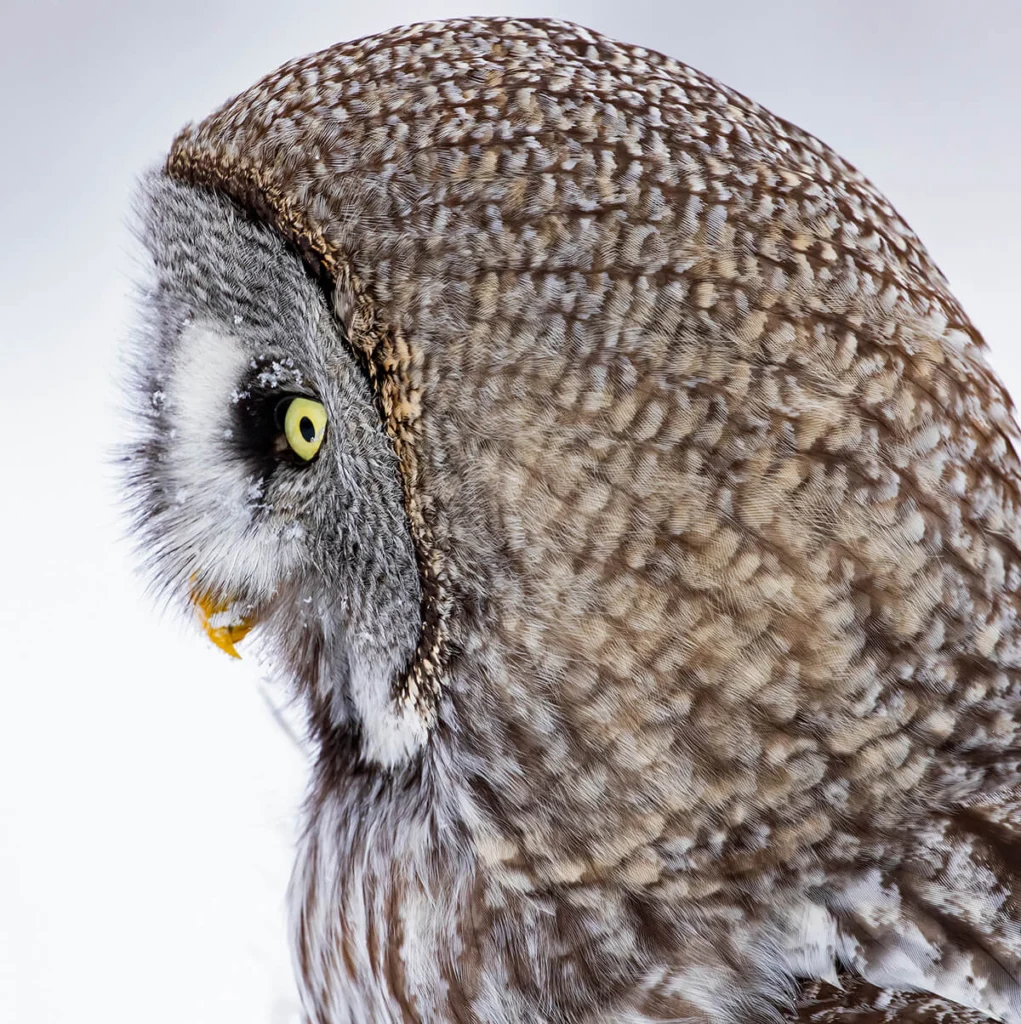
Owls do possess incredible vision, but these birds, which are mostly nocturnal, also rely on outstanding hearing abilities to find their prey in the darkness. Barn Owls, for example, are able to locate small animals hiding in vegetation by using their auditory sense alone; in fact, the Barn Owl’s hearing is among the best of any animal ever tested. The Great Gray Owl can find prey under almost a foot of snow. Owls’ flat faces work like dish antennas — the feathers around the face direct sound waves to their ears, which are hidden on the sides. Many owl species also have a slight asymmetry in ear position, which they use to triangulate and locate prey in three-dimensional space. Their ear placement helps them determine the direction of the sound, the distance to the target, and the height of the target.
Bountiful Years Bring Lots of Chicks
The amount of food available can strongly affect the reproduction of some owl species. While Barn Owls typically lay four to seven eggs, they have been known to lay as many as 12 during years with high rodent populations. In years of food scarcity, however, some owls might refrain from breeding altogether.
One of the best examples of the relationship between prey availability and reproduction rates is the Snowy Owl, which feeds almost exclusively on lemmings during the breeding season. These tiny Arctic rodents are extremely susceptible to “boom and bust” population changes that have ripple effects throughout the entire Arctic food web. In years of plenty, Snowy Owls will take advantage of the bounty and line their nests with lemmings, and they also tend to lay larger clutches. But when lemmings are scarce, Snowy Owls may be forced to go after other prey, or they may move on from an area entirely.
Stealthy Hunters
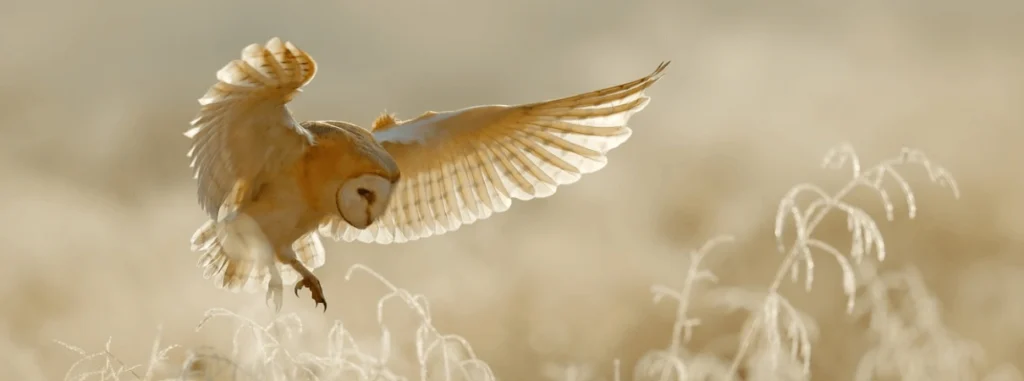
The flight of owls is nearly silent, which allows them to approach and then pounce on unsuspecting targets. Because the wings’ surface area is larger than that of most birds in proportion to body mass, they can glide more slowly without stalling and dropping to the ground, and flap their wings less often to stay aloft.
The leading edges of their outer wing feathers are serrated and have the effect of slicing through air that would typically produce a “wooshing” sound from a more solid feather. Owl feathers are also exceptionally soft, almost velvety, which muffles sound, and the trailing edges of the wing feathers are fringed. The comb-like quality of the flight feathers allows more air to pass through soundlessly.
Owls' Water Needs
Owls can drink, but they mostly get their water needs met by the animals they eat. As they metabolize their food, the hydrogen contained in the animals’ fat gets oxidized, yielding around one gram of water for every gram of fat. During northern winters, owls may sometimes be seen eating snow.
Just because owls aren’t drinking water doesn’t mean they don’t need it. Many owl species have been observed taking a dip in ponds, streams, and even bird baths. Bathing helps maintain feather health (and it’s probably refreshing on a hot summer day!)
Protecting Owls
While owls’ extraordinary hunting skills and nocturnal habits are the stuff of legend, the dangers they face are often overlooked. Threats like habitat loss, pesticides (particularly rodenticides), and vehicle and window collisions have already sent a third of all owl species in the United States into decline.
Several North American owl species, including the Flammulated Owl, Snowy Owl, and Long-eared Owl, have been placed on Partners In Flight’s Watch List, and the Northern Spotted Owl (a Spotted Owl subspecies found in the Pacific Northwest) has been listed under the Endangered Species Act since 1990.
American Bird Conservancy and our partners are helping a variety of owl species throughout the Western Hemisphere by conserving and improving habitat, working to ban dangerous pesticides and rodenticides, and supporting policies that advance conservation measures and fund conservation programs.
Take action for owls and other birds! Visit ABC’s Action Center to find opportunities to speak up for birds, learn how to reduce pesticide use at home, and find out how to treat windows to prevent collisions.