Six States Joining Bird City Network
In 2025, more than 275 communities participated in BCN within its 16 programs. They completed more than 3,500 actions to improve habitat, reduce threats, engage people, and promote sustainability.
Antrostomus vociferus
Bixananêhi (Arapaho)
“It is vowed that the birds are psychopomps lying in wait for the souls of the dying… If they can catch the fleeing soul when it leaves the body, they instantly flutter away chittering in daemoniac laughter…”
– H.P. Lovecraft, The Dunwich Horror
With its nocturnal habits, cryptic nature, and eerie, hypnotic song, the Eastern Whip-poor-will is endowed with an impressive body of folklore, mythology, and literature. In such tellings, these birds often play a role in predicting a death, embodying the dead, or dealing with the soul of the deceased, as in Lovecraft’s story quoted above. The whip-poor-will shows up in the novels and poems of authors like Kurt Vonnegut, Emily Dickinson, and William Faulkner, and in the works of many songwriters, from Hank Williams to Elton John.
The Eastern Whip-poor-will is rarely seen due to its excellent camouflage, but its persistent singing at night makes it hard to ignore. In addition to its English common name, the song is this bird’s namesake in many other languages as well: Wágulí in Cherokee, Cuerporruín (“despicable body”) in Spanish, and Ziwashiko’ko in Myaamiaki, to name only a few. While some of these onomatopoetic names may be somewhat bizarre or macabre, others have direct relevance to the people listening. Ziwashiko’ko, for instance, translates to “sow your seed!” and the whip-poor-will’s singing serves as a seasonal marker of the start of the growing season.
The Eastern Whip-poor-will has a number of strange and fascinating features that it shares with other birds in its family, collectively known as the nightjars or sometimes goatsuckers. One of these is the comically small bill, matched with the phenomenally wide gape of the bird’s open mouth. The amazing frog-like mouth allows these birds to easily gulp down insects in flight. Whip-poor-wills also have an odd comb-like ridge along the inner edge of the claw on the middle toe. While the function of this “pectinate” claw is not fully known, ornithologists suspect it may aid with preening, particularly the long whisker-like bristles extending from around this bird’s mouth.
Despite their many admirers, the nightly chorus of “whips” is heard less and less each spring as forests are lost to agriculture and development. Since Eastern Whip-poor-wills often forage close to roads, they are also vulnerable to collisions with cars. Declines in their prey from pollution and pesticide use have also affected this insect-eating bird.
The forests of the central and eastern United States have changed radically over the last few centuries. In many places, forests are still being lost to unsustainable logging practices. Furthermore, forests that have regrown following logging often lack the diversity of tree species and growth stages that birds like the Eastern Whip-poor-will depend on.
Pesticides pose a risk to insectivorous birds all over the world. In addition to being directly impacted by toxins in the environment, pesticide use can result in major drops in the numbers of invertebrates, leaving birds like the Eastern Whip-poor-will with little to eat.
The Eastern Whip-poor-will needs our help to overcome the threats it faces. At ABC, we’re inspired by the wonder of birds and driven by our responsibility to find solutions to meet their greatest challenges. With science as our foundation, and with inclusion and partnership at the heart of all we do, we take bold action for birds across the Americas.
ABC and the U.S. Fish and Wildlife Service, as partners of the Central Hardwoods Joint Venture, have contributed to an ongoing project in the Missouri Ozarks that is documenting habitat use by whips and Chuck-will’s-widows in the shortleaf pine and pine-oak forests in the Mark Twain National Forest. In the forests of the eastern United States, ABC works with a range of partners to apply conservation practices and improve forest diversity and health at a landscape scale using Dynamic Forest Restoration.
ABC works with partners at the state and federal levels in the U.S. to call for the regulation or cancellation of the pesticides and toxins most harmful to birds. We develop innovative programs, like working directly with farmers to use neonicotinoid coating-free seeds, advancing research into pesticides’ toll on birds, and encouraging millions to pass on using harmful pesticides.
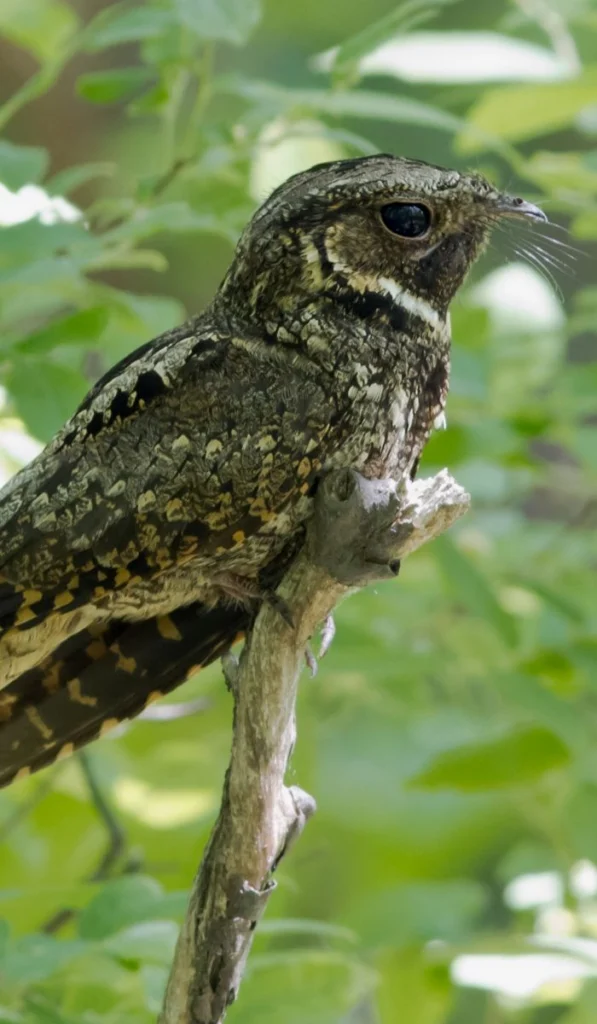
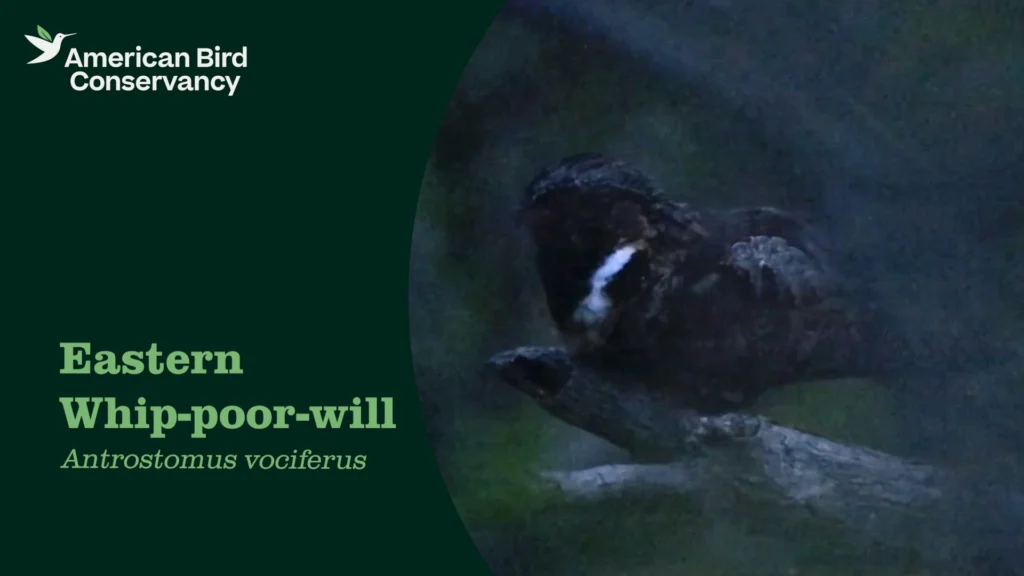
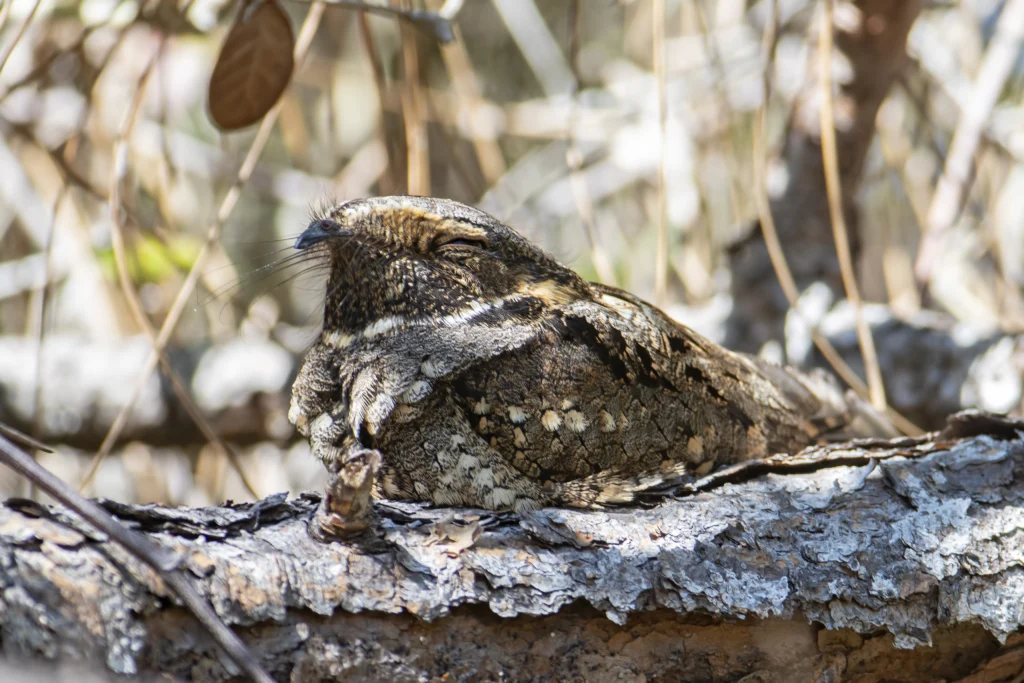
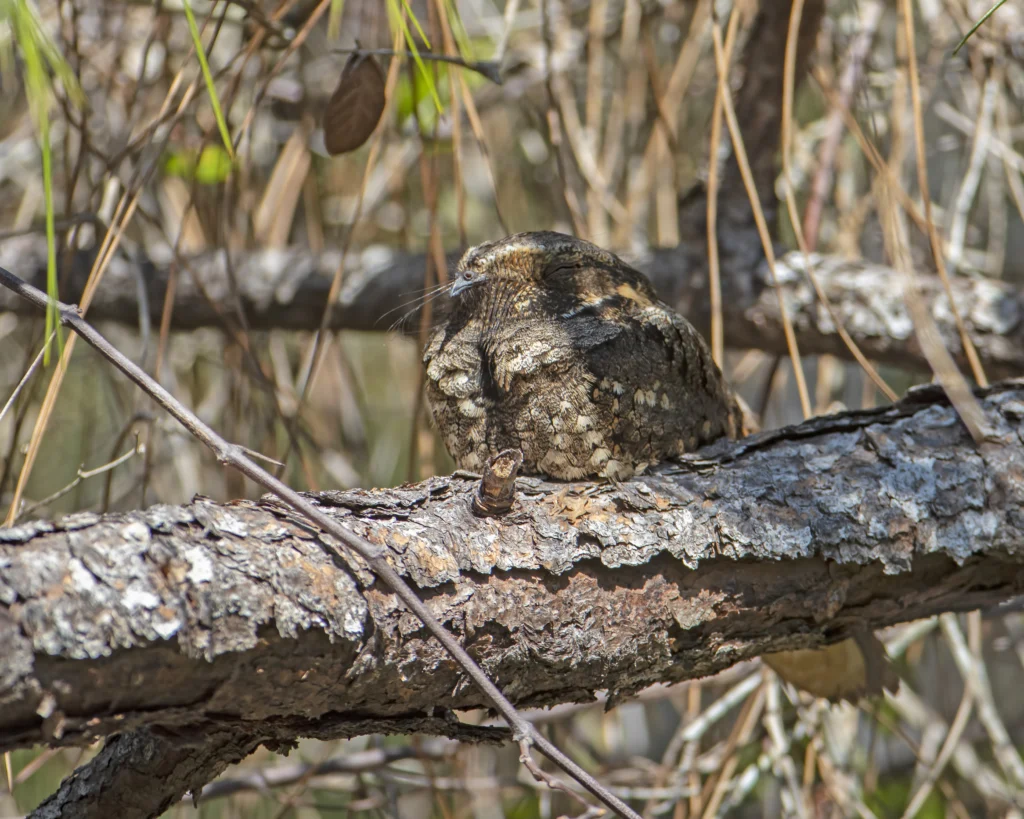
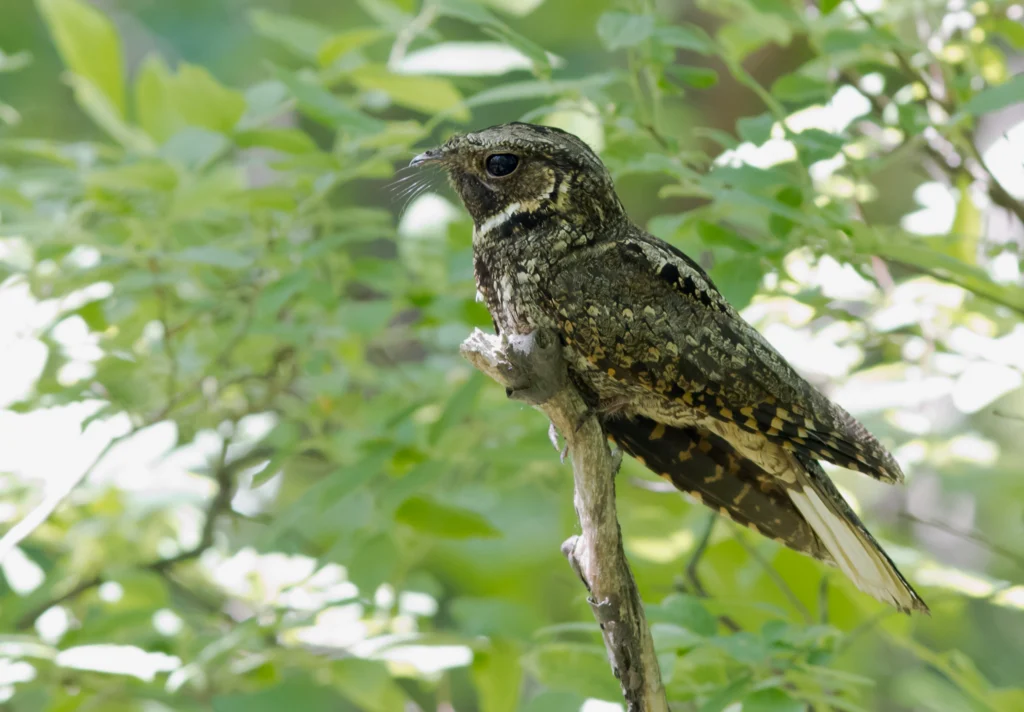
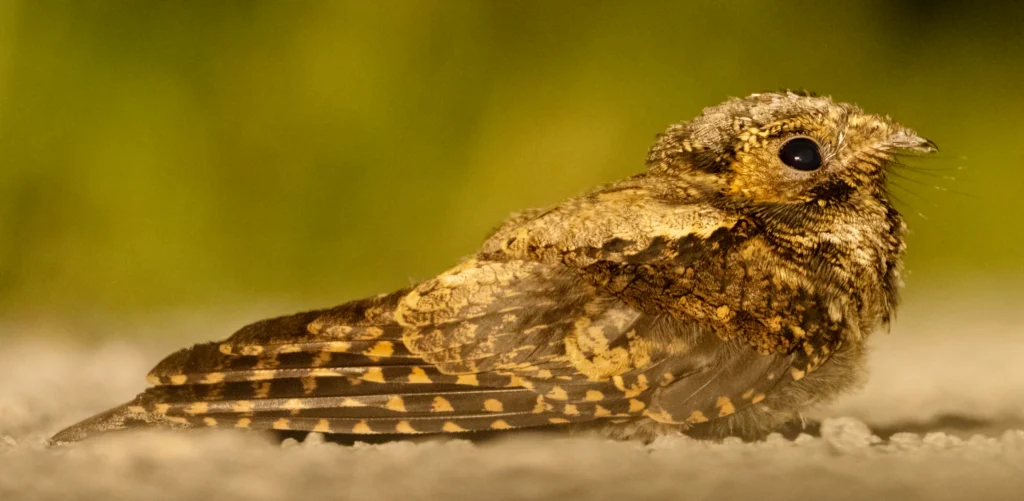
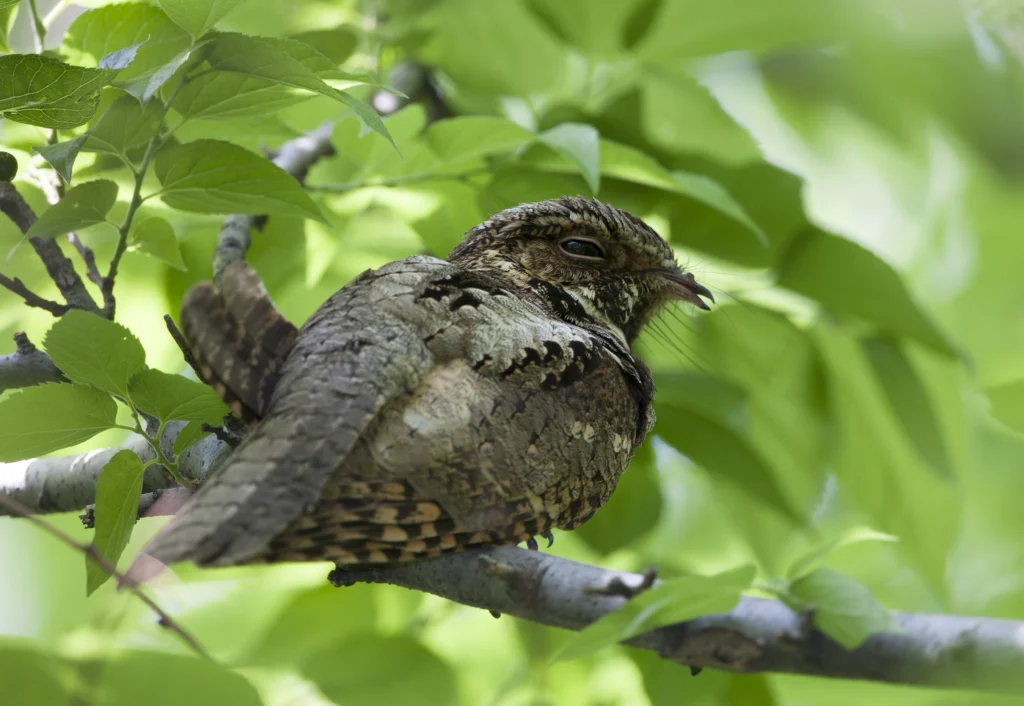
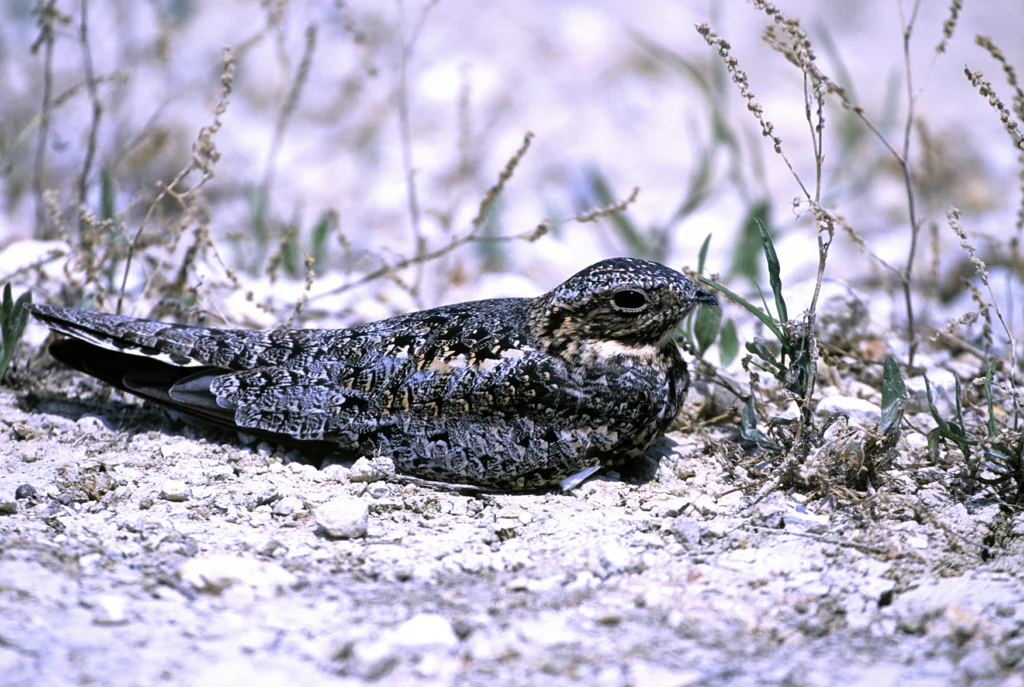
The Eastern Whip-poor-will is famous for its ability to camouflage with the leaf litter of a forest floor, especially when roosting or sitting motionless on their nest through the daylight hours. This camouflage is a result of complex mottled patterns in shades of gray and brown. Whip-poor-wills have a contrasting band of pure white across the throat, though this is hidden while the birds are roosting with their heads hunched low. Males also have a broad white patch on either side of the tip of the tail. Females have similar patches, but theirs are a creamy yellow-brown.
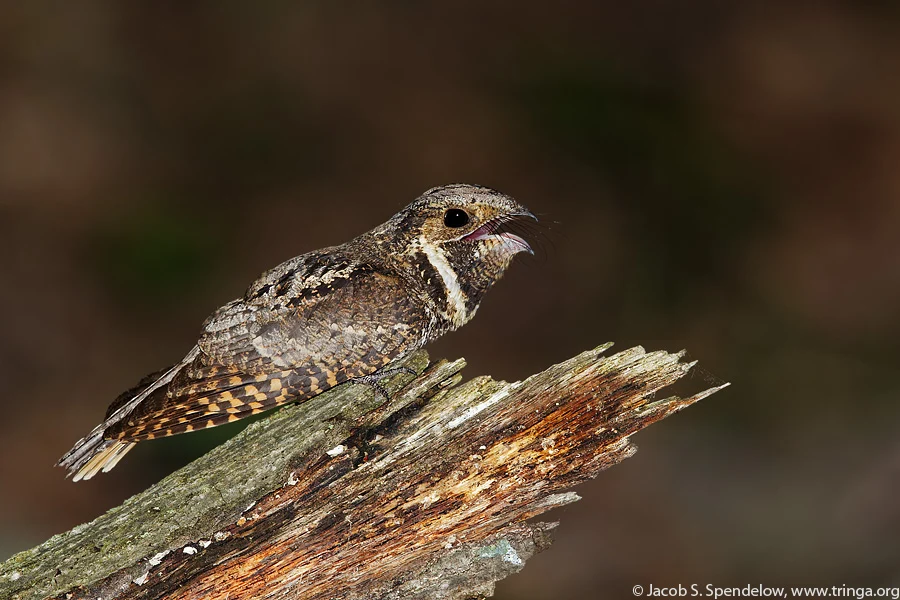
For a bird known so well for its songs, the Eastern Whip-poor-will’s vocal behavior is not well understood. The namesake song of the male is a bright whistled phrase, sung loudly and repetitively. The “whip” is a single even tone, followed by the rising, warbled “poor” and the rapidly rising and falling “will.” Both sexes give several calls as well, the most common of which is the rapid, rising, croak-like Quirt call. Whip-poor-wills also give a growl, a hiss, and will sometimes strike their wingtips together to make a snapping or clapping sound.
Credit: Stanislas Wroza, XC1014021. Accessible at www.xeno-canto.org/1014021.
Credit: Paul Marvin, XC405768. Accessible at www.xeno-canto.org/405768.
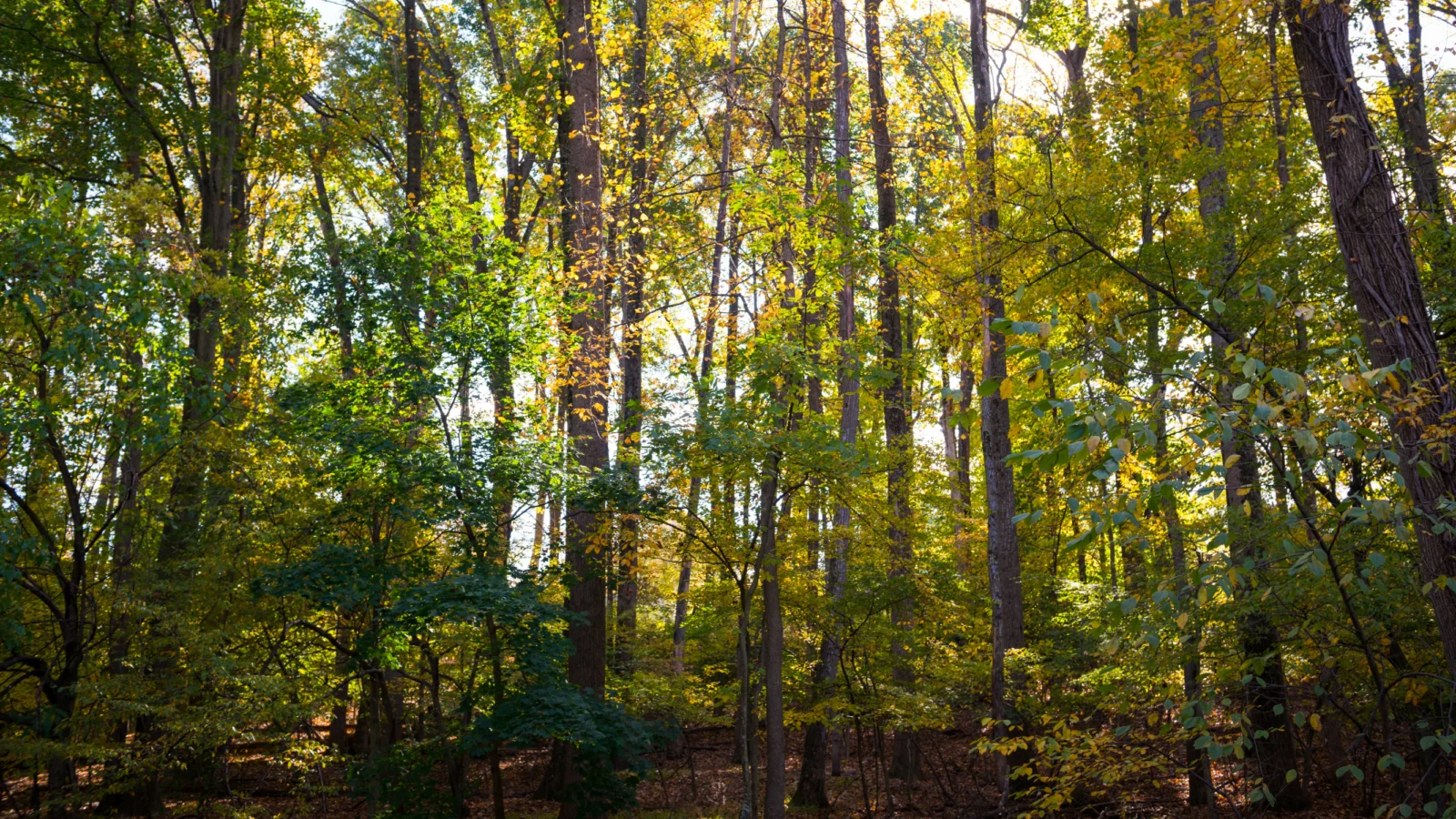
The Eastern Whip-poor-will lives in open forests with hardwood trees.
Specific Area
Eastern North America
Range Detail
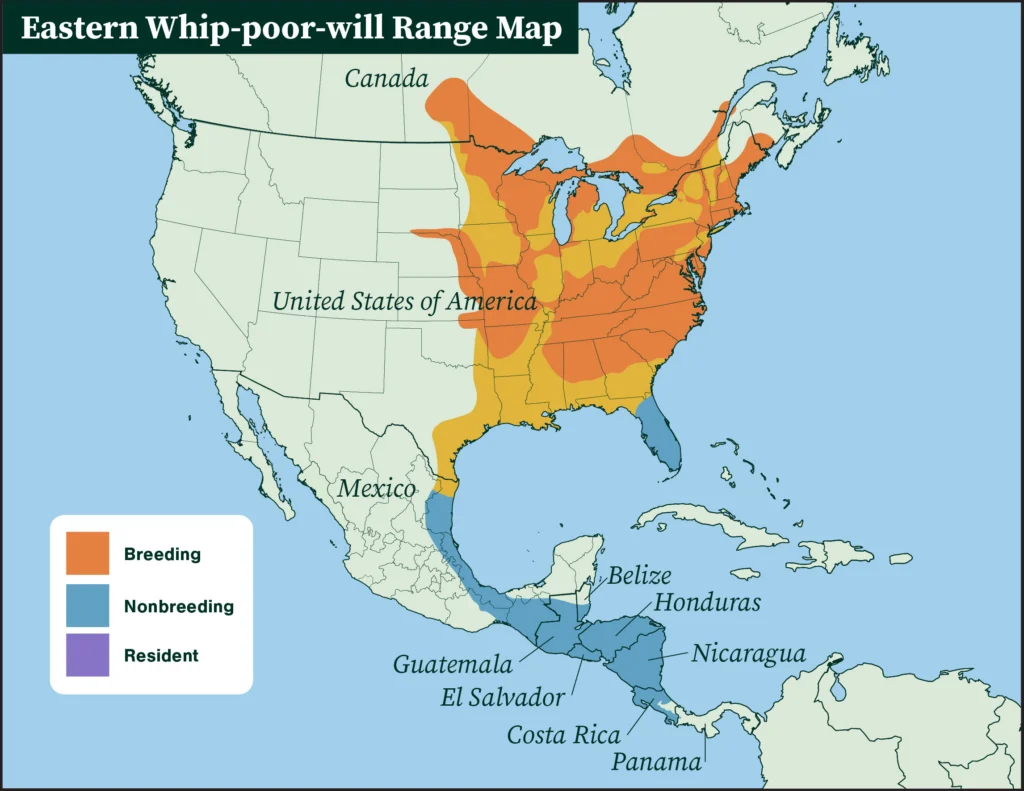
The Eastern Whip-poor-will breeds in open woods across central and southeastern Canada and the eastern United States. In the nonbreeding season, these birds range from the southeastern United States to eastern Mexico and Central America.
Did you know?
Eastern Whip-poor-wills are well known to be especially active on moonlit nights. Being visual predators, the moonlight presumably aids them as they hunt nocturnal flying insects. Amazingly, these birds also align their nesting cycle to the phases of the moon, such that hatching occurs during the waxing crescent phase. This ensures that the parents will have light on their side while their young are at their neediest.
Eastern Whip-poor-wills roost during the day, usually on a branch, the ground, or on the nest, where their cryptic plumage allows them to blend in beautifully. These birds are strictly nocturnal and most active just before dawn, just after dusk, and on bright moonlit nights. Despite being a bird many in the eastern United States will have heard, many aspects of the Eastern Whip-poor-will’s life history remain unknown, especially when it comes to their lives during migration and in their nonbreeding range.
Eastern Whip-poor-wills are consummate aerial foragers, consuming large quantities of beetles, moths, and other insects each night. Though their beaks are quite small, whip-poor-wills and other nightjars have enormous cavernous mouths, which allow them to capture prey that is quite large for the size of the bird. These birds typically hunt by flying out from a perch or from the ground in pursuit of flying prey, and will often have favorite perches that they use night after night.
Courtship behavior in this species is still somewhat mysterious. Observers have described several display behaviors, but no standard sequence has been identified. The male performs a tail-flashing display, hovering in front of a female with his tail feathers fully spread, showing off the large white patches. A female may walk in circles below a perched male with her head lowered, and her wings and tail spread. A male, in turn, may walk in circles around a female, who may then respond by fluttering her wings and raising and lowering her body. Pairs typically stay together through the breeding season, and may nest together again the following year.
Eastern Whip-poor-wills are faithful to their nesting grounds, with most returning to the same areas each year. These birds nest on the ground, laying their eggs directly onto the leaves of the forest floor; parents do not even form a scrape in the leaf litter, although a slight depression may form from the weight of the incubating birds. Usually, the nest is on the north side of a small shrub or patch of thicker vegetation, which provides shelter from the sun.
Eastern Whip-poor-wills lay two eggs, cream colored with darker spots or blotches. Both sexes incubate for 19 to 21 days and will rarely flush during this period unless they are almost stepped upon. Both parents feed and brood the young as well, which fledge after two to three weeks. Interestingly, the hatching of Whip-poor-will chicks appears to be closely tied to the lunar cycle: Most hatch a few days before a full moon. This strategy may have evolved to allow the adult birds to forage all night during the full moon to catch enough insects to support their chicks.
Related News & Stories
Join the flock! Your donation helps preserve the habitats that birds need to survive.