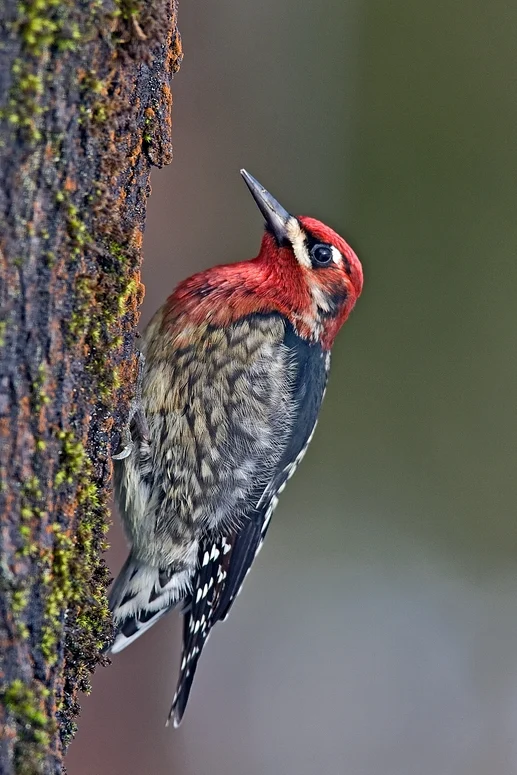
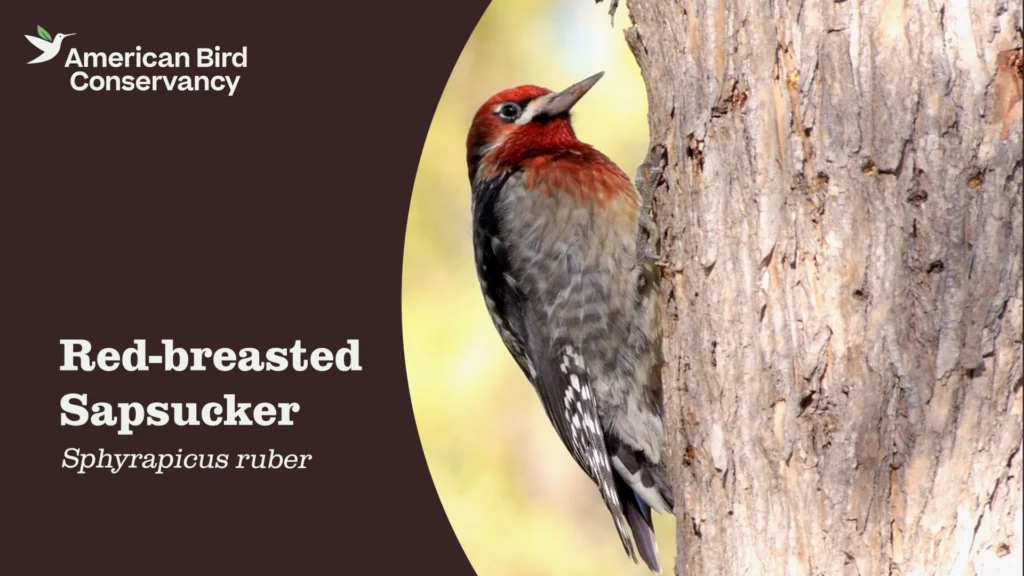
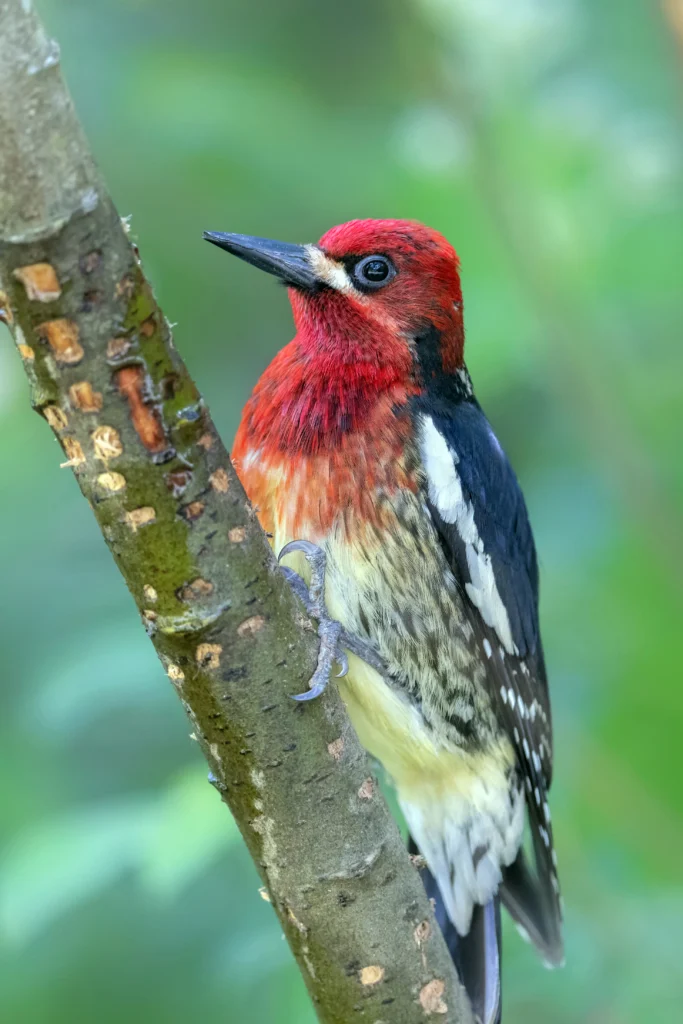
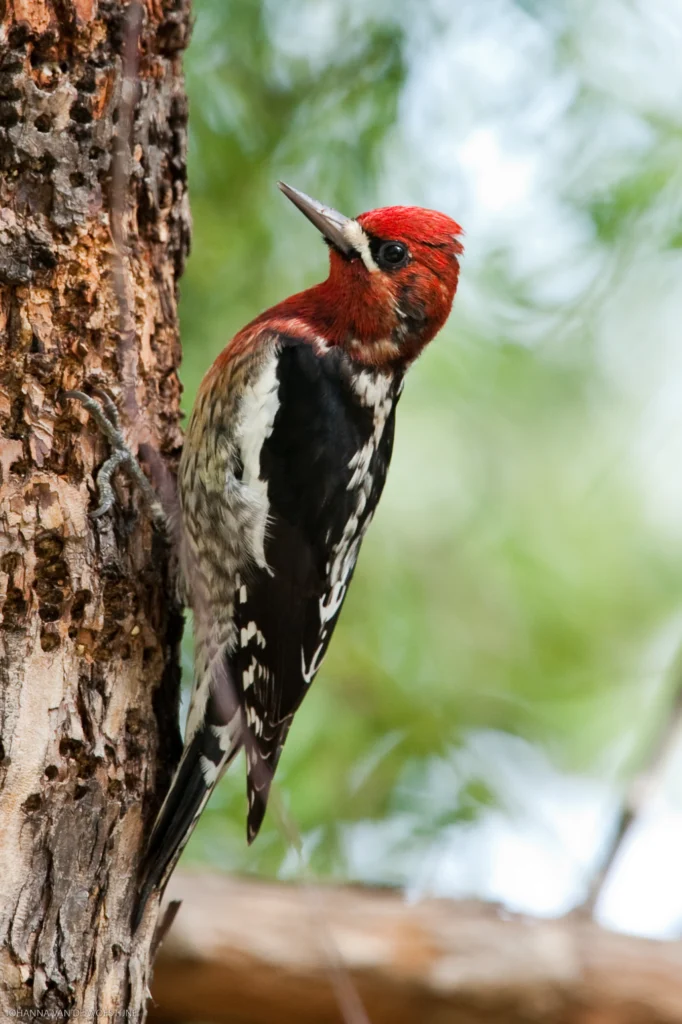
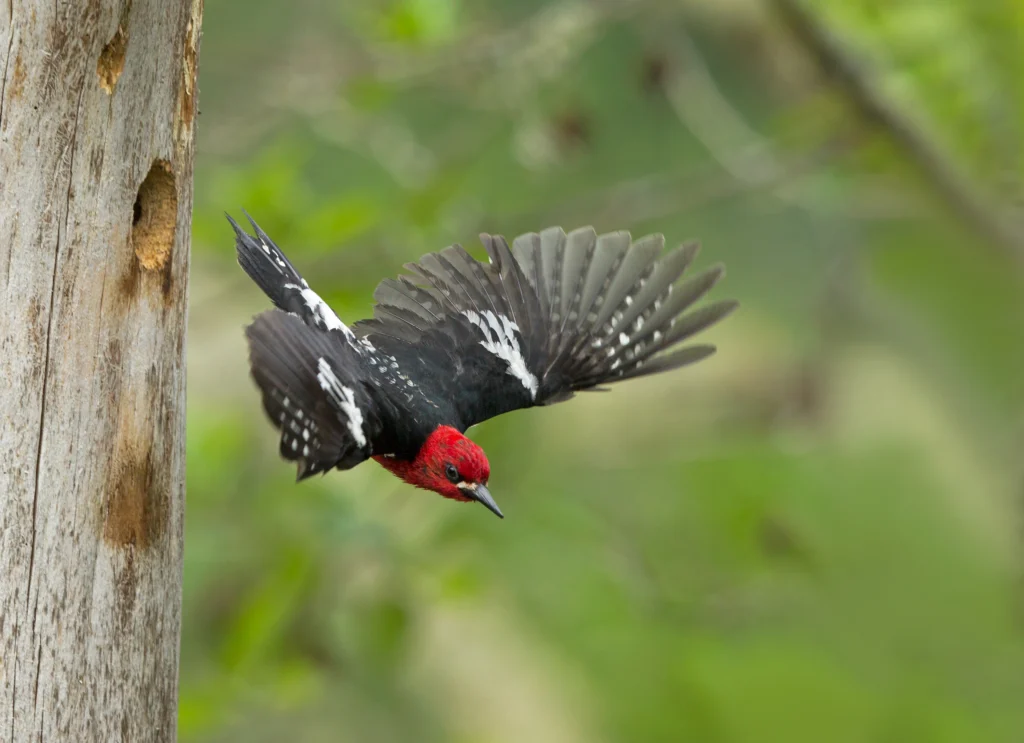
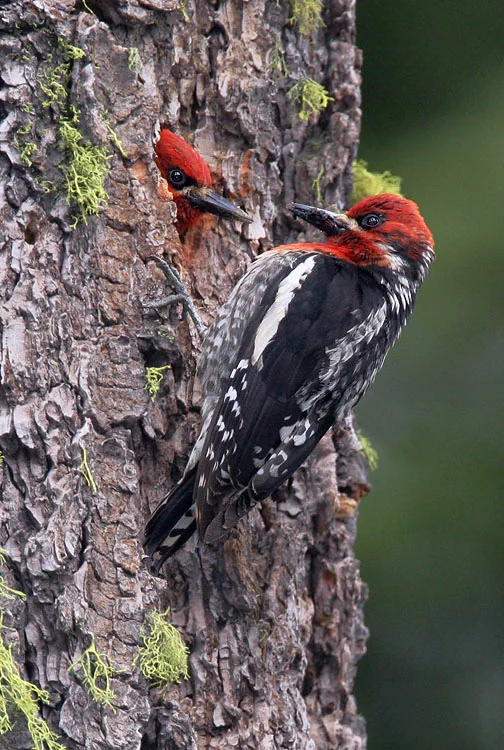
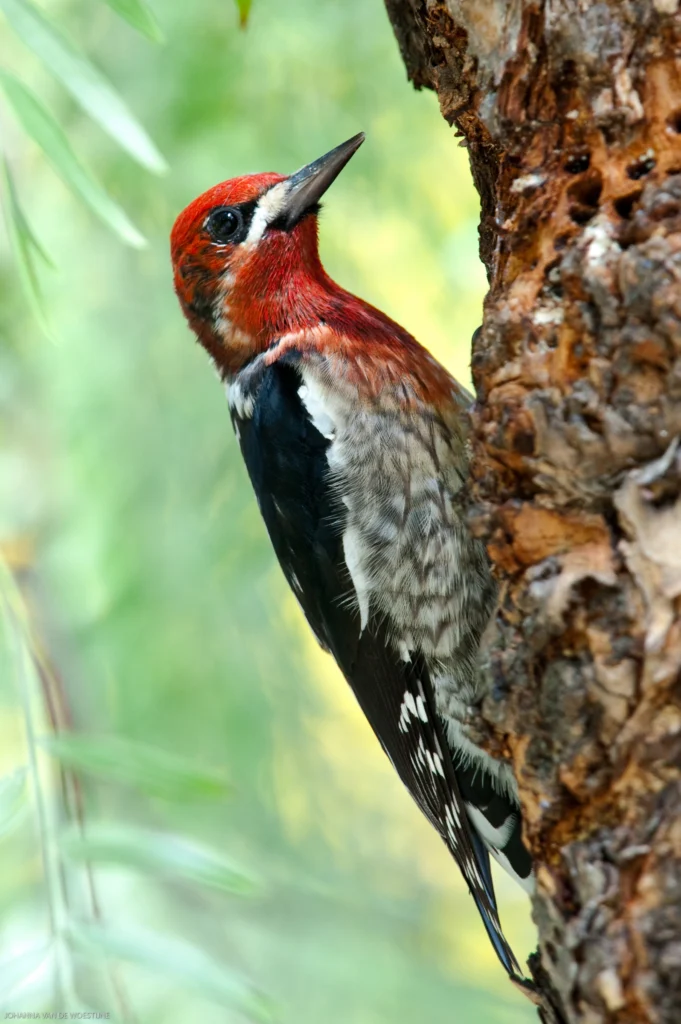
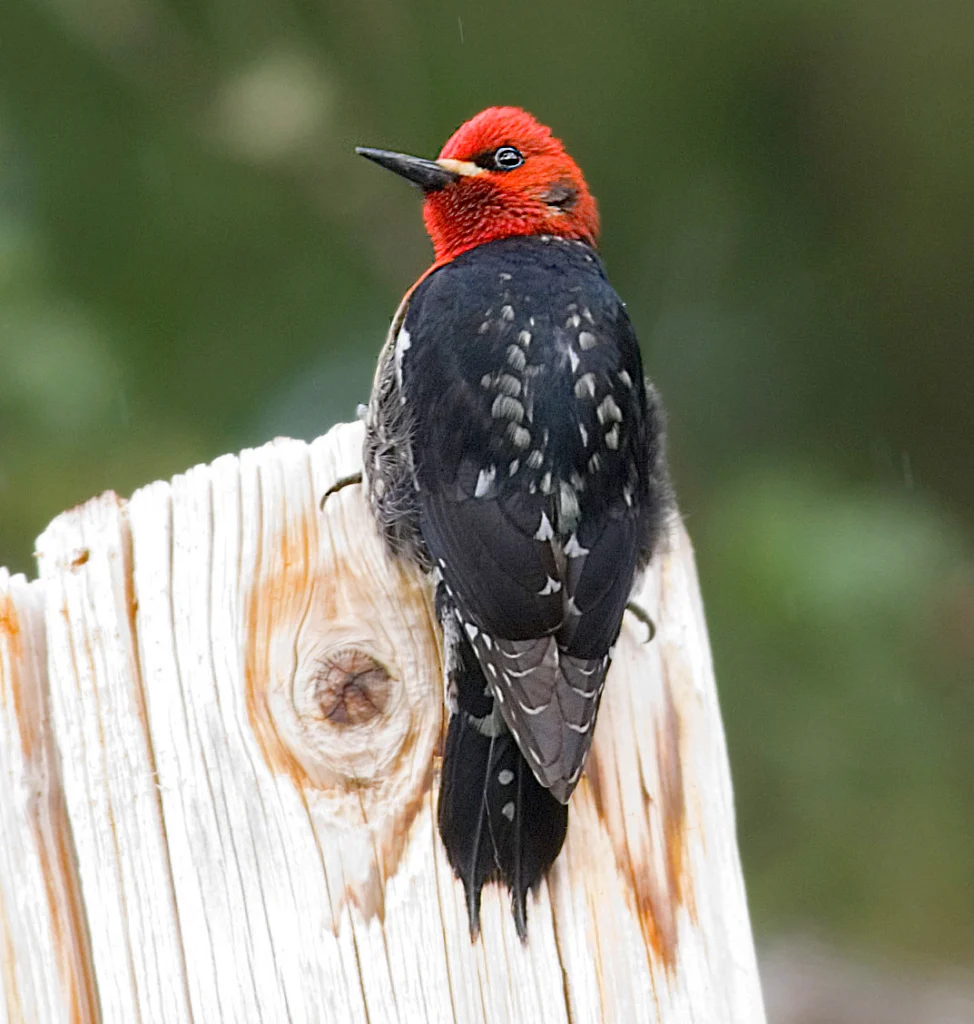
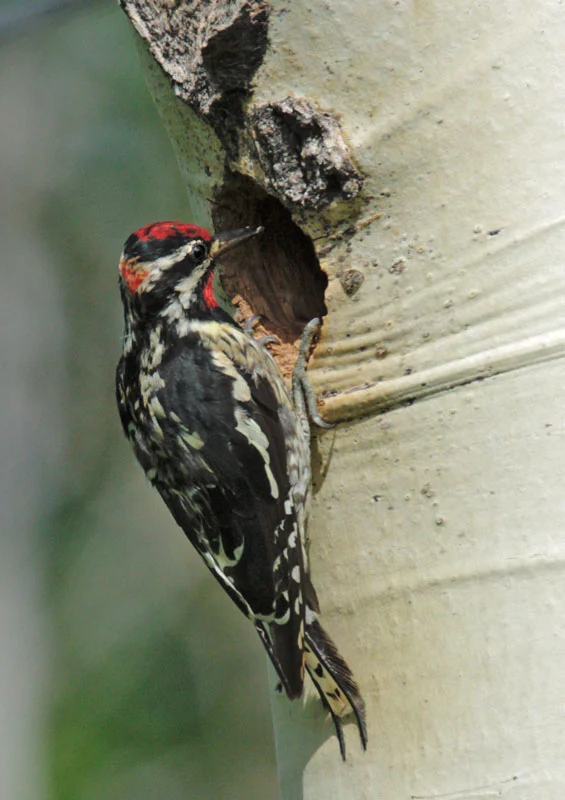
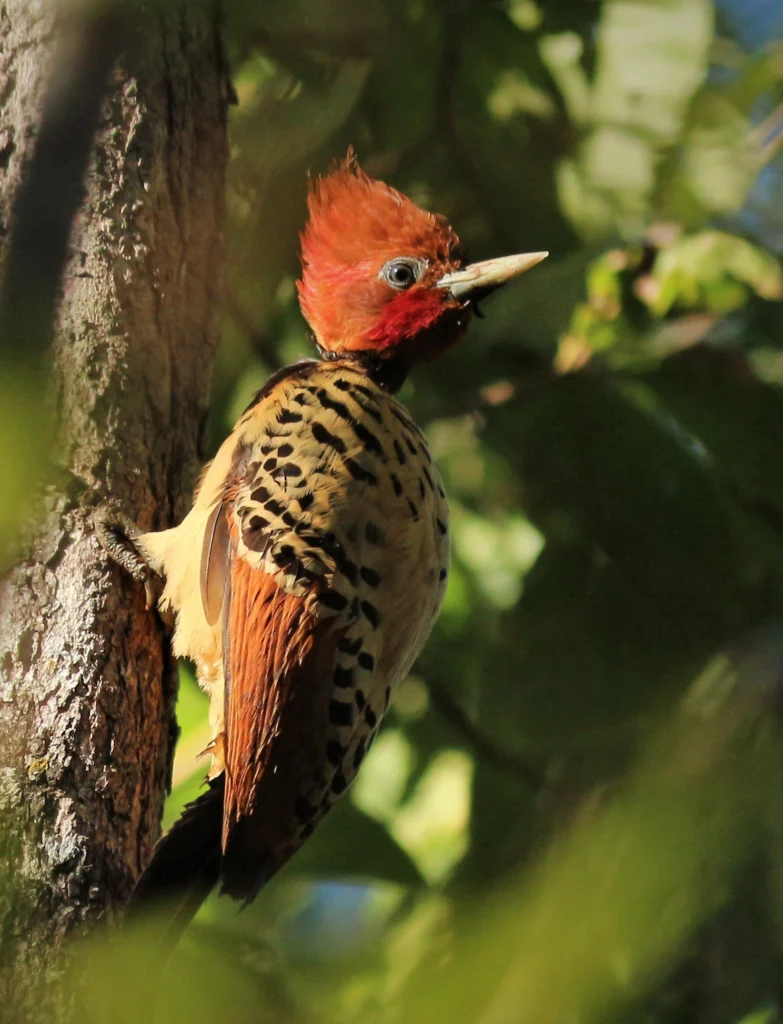
The Red-breasted Sapsucker is one of four species in the genus Sphyrapicus, the sapsuckers, which are a distinctive group of North American woodpeckers with a peculiar and unique foraging strategy. These industrious birds create rows of small openings in the bark of specific trees to allow the sweet, nutritious sap to flow, much like a syrup maker tapping a maple tree. They then lap the sap straight from the tree with their specialized tongues which are covered in stiff bristles that hold the sugary liquid in much the same manner as a paintbrush.
Sapsuckers maintain these openings or “wells” throughout the breeding season, regularly expanding existing holes, opening new ones, and even switching between tree species to take advantage of changes in sugar flow through the season. Conifers, with their evergreen foliage, start flowing first and are first to be tapped. When aspens start leafing out, sapsuckers switch their efforts to these trees instead.
In creating their wells, Red-breasted Sapsuckers also provide an irresistible opportunity for other animals with a taste for sweets. Many birds, especially warblers and hummingbirds, are drawn to sapsucker wells. Researchers have also reported a range of mammals visiting this species’ wells, including chipmunks, squirrels, and jumping mice. Insects feed at these wells too, especially butterflies, moths, flies, wasps, and ants.
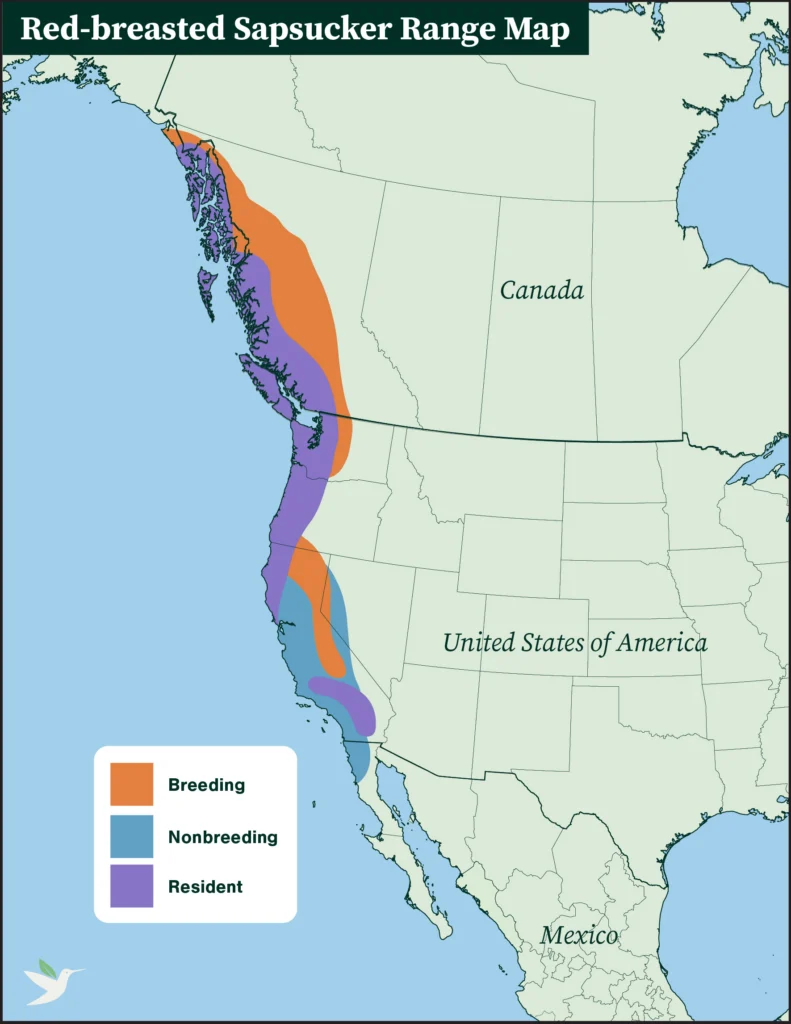
Red-breasted Sapsuckers have another important role that they play in the forests of the Pacific Northwest. Like other woodpeckers, Red-breasted Sapsuckers nest in cavities that they excavate in trees. These birds typically do not reuse nest cavities from year to year, so vacant cavities from previous years are available to a huge number of species that require cavities to nest in, but can’t excavate them for themselves. There are a number of these secondary cavity-nesting birds that overlap with the Red-breasted Sapsucker, including the Red-breasted Nuthatch, Tree Swallow, Northern Pygmy-Owl, Chestnut-backed Chickadee, and many others. Some mammals, such as red squirrels and northern flying squirrels, also use sapsucker cavities.