

Thirteen Tips to Make the Journey Safer for Migrating Birds
Right now, millions of birds are on their way north to their breeding grounds, drawn by the abundant food sources and nesting sites that await them.
Setophaga petechia
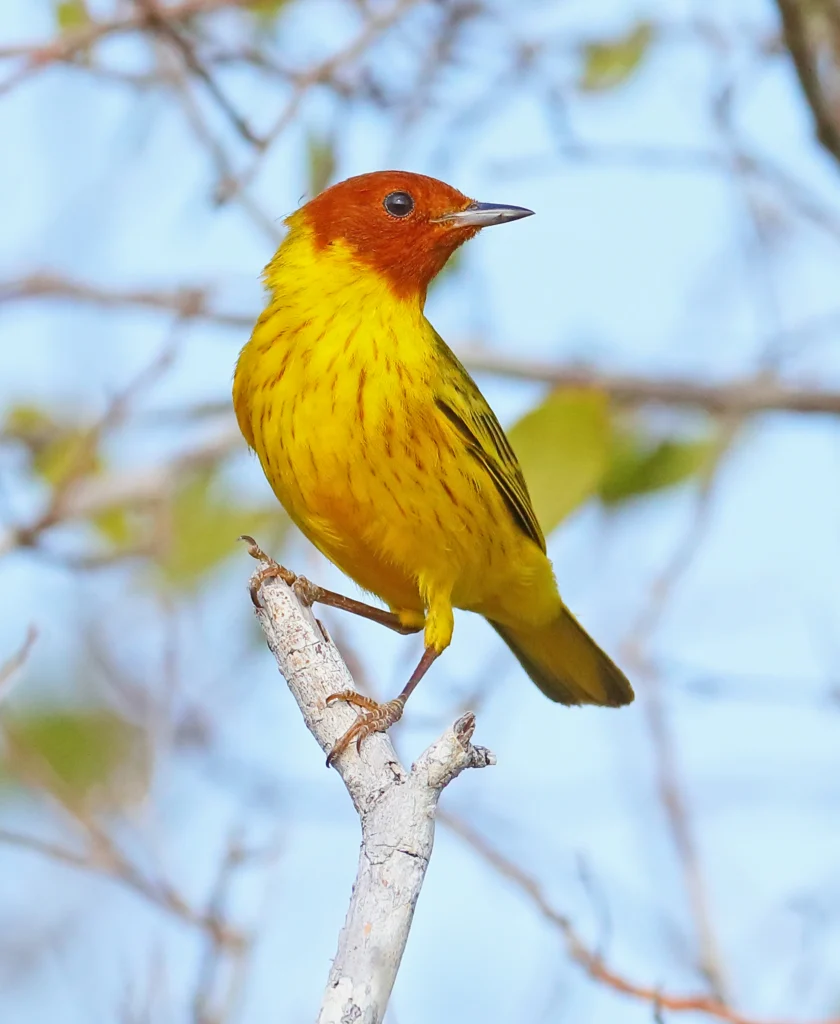
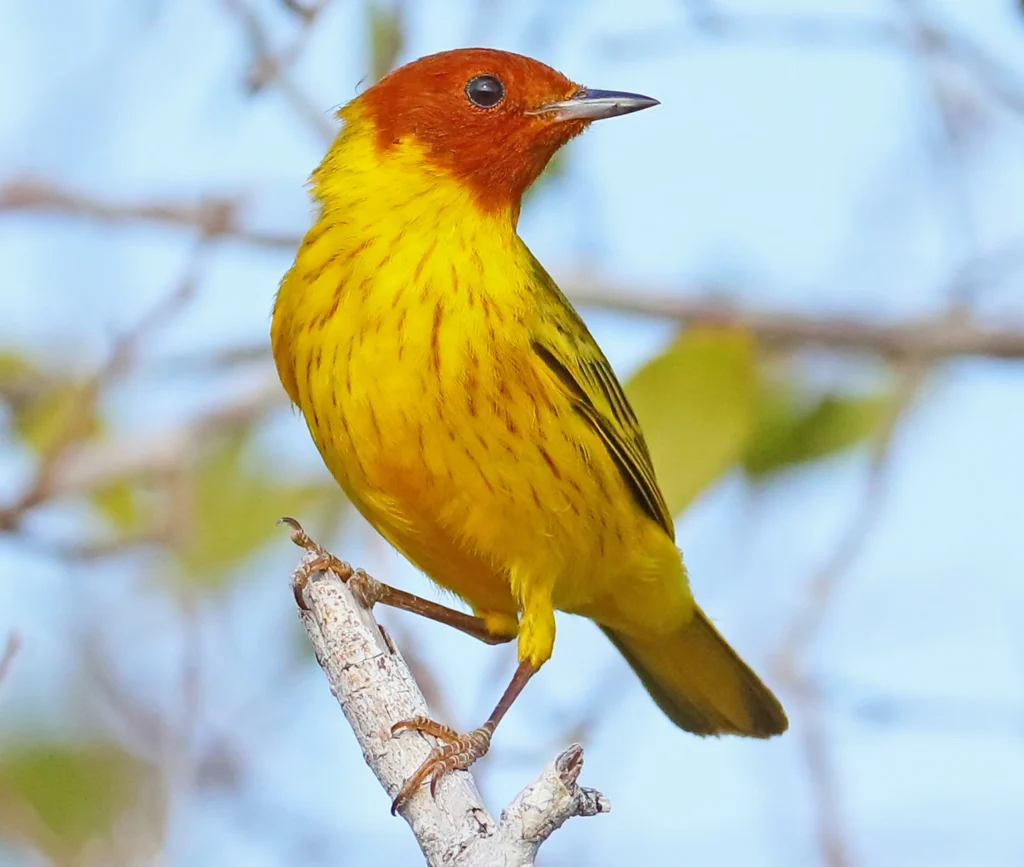
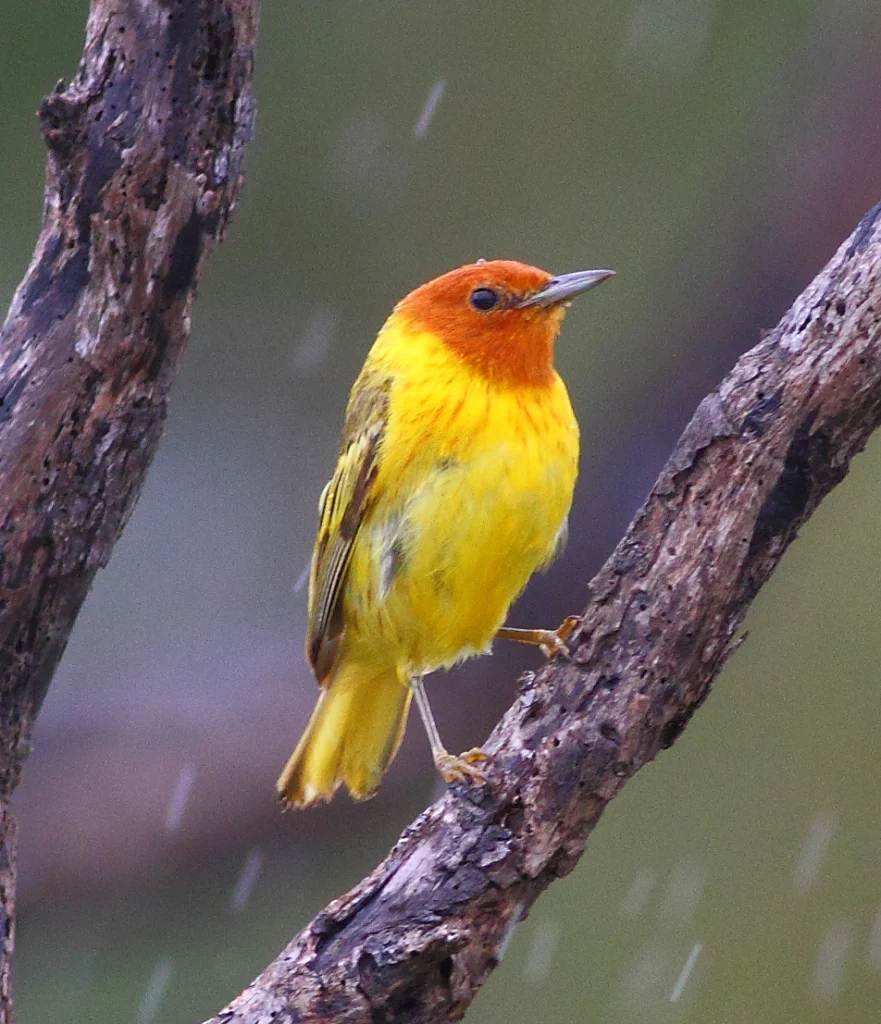
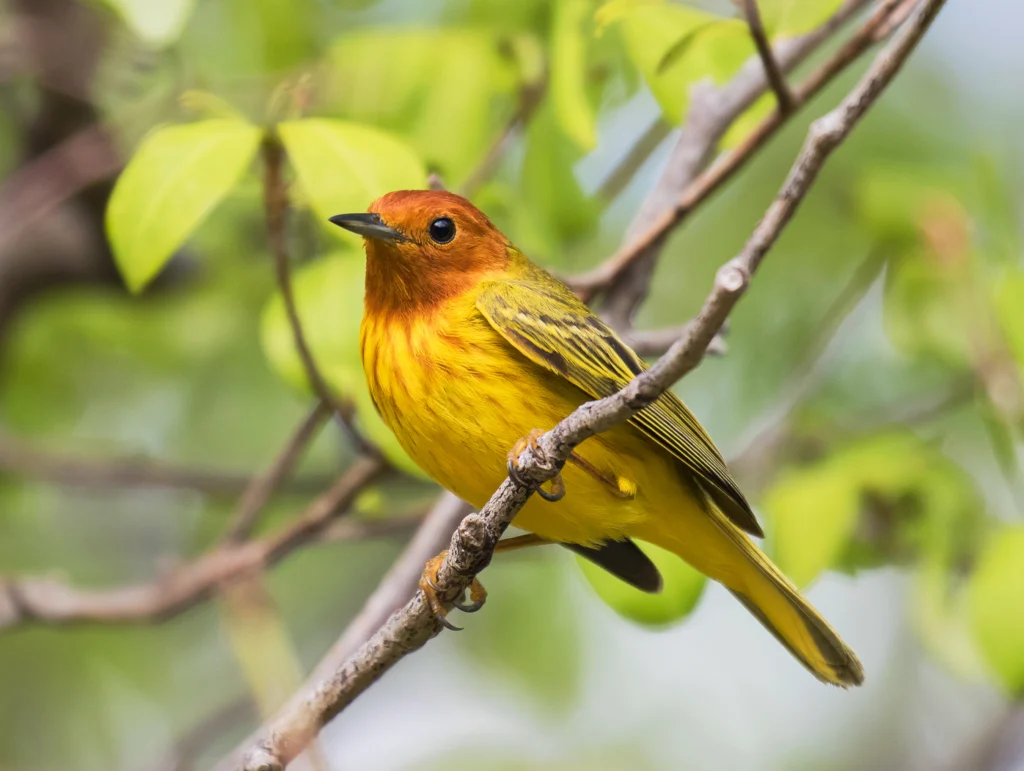
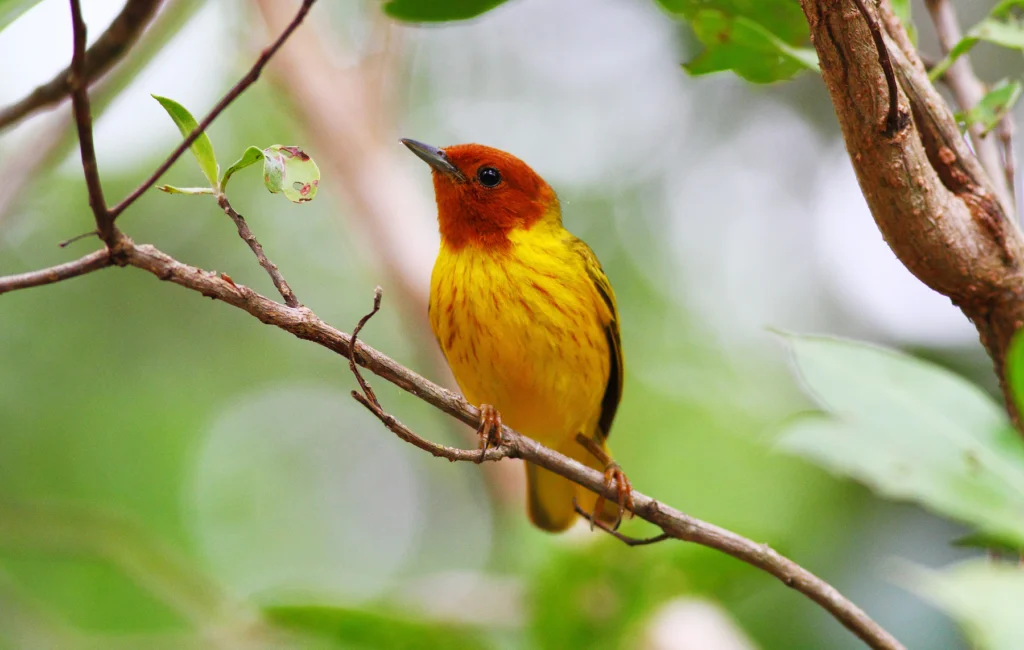
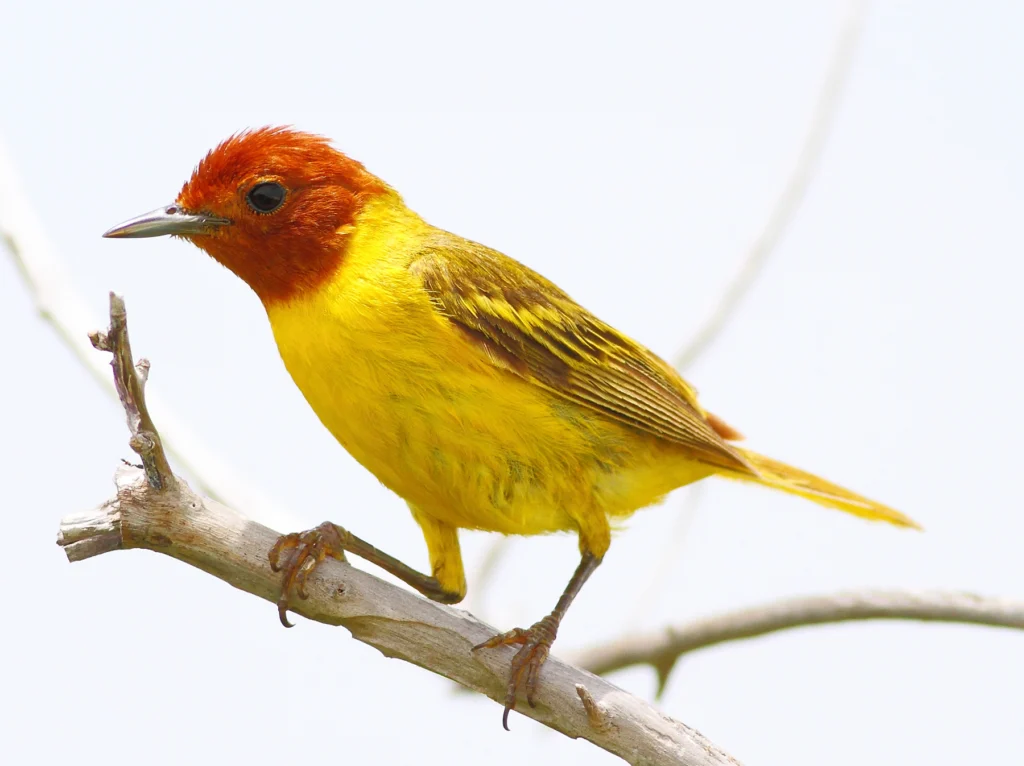
The Mangrove Yellow Warbler is the resident tropical counterpart to the Northern Yellow Warbler, a migrant that breeds in North America almost to the Arctic Circle. The two species were long considered to be one, the Yellow Warbler, but were split in 2025. While the two are similar in many ways, the male Mangrove Warbler has a reddish crown, sometimes even a complete hood, to match the chestnut streaks running down his breast. The Northern Yellow Warbler is a long-distance migrant, and its long, narrow wings and streamlined body shape are adapted for this purpose. The Mangrove Warbler, however, is resident year-round, and its rounded wings are better suited for maneuverability in the thickets and dense shrubs that both species prefer. Mangrove Warblers also have bulkier bills, and, unlike most North American warblers, both sexes sing.
With their strikingly yellow plumage, Mangrove Yellow Warblers are hard not to notice, especially on islands with fewer flashy species to compete with. As such, these birds have earned a number of nicknames in the various locations they call home. Canario de Manglar is Spanish for Mangrove Swamp Canary, referencing both the bird’s yellow color and preferred habitat. Ti Jòn means Little Yellow in Haitian Creole. On the island of Dominica, the two Yellow Warbler species are referred to together as Titin Nwel o Titin Noel, in reference to the appearance of northern migrants that join their southern compatriots around Christmas time, causing their numbers to swell.
Like their northern relatives, the Mangrove Yellow Warbler is often parasitized by the local cowbird species, in their case, the Shiny Cowbird. Cowbirds are brood parasites; females lay their eggs in the nests of other bird species, which raise the cowbird chicks as their own. Mangrove Yellow Warblers can at least sometimes recognize cowbird eggs and will often abandon a nest that has a cowbird egg in it. However, even with a cowbird egg, Mangrove Yellow Warblers can still raise some of their own young to fledging as well. Unfortunately for the warblers, it seems that once the cowbird egg has hatched, the unsuspecting parents are unable to recognize that it is not one of their own.
Having only been elevated to its own distinct species in 2025, little is known of the population trends and conservation status of the Mangrove Yellow Warbler across its range. Some populations have been the subject of conservation research, such as the Galápagos subspecies, which is currently declining. One subspecies, the “Barbados” Yellow Warbler, has been listed under the Endangered Species Act since 1970. The conservation threats to other subspecies and populations are poorly known.
Mangroves are also threatened by rising sea levels and increasingly numerous and intense storms. Both of these factors contribute to the destruction and erosion of mangrove stands, leaving less habitat for Mangrove Yellow Warblers to forage and nest.
Across much of its range, the Mangrove Yellow Warbler is a habitat specialist, and the ongoing destruction of mangrove forests throughout its range is probably the biggest threat to its survival. Especially along marine coastlines, mangrove forests are frequently destroyed to make way for tourism development, urban expansion, and aquaculture operations, such as shrimp farms.
Birds like the Mangrove Yellow Warbler need our help to overcome the threats they face. At ABC, we’re inspired by the wonder of birds and driven by our responsibility to find solutions to meet their greatest challenges. With science as our foundation, and with inclusion and partnership at the heart of all we do, we take bold action for birds across the Americas.
Mangrove habitat is crucial to a number of species in addition to the Mangrove Yellow Warbler. ABC works with the Rio Grande Joint Venture to preserve mangroves along the Gulf Coast. These mangroves provide habitat for birds like the Mangrove Yellow Warbler and the vulnerable Reddish Egret, but also protect humans and wildlife alike from the effects of extreme weather, including hurricanes, storm surges, and flooding.
Climate change poses a major threat to the Mangrove Yellow Warbler. ABC addresses climate change in three key areas: mitigation, resilience, and adaptation. We have planted millions of trees throughout the Western Hemisphere, protected more than 1.1 million acres of land in Latin America and the Caribbean, and continue to improve and restore bird habitat.
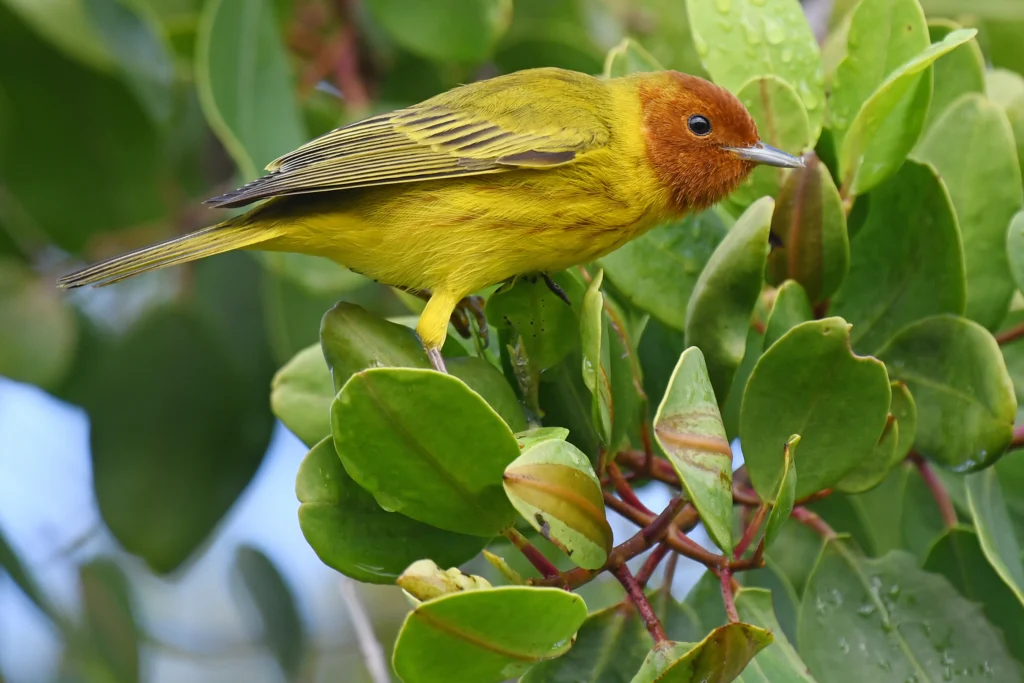
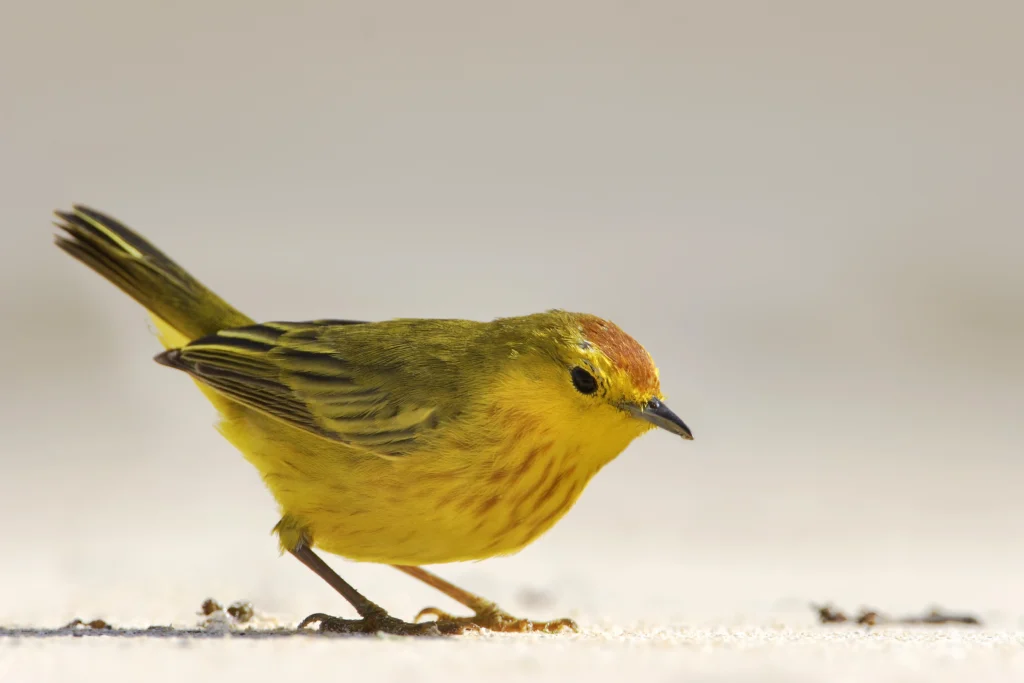
The Mangrove Yellow Warbler is indeed mostly yellow, almost as much as the Northern Yellow Warbler. Like its northern cousin, the Mangrove Yellow Warbler’s flight feathers on the wings and tail present alternating stripes of gray-brown and vibrant yellow. Males also have the characteristic chestnut stripes down the breast, with the addition of matching coloration on the head. Depending on the subspecies, this can be limited to a small patch at the top of the head or cover the head entirely. Males and females differ slightly in hue, with males a bright, rich sunflower yellow and females usually a subtler lemon yellow.
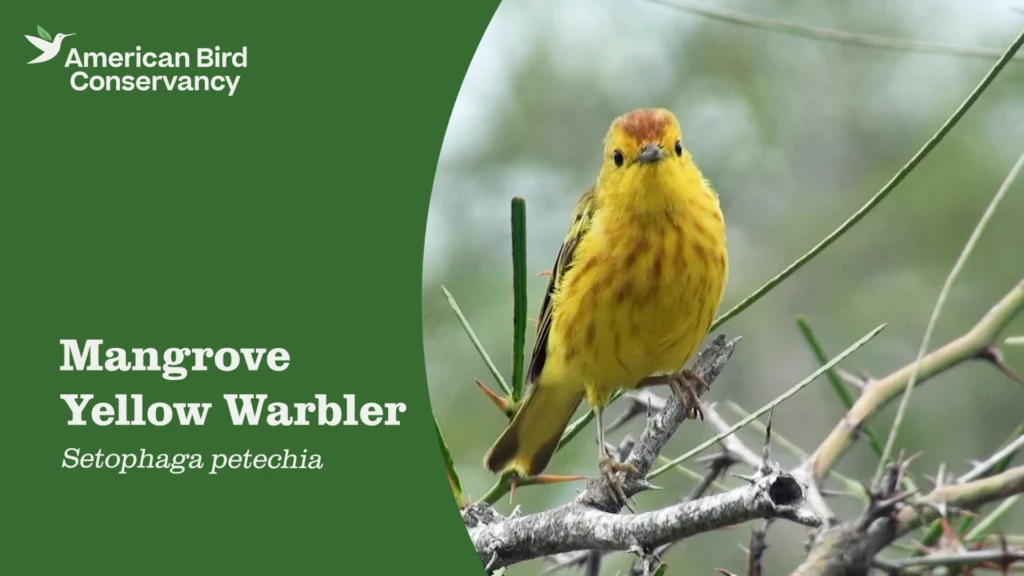
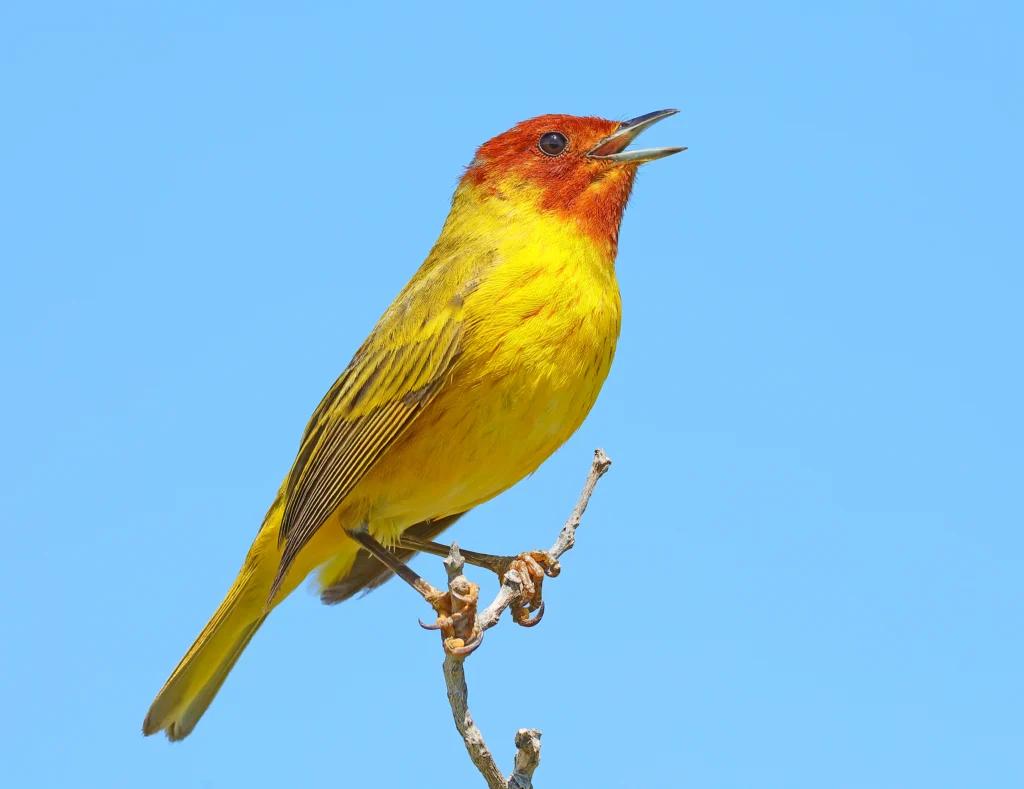
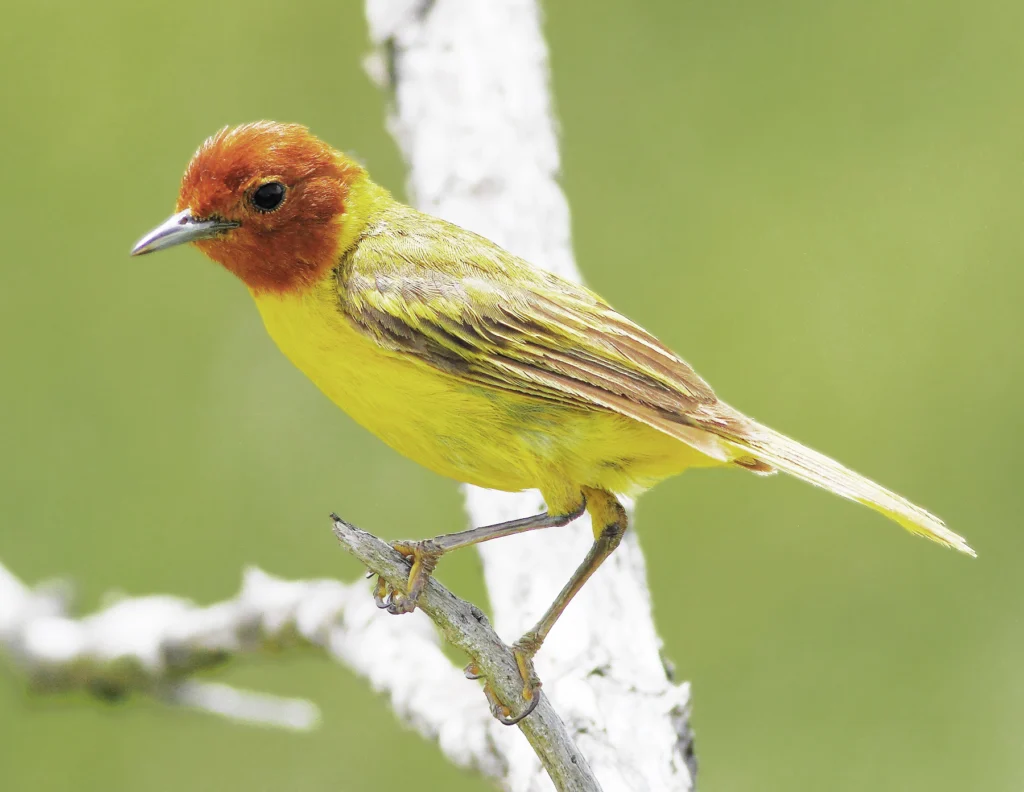
The song of the Mangrove Yellow Warbler is similar to the Northern Yellow Warbler’s, although highly variable across its geographic range. In some populations, the song is simpler and slower than that of the northern species, including fewer notes, while in others it seems nearly identical. Interestingly, females of this species sing, and males and females will even sing together in duet. Like many other warblers, the Mangrove Yellow Warbler also gives a short sharp chip note in a variety of contexts, including nest and territory defense.
Credit: Manuel Grosselet, XC809642. Accessible at https://xeno-canto.org/809642.
Credit: Manuel Grosselet, XC809643. Accessible at https://xeno-canto.org/809643.
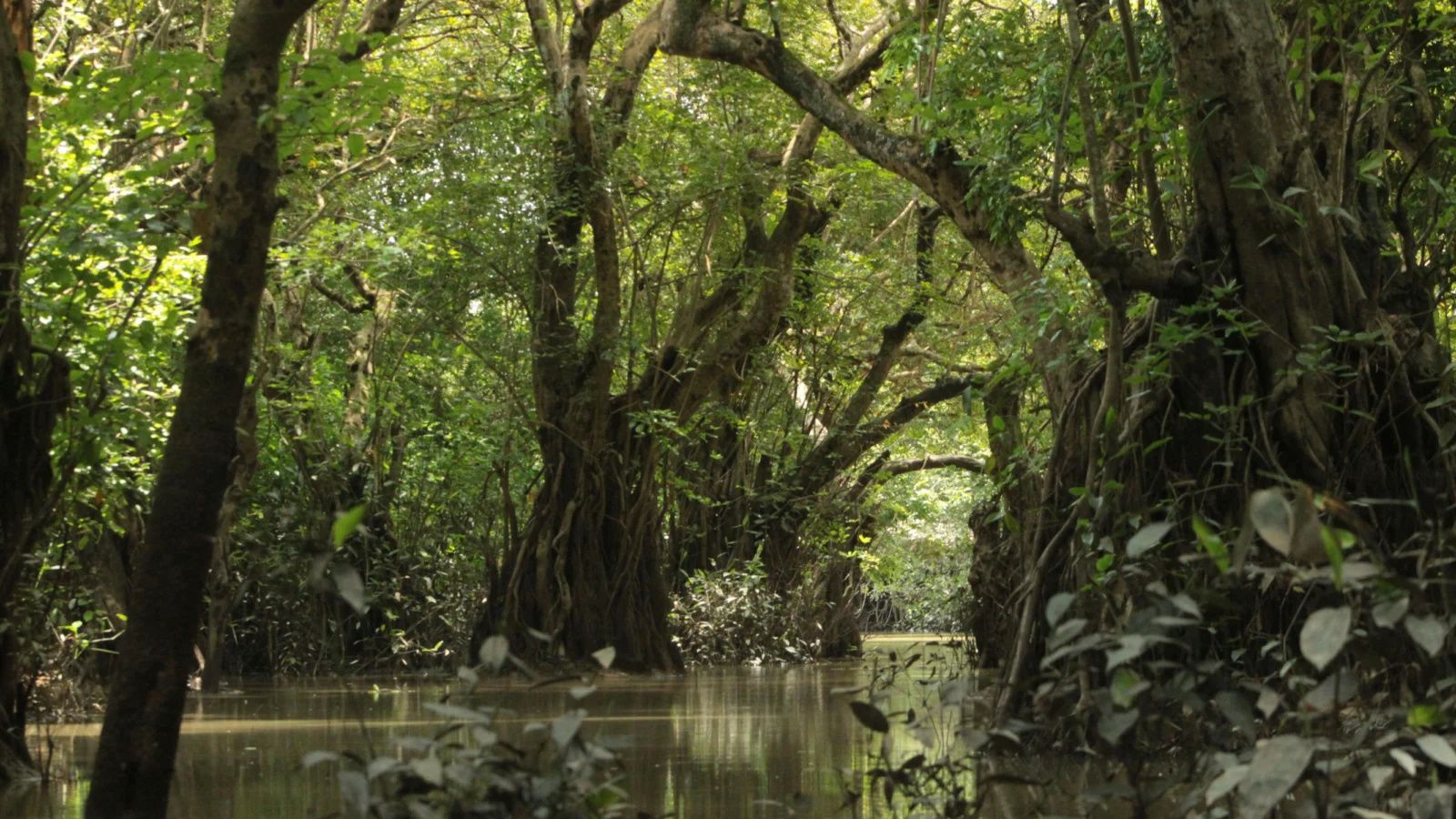
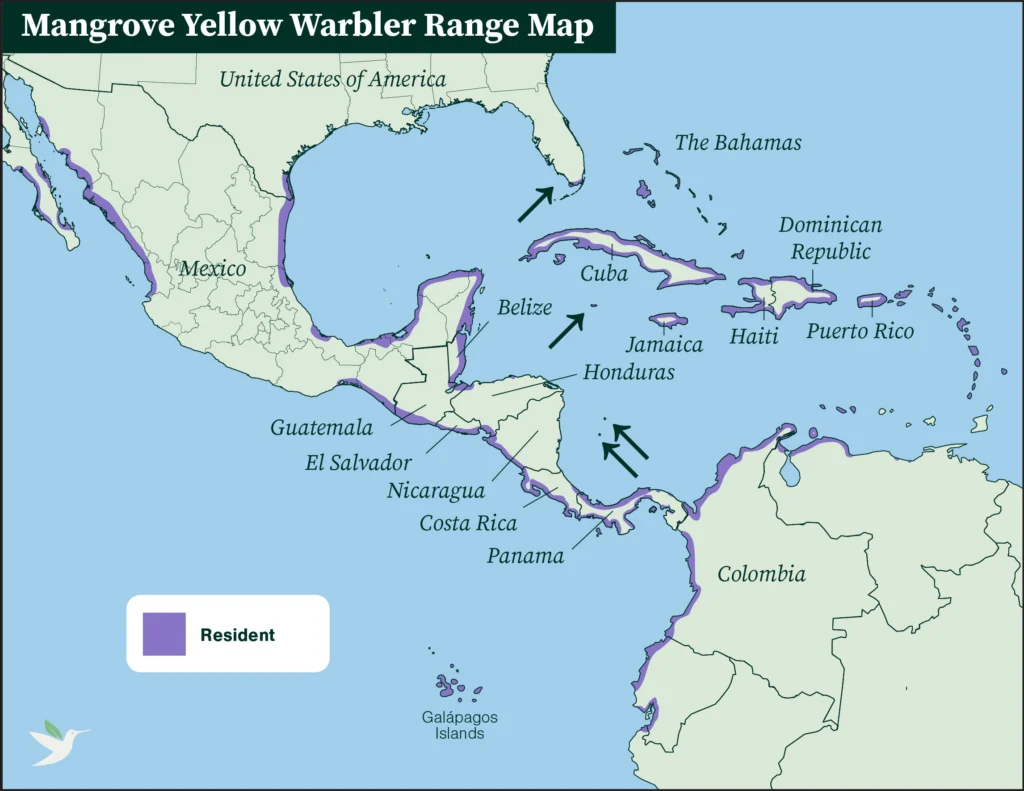
True to its name, the Mangrove Yellow Warbler is a year-round resident in coastal mangrove forests.
Área específica
Coastal Mexico, Central America, northwestern South America, and the Caribbean
Detalles de la gama
The Mangrove Yellow Warbler lives year-round in coastal mangroves throughout the Caribbean Islands, along the Gulf Coast of Mexico, and at the southernmost tips of Texas and Florida. This species is also found on the Atlantic Coast of the Yucatán Peninsula, Costa Rica, Panama, Colombia, and Venezuela, including some of the coastal islands. The Pacific Coast also hosts several populations, in Baja California, mainland Mexico, and most of Central America south to Ecuador. An isolated population also lives on the Galápagos Islands.
¿Sabías?
The Mangrove Yellow Warbler is largely restricted to coastal habitats at or close to sea level. However, on several small islands — Dominica, Martinique, and the Galápagos — these birds can be found at elevations of up to 2,000 feet!
The breeding biology of the Mangrove Yellow Warbler is poorly studied, but may be similar to that of the closely related Northern Yellow Warbler. The Mangrove Yellow Warbler is socially monogamous, and at least in the Galápagos subspecies, pair bonds are maintained year after year. This species is probably at least somewhat promiscuous, as well. In the nonbreeding season, birds are mostly solitary.
The Mangrove Yellow Warbler feeds mainly on insects and spiders, gleaning them from shrubs and tree branches or sallying out from a perch to grab winged insects in mid-air. In the Galápagos, these birds will forage in any available habitat, including rocky and sandy areas, rushing after the receding waterline on the beach. They are even seen foraging from the backs of marine iguanas and Galápagos giant tortoises!
Courtship is not well known in the Mangrove Yellow Warbler, but the Northern Yellow Warbler’s courtship behavior may provide a useful reference point. Song likely plays a role, and courting males probably use some sort or sorts of display. In the Northern Yellow Warbler, the male chases a female around his territory, and frequently employs a suite of displays that involve stereotyped flight behaviors and postures, which may serve to emphasize features of his plumage.
The female builds her nest in an upright fork or horizontal branch in the mangrove canopy. The nest is a deep cup of grasses and seaweed, lined with soft material including feathers and fine plant fibers. Similar to the Northern Yellow Warbler, the nest of the Mangrove Yellow Warbler can be quite tall. Females often decorate the outside of the nest with feathers or pieces of plastic.
The female lays two or three whitish eggs with brown to red blotches or speckles, which she incubates for about two weeks. She also broods alone, but both parents feed the nestlings. The length of time from hatching to fledging is unknown, but it is probably similar to the incubation period.
Noticias e historias relacionadas

¡Únete a la bandada! Tu donación ayuda a preservar los hábitats que las aves necesitan para sobrevivir.