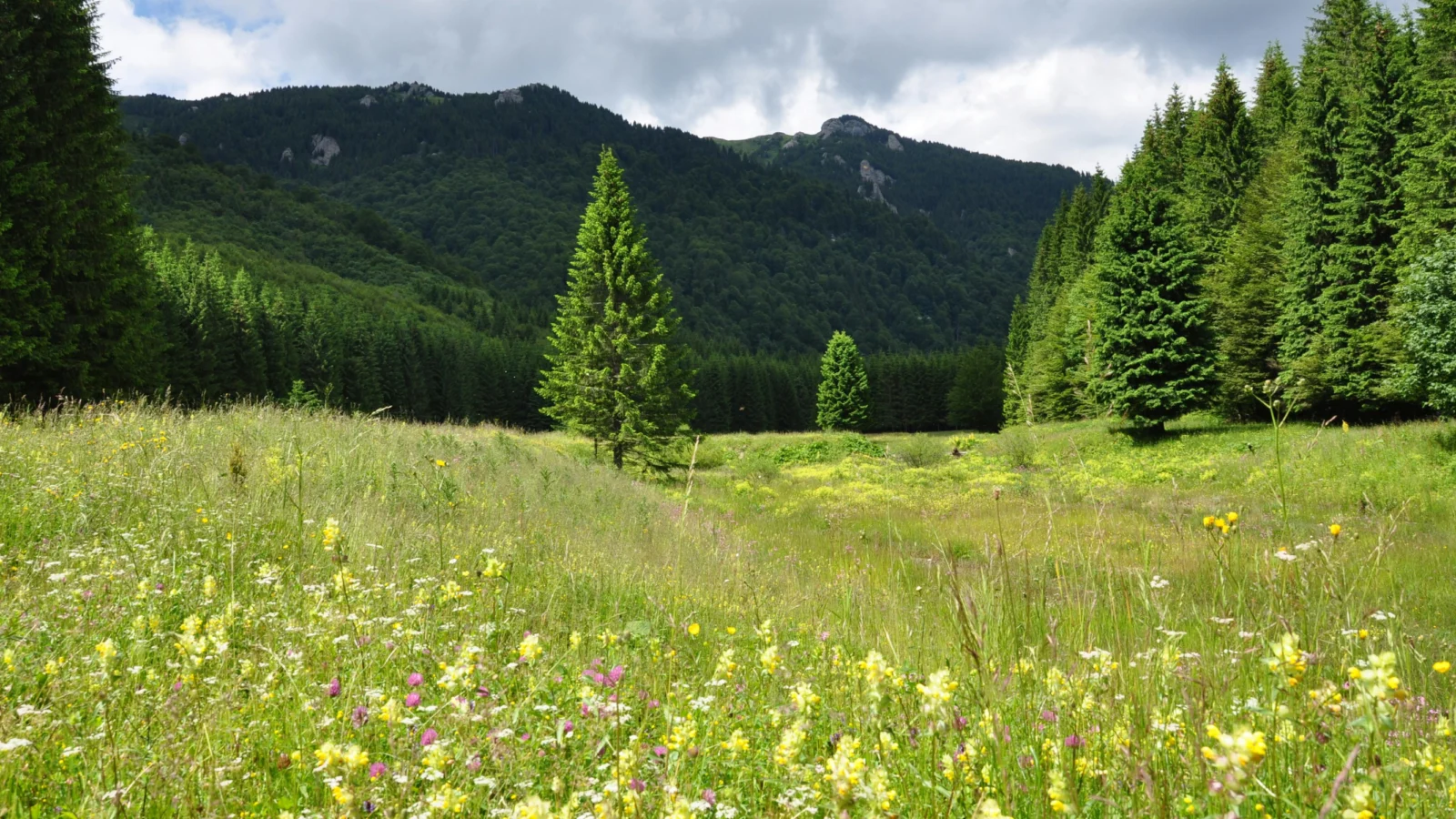
Meadow. Photo by Laurentiu Vasilescu, Pexels.

Mirlo de alas rojas

Agelaius phoeniceus

ᐊᓯᑭᓈᒃ / Asiginaak (Ojibwe)

Red-winged Blackbird. Photo by ©Michael Stubblefield.

Mirlo de alas rojas

Red-winged Blackbird. Photo by ©Michael Stubblefield.

Agelaius phoeniceus

Descripción general

Estado de conservación
Tendencias demográficas
Decreciente
Tamaño de la población
180 million
Familia
Mirlos
Orioles
Troupials
Ubicación
caribe
América del norte
Patrón de migración
Latitudinal
Distancia de migración
Distancia corta
También conocido como
  • Klok Tsanné (Chippewa)
  • ᒐᐦᒐᐦᑳᔪᐤ (transliterated as Tsatsagayoo, Cree)
  • Tordo Sargento (Spanish)

Acerca de

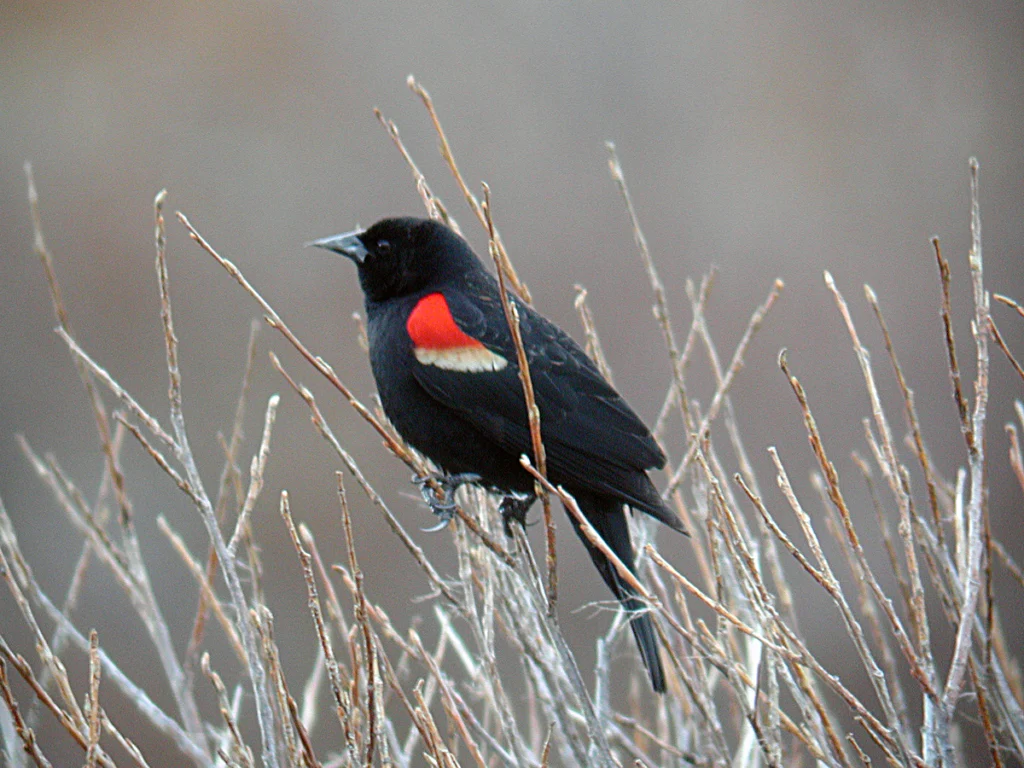
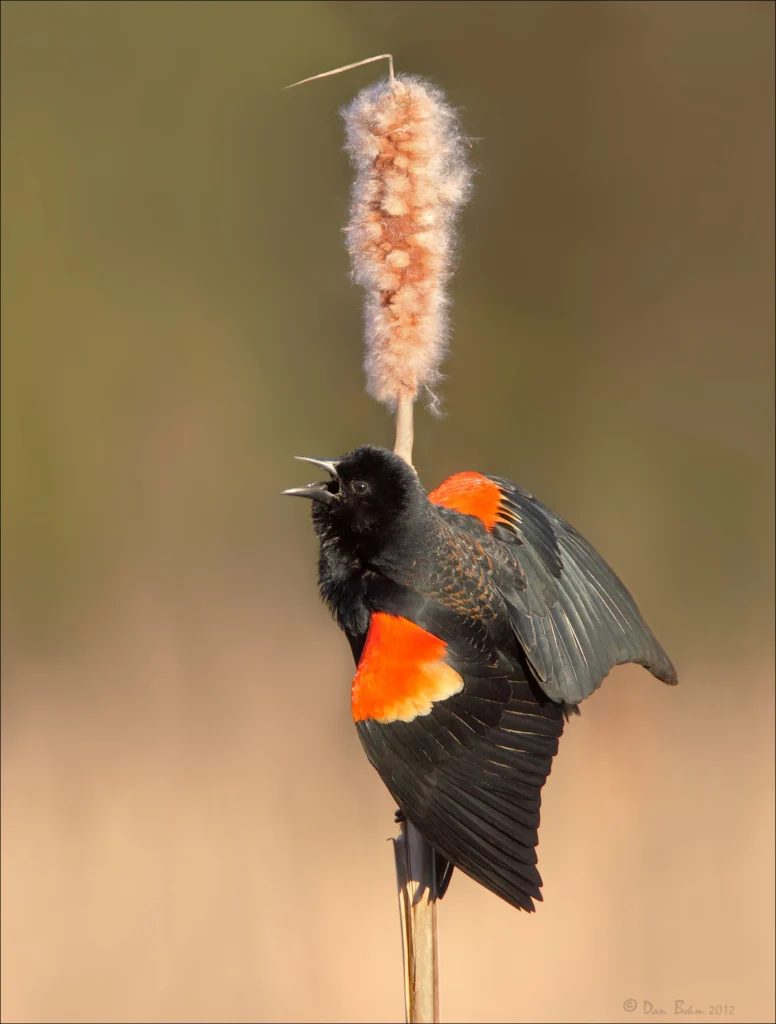
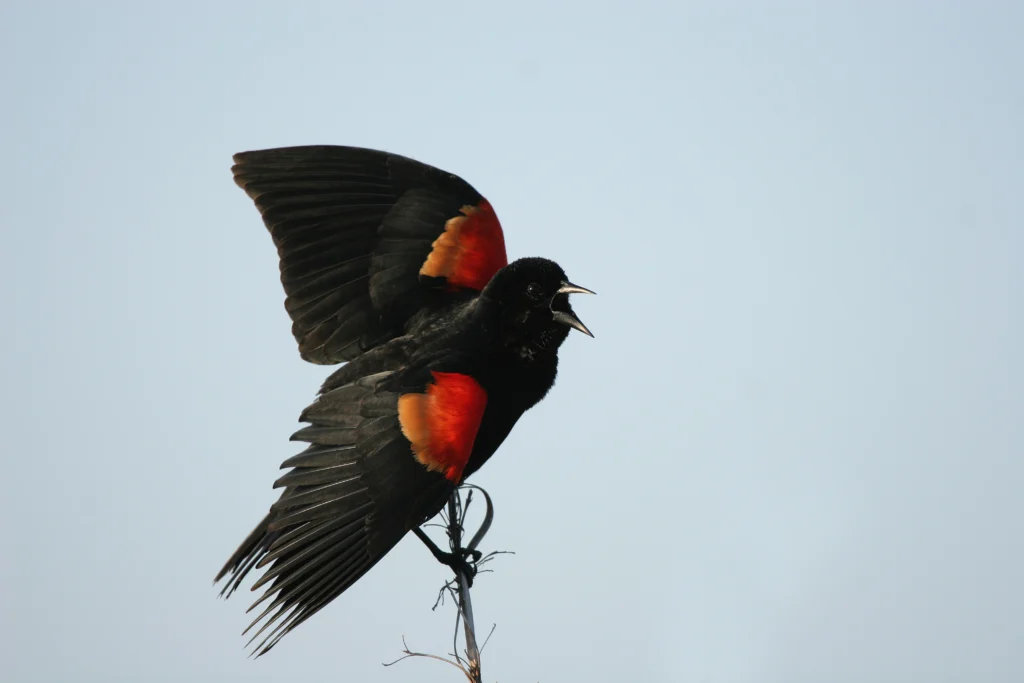
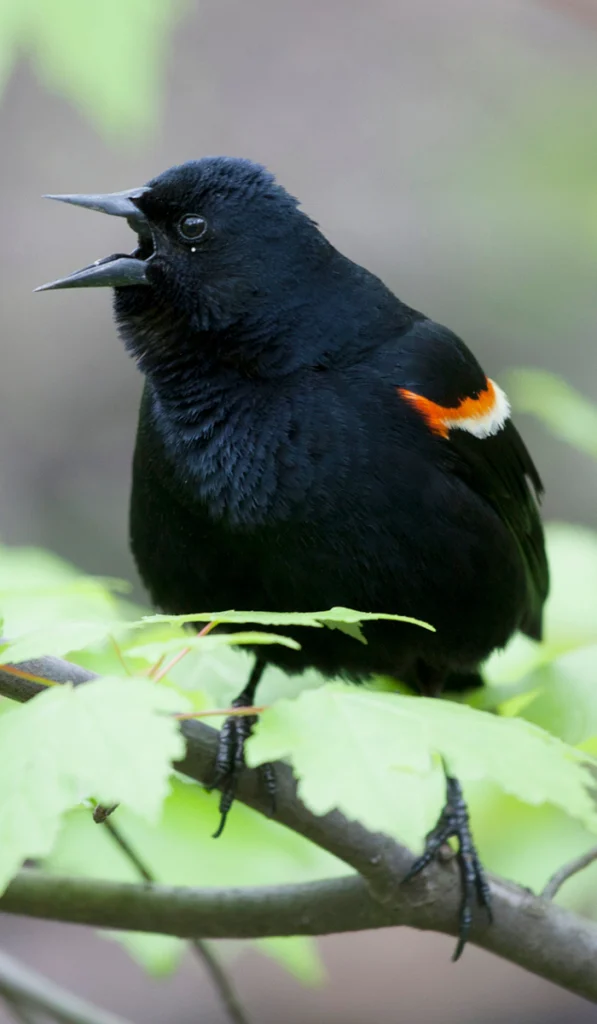
The liquid, burbling “conk-a-ree!” of a male Red-winged Blackbird on territory is a sure sign of spring, or at least its pending arrival. This bird’s common name derives from the sleek black males’ distinctive shoulder patches, or epaulets, which flash red in flight and in display.

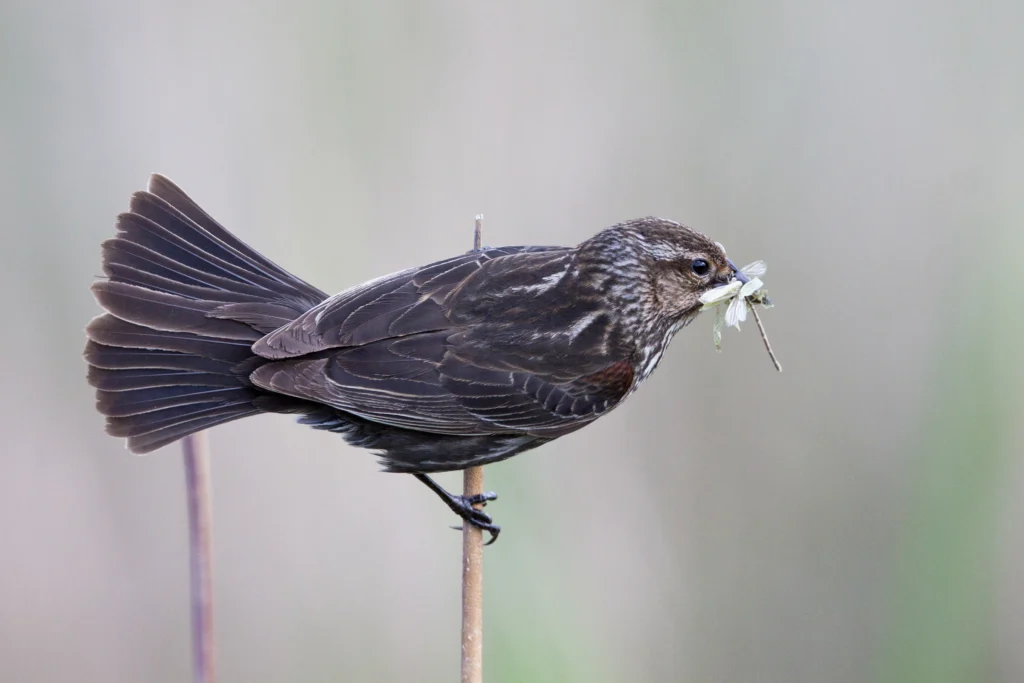
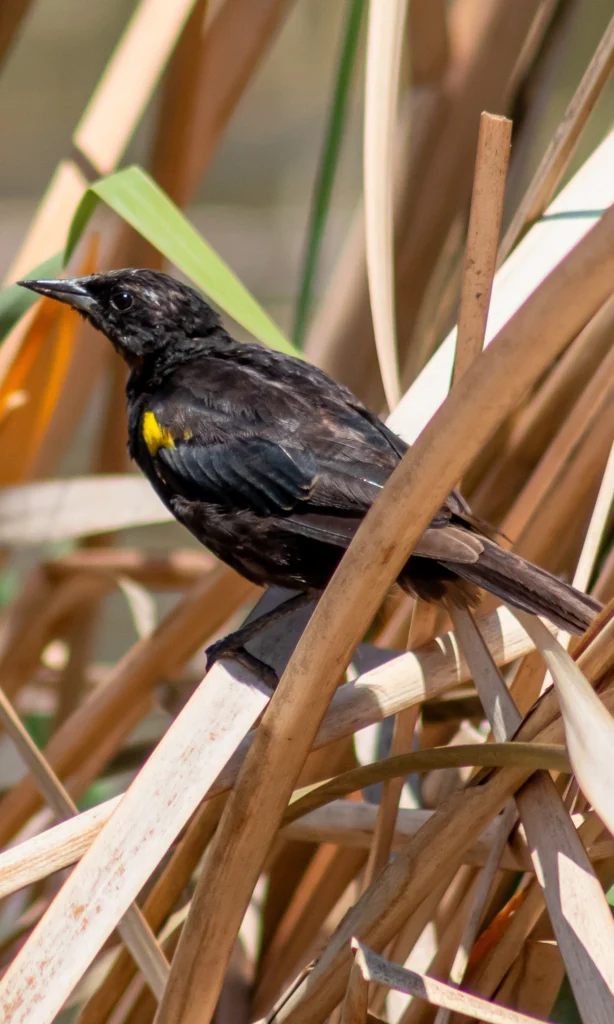
Brash and flashy, the male Red-winged Blackbird provides the perfect distraction from the more mysterious side of this species’ life history. Red-winged Blackbirds are sexually dimorphic, meaning males and females have very different appearances. They also play very different roles during the breeding season. While males stand sentry, ceaselessly singing and chasing intruders, the streaky brown females — easy to mistake for large, pointy-billed sparrows — skulk in nearby vegetation, stealthily building nests, laying eggs, and incubating, then doing much of the feeding of their young.

But it’s usually not just one pair that occupies a territory. This species is polygynous, meaning that one male may mate with and share territory with more than one female. Usually, Red-winged Blackbirds nest in loose colonies, with a male attracting as many as 15 females to nest within his territory. For their part, females frequently mate with males other than the territory holder, and so they often lay clutches with mixed paternity.
Amenazas

Still one of North America’s most abundant birds, the Red-winged Blackbird is nonetheless a concern for conservationists. Outside the breeding season, Red-winged Blackbirds and other blackbirds are frequently targeted at their large roosts in agricultural areas, where they can cause some crop damage. Dedicated studies have shown that the losses attributable to North American blackbird species are lower than the 5 percent threshold at which damages are considered to be economically meaningful. For decades, control measures such as poisoning, trapping, and shooting, along with habitat loss and climate change, have resulted in a substantial decline in Red-winged Blackbird populations.

Changing Farming Practices

Several trends in North American agriculture have reduced the amount and quality of habitat available to Red-winged Blackbirds. Earlier mowing of hay reduces the amount of time hayfield habitat is usable. Increasing use of pesticides reduces prey populations and may poison blackbirds. Increasingly monocultural crop planting and the disappearance of fallow fields also deplete potential blackbird habitat.

Changing Climate

In eastern North America, winters are expected to become wetter, warmer, and stormier over time as the climate continues to change. Red-winged Blackbirds are less likely to survive stormy winters, as storms can both make food inaccessible and kill blackbirds directly.

Cambio climático

Estrategias y proyectos de conservación

Even common species like the Red-winged Blackbird need our help to overcome the threats they face. At ABC, we’re inspired by the wonder of birds and driven by our responsibility to find solutions to meet their greatest challenges. With science as our foundation, and with inclusion and partnership at the heart of all we do, we take bold action for birds across the Americas.

Evite los pesticidas y las toxinas.

ABC works with partners at the state and federal levels in the U.S. to call for the regulation or cancellation of the pesticides and toxins most harmful to birds. This is particularly important for species that are both granivorous (seed and grain eaters) and that use habitat in agricultural areas. We develop innovative programs, like working directly with farmers to use neonicotinoid coating-free seeds, advancing research into pesticides’ toll on birds, and encouraging millions to pass on using harmful pesticides.

Pesticidas y toxinas

Abordar el cambio climático

Climate change is already affecting the Red-winged Blackbird. ABC addresses climate change in three key areas: mitigation, resilience, and adaptation. We have planted millions of trees throughout the Western Hemisphere, protected more than 1.3 million acres of land in Latin America and the Caribbean, and continue to improve and restore bird habitat.

Abordar el cambio climático

Galería de aves

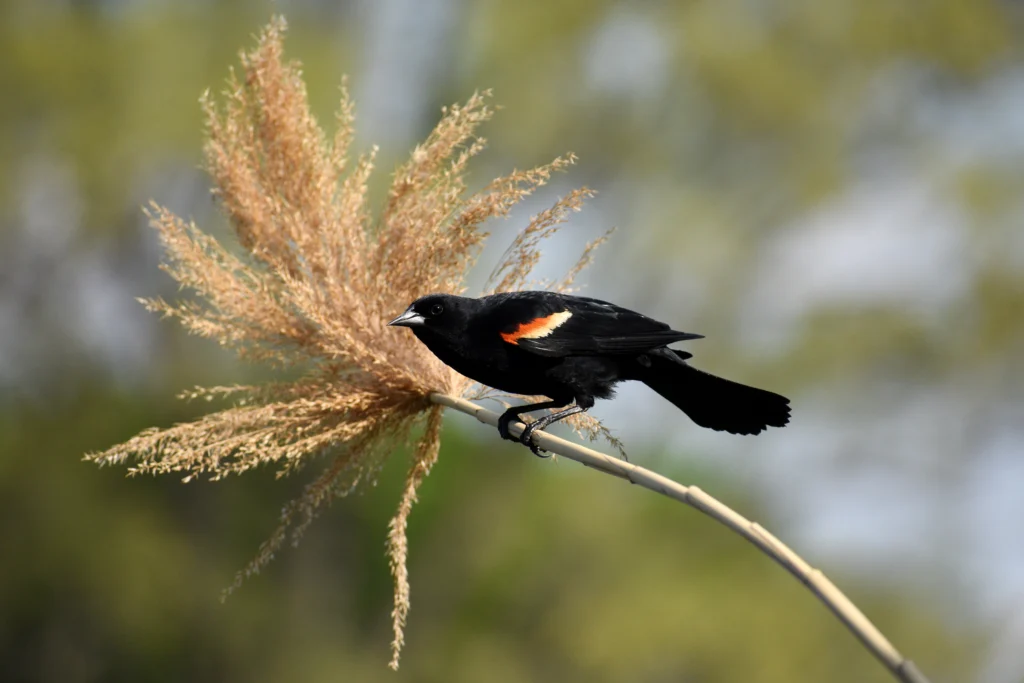
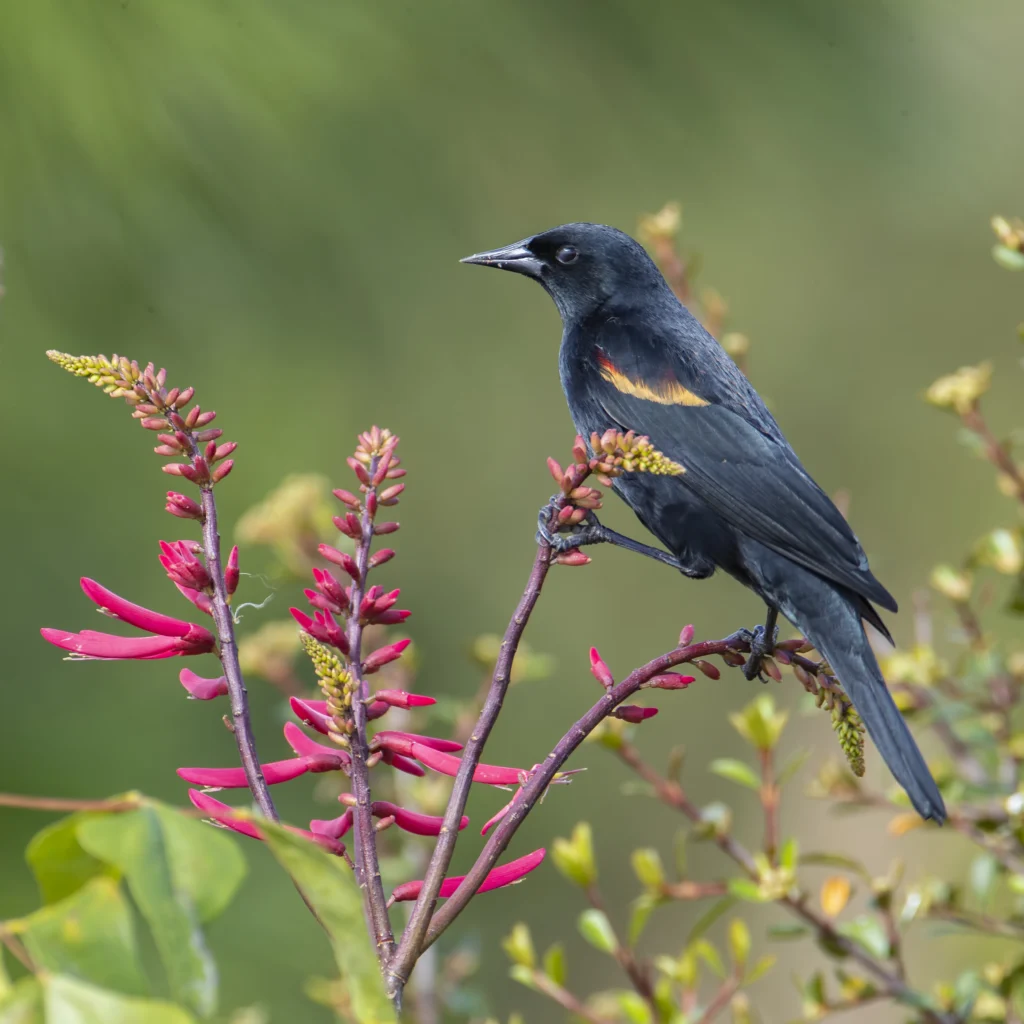
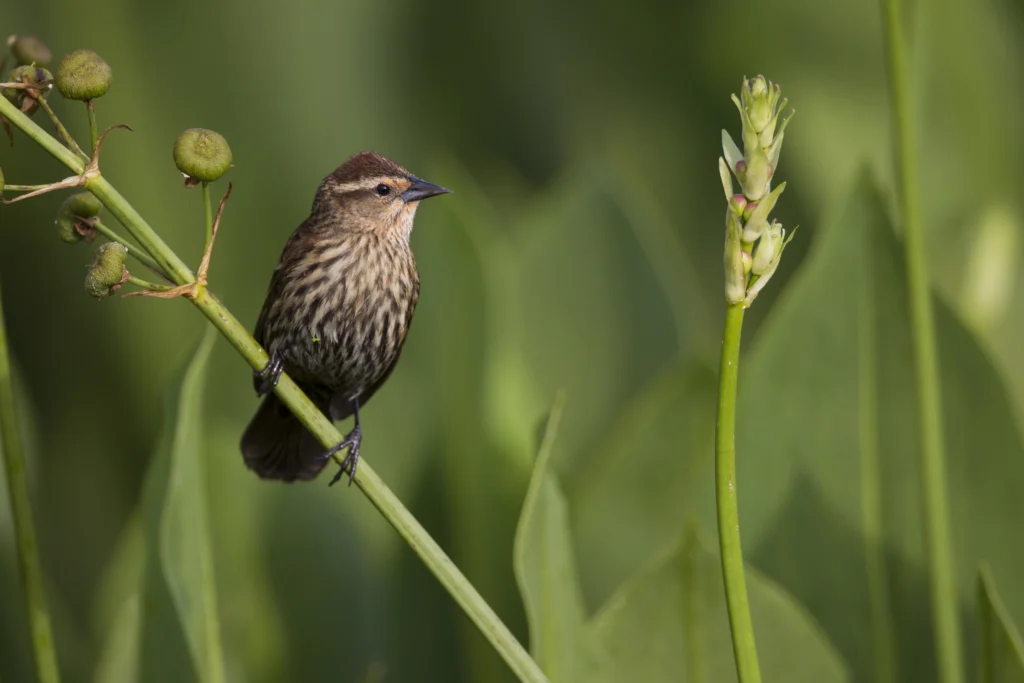
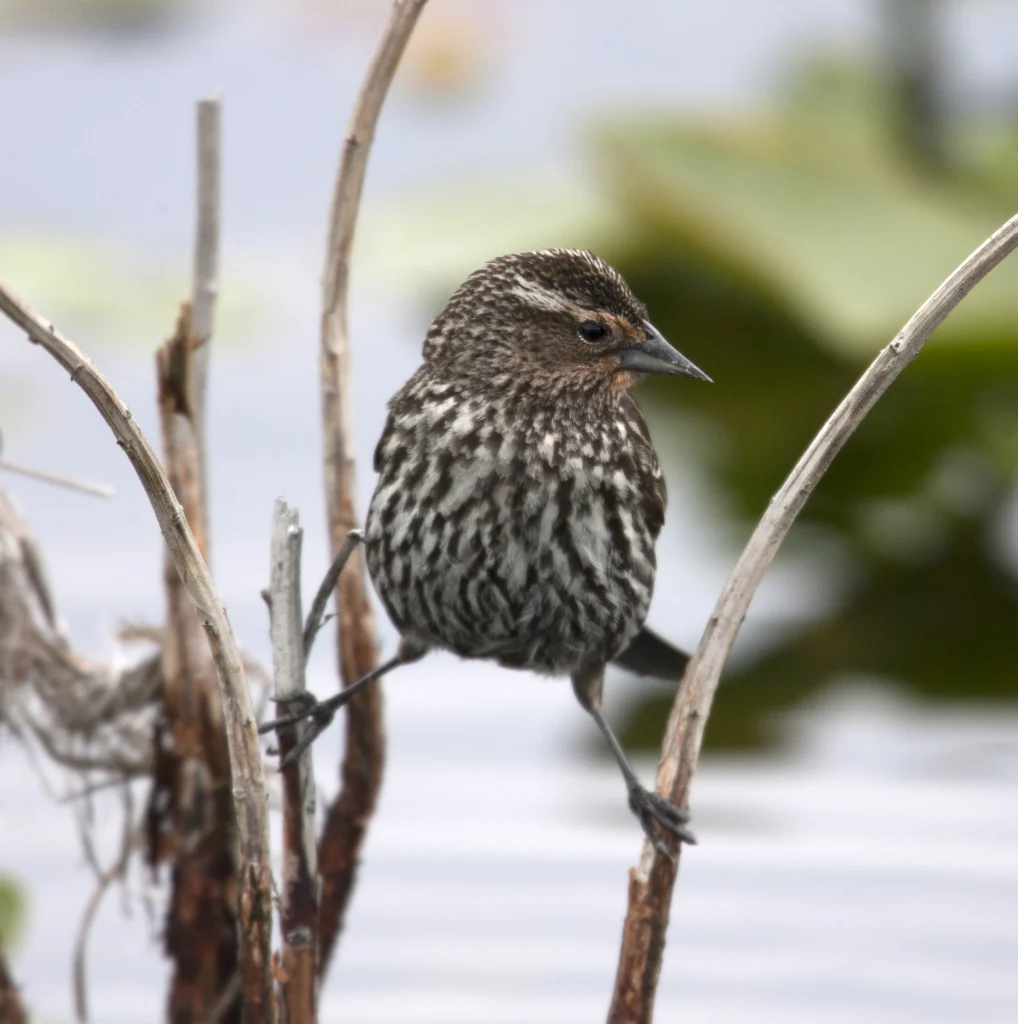
The male Red-winged Blackbird is striking and elegant, entirely glossy black except for the brilliant red and yellow shoulder patches or “epaulets.” Males often hide their epaulets, however, such that only a narrow yellow stripe will appear on the shoulder. Females are more subtly and intricately patterned in shades of brown, white, and cream. The female’s wings and tail are largely dark brown, while the underparts, back, and nape are streaked brown and white. In some subspecies, females have a wash of cream or tan around the bill. Some subspecies are less streaked overall, and females of the “Red-winged” subspecies even have a subtle red shoulder patch, similar to the male’s. Males and females have essentially the same coloration year-round.

Sonidos

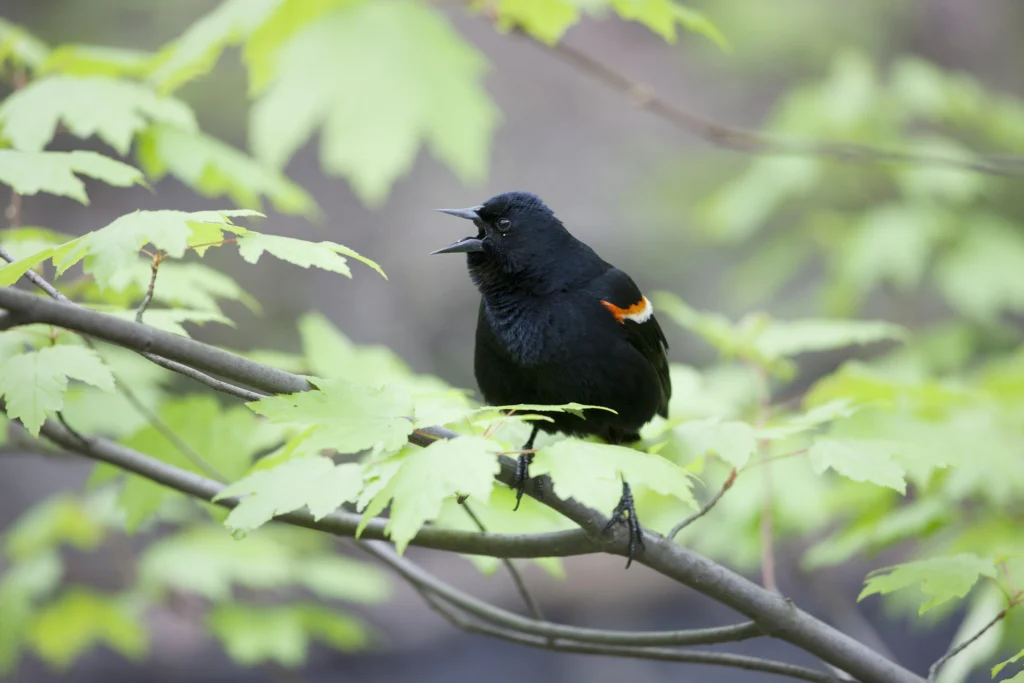
El conk-a-ree song of the male Red-winged Blackbird is well known throughout the species’ breeding range, an iconic sound of wetland areas in the spring. Red-winged Blackbirds are highly vocal, with an immense repertoire of percussive barks, high thin whistles, and an array of other calls, each with its own particular context and use. One study on this bird’s vocalizations identified seven unique alarm calls, including separate check, chuck, chick, chonk, y chink calls. Females also give unique and complex vocalizations, which many researchers refer to as “female song.” The vocal system of this species is intricate, nuanced, and rather enigmatic.

Male Song and Calls

Credit: Greg Irving, XC1073577. Accessible at https://xeno-canto.org/1073577.

Female Song

Credit: Stanislas Wroza, XC1012920. Accessible at https://xeno-canto.org/1012920.

Whistle Calls

Credit: Ray Cooke, XC1100191. Accessible at https://xeno-canto.org/1100191.

Hábitat

The Red-winged Blackbird breeds in wetlands, riparian areas, and agricultural fields. Outside of the breeding season, these birds also use meadows, prairies, and other open habitats, especially near ditches or ponds.

  • Typically nests in emergent wetland vegetation and riparian shrubs
  • In the nonbreeding season, will form large communal roosts near grain fields

Rango y región

Rango y región


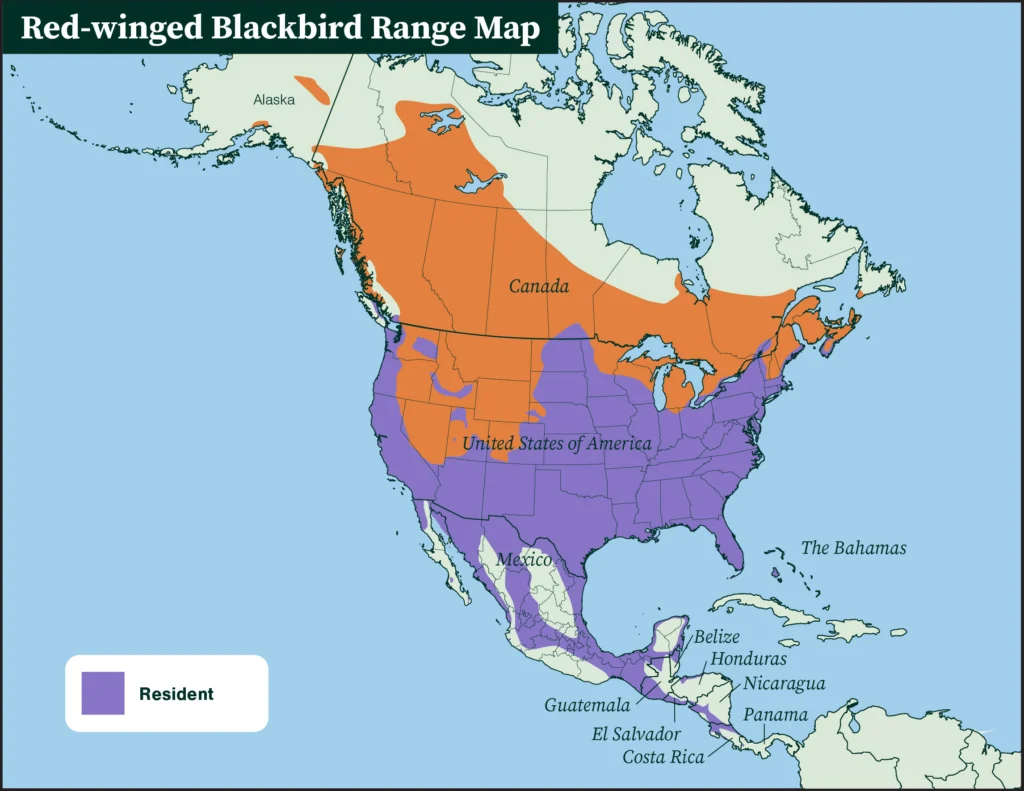
Red-winged Blackbird range map

Área específica
Canada, the United States, Mexico, Central America

Detalles de la gama
Migratory populations breed as far north as the Arctic Circle in the Canadian Northwest Territories, and south through the Great Basin, Great Plains, Great Lakes, and New England. Red-winged Blackbirds are year-round residents in the remainder of the United States and throughout Mexico and Central America as far south as Costa Rica. There is also a resident population in The Bahamas.

¿Sabías?
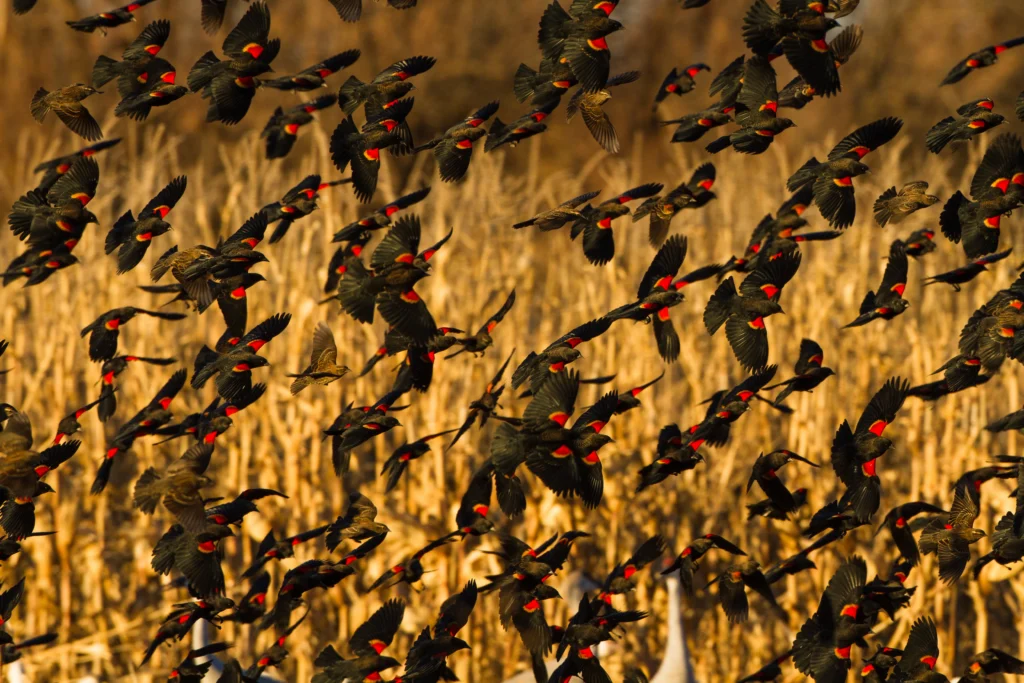
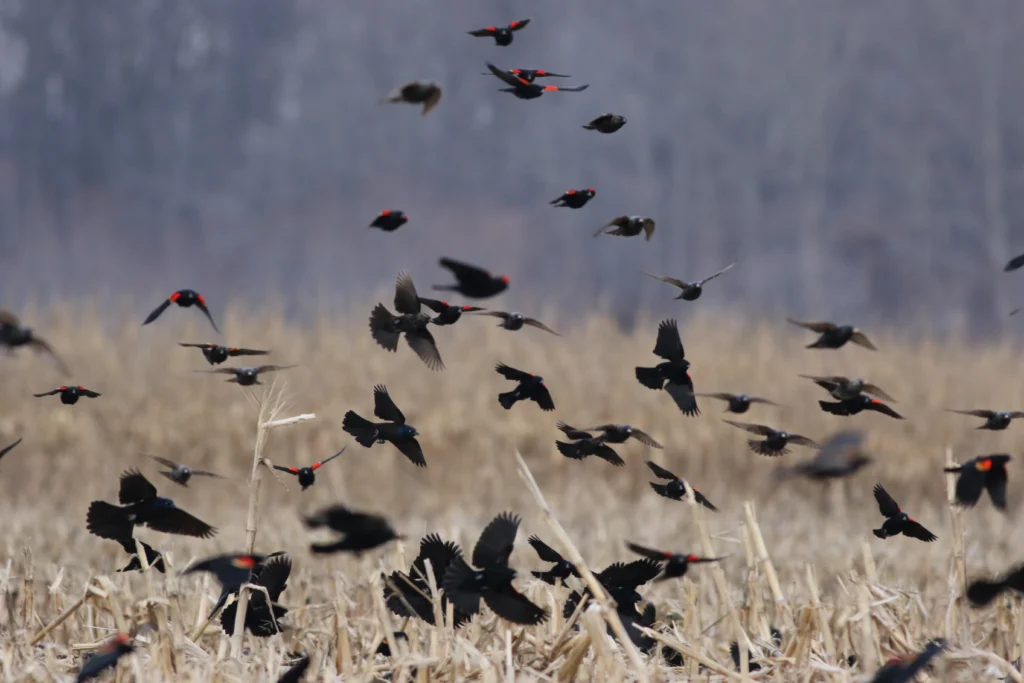
During migration and in winter, Red-winged Blackbird flocks can be enormous, numbering in the tens of thousands. These flocks can also include other blackbird species, grackles, starlings, and even cowbirds. Cowbirds are brood parasites that lay their eggs in Red-winged Blackbird nests. Red-wingeds harass cowbirds relentlessly during the breeding season, but apparently give them a pass when there are no nests to defend.

Rango
caribe
América del norte
Patrón de migración
Latitudinal
Distancia de migración
Distancia corta

Historia de vida

The Red-winged Blackbird is a conspicuous species, typically breeding in colonies and forming immense flocks in the nonbreeding season. Colonies are noisy and full of action, as tightly-packed birds negotiate over resources and attempt to defend their territories and mates from neighbors. These blackbirds are always on the lookout for potential predators as well, and will readily sound the alarm at a sign of danger. If a predator or unsuspecting human comes too close to the nest, Red-winged Blackbirds will not hesitate to dive-bomb the threat repeatedly until it has fled the scene.

Dieta

Red-winged Blackbirds are omnivorous, feeding on seeds and waste grain such as corn and rice, some small fruits such as blackberries, and a wide variety of insects and spiders, particularly during the breeding season. Red-wingeds will take a range of other food as well, depending on habitat and opportunity, including snails, frogs, worms, mollusks, and sometimes carrion. Red-winged Blackbirds will also visit backyard bird feeders, especially in the winter, for seed and suet.

Noviazgo

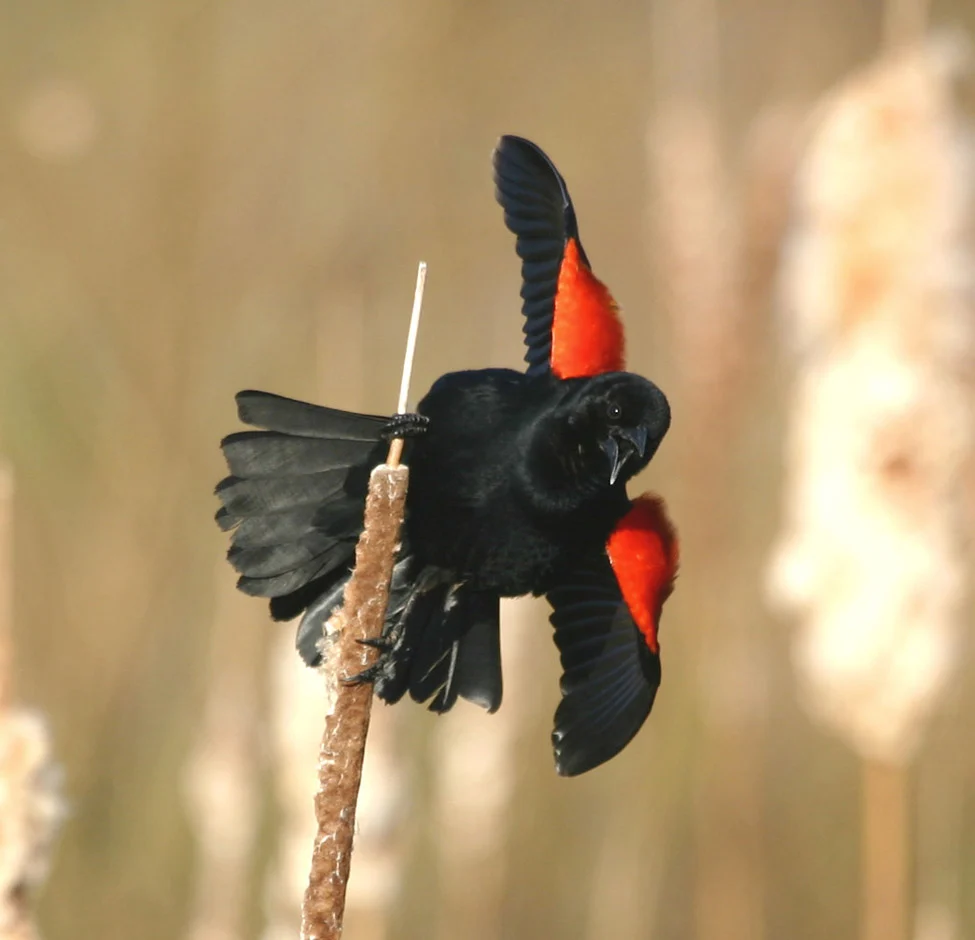
Red-winged Blackbirds pair quickly, and courtship is brief. When a new female shows up on a male’s territory, he will perform a “song-spread” display, in which he sings while exposing his bright red epaulets (shoulder patches). The male may also perform a “crouch” display in which he lowers his head while raising his body feathers and showing off his epaulets. Once a female has paired with a male, she will sing on his territory and even duet with the male, singing her song concurrently with his.

Anidación

Nesting is a dicey game of hide-and-seek in the wetlands and fields where Red-winged Blackbirds breed. They tend to nest close to the ground, making eggs and young vulnerable to predators. The female’s brown and streaky coloration helps to camouflage her at and near her nest, a construction of plant material wound around vertical plant stems and lined with leaves, bark, and mud, usually concealed in thick reedy vegetation and often over water. Group nesting and individual birds’ diligence and aggression toward intruders provides some added security.

Huevos y crías

Females lay two to four pale blue-green to grayish eggs with dark streaks and splotches. Only females incubate, and the eggs hatch after 11 to 13 days. Females are alone in brooding as well, but both parents feed the nestlings for 11 to 14 days until they fledge. Though females do most of the work at the nest, males are constantly vigilant through the entire nesting period, watching for predators and brood parasites like the Brown-headed Cowbird. Each breeding female may raise a single clutch or up to three clutches in a given season.