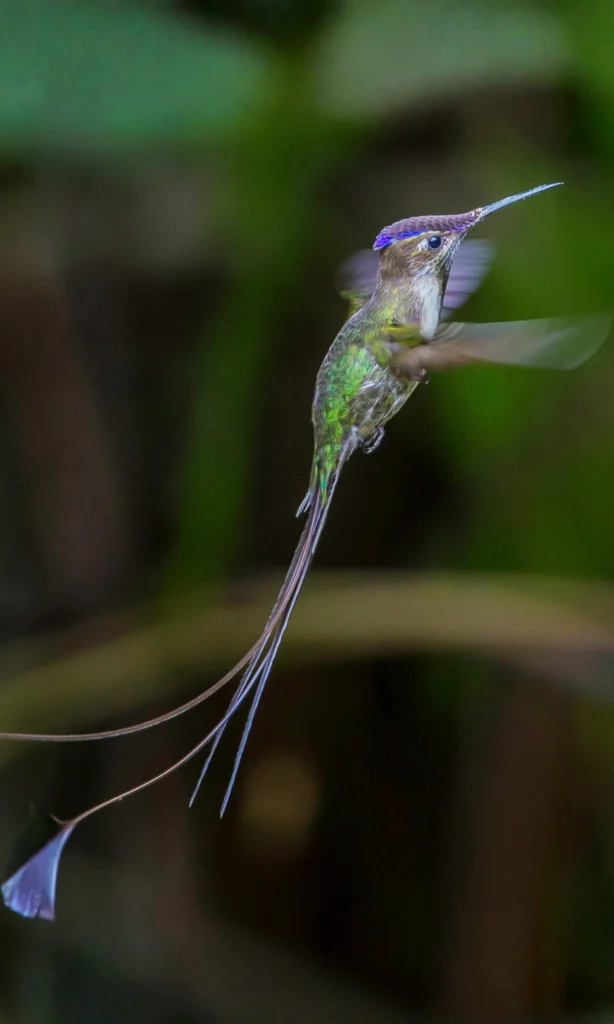
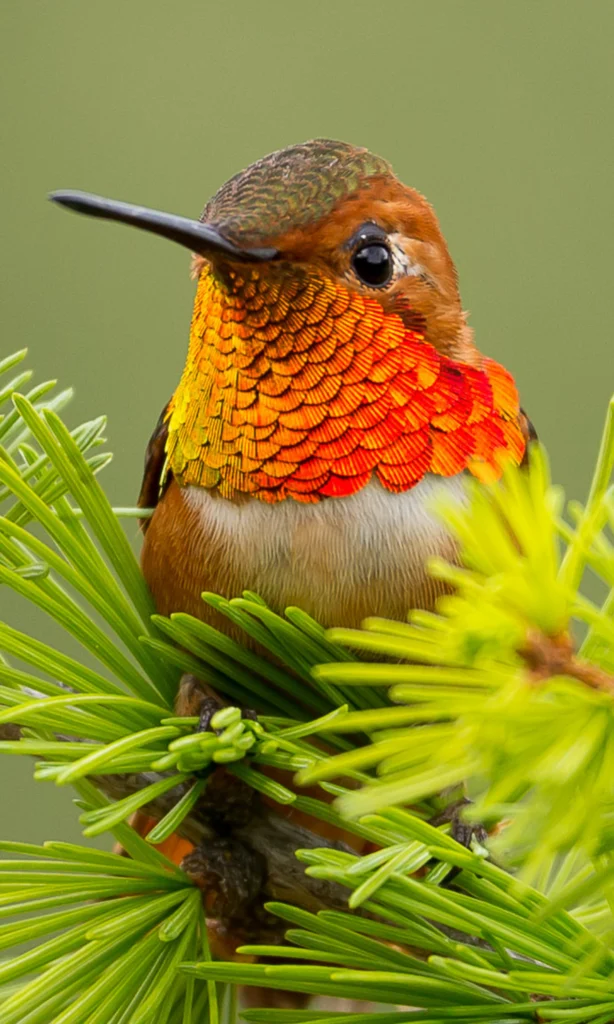
Sierra Nevada National Park of Santa Marta, Colombia. Photo by ToniFlap, Getty Images.

Ala de sable de Santa Marta

Campylopterus phainopeplus

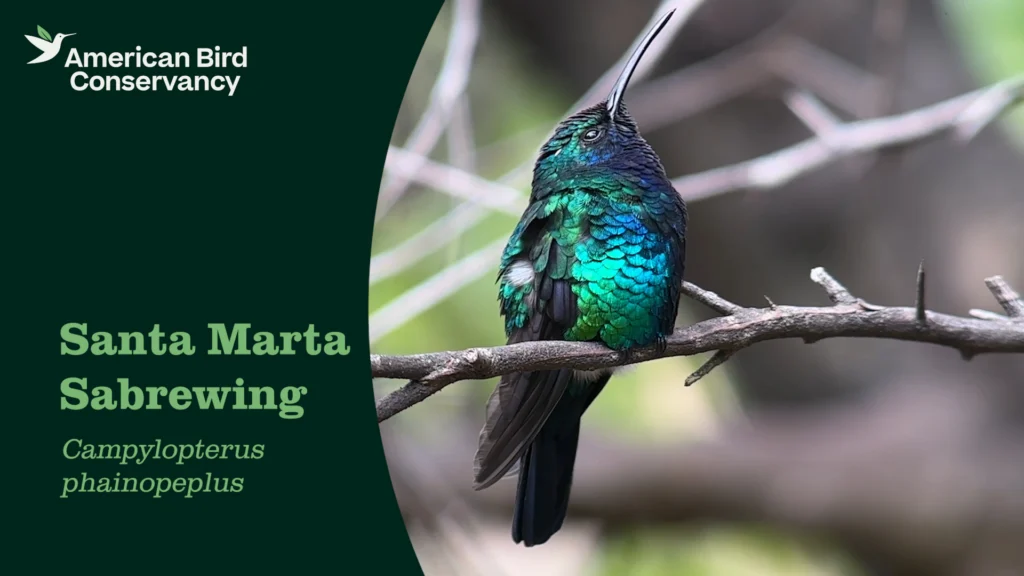
Santa Marta Sabrewing perched. Photo by Carole Turek.

Ala de sable de Santa Marta

Santa Marta Sabrewing perched. Photo by Carole Turek.

Campylopterus phainopeplus

Descripción general

Tendencias demográficas
Decreciente
Tamaño de la población
<50
Familia
Colibríes
Ubicación
Sudamerica
Patrón de migración
Desconocido
Distancia de migración
Desconocido
También conocido como
  • Ala de sable serrano (Spanish)

Acerca de

The Santa Marta Sabrewing is arguably the rarest and most poorly known of 24 bird species endemic to the Santa Marta Mountains of coastal Colombia, an isolated range and one of the most important locations for endemic species in the world. This “lost bird” went 76 years without a definitive record, from 1946 until its rediscovery in 2022 (though there was a report and possible photograph in 2010). From 2022 to 2023, researchers from Colombian conservation nonprofit SELVA and Universidad Nacional de Colombia surveyed for this species and identified a small breeding population. ABC and our partners are now supporting efforts to learn more about the species and its conservation needs.

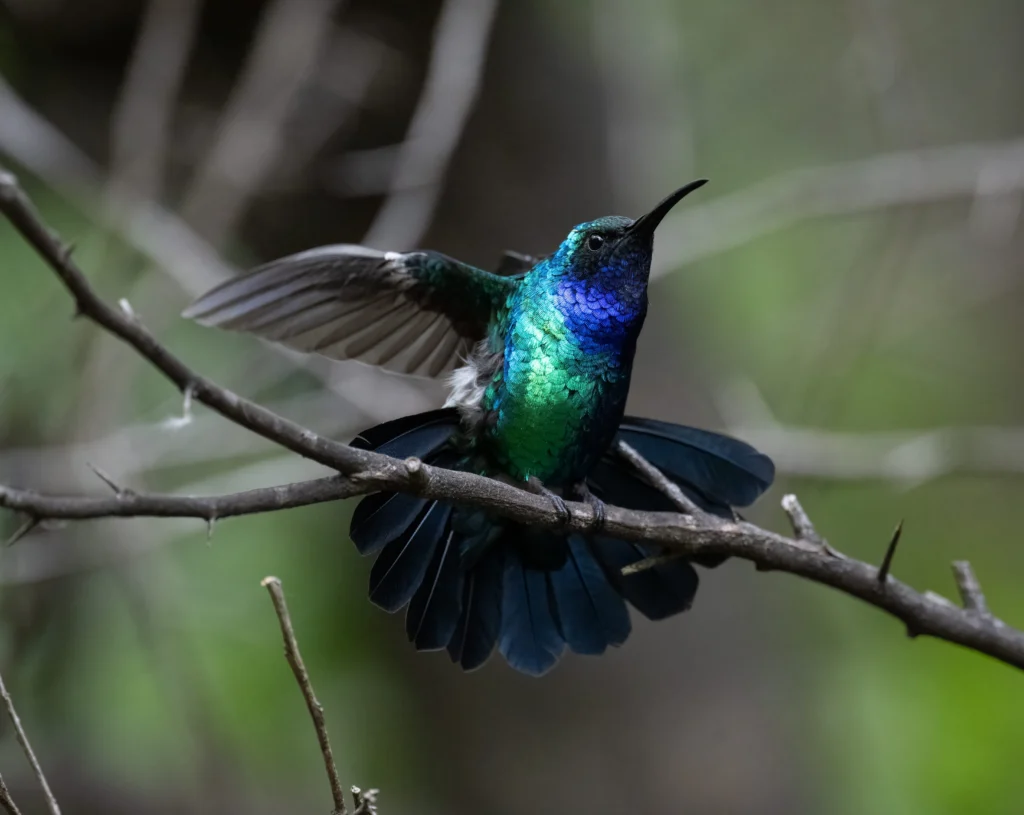
The natural history of this species is not well known, given the length of time it was “lost” to science. However, observations of these birds show them to be highly territorial, chasing off hummingbirds of other species as well as their own. One spectacular defensive display involves two males ascending vertically up to 60 feet in the air, before diving back down with their dark blue tails fanned.

Despite their aggressive territoriality, many males hold territories clustered closely together. These tight neighborhoods may, in fact, constitute dispersed leks — areas where females come to watch males display, and where males compete for a chance to mate. The male’s display seems to involve calling continuously through the morning hours, which they do all year long. These display vocalizations consist of a simple chip call given repeatedly at varying rates.
Amenazas

Birds around the world are declining, and many of them are facing urgent, acute threats. Much remains to be learned about the Santa Marta Sabrewing, but current estimates place its total population size at fewer than 50 individuals. Habitat loss could pose a threat to the formerly lost bird, specifically because its range is so small that any habitat lost constitutes an outsized proportion of the total habitable area for the species.

Cambio de uso del suelo

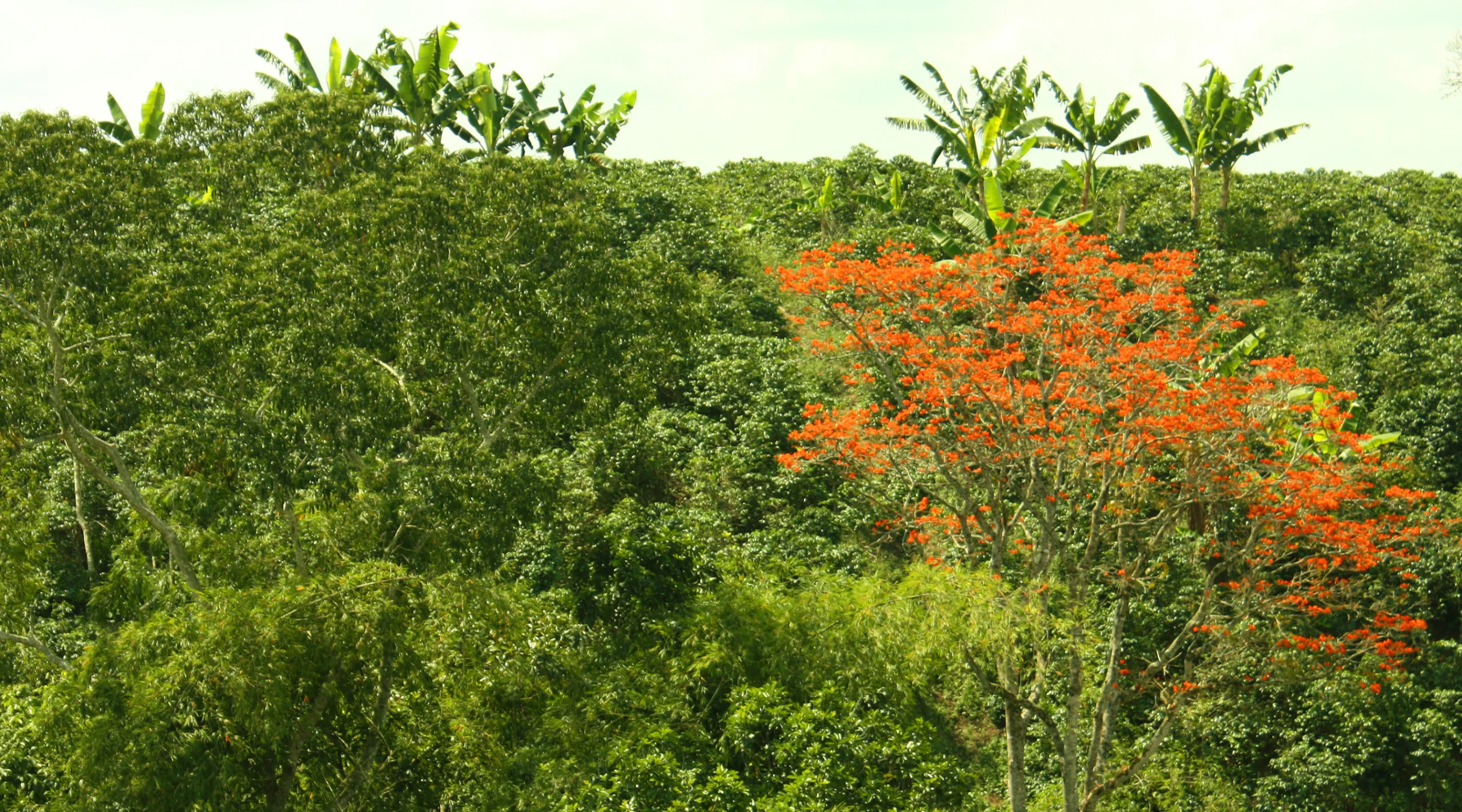
Though these birds are known to forage at the edges of coffee plantations, their territorial habitat is almost always dominated by native plants, and riparian corridors seem to be particularly important. If native habitat is cleared for agriculture, the areas where this species is known to breed may be put at risk. Sugar cane cultivation may be of particular importance, as this crop often requires conversion of riparian areas. However, Sabrewings are known to use forest-friendly banana and coffee operations, suggesting that agroforestry practices may allow human land use to accommodate the habitat needs of this species.

Estrategias y prácticas de conservación

Birds need our help to overcome the threats they face. This is particularly true for species like the Santa Marta Sabrewing, with its limited distribution and extremely small estimated population. At ABC, we’re inspired by the wonder of birds and driven by our responsibility to find solutions to meet their greatest challenges. With science as our foundation, and with inclusion and partnership at the heart of all we do, we take bold action for birds across the Americas.

Crear y mantener reservas

El hábitat es fundamental para la supervivencia de las aves. Trabajando con decenas de socios y comunidades locales en toda Latinoamérica y el Caribe, ABC apoya una creciente red de áreas protegidas en más de una docena de países. Con un total de más de 1,3 millones de acres, casi un tercio de la avifauna mundial (más de 3.000 especies) está protegida por una reserva apoyada por ABC.

Creación y mantenimiento de reservas

Mejorar el hábitat

ABC helped fund the 2022–2023 study that provided the first unimpeachable record of the Sabrewing since the 1940s, as well as the majority of what is known about this species in the scientific literature. Knowledge of birds’ habitats, diets, and life histories is crucial for their conservation, and ABC and our conservation partners are working to help the local community protect this rare and extremely vulnerable species.

Nuevas investigaciones revelan el hábitat, la distribución y el comportamiento de especies de colibríes recientemente redescubiertas.

Galería de aves

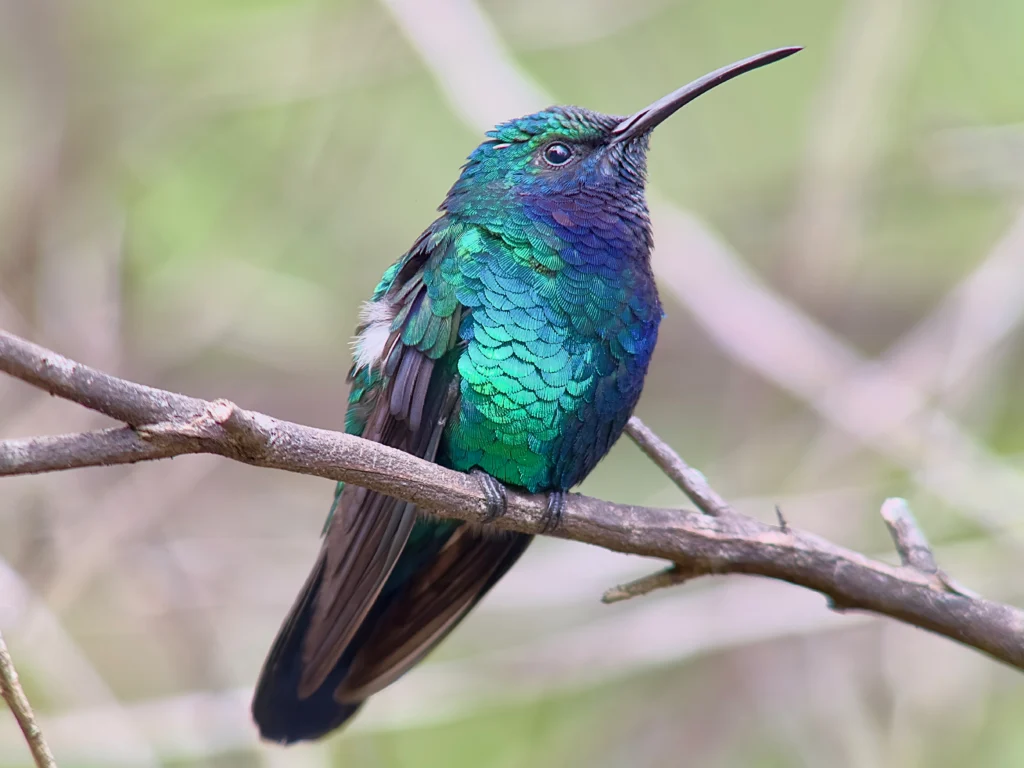
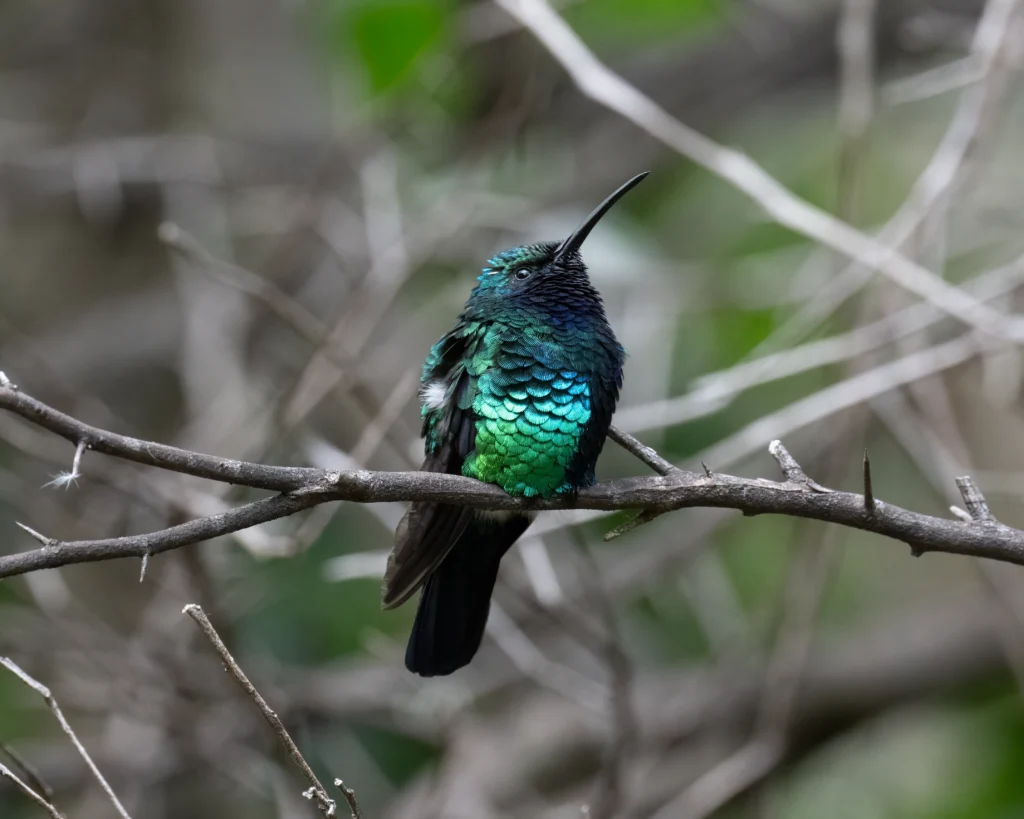
With his glittering iridescent green and blue body, dark blue tail, and deep purple and blue throat, the male Santa Marta Sabrewing is a real beauty. Only the dark brown wing feathers lack iridescence. Females are a similar shining green and blue on the back, tail, and sides, but with a dark gray mask and cap, and are mostly grayish-white below. Both sexes have a small white spot behind the eye and a black, recurved bill. This species is quite similar to several other hummingbirds, including the closely related Lazuline Sabrewing (Campylopterus falcatus), which can be differentiated by its rust-colored tail feathers.

Sonidos

Though no specific song has been described for this species, male Santa Marta Sabrewings perch in prominent locations on their territories and give a quick, sharp, percussive downswept chip, uttered singly, paired, or rapidly in a sputtering chatter or rattle. Few recordings of the Sabrewing exist, but as researchers continue to study the natural history of this enigmatic species, they will undoubtedly record and describe a broader communicative repertoire.

Chip Calls

Credit: Andrés M. Cuervo, XC913191. Accessible at https://xeno-canto.org/913191.

Hábitat

The Santa Marta Sabrewing is most commonly seen in low vegetation, especially thickets in riparian areas, and along forest edges within its small range in the Andean cloud forest.

  • Prefers native plants, especially for leks
  • Often seen foraging along borders of developed areas, such as shade coffee plantations

Rango y región

Rango y región


Área específica
Santa Marta Mountains of Colombia

Detalles de la gama
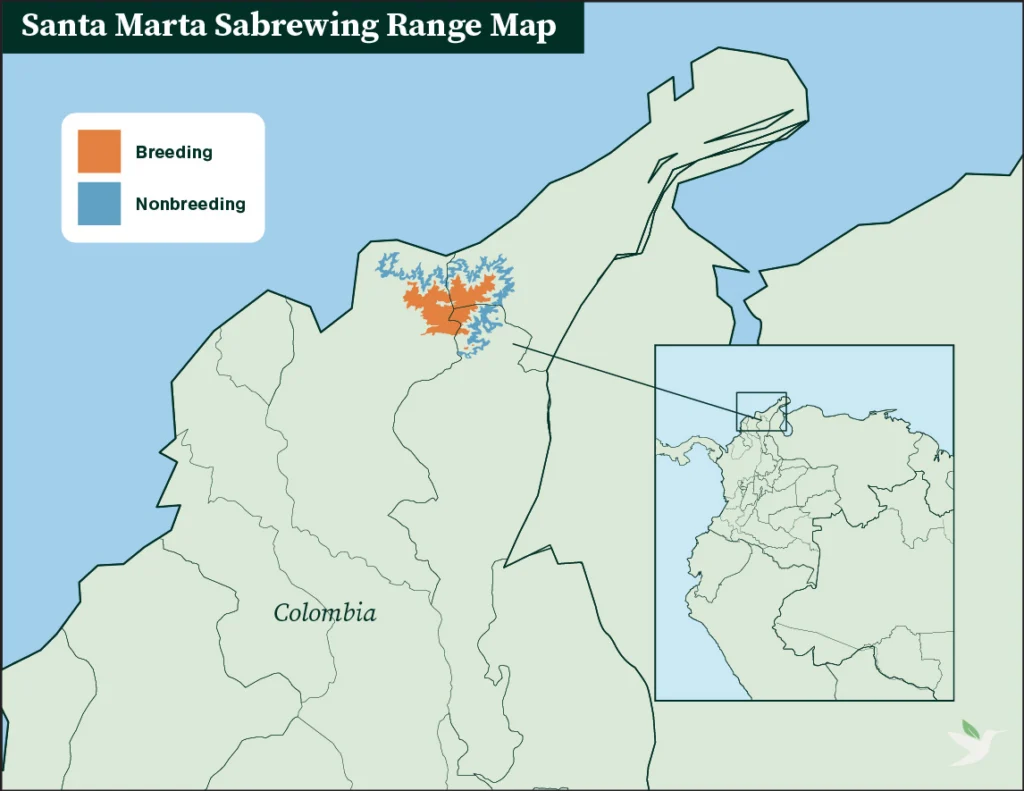
The Santa Marta Sabrewing is endemic to the Santa Marta Mountains in northeastern Colombia, possibly restricted to a 9-square-mile area in the Guatapurí River basin. Due to its extremely limited range, this species is considered a “microendemic.”

¿Sabías?
These birds were thought to be elevational migrants, moving to lower elevations during the dry season from February to May, and higher elevations in the wet season from June to October. This claim was first made in the late 1800s by an English naturalist on an expedition in the area. However, his claims have never been corroborated. In the only concerted study of this species, published in 2024, researchers found no evidence that this species migrates at all.

Rango
Sudamerica
Patrón de migración
Desconocido
Distancia de migración
Desconocido

Historia de vida

The Santa Marta Sabrewing has seldom been the focus of scientific study, and very little is known of its life history. Some males display in small aggregations within a relatively small area, singing continuously while vigorously defending their own slivers of territory 30–45 feet apart. Researchers suggest these aggregation areas may be leks — shared performance spaces where males compete for access to mates. In a classic lek system, females would visit these areas, and males would compete for a chance to mate with them.

Dieta

The Santa Marta Sabrewing is known to eat insects and nectar, and has been recorded feeding from banana flowers. No other details are known.

Noviazgo

While little is known of this species’ breeding biology, researchers have observed that males will perch and sing throughout the morning, defending territories that are often quite near each other in what may constitute a loose lek. Males sing and defend territories year-round.

Anidación

No nest has been found for this species. One female was seen collecting spiderwebs in May 2023, likely for use in building a nest.

Huevos y crías

No eggs or young have been observed.