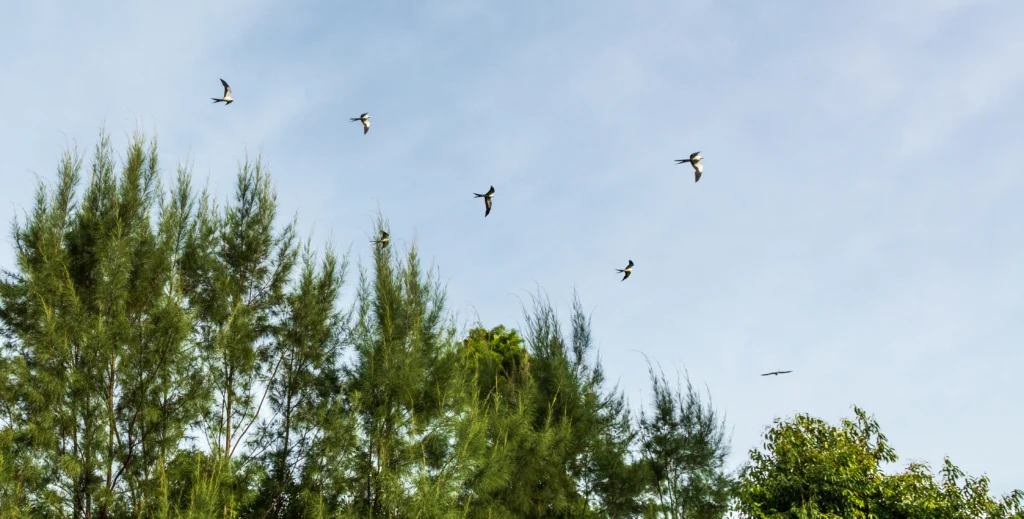
El Milano colilargo Es reconocible al instante en los cielos veraniegos del sureste de Estados Unidos. Acróbatas aéreos hábiles, proyectan una figura estilizada y elegante al planear, con el blanco de sus cuerpos acentuado por los bordes negros de sus alas y su cola ahorquillada. Con un movimiento de su cola, similar a un timón, la cometa puede maniobrar fácilmente para cambiar de dirección en un instante en pleno vuelo, sin batir las alas.
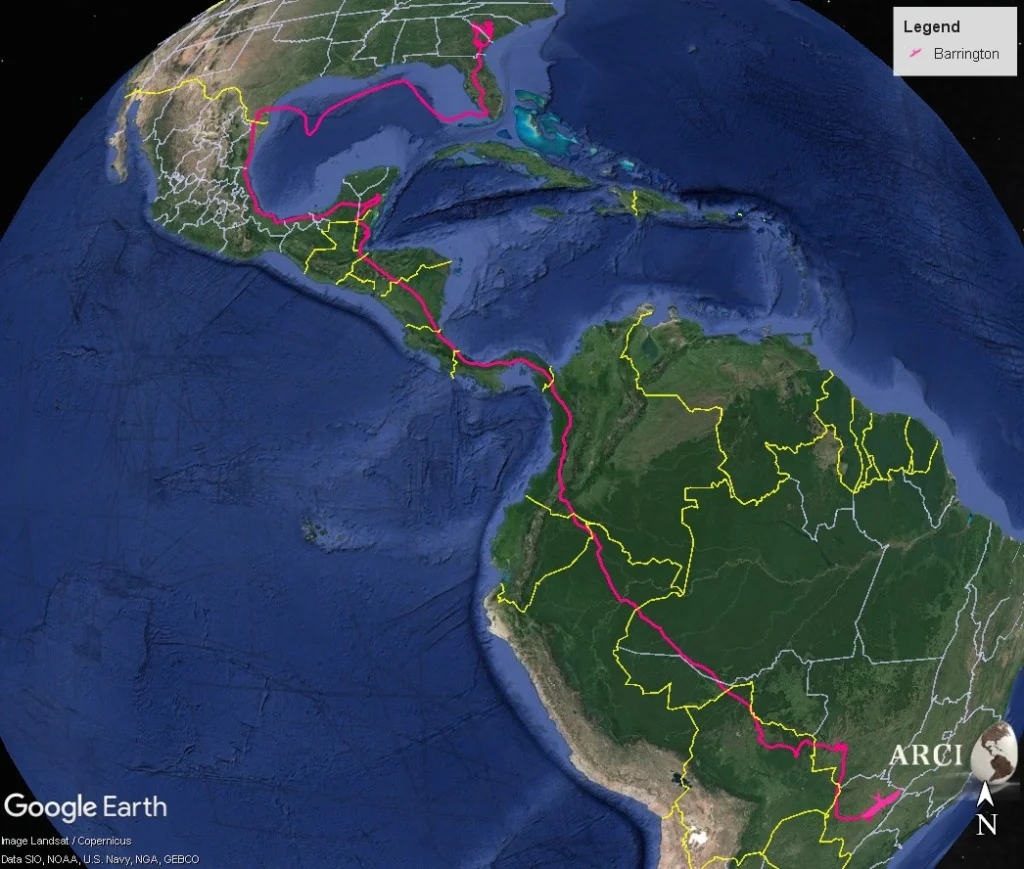
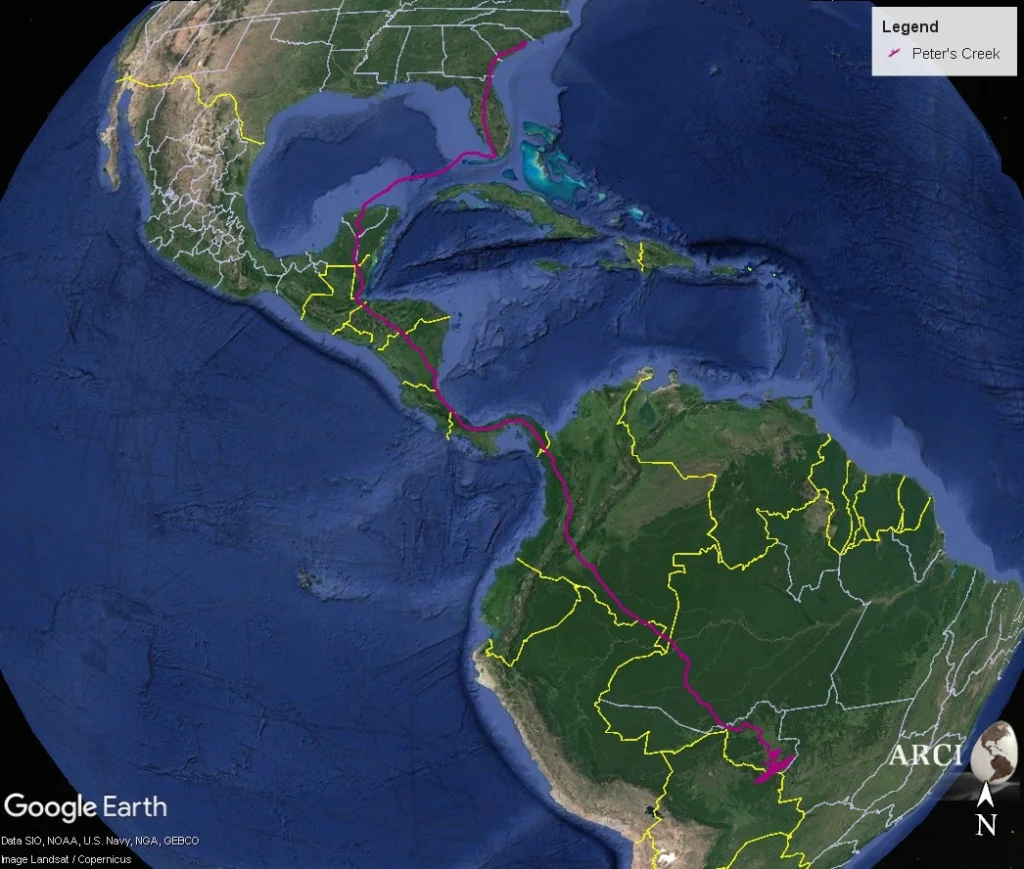
El milano tijereta aplica esta misma aptitud a la migración de larga distancia, que lleva a la subespecie estadounidense hasta Brasil. (Una segunda subespecie reconocida reside durante todo el año en Centroamérica y Sudamérica). Una vez finalizada la temporada reproductiva, los milanos surcan los cielos, a veces migrando en grupos de mil o más. Estas aves rara vez están solas; su naturaleza social es única entre la mayoría de las especies de rapaces. Sin embargo, nuevos datos sobre los movimientos individuales de los milanos pueden ayudar a crear un futuro más prometedor para toda la especie.
Esta especie estuvo en declive durante décadas. Su área de reproducción se redujo para la década de 1940, probablemente debido a la tala y el drenaje de los bosques de tierras bajas, y la caza ilegal y quizás la recolección de huevos ejercieron mayor presión sobre la especie. A mediados del siglo XX, ver sus siluetas en vuelo era mucho menos común. Tras décadas de trabajo de conservación, la población de milanos tijereta en Estados Unidos se ha estabilizado, gracias, en parte, a la conservación de grandes extensiones y a la gestión sostenible de los bosques en explotación.
Los hábitats forestales que los milanos utilizan para descansar, anidar y criar a sus crías se solapan con los bosques de trabajo, esenciales para la producción de fibra y productos forestales. Conocer cómo los milanos utilizan los bosques de trabajo es clave para su conservación, y los vuelos de cada ave pueden ofrecer información invaluable para la gestión forestal.