Six States Joining Bird City Network
In 2025, more than 275 communities participated in BCN within its 16 programs. They completed more than 3,500 actions to improve habitat, reduce threats, engage people, and promote sustainability.
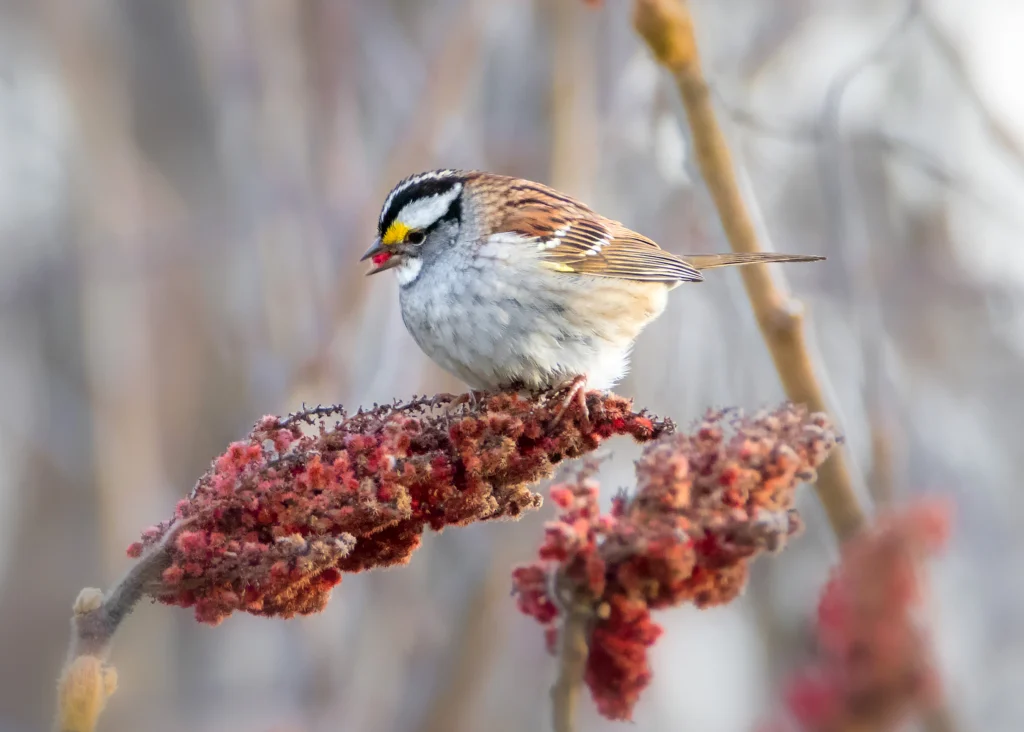
In the fall of 2023, 1,000 birds died overnight at a glass-fronted building overlooking Lake Michigan. Hundreds of warblers, including Palm, Yellow-rumped, and Tennessee collided with the building, along with scores of Swamp, White-throated, and Lincoln’s Sparrows, and buntings, Soras, and thrushes. The mass die-off prompted national attention and calls from American Bird Conservancy (ABC) and other organizations for the building owners to act swiftly to address the problem. The call was heeded, but scores of other buildings still need to follow suit.
Migration, sadly, brings bird deaths from window collisions in large numbers (more than 1 billion birds die from window collisions in the U.S. every year), but the threat doesn’t stop with migration. It isn’t just migratory birds or birds navigating a labyrinth of glass-encased skyscrapers that are at risk. All too often, it’s birds in backyards that become collision victims.

En enero de 2025 se presentaron informes a la Laboratorio de anillamiento de aves del Servicio Geológico de Estados Unidos No uno, sino dos cardenales norteños anillados que chocaron contra la misma ventana de una residencia el mismo día. La hembra, anillada a finales del invierno de 2023, y el macho, anillado en el otoño de 2024, fueron anillados en una estación de anillamiento cercana en Illinois y murieron debido al impacto contra esta ventana. Ambos pájaros tenían menos de dos años.
Varios años antes, se había reportado a la BBL otra víctima de colisión con un cardenal norteño contra una ventana. Este cardenal chocó contra una ventana junto a comederos para pájaros en una residencia en Cambridge, Nueva York. Anillado tan solo siete meses antes en el condado de Belknap, Nuevo Hampshire, como ejemplar de eclosión, este cardenal macho falleció lamentablemente antes de alcanzar su primera temporada reproductiva. Estos son solo algunos de los muchos reportes de encuentros recibidos en la BBL de aves anilladas que han chocado contra vidrio.
Since 1922, the BBL has amassed nearly 11,000 reports of banded bird collisions, including more than 900 reported in the last five years alone. Given how rarely window collision victims are detected and reported, this is an astonishing number. Many birds reported after building collisions are species, like cardinals, that frequent bird feeders, particularly during the winter months. Other species commonly reported after window collisions include Evening Grosbeak, Purple Finch, Mourning Dove, American Goldfinch, and Common Grackle, as well as raptors such as Sharp-shinned and Cooper’s Hawks that utilize feeders to hunt for smaller passerines.
While some collision victims are banded, many are not. Any banded bird that collides with glass provides a small glimpse at the serious problem of window collisions, as well as vital information for that bird individual and species, revealing seasonal and temporal patterns in survival and habitat use, as well as migratory pathways.
Many people assume bird-window collisions are caused by skyscrapers in city centers, but all structures with windows put birds at risk. In fact, an estimated 44 percent of window collisions occur on residences only one to three stories high. The story of this Northern Cardinal shows that windows at home can be just as deadly.
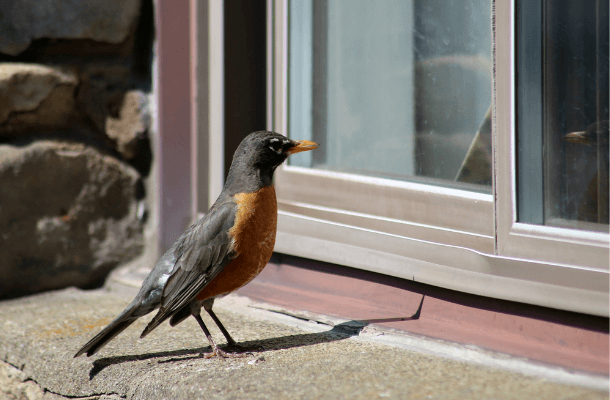
Birds collide with windows because they see habitat through the glass or reflected back at them — they don’t experience glass the way people do. People don’t see glass either, but when we see a windowsill or a doorframe, we know to interpret these as cues that glass is present. Without those visual markers, we’re likely to bump into glass, too.
Birds don’t see those markers the way we do, and this makes glass a danger. For us, colliding with glass may result in bruises (to our bodies and sometimes our egos), but we recover. By and large, birds do not. And while it may be comforting to think that birds that collide with windows can simply “shake it off,” new research is indicating that is not the case. They collide at high speeds and their fragile bodies make them more vulnerable to injury. Even with intensive care from experienced wildlife rehabilitators, birds that collide with windows frequently succumb to their injuries.
Las colisiones son un problema constante durante todo el año. A finales de primavera y en verano, las aves jóvenes se dedican a explorar su entorno. En invierno, cuando los recursos escasean, las aves residentes deben ampliar sus territorios para encontrar alimento. Esta mayor actividad aumenta la probabilidad de que un ave choque contra una ventana.

Whether you live in a farmhouse in the country, a condo in a suburb, or an apartment block in a city, your home is part of the habitat birds need to survive. Treating your windows to prevent collisions goes hand in hand with other actions to help birds, like keeping cats indoors, planting native plants that provide food, and passing on pesticides.
Bird feeders and bird baths can be a helpful way to support birds through harsh winter weather. Varying advice has been given about the optimal distance between bird feeders and windows, but the fact is, A menos que sus ventanas hayan sido tratadas para evitar colisiones, no existe tal cosa como una distancia segura. Even in the absence of feeders or other features like native plants that would draw birds closer to your home, you should have a plan for treating your windows. And if you’re planning on feeding birds, taking care to reduce collisions is a must.
ABC’s Collisions team has tested dozens of products for their efficacy in reducing collisions and minimizing risks to birds. Our Solutions Database provides reviews of every product we’ve tested along with approved products and solutions for residential homes or businesses. We offer solutions for retrofitting existing windows or installing new windows, with options ranging from low-tech tempera paint patterns to customized etched glass installations. If you can’t address every window, prioritize large picture windows, windows near bird feeders and baths, and windows where collisions have previously occurred.
Los resultados de las medidas de mitigación de colisiones son inmediatos. Donna Barski, miembro de ABC y participante del Proyecto FeederWatch, recibía aproximadamente un golpe en la ventana a la semana. Siguiendo las recomendaciones de ABC, compró cinta adhesiva y la aplicó a sus ventanas. Ahora, Barski afirma que las colisiones han cesado por completo.
“¿En cuanto a la estética? Mi esposo y yo no tenemos ningún problema para ver las aves, y de hecho, las rayas no nos impiden ver el exterior en absoluto —dijo Barski—. De hecho, son un detalle muy agradable, sobre todo sabiendo que cumplen una función tan importante.”
Bird-friendly window treatments aren’t foolproof, though they can drastically reduce collisions. If a bird does collide with a window, it needs to be seen by a wildlife rehabilitator. Even if it appears fine, the force of collisions can cause severe internal injuries. With avian flu circulating at high levels at the time of publication, it’s important to take the extra step of checking on and following advice from your local wildlife authorities. Be sure to take proper precautions when handling birds: Always wash your hands thoroughly for at least 20 seconds using soap and warm water before and after, and wear a disposable mask and gloves if handling sick or dead birds. Follow these steps for handling injured birds:
– Levante el ave. Acérquese por detrás y cubra el ave con las manos. Sujétela firmemente sin apretarla; el cuerpo de las aves es extremadamente frágil. Evite manipularla más de lo necesario para minimizar el estrés.
– Coloque al ave en un recipiente, como una caja pequeña de cartón o una bolsa de papel. Poner una toalla de papel en el fondo le ayudará a sujetarse. Manténgala en un lugar tranquilo y oscuro.
– No alimente al pájaro ni intente darle agua.
– Contact a wildlife rehabber for further guidance.
Para informar sobre un anillamiento de aves a la Laboratorio de anillamiento de aves del USGS de un pájaro que ha chocado con un cristal, por favor envíelo a reportband.gov. Asegúrese de indicar que el ave chocó contra un edificio o ventana en el campo de datos "Cómo se obtuvo" y proporcione cualquier información adicional sobre la zona en las observaciones (edificio residencial o urbano, presencia de comederos, etc.). El USGS está explorando cómo podemos contribuir a la comprensión científica de las colisiones de aves mediante los datos recopilados de la base de datos BBL.
ABC agradece a la Laboratorio de anillamiento de aves del Servicio Geológico de Estados Unidos Para proporcionar información sobre bandas utilizada en la subsección ‘Un problema cercano’. Si bien la BBL proporcionó datos de bandas, toda la información adicional sobre soluciones y apoyo fue proporcionada por ABC.
Laboratorio de anillamiento de aves del Servicio Geológico de Estados Unidos.
Noticias e historias relacionadas