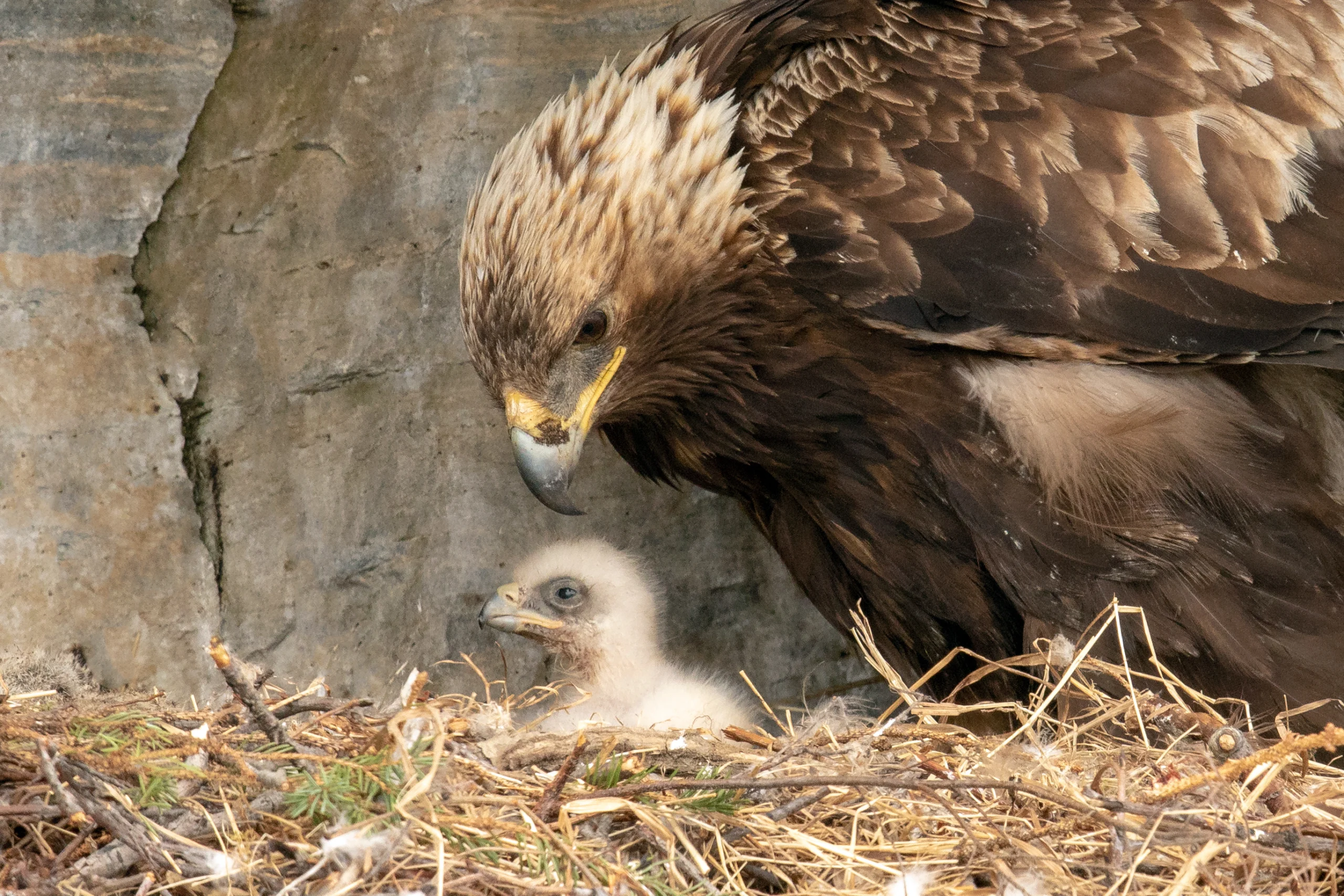
Águila real y polluelo en el nido. Foto de Mick Thompson.
A Widespread Threat
Toxins like the heavy metal lead (Pb) continue to be a widespread threat, affecting birds from Golden Eagles and California Condors to waterfowl.
Lead Used in Ammunition
For hundreds of years, lead was used as an additive in paint, gasoline, pipes, and other materials. Citing lead’s extreme health risks to humans, especially children, in 1977, the U.S. Consumer Product Safety Commission banned lead paint in residential and public buildings as well as in toys and furniture. In 1996, it was banned from use in gasoline.
Unfortunately, the use of lead in bullets and shotgun pellets continues to provide a pathway for lead poisoning in humans and wildlife, including Golden Eagles, hawks, and condors.
An estimated 16 million birds are poisoned by lead every year. Some birds, like Bald Eagles, accidentally ingest lead shotgun pellets and ammunition fragments when scavenging on carcasses or remains left by hunters. Other birds, such as Mourning Doves, mistake spent shot for seed in fields and forests, while diving birds like Common Loons swallow lead fishing tackle as they forage on lake bottoms.
Lead bullet fragments or residues in game meat also pose a significant risk to hunters and their families. For more information, see huntingwithnonlead.org.
Lead and the California Condor
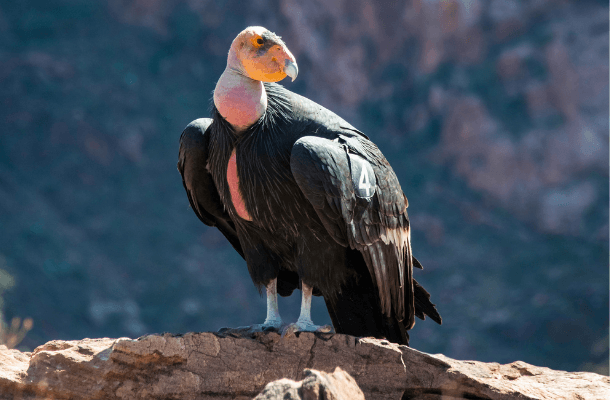
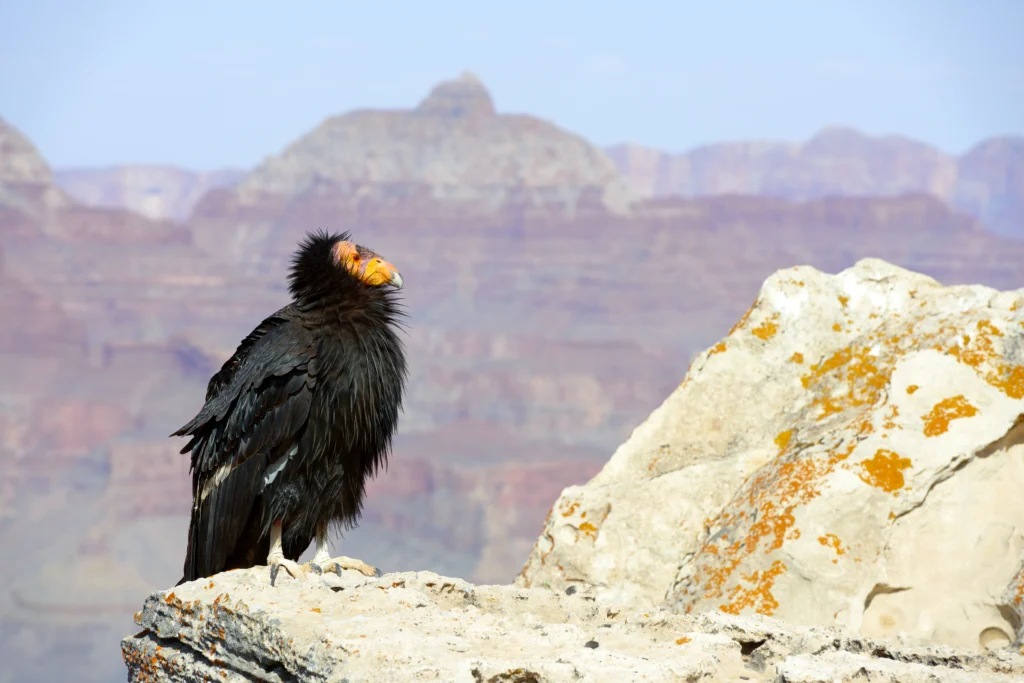
Perhaps the most iconic example of the impact lead toxicity can have on a species’ population is that of the California Condor. Their numbers dipped as low as 22 individual birds in 1987, due in part to lead poisoning caused by eating animal carcasses containing lead shot.
California Condor, Grand Canyon National Park. Photo by Kojihirano/Shutterstock.
Years of conservation efforts have helped the California Condor population surpass 600, but the threat of lead poisoning remains. A 2012 study found that two-thirds of California Condor deaths were caused by lead poisoning. Between 45 and 95 percent of the condor population continues to test positive for lead exposure. In response, California passed a law that will phase out the use of lead ammunition for any hunting purpose by July 1, 2019.
Toward a Non-Lead Future
A number of states, such as Missouri and Colorado, have taken action to protect wildlife management areas from toxic ammunition. Many national wildlife refuges are also conducting programs to educate hunters on the use and benefits of non-lead ammunition and are even giving away non-toxic ammunition for sportspeople to use in the field.
Non-lead options, such as copper, tin, and tungsten, are readily available; the more these products are used, the more affordable and widely accepted they will become.
Majority of U.S. State Wildlife Websites Do Not Have Clear Information About Lead Impacts on Birds
ABC conducted a survey of information available about the impacts of lead ammunition, shot, and fishing tackle across all 50 U.S. state wildlife agency websites. Clear, accessible information lead's wildlife impacts is lacking.
Los ataques a la Ley de Especies en Peligro de Extinción en el Congreso ponen en peligro a las especies en peligro
The Lesser Prairie-Chicken is the focus of new bills in the U.S. House of Representatives and Senate, with some legislators seeking to permanently remove the species from the Endangered Species Act (ESA). If successful, this effort will likely be catastrophic for the beleaguered bird. While...
ABC consigue grandes victorias para las aves a nivel estatal.
Si bien el gobierno federal de EE. UU. impulsa y financia la labor de conservación de las aves, la defensa de American Bird Conservancy va más allá del Congreso. Abordamos temas estratégicos en las legislaturas estatales, donde encontramos oportunidades para promover la conservación de las aves y sus hábitats de manera significativa e impactante.
Protecciones peligrosas: el desafío de proteger a las aves y a los trabajadores agrícolas de los pesticidas mientras aumentan las temperaturas
Es hora de impulsar una mayor financiación para los programas de Educación, Seguros e Investigación, en particular a través del Departamento de Agricultura de los Estados Unidos, que apoyan alternativas a las prácticas agrícolas convencionales, como la agricultura sin semillas recubiertas de pesticidas. La Ley Agrícola contiene casi 1000 millones de dólares en subvenciones...