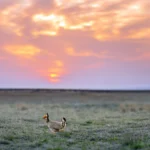
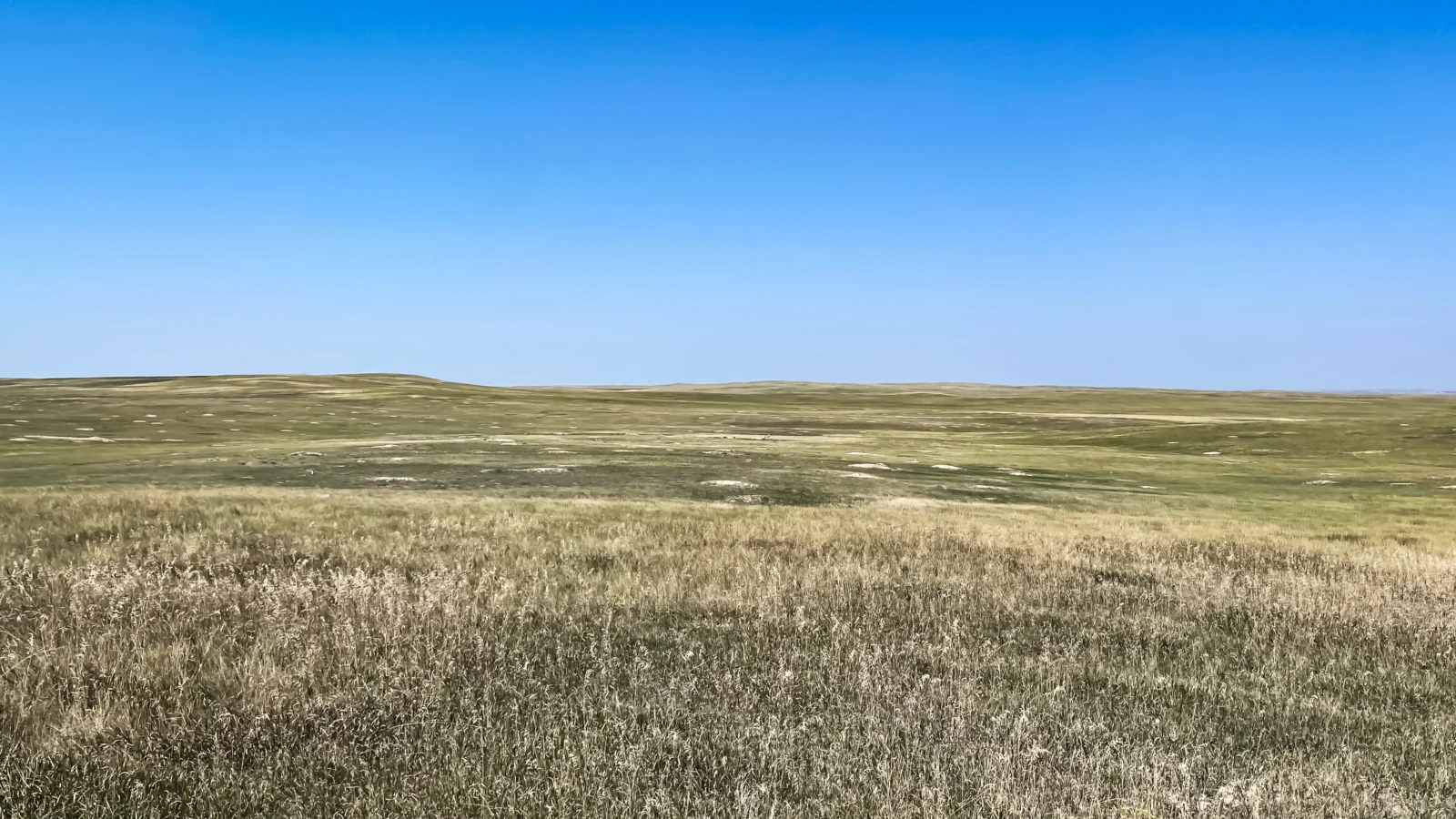
Roberts Prairie Dog Town in the Badlands National Park. Photo by Kurt Nichols.

Espolón largo de collar castaño

Calcarius ornatus

Aapinakoisisttsii (Blackfoot)

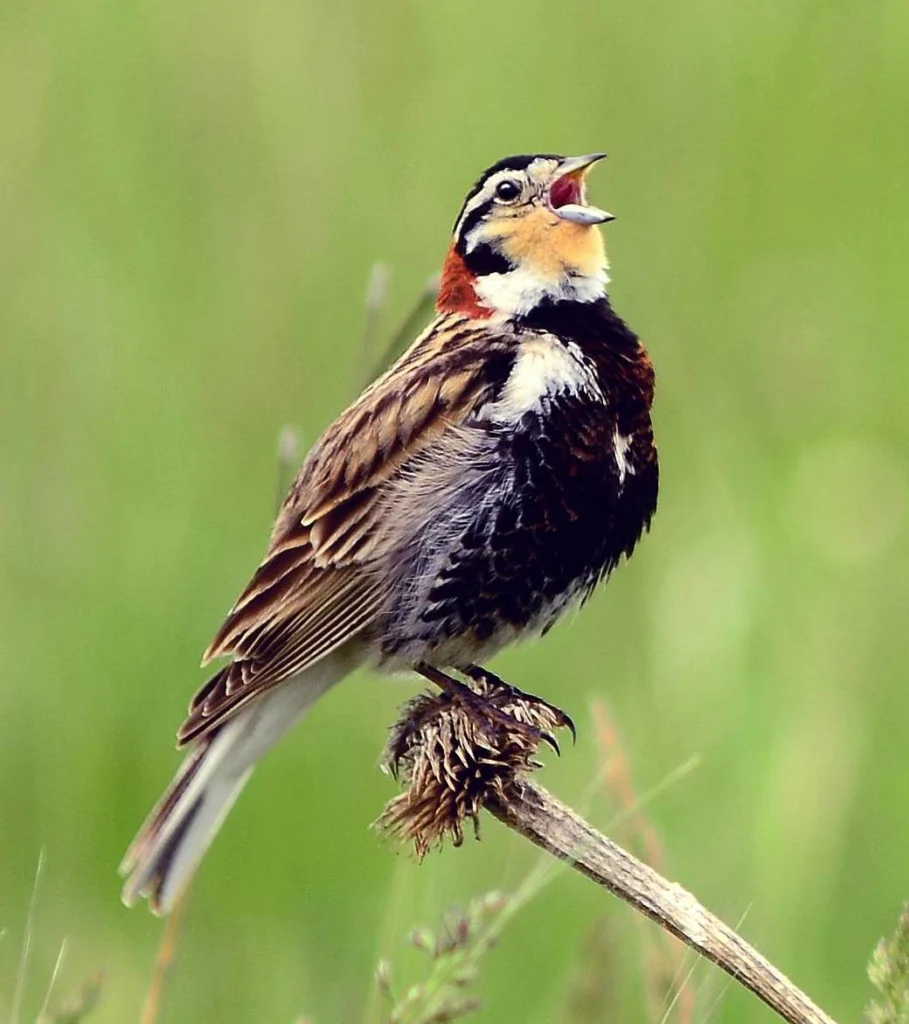
Chesnut-collared Longspur. Photo by Rick Bohn, USFWS.

Espolón largo de collar castaño

Chesnut-collared Longspur. Photo by Rick Bohn, USFWS.

Calcarius ornatus

Descripción general

Estado de conservación
Tendencias demográficas
Decreciente
Tamaño de la población
3,100,000
Familia
Longspurs & Snow Buntings
Ubicación
América del norte
Patrón de migración
Latitudinal
Distancia de migración
Media Distancia
También conocido como
  • Iskiokae (Blackfoot)
  • Escribano Cuellicastaño (Spanish)
  • Arnoldo Ventrinegro (Spanish)

Acerca de

The Chestnut-collared Longspur is an iconic species of short and mixed-grass prairies, favoring grazed sites and those maintained by fire. It is the smallest of North America’s four longspur species, all of which originated in the Americas, with three species found only here. These are species of nearly two-dimensional landscapes, being most abundant on treeless prairies or tundra. As such, they spend much of their time on the ground, where they forage and nest.

Longspurs are named for the extra-long claws on their hind toes, a feature they share with other ground-dwelling grassland birds, including Sprague’s Pipit and Henslow’s Sparrow. This long claw is thought to help these birds navigate uneven ground by increasing their “footspan.”

The Chestnut-collared Longspur, like other birds of the grasslands and prairies, has experienced sharp declines in recent decades. These stunning birds are vulnerable to habitat loss in their breeding range in southern Canada and the northern United States and on their nonbreeding grounds extending into the Chihuahuan Desert grasslands. Conservation efforts from American Bird Conservancy and our partners have emphasized enhancing these habitats and restoring grassland connectivity — essential to species like the longspur, which require large, unfragmented tracts of habitat.
Amenazas

Grassland species including the Chestnut-collared Longspur, Baird’s Sparrow, and Dickcissel comprise one of the fastest-declining suites of birds native to North America, chiefly due to habitat loss in breeding and nonbreeding areas. The Chestnut-collared Longspur has lost an estimated 85 percent of its population and much of its former breeding range since the mid-1960s. Partners in Flight includes it on its Yellow List of species of conservation concern, and the International Union for Conservation of Nature (IUCN) classifies it as Vulnerable to extinction. This species is also federally recognized as Endangered in Canada and as a species of conservation concern in Mexico.

Vanishing Grasslands

The grasslands this species relies on are quickly disappearing. The Chestnut-collared Longspur has declined steeply over the last half-century as grasslands have been lost to row-crop agriculture and exotic grass species like crested wheatgrass, smooth brome, and others. Most importantly, however, this is one of several grassland species that require large expanses of grass. This reflects the vast historic scales that these grasslands once occupied. Additionally, the longspur’s best defense against nest predators in a two-dimensional habitat is a sea of grass within which to hide its nest.

Pérdida de hábitat

Encroaching Shrubs

Grasslands and the wild beings that depend on them are also at risk from the spread of trees and woody shrubs. Adapted to sprawling two-dimensional habitats, grassland birds avoid areas with woody vegetation where they are more vulnerable to higher numbers and species of predators. Historically, periodic low-intensity fires maintained the grasslands by burning down larger woody plants while grasses could resprout from extensive root systems. In the last century, fire suppression on the prairie has allowed woody shrubs and trees to spread into grassland areas, reducing the amount of habitat available to Chestnut-collared Longspurs and other sensitive grassland species.

Estrategias y proyectos de conservación

The Chestnut-collared Longspur, and grassland birds in general, need our help to overcome the threats they face. At ABC, we’re inspired by the wonder of birds and driven by our responsibility to find solutions to meet their greatest challenges. For migratory grassland species like the Chestnut-collared Longspur, we work to conserve habitat on their breeding and nonbreeding grounds, as well as stopover sites used during migration, to ensure these birds have a place to thrive throughout their annual cycle. We work with an array of partners throughout this species’ range, including the Rio Grande and Oaks and Prairies Joint Ventures, to restore grasslands.

Conserving and Enhancing Breeding Habitat

ABC is working to preserve and restore North America’s native grasslands to ensure that the Chestnut-collared Longspur, Long-billed Curlew, and other grassland species can thrive on their northern breeding grounds. Since 2019, our Northern Great Plains Program has worked with landowners to improve more than 1 million acres of private lands through grazing management and habitat restoration, ensuring that they support people and birds together.

Restaurando el hábitat

Restoring Nonbreeding Habitat

In the longspur’s nonbreeding range, Pronatura Noreste, ABC, and other partners have restored and protected more than 150,000 acres in Mexico’s Valles Centrales BirdScape, the largest of 12 Grassland Priority Conservation Areas (GPCAs) identified in Mexico by the Commission for Environmental Cooperation — and one of the richest for grassland birds in the Chihuahuan Desert. And, with the Robles y praderas y Río Grande Joint Ventures, we work to restore and conserve grasslands through brush management from Oklahoma to Mexico, ensuring the longevity of the habitats to support the longspur through its full annual cycle.

A pesar de los vientos en contra, un año de resultados para la conservación de las aves

Championing Bird-Friendly Policies

ABC advocates for policies at the local, state, and federal levels that benefit birds. The Farm Bill, in particular, is the single largest source of conservation funding in the world and has an outsized impact on grassland bird conservation. The programs it funds help ABC, the Migratory Bird Joint Ventures, and landowners such as ranchers and farmers become partners in conservation. Programs like the Conservation Reserve Program, the Grassland Restoration Incentive Programs, and the Regional Conservation Partnership Program have boosted efforts to encourage bird-friendly practices on working and private lands, benefiting the Chestnut-collared Longspur and many other species.

Cómo funciona la Ley Agrícola para las aves

Galería de aves

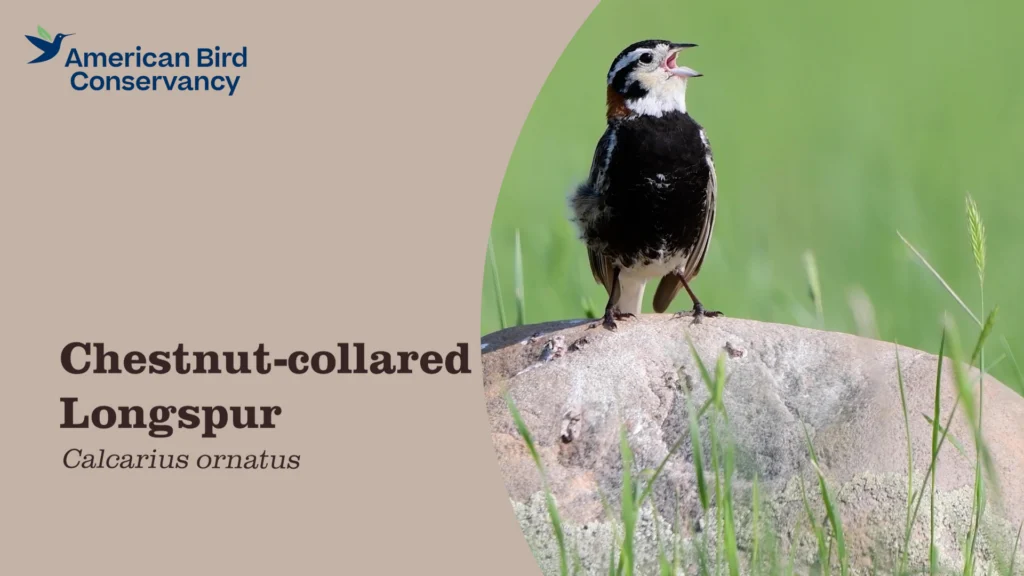
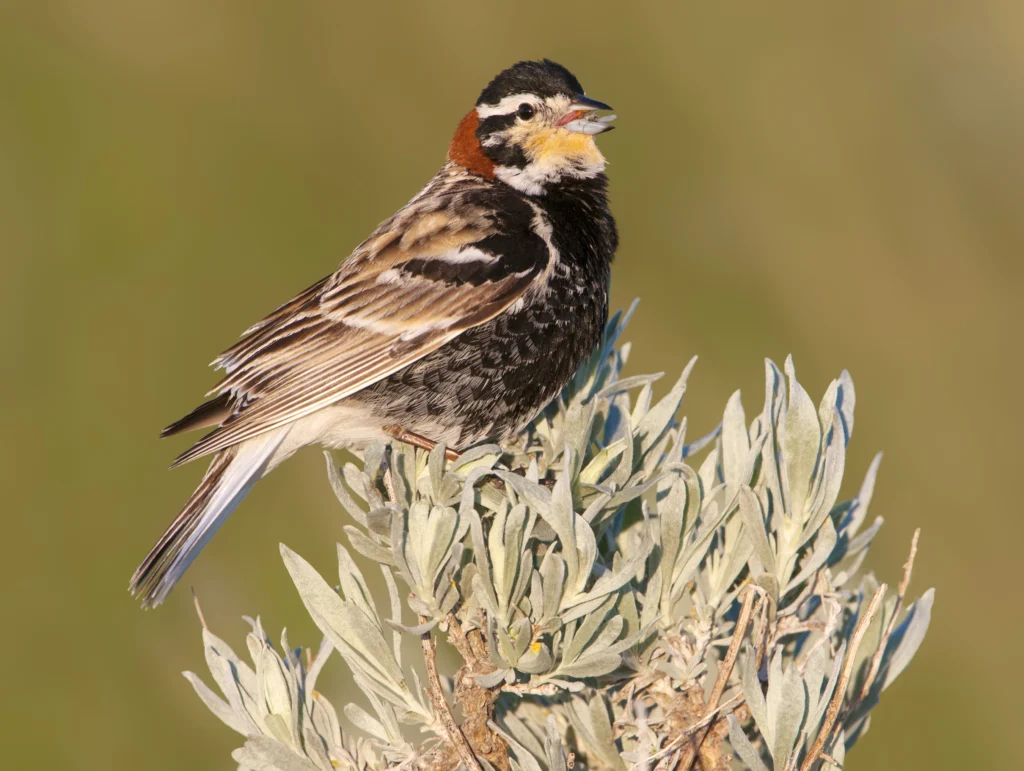
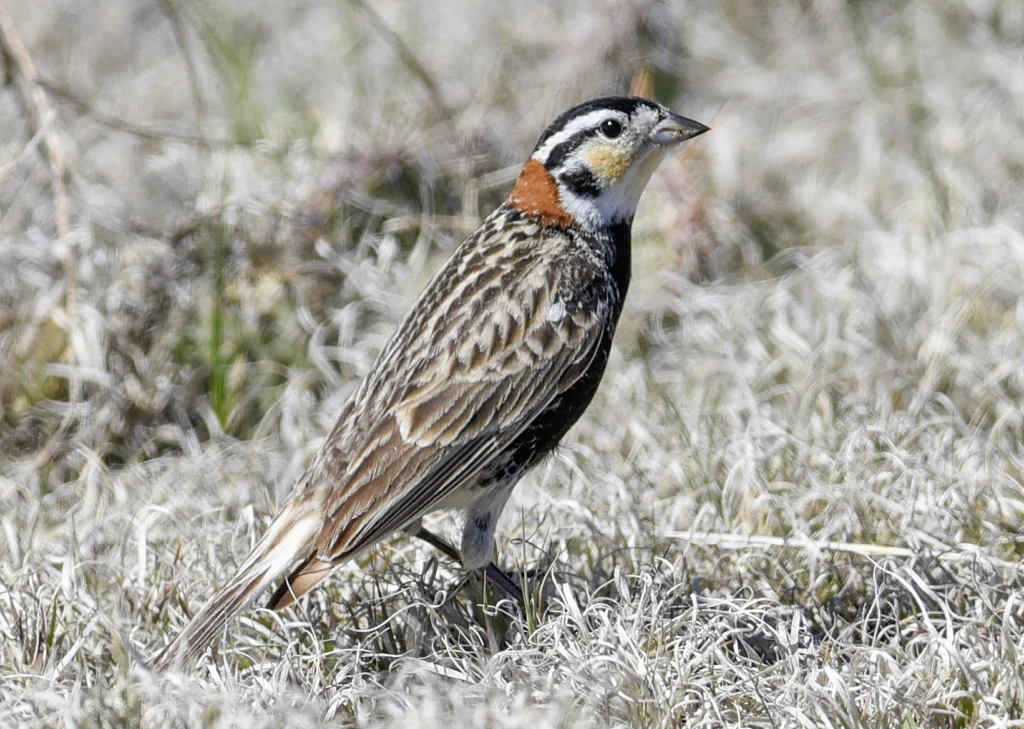
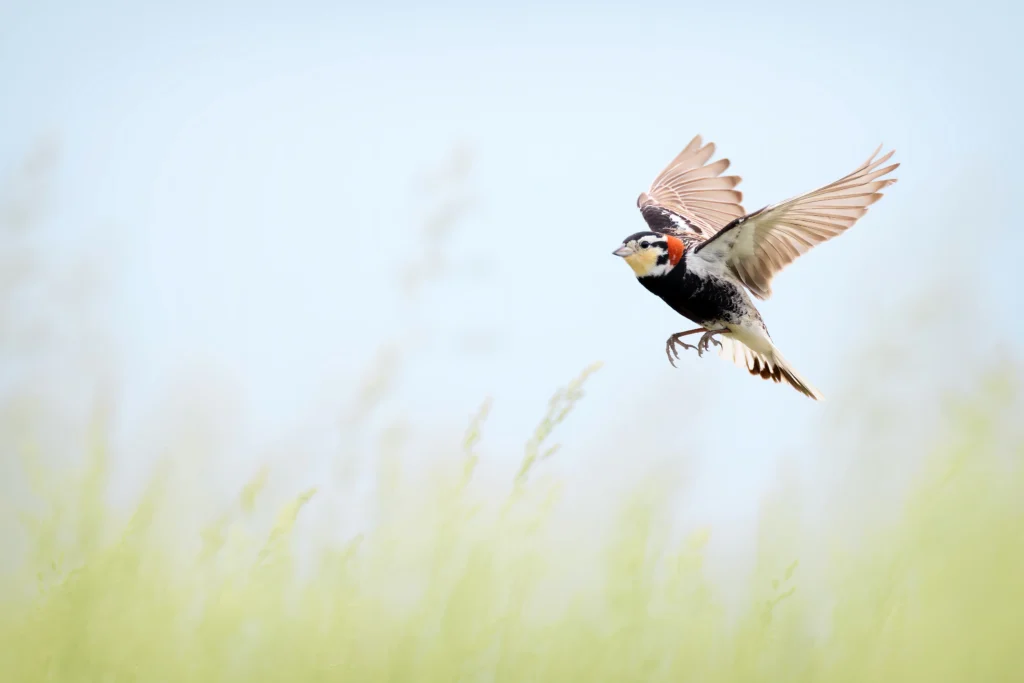
In breeding plumage, male Chestnut-collared Longspurs sport a striking facial pattern of black, white, and buff, matched by striking black underparts and contrasting with the rich chestnut nape that gives the species its name. Females and males in the nonbreeding season are a much plainer combination of buff and gray with dusky streaks — perfect camouflage for a species that seeks shelter amid the grasses and wildflowers.

Sonidos

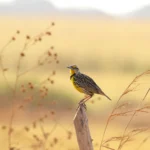
Naturalists and birders often compare the male Chestnut-collared Longspur’s song to that of the distinguished Alondra occidental. The longspur’s song, however, is undoubtedly more complex. Though equally musical, the longspur incorporates a range of chirps and trills in addition to the flute-like notes of the meadowlark. Both sexes also give a variety of calls, including a quick series of several squeaky or whiny notes, often given in flight.

Canción

Credit: Andrew Spencer, XC104371. Accessible at www.xeno-canto.org/104371.

Llamar

Credit: Andrew Spencer, XC104375. Accessible at www.xeno-canto.org/104375.

Hábitat

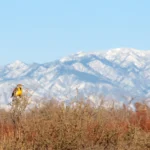
The Chestnut-collared Longspur breeds in short- and mixed-grass prairies in the northern Great Plains, moving south to arid and semiarid grasslands in the nonbreeding season.

  • Prefers recently grazed, mowed, or burned prairie in breeding season
  • Often uses prairie dog towns, where grasses are heavily grazed
  • Nonbreeding habitat is similar — grasslands with short vegetation — although often in drier ecosystems

Rango y región

Rango y región


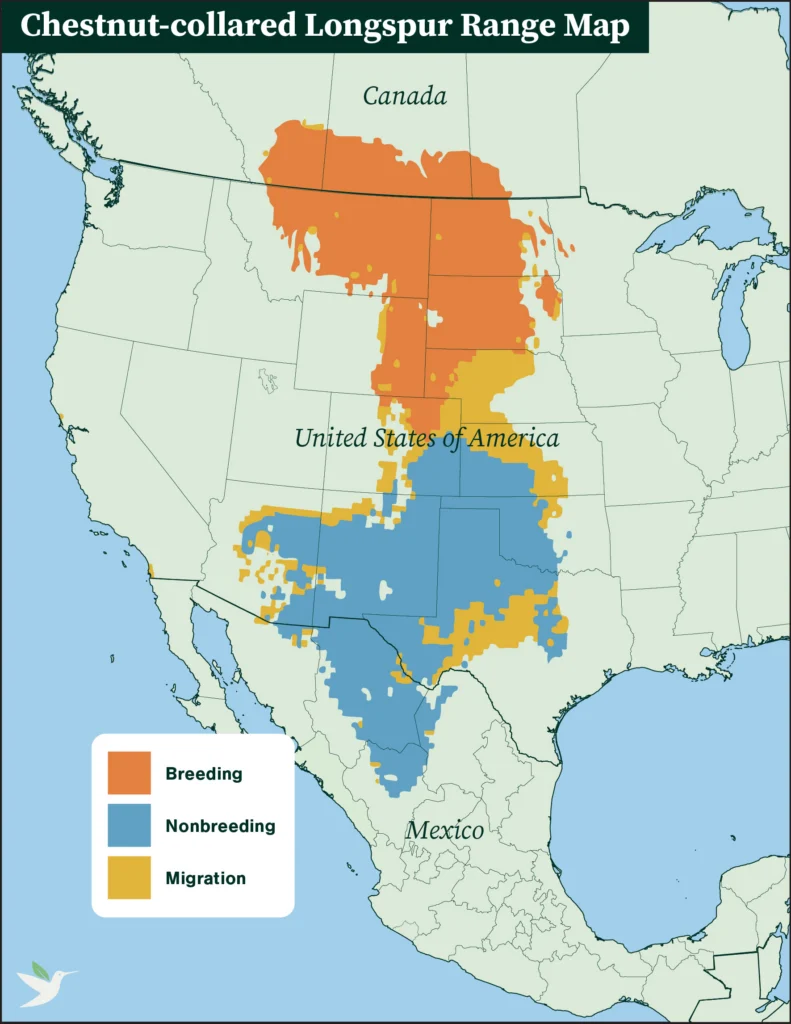
Chestnut-collared Longspur range map

Área específica
Great Plains and northern Chihuahuan Desert

Detalles de la gama
Chestnut-collared Longspurs breed in the northern Great Plains of the United States and southern Canada. Medium-distance migrants, they leave their nesting grounds for wintering areas in the southern Great Plains and Chihuahuan Desert grasslands of north-central Mexico.

¿Sabías?
Though the Chestnut-collared Longspur requires notably short grassland, the related Thick-billed Longspur needs the vegetation even shorter! Though the two habitats may seem fairly similar to human eyes, the two birds hardly overlap in their breeding sites.

Rango
América del norte
Patrón de migración
Latitudinal
Distancia de migración
Media Distancia

Historia de vida

Although the Chestnut-collared Longspur is monogamous during the breeding season, females often mate with other males, especially when starting a second brood. Having eggs sired by multiple males gives her brood more genetic diversity, making it more likely that some of her young will successfully breed themselves. Neighbors aren’t necessarily enemies, though. When a predator like a shrike or harrier shows up in their neighborhood, several longspur pairs will team up to mob and drive it away. Chestnut-collared Longspurs also become quite gregarious during the fall and winter, forming flocks soon after breeding season.

Dieta

Chestnut-collared Longspurs forage on the ground for insects (particularly grasshoppers), spiders, and seeds, often scratching after them with their oversized feet. They also pick food from low vegetation, and sometimes make short flights to nab flying insects. During the breeding season, they focus on protein-rich invertebrates, then switch to seeds during the winter.

Noviazgo

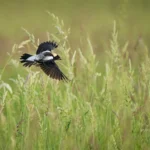
The male Chestnut-collared Longspur defines and defends his territory through a conspicuous flight display, singing on the wing while flaunting his pitch-black belly and crisp white tail against the blue of the wide-open prairie sky. At closer range, he may also perform on the ground, fanning his tail and wings while raising and bowing his head.

Anidación

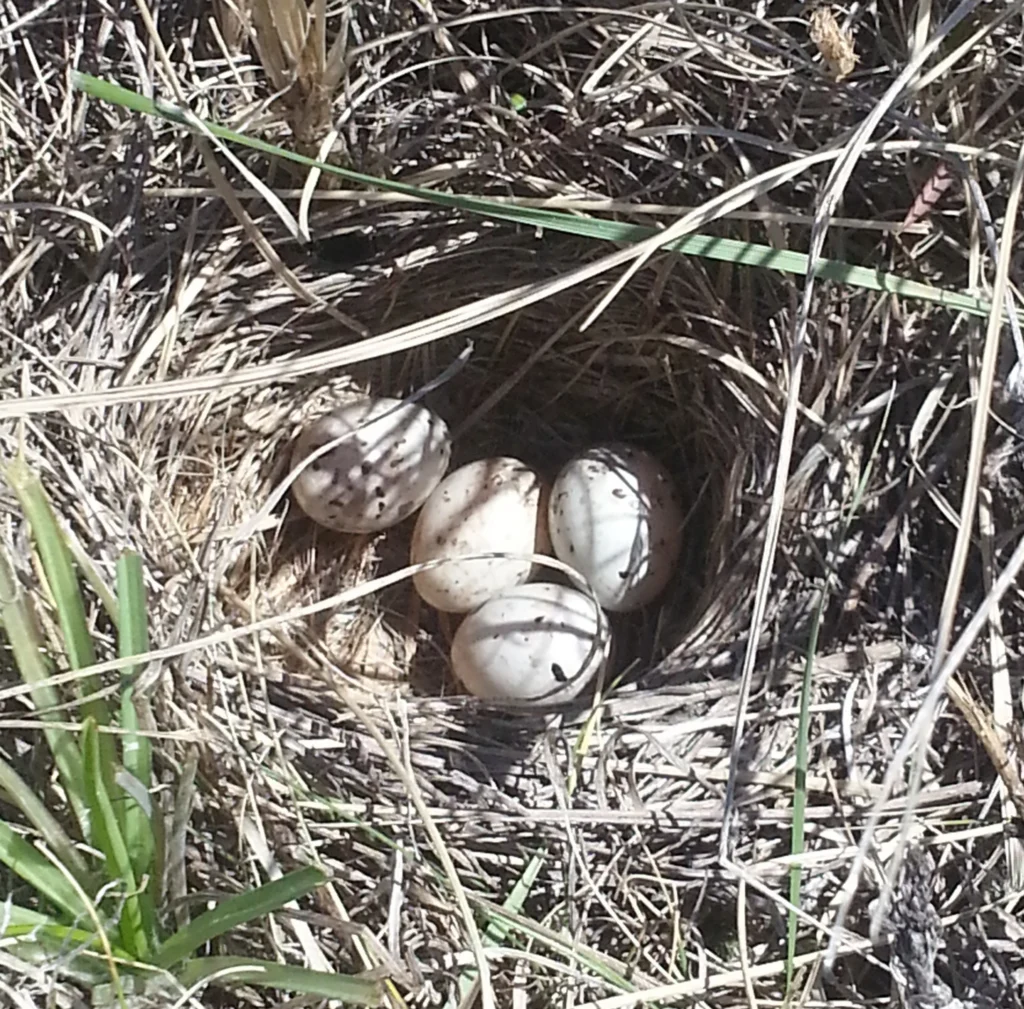
Once mated, the pair begins to nest. The female excavates a cup-shaped depression in the ground, usually next to or within a shrub, clump of grass, or sometimes even cow dung. She builds her nest within this depression, primarily from grasses, then lines the nest with softer material such as fur, feathers, hair, or plant fibers. The nest rim is typically flush with the ground. If her nest is destroyed, she will build another. This resilient species may try to re-nest as many as four times within a season!

Huevos y crías

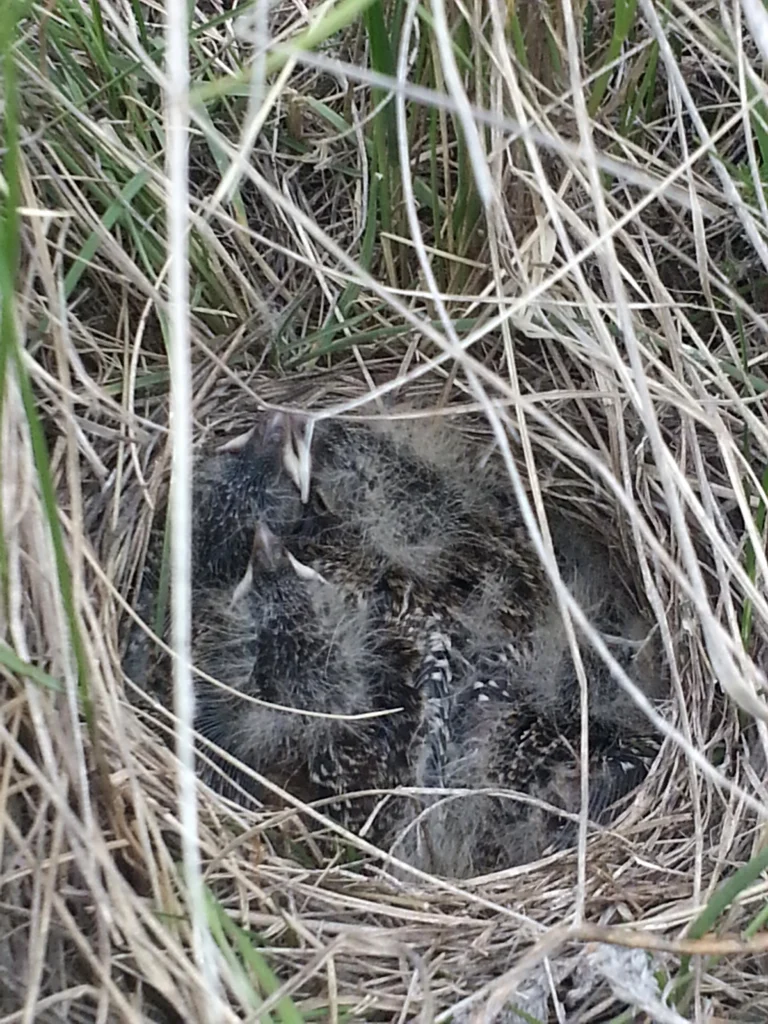
The female Chestnut-collared Longspur lays three to five eggs, and does most of the incubation herself while her mate stands guard over their territory. If disturbed while on the nest, she takes flight and performs a flappy distraction display to lead potential predators away from the area, much like the injured-wing act deployed by nesting Chorlito americano. Once the young hatch, the male joins in their care, helping the female shade them from the sun, joining in distraction displays, and aggressively attacking intruders. Both parents feed the rapidly growing nestlings, which leave the nest within two weeks. The male then takes over feeding duties, which continue for almost another month, while the female begins a second brood.