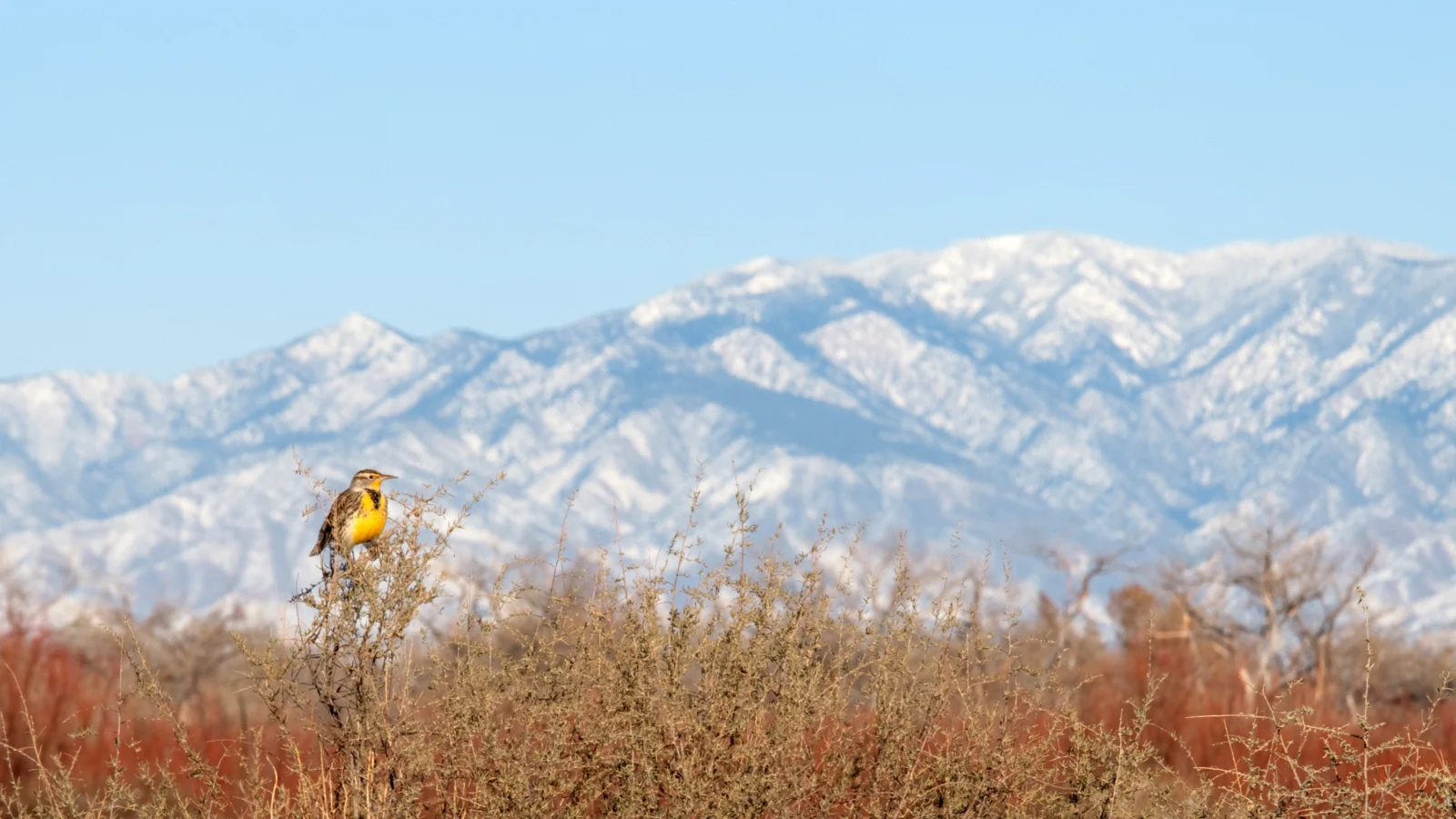
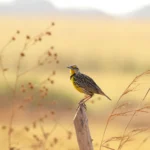
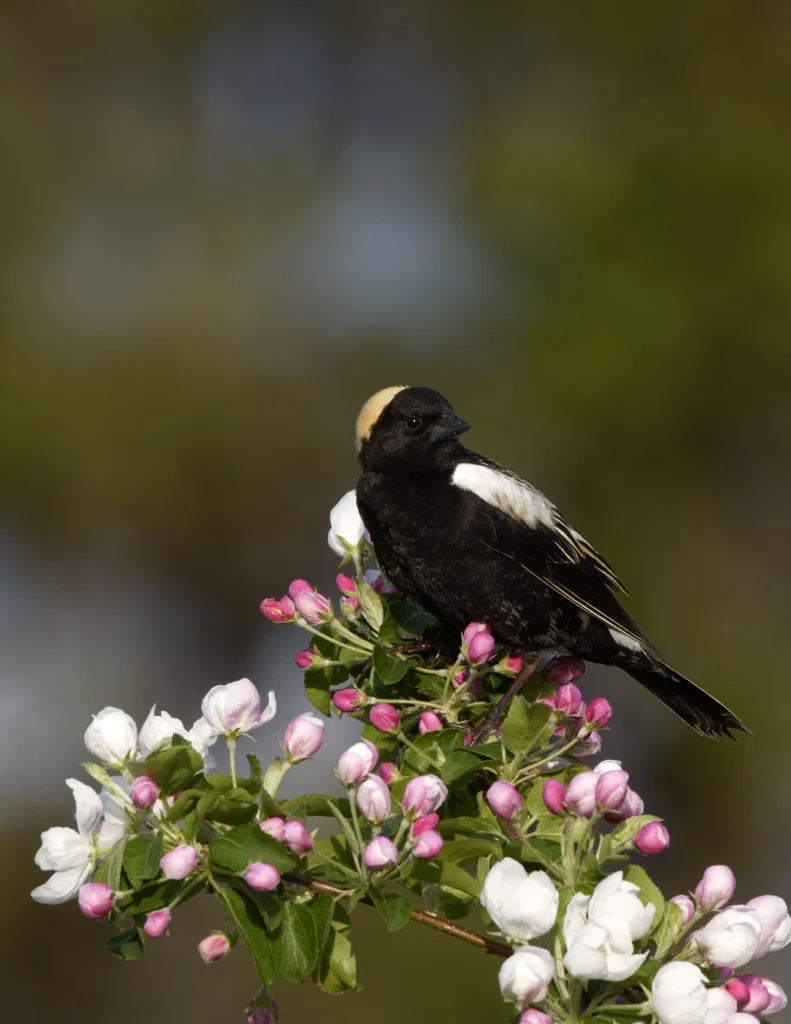
A Western Meadowlark perches on scrub with a view of mountains behind it. Photo by Jacob Spendelow.

Prioritizing Indigenous Perspectives in Grassland Restoration

Western Meadowlark. Photo by Jacob Spendelow.

Prioritizing Indigenous Perspectives in Grassland Restoration

Read in English
Escuchar este articulo

The central grasslands of North America once covered nearly a tenth of the continent, an expanse created and sustained by the imprint of humans and ancient animals — roving camelops, mammoths, giant ground sloths, and bison. The paths they chose and the lives they led shaped tallgrass and shortgrass prairies, arid and alpine grasslands. Bison wallowed, creating ponds. Humans set fires, preventing trees from encroaching. Both actions increased bird diversity.

The grasses formed rich soils, trapping more carbon than most forests within their deep networks of roots. In the past two centuries, we have lost nearly two-thirds of these ancient grasslands to the plow, to encroaching trees, to overgrazing, to suburbanization. As a consequence, grassland birds are declining rapidly. El Mapa de las praderas centrales, supported by ABC through our work with the Migratory Bird Joint Ventures, creates a path toward renewed abundance. The Indigenous Kinship Circle (IKC) ensures that Indigenous knowledge and approaches play a central role.

Since 2022, it has been a pleasure to learn from and with Aimee Roberson and Katia Carranza, who have both supported the IKC. As I reflect on their stories, their paths and those of their ancestors inspire me as much as their vibrant work of cultural and biological restoration. With roots in Mexico and the United States, Carranza works to benefit the well-being of humans and biodiversity across that border. And, as Roberson described so beautifully in the Winter 2022–23 issue of Conservación de aves, her ancestors were stewards of these lands and walked the Trail of Tears. She has worked on bird conservation and research, habitat restoration, and partnerships in several regions of the grasslands.

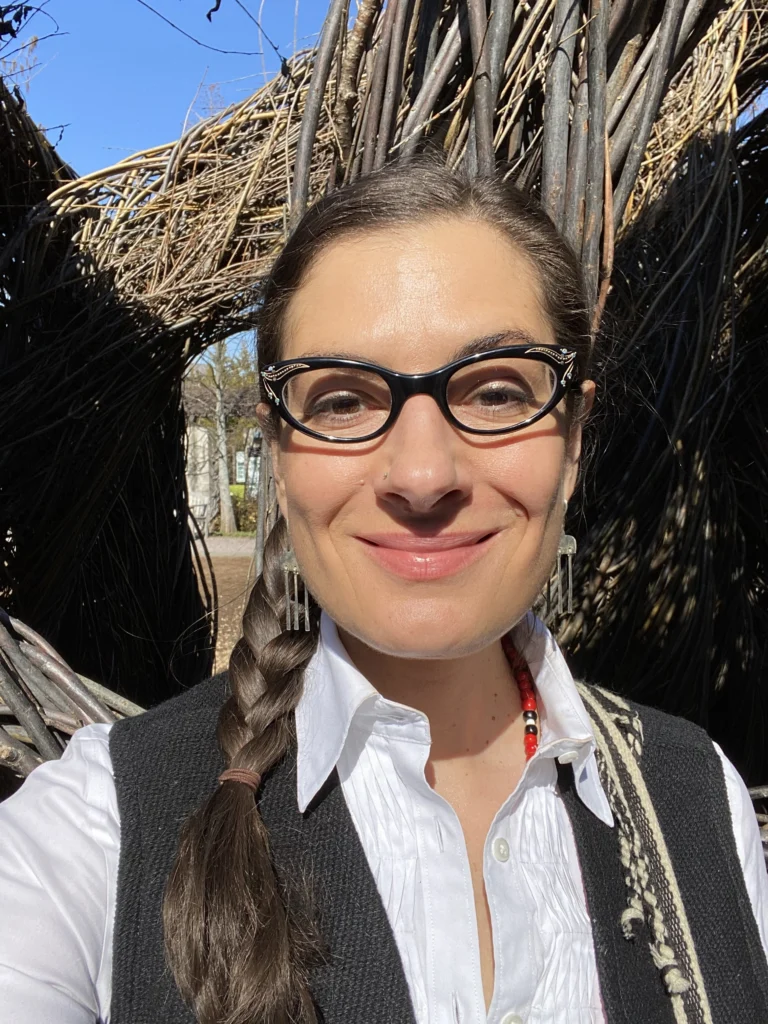
Aimee Roberson.
Aimee Roberson.

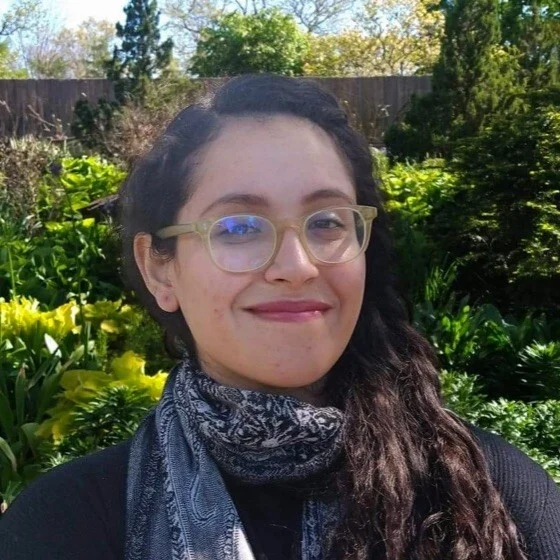
Roberson, a citizen of the Choctaw Nation of Oklahoma and a descendant of the Chickasaw Nation, is the former Director of ABC’s Southwest Region. She is the Executive Director of the nonprofit Cultural Survival, which works in solidarity with Indigenous Peoples in support of their rights, self-determination, and cultural and political resilience. Carranza, a Mestiza sustainability researcher and community organizer, worked with Roberson as one of ABC’s first Together for Birds fellows between 2022 and 2024.

Roberson spoke of co-creating the IKC: “It was an enriching and life-changing experience for me, finally allowing me to express my perspective as an Indigenous person within institutions and organizations that primarily approached conservation and science from a ‘Western’ framework. This feeling of straddling two different realities, of ‘walking in two worlds,’ is the lived reality of many Indigenous People whose homelands and territories have been heavily impacted by settler colonialism and are contending with the ongoing impacts of genocide and forced assimilation. Participating in Indigenous Kinship Circle discussions provided a breath of fresh air.”

Carranza said the fellowship appealed to her because it was “an opportunity to better understand and advocate for holistic and multicultural approaches to grassland restoration, conservation, and resilience — to help rekindle ancestral kinship and Indigenous solutions for a just and sustainable biosphere.”

During the fellowship, she conducted research driven by Indigenous and Western approaches and created technical reports, educational materials, and strategic recommendations. “I collaborated with Indigenous and Western leaders, researchers, and government officials,” she said. “I valued how our efforts focused on rebuilding kinship between Indigenous Peoples who have long faced disconnection because of language, income, and political barriers. They built relationships and secured sizable grants to support cultural revitalization, traditional agroecology, youth empowerment, and climate resilience of Indigenous Nations in Mexico and South Dakota.”

Katia Carranza.
Katia Carranza.

Carranza also helped ensure that Indigenous Peoples in Mexico could participate in meetings and contribute to projects by investing in translation and interpretation. “Indigenous Peoples across cultures and borders have never stopped cultivating reciprocity and reconnection, having witnessed how their peoples, environments, and wildlife have suffered over time because of extractive relationships. They have led in caring for Nature as a valued relative who shapes traditions, well-being, and resilience. They have grown local and youth leadership in healing our communities and environments. Indigenous Peoples are investing in numerous parallel efforts, all grounded in cultural revitalization within agroecology, wildlife restoration, language preservation, and land rematriation across borders,” she said.

Since 2019, the Mexican government has returned more than 113,000 acres to the Indigenous Yaqui people in the western state of Sonora, and another 19,500 acres are expected to be returned soon. Farther north, in South Dakota, the Rosebud Sioux Tribe and its partners have brought more than 1,000 bison over the last six years to a 28,000-acre native grassland. Bringing back the prairie’s largest animal to roam free is helping restore the habitat and the local Native cultural economy. No single grassland bird species is the focus of these efforts, but many birds benefit — sandpipers, bobwhites, meadowlarks, sparrows, and others.

Roberson expects the IKC to remain an important part of grassland conservation in the years ahead. “Together,” she said, “we created a space where Indigenous People learn from and support each other, where we collectively advocate for our perspectives and too-often-forgotten histories to be heard, respected, considered, and shared with conservation entities such as the Central Grasslands Roadmap.”

Our connection to each other also continues. Since 2022, Aimee, Katia, and I have stayed connected regarding our own personal and professional paths. Work that explicitly illuminates and deepens ecological and cultural interconnections is both ancient and still outside of mainstream conservation. As such, we engage in wayfinding, co-creating diverse ways of understanding and serving birds, people, and wild lands.


This article first appeared in the Summer 2026 issue of Conservación de aves, Revista miembro de ABC. 


Naamal De Silva is ABC’s Vice President of Together for Birds. She serves on the management board and executive council for the Appalachian Mountains Joint Venture and the Advisory Board for DC Climate Week.