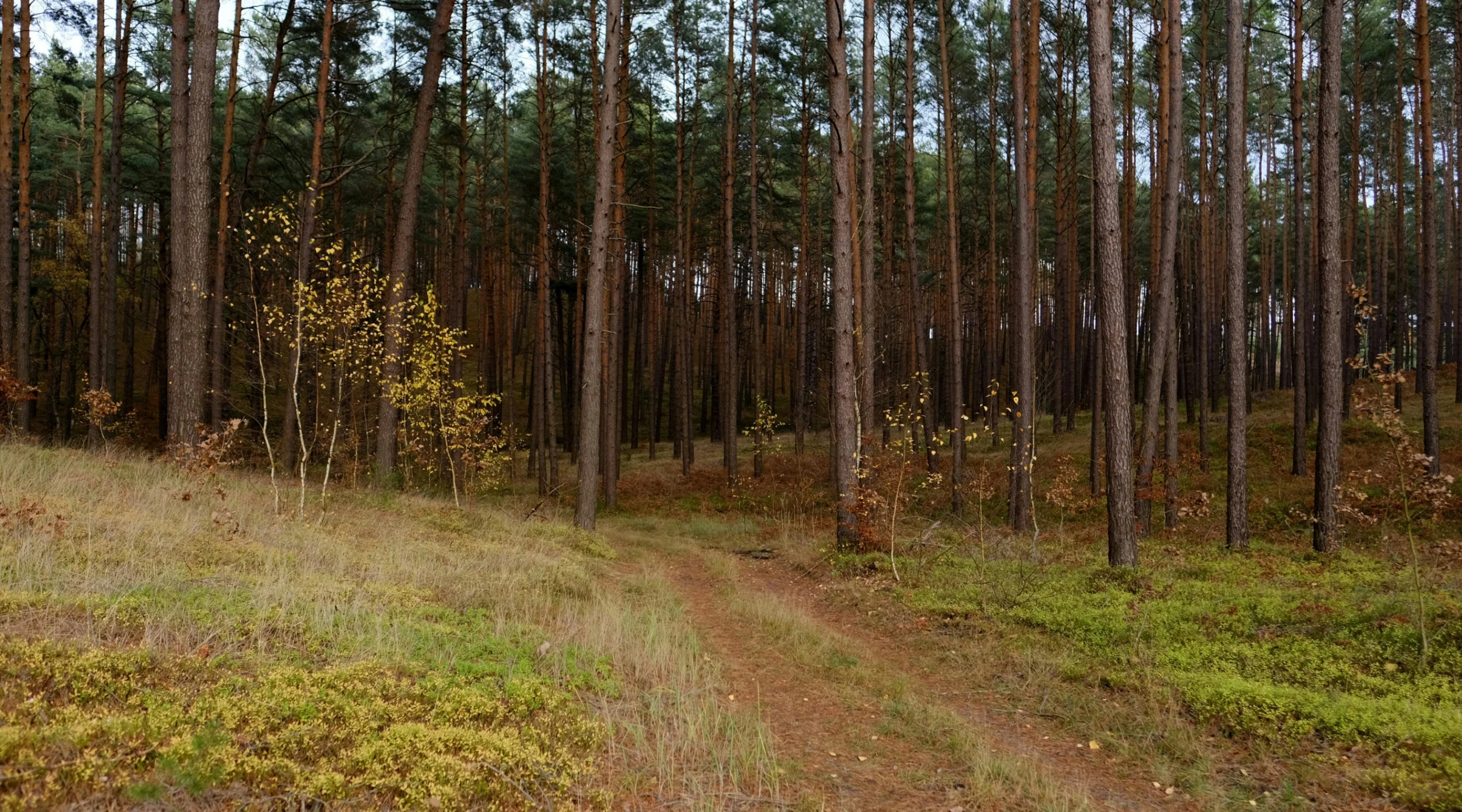
Open Woodland by Roman Biernacki, Pexels

Pájaro carpintero de cabeza roja

Melanerpes erythrocephalus

ᏓᎳᎳ (Cherokee)

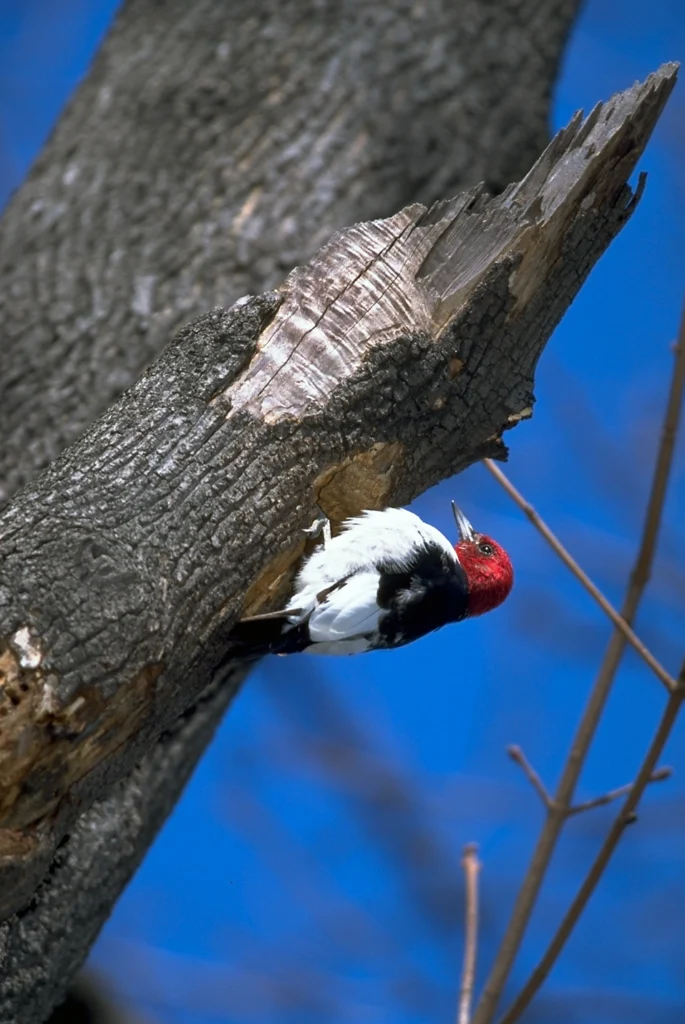
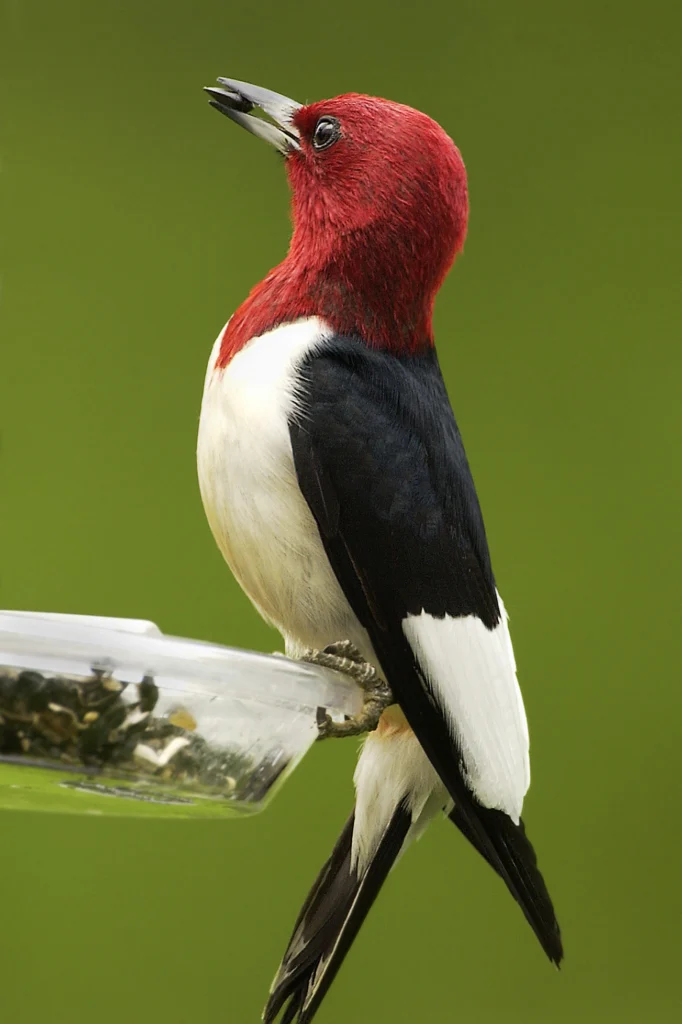
Red-headed Woodpecker. Photo by Owen Deutsch, owendeutsch.com.

Pájaro carpintero de cabeza roja

Red-headed Woodpecker. Photo by Owen Deutsch, owendeutsch.com.

Melanerpes erythrocephalus

Descripción general

Estado de conservación
Tendencias demográficas
Decreciente
Tamaño de la población
1,800,000
Familia
Pájaros carpinteros
Ubicación
U.S. and Canada
Patrón de migración
Variado
Distancia de migración
No migratorio
También conocido como
  • Carpintero Cabecirrojo (Spanish)

Acerca de

The Red-headed Woodpecker is a charismatic and colorful species, recognizable to even the most casual birder. Its eye-catching plumage gives this woodpecker a number of whimsical nicknames, including flag bird, flying checkerboard, jellycoat, patriotic bird, and shirt-tail bird. They are noisy as well as colorful, giving a variety of harsh whines, nasal churrs, and rapid chattering calls.

The Red-headed Woodpecker is one of only four North American woodpecker species that commonly store or “cache” food (the others are the Acorn, Lewis’s, and Red-bellied Woodpeckers). Red-headed Woodpeckers can be observed stuffing nuts and other edible items in crevices, tree cavities, or under bark, and sometimes even use pieces of bark to hide the items they have cached. These caches provide the woodpecker with a reliable source of food year-round.
Amenazas

Partners in Flight includes the Red-headed Woodpecker as a Watch List Species for the United States and Canada due to steep population declines and threats to the woodlands with standing dead trees (snags) that this species prefers. This habitat is disappearing as forests are developed, snags are removed, and fire suppression allows new growth to crowd the open woods. Beavers, once widespread across the continent, provided ideal habitat for these woodpeckers as well, as the creation of ponds left large snags perfectly-suited for nesting Red-headed Woodpeckers. Similar declines have been noted in other species that prefer open forest and savanna, including the Prairie Warbler, Flammulated Owl, and Olive-sided Flycatcher.

Monoculture in the Savanna

While small farms and orchards can support the Red-headed Woodpecker, the movement toward large-scale monoculture practices has eliminated much of the habitat that used to be available to these birds. The loss of diversity, as well as the elimination of windrows and other habitat that would fall between smaller plots, means that these areas provide very little to birds.

Pérdida de hábitat

Fire Suppression

Historically, Indigenous land stewardship using fire maintained the open savanna habitat that Red-headed Woodpeckers prefer. However, fire suppression has allowed young trees to encroach into these habitats, replacing open woodlands with dense, closed forests.

Getting Rid of Dead Trees

Standing dead trees and even dead limbs on living trees provide necessary habitat for cavity nesters like the Red-headed Woodpecker. Natural cavities are rare, especially in living trees, so the removal of dead trees and limbs has a big impact on whether a bird will be able to nest. Firewood cutting, deforestation, and even the removal of trees in urban areas for safety concerns all reduce the habitat available to these birds.

Estrategias y proyectos de conservación

The Red-headed Woodpecker needs our help to overcome the threats it faces. At ABC, we’re inspired by the wonder of birds and driven by our responsibility to find solutions to meet their greatest challenges. With science as our foundation, and with inclusion and partnership at the heart of all we do, we take bold action for birds across the Americas.

Mejorar el hábitat

Habitat is the foundation for birds’ survival. ABC works across vast landscapes in North America where many of our priority species breed. Working closely with the Migratory Bird Joint Ventures (JVs) and other partners, we have improved more than 10 million acres of bird habitats in the places where birds need us most — from the Great Lakes to the Chihuahuan Desert.

Restaurando el hábitat

Partnering for Forest Conservation

ABC participates in several management programs that benefit Red-headed Woodpeckers. As part of the Central Hardwoods Joint Venture (CHJV), ABC is helping to restore large acreages of natural communities. Through thinning and prescribed burns, we are supporting important habitats for this woodpecker, such as open oak and oak-pine woodlands.

Empresa conjunta de maderas duras centrales

Supporting Sustainable Forestry

Through the Sustainable Forestry Initiative, ABC is working with private landowners and forestry companies in the Southeastern U.S. to create and maintain habitat for Red-headed Woodpeckers. Foresters are encouraged to leave an adequate number and density of snags when forest stands are harvested, providing trees and open land good for the nesting woodpeckers. This program also benefits many other species, including the Reinita alidorada y Milano colilargo.

Persiguiendo cometas de papel

Galería de aves

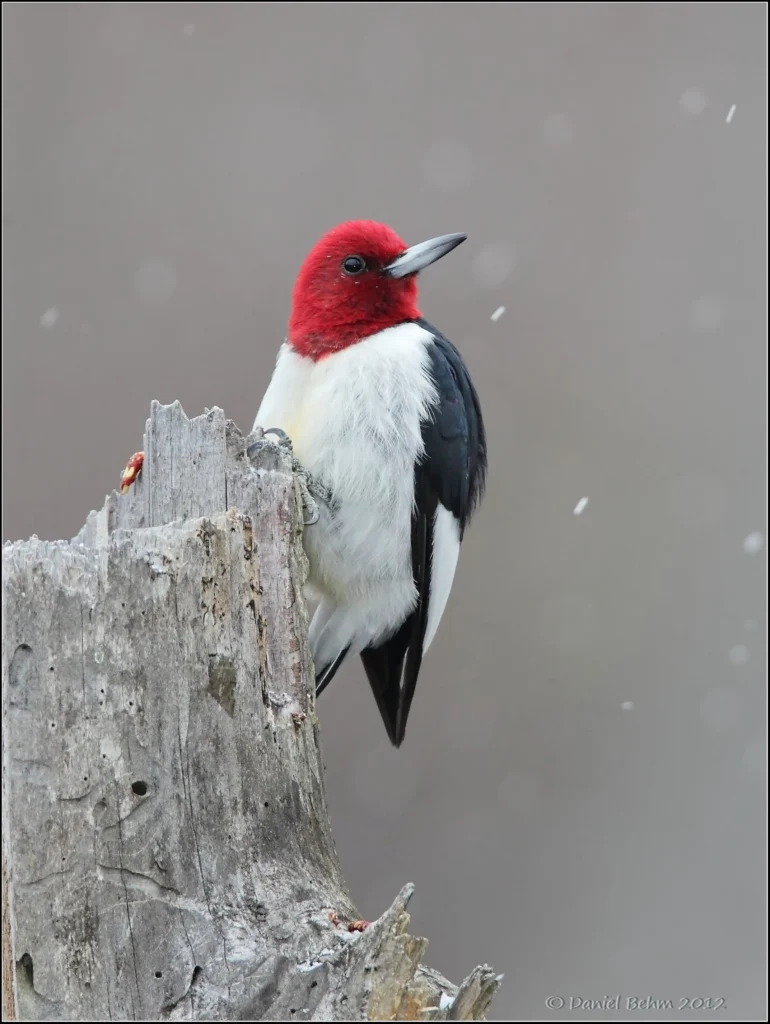
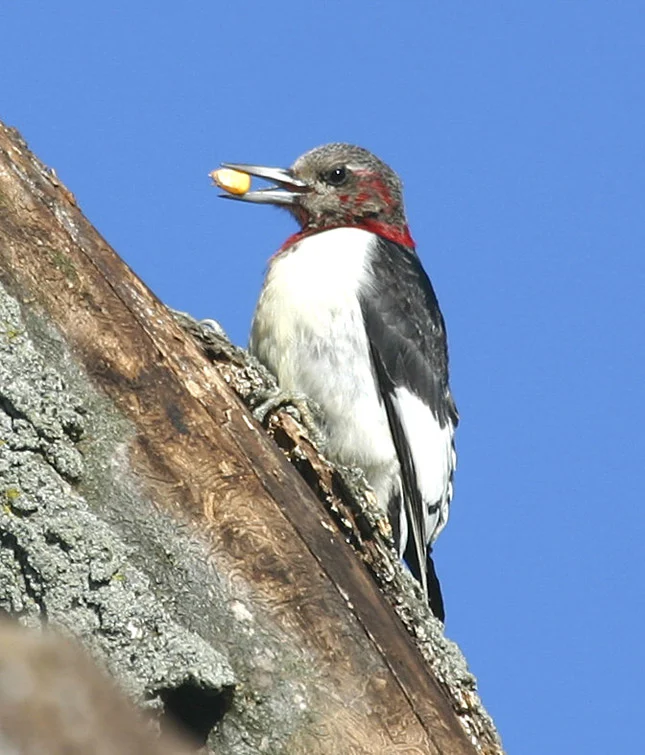
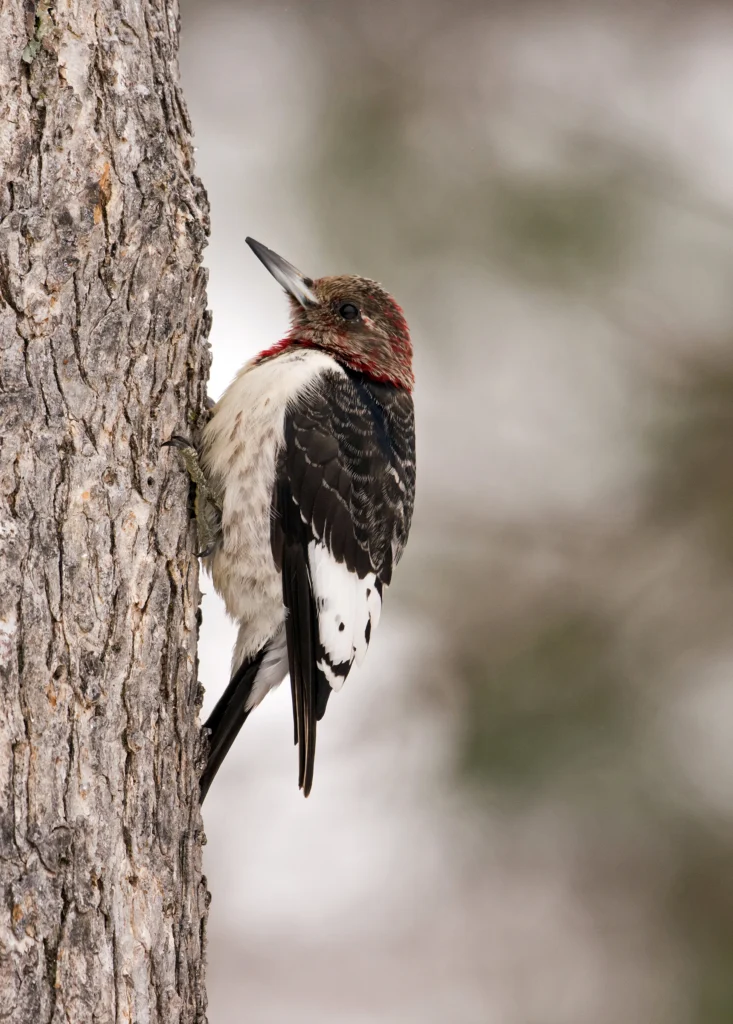
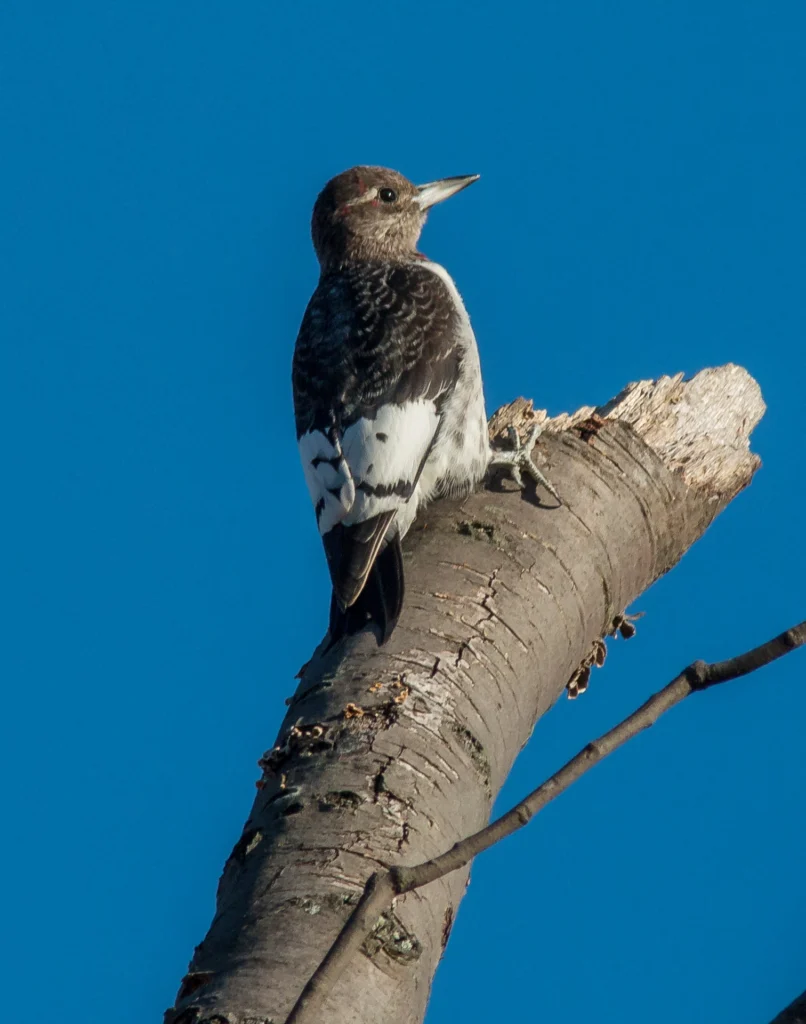
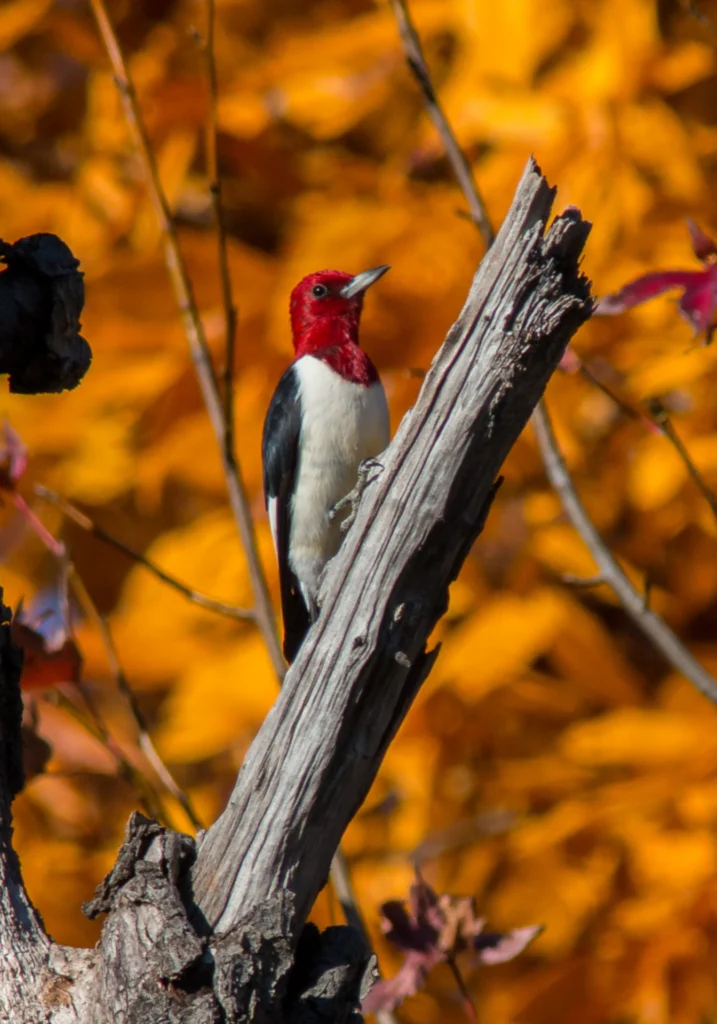
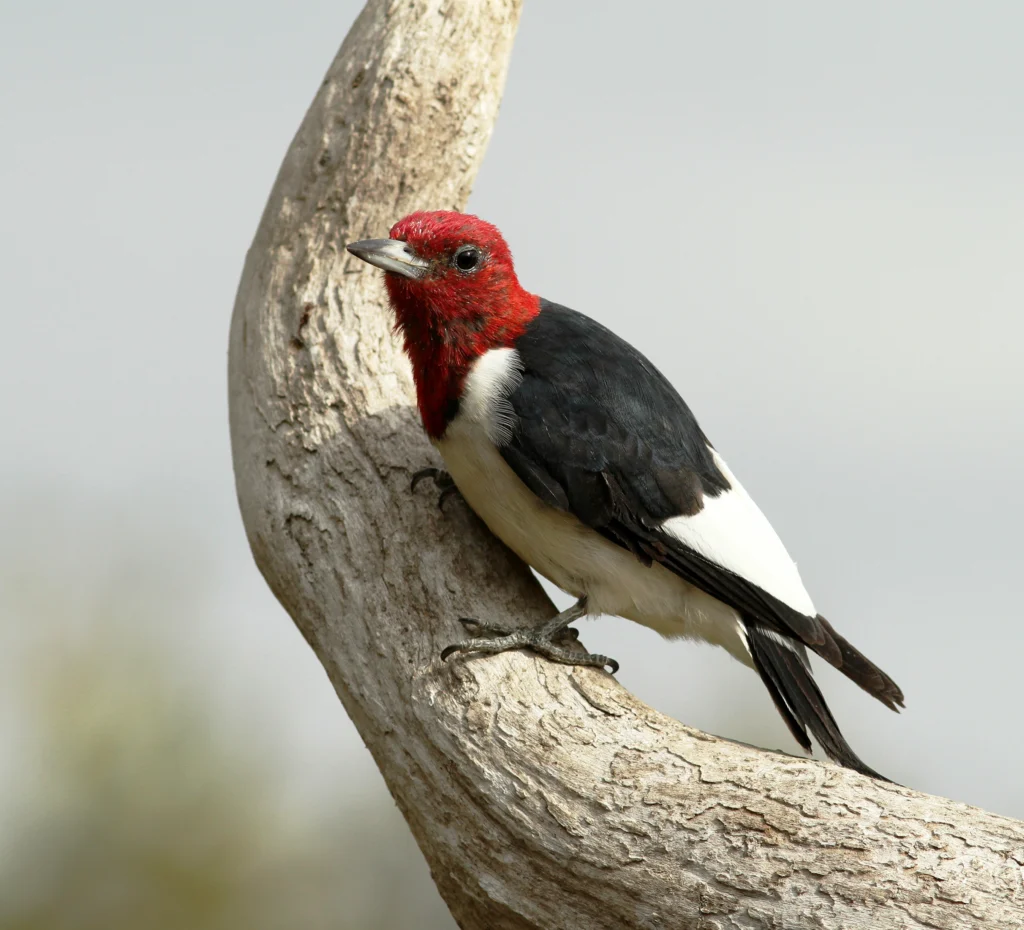
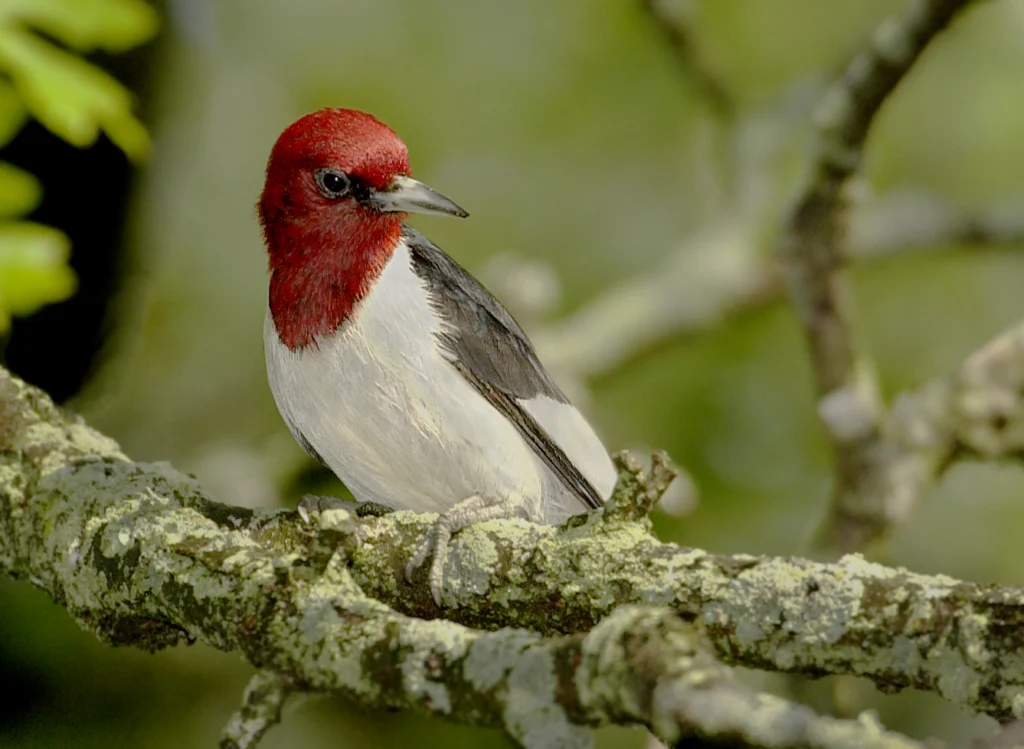
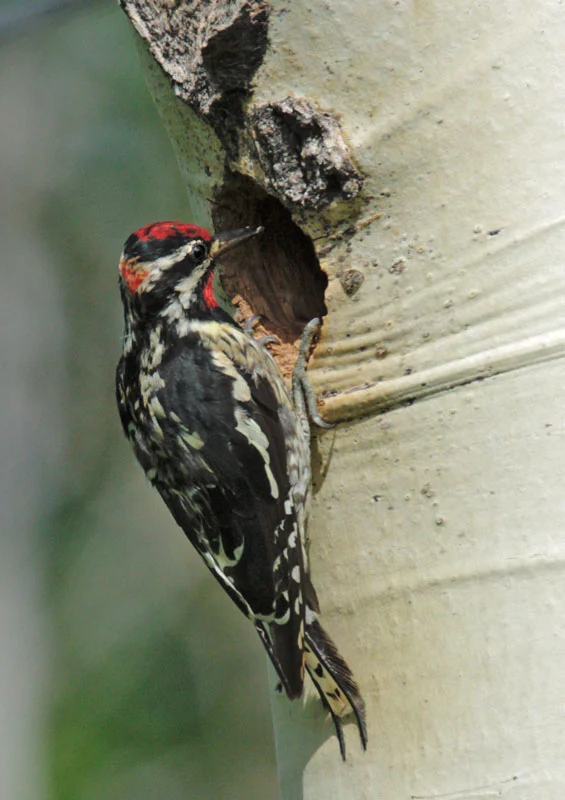
Male and female Red-headed Woodpeckers have the same plumage, making them one of only four woodpecker species worldwide with this characteristic (Lewis’ Woodpecker is another). The head, neck, and most of the breast are a striking cherry red, the underparts are white, and the upperparts are mostly shiny black, with a broad white band across the lower wings and rump. Juveniles can be told by the coloring of their heads, which is a dull grayish-brown rather than the bright red of adult birds. The darker parts of the juveniles’ plumage can also be streaked or scalloped. Young birds gradually molt into full color by their second year, but can show an odd patchwork of gray, brown, and red plumage on their heads in the meantime.

Sonidos

The Red-headed Woodpecker has a large repertoire of vocalizations, ranging from rasping whines to nasal chatter. The most common call is a shrill descending querr o tchur. Drumming serves a similar role to song in most woodpeckers, helping birds to defend their territories and attract mates. Both male and female Red-headed Woodpeckers drum, a rapid, even series of strikes on a tree or other resonant vertical object.

Querr Calls and Drumming

Credit: John A. Middleton Jr., XC711382. Accessible at https://xeno-canto.org/711382.

Hábitat

The Red-headed Woodpecker lives year-round in open savannas, woodlands, and lowland forests where there are standing dead trees or limbs for nesting.

  • Uses human-modified habitats such as orchards, pastures, and suburban parks
  • Often associated with forest disturbances such as wildfire or wind damage
  • Historically associated with beaver ponds

Rango y región

Rango y región


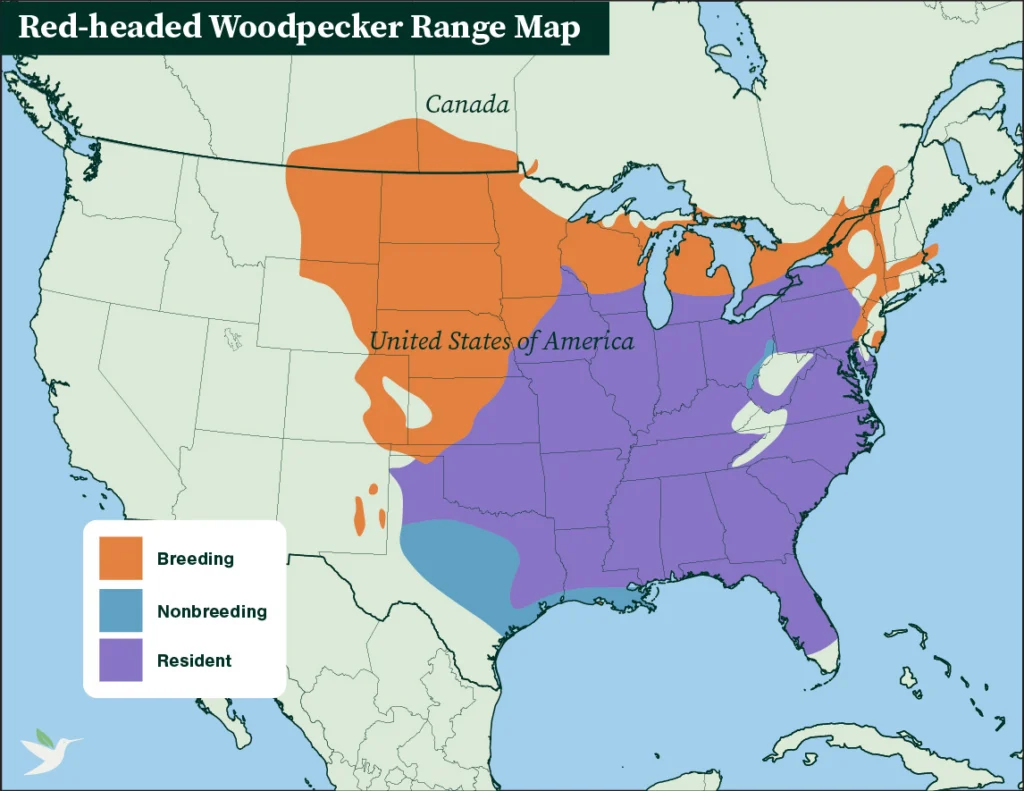
Red-headed Woodpecker range map.

Área específica
Southern Saskatchewan and Manitoba; eastern and central United States

Detalles de la gama
The Red-headed Woodpecker is widespread across the central and eastern United States and parts of southern Canada. From as far west as eastern Montana and southern Saskatchewan, this woodpecker ranges east to Vermont and southern Ontario and Quebec, and south into Texas and Florida. This bird avoids large mountain ranges and is largely absent in the higher elevations of the Blue Ridge and Adirondack Mountains.

¿Sabías?
Red-headed Woodpeckers are a nomadic species, with periodic movements influenced by the yearly abundance of nuts, a favored winter food, rather than the time of year. Some northern populations of Red-headed Woodpecker migrate south in the fall, but many populations remain in one place year-round, especially if acorns, beechnuts, and other nut crops are abundant.

Rango
U.S. and Canada
Patrón de migración
Variado
Distancia de migración
No migratorio

Historia de vida

Garrulous, gorgeous, and energetic, the Red-headed Woodpecker is a joy to behold. Their bold plumage makes them impossible to ignore, their aerobatic flight is truly impressive to watch, and their interpersonal antics, from their raucous calls to their games of courtship “peek-a-boo,” make them truly entertaining as well.

Dieta

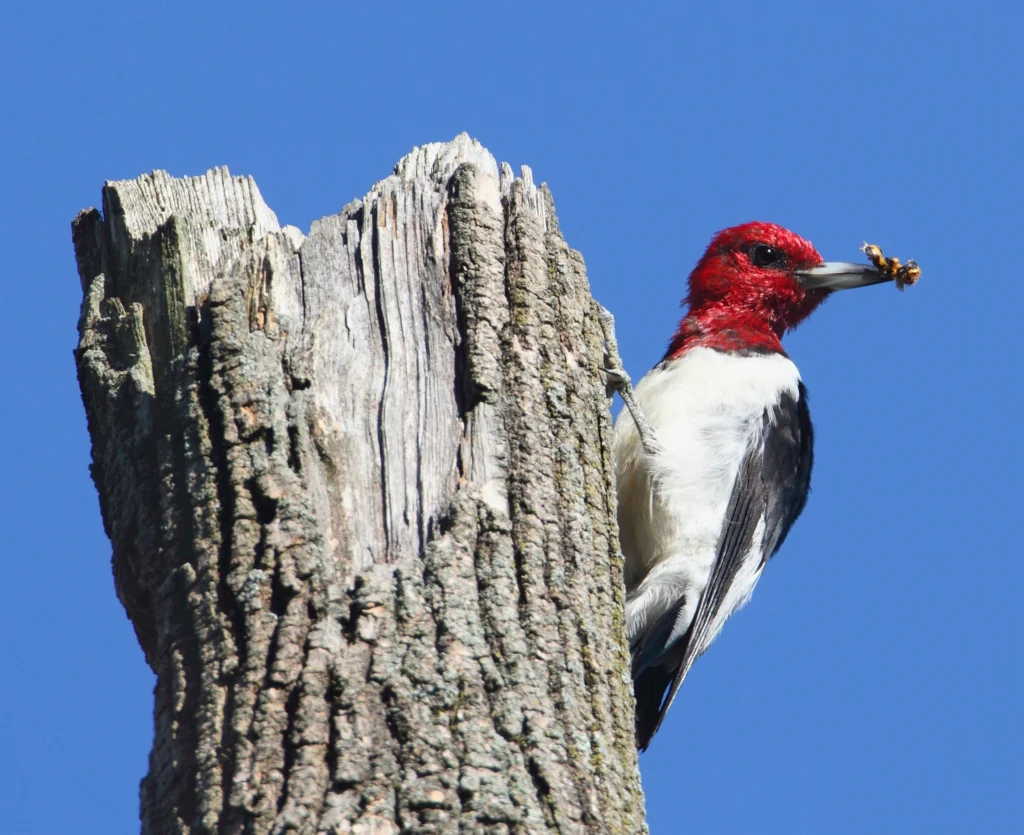
Red-headed Woodpeckers are more omnivorous than many woodpeckers, feeding on a wide variety of insects and other invertebrates, fruits, berries, and seeds, as well as nuts. Red-headed Woodpeckers drill into dead wood after insects in typical woodpecker fashion, but will also pluck prey from vegetation or the ground. Like the Lewis’s Woodpecker, the Red-headed Woodpecker is an accomplished catcher of flying insects, darting out from a stationary perch to capture them in mid-air, like a flycatcher.

Noviazgo

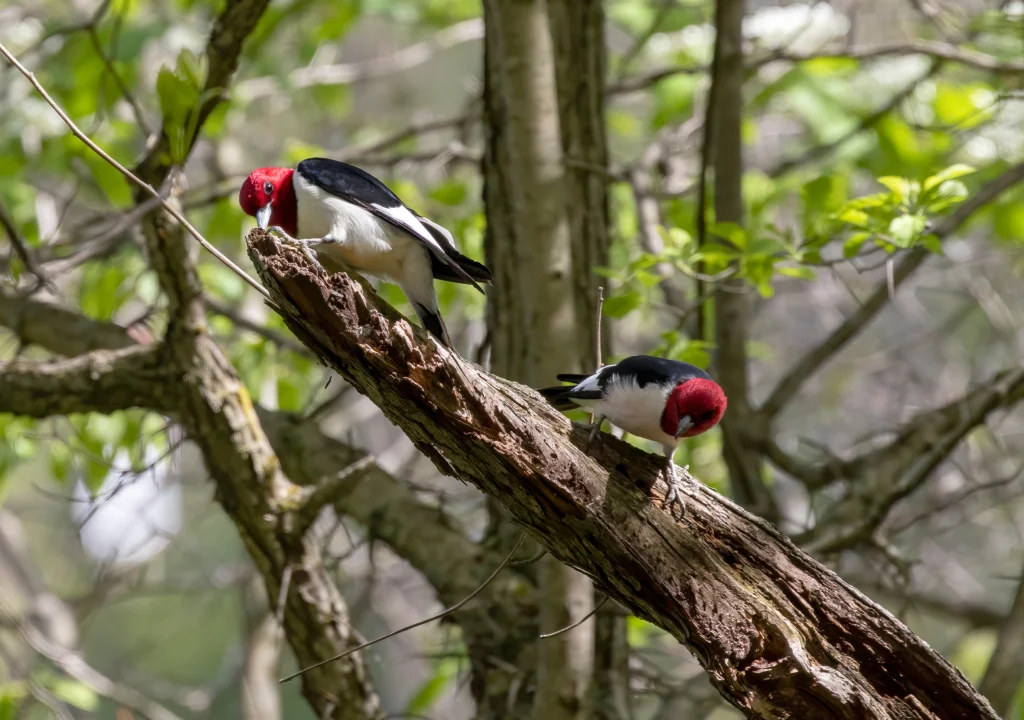
The sexual behavior of this species mostly occurs in the immediate vicinity of the nest site. Mates will spend a surprising amount of time playing “peek-a-boo” while perched on a tree, repeatedly looking at each other around one side of the tree and then the other. Sometimes, the male will tap slowly on the inside of the nest cavity while the female does the same on the outside. Females will also mount males, termed “reversed mounting,” before the two switch places for copulation.

Anidación

The male chooses a site to excavate the nest cavity on a dead branch or trunk, or a utility pole or fencepost in areas with fewer trees. He does most of the excavation, often incorporating an existing crack if available. These woodpeckers frequently use existing holes. Eggs are placed on a simple mound of wood chips from the interior of the cavity, which may be intentionally left behind; during excavation, they remove most of the wood chips, and females may add more wood chips as more eggs are laid.

Huevos y crías

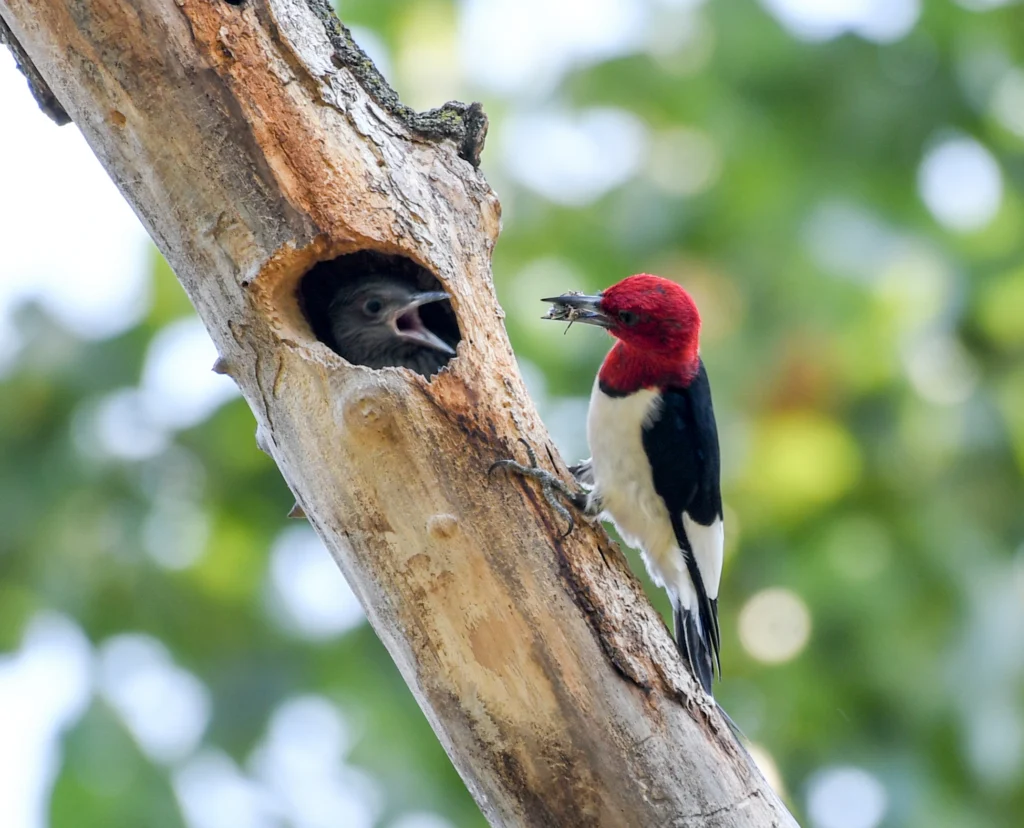
Females typically lay five eggs, which both the male and female incubate. Both sexes develop areas of bare skin on their bellies, brood patches, which they use to warm the eggs and later the young. Eggs hatch after about two weeks of incubation, and both parents feed the hatchlings. Nestlings fledge after three or four weeks. Parents continue feeding their young, but may attempt to raise another brood, in which case they may chase off the juveniles from the previous brood.