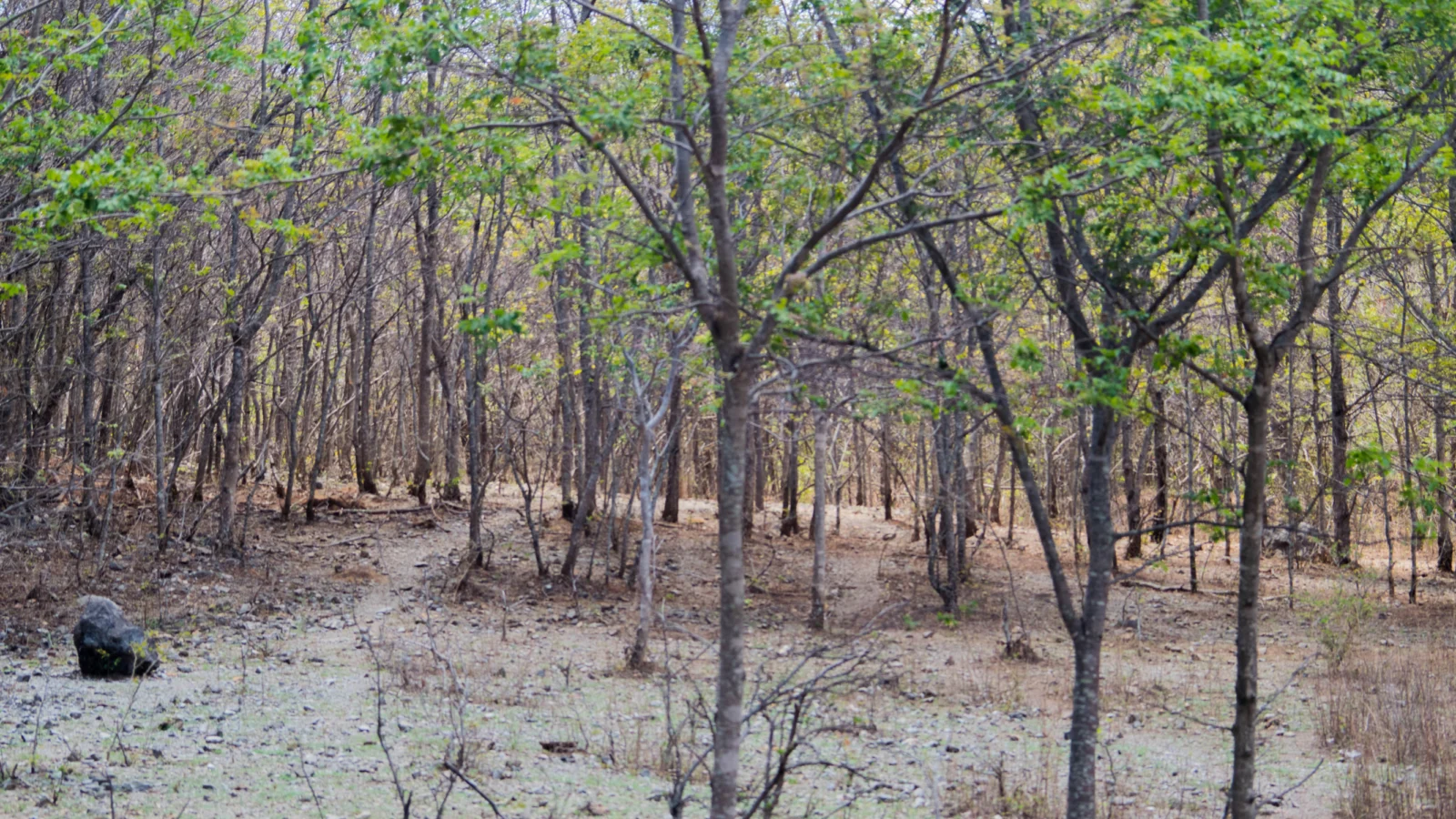
Cerrado forest. Photo by SethSampaio, Getty Images.

Pájaro carpintero de Kaempfer

Celeus obrieni

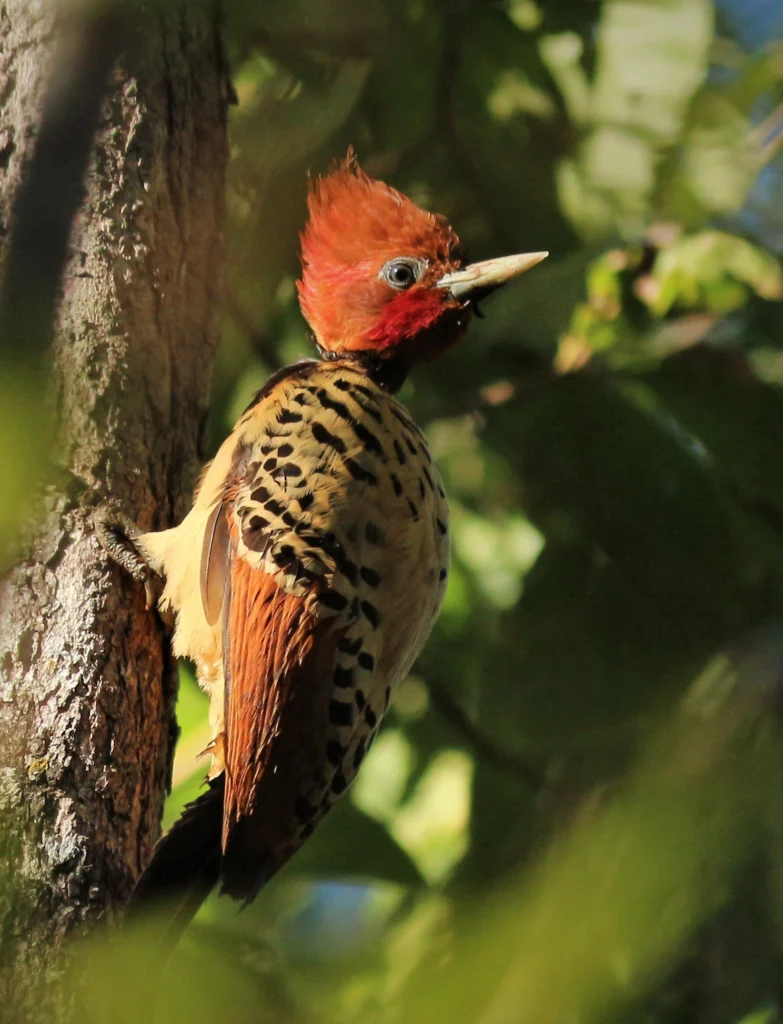
Kaempfer's Woodpecker. Photo by Tulio Dornas.

Pájaro carpintero de Kaempfer

Kaempfer's Woodpecker. Photo by Tulio Dornas.

Celeus obrieni

Descripción general

Estado de conservación
Tendencias demográficas
Decreciente
Tamaño de la población
6,000
Familia
Pájaros carpinteros
Ubicación
Sudamerica
Patrón de migración
No migratorio
Distancia de migración
No migratorio
También conocido como
  • Pica-pau-da-taboca (Portuguese)
  • Caatinga Woodpecker

Acerca de

The brilliantly colored Kaempfer’s Woodpecker is endemic to the Cerrado, a sprawling, dry tropical savanna of open woodlands and riparian gallery forests in the central highlands of Brazil and neighboring Bolivia. The Cerrado biome is the most biodiverse savanna in the world, home to 30 endemic bird species found nowhere else in the world, including the Critically Endangered Blue-eyed Ground Dove. The Cerrado also hosts hundreds of mammals, reptiles, amphibians, and fish, as well as thousands of plants unique to the region.

A bamboo specialist, the Kaempfer’s Woodpecker drills holes into dead bamboo canes in search of the ant colonies that provide its main food. On the Cerrado, bamboo is largely restricted to dense patches of increasingly fragmented forest, often along waterways. The Kaempfer’s Woodpecker has a rather odd distribution within its range as a result, and is scattered across hundreds of small, isolated fragments of dense forest with bamboo on the vast Cerrado savanna landscape.

First collected in 1926, the Kaempfer’s Woodpecker was considered a subspecies of the Rufous-headed Woodpecker based on a single bird. It was 80 years before this bird was seen again, at which point many had considered it to be extinct. After its rediscovery, the Kaempfer’s Woodpecker was recognized as a separate species based on differences in its habitat, size, and plumage, as well as the great distance between this species’ range and that of the Rufous-headed Woodpecker. Genetic studies in the 2010s confirmed that this once-lost bird is, in fact, its own distinct species.
Amenazas

The biggest threat to the Kaempfer’s Woodpecker is the ongoing loss, degradation, and fragmentation of its habitat. There are very few protected areas in the Cerrado — less than two percent of the entire biome — and Kaempfer’s Woodpeckers are not known to occur in any of them. In addition, because of its scattered distribution, there is no clear stronghold site for the species, making it harder to protect and putting it at even greater risk of extinction. Students at Brazil’s University of Tocantins have been studying this species for several years and learning more about its range, which is vast but increasingly fragmented by agricultural activities, infrastructure development, and land-clearing for cattle ranching.

Losing the Cerrado

Central Brazil’s vast Cerrado landscape, the home of the Kaempfer’s Woodpecker, is rapidly disappearing due to large-scale agriculture. As of early 2026, 55 percent of the Cerrado had been destroyed. The unsustainable expansion of soybean farms and cattle pastures is the main culprit, driving massive deforestation across the region. The remaining fragments of forest, the habitat Kaempfer’s Woodpeckers require, are frequently cut over in this process. Eucalyptus and sugar cane are two other major crops contributing to the loss of this vital habitat. A 2021 study found that 94 percent of the clearing taking place in the Cerrado and Amazon biomes was taking place illegally.

Pérdida de hábitat

Estrategias y proyectos de conservación

The Kaempfer’s Woodpecker needs our help to overcome these threats to its survival. At ABC, we’re inspired by the wonder of birds and driven by our responsibility to find solutions to meet their greatest challenges. ABC works with FAPTO (Fundação de Apoio Científico e Tecnológico do Tocantins) at the University of Tocantins to educate landowners about the Kaempfer’s Woodpecker and to create private protected reserves for this striking species.

Crear y mantener reservas

El hábitat es fundamental para la supervivencia de las aves. Trabajando con decenas de socios y comunidades locales en toda Latinoamérica y el Caribe, ABC apoya una creciente red de áreas protegidas en más de una docena de países. Con un total de más de 1,3 millones de acres, casi un tercio de la avifauna mundial (más de 3.000 especies) está protegida por una reserva apoyada por ABC.

Creación y mantenimiento de reservas

Crear y mantener reservas

To ensure that the Kaempfer’s Woodpecker and other species of the Cerrado have a place to flourish, ABC, Instituto Araguaia, and other partners have worked to protect Araguaia’s 1,482-acre Cantão-Cerrado Corridor. The corridor lies in the eastern buffer zone of Parque Estadual do Cantão. The corridor encompasses the last remaining intact lowland Cerrado forests in the region, preventing them from being converted to soybean agriculture.

Gestión duradera de las reservas de aves

Galería de aves

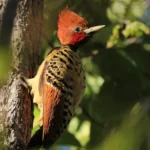
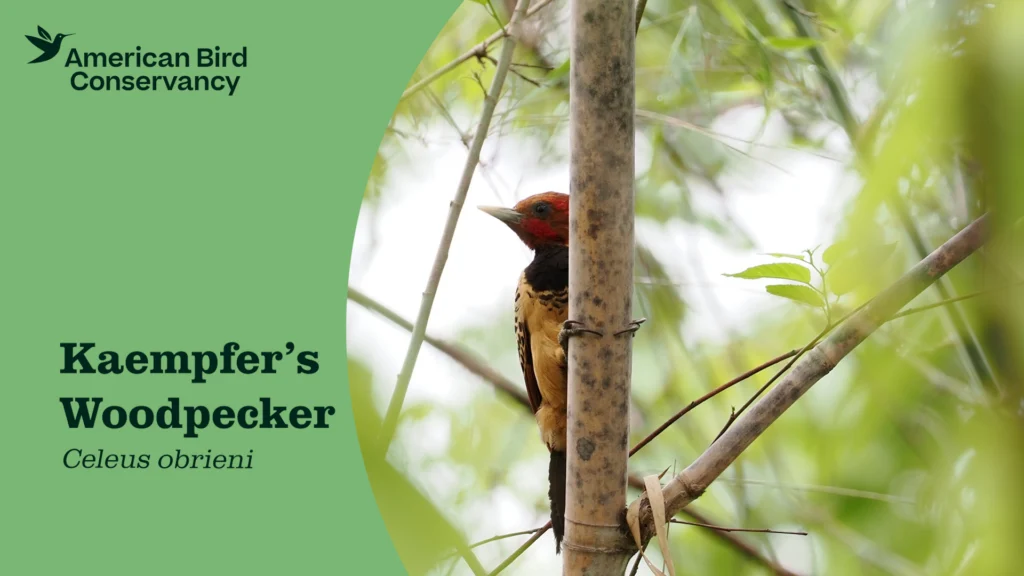
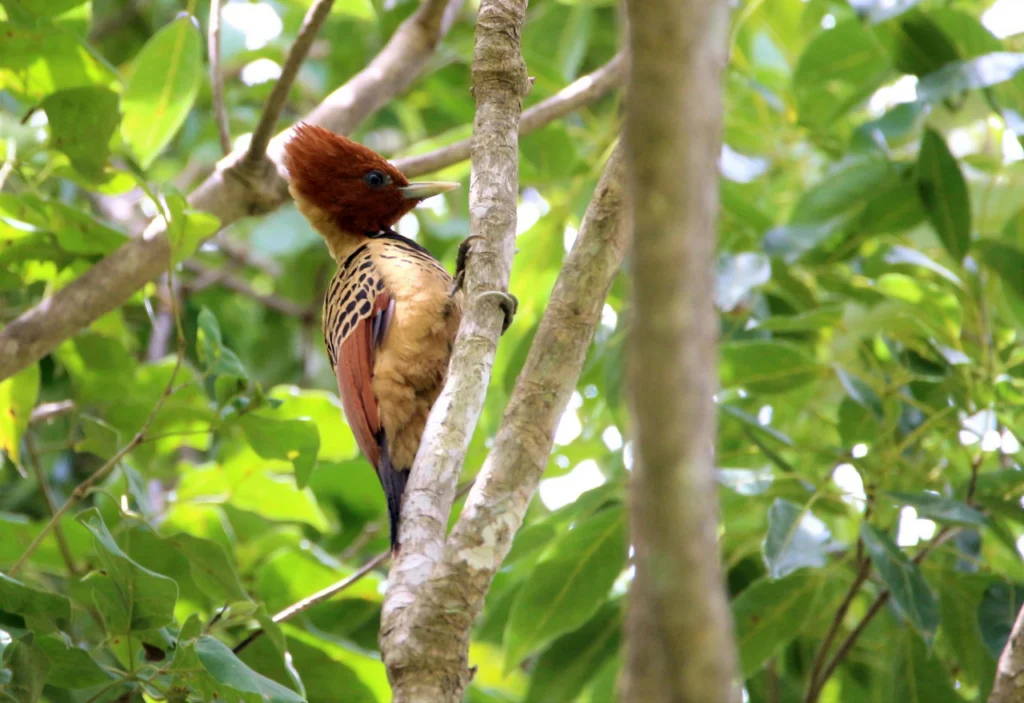
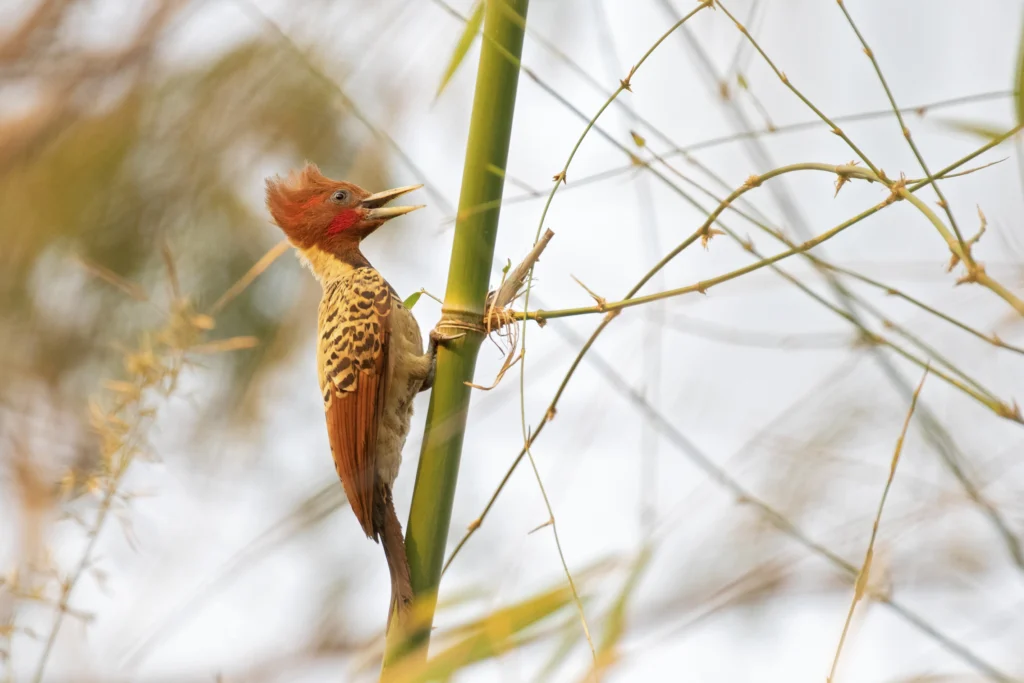
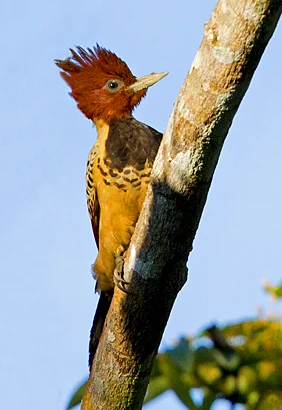
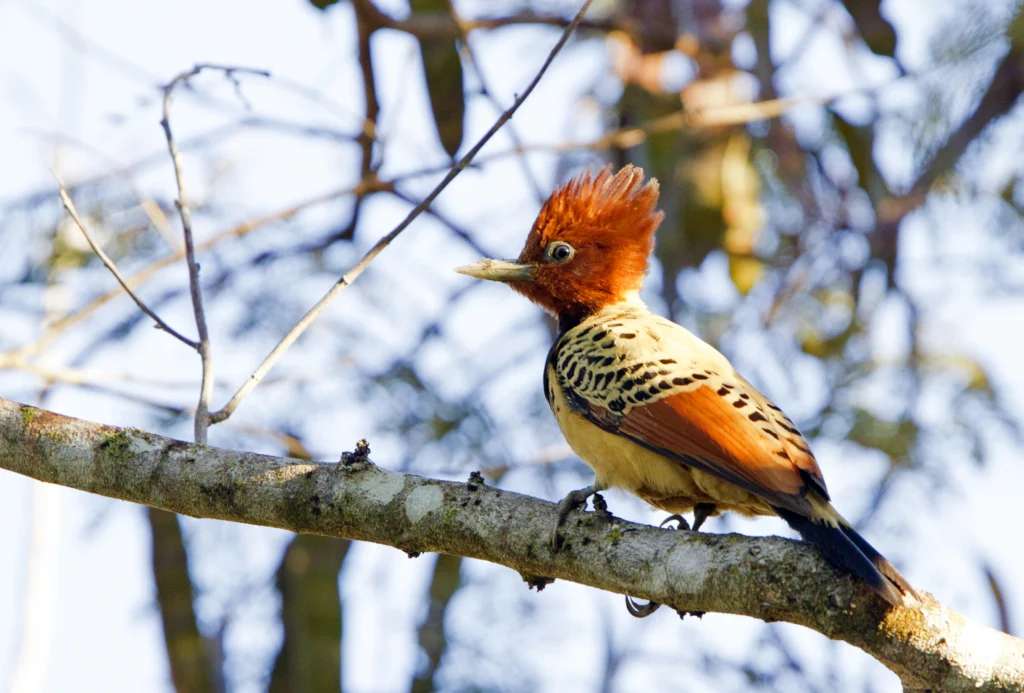
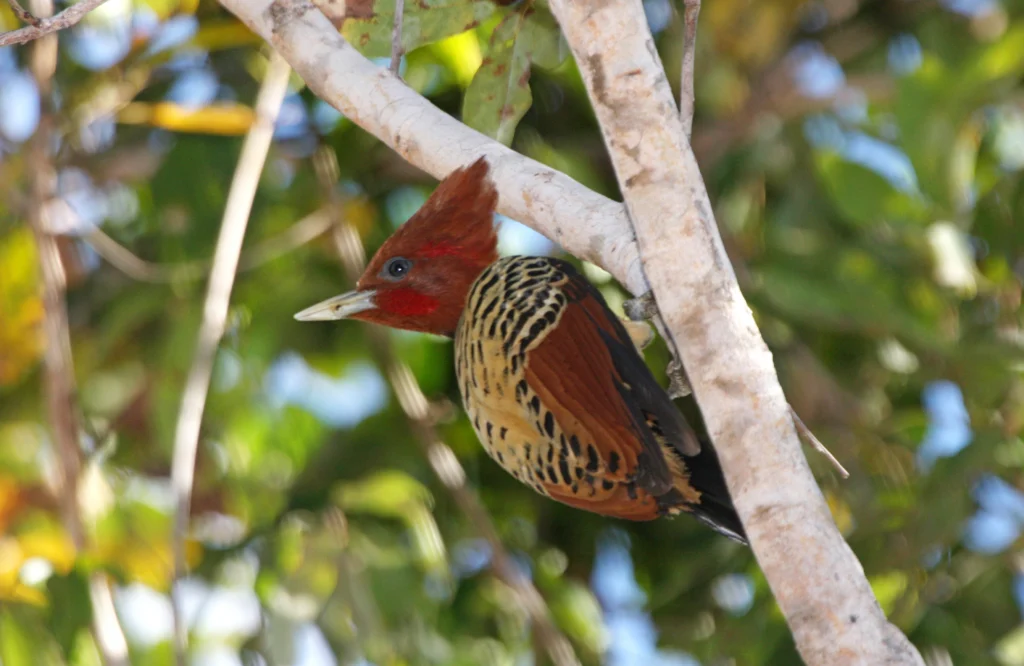
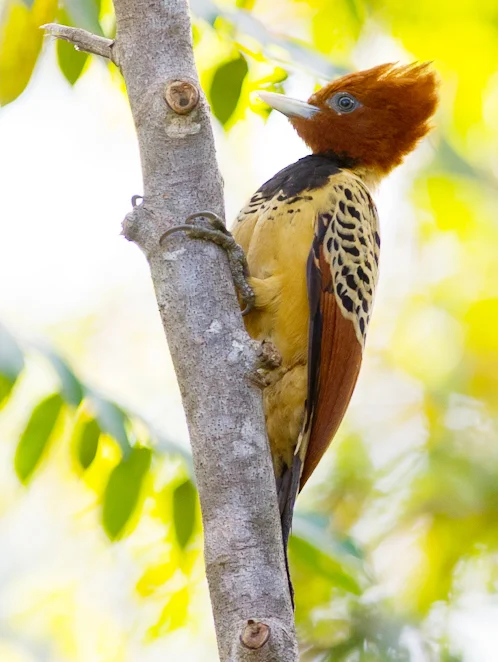
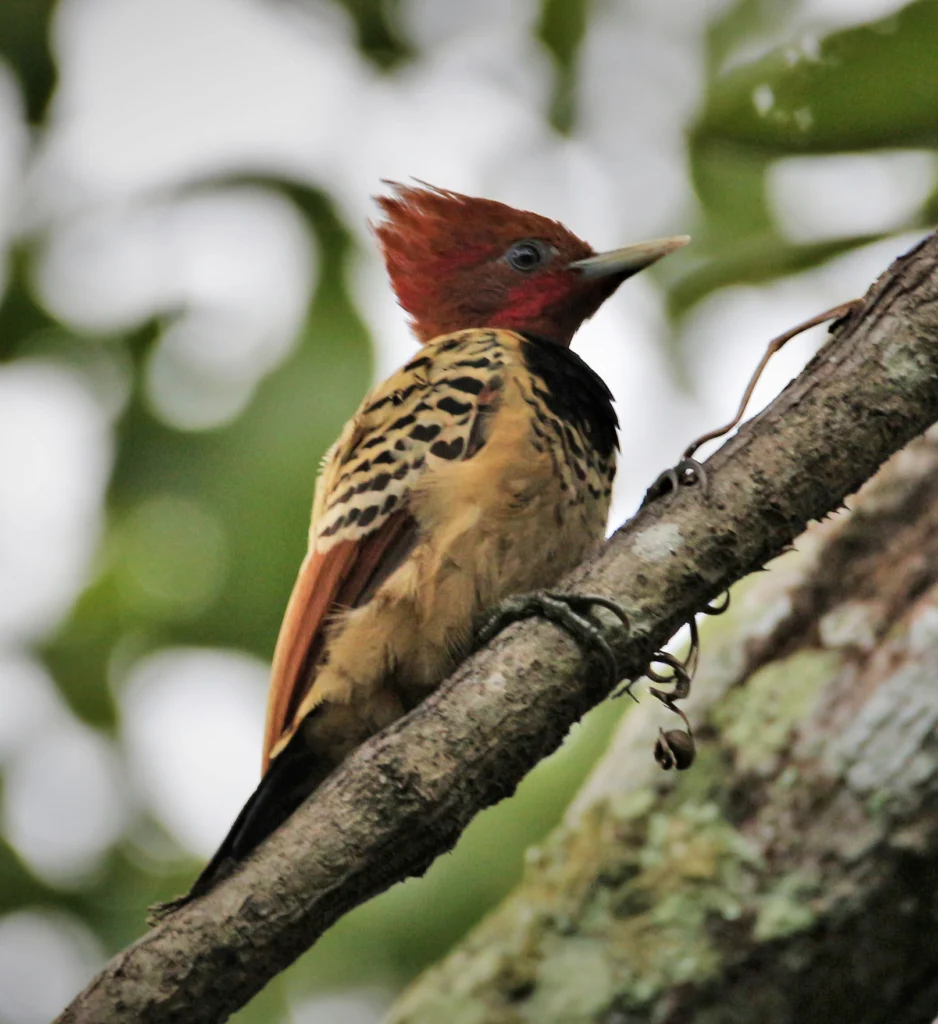
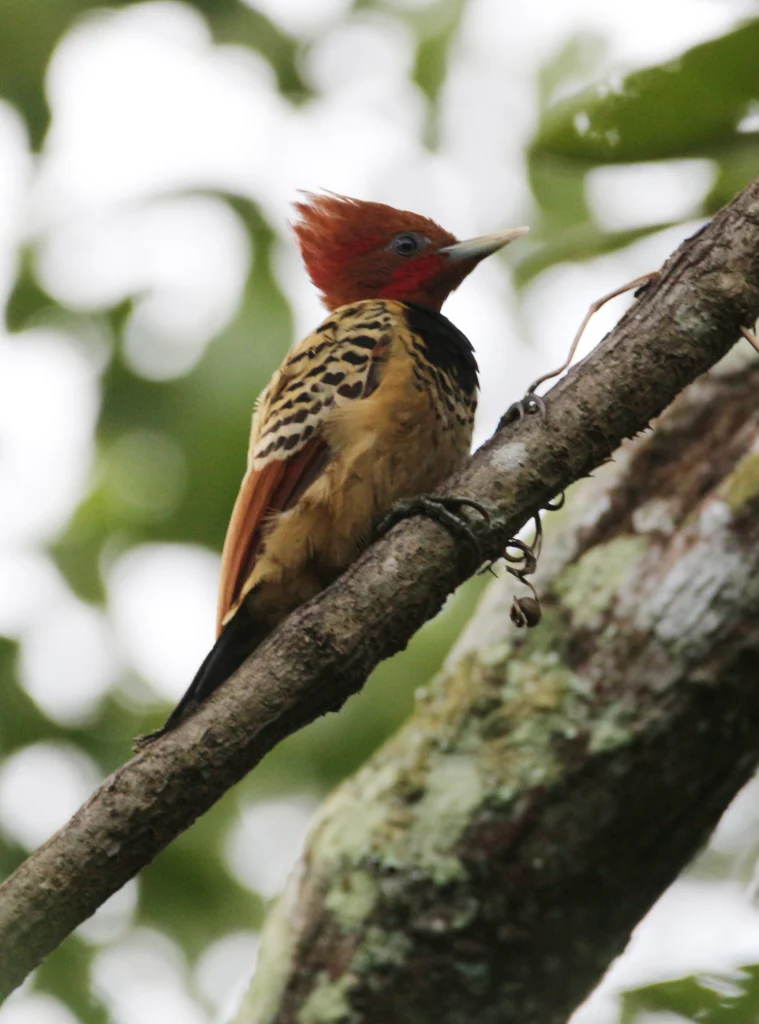
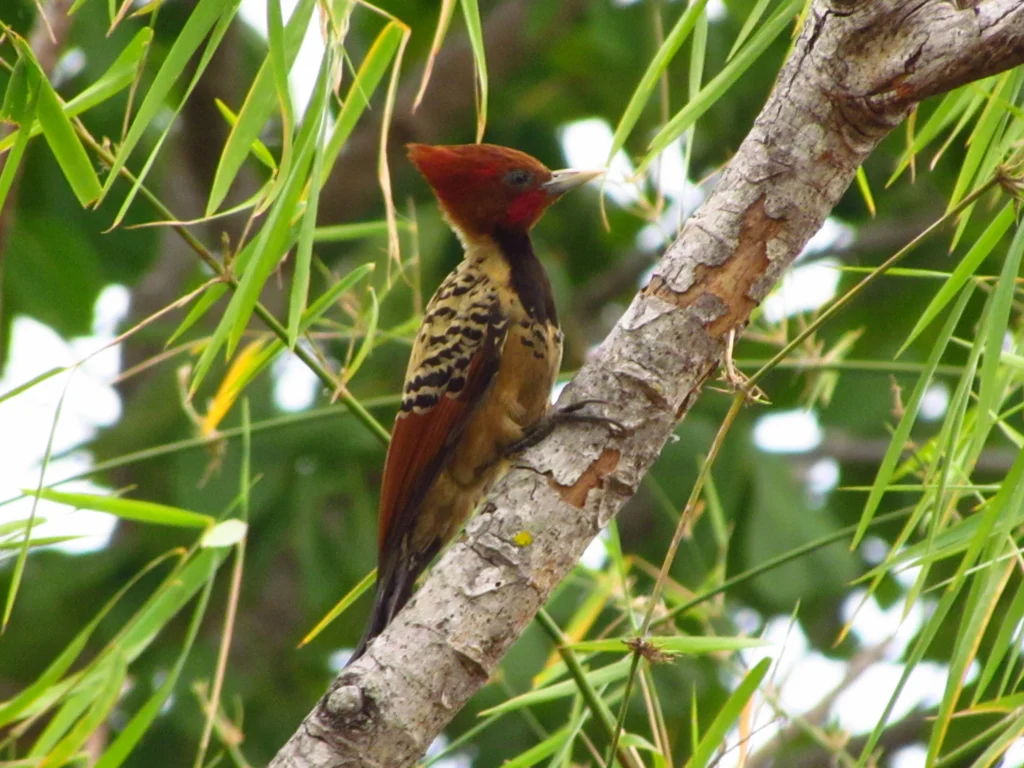
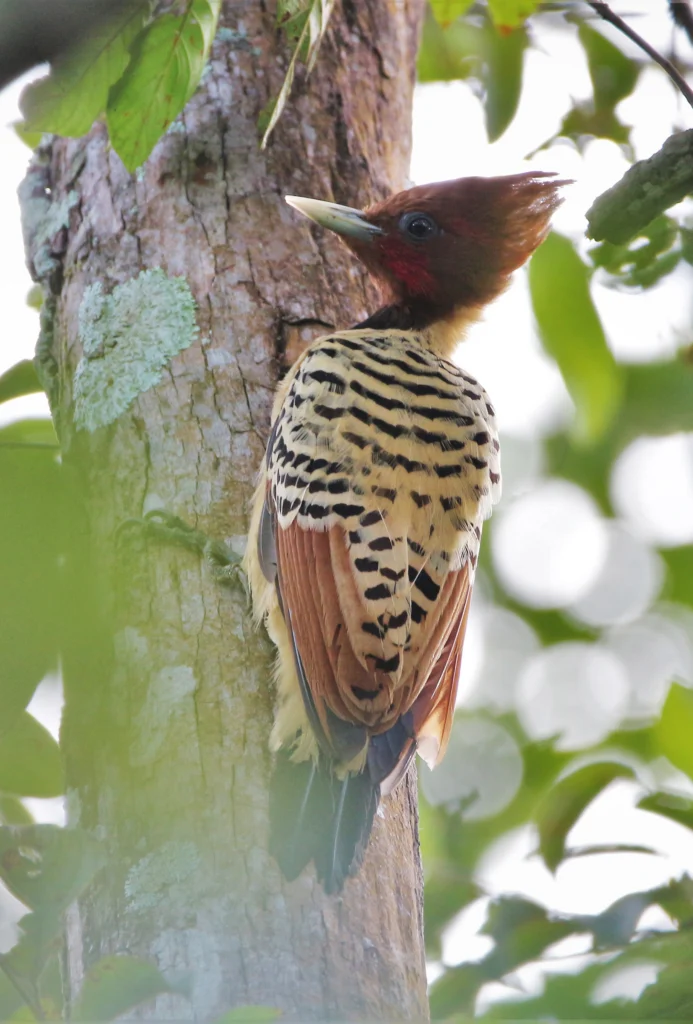
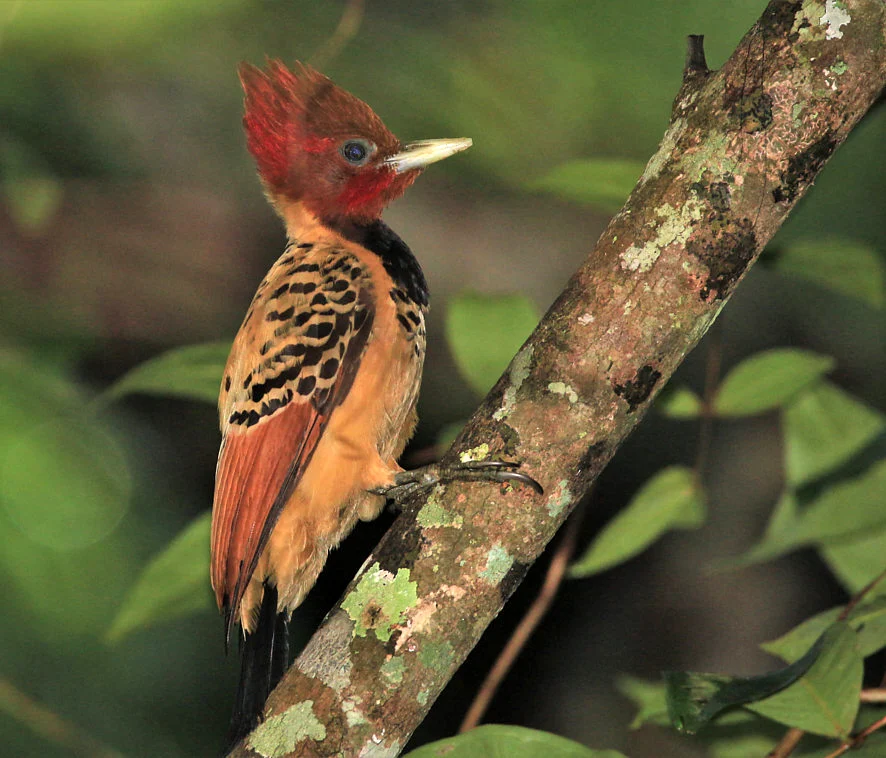
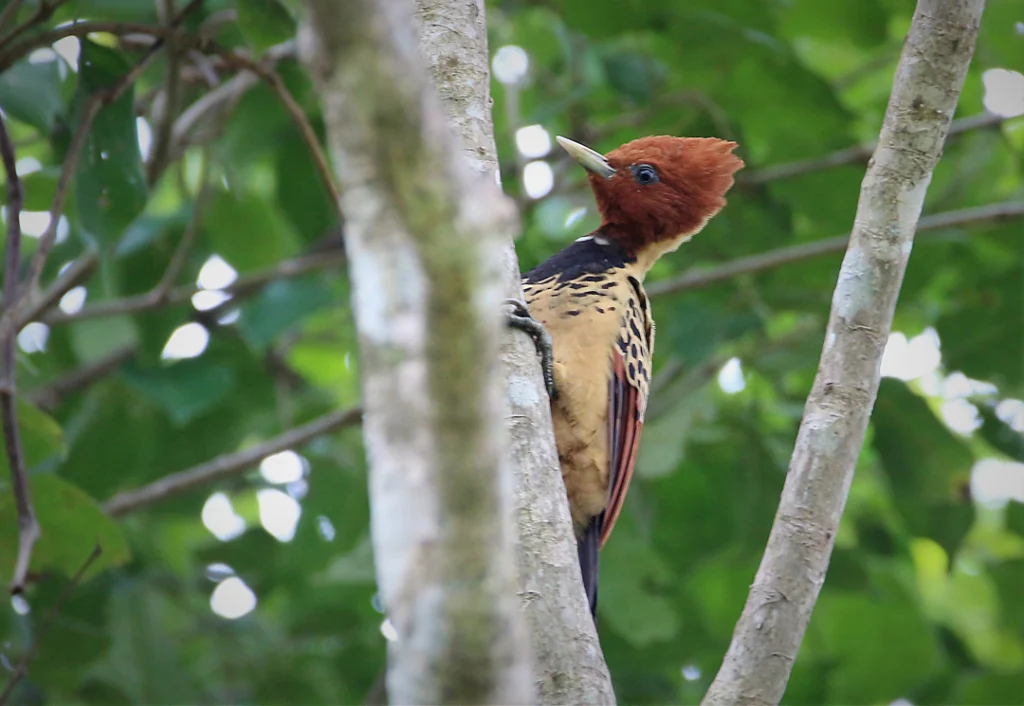
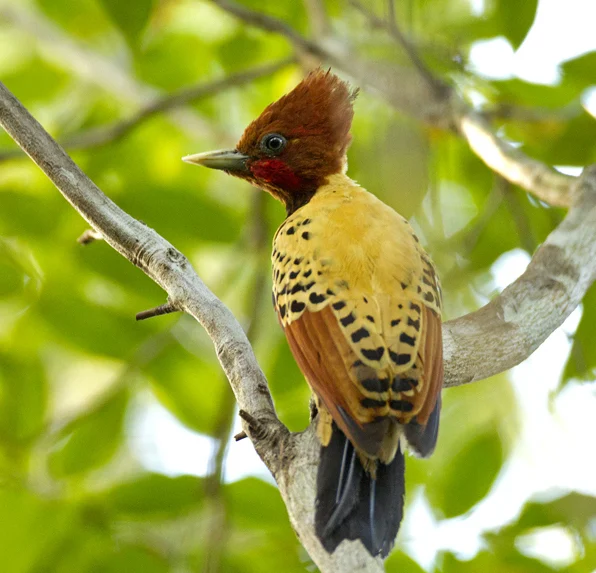
The Kaempfer’s Woodpecker is striking and distinctive, with its wild, scruffy chestnut mohawk and yellow-and-black spots and bands across its wings and back, the pattern somewhere between leopard and zebra. Chestnut flight feathers on the wings match the color of the head, and the black tail is paired with a bold black patch covering the breast. The rest of the underparts match the yellow-to-cream color of the back. The chisel-like bill is a pale cream color. Males and females are similar, except that males show bright red smears stretching back from the eye and bill, a bit like sloppily applied lipstick.

Sonidos

The most common vocalization known from the Kaempfer’s Woodpecker is a high, descending laugh composed of a quick, upswept squeal followed by a short chuckled series of descending nasal notes. These woodpeckers typically drum on bamboo, a rapid, evenly paced burst, often with a sharp tonal quality characteristic of its preferred substrate.

Llamar

Credit: FilhoManfredini, XC413022. Accessible at www.xeno-canto.org/413022.

Drum

Credit: Robson Silva e Silva, XC23863. Accessible at www.xeno-canto.org/23863.

Hábitat

The Kaempfer’s Woodpecker is endemic to Brazil’s extensive tropical woodland-savanna, or Cerrado. Specifically, it uses wooded areas, such as native palm forests and riparian woodlands along streams.

  • Most frequently found in bamboo groves, especially the species Guadua paniculata

Rango y región

Rango y región


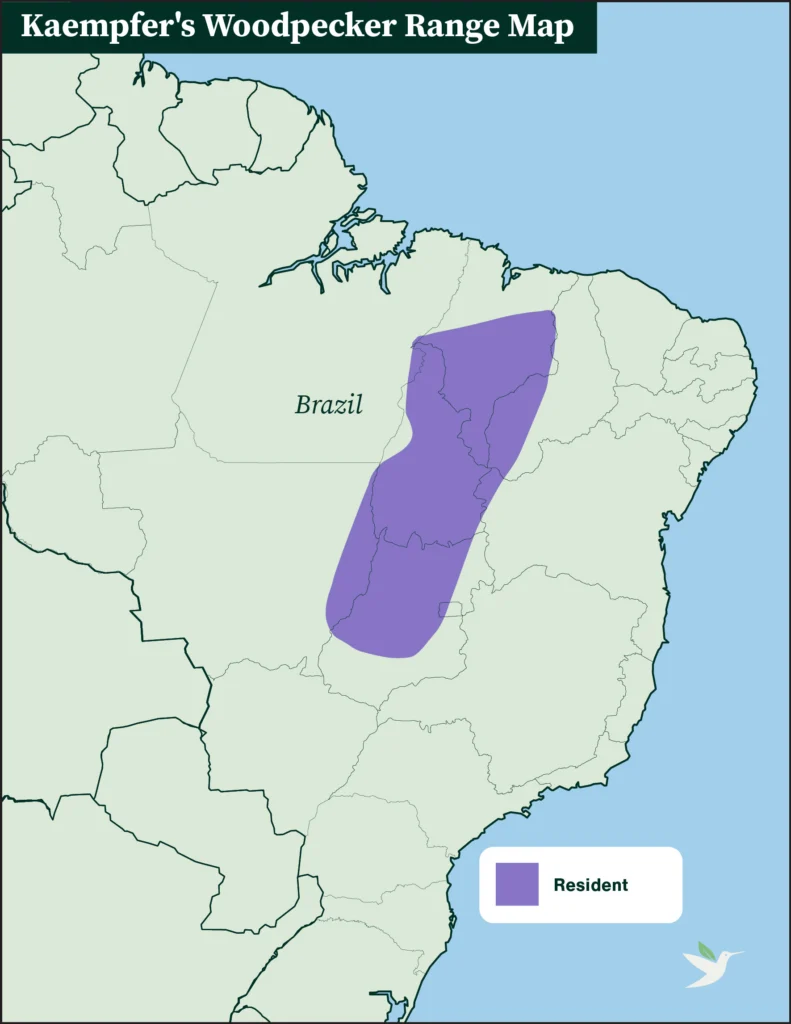
Kaempfer's Woopecker range map.

Área específica
Brasil

Detalles de la gama
The Kaempfer’s Woodpecker is restricted to the northern portion of the Cerrado biome of central and eastern Brazil. Though widespread, this species is quite restricted to specific habitats within its range, especially small stands of bamboo within fragments of forest.

¿Sabías?
Though it is also a bamboo drilling specialist, the Kaempfer’s Woodpecker’s closest relative, the Rufous-headed Woodpecker, is a species of wet tropical forest of the northwestern part of the continent.

Rango
Sudamerica
Patrón de migración
No migratorio
Distancia de migración
No migratorio

Historia de vida

The Kaempfer’s Woodpecker is poorly represented in the scientific literature, having only recently been rediscovered and determined to be a unique species. As such, little is known of its biology or life history. However, some aspects of its life history may be similar to those of other closely related woodpeckers.

Dieta

The Kaempfer’s Woodpecker is strongly associated with bamboo, especially the sizable Guadua paniculata, which it excavates in search of ant colonies. Carpenter ants (genus Camponotus) are the most common target, particularly the bamboo specialist Camponotus depressus, as well as the generalist Azteca fasciata. Though these woodpeckers show a preference for dead bamboo, they will forage in live stems as well.

Noviazgo

Courtship has not been described for the Kaempfer’s Woodpecker, or any other woodpecker in its genus.

Anidación

No nests for this species have been documented, and its nesting behavior has not been described. However, it can be assumed that this species nests in tree cavities, as do most other woodpecker species worldwide, or possibly in the nests of arboreal ants, as do several other woodpeckers in this genus.

Huevos y crías

The eggs, young, and parental behavior of the Kaempfer’s Woodpecker, along with the other woodpecker in its genus, have not been documented.