Descripción general
Acerca de
El inteligente y sociable cuervo común ha sido objeto de la mitología, el folclore y la literatura a lo largo de los siglos. Distintas culturas indígenas americanas lo representan como un astuto embaucador, un guía y ayudante para los humanos, o un héroe cultural que contribuyó a la creación del mundo. Muchas culturas europeas asocian al cuervo con la muerte y la fatalidad, probablemente a raíz de una asociación muy real con los cuervos que se alimentan de cadáveres en el campo de batalla y de aquellos que murieron durante la Peste Negra. Los cuentos populares suecos los representan como los fantasmas de los asesinados, y las antiguas historias alemanas los describen como almas condenadas.
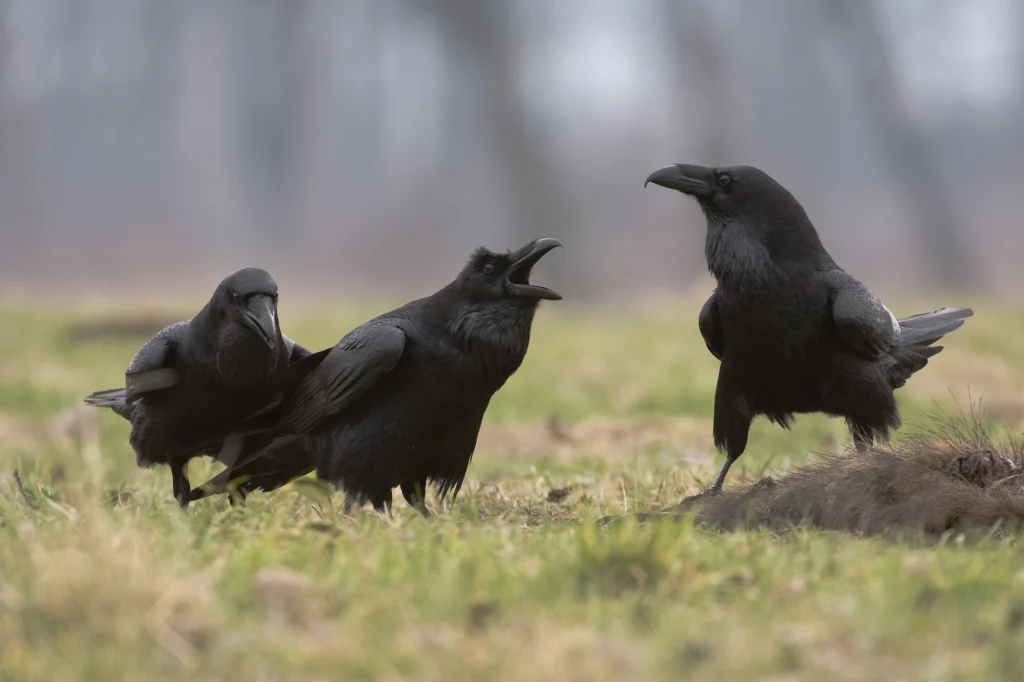
Los cuervos también son reconocidos por su inteligencia. Sus cerebros se encuentran entre los más grandes de cualquier especie de ave y muestran una excelente capacidad para resolver problemas. El biólogo Bernd Heinrich, conocido por sus estudios sobre el comportamiento de los cuervos, sostiene que este es uno de los cuatro únicos animales conocidos (junto con las abejas, las hormigas y los humanos) que demuestran "desplazamiento", la capacidad de comunicarse sobre eventos que no ocurren en el presente. Se ha observado que los cuervos demuestran esta capacidad cuando un ave solitaria descubre un gran cadáver custodiado por una pareja de cuervos. Se cree que el cuervo solitario regresa al dormidero y comunica el hallazgo a otras aves, y al día siguiente, una bandada de cuervos no apareados vuela hacia el cadáver y ahuyenta a la pareja.

Amenazas
Although raven populations are globally stable today, some populations have been harmed or eradicated entirely by human activities. These adaptable and crafty birds do well in human-altered landscapes, which can lead to conflict. In other areas, timber logging and expanding development have increased suitable habitat for ravens. Previously driven out of the eastern forests, raven populations have grown under federal protection from the Migratory Bird Treaty Act. Persecution persists, but not nearly to the extent it once did.
Conceptos erróneos humanos
Inteligentes y oportunistas, los cuervos comunes pueden prosperar en presencia de humanos, aprovechando el saciedad que ofrecen nuestros cubos de basura, tierras agrícolas y animales atropellados. Su capacidad para sobrevivir en diversas condiciones demuestra su adaptabilidad, pero también puede generar conflictos directos entre los cuervos comunes y los humanos. En algunos contextos, se los considera plagas, sobre todo a medida que su número ha aumentado. La gestión activa de las poblaciones por parte de conservacionistas ayuda a mitigar los conflictos entre humanos y cuervos, pero estos aún pueden sufrir persecución por parte de individuos y, históricamente, han sido expulsados de algunas partes de su área de distribución.
Cambios en la calidad del hábitat
El cuervo común es adaptable, pero la especie no es inmune a la amenaza de la pérdida o degradación del hábitat. La tala intensiva en los bosques del este de Estados Unidos a principios del siglo XX provocó la disminución de su población. Sin embargo, en algunos casos, la degradación de la calidad del hábitat, que conlleva la presencia de más recursos, como vertederos que proporcionan alimento y puentes que ofrecen refugio, puede beneficiar a los cuervos comunes.
Estrategias y proyectos de conservación
While raven populations are healthy overall, they are vulnerable in some parts of their range. Ravens need our help to overcome the undeserved assumptions that have led to their persecution, and to be recognized for the intelligent, resourceful, and culturally significant birds that they are. Science-backed active population management can provide solutions to human-wildlife conflicts, creating the conditions for both humans and wild birds to coexist and thrive.
Extensión y educación
Los cuervos comunes suelen ser malinterpretados. Aunque a veces se les considera plagas, aparecen en mitos e historias de culturas de todo el mundo. También contribuyen a la salud de los ecosistemas. ABC apoya la divulgación y la educación para disipar las ideas erróneas sobre los cuervos y reconectar a las personas con estas aves excepcionales. El Conocimiento Ecológico Tradicional enfatiza su papel como carroñero para mantener ecosistemas saludables y reducir la propagación de enfermedades, su increíble inteligencia y sus sólidas habilidades de comunicación.
Gestión activa de la población
Los programas de gestión activa de poblaciones, realizados por profesionales, pueden abordar la sobreabundancia de cuervos comunes en algunas zonas. Estos enfoques, con respaldo científico, reducen los conflictos que pueden surgir cuando los cuervos, en busca de entornos ricos en recursos, terminan en tierras agrícolas, barrios y otros lugares donde su presencia puede causar problemas a las personas.
Galería de aves
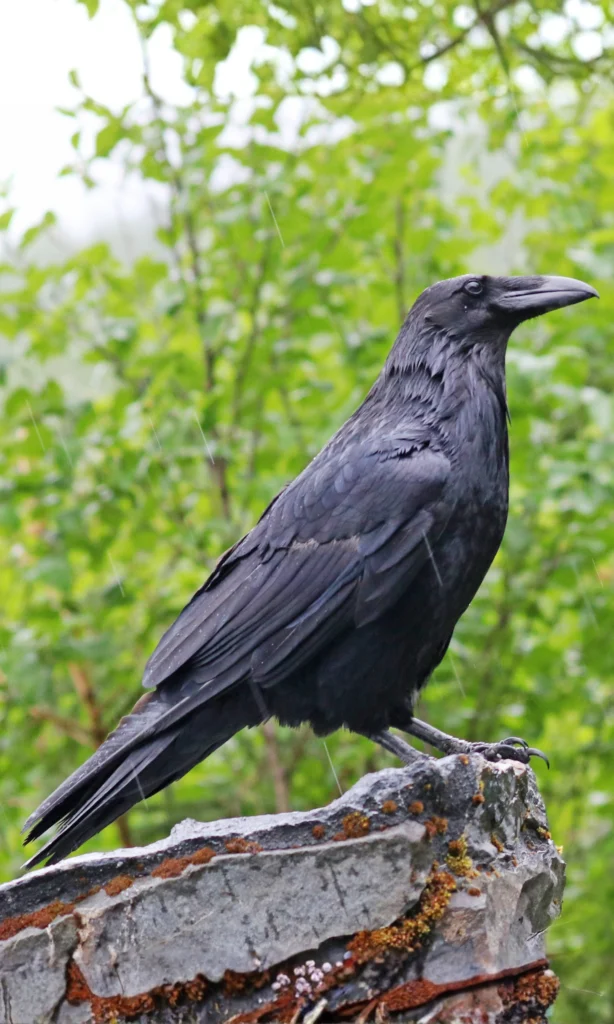
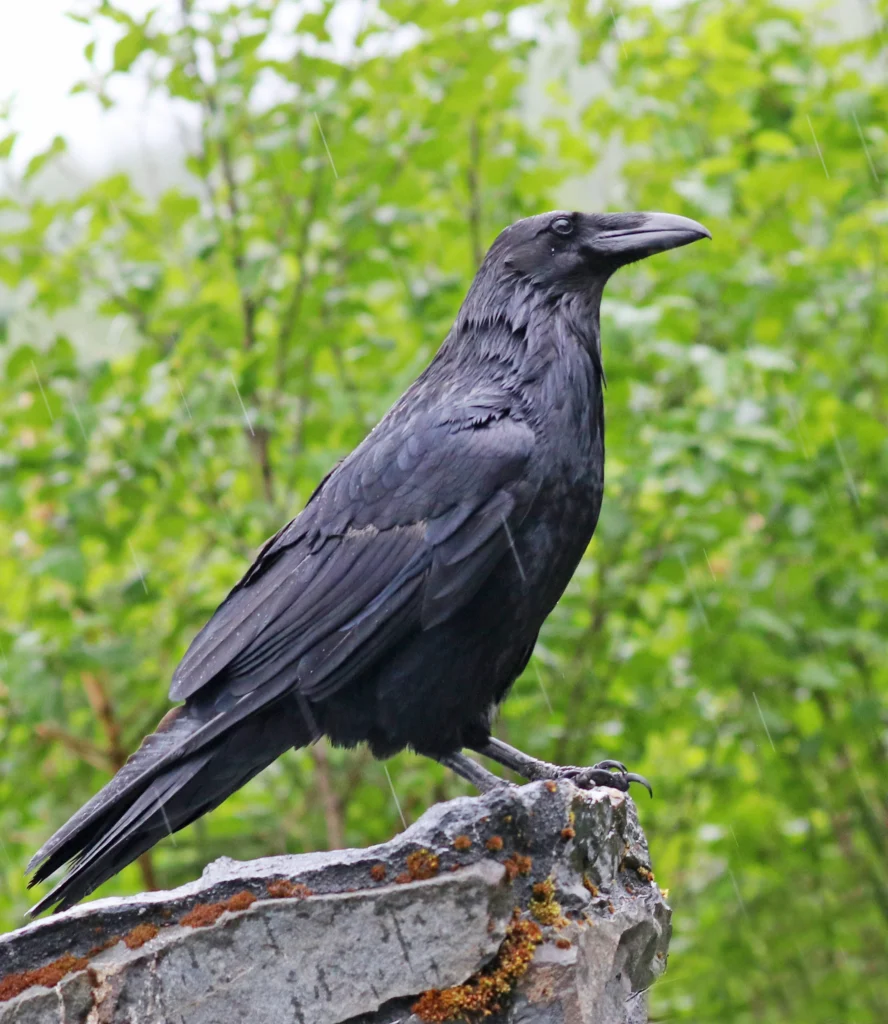
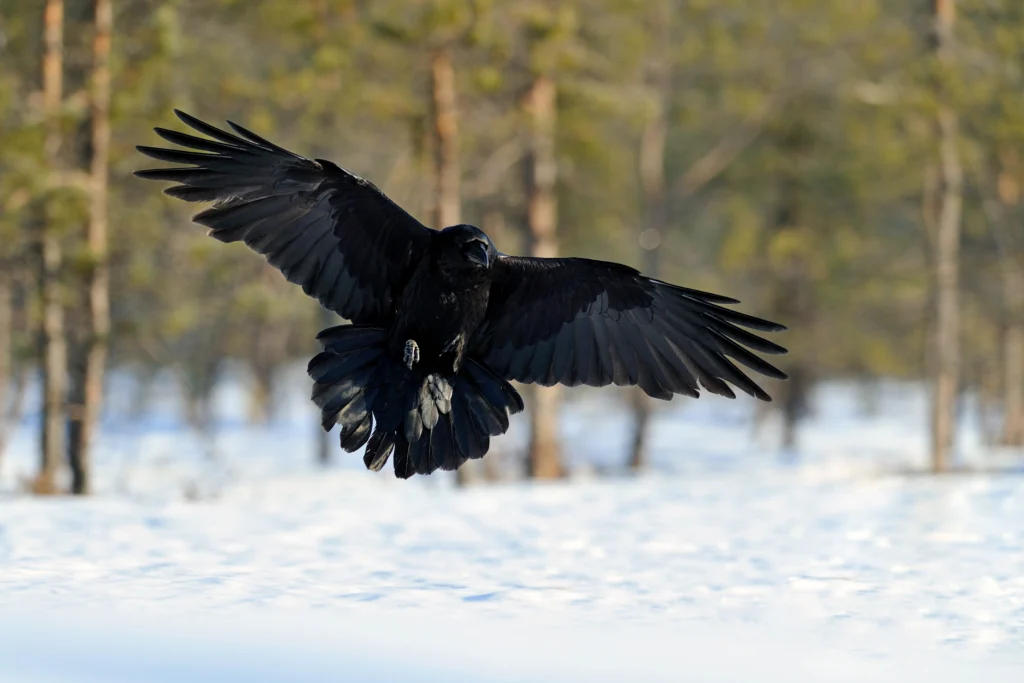
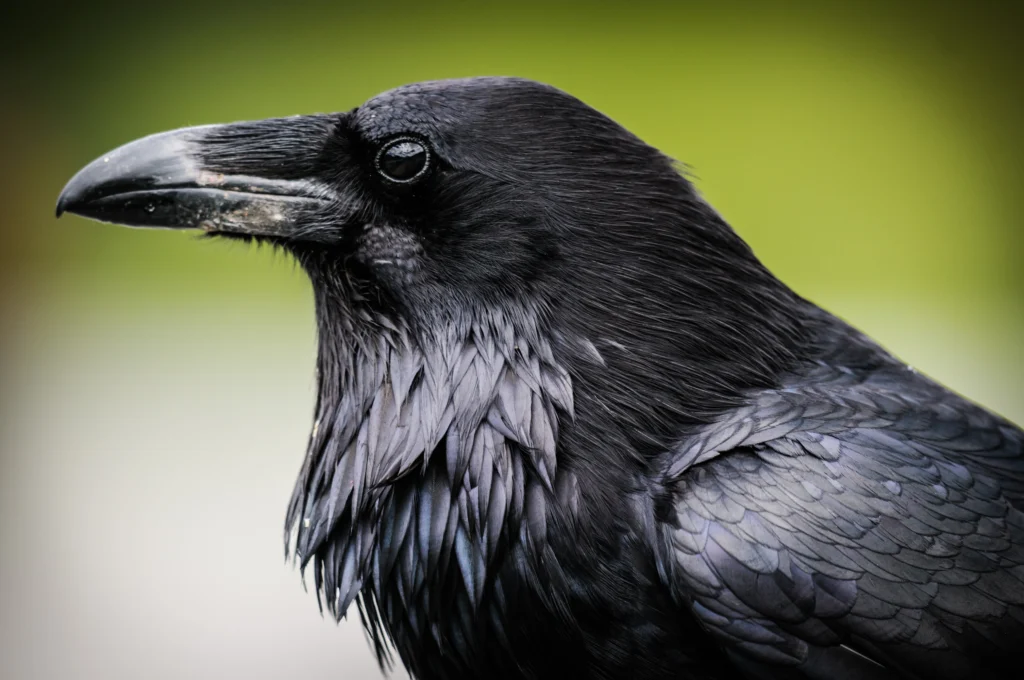
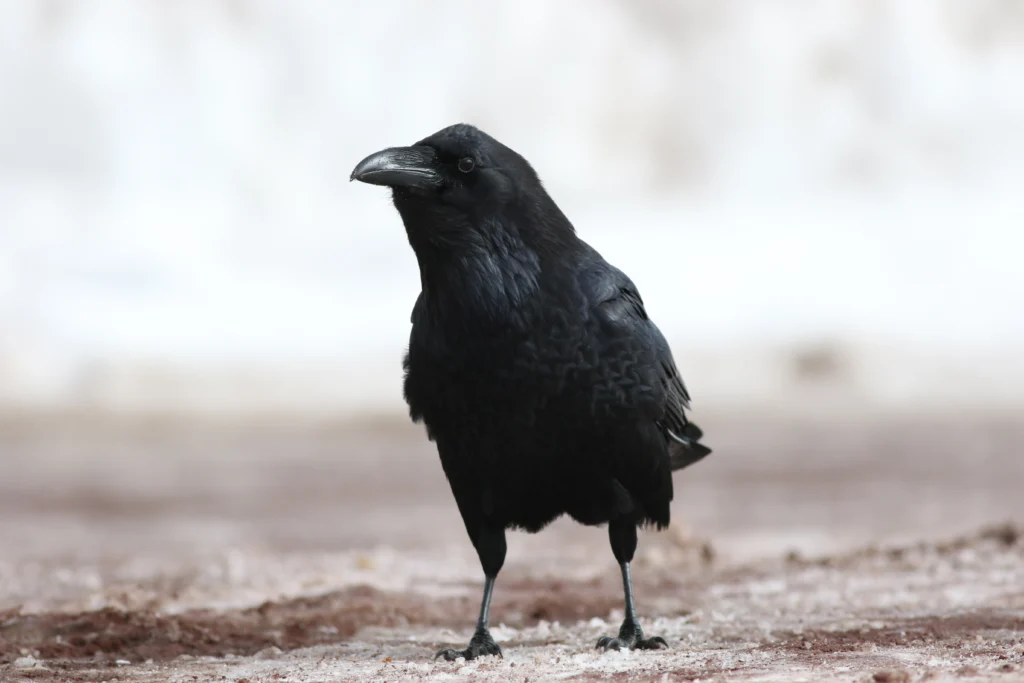
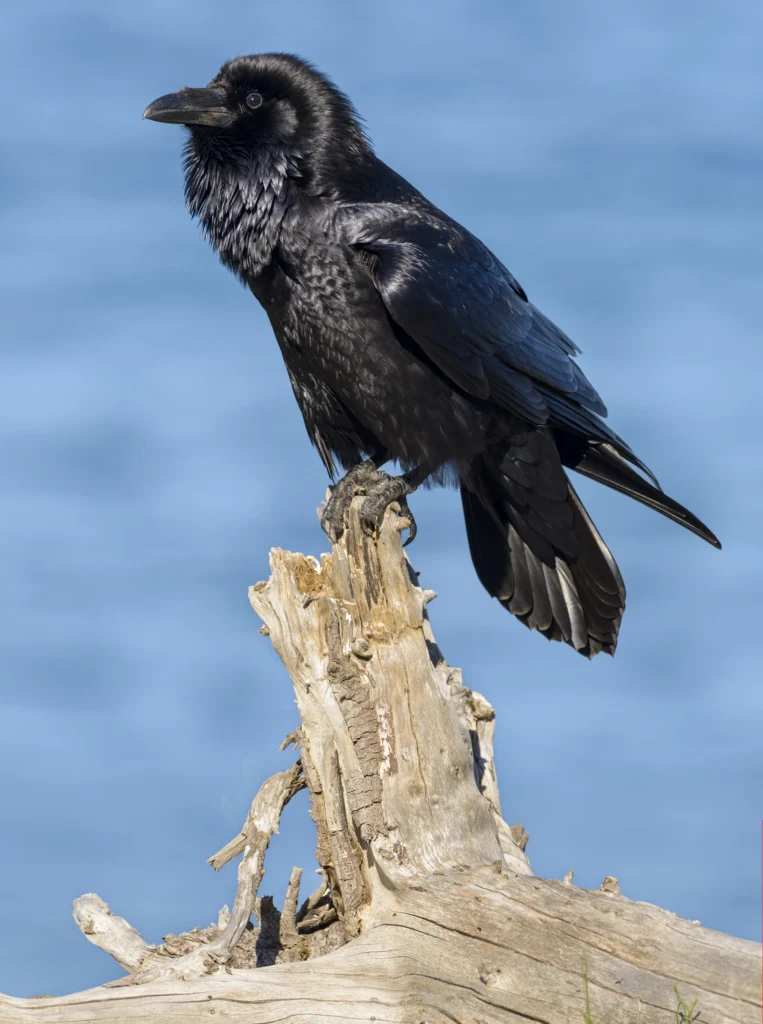
The Common Raven is a beautiful, glossy black from beak to claw, the feathers sometimes showing a blue or purple iridescence. In flight, the wings are long and broad, sometimes described as “plank-like” in the manner of eagles and other soaring birds. The raven’s tail is distinctively wedge-shaped, distinguishing it from other similar birds in flight. The bill is large, and feathers extend from the base to at least halfway to the tip. Common Ravens also have prominent elongated feathers on the throat, commonly called “hackles,” that they sometimes raise in dominance displays.
Sonidos
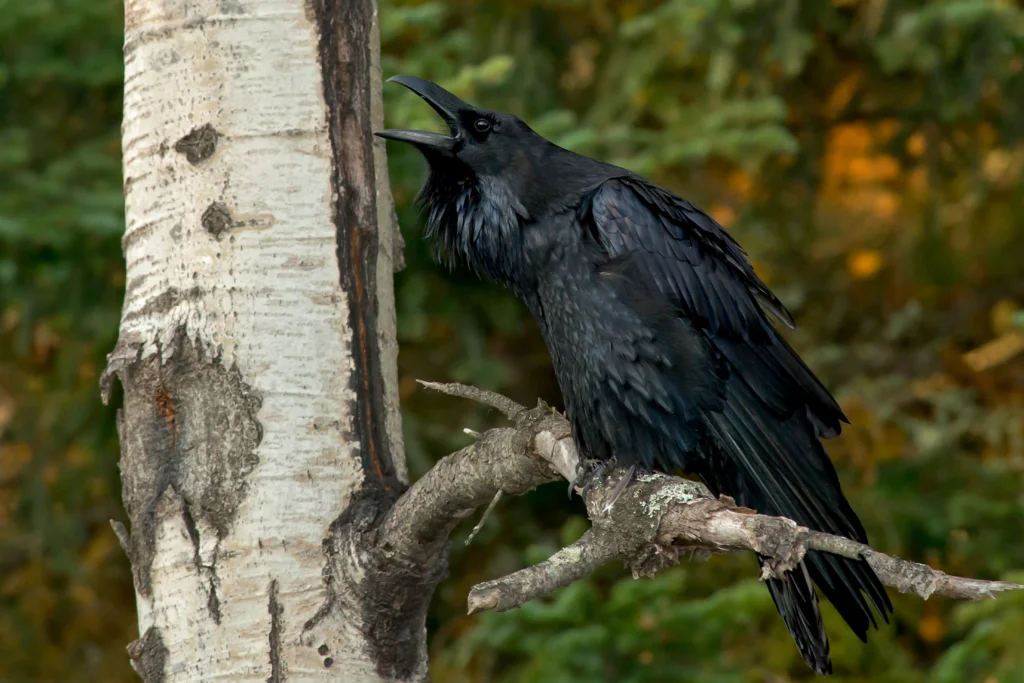
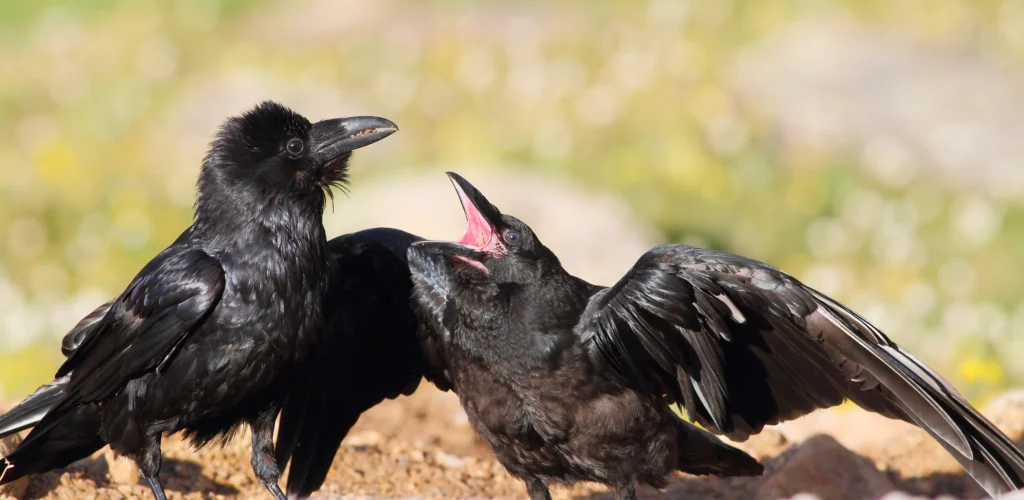
Like many birds in the family Corvidae, the Common Raven is highly vocal and has an enormous repertoire encompassing a huge range of sounds. Common calls include croaks, squawks, rattles, knocks, and bell-like sounds, but ravens seem to have no conventional song. Researchers have catalogued as many as 79 distinct call types. Captive ravens are also known to mimic human speech, but mimicry has not been clearly documented in the wild. There are 20 calls for which researchers have arrived at some understanding of the context or motivation. The frequently-heard Kaw Call is somewhat ambiguous, being used in a number of contexts, but may serve to defend territory or for an individual to identify itself. Young birds and paired females give Yell Calls when hungry, sometimes to beg food from an adult or male mate, or to recruit other ravens to a food source such as a carcass.
Credit: Greg Irving, XC1045826. Accessible at www.xeno-canto.org/1045826.
Credit: Thomas Magarian, XC871442. Accessible at www.xeno-canto.org/871442.
Credit: Doug Hynes, XC922424. Accessible at www.xeno-canto.org/922424.
Hábitat
Ravens are habitat generalists, living in remote deserts, forests, prairies, and coastal environments, as well as developed areas and land converted for agriculture and livestock.
- Found across a wide elevational range, from coastlines to alpine tundra
- Generally avoids larger cities and towns, but will forage at adjacent landfills and along roadways
Rango y región
Área específica
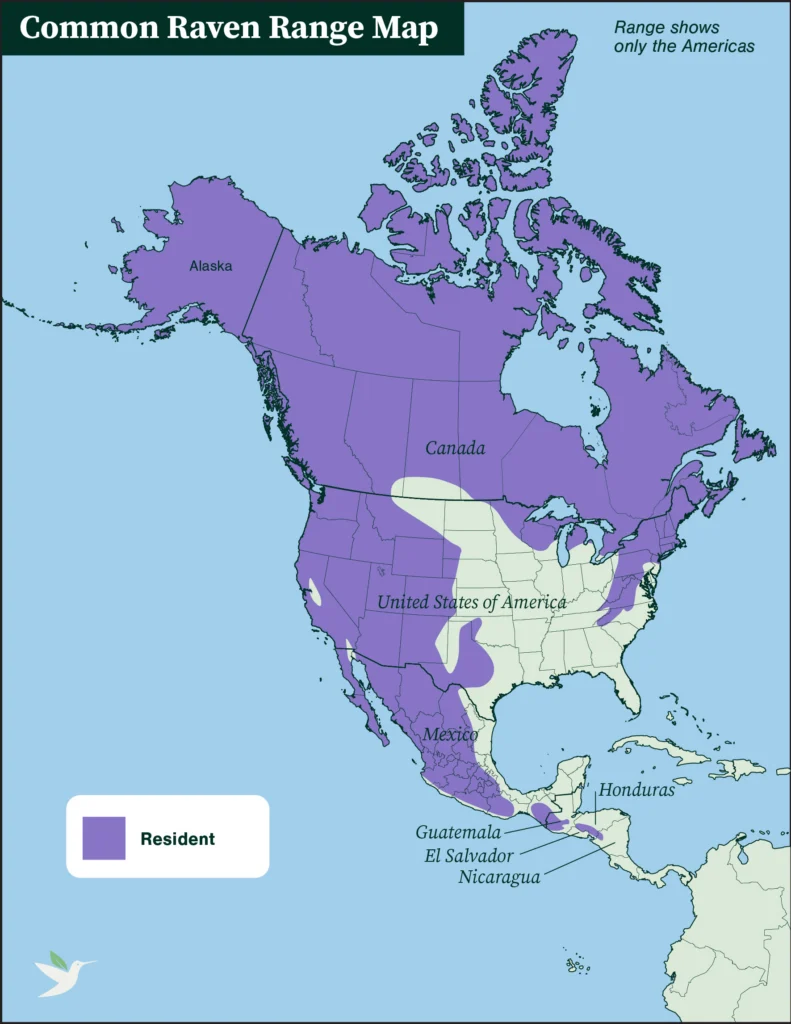
Ártico de América del Norte al sur de Nicaragua; ausente en el sureste y medio oeste de los Estados Unidos
Detalles de la gama
El cuervo común vive todo el año en todo el hemisferio norte. En América, se distribuye desde Alaska y el archipiélago ártico canadiense hasta el extremo norte de Nicaragua. Esta especie no se encuentra habitualmente en el sureste y el medio oeste de Estados Unidos. Aunque no es migratoria, los cuervos se desplazan más extensamente durante la temporada no reproductiva, a veces fuera de su área de distribución habitual.
Did you know
Common Ravens are famously crafty and resourceful. In some areas, ravens have learned to unzip motorcycle panniers to rob riders of their lunches. In others, ravens are attracted to the gunshots of hunters, where they might find an easy and nutritious meal. Some hunters even claim that ravens will lead them to prey, anticipating a payout in leftovers.
Historia de vida
The Common Raven is an undeniably fascinating animal. Intelligent, social, playful, and curious, these birds never cease to amaze and entertain. Where winds are high, such as mountaintops, ravens may be found riding the updraft. When predators such as eagles, owls, or even wolves are around, ravens may be found harassing them. At dusk, ravens often congregate at traditional roosting sites. These roosts can be massive, hosting hundreds of birds.
Dieta
Common Ravens are dietary generalists and will eat a huge range of food. Carrion provides a valuable food source to many, and they are frequently seen foraging in human refuse, but away from roadsides and landfills, they are excellent hunters, scavengers, and nest-robbers. Ravens also eat grains, fruits, seaweed, insects, and a range of vertebrates, including reptiles, small mammals, and other birds. Ravens are also known to follow predators like wolves, mountain lions, and bears, swooping in to steal a bite when the larger animal’s back is turned.
Noviazgo
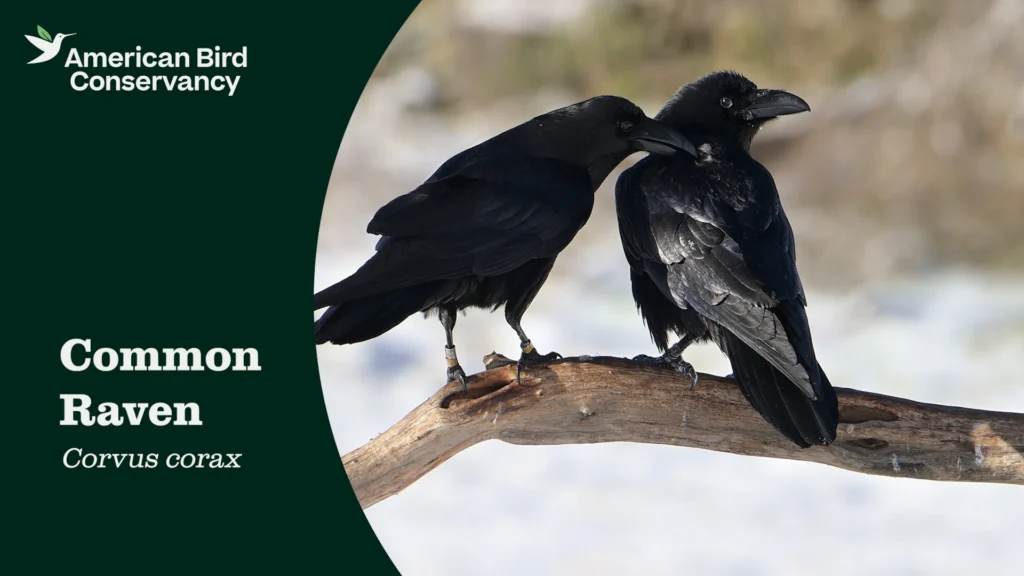
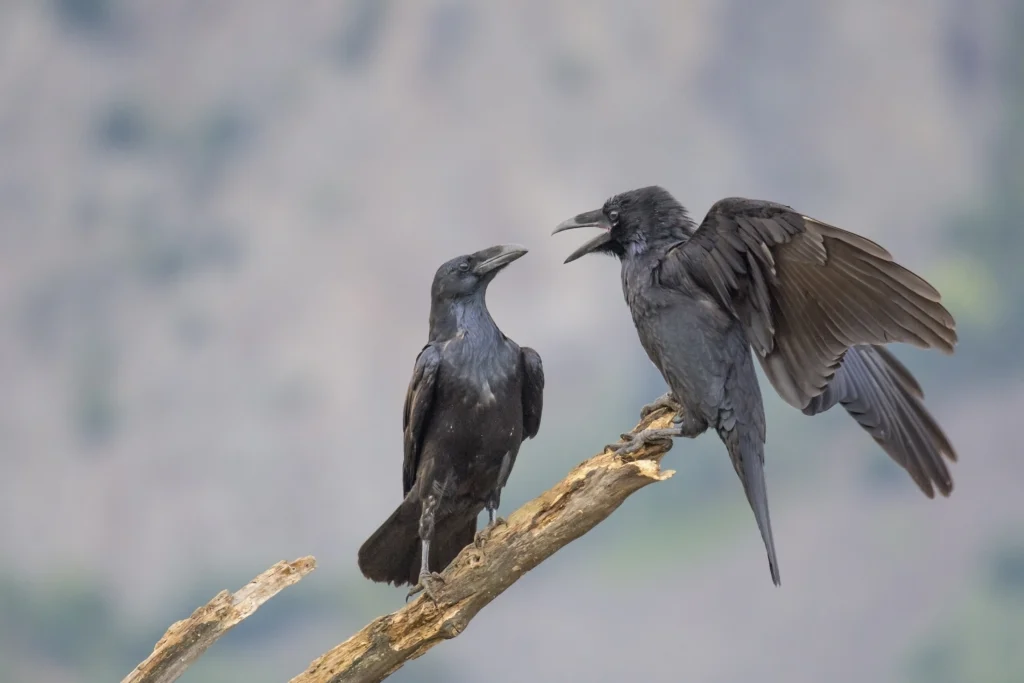
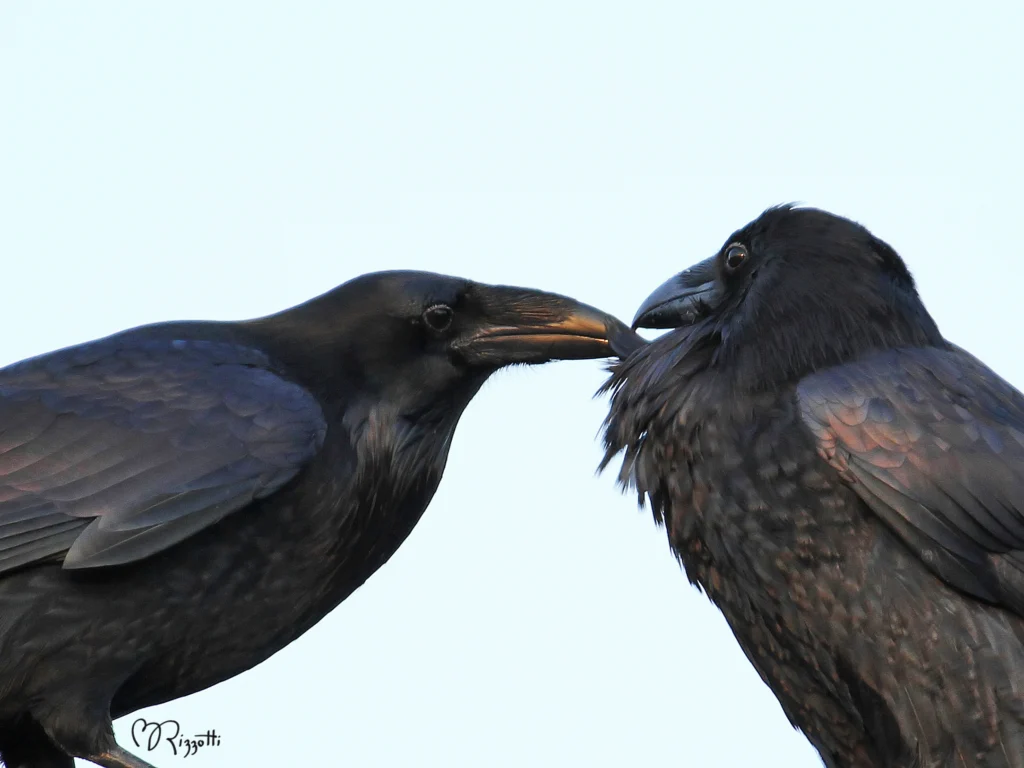
Though also performed by young, unmated birds, paired ravens will perform simple displays to one another. Males will display to females by bowing, spreading the wings and tail, and flashing the white nictitating membranes over their open eyes while giving “gurgling” or “choking” vocalizations and snapping their beaks. Females may also display, spreading the wings and tail and producing female-specific Knocking Calls. Pairs frequently preen each other, and mates may even “request” to be preened by holding still while presenting their head or neck. Mates sometimes hold each other’s bills or feet as well. Unmated juvenile birds sometimes form preening partnerships, but these may not last into adulthood.
Anidación
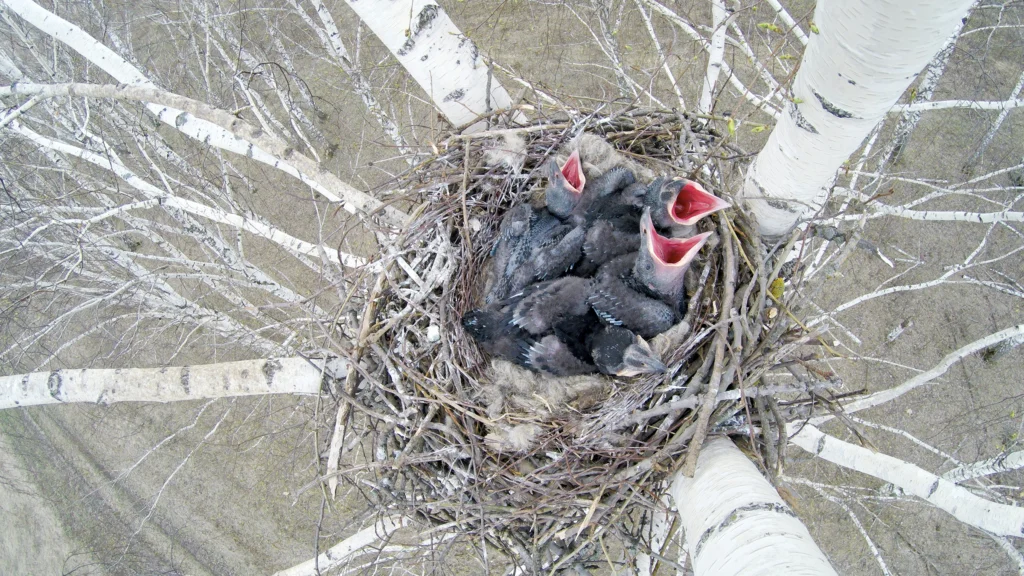
Common Ravens will nest almost anywhere with good food supplies and an elevated structure with a large surface on which to build a nest, such as a large tree, cliff face, communication tower, windmill, or abandoned building. The nest itself is a large open cup. The outer structure is made of sticks, which support an inner cup of smaller branches and twigs, sometimes lined with other materials including fur, moss, paper, or mud, among others.
Huevos y crías
Common Ravens usually lay five or six eggs, greenish or bluish with darker markings. Females do most of the incubating while males bring food and stand guard outside the nest, sometimes taking a shift here or there, especially in cold weather. The eggs hatch after 20 to 25 days, and both parents feed and brood the nestlings. Young fledge between four and seven weeks later. Cooperative breeding is not common, but in rare cases, observers have noted nests with three adult birds in attendance.