Descripción general
Acerca de
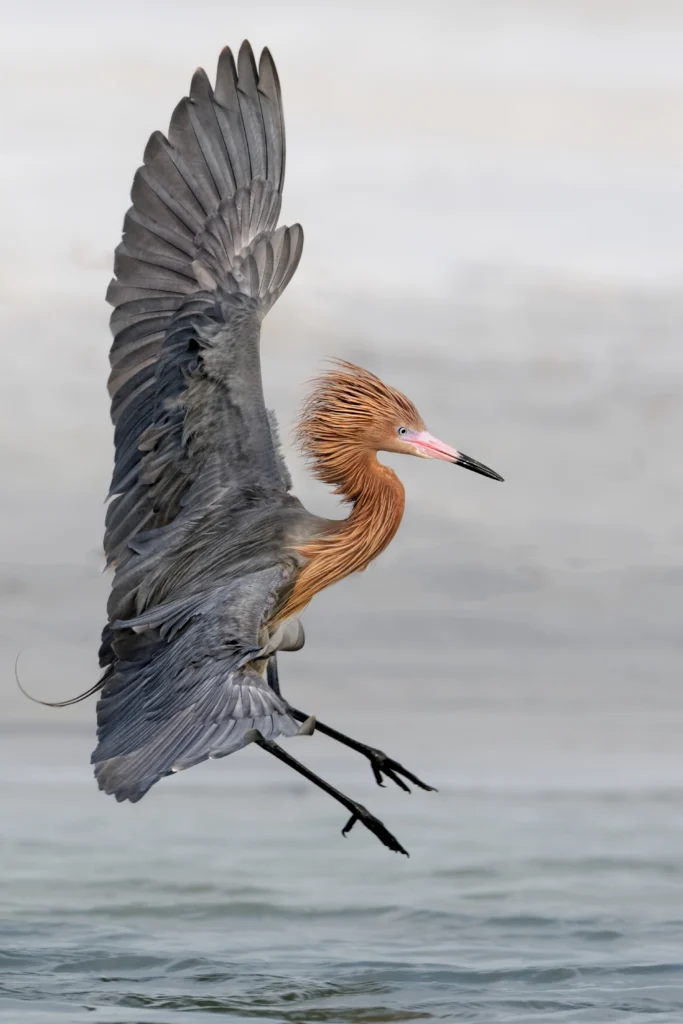
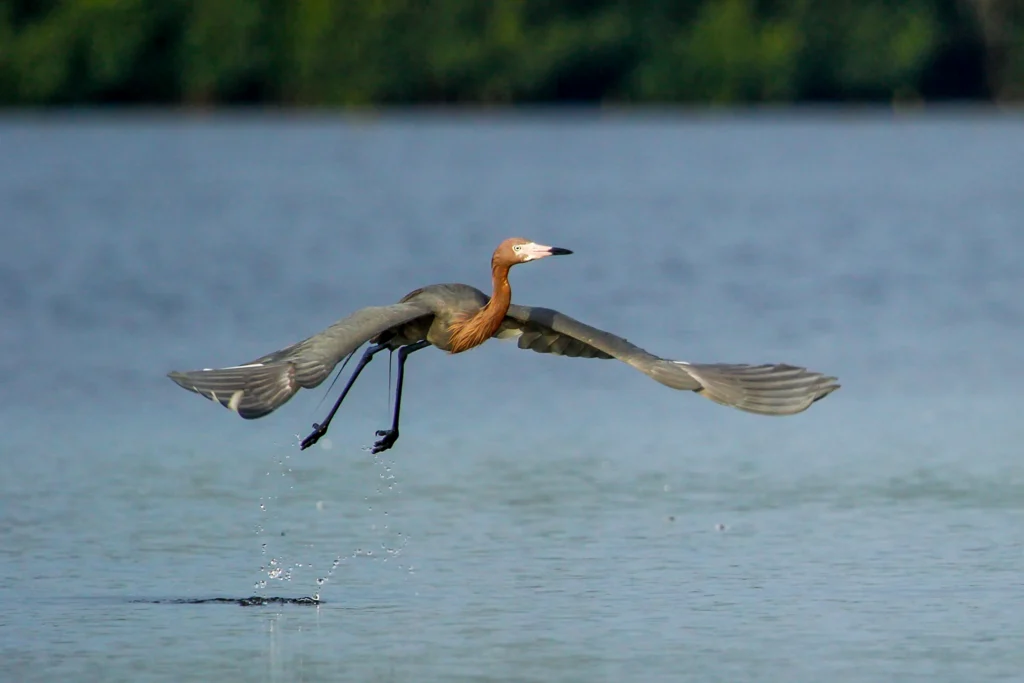
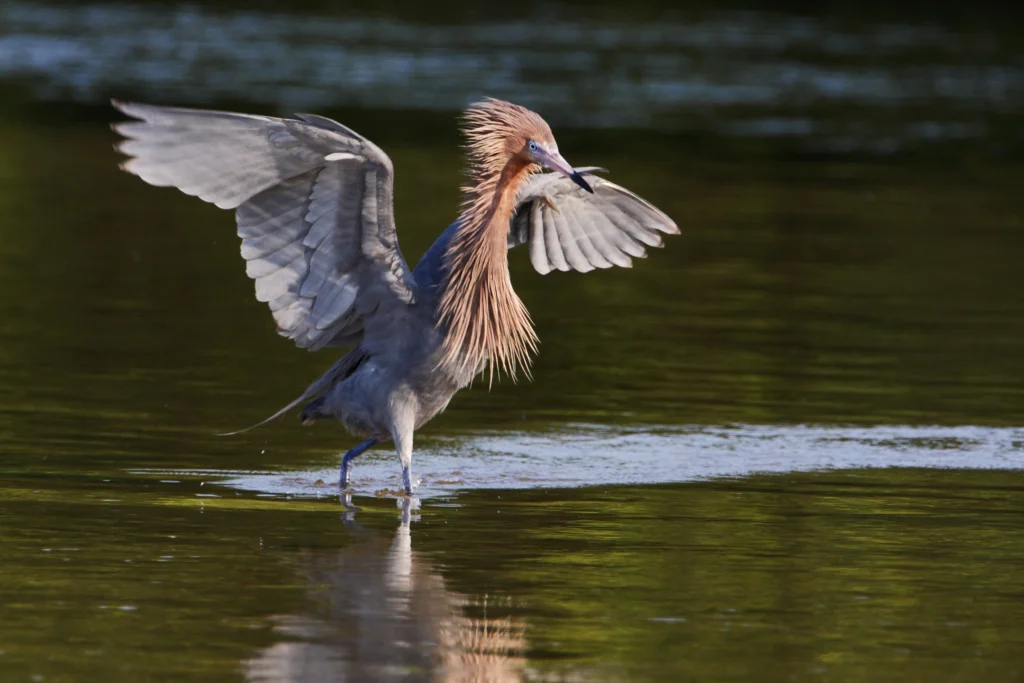
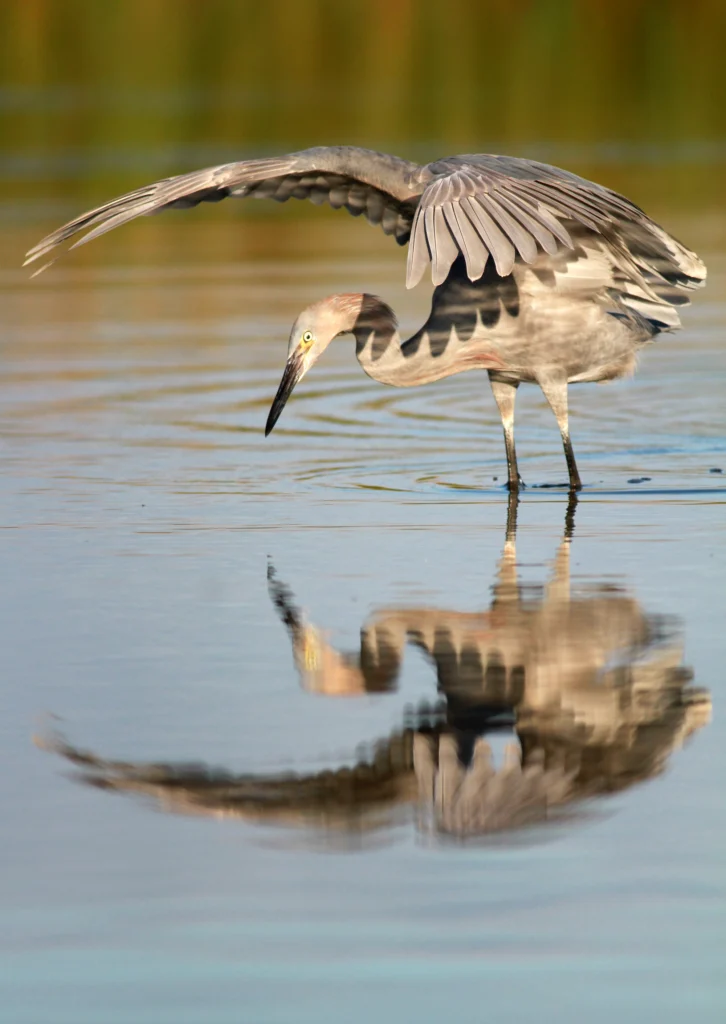
The Reddish Egret is a fascinating and entertaining bird, with an extremely energetic foraging style that sets it apart from the patient and nearly motionless strategy employed by many other members of its family. While most herons, bitterns, and egrets move slowly and stealthily, Reddish Egrets charge through shallow coastal waters after their prey. In their wild pursuit, they make rapid twists and turns, hopping into the air and occasionally flying short distances, often while holding their wings above their heads, before finally delivering a rapid and decisive strike into the water. Frequently, the fish they return with are so small that they hardly seem worth the effort, but it certainly doesn’t slow them down. These antics, and perhaps the long tousled feathers of their neck and head, have earned the Reddish Egret several colorful local names, including Garza borracha (“drunken heron”) and Garza loca (“crazy heron”).
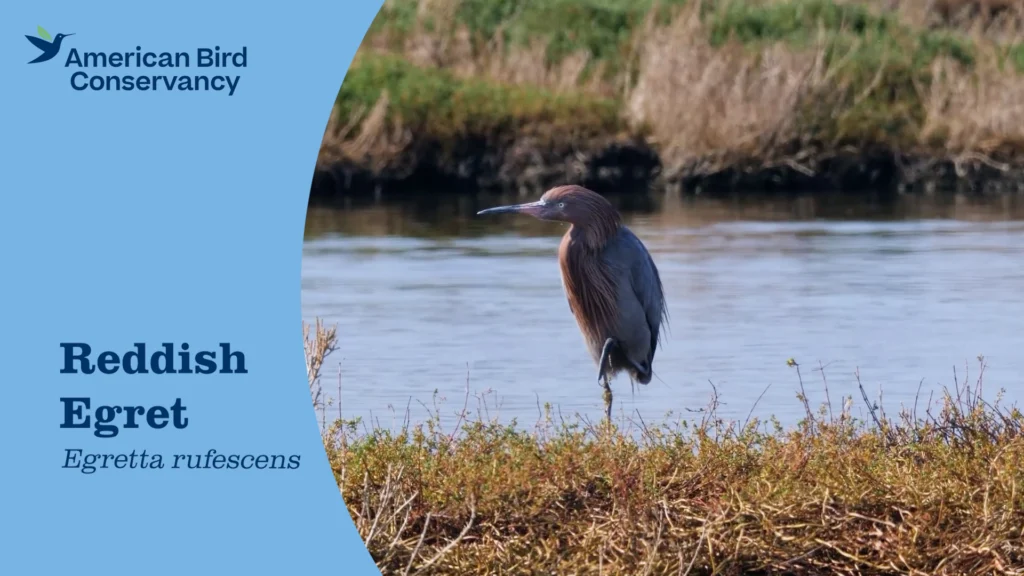
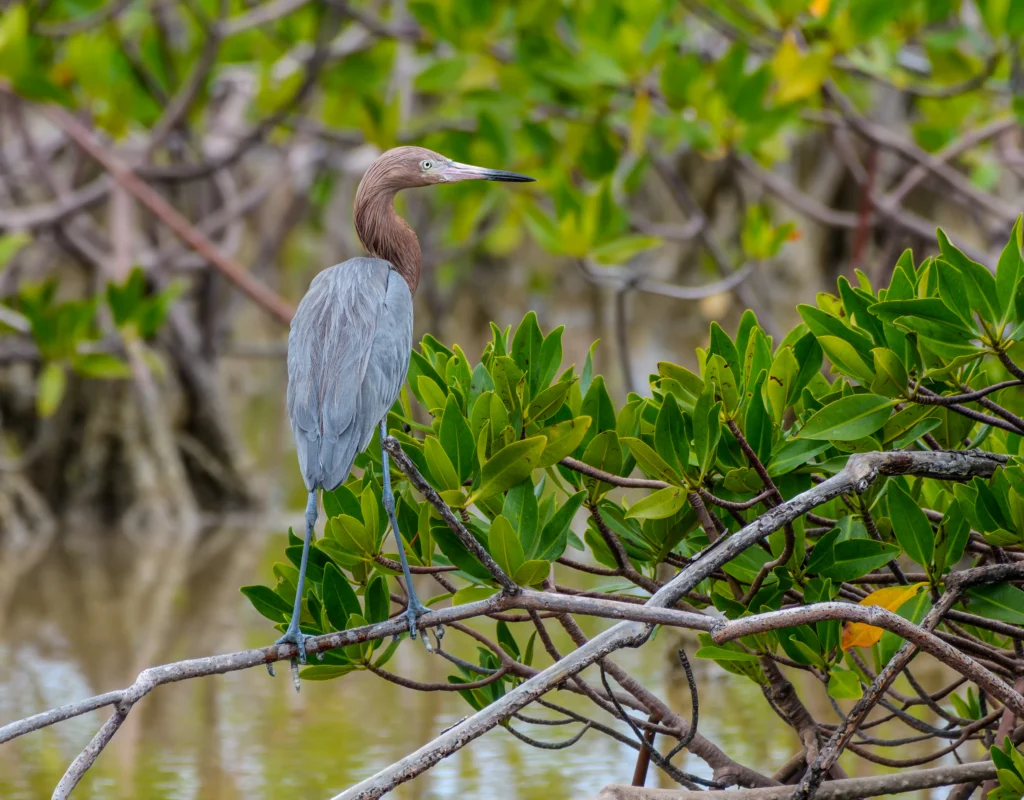
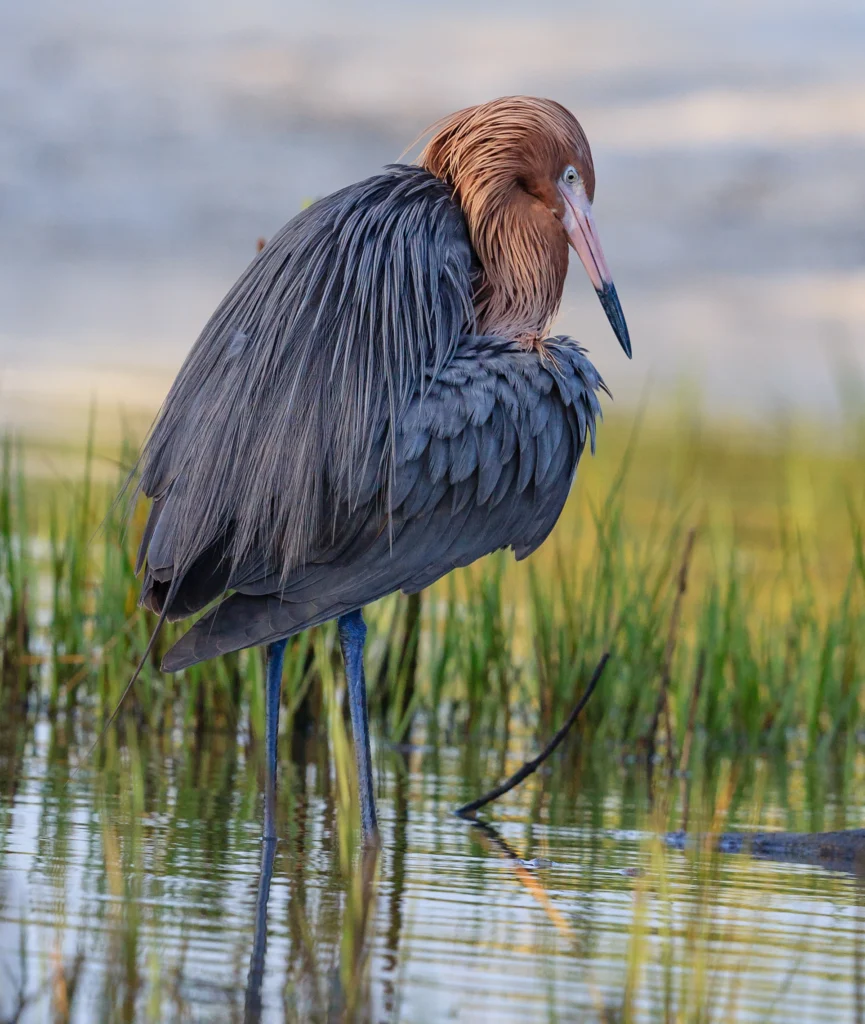
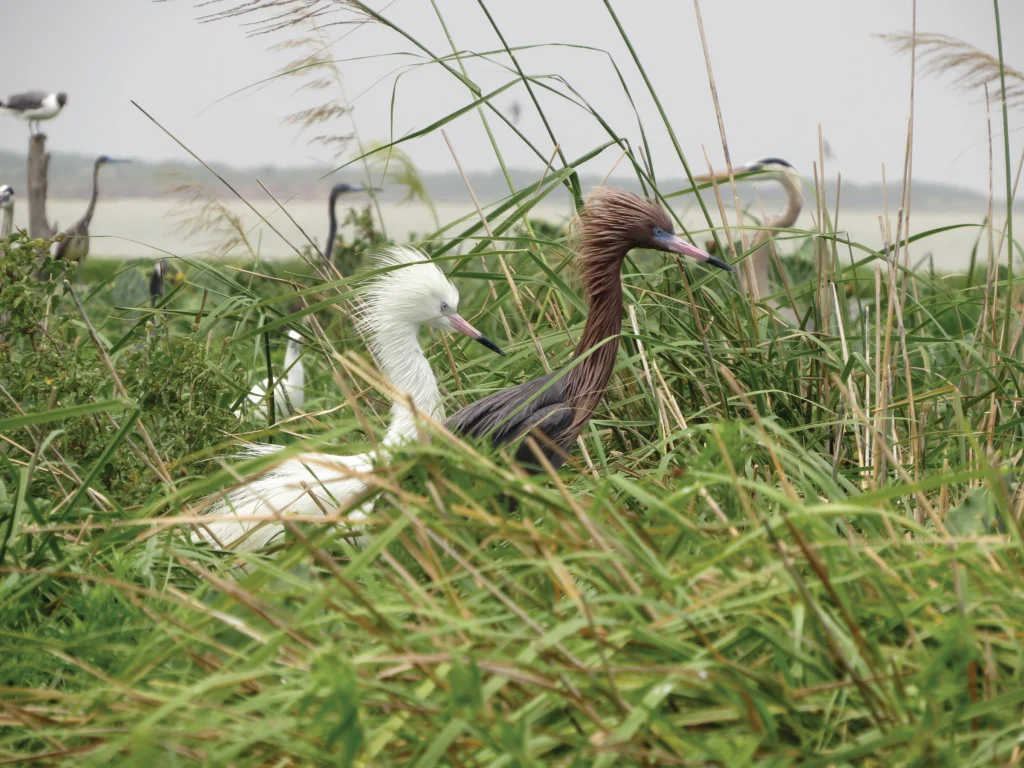
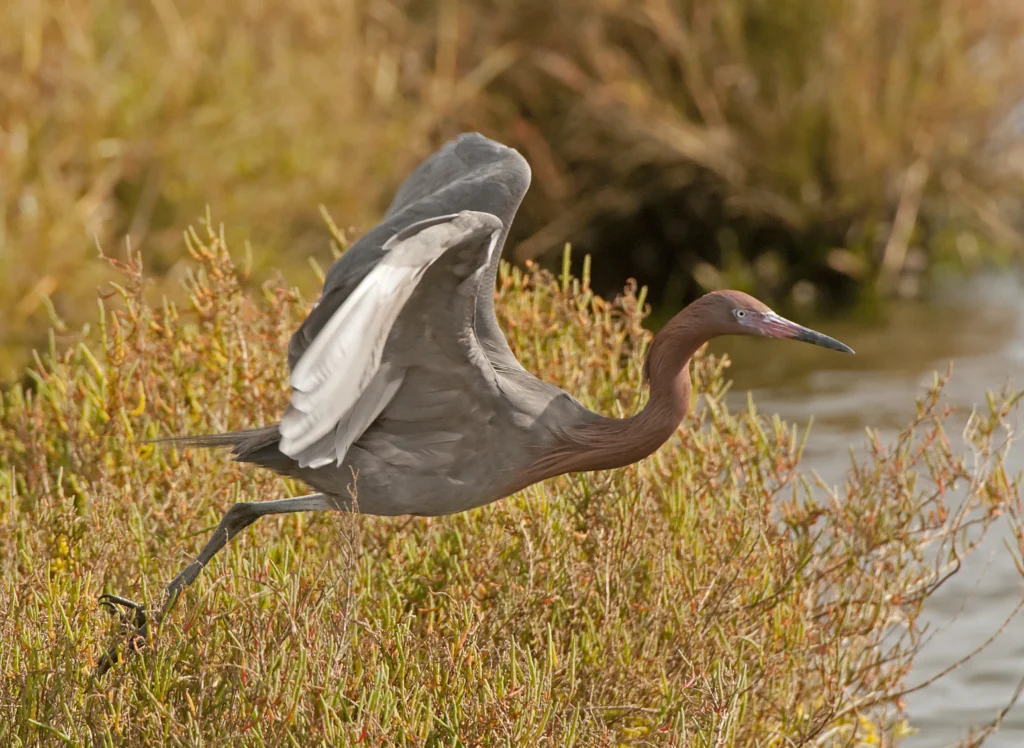
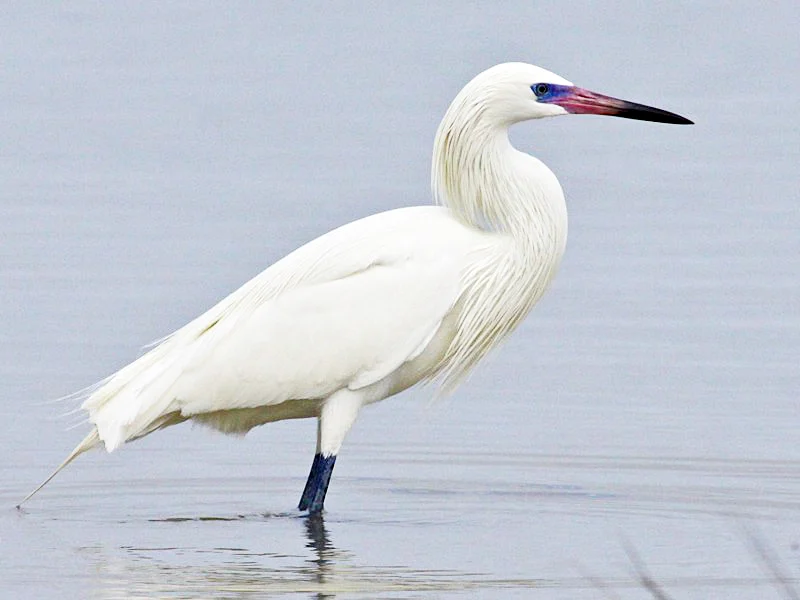
The Reddish Egret has two distinctive color morphs: A dark morph that pairs a slate-gray body with the namesake rusty reddish head and neck, and a white morph, in which the plumage is snowy white. Though the dark morph is more common over most of the species’ range, the white morph is not rare. During the breeding season, white and dark birds frequently pair together, and a given nest may have both dark and white chicks. Some birds even show an intermediate plumage, although it is not known whether this is a result of parentage or simply partial albinism in individual birds.
Amenazas
Reddish Egrets in the U.S. were decimated by plume hunters in the 19th century, along with other egret and heron species, and populations never fully recovered. At present, habitat loss is this species’ greatest threat. Reddish Egrets depend on coastal habitats for successful foraging and breeding, but these areas are frequently destroyed by development projects and are also vulnerable to sea level rise caused by climate change.
Shoreline Development
The tropical and subtropical coastlines that support the Reddish Egret are highly attractive to humans as well. Throughout the egret’s range, these ecosystems are frequently replaced with tourist infrastructure, residential development, and other built environments. Even if habitat isn’t replaced entirely, proximity to these developed areas can cause enough disturbance to make them unusable for Reddish Egrets and other coastal birds. Similarly, boating, shipping, and fishing can also disturb these birds, making it challenging for them to breed and forage.
Rising Sea Levels
As the climate warms, the polar ice caps and glaciers worldwide have begun to melt, draining into the ocean and raising the sea level in coastal areas. Additionally, as the ocean warms, it physically expands — about half of the rise in sea levels is a result of the water physically expanding. With steadily increasing temperatures, coastal waterlines continue to rise, flooding shorelines and mudflats. As these areas are subsumed under the rising sea, the habitat that supports the Reddish Egret goes with them.
Estrategias y proyectos de conservación
Like many coastal species, the Reddish Egret needs our help to overcome the threats it faces. At ABC, we’re inspired by the wonder of birds and driven by our responsibility to find solutions to meet their greatest challenges. With science as our foundation, and with inclusion and partnership at the heart of all we do, we take bold action for birds across the Americas.
Mejorar el hábitat
The Reddish Egret benefits from many of the conservation actions ABC has put in place for coastal-nesting species, particularly through our Gulf Coast Program. Through this conservation initiative, we combine physical protection and nest site monitoring with media outreach and on-the-ground educational activities. With this approach, we ensure that the Reddish Egret and other coastal species have a place where they can thrive, while also building support for the conservation of wild coastal areas within the local communities that steward them.
Abordar el cambio climático
Climate change is causing sea levels to rise, and this poses a major threat to the Reddish Egret. ABC addresses climate change in three key areas: mitigation, resilience, and adaptation. Many of ABC’s conservation projects protect carbon-rich tropical forests. We have planted millions of trees throughout the Western Hemisphere, protected more than 1.3 million acres of land in Latin America and the Caribbean, and continue to improve and restore bird habitat.
Championing Bird-Friendly Policies
ABC advocates for policies at the local, state, and federal levels that benefit birds. The Farm Bill, in particular, is the single largest source of conservation funding in the world and has an outsized impact on grassland bird conservation. The programs it funds help ABC, the Migratory Bird Joint Ventures, and landowners such as ranchers and farmers become partners in conservation. Programs like the Conservation Reserve Program, the Grassland Restoration Incentive Programs, and the Regional Conservation Partnership Program have boosted efforts to encourage bird-friendly practices on working and private lands, benefiting the Chestnut-collared Longspur and many other species.
Galería de aves
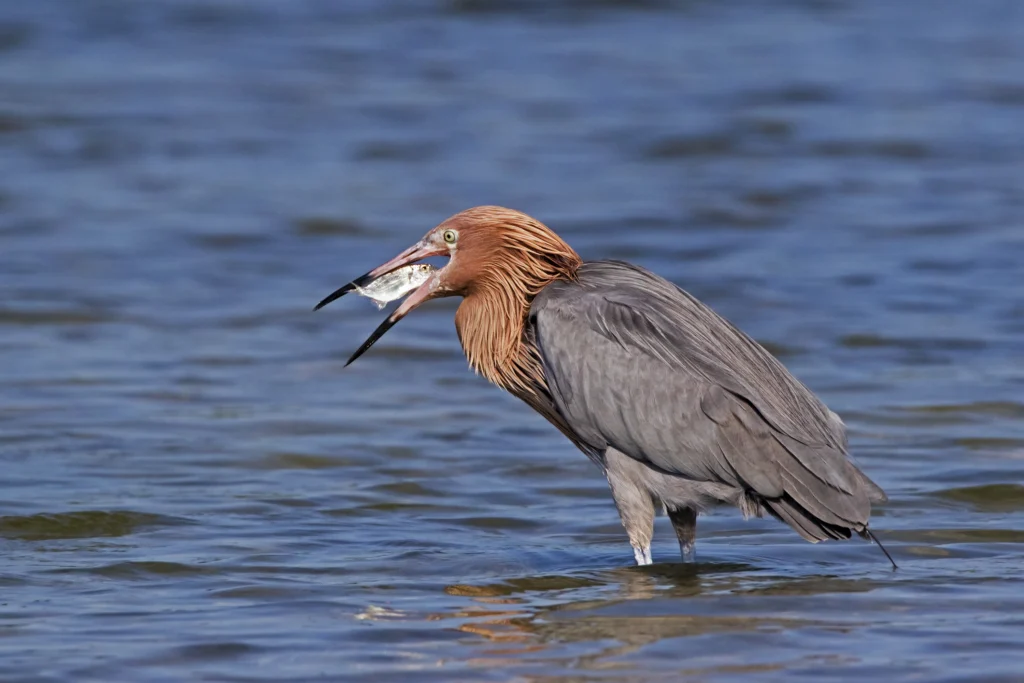
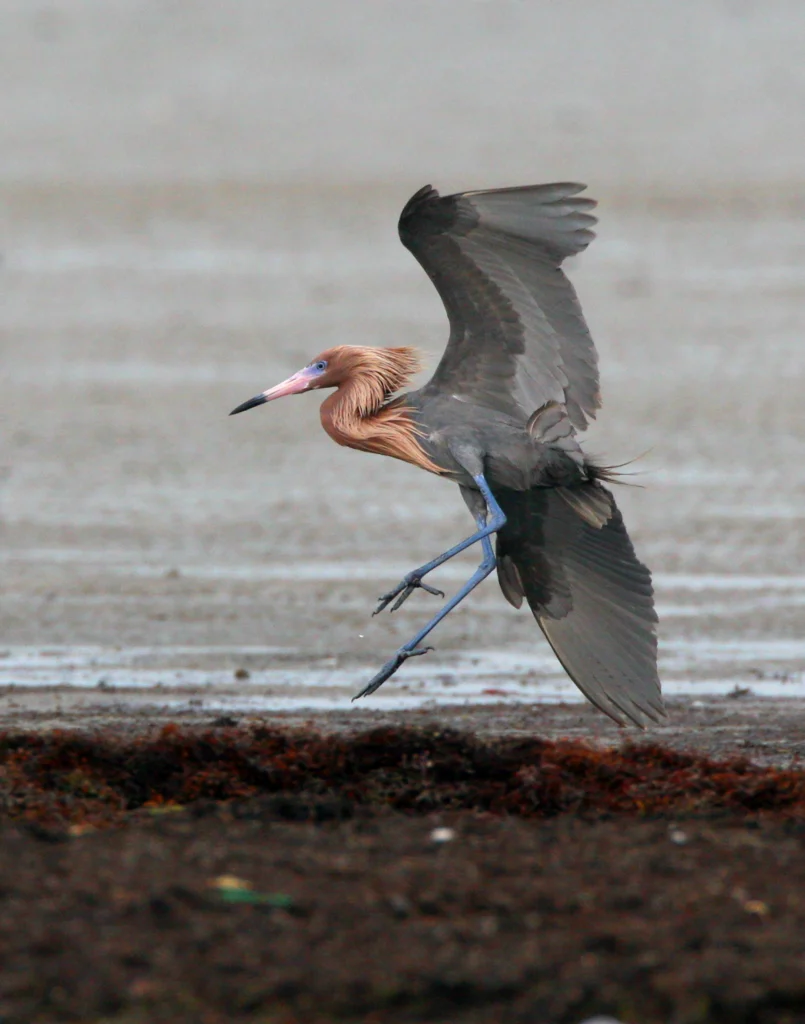
The Reddish Egret occurs in two color morphs: a dark morph characterized by a slate-blue body and reddish head and neck, and a white morph with completely white body plumage. However, both color morphs share long, shaggy-looking neck feathers and a distinctive two-toned bill, pink closest to the face and black toward the tip, as though the bird had dipped its bill in black ink. In the breeding season, the skin between the beak and eyes turns a brilliant violet-blue, while the legs go from grayish blue to a striking cerulean.
Sonidos
Reddish Egrets give a range of throaty grunting and croaking vocalizations. While some of these are paired with visual displays, others are given in flight, while foraging, during chases and fights, or in other contexts. During joint displays, paired birds will also produce a “bill-clappering” sound, lightly snapping the bill to produce a relatively soft popping sound. The “Display Calls and Bill-Clappering” recording below was made during a twig-passing display between mated birds.
Credit: Andrew Spencer, XC130178. Accessible at www.xeno-canto.org/130178.
Credit: Paul Marvin, XC452975. Accessible at www.xeno-canto.org/452975.
Credit: Andrew Spencer, XC130833. Accessible at www.xeno-canto.org/130833.
Hábitat
Reddish Egrets seldom leave the coastline, where they forage in shallow waters and nest primarily in mangroves.
- Often prefer to nest on small coastal islands
- On more arid coastlines, will nest in shrubs, cacti, agave, or on bare sand
- Roosting, nesting, and nonbreeding habitats are similar
Rango y región
Rango y región
Área específica
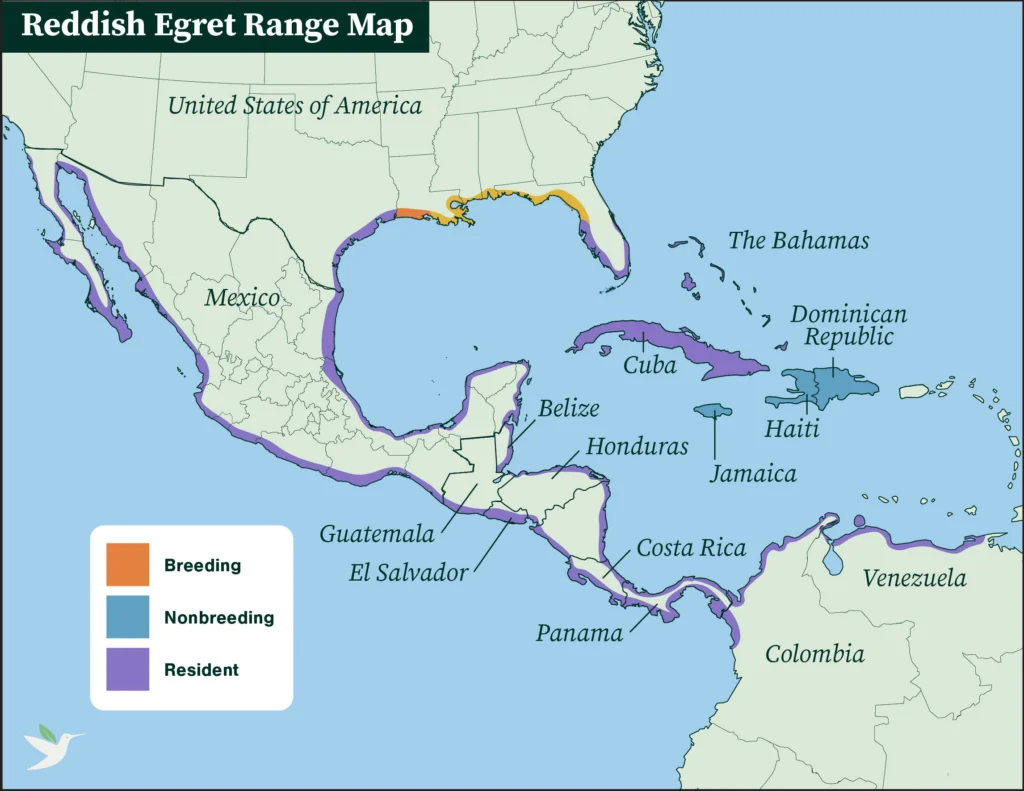
Gulf Coast; Atlantic and Pacific Coasts of Mexico, Honduras, Belize, Guatemala, and El Salvador south to Panama; coastal Colombia and Venezuela; the Caribbean
Detalles de la gama
The Reddish Egret is found year-round in coastal Mexico, south to Panama, as well as the coasts of Venezuela, Colombia, Cuba, the Bahamian Archipelago, the southern half of Florida, and Texas’ Gulf Coast. There is also a breeding population in southwestern Louisiana, and wintering populations in Jamaica and Hispaniola.
¿Sabías?
Plume hunters are thought to have extirpated this species from Florida, Louisiana, and much of Texas. The Reddish Egret’s presence in these states is a result of them recolonizing areas they inhabited before the plume trade exploded in the 1800s.
Historia de vida
In addition to their dance-like hunting technique, the Reddish Egret is quite a performer in social contexts as well. These birds use a wide range of displays both in aggressive interactions and during courtship and breeding. Reddish Egrets are indeed quite social birds, nesting in diverse colonies and sometimes foraging in large aggregations that may include resident and migratory birds such as pelicans, terns, flamingos, and shorebirds. However, these egrets need a lot of space to execute their moves, and prefer not to be crowded too closely.
Dieta
The Reddish Egret mostly eats small fish, but may sometimes eat other animals like tadpoles and frogs. This species is famous for its highly active hunting style. Reddish Egrets dash, lurch, and zig-zag after their prey, often holding their wings over the water as they hunt. This shadow-casting strategy, also known as “canopy feeding,” may reduce glare from the surface of the water, or actually attract fish to the bird. They will also flick their wings or stir the mud or sand with their feet — sometimes while hovering above the water! — to startle camouflaged fish into moving and revealing their positions.
Noviazgo
Reddish Egrets do not breed until their third or fourth year, at which point they begin to perform their complex and energetic courtship displays. These birds have a rather large repertoire of display movements, some performed solo and others jointly with a mate. Many of their displays make use of the long, narrow feathers on the head and neck, which these egrets flare out like a lion’s mane. One particular display involves pair members hopping over one another with their necks fully extended. Another has the pair bringing each other sticks, while also bowing, tossing their heads back, calling, and clappering their bills — check out a sound recording of this display in the Sounds section above!
Anidación
Como el Cigüeña de madera, the Reddish Egret is a colonial species and will nest alongside other egrets, herons, cormorants, and spoonbills. They favor coastal islands, where they build their nests in mangroves, low bushes, or even prickly pear cacti, which may provide some protection from predators. They will also use human-made nesting spots such as dredge islands. The male and female work together to build a platform nest of sticks, which they will add to even after the female has started incubating. Reddish Egrets will also line their nests with grasses and herbaceous plants.
Huevos y crías
Females lay three or four pale bluish-green eggs, which both sexes incubate for about four weeks. Even after the eggs hatch, one adult always stays near the nest. Adults brood the young, but will also shade them with their wings in the heat of the day. The nestlings remain in the nest for four to five weeks, though the parents attend to them less after two or three weeks. If threatened, the nestlings will hiss and jab at intruders, sometimes regurgitating as well.