Western Bluebird

Sialia mexicana

Dakáakshuakaate (Apsáalooke/Crow)

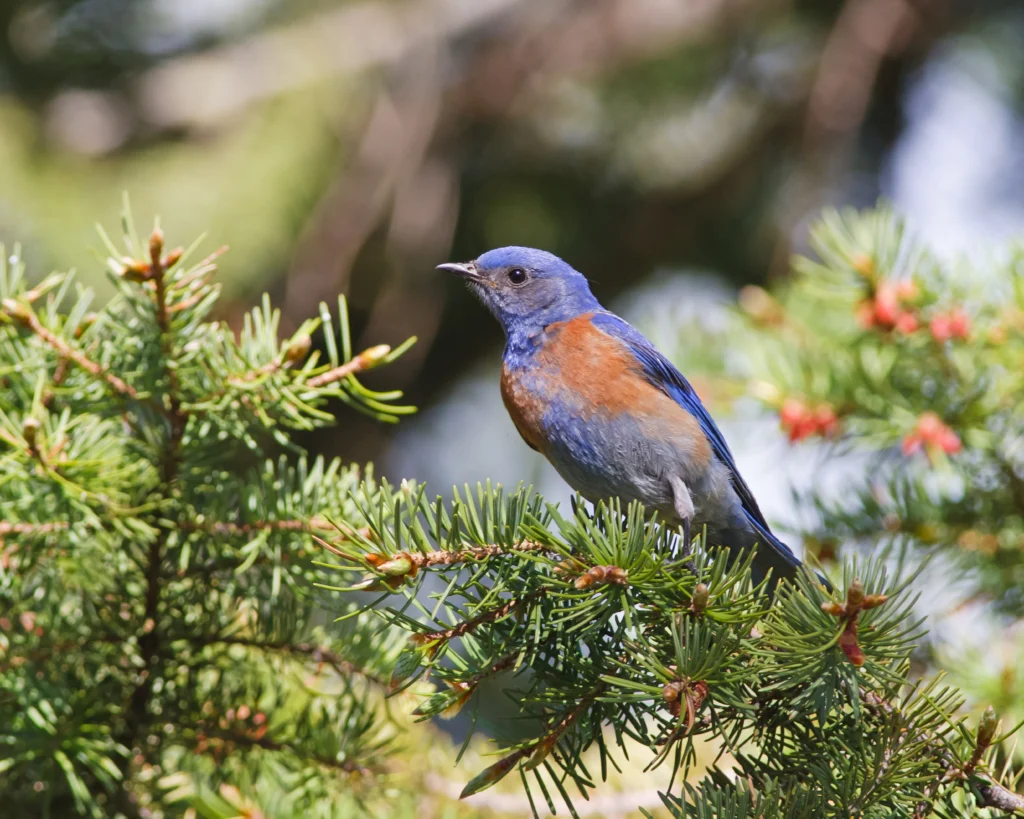
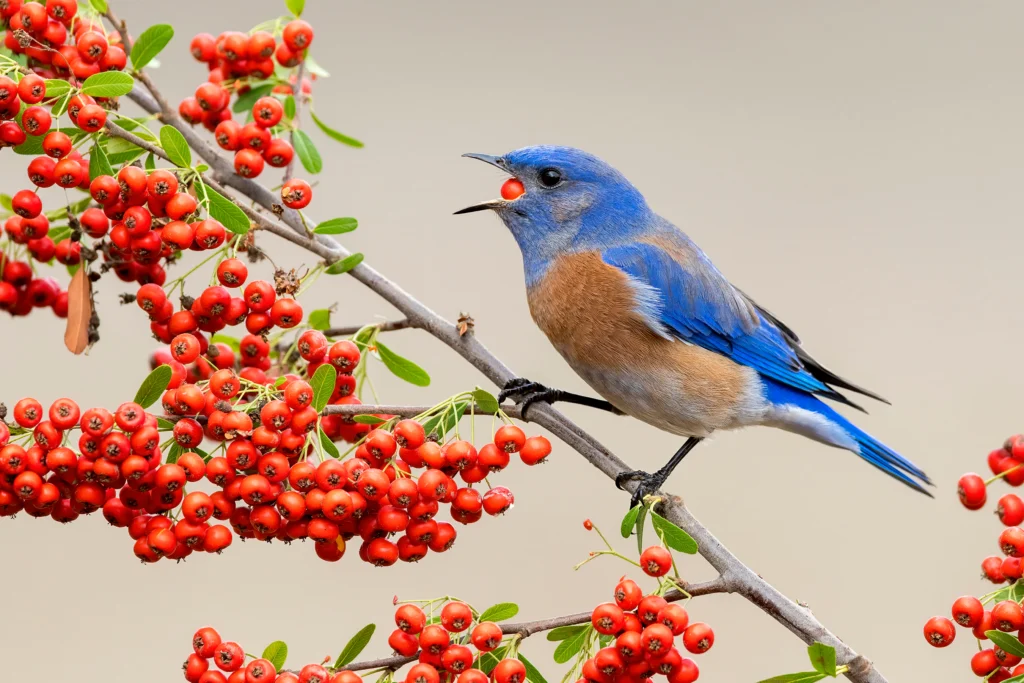
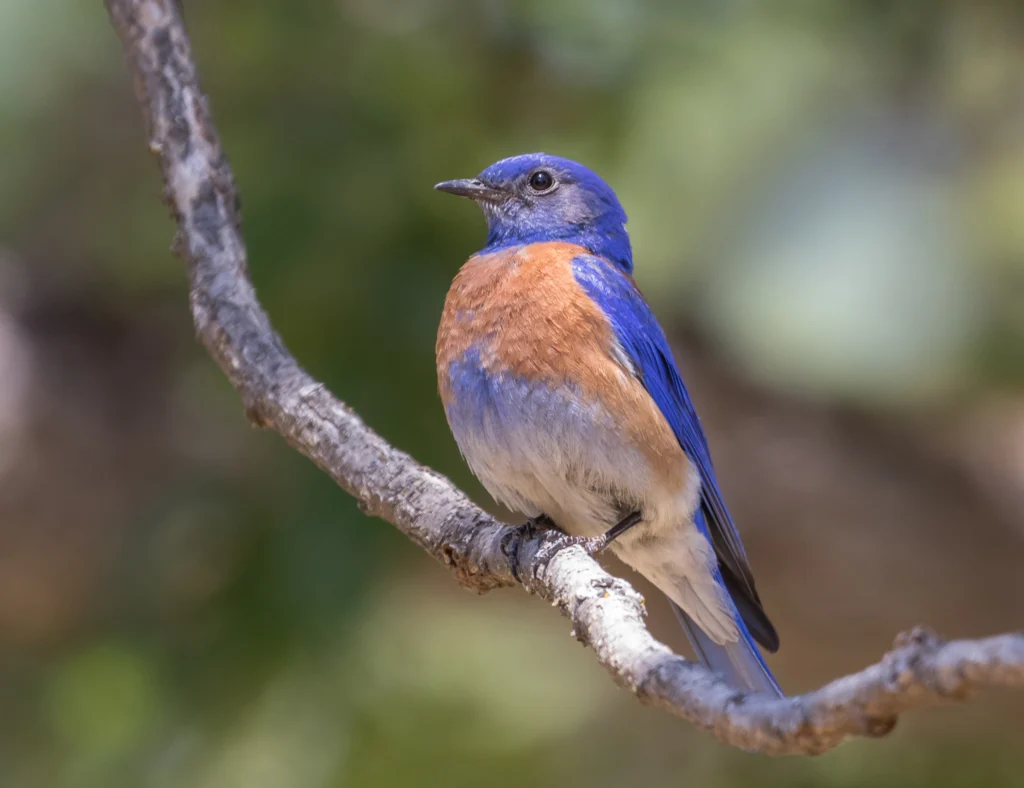
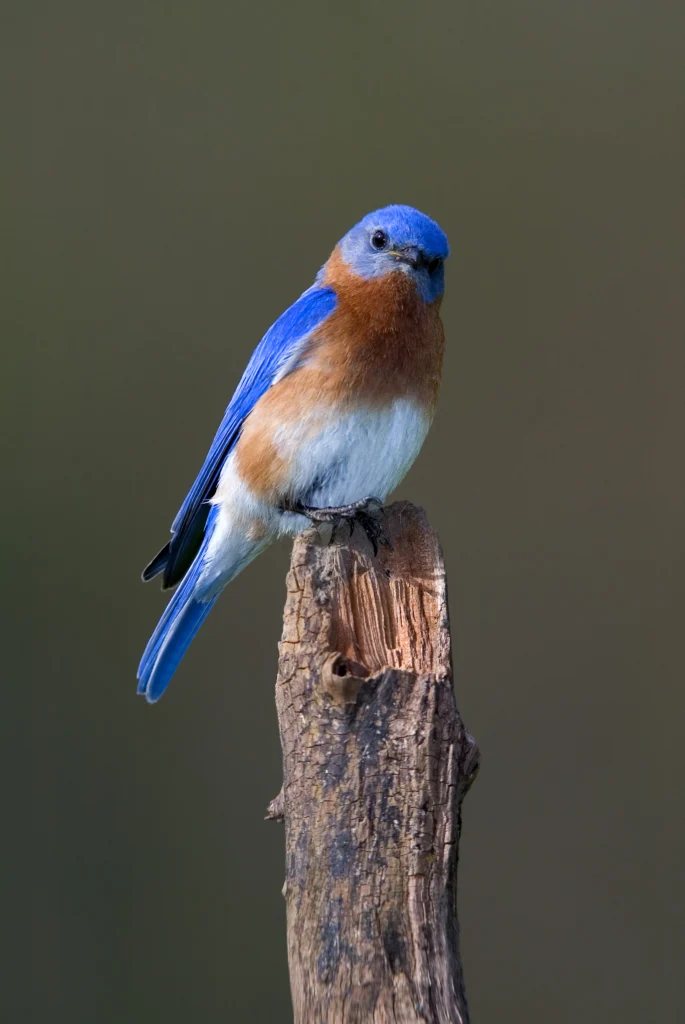
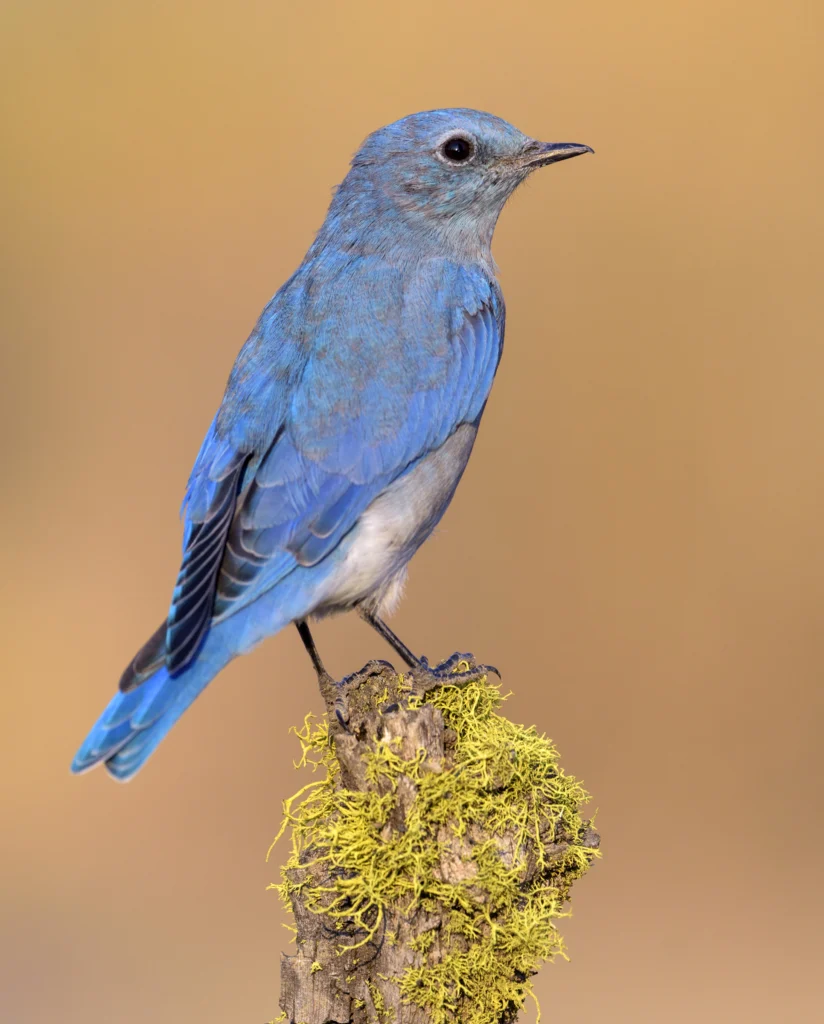
Western Bluebird. Photo by Hayley Crews, Shutterstock.

Western Bluebird

Western Bluebird. Photo by Hayley Crews, Shutterstock.

Sialia mexicana

Descripción general

Estado de conservación
Tendencias demográficas
Creciente
Tamaño de la población
7.1 million
Familia
Zorzales
Ubicación
América del norte
Patrón de migración
Latitudinal
Distancia de migración
Distancia corta
También conocido como
  • Azulejo Garganta Azul (Spanish)

Acerca de

The Western Bluebird is a beautiful thrush of woodland and savanna, found across much of the western United States and the interior of Mexico. With their shades of deep rust and lustrous sky-blue, these birds are a delight to watch as they swoop from low perches to pounce on ground-dwelling insects. These birds are fairly adaptable, readily using nest boxes and perches provided by humans, and are frequently spotted on barbed wire fences on agricultural land.

With large eyes, a short bill, and a round shape, these birds look quite cute. However, both males and females are aggressively territorial, and males in particular are known to pin rivals to the ground and peck at them viciously. This might sound excessive, but these birds have good reason to be defensive. Aside from defending food resources and much sought-after nesting cavities, paired birds, typically males, will sneak onto their neighbors’ territories in search of an interested female to mate with. This benefits the female by increasing the genetic diversity in her nest, and the sneaky male gets insurance on his genes by not placing all his eggs in one basket. But, from an evolutionary perspective, this is bad news for the female’s mate, who may end up providing parental care for offspring that are not related to him.

By the end of the breeding season, however, Western Bluebirds form large flocks with their neighbors. Additionally, pair bonds between a male and female tend to be long-lasting. Apparently, these beautiful little birds don’t hold grudges.
Amenazas

Common and fairly widespread, the Western Bluebird is not considered a species of conservation concern. However, like most birds, they face threats due to human activities of the past and present, including salvage logging, fire suppression, and the introduction of invasive cavity-nesting species like the House Sparrow and European Starling.

Removal of Dead Trees

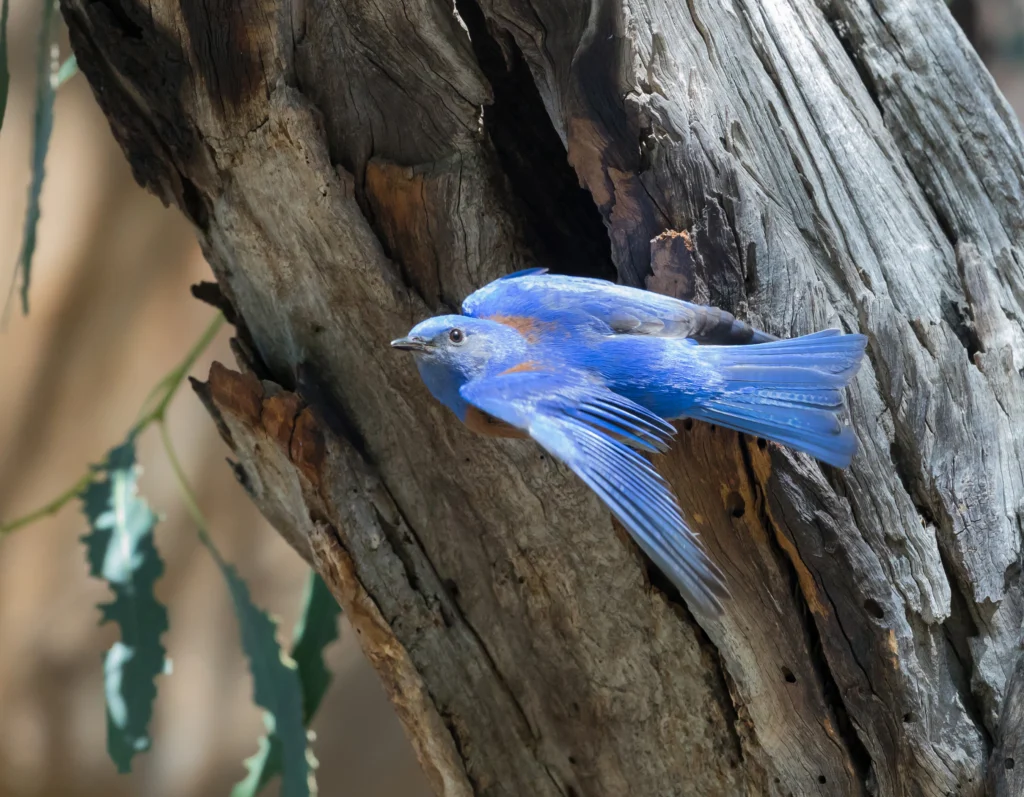
As secondary cavity nesters, breeding Western Bluebirds rely on either naturally occurring cavities or those created by woodpeckers. Although living trees sometimes offer suitable nesting spaces, the majority are excavated in dead trees by woodpeckers. Removing dead trees leaves few nest sites available to bluebirds and other secondary cavity nesters.

Fire Suppression

Historically, periodic fires were a common occurrence throughout much of the West. However, for many decades, fires were not allowed to burn over large areas, ultimately leading to forests growing thicker, closing the openings used by birds like the Western Bluebird. At the same time, fewer fires meant fewer standing dead trees, inhibiting the reproduction of cavity-nesting species like the Western Bluebird.

Estrategias y prácticas de conservación

Even relatively common species like the Western Bluebird need our help to overcome the threats they face. ABC has supported efforts to return the Western Bluebird to the San Juan Islands, where it had previously been extirpated. ABC also led the charge to end the threat caused by open, standing pipes, which can trap and kill cavity nesters like the Western Bluebird. With science as our foundation, and with inclusion and partnership at the heart of all we do, we take bold action for birds across the Americas.

Mejorar el hábitat

Habitat is the foundation for birds’ survival. ABC works across vast landscapes in North America where many of our priority species breed. Working closely with the Migratory Bird Joint Ventures (JVs) and other partners, we have improved more than 9.7 million acres of bird habitats in the places where birds need us most — from the Great Lakes to the Chihuahuan Desert.

Restaurando el hábitat

Galería de aves

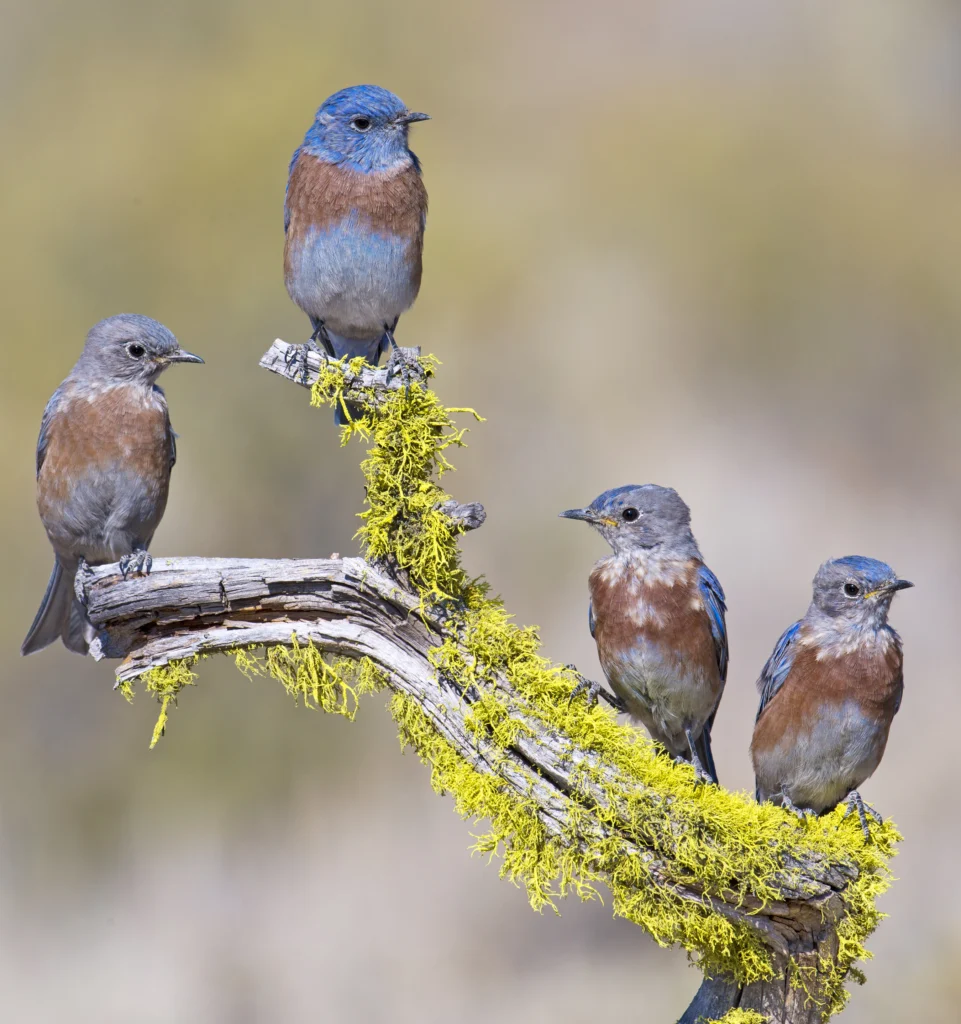
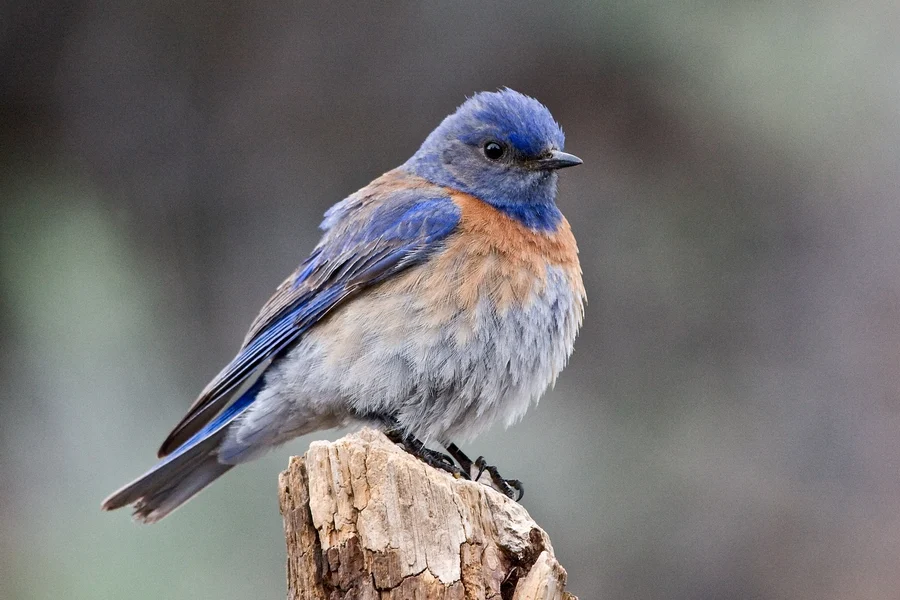
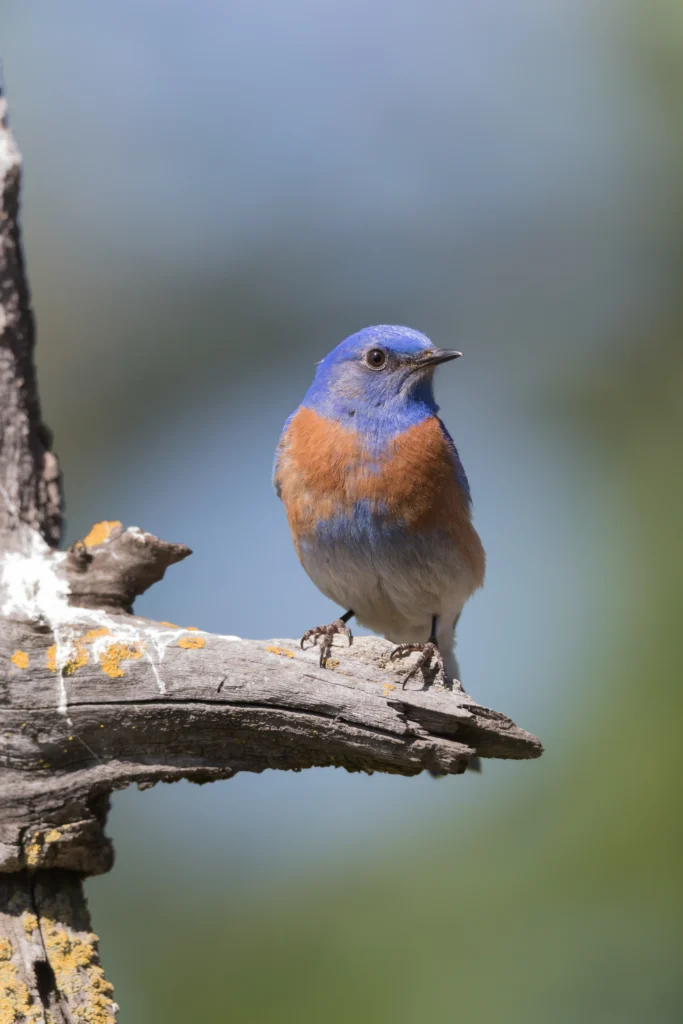
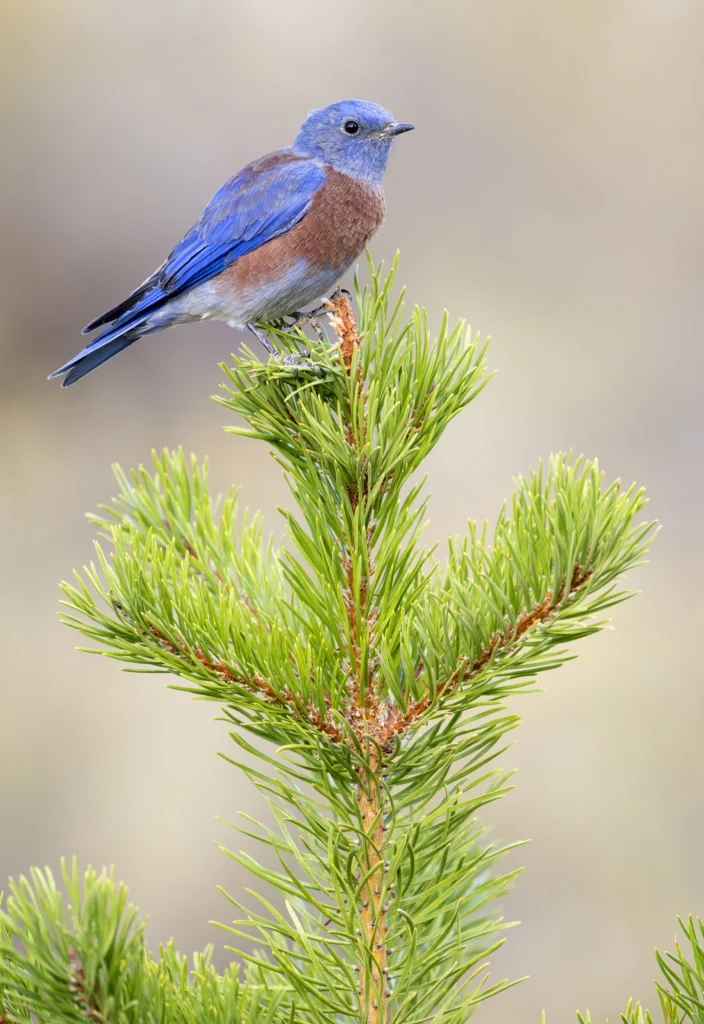
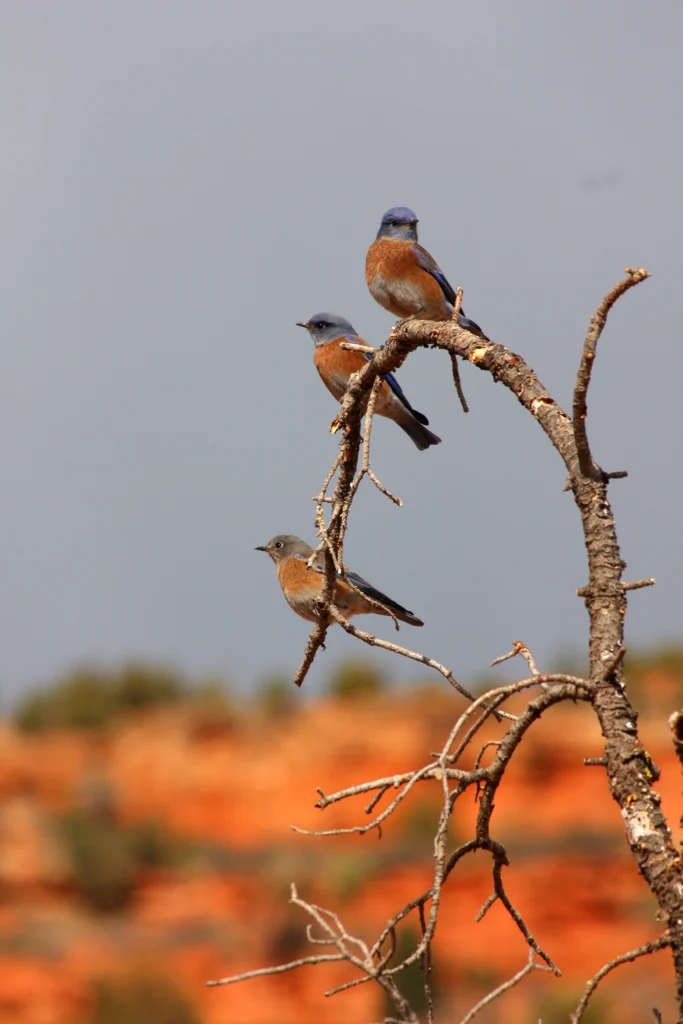
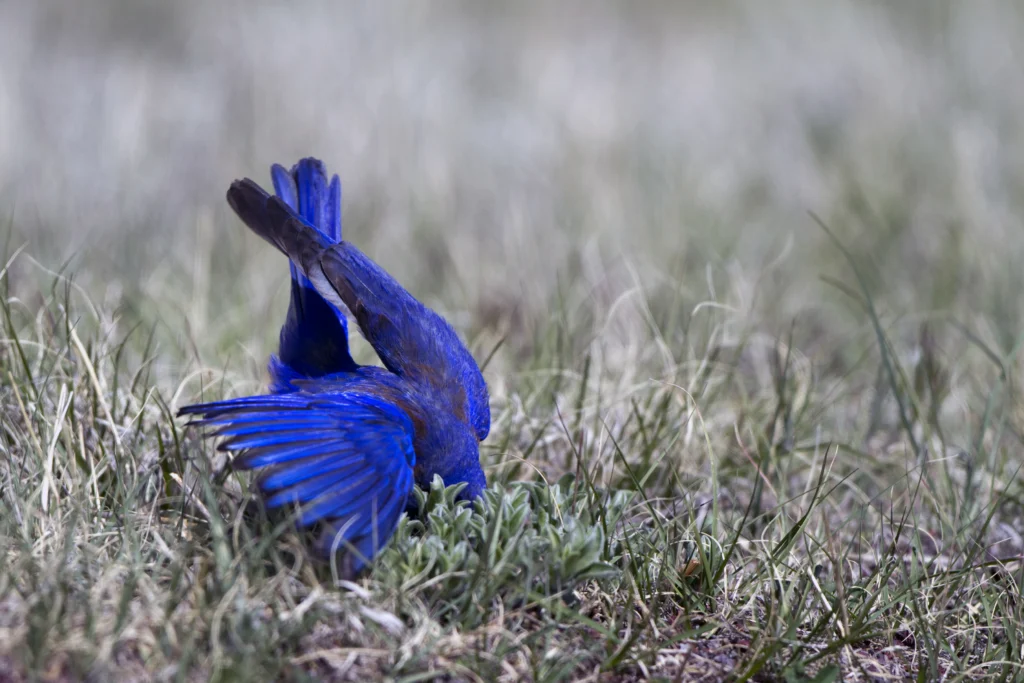
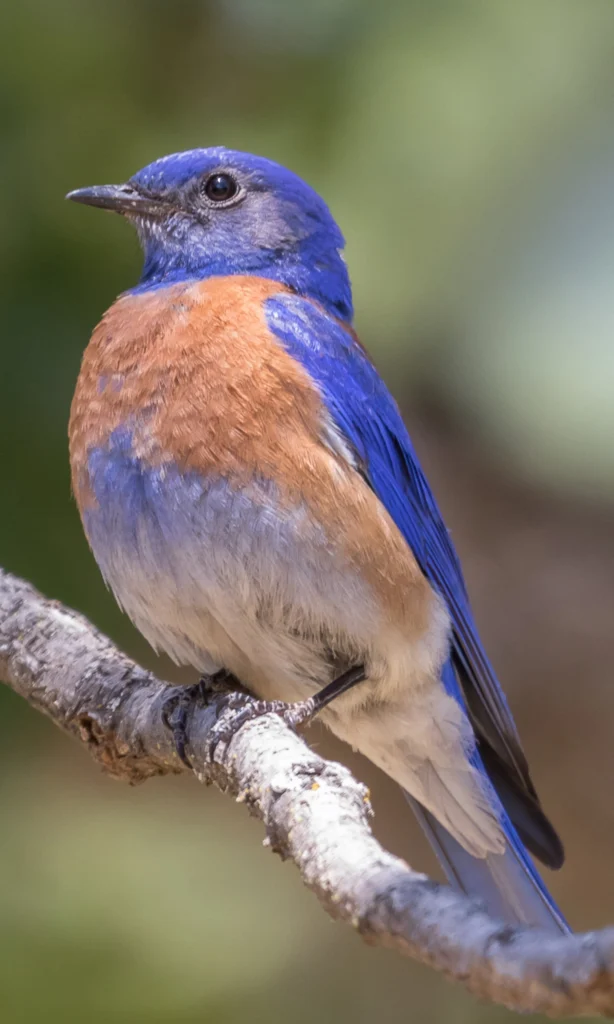
With a limited palette of rufous, white, and stunning sky blue, the Western Bluebird is beautiful and iconic. Males are a bright, almost glowing shade of blue above, owing to the microstructures on the surfaces of their feathers that filter incoming light and selectively reflect only a narrow bandwidth of the most brilliant blue. The male’s throat is blue, the breast and flanks a rusty orange-brown, and the rest of the underparts range from pale gray to blue. Females are largely gray above, but the tail, wings, and rump match the breathtaking blue of the male. The patterning on the female’s underparts is similar, but the rufous breast and sides are usually a subtler peach hue. Both males and females may have rufous on the back and above the wings. In the southern portions of their range where Western Bluebirds may overlap with their cousins the Pájaros azules del este, Westerns can be differentiated by their blue or gray throats and bellies, and patches of rufous on the upperparts.

Sonidos

Unlike the related Eastern Bluebird, only male Western Bluebirds are known to sing. While no rigorous study has been made of this species’ song, Western Bluebirds seem to sing rather simple songs, and may be composed mostly of calls used in other contexts. This also stands in contrast to Eastern Bluebird males, which hold vast song repertoires with dozens of different songs. However, it is possible that Western Bluebird songs are equally complex in ways that are yet to be recognized or explored by science.

Canción

Credit: Paul Marvin, XC649086. Accessible at www.xeno-canto.org/649086.

Few Calls

Credit: Greg Irving, XC1099311. Accessible at www.xeno-canto.org/1099311.

Hábitat

The Western Bluebird is a species of open woodlands and forest edges, in both the breeding and nonbreeding season. They also take well to disturbed environments, such as burned woods, moderately logged areas, and even farm or pasture with substantial trees and low perches.

  • Commonly found in Ponderosa Pine, Piñon Pine, juniper, and oak woodlands
  • Prefers open understory
  • Nonbreeding habitat is similar, but typically found at lower elevations, including chaparral and even desert

Rango y región

Rango y región


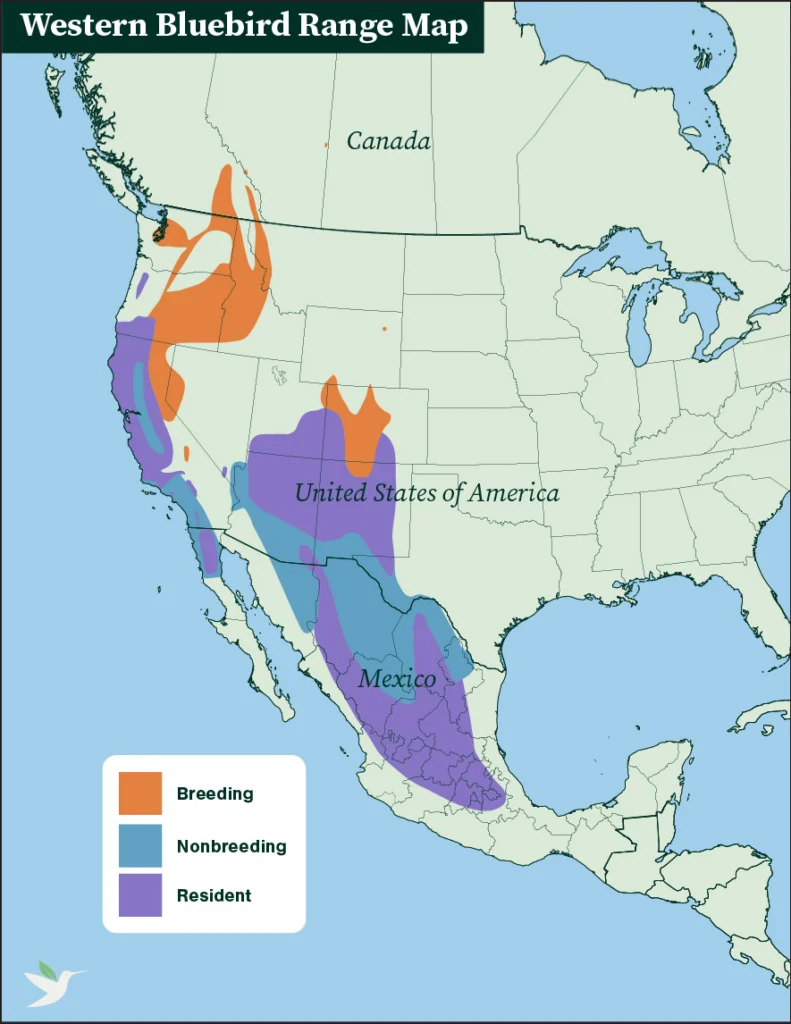
Western bluebird range map.

Área específica
América del Norte occidental

Detalles de la gama
The Western Bluebird is found year-round in much of California, the Four Corners region of the American Southwest, and central Mexico. In the breeding season, birds also move into eastern Oregon, Washington, southern British Columbia, and much of Idaho and Colorado. In the nonbreeding season, some populations fly to northern Mexico, southern Arizona, New Mexico, and West Texas, as well as the southern coast and Central Valley of California.

¿Sabías?
The migratory patterns of this species are subtle and complex, tied to weather and food availability rather than distinct breeding and nonbreeding ranges. While some populations move latitudinally, others simply move up and down in elevation, sometimes even moving upwards temporarily during the winter when weather allows. These winter visitors may even begin to defend nest cavities, a testament to the intense competition over this limited resource.

Rango
América del norte
Patrón de migración
Latitudinal
Distancia de migración
Distancia corta

Historia de vida

Though highly territorial in the breeding season, nonbreeding birds can be quite social. Western Bluebirds may form flocks of over 100 individuals, and frequently bathe together. When temperatures are low, they will even roost together in cavities or clumps of mistletoe. Western Bluebirds will also associate with other species in flocks, including Petirrojos americanos, Yellow-rumped Warblers, and their closest relative, the Azulejo de montaña.

Dieta

Depending on the population, Western Bluebirds may drastically change their diet in the course of their annual cycle from predominantly insects to predominantly fruits. In the breeding season, Western Bluebirds largely hunt ground-dwelling invertebrates such as grasshoppers, beetles, and spiders that they drop down upon from low perches. In the nonbreeding season, juniper and mistletoe berries are staple foods in many populations, which the bluebirds mostly glean directly from trees.

Noviazgo

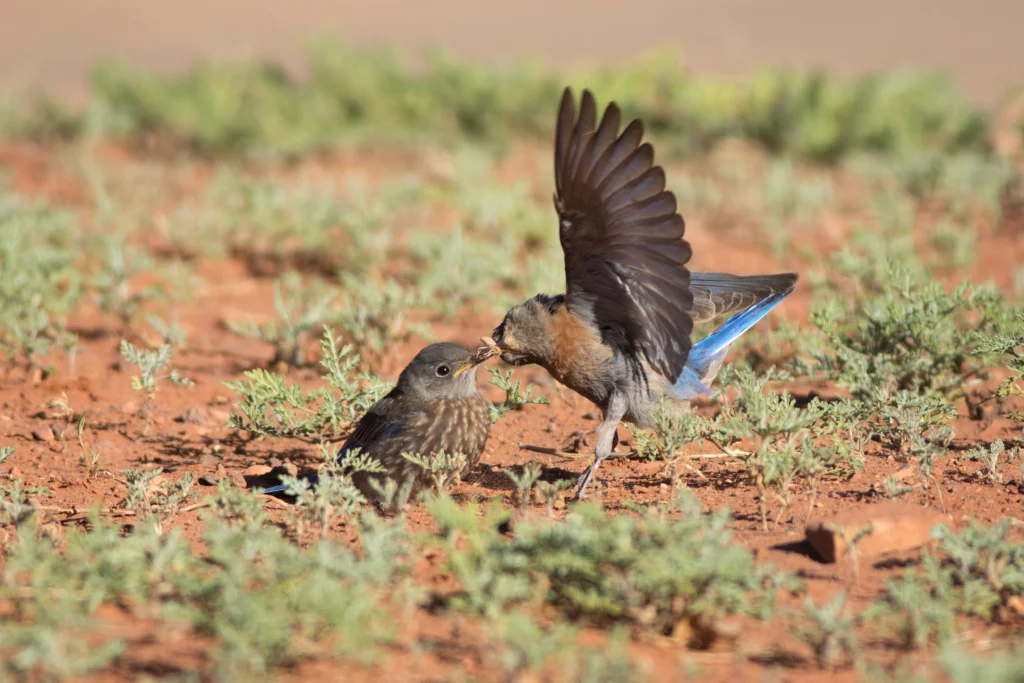
Similar to the Eastern Bluebird, the male Western Bluebird attracts a female primarily by advertising a cavity on his territory. He does this by taking nesting material to a potential nest site on his territory and carrying it in and out of the cavity, then perching above it and waving his wings. Whether she chooses to nest in this particular cavity is another matter, however. The pair may investigate several options, but ultimately she chooses the site. In some populations, males also feed their mates frequently, even before females begin incubating. Females sometimes specifically solicit food from their mates by calling and fluttering their wings.

Anidación

Like the two other bluebird species, the Western Bluebird is a cavity nester, relying on natural cavities, those excavated by woodpeckers, or nest boxes. However, Western Bluebirds are less tolerant of open areas than the other bluebirds, instead preferring open woodlands or forest edges and openings. The female fills the bottom of the nest cavity and builds a simple open cup using mostly soft materials, such as dry grass, bark strips, feathers, and fur.

Huevos y crías

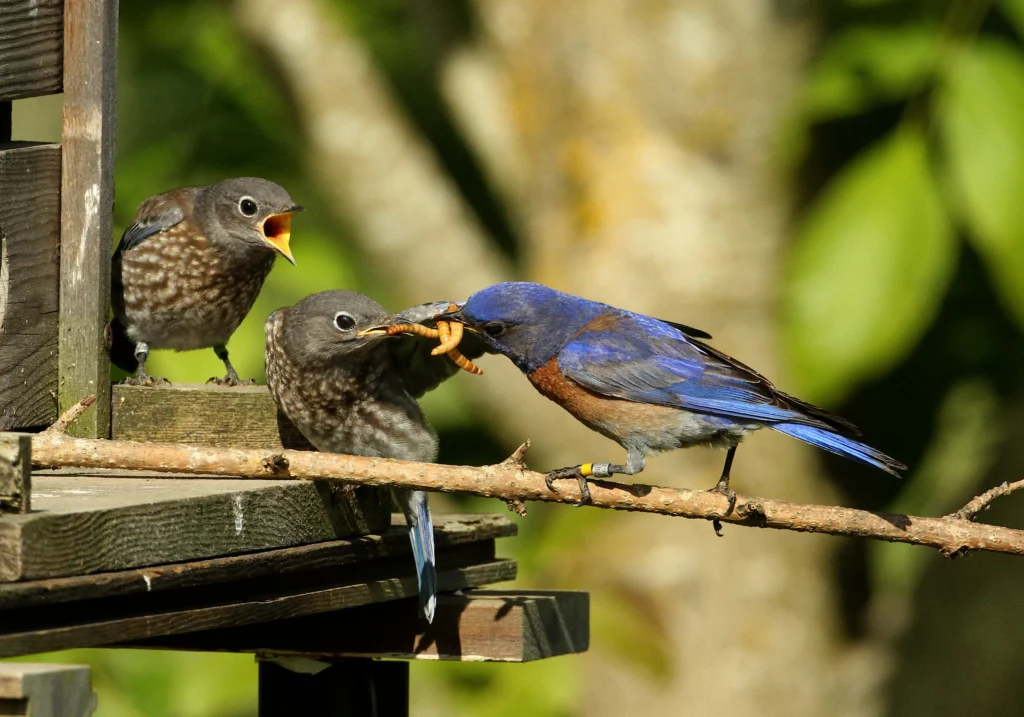
The female typically lays a clutch of five pale blue or occasionally white eggs. Only the female incubates, but her mate will feed her while she does and sometimes accompany her when she leaves the nest. Young hatch after two weeks. Both parents feed their young, although only the female broods. Some nests will also have an additional “helper” bird, usually a male from a previous brood, that assists with feeding the young and defending the nest. This behavior, known as cooperative breeding, is more widespread among Western Bluebirds than Eastern or Mountain, and is relatively uncommon among temperate North American species.