A Look Inside the Nest: Male Birds and Parenting
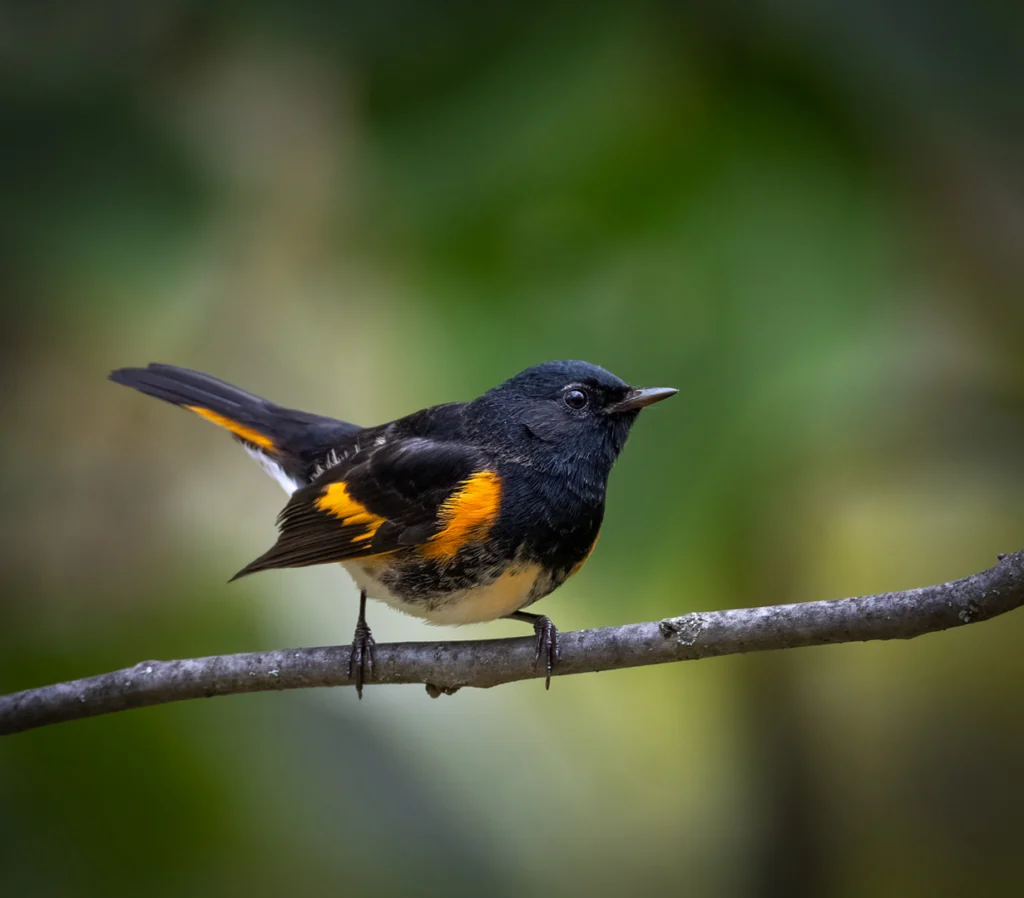
Male bird parents run the gamut, too, and sometimes defy expectations. In the bird world, some male parents contribute only genetics to the next generation, as is the case with male hummingbirds.
There are seemingly endless ways to raise youngsters in the bird world. Some female birds do it all: building the nest, incubating the eggs, and raising the young to fledging. Others split the work with a male partner. Occasionally, males do all the work. In some rare cases, females and males manage to avoid parenting duties altogether. For some species, it takes a village to help raise chicks, and “neighbors” or even other offspring pitch in.
Sea cual sea el modo en que lo hagan, el proceso de anidación, crianza y cría de los polluelos puede ser una experiencia intensa para las aves (¡y suele ocurrir después de un largo viaje migratorio!). Explore las estrategias de crianza de algunas aves hembras para ver cuán diferentes pueden ser sus enfoques para criar a sus crías.
Los colibríes son asombrosos por sí mismos: son increíblemente pequeños, pero algunas especies migran miles de kilómetros con alas que baten hasta 200 veces por segundo. Aunque los machos suelen llevarse el crédito por sus vistosas plumas iridiscentes y sus impresionantes vuelos de cortejo, las hembras merecen una mirada más atenta. No solo son sutilmente hermosas, sino que también son padres extremadamente comprometidos y devotos.
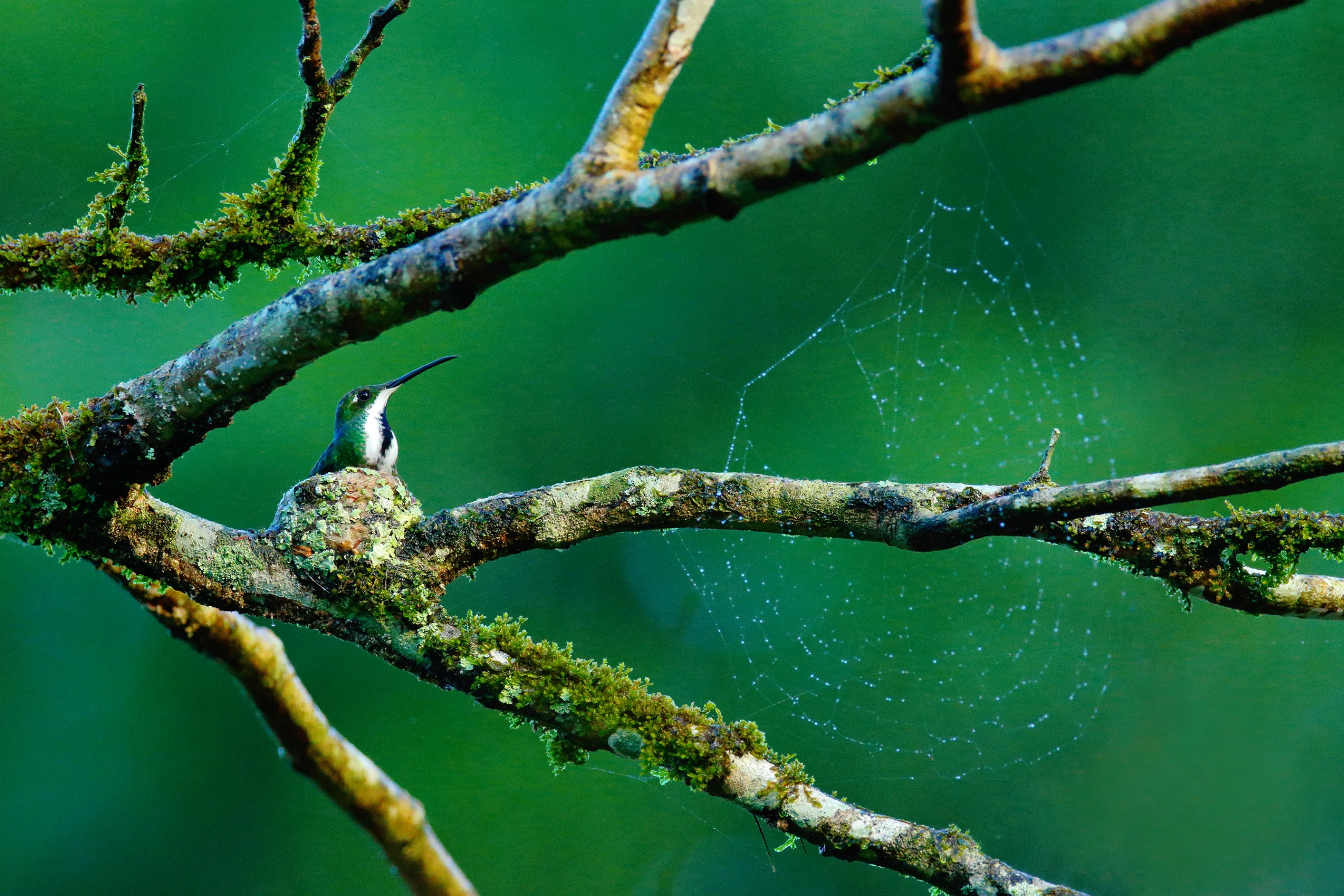
Los colibríes machos no desempeñan ningún papel en la nidificación. Una vez que se han apareado, se van, dejando a la hembra el trabajo duro. ¡Pero ella está a la altura de la tarea! Las hembras construyen nidos durante varios días utilizando fibras suaves unidas con telarañas, que proporcionan algo de elasticidad para acomodar los huevos y, eventualmente, los polluelos. Un poco de liquen y musgo permiten que el nido se mimetice con las ramas circundantes. Ahí es donde la hembra permanecerá durante las siguientes dos semanas, aproximadamente, mientras incuba dos huevos diminutos que pesan lo mismo que un clip.
Aparte de un puñado de viajes rápidos cada día para comer algo, la hembra está en el nido las 24 horas del día. Los polluelos de colibrí son altriciales, lo que significa que no pueden sobrevivir sin el cuidado significativo de un padre, por lo que cuando sus huevos eclosionan, el trabajo de la hembra del colibrí está lejos de terminar. Aunque el tiempo varía de una especie de colibrí a otra, puede esperar alimentar a los polluelos hambrientos hasta que emplumen después de unos 25 días. Incluso podría comenzar el proceso de nuevo con una nueva nidada.
Parenting is not a job for the faint of heart, especially in the world of hummingbirds, but quality habitat can make the work easier. American Bird Conservancy and our partners in communities throughout Latin America and the Caribbean have created more than 1 million acres of reserves where upwards of 230 hummingbird species are found. Your yard, too, can become prime hummingbird habitat with the right native plants and the absence of gatos que deambulan libremente y pesticidas.
Hunkered down with the snow piling up around her, and even on top of her, one Águila calva in Minnesota made headlines when she was seen on a livestream nest cam stoically weathering the snowstorm that had rolled in. Thankfully, Bald Eagles are equipped with warm, insulating feathers, and, surprisingly, the snow adds a little insulation to the nest, too. Other Bald Eagles have been seen sitting patiently through torrential downpours and holding steady through hail storms. As long as they are able to carefully rotate their eggs to keep them warm and prevent the nest from getting too wet, these hardy birds of prey will endure whatever nature throws their way.
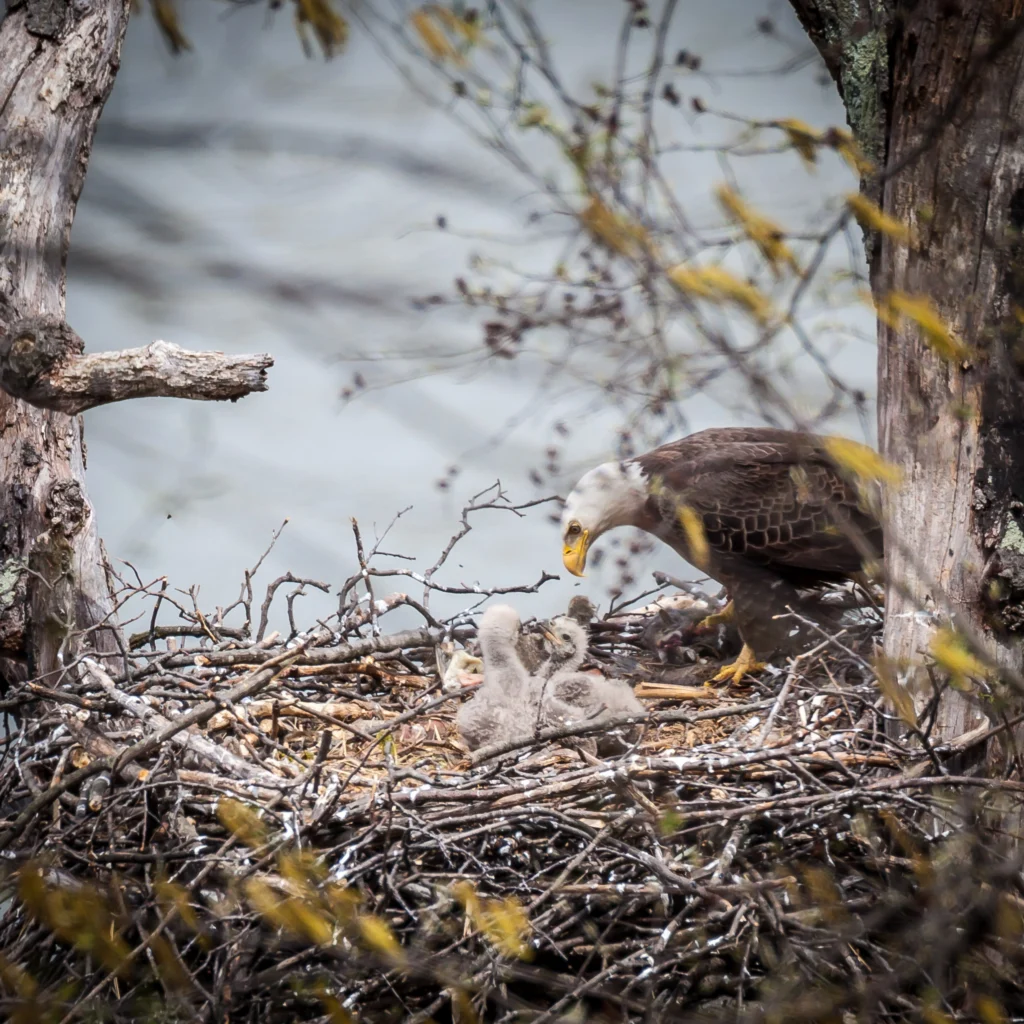
Las águilas calvas construyen nidos enormes en árboles altos que ofrecen una buena vista y un lugar fácil para despegar o aterrizar. Tanto los machos como las hembras traen materiales para el nido al lugar, pero es la hembra la que hace la mayor parte de la preparación, tejiendo cuidadosamente ramas, musgo, tallos de maíz y pasto para crear un nido que mide hasta 6 pies de diámetro y pesa 1,000 libras. Luego, recubre el nido con liquen antes de agregar los toques finales: plumas suaves y suaves o vegetación en la copa del nido, el futuro hogar de una nidada de hasta tres huevos. Construir el nido puede llevar tres meses, pero es una inversión que vale la pena: las águilas calvas reutilizan el mismo nido año tras año y lo van completando a medida que avanzan.
Soon, the pair settle into a routine of shared incubation duties until the eggs hatch. The female is on the nest a majority of the time, which frees up her mate to do the important work of bringing back food for rapidly growing chicks. The female will soon catch up to him, though. Once nestlings no longer require her near-constant presence, she is out on the hunt, supplying her young with as much food as the male.
Bald Eagle nests often make headlines in local news, in part because they were rare only decades ago. In addition to losing habitat, throughout the middle of the 20th century, Bald Eagles suffered greatly from the use of the agricultural pesticide DDT, which thinned the shells of their eggs and led to a quick decline in the species. Bald Eagles have made a remarkable recovery, possible only because of the protections they were afforded under the Endangered Species Act and the banning of DDT in 1972. Their numbers have steadily climbed from an estimated 417 breeding pairs in 1963 to more than 71,000 today.
The Bald Eagle’s recovery is one of the strongest examples of conservation at work and a clear signal that we have the capacity to reverse species declines and halt extinctions. Today, a new generation of pesticides continues to threaten birds and other wildlife. Learn more about the problems of pesticides today and tomar medidas.
… Because they simply don’t do it! Brood parasitism is an evolutionary strategy that shifts the responsibilities of incubating eggs and caring for young onto another bird — or another species — entirely. Brown-headed Cowbirds initially developed this strategy to allow them the freedom to follow the bison and cattle that roamed the Great Plains, whose footsteps stirred up insects that the cowbirds could eat. Their nomadic existence made nesting nearly impossible. Brood parasitism solved that problem, but as the Brown-headed Cowbird’s range has expanded, so has their nesting strategy.
Female Brown-headed Cowbirds lay eggs prolifically at a rate of nearly one egg per day in a breeding season that can last more than two months. While brood parasitism works for cowbirds, it can be detrimental to other species like warblers, vireos, and sparrows. Some species recognize cowbird eggs and remove them if they’re large enough to do so, or build a new nest atop the parasitized one, as the Yellow Warbler often does. Typically, though, the eggs are incubated, sometimes at the expense of the host’s much smaller eggs. Cowbird eggs hatch quickly, and the comparatively enormous chicks can out-compete other nestlings for food and space.
Alterations to the landscape have exacerbated this problem: Unchecked deforestation paved the way for the cowbird’s range to expand beyond the prairies of the Midwest to the entire continental United States. Managing for brood parasitism is part of the recovery plans for some endangered species like the Reinita de Kirtland and Black-capped Vireo, but the cowbird is protected by the Migratory Bird Treaty Act, making it illegal to remove its eggs without a permit.
The best way to keep your yard free of opportunistic Brown-headed Cowbirds is to make it less attractive to them. Reduce the amount of open lawn by growing native plant species in its place. Avoid platform feeders that provide easy perching for cowbirds and clean up bird seed scattered on the ground to deter their foraging.
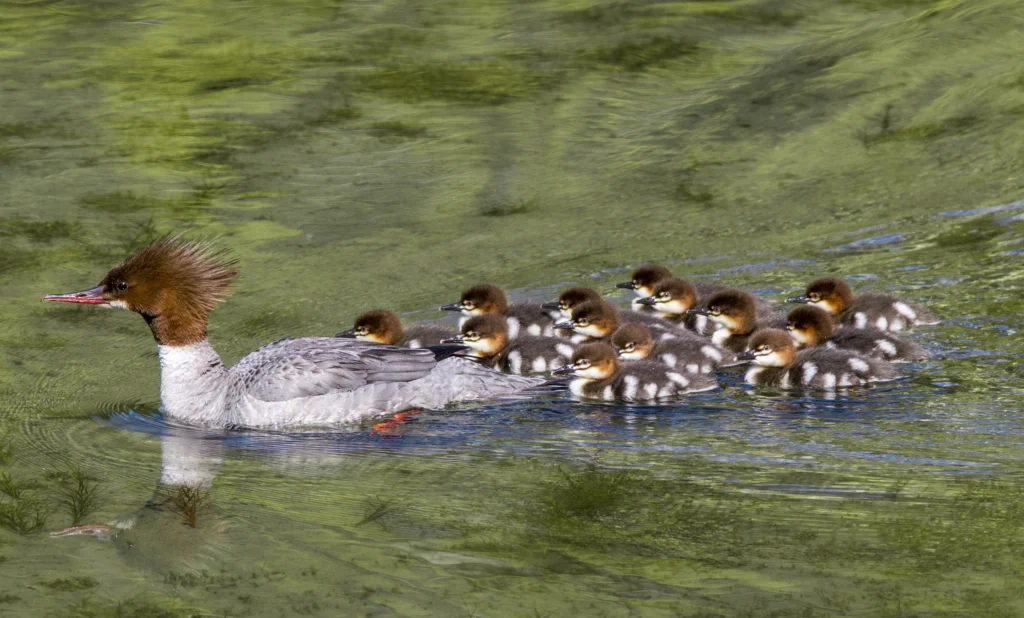
Si alguna vez has visto a un pato con un desfile de patitos siguiéndolo, existe la posibilidad de que algunos de esos bebés no fueran realmente suyos. Un tercio de todas las especies de aves acuáticas ponen sus huevos en los nidos de otros patos, incluso si tienen un nido propio. Los que anidan en cavidades, como el serreta común y el pato de los bosques, lo hacen con mayor frecuencia, posiblemente debido a la escasez de sitios de anidación adecuados. A diferencia del parasitismo de cría de los tordos de cabeza marrón, el comportamiento tiene mucho menos impacto en los polluelos del anfitrión. No poner todos sus huevos en una canasta (o nido) también actúa como una póliza de seguro: si un mapache hambriento o una inundación pierden un nido, los huevos puestos en otro lugar aún tienen una oportunidad.
Por lo tanto, no es inusual que una madre pata tenga una gran nidada de unos 20 patitos siguiéndola. Es probable que no sean todos sus propios hijos, aunque es posible que los haya incubado todos. Pero ¿más de 30, 50 o incluso 70 patitos? Eso es una guardería para patitos.
Common Mergansers sometimes form such an arrangement, known as a crèche, when closely related birds nest near each other. After hatching, little ones might be left in the care of an older, experienced female. This matriarchal merganser will care for the offspring of several females, freeing up the adults to molt without the responsibility of rearing young. In 2018, a photo of one proud-looking Common Merganser with an astounding 50 fuzzy, rust-colored ducklings bobbing behind her in the waters of a lake in Minnesota went viral. The photographer later said he had on one occasion counted 76 ducklings. That’s one busy merganser mom!
Waterfowl are one of the few bird families that have experienced population increases since 1970, not just because they are raising ducklings by the dozens. While other bird families have experienced a net loss of nearly 3 mil millones de aves, waterfowl are thriving because of investments in the conservation of their wetland habitats across the U.S. Their recovery can provide a blueprint for harnessing the resources to help other birds bounce back. Learn how you can help.
Depending on their parenting strategy, female birds can be entirely absent from the nest, or they can be the sole source of warmth and nourishment for their chicks. Male birds are no less varied in their approaches to parenting, something that will be explored in part two of this series.
No matter the parenting style, birds can use our help to successfully raise their young. The world can be tough for birds, especially those that migrate long distances. The journey is hardest for young, inexperienced birds, in particular those making the flight south for the first time in fall in the Northern Hemisphere. Help make the journey safer by vivir una vida respetuosa con las aves.
Noticias e historias destacadas

¿Qué es el pico de un pájaro? ¿Es simplemente una versión curiosa de una nariz o es algo completamente distinto? Las aves usan el pico para una amplia variedad de funciones, como comunicarse, defenderse y alimentarse. Estos asombrosos apéndices pueden parecer simples, pero esconden muchas sorpresas. Si...