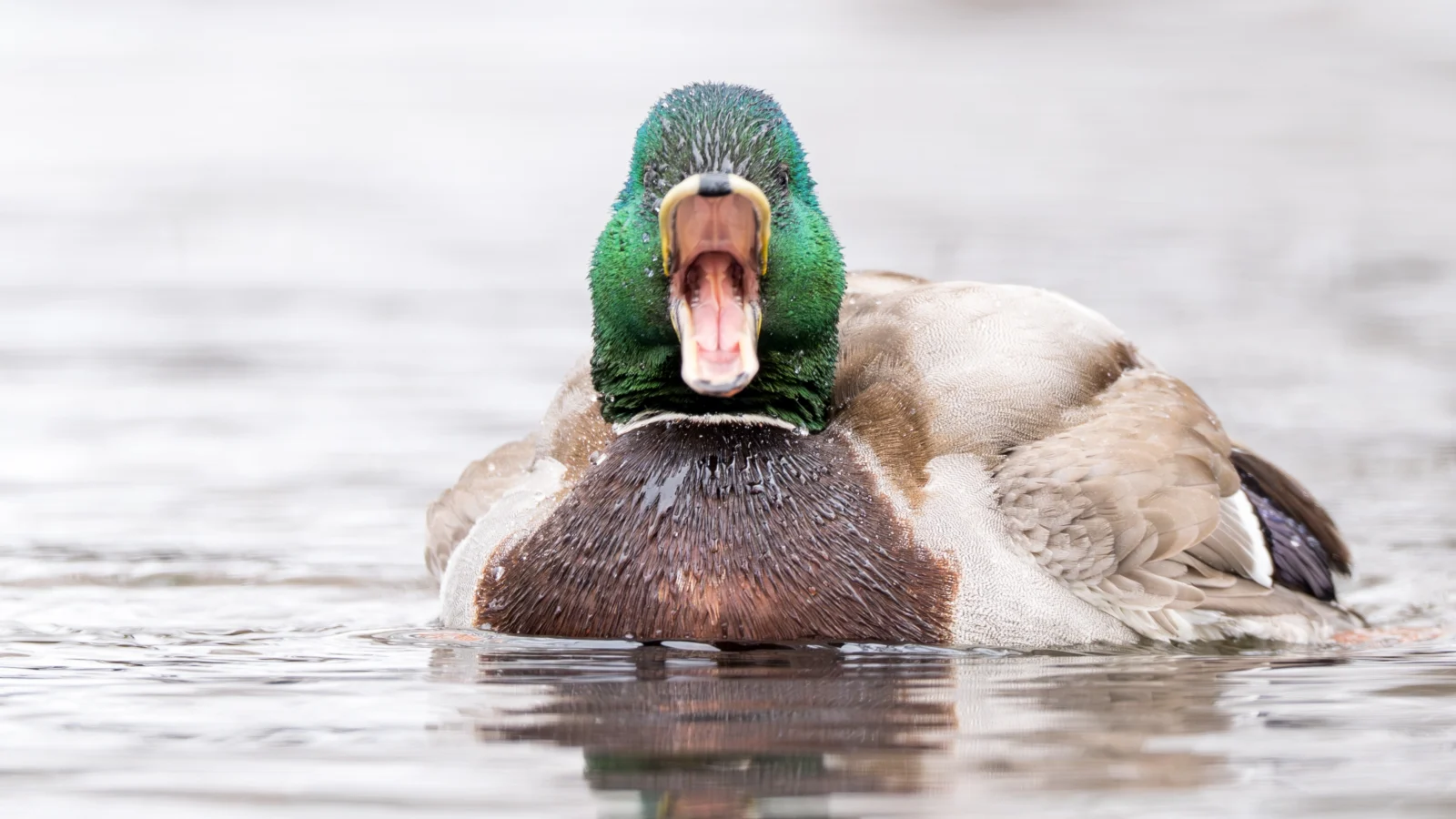
A male Mallard with his beak open wide to expose lamellae, comb-like projections that filter plant matter out of water.

What’s the Deal with Duck Bills?

Mallard male. Photo by Cami Johnson, Shutterstock.

What’s the Deal with Duck Bills?

Read in English
Escuchar este articulo

If you’ve ever gotten a glimpse inside the beak of a bold duck or goose that approached you at a local park or elsewhere, you may have done a double-take. Were those … teeth?!

Ducks don’t have teeth — or do they? What exactly are ducks up to when they tip forward and submerge their front halves in the water? And why do duck bills have that odd “duck-billed” shape, anyway? We’re here to answer all of your questions about ducks’ eating habits and shed light on those famously funny-shaped beaks.

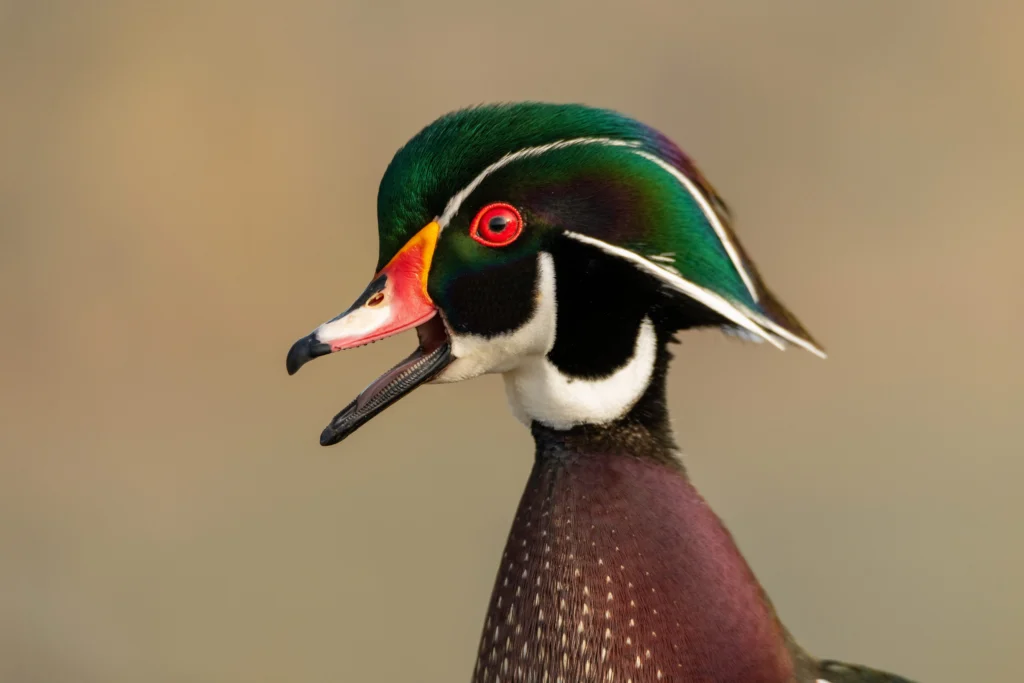
Wood Duck with visible lamellae. Photo by Fotomoods, Shutterstock.

Do Ducks Have Teeth?

First, some basic anatomy. Teeth are hard structures attached to the jaws of some groups of vertebrates (animals with backbones). Many vertebrate animals — humans included — use teeth to chew up food before swallowing. But that’s not all teeth are good for. Some animals use their teeth for capturing prey and other tasks.

So, do ducks have teeth? No — in fact, no birds do! Hence the old saying “scarce as hen’s teeth.”

Bird mouths are very different from those of other vertebrates. Over millennia, evolution has modified bird jaws into the specialized structures we know as beaks or bills, which all feathered creatures rely on instead of teeth for gathering and manipulating food. Beaks occur in many different forms, adapted for the specific diet of each bird species.

Okay, but How Do Ducks Eat?

If you look in the beak of a typical duck, running along its inside edges you’ll see comb-like projections called lamellae, from a Latin word meaning “thin plate.” Lamellae may look a bit like teeth, but they’re actually part of the bill itself. Combined with the wide, flat (or spatulate) shape of most ducks’ beaks, and the flexible lower mandible’s ability to open just a tiny bit to let water flow through, lamellae act like a sieve that ducks can use to strain bits of plant matter and other edible morsels out of water or mud. Filter-feeding ducks like the Northern Shoveler mentioned below have the most lamellae of all.

Although ducks and geese are the most well-known birds with lamellae, a few other filter-feeding birds, such as flamingos, have them as well. Despite lamellae’s passing resemblance to teeth, ducks don’t use them to chew: You may have seen a duck doing something that looks a bit like chewing, but those nibbling motions are just its way of repositioning food as it prepares to gulp it down.

Besides the lamellae, there are a few other interesting features of duck bills worth noting:

The edges of duck bills are soft and sensitive because many duck species find food largely by touch. Near the tip of a duck’s upper mandible is a small, hard bump called a nail, which ducks sometimes use for digging through mud in search of food.

In addition to lamellae, some ducks and geese have spiky projections called papillae running down the sides of their tongues. These also help with filter-feeding.
Dabblers and Divers

Duck species differ, but broadly speaking, the species are divided into two groups:

Dabbling ducks feed mostly at and near the surface of the water, tipping forward to stick their heads underwater. Diving ducks dive beneath the water’s surface in search of food, propelling themselves with feet positioned far back on their bodies.

These duck groups contain a number of species that call North America home. Here are just a few of the fascinating ways North American duck species have evolved bills for different diets:

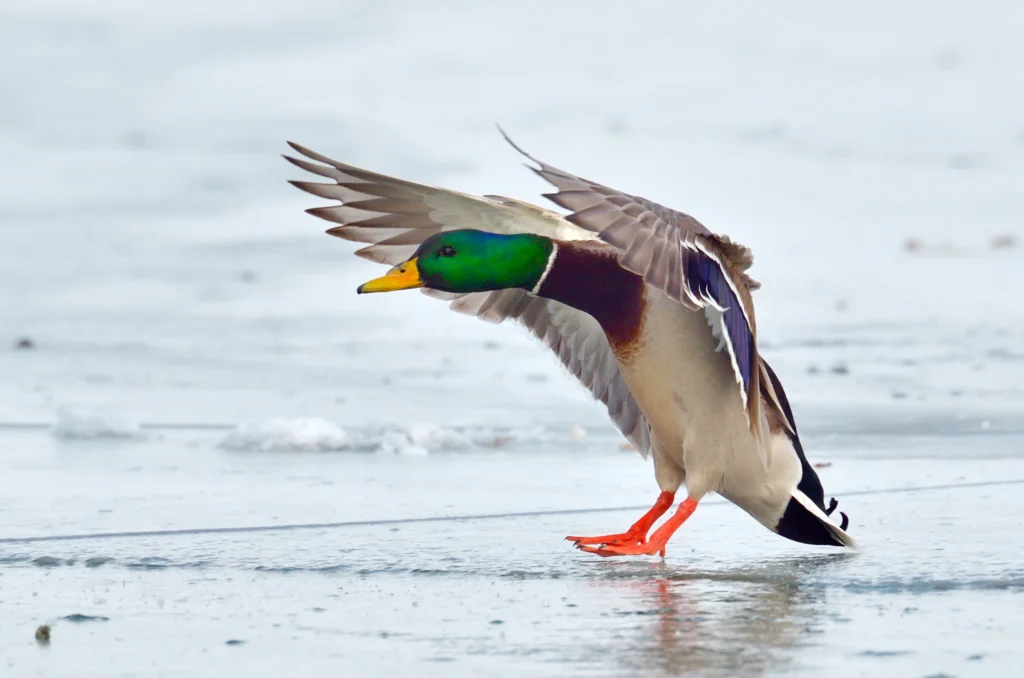
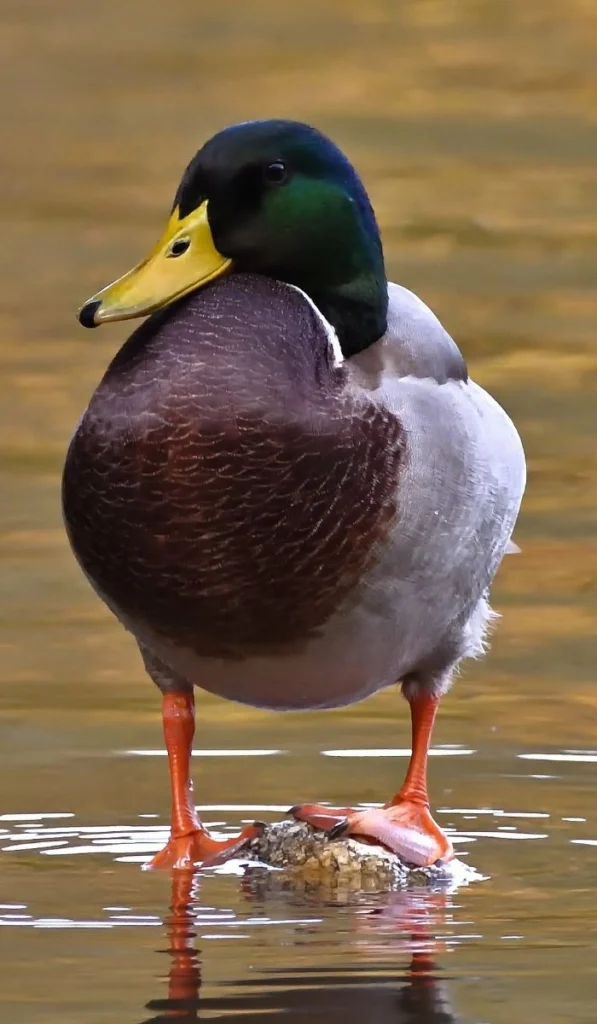
Mallard male. Photo by aabeele, Shutterstock.

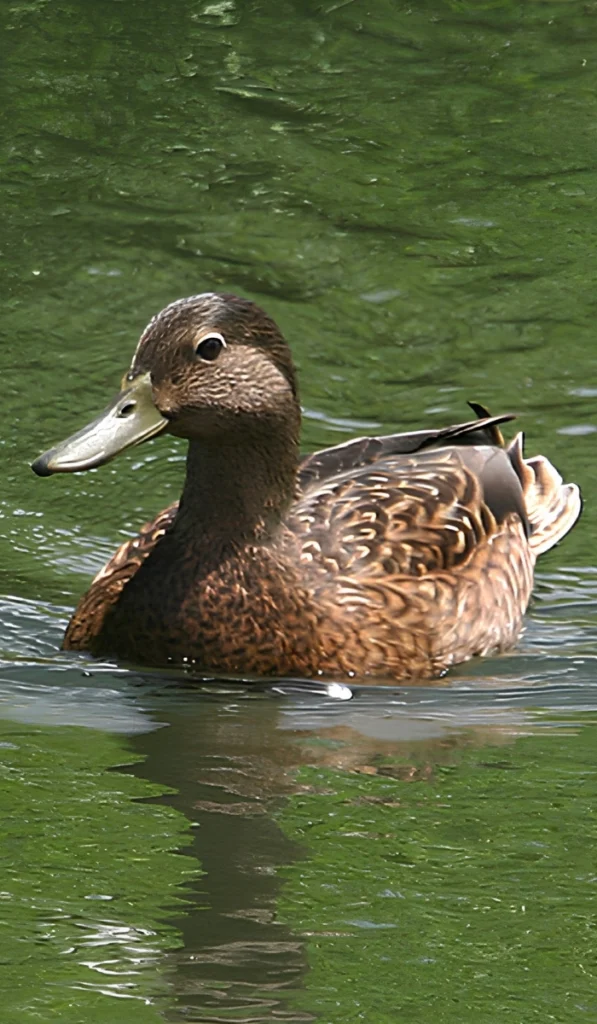
Ánades reales are the generalists of the duck world, eating everything from aquatic vegetation in ponds to earthworms on land to unharvested grain, such as corn, in farm fields. Theirs is the classic “duck bill.”

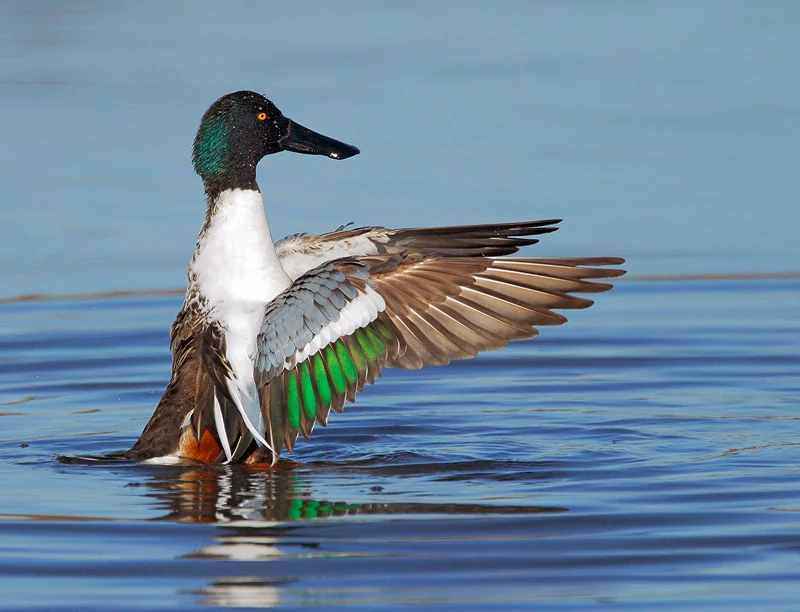
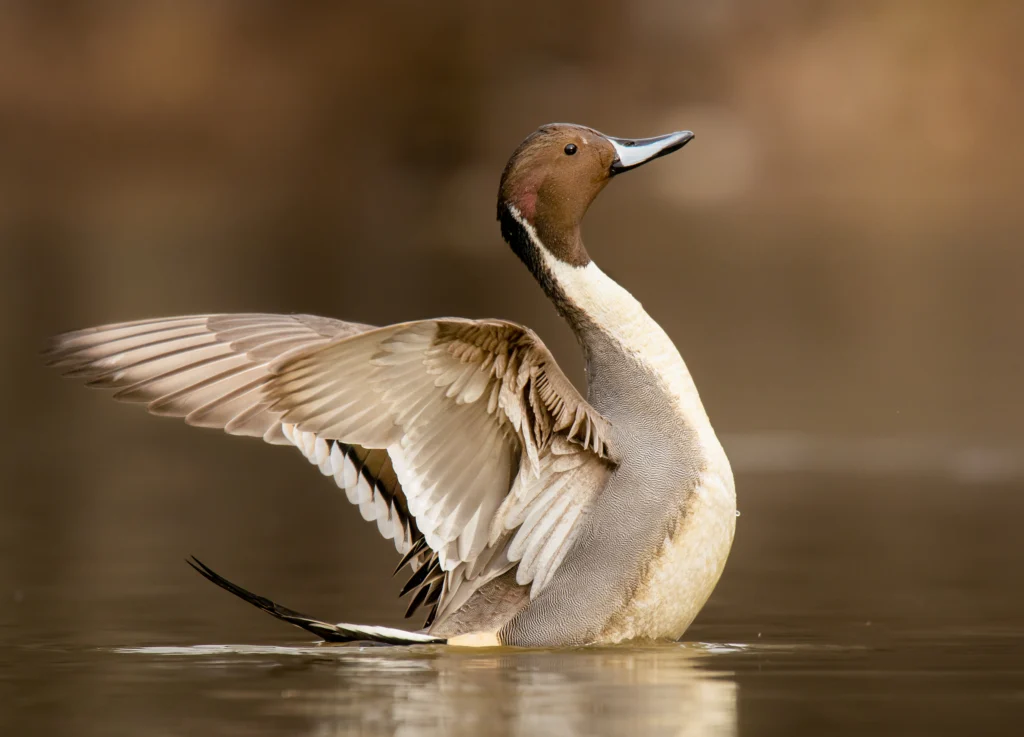
Northern Shoveler. Photo by Tom Grey.

Northern Shovelers get their name from the exaggerated shape of their extra-long and extra-wide bills, which they use to skim for tiny creatures at the surface of the water. The upper beaks (upper mandibles) of these dabblers are packed with more than 200 tiny ridges (or lamellae), which act like a strainer.

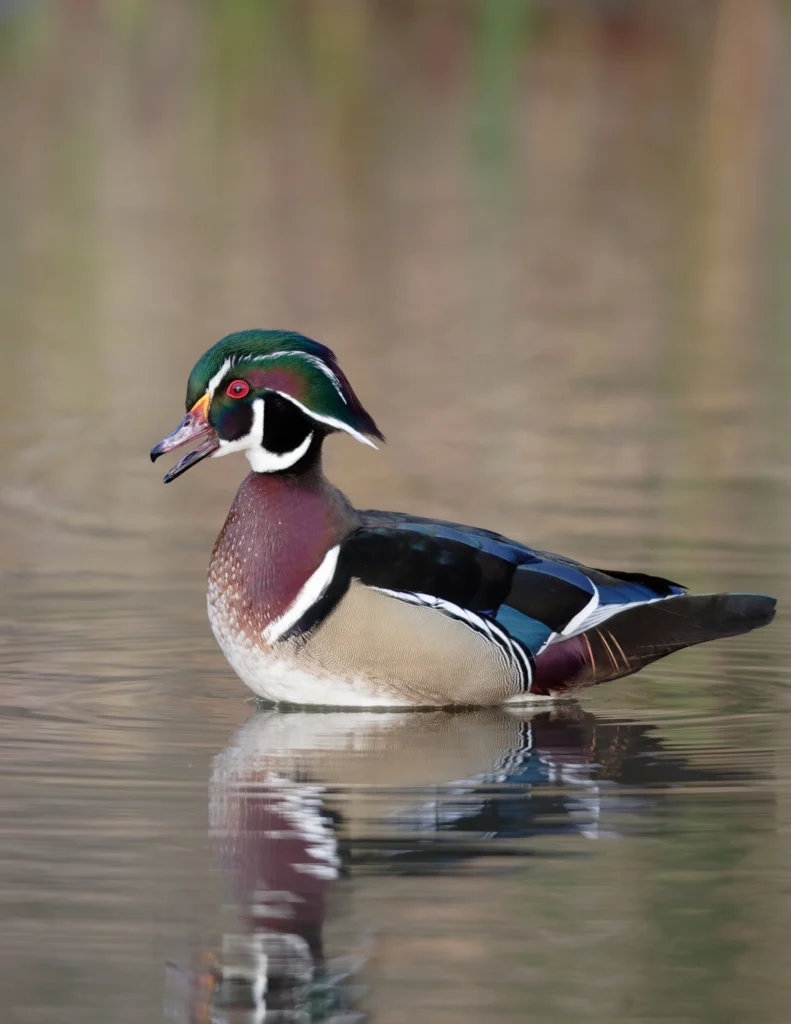
Wood Duck male. Photo by Paul Rossi.

Patos de madera have shorter, narrower bills than most other dabbling ducks. This lets them snip plants, grab small invertebrates, and pick up acorns (a favorite Wood Duck food) in the forested wetlands they frequent.

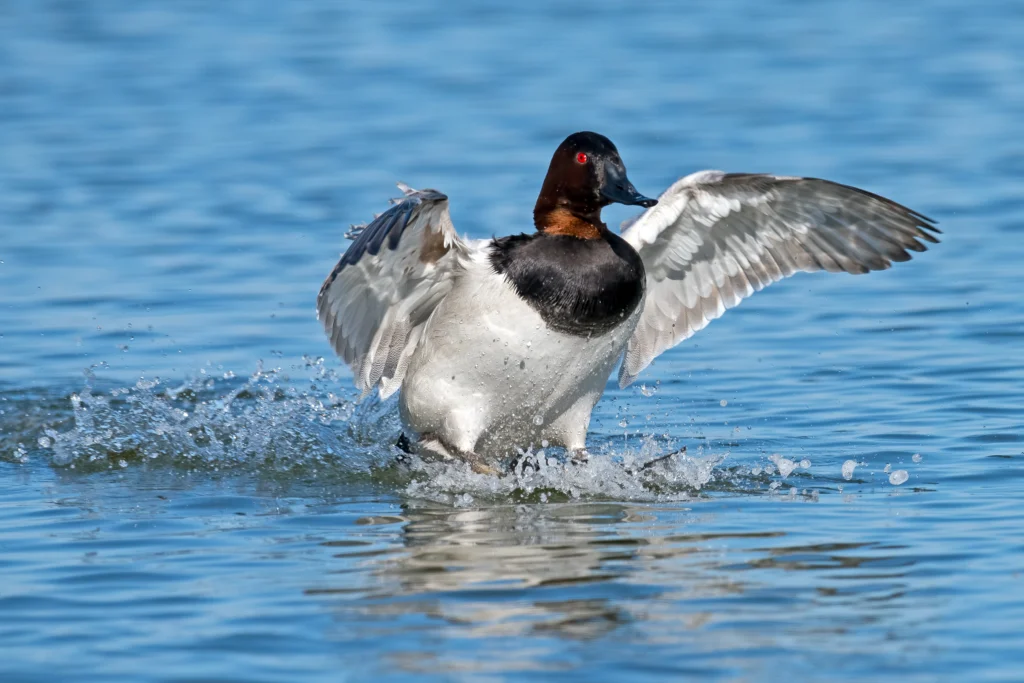
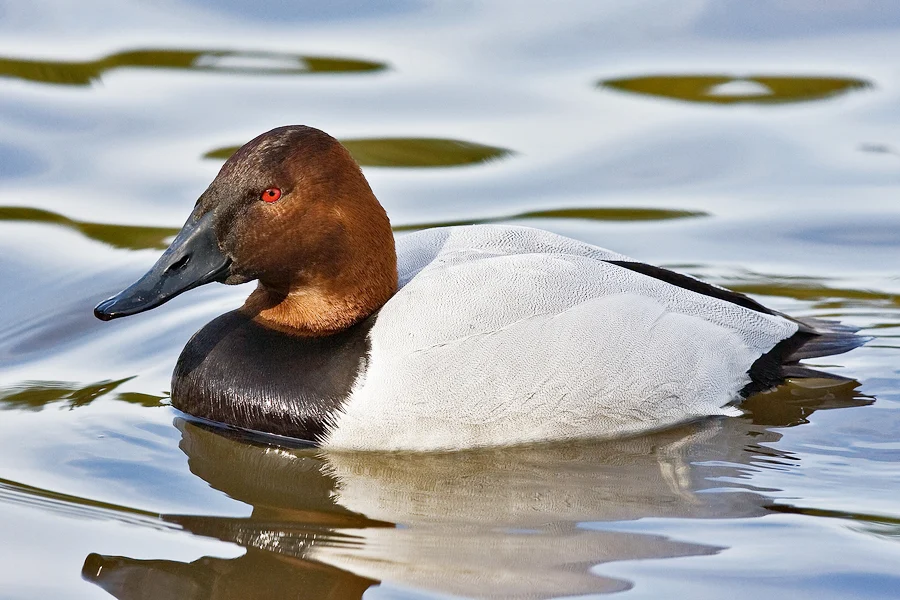
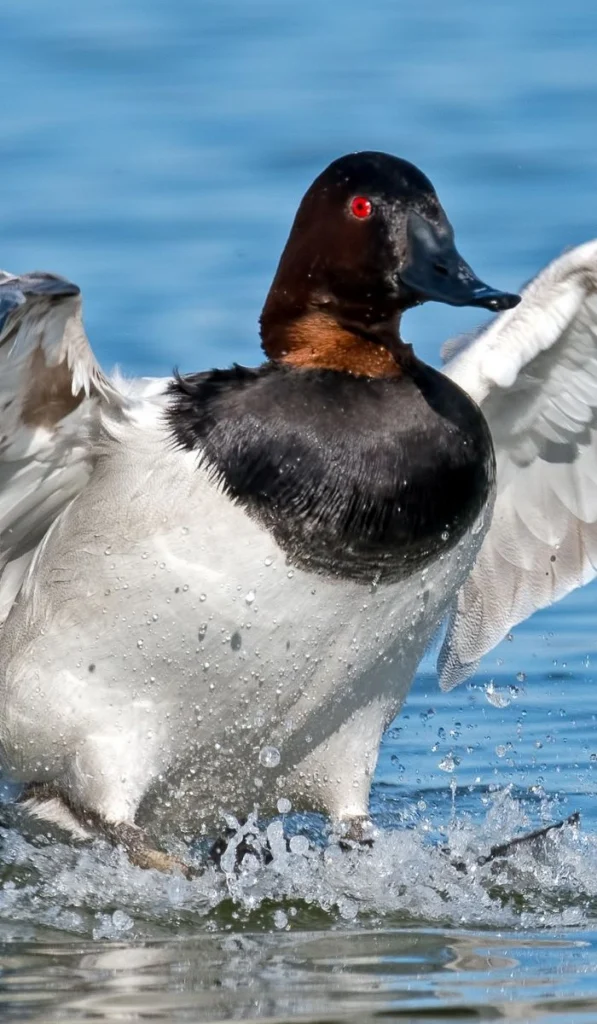
Canvasback male. Photo by Brian E Kushner, Shutterstock.

Canvasbacks are diving ducks with stout, sloping bills for grasping the leaves and yanking out the fleshy roots of underwater plants, which make up much of their diet during migration and winter. In the breeding season, Canvasbacks switch to a more varied diet that also includes invertebrates and small fish.

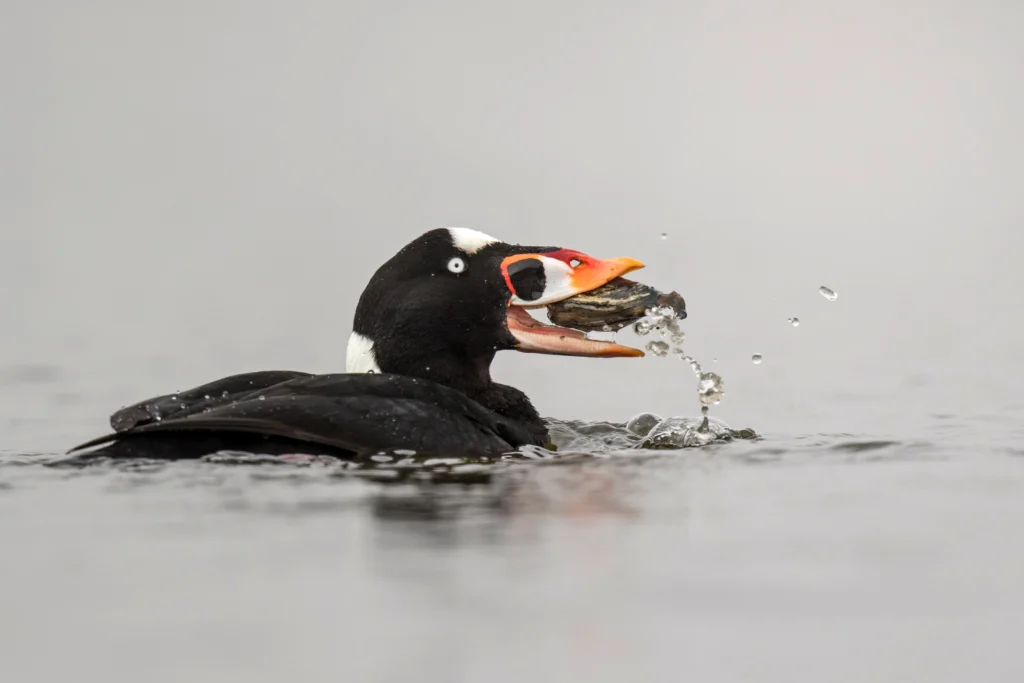
Surf Scoter with clam. Photo by Phoo Chan, Shutterstock.

Surf Scoters spend much of the year along the coasts and thus are considered “sea ducks,” even though they nest in freshwater habitats in northern Canada and Alaska. They’re shellfish specialists, diving under the waves and using their broad, chunky bills to pry mussels and clams off of rocks.

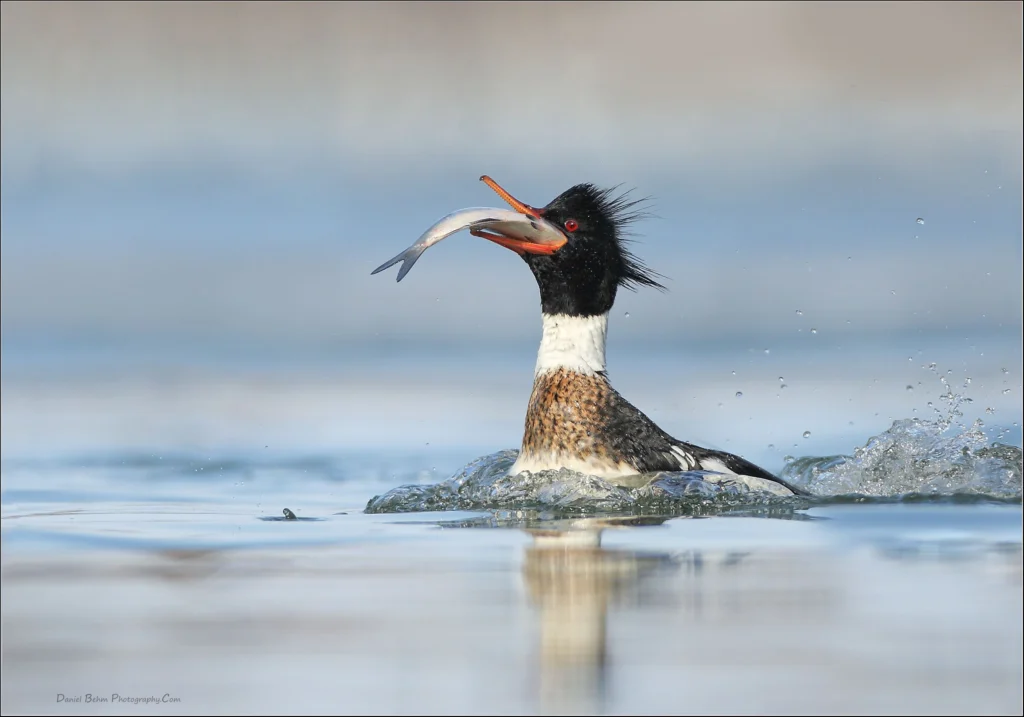
Red-breasted Merganser male eating a fish. Photo by Dan Behm.
Red-breasted Merganser male. Photo by Dan Behm.

Mergansers de pecho rojo and several related species are unusual among ducks because they have no lamellae. Instead, their narrow, serrated, sharp-tipped beaks are the perfect tools for catching fish underwater.

Feeding Does Not Help Ducks

You can help wild ducks by supporting efforts to conserve their natural, food-rich habitats. But you should not try to feed them. Not only are carbohydrate-rich foods like bread bad for waterfowl health — feeding can attract large concentrations of ducks to areas that can’t support them and that aren’t safe for them. Plus, any food that goes uneaten can attract unwanted pests and pollute small bodies of water.

Canvasback male. Photo by Alan Wilson.

Aves en peligro

While the populations of mallards and other ducks mentioned above have rebounded or held steady in recent decades, they still face dangers — and they aren’t alone.

En menos de una vida humana, 2.9 billion breeding adult birds have been lost from the United States and Canada, across every ecosystem. Scientists identify pérdida de hábitat como el principal factor general del declive de las aves. Pero las aves también se enfrentan a amenazas de gatos y otras especies invasoras, colisiones de vidrio, exposición a pesticidas, y cambio climático, entre otras cosas.

Proteger a las aves de estos peligros es una tarea de gran envergadura, y necesitamos tu ayuda. Puedes empezar por vivir una vida respetuosa con las aves, Tomando medidas para las aves, or making a donation to support ABC’s bird conservation mission.