Descripción general
Acerca de
The handsome Northern Pintail is one of North America’s most widespread ducks, especially in the West, though it is not nearly as abundant as the more familiar Mallard. The Northern Pintail gets one of its popular nicknames, “sprig” (short for sprig-tail), from the male’s long central tail feathers, which reminded hunters of plant stems, or sprigs. Some hunters differentiate further, calling male pintails “bull sprigs” and females “hen sprigs.” Even though the female lacks long tail feathers, she has a pointy wedge-shaped tail distinctive among dabbling duck species.
Amenazas
Although the Northern Pintail remains a popular game bird, its numbers are in decline. Habitat loss is an ongoing problem, particularly in the Prairie Pothole Region where these birds breed. Persistent drought in the prairie grasslands, a result of climate change, can dramatically curb nesting success. The Northern Pintail’s aquatic foraging style also increases the risk of ingesting lead shot, which can lead to debilitating or fatal lead poisoning. Northern Pintails feeding on land may also suffer the effects of neonicotinoid pesticides.
Draining Wetlands & Plowing the Prairie
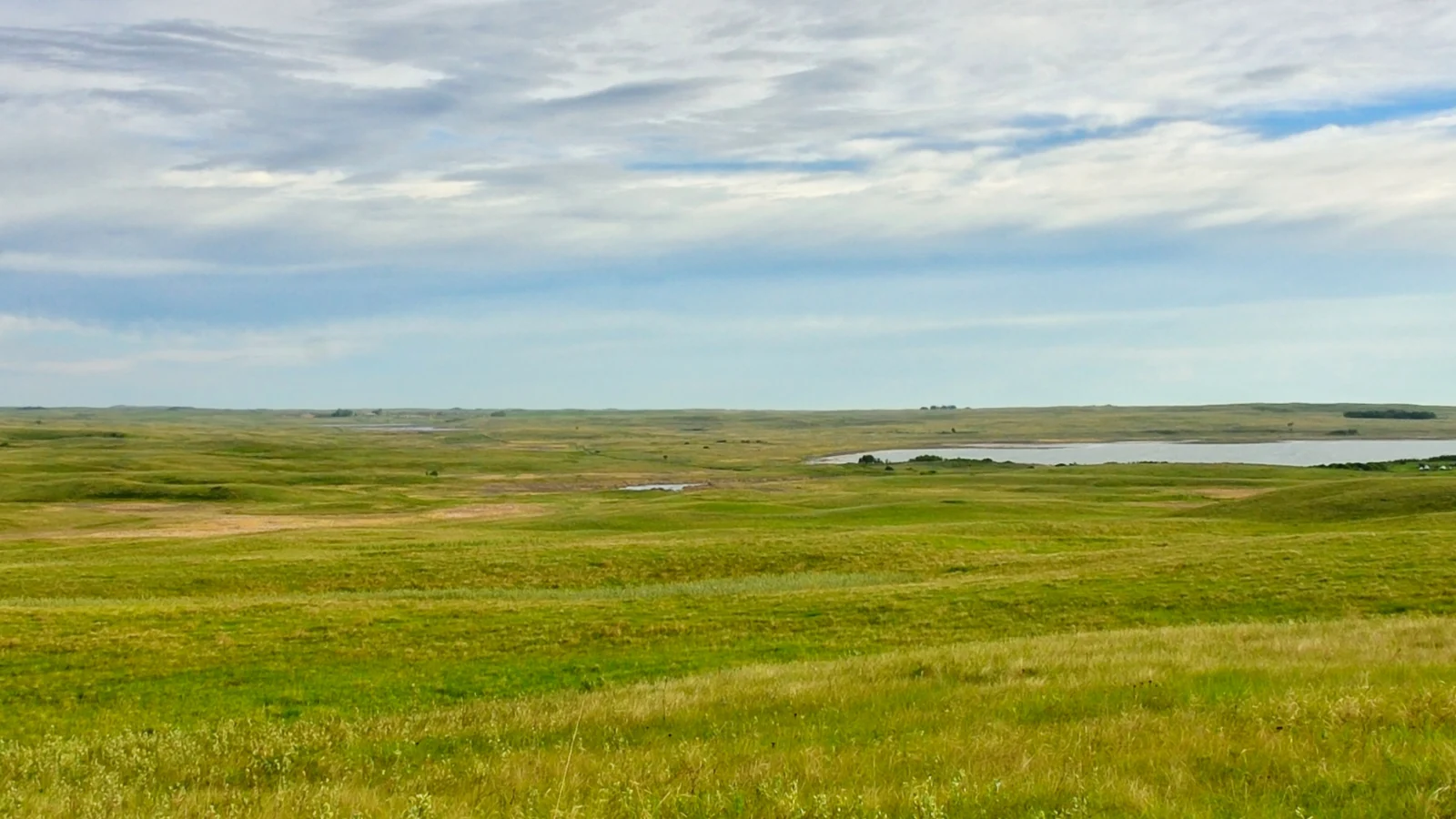
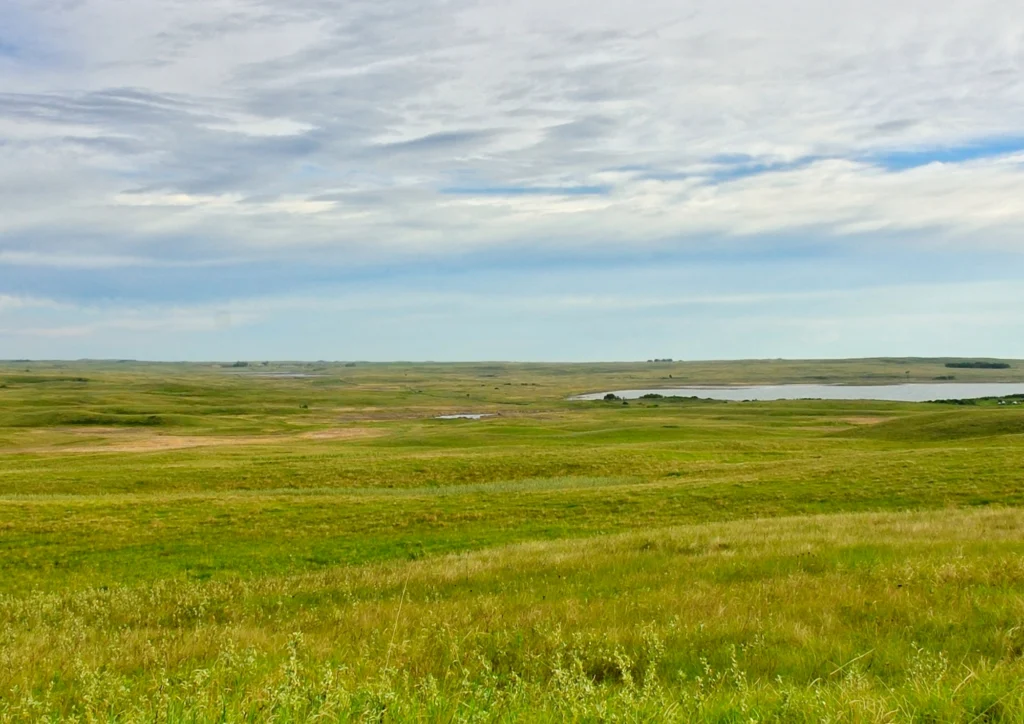
The Prairie Pothole Region of the north-central United States and southern Canada is the Northern Pintail’s primary breeding grounds. Unfortunately, little of this crucial habitat remains. Most of the pothole lakes and wetlands have been drained, and prairies plowed over in favor of agriculture. This process is ongoing as more and more land is lost to development.
Climate Change & Drought
Northern Pintails need water to breed successfully, and the number of young hatched and raised in a year is closely related to the amount of open water available. As such, drought is of particular concern to Northern Pintails, as well as other water birds that breed in the Great Plains, and with climate change, droughts are expected to become both more regular and more severe.
Pesticides and Pollutants
The Northern Pintail’s aquatic foraging style increases its risk of ingesting lead shot. Pintails, along with other birds, may also suffer the effects of neonicotinoid pesticides that wash into waterbodies and as they forage for grains and other plant foods on land.
Estrategias y proyectos de conservación
The Northern Pintail needs our help to overcome the threats it faces. At ABC, we’re inspired by the wonder of birds and driven by our responsibility to find solutions to meet their greatest challenges. With science as our foundation, and with inclusion and partnership at the heart of all we do, we take bold action for birds across the Americas.
Mejorar el hábitat
Although little of the Prairie Pothole Region is protected from development, large patches of potholes and prairie still exist. ABC’s Northern Great Plains team, along with our partners in the Prairie Pothole Joint Venture, work to maintain the vitality and continuity of this landscape. We support sustainable agricultural practices and create the tools and resources that land stewards need to keep this crucial biome of the Western Hemisphere rich in birds, including waterfowl like the Canvasback.
Abordar el cambio climático
Climate change poses a major threat to the Northern Pintail. ABC addresses this global threat in three key ways: mitigation, resilience, and adaptation. We have planted millions of trees throughout the Western Hemisphere, protected more than 1.3 million acres of land in Latin America and the Caribbean, and continue to improve and restore bird habitat.
Evite los pesticidas y las toxinas.
ABC colabora con socios a nivel estatal y federal en EE. UU. para exigir la regulación o la prohibición de los plaguicidas y toxinas más dañinos para las aves. Desarrollamos programas innovadores, como trabajar directamente con agricultores para que utilicen semillas sin recubrimiento de neonicotinoides, impulsar la investigación sobre el impacto de los plaguicidas en las aves y alentar a millones de personas a dejar de usar plaguicidas dañinos.
Galería de aves
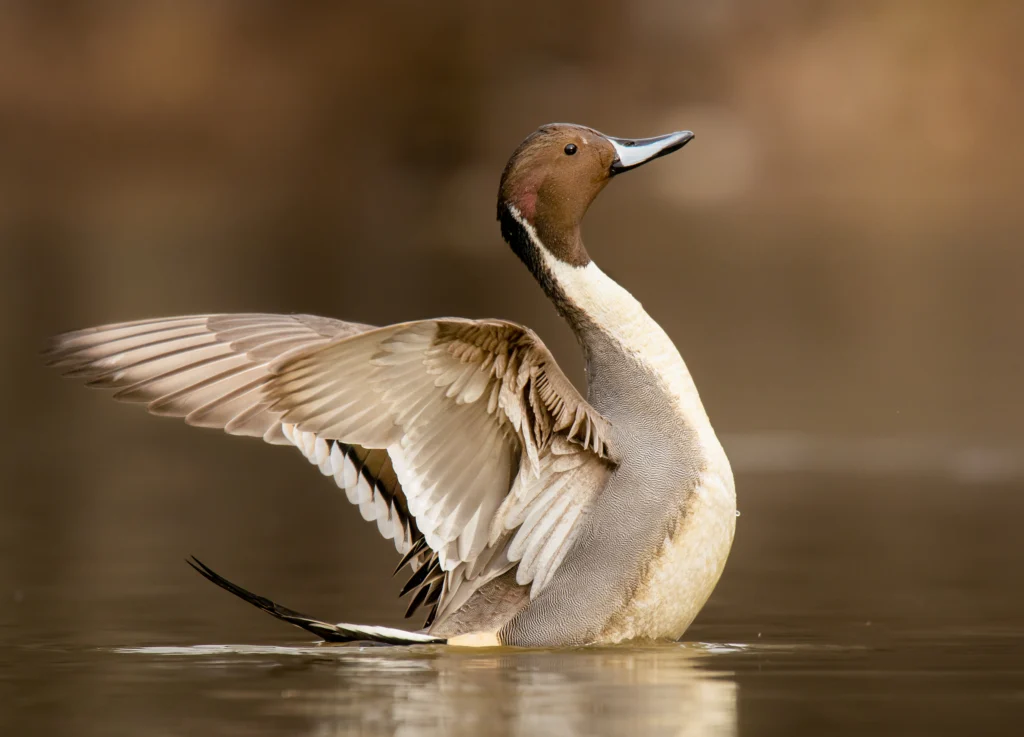
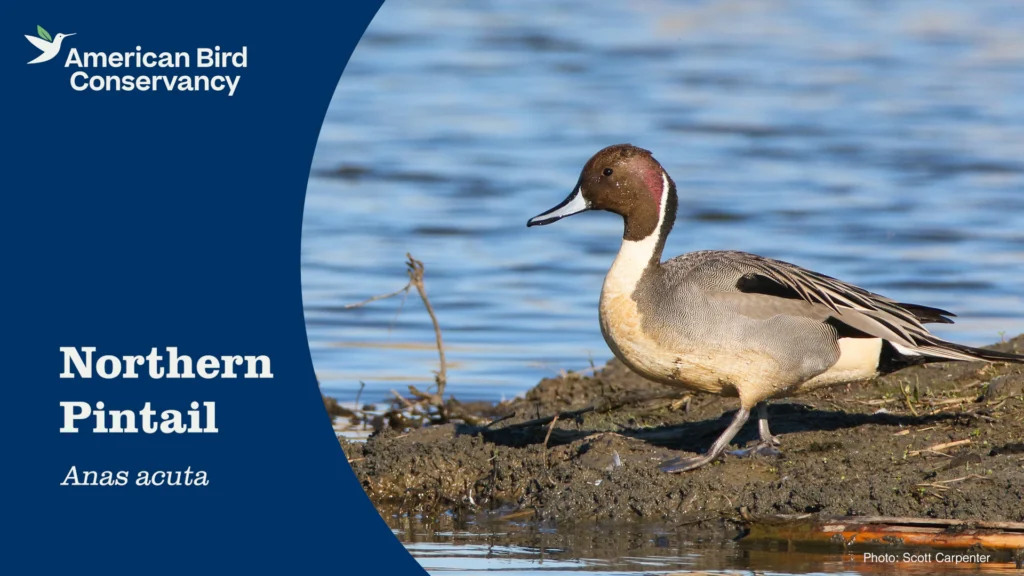
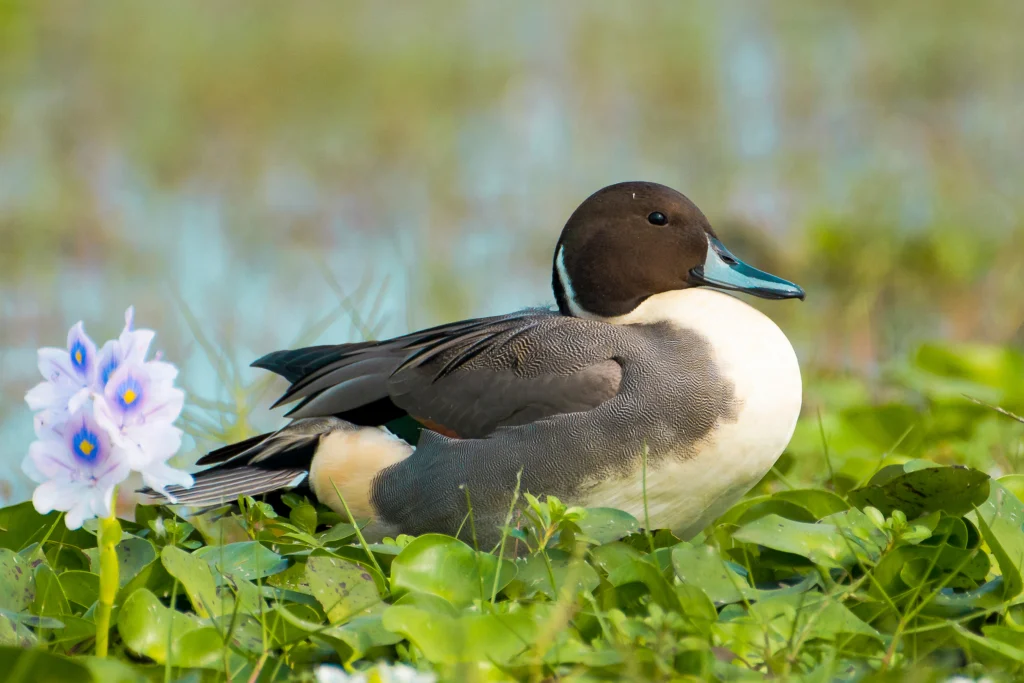
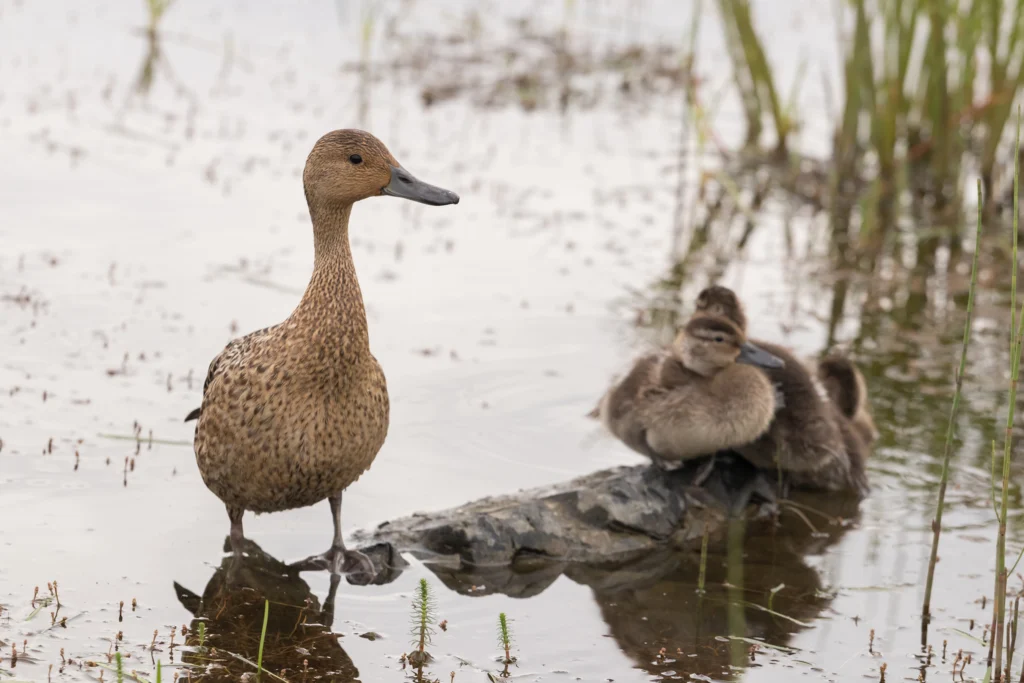
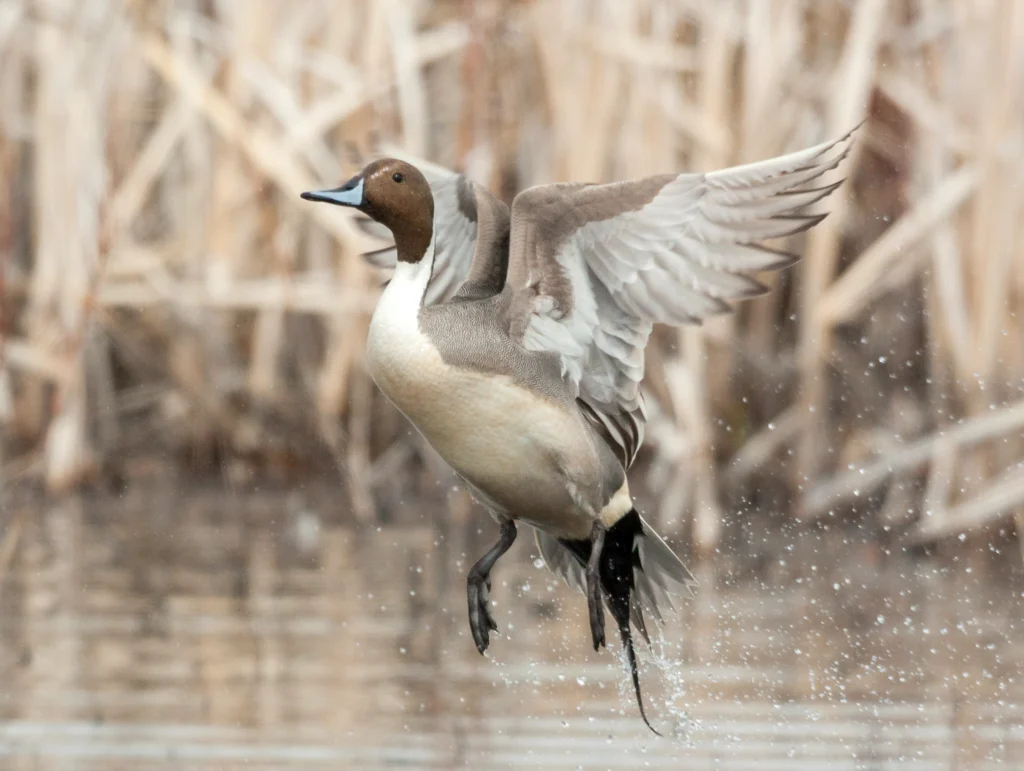
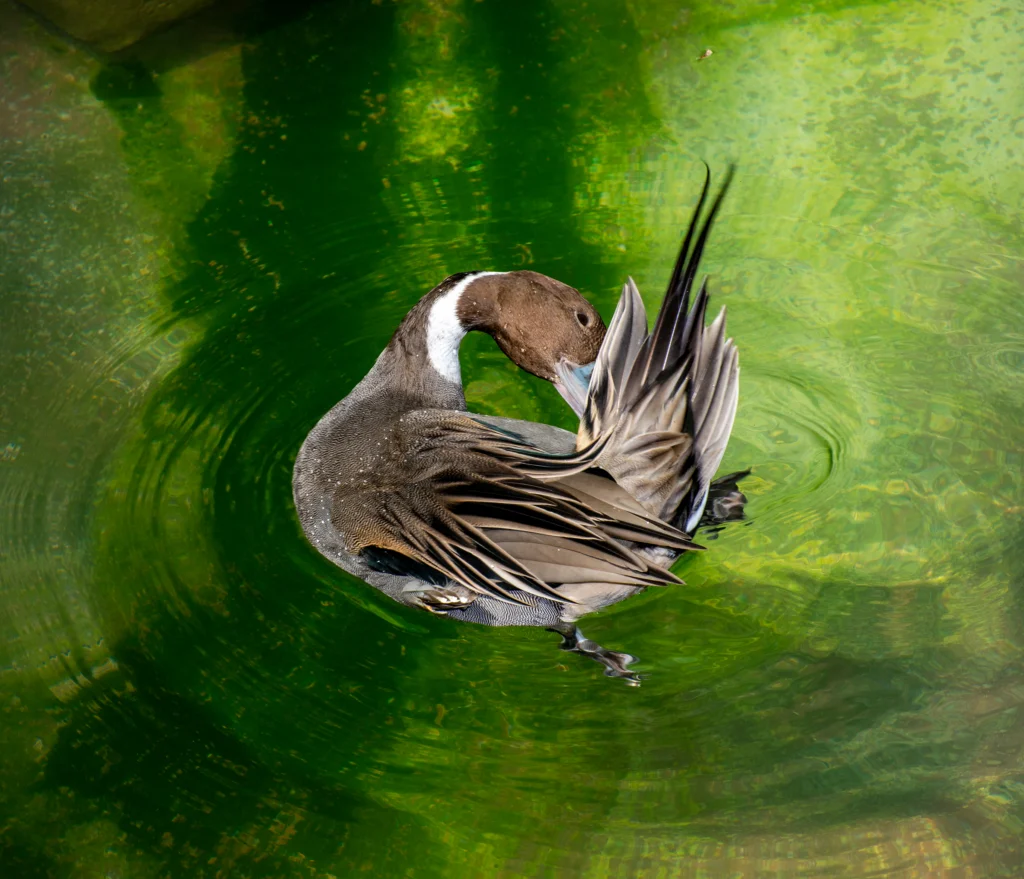
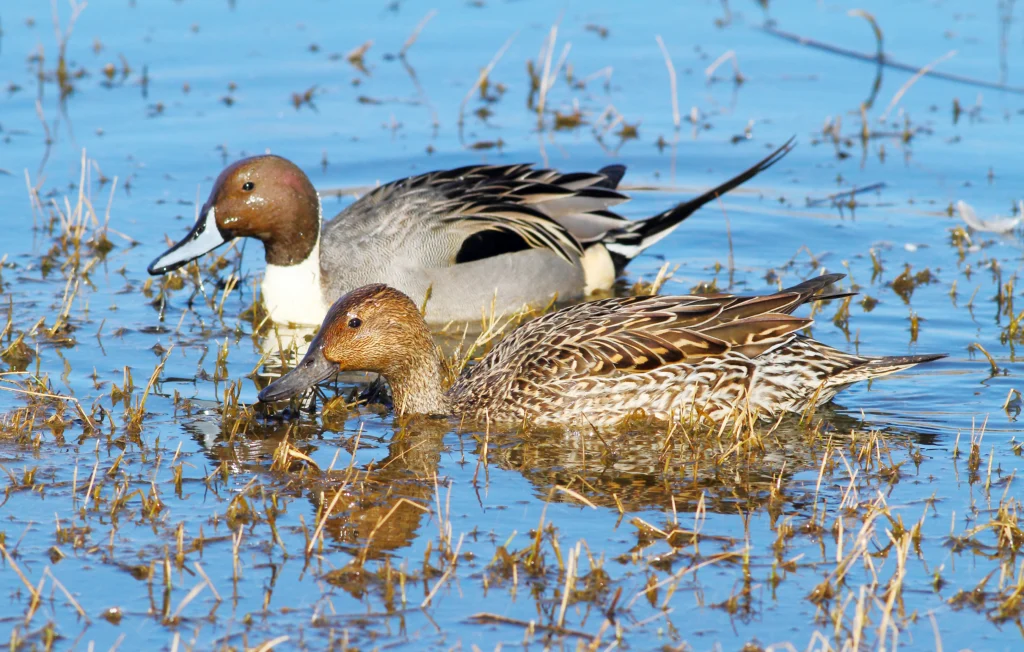
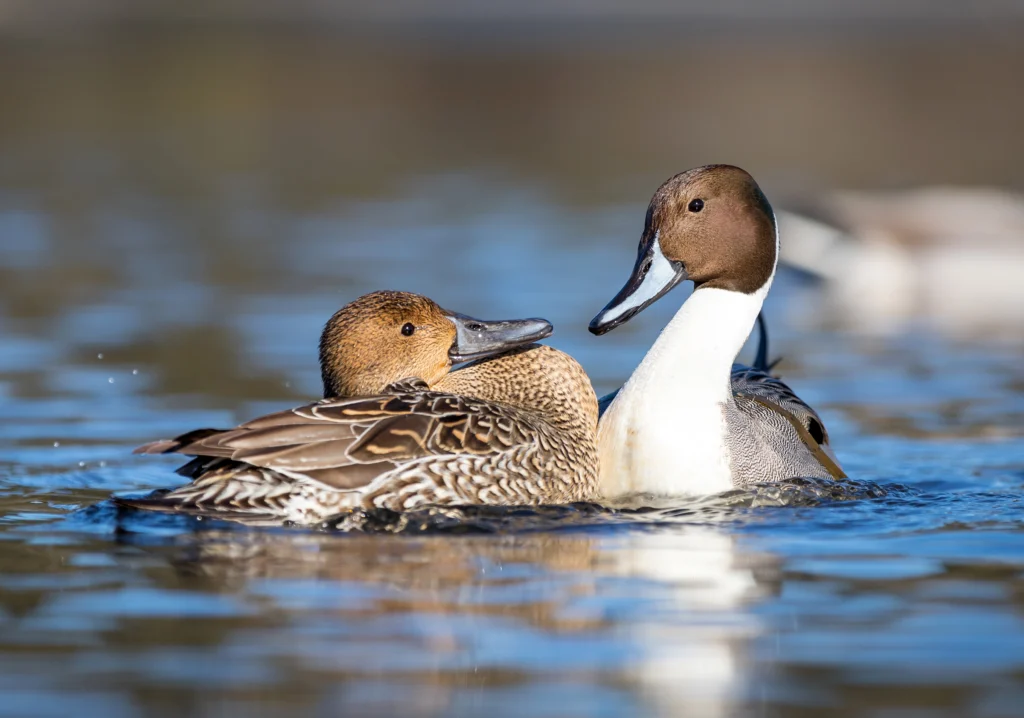
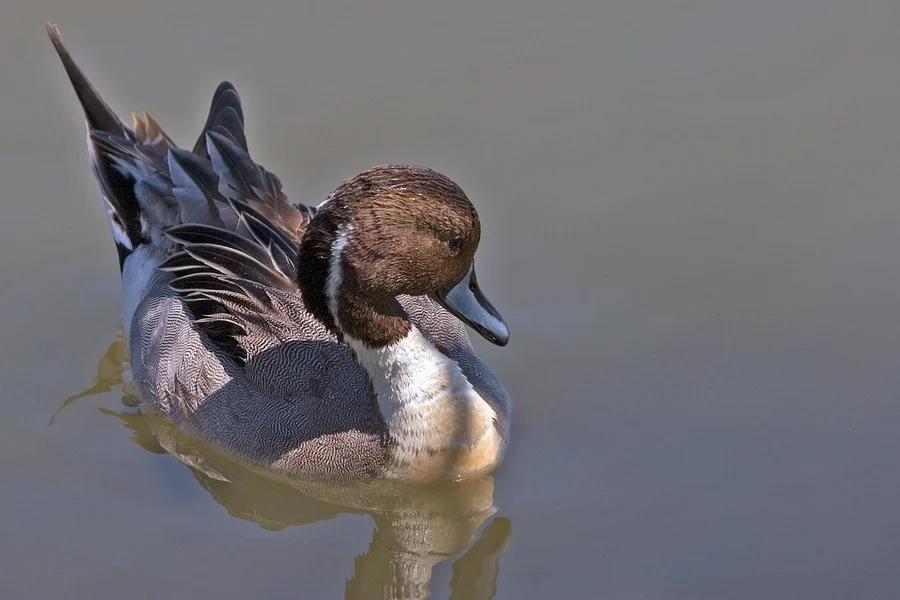
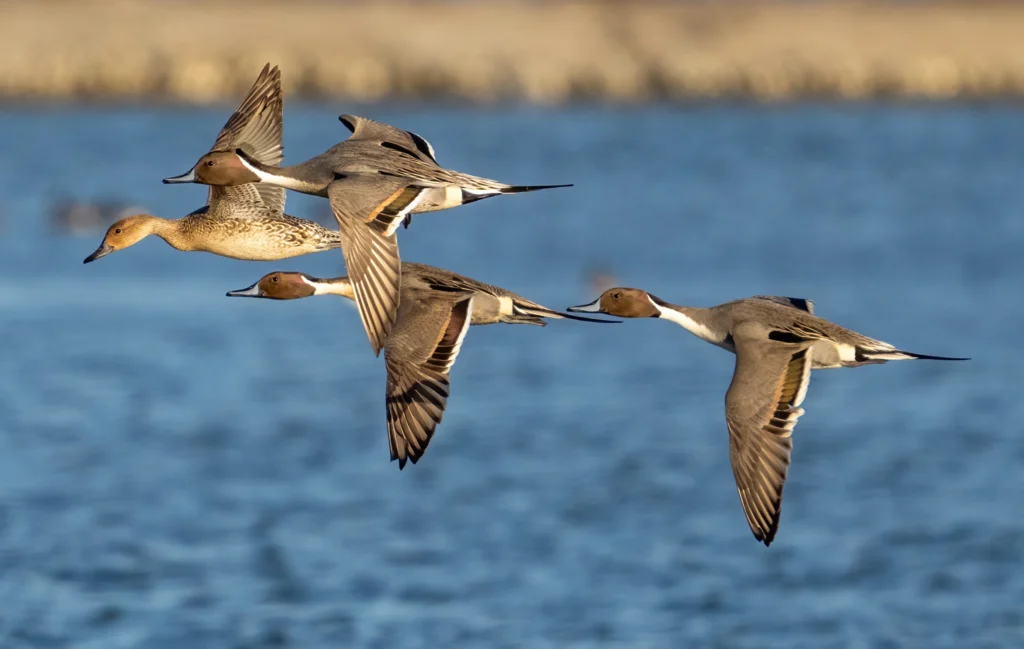
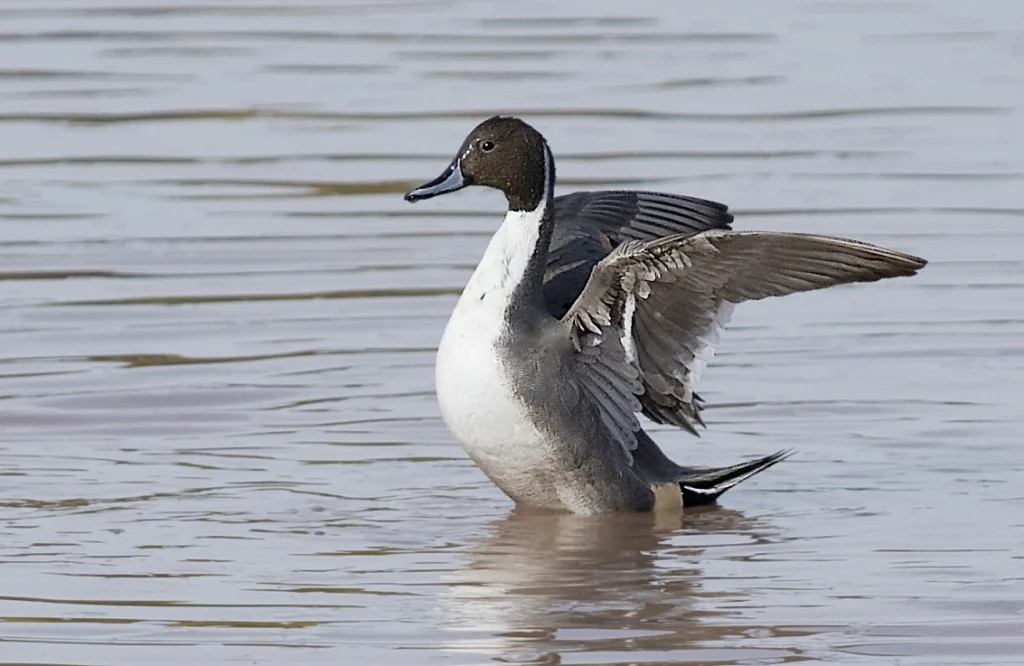
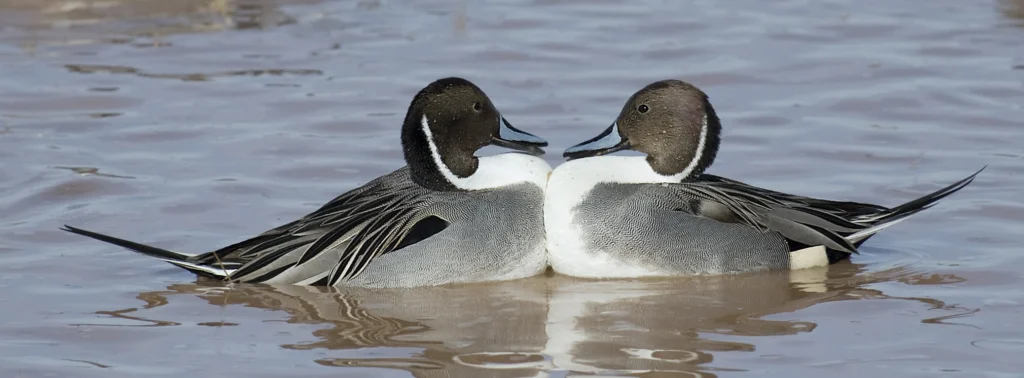
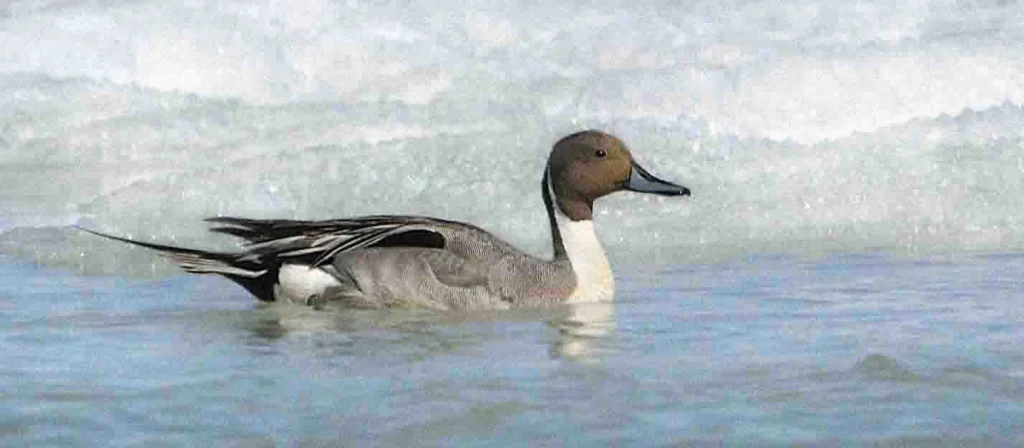
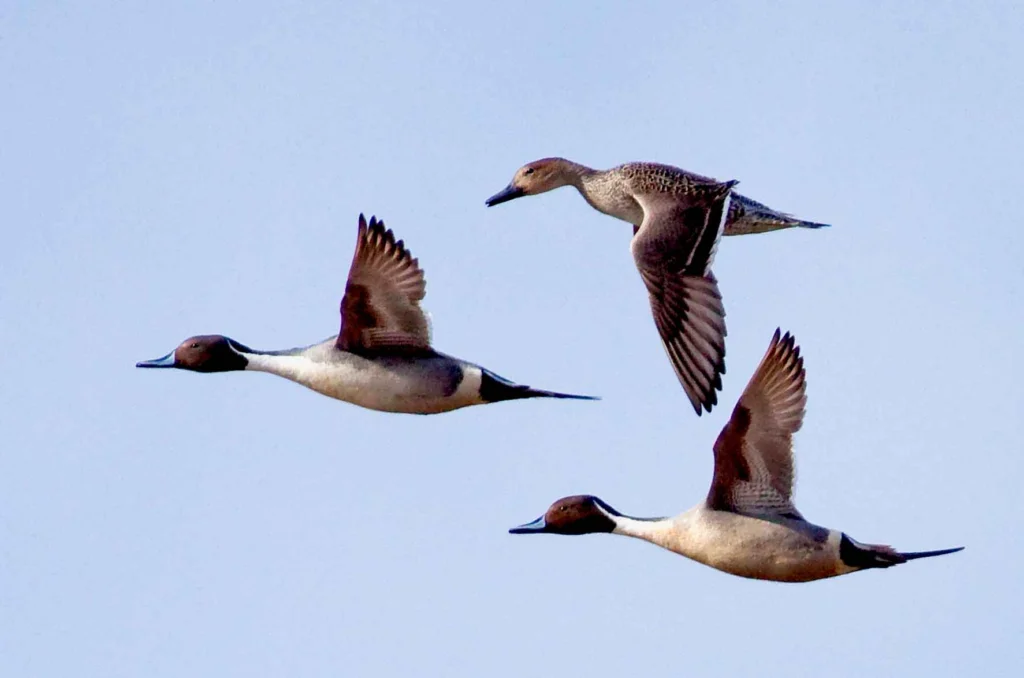
The Northern Pintail is distinctive both on the water and in flight. Both female and male are more streamlined than the Mallard, with long, slender necks, smallish heads, and slim bodies. In addition, the adult male sports the species’ namesake pointed tail. The rest of the drake, or male, pintail’s plumage is quietly elegant, with a dark brown head accented by a white stripe and otherwise white neck and breast. The female is a plainer combination of mottled brown, tan, and white, but can still be fairly easily identified thanks to her long neck and slender proportions.
Sonidos
The male Northern Pintail’s most common vocalization is the Whee call, a soft, two-toned whistle. The female’s typical calls are harsh nasal quacks and percussive cackling Kuk llamadas.
Credit: Marco Dragonetti, XC106943. Accessible at www.xeno-canto.org/106943.
Credit: Ryan P. O’Donnell, XC104580. Accessible at www.xeno-canto.org/104580.
Hábitat
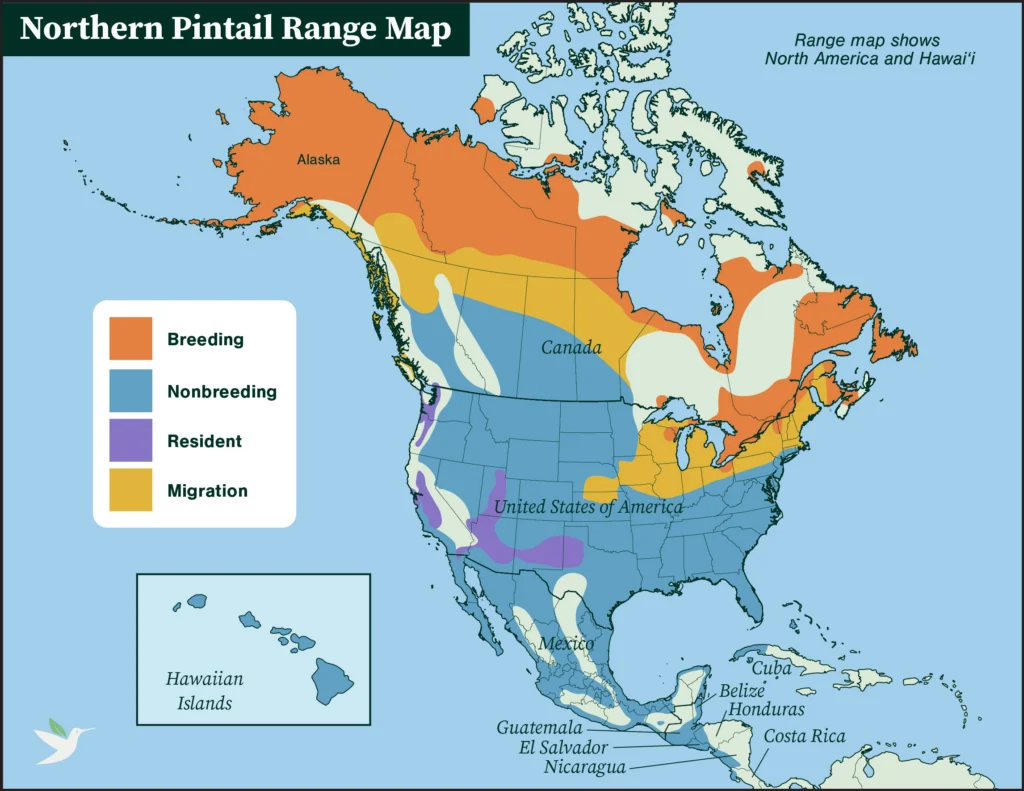
The Northern Pintail breeds in open, shallow wetlands and grasslands, such as those in North America’s Prairie Pothole Region, and winters in open marshes and estuaries.
Rango y región
Rango y región
Área específica
Across the Northern Hemisphere, tropics to subarctic
Detalles de la gama
The Northern Pintail has a wide geographic distribution, spanning North America, Europe, Africa, Asia, and some of the Pacific Islands, including Hawaiʻi. In North America, its core nesting habitat includes Alaska, much of Canada, and the Northern Great Plains. The latter region, often called the Prairie Pothole Region, provides important breeding grounds for many other waterfowl species such as the Canvasback, plus grassland songbirds including the Bobolink and Baird’s Sparrow.
¿Sabías?
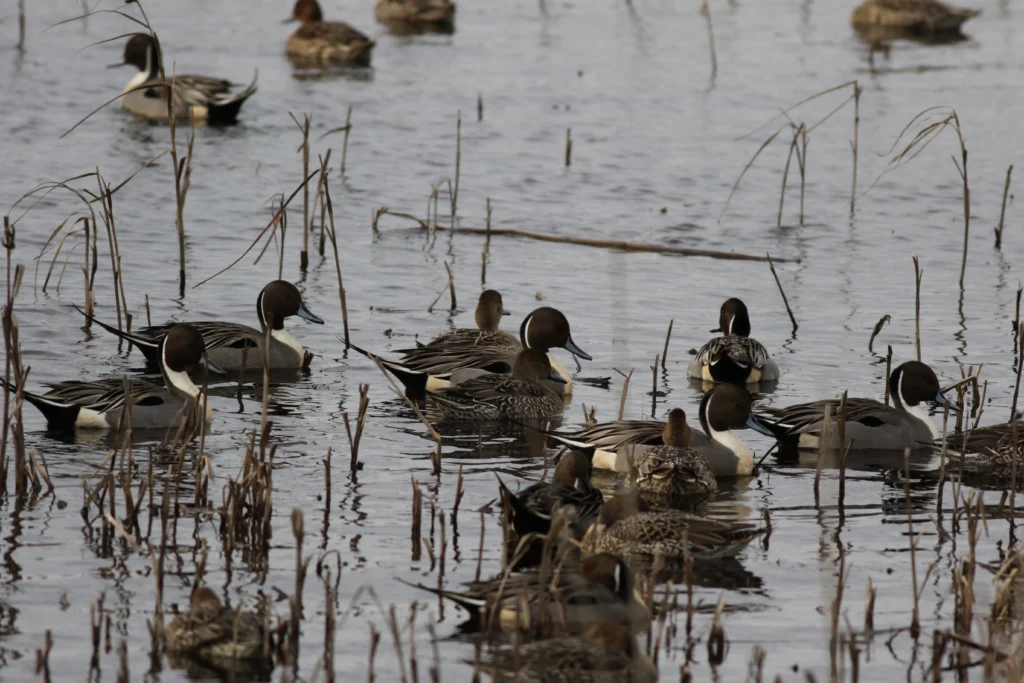
While some of their populations are resident, most Northern Pintails move south of their breeding range for the winter, migrating at night in large, fast-flying flocks. This species is highly gregarious outside of its nesting season and forms mixed flocks with other waterfowl on its wintering grounds.
Historia de vida
Dieta
Like other “dabbling” duck species such as the Mallard and Koloa Maoli (Hawaiian Duck), the Northern Pintail feeds at the water’s surface or by tipping forward, tail-up to reach underwater plants. The pintail’s long neck allows it to reach farther below the surface than other dabbling duck species. During the summer months, the Northern Pintail feeds heavily on insects, mollusks, and crustaceans, while ducklings in particular take advantage of the protein-rich insect bounty. In fall and winter, this duck switches to mostly plant material, especially grass and weed seeds, plus waste field grains when they are available.
Noviazgo
The Northern Pintail is one of North America’s earliest nesting duck species, arriving back on its breeding grounds as the last winter ice melts. During courtship, a male swims close to a female with his head down and tail up while making his whistled Whee call. Both mated and single males join in group “pursuit flights,” which may include up to 16 birds all chasing one female.
Anidación
Northern Pintail hens nest farther from water than do other duck species, often in open areas with short grasses and other low vegetation. They will also nest in fallow agricultural fields, to their detriment if the land is plowed and planted during breeding time. The ground nest is a simple scrape lined with grasses and the female’s down feathers.
Huevos y crías
A Northern Pintail hen lays a clutch of seven to nine eggs, then incubates them herself for almost a month. When the ducklings hatch, the hen immediately leads them to the nearest body of water. Although her young can immediately swim and feed themselves, the hen remains nearby until they can fly.