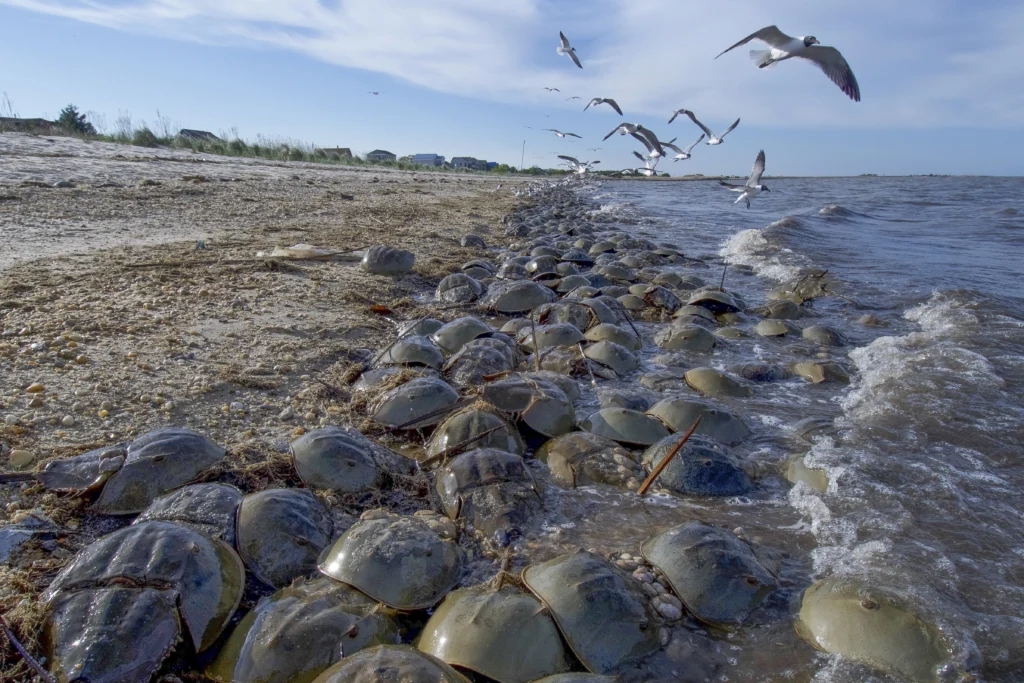
This spring, millions of horseshoe crabs will crawl out of the seas onto beaches scattered from Maine to Mexico’s Yucatán Peninsula, just as their species has for millions of years. The “living fossils,” as they’re often called, predate the dinosaurs and have survived the five major mass extinctions in Earth’s history. Now, whether or not these beach-dependent creatures hang on into the future is largely up to us.
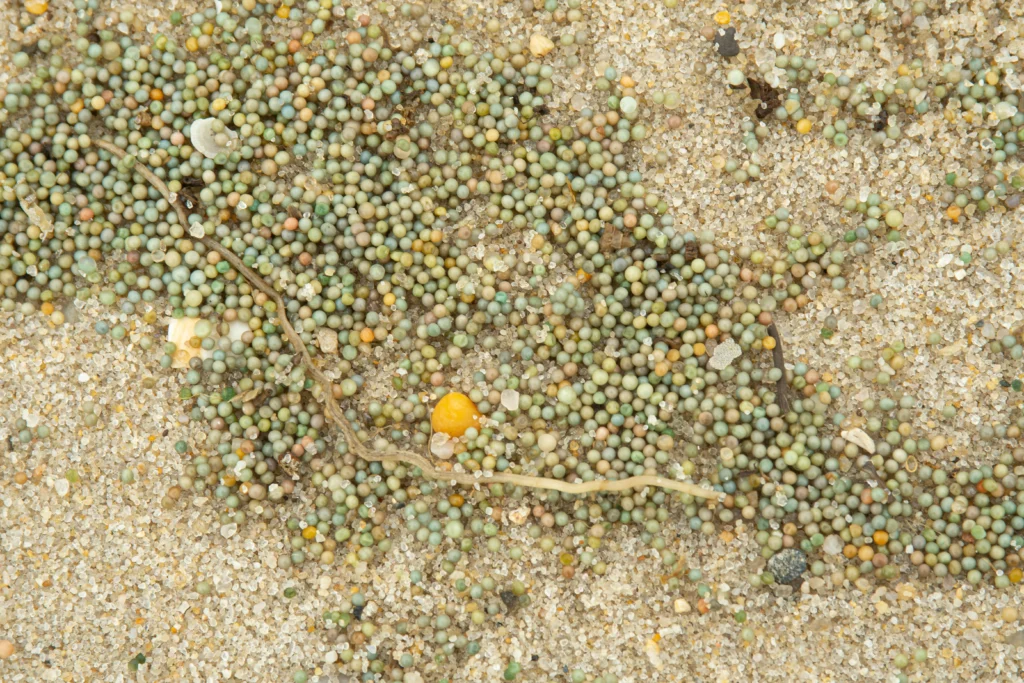
At high tide around a new or full moon, female horseshoe crabs will burrow into the sand to lay thousands of small eggs while males fertilize them. If all goes well, the adults will make it back to their intertidal flats and sandy ocean bottoms, and the eggs that aren’t eaten by shorebirds will produce young that make their way into the water, too.
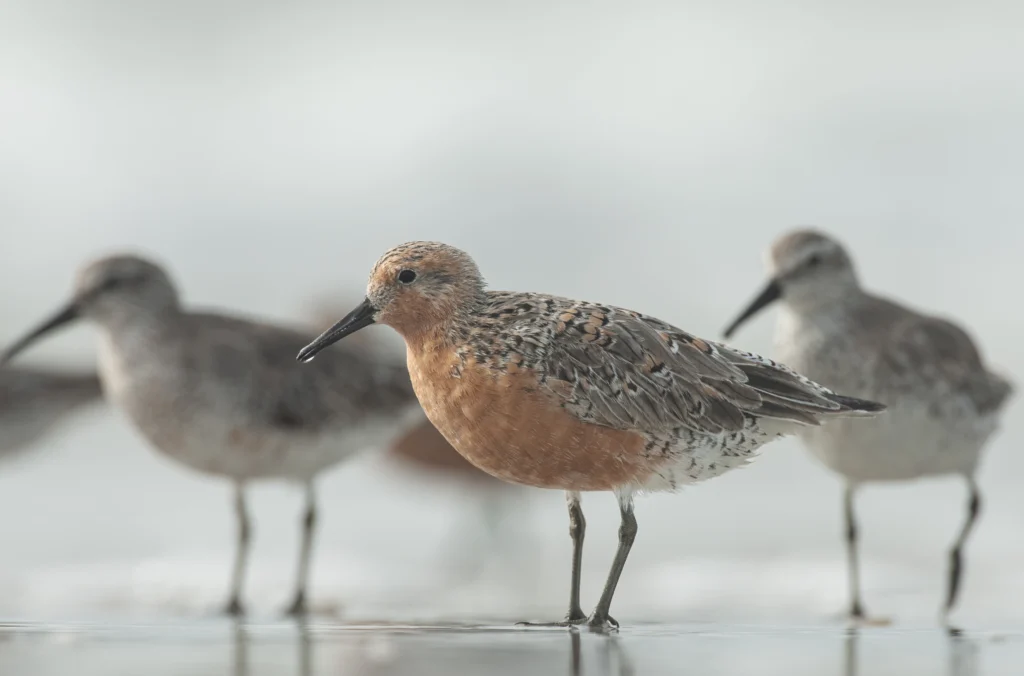
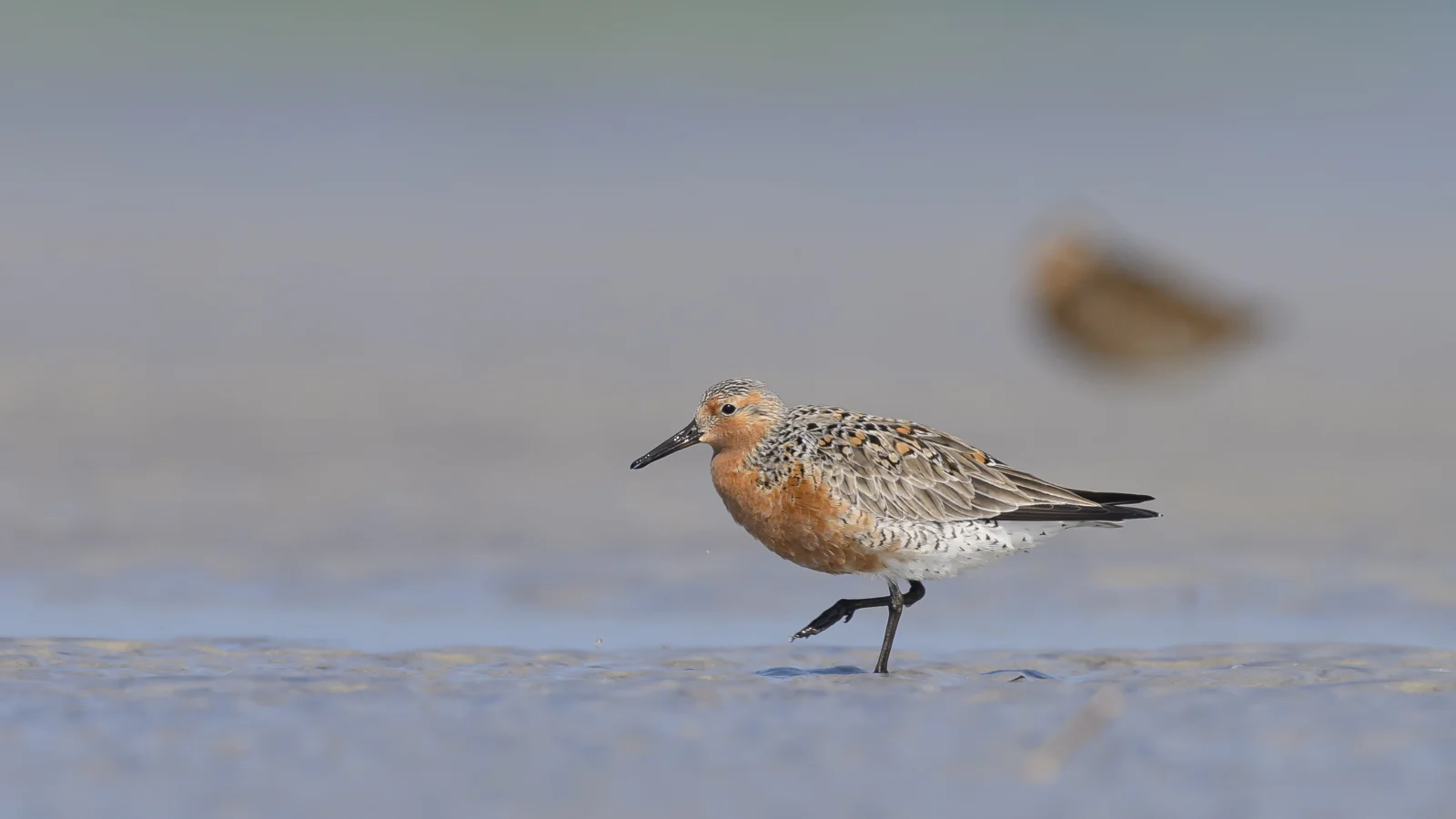
Sadly, all is not well for horseshoe crabs and the shorebirds, especially Nudos rojos, that fuel their migrations by feasting on the crabs’ eggs. ABC and other conservation groups have advocated for decades on behalf of preserving these animals and their intertwined relationship. Indeed, the knot makes an astonishing 9,000-mile spring migration that has been fodder for nature documentaries, books, and countless articles. The trip — from southern Argentina to the Canadian arctic — only works because the birds stop on Delaware Bay and other beaches to scarf down crab eggs.
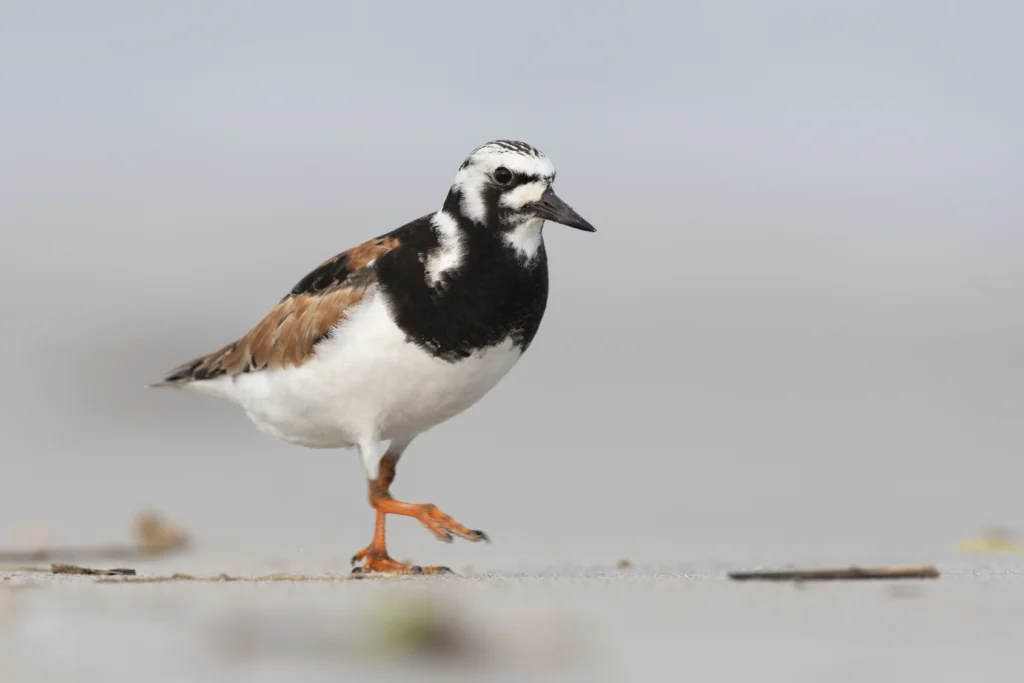
Other species that rely on horseshoe crab eggs include the Ruddy Turnstone, Dunlin, Semipalmated and Least Sandpipers, Sanderling, Black-bellied and Semipalmated Plovers, and Laughing Gull.
The good news is that the proverbial tides are starting to turn, even in the last several months. Before we get to the latest developments, let’s look at how we got here.
The Exploitation Era
Centuries ago, Indigenous peoples used dead horseshoe crabs as crop fertilizer. European settlers likely learned of this practice from the native residents, and by the mid-1800s, they were collecting millions of live horseshoe crabs a year from shorelines and sending them to be ground up for fertilizer. This continued until the advent of modern fertilizers in the 1960s.
In the 1970s, the pharmaceutical industry discovered that horseshoe crabs’ blue blood contains the protein Limulus amoebocyte lysate (LAL), which could be used to look for potentially deadly endotoxins in vaccines, medicines, and medical devices, like heart valves and pacemakers. In 1977, the Food and Drug Administration (FDA) approved a testing protocol using LAL, and the procedure soon became an indispensable part of medical safety testing.
While the procedure has surely improved human health in the decades since, it has also required that blood be drawn from hundreds of thousands of horseshoe crabs each year. The process, which draws blood from their hearts, results in the deaths of 15 to 30 percent of bled crabs. The crabs that survive the process are released back to the sea. However, not all crabs thrive when released, and some exhibit behavior changes, such as decreased movement and activity. These effects do not result in direct mortality but impact the overall population health of the species.
As harvesting horseshoe crabs for the LAL process ramped up, the fishing community in the 1980s and ’90s increased its collection of the animals for eel and whelk bait. The harvest peaked at 2.6 million horseshoe crabs in 1999. A year earlier, the Atlantic States Marine Fisheries Commission (ASMFC) began to regulate the bait harvest, introducing quotas, seasonal closures, and recently, a two-year ban on harvesting egg-laying females in Delaware Bay. (Now, the coastwide bait quota is about 1.5 million, but fewer crabs are caught for bait. In 2022, for example, 573,633 horseshoe crabs were harvested.)
The 1990s spike in harvests led to an immediate drop in the number of horseshoe crab eggs available for hungry shorebirds. The population of the Red Knot subspecies that migrates along the Atlantic coast (Calidris canutus rufa) followed suit, falling from an estimate of 100,000–150,000 in the 1980s to 18,000–33,000 by 2007.
Time to Act
Since then, policymakers, often spurred by public sentiment, began to act. New Jersey banned horseshoe crab bait harvests in 2008. Six years later, the U.S. Fish and Wildlife Service declared the rufa Red Knot Threatened under the Endangered Species Act. Shortages of crab eggs was a threat cited in the listing decision. In 2023, Connecticut banned bait harvests of horseshoe crabs in its waters.
Meanwhile, researchers developed synthetic testing processes that could replace LAL. Later, pharmaceutical companies commercialized these synthetic methods. The manufacturer Eli Lilly began converting to non-LAL tests in 2016, and other companies have followed. (The Sustainability Scorecard for Endotoxin Testing, operated by three conservation groups, keeps tabs on the industry’s progress at pharmascore.org.)
In July 2024, experts with US Pharmacopeia, a nonprofit, nongovernmental organization that sets standards for medical manufacturers, approved adding a new chapter to its compendium approving the use of non-animal-derived reagents for endotoxin testing. The chapter became official in May 2025, representing progress in acceptance of synthetic testing methods that do not require the harvest of horseshoe crabs. A main hurdle to ending the demand for horseshoe crab blood in the U.S. is a 2012 FDA endotoxin testing guidance that designates LAL as the preferred testing method. Wildlife advocates, including Annie Chester, Policy Director at ABC, worked with members of Congress to address the challenge. A federal funding bill that passed in late 2025 and covered the FDA’s work in 2026 included language instructing the agency to update its 2012 endotoxin testing guidance to accept synthetic methods.
“Securing this language in the federal funding process involved close collaboration with partners and Congressional offices,” Chester said. “ABC and partners worked together to educate Congressional offices about the issue. This direct advocacy effort led to increased awareness and interest from members of Congress along the East Coast — the horseshoe crabs’ native range. Those members of Congress were instrumental in securing the inclusion of the new directive.”
Massive Grassroots Effort
Another major win took place just before Christmas 2025. New York Governor Kathy Hochul convertido en ley a ban on horseshoe crab harvests in state waters — a significant holiday gift for the imperiled population in Long Island Sound. The legislation requires bait and biomedical harvests to be phased out over the next three years, and the full ban will take effect in 2029.
Hochul had vetoed a similar ban in 2024. After the legislature passed a revised bill in 2025, Adrienne Esposito, Executive Director of the New York-based Citizens Campaign for the Environment, said “a massive grassroots effort” helped get the bill signed. Another push, Esposito said, came from two studies published in September 2025 by the Maritime Aquarium in Connecticut. They showed a loss of the Long Island Sound horseshoe crab population of 2 to 9 percent per year for the last five years.
“This was essential information that demanded a preservation effort be implemented,” she said. “We are extremely hopeful that with New Jersey, Connecticut, and New York all banning harvesting, the populations will recover and the species will be able to flourish.”
Jason Patlis, President and CEO of the Maritime Aquarium, added: “This law represents a major victory for science-based conservation. Our research has documented severe declines in horseshoe crab populations, and this decisive step by New York will help reverse that trend.”
The lesson is simple. If we can help horseshoe crabs flourish, the populations of the Red Knot and other shorebirds will rise — eventually.
Building Momentum
While the recent wins are great news, momentum continues to build. Legislators in Massachusetts recently introduced a bill that would ban horseshoe crab harvest. ABC and advocates in other states, including Delaware, are also working with their representatives to pass harvest bans.
Conserving horseshoe crabs is a key strategy to recovering Red Knots, which are still federally Threatened and have not seen a population increase since being listed in 2014. New Jersey, Delaware, and the U.S. Fish and Wildlife Service jointly monitor the Delaware Bay stopover annually, and in 2024, they estimated that just over 46,100 knots visited that year. Indeed, since 2019, numbers have fluctuated between about 39,000 and 46,000, which are notably higher than the 2007 estimate. Today’s numbers are nowhere near the late 1990s estimate of 77,000 or the 1989 estimate of about 153,000.
The lesson is simple. If we can help horseshoe crabs flourish, the populations of the Red Knot and other shorebirds will rise — eventually.
En un 2024 essay for the Southern Environmental Law Center, author J. Drew Lanham, the cultural ornithologist, academic, and MacArthur Fellow, mused about the “time-evolved, moon-mediated agreement” that shorebirds have with horseshoe crabs. “We must be ever vigilant to protect those who can’t protect themselves,” he wrote, as he recalled giving a helping hand to a horseshoe crab he found lying upside down on a beach. He flipped it over so it could return to the sea and pondered about a migrating Red Knot overhead seeing him do so.
“I cannot know what the knot knows, but the bird-lover within knows that helping this ancient uncle return to the sea might mean more eggs spawned on future moonlit nights that will feed shorebirds to give them better chances at surviving and making more of themselves. That means more birds and crabs for us to wonder over and watch. The cause of kinship among us all demands no less.”
Matt Mendenhall, ABC’s Managing Editor, has been writing about birds and conservation for 25 years.
This article first appeared in the spring 2026 issue of Conservación de aves, the member magazine of American Bird Conservancy.
ABC is a member of the Coalición para la Recuperación del Cangrejo Herradura.
What’s in a Name?
Let’s face it. This story’s main characters have unusual names.
Horseshoe crabs may resemble actual crabs, but in fact, they are not crabs or even crustaceans. They’re more closely related to sea spiders and scorpions. Their U-shaped exoskeleton or carapace that resembles a horse’s hoof inspired their common name.
The name of the Red Knot, which is found in the Americas as well as Europe, Africa, Asia, and Australia (and its Eurasian cousin, the Great Knot), is believed to derive from King Canute or Knut, ruler of England, Denmark, and Norway about a thousand years ago. The story goes that after dining on the birds, he was so pleased with the flavor that loyal courtiers named the birds after him. Not surprisingly, “Red” comes from the robin-red underparts of their breeding plumage.