Open Ocean. Photo by Marianna Sigov, Pexels.

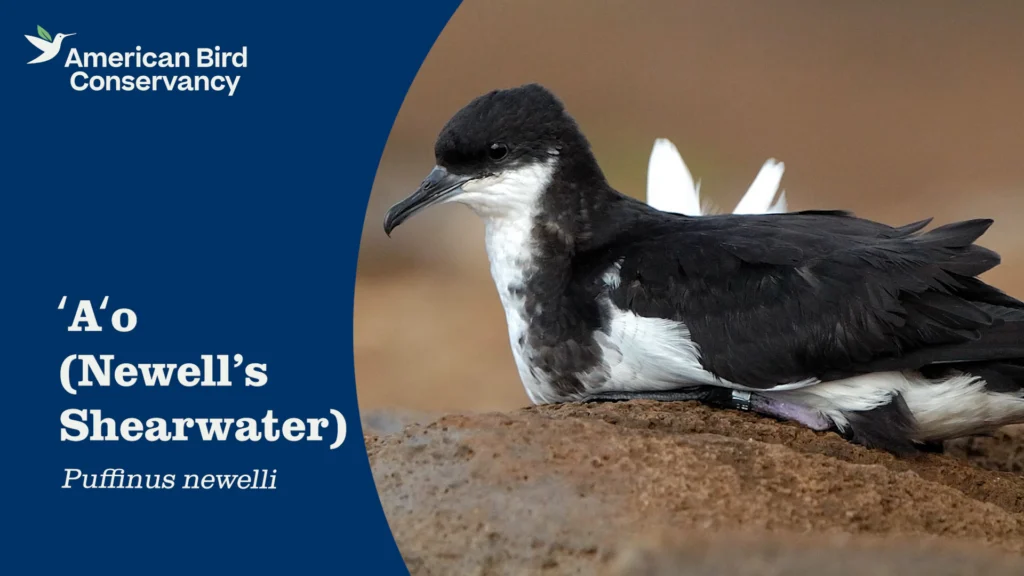
ʻAʻo (Newell’s Shearwater)

Frailecillo newelli

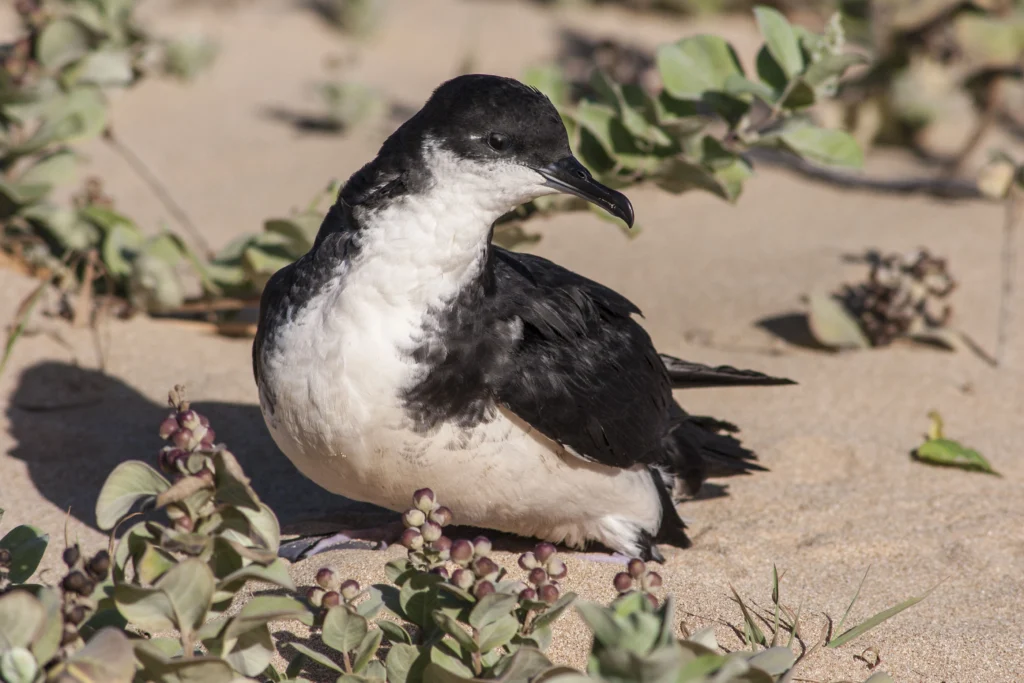
ʻAʻo (Newell’s Shearwater). Photo by Jack Jeffrey

ʻAʻo (Newell’s Shearwater)

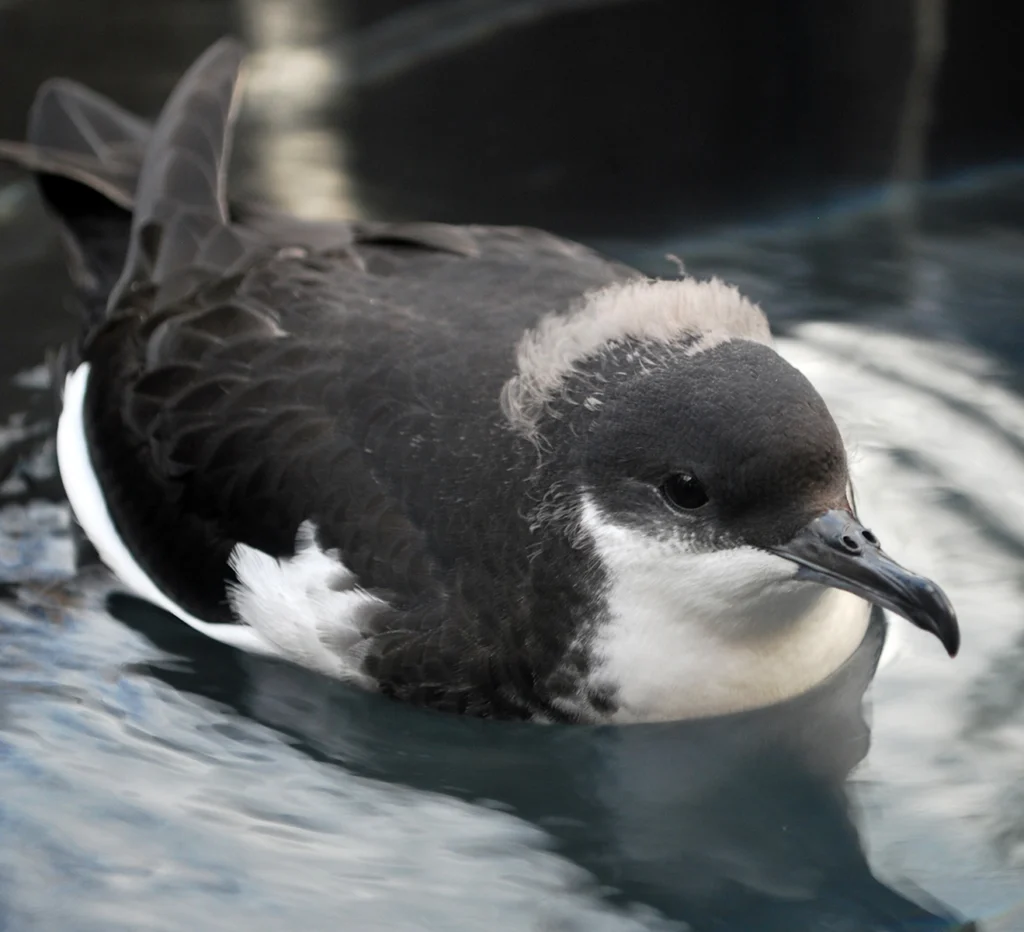
ʻAʻo (Newell’s Shearwater). Photo by Jack Jeffrey

Frailecillo newelli

Descripción general

Tendencias demográficas
Decreciente
Tamaño de la población
10,000-19,999
Familia
Shearwaters
Ubicación
Hawai
Patrón de migración
No migratorio
Distancia de migración
No migratorio

Acerca de

The low, moaning call of the Newell’s Shearwater gives this small black-and-white seabird its onomatopoeic Hawaiian name: ʻAʻo. First described to science by ornithologist Henry Henshaw in 1900, the elusive seabird was declared extinct less than ten years later. Then, after nearly four decades, this resilient shearwater was once again spotted at sea. The ʻAʻo’s taxonomic history is equally complicated: It was not recognized as a full species until 2004, separating it from the closely related Townsend’s Shearwater, which ranges the seas off the coast of western Mexico.

ʻAʻo are sometimes referred to by fishermen as “tuna birds,” since they are often a good sign that there are tuna nearby. Indeed, ʻAʻo follow schools of these large predatory fishes in mixed seabird flocks that may include the Red-footed Booby and White-tailed Tropicbird. In fact, shearwaters (and other seabirds) and tuna (and other underwater predators) could be considered to hunt cooperatively — team tuna pushes their prey up to the surface, while the seabirds keep the school from dispersing sideways. Once their prey is near the surface, ʻAʻo adeptly dive into the water, using their wings to “fly” as they pursue the squid and fish that are their bread and butter.
Amenazas

Newell’s Shearwater numbers have declined precipitously in the last 50 years, with a total population loss of over 90 percent. The threats are many, but predation at nest burrows by invasive cats, rats, and mongooses is one of the most significant. Additionally, birds flying at night are frequently killed in collisions with powerlines, and can be disoriented by artificial lights. As with so many native Hawaiian birds, habitat degradation by invasive plants and animals such as pigs and goats is also a major issue.

Disorienting Lights

ʻAʻo are impressive nighttime navigators, using natural light cues from the moon and stars. Unfortunately, artificial lights can throw them off. Young birds heading to sea for the first time are often attracted to the bright lights at playing fields, hotels, resorts, and streets. Disoriented, they circle the lights until they are exhausted and fall to the ground. This phenomenon is so common that it has a local name: “fallout.” Once the exhausted birds are on the ground, they can easily be injured or killed by cars, cats, and dogs.

Nocturnal Collisions

Collisions with powerlines and other structures kill many adult shearwaters. Nesting ʻAʻo are very active at night, traveling between their nests and the sea as they feed themselves and their young. However, traveling in the dark has become hazardous with the construction of powerlines across the interior of the islands where ʻAʻo nest.

Invasive Predators

Introduced predators are an existential threat to most native Hawaiian birds, all of which evolved with no terrestrial predators. While ʻAʻo are safe for most of the year out at sea, they are extremely vulnerable during their breeding season when they come to land. Domestic cats are perhaps the most dangerous predator to the ʻAʻo, taking both adults and young. In addition to cats, dogs pose a threat to young birds, especially when they are grounded. Rats will take eggs as well as chicks of any age. Invasive Barn Owls, skilled nocturnal predators, have also proven to be devastating, hunting at nesting colonies when ʻAʻo arrive at their burrows at night.

Gatos y especies invasoras

Estrategias y proyectos de conservación

ABC, our partners, and local communities are taking action to prevent Hawaiian birds from going extinct. We work to restore habitat, remove invasive mammals, and use predator-proof fencing to create safe havens for nesting seabirds and translocate species to predator-free habitats where they can thrive. As part of the collaborative Birds, Not Mosquitoes program, we are working to suppress invasive mosquito populations, thereby reducing the prevalence of avian disease. We advocate for policies that protect Hawaiʻi’s birds and support innovative approaches to restoring habitat and conserving birdlife. Along with our partners, we’re creating a future for the birds of Hawaiʻi.

Mejorar el hábitat

In 2014, ABC collaborated with partners including the U.S. Fish and Wildlife Service, Pacific Rim Conservation, and the Kauaʻi Endangered Seabird Recovery Project to build the first-ever predator-proof fence on Kauaʻi, at Kilauea Point National Wildlife Refuge. Over 100 Newell’s Shearwater chicks have been translocated to Nihoku since 2016. In June 2022, a male that had been translocated in 2018 returned, raising hopes that others will eventually join it to start a new colony — a needed lifeline for this species.

Tras años en el mar, la primera pareja de petreles hawaianos anida en Nihokū

Save Our Shearwaters

Save Our Shearwaters (SOS), a licensed rehabilitation organization on Kauaʻi, has been addressing the threat of powerline collisions since 1979, urging community members to collect downed seabirds — the majority of which are state and federally listed endangered species — and bring them to their centers. Over 90 percent of these birds, including several thousand young Newell’s Shearwaters, have been rehabilitated and returned to the wild, although their survivorship is in most cases unknown. ABC has pursued litigation under the Endangered Species Act to force entities responsible for powerline mortality and light attraction on Kauaʻi and other locations to take action to reduce their impact.

Hawaiian Electric y grupos conservacionistas llegan a un acuerdo para proteger a las aves marinas en peligro de extinción.

Mantenga a los gatos dentro de casa

Los gatos son compañeros maravillosos, pero están más seguros (al igual que las aves) cuando viven dentro de casa o bajo el control de sus dueños. ABC promueve la tenencia responsable de gatos, alentando a millones de dueños de mascotas a tomar medidas para mantener a sus gatos dentro de casa y abogando por políticas que beneficien la salud de las aves, los gatos y las personas.

Mantenga a los gatos dentro de casa

Galería de aves

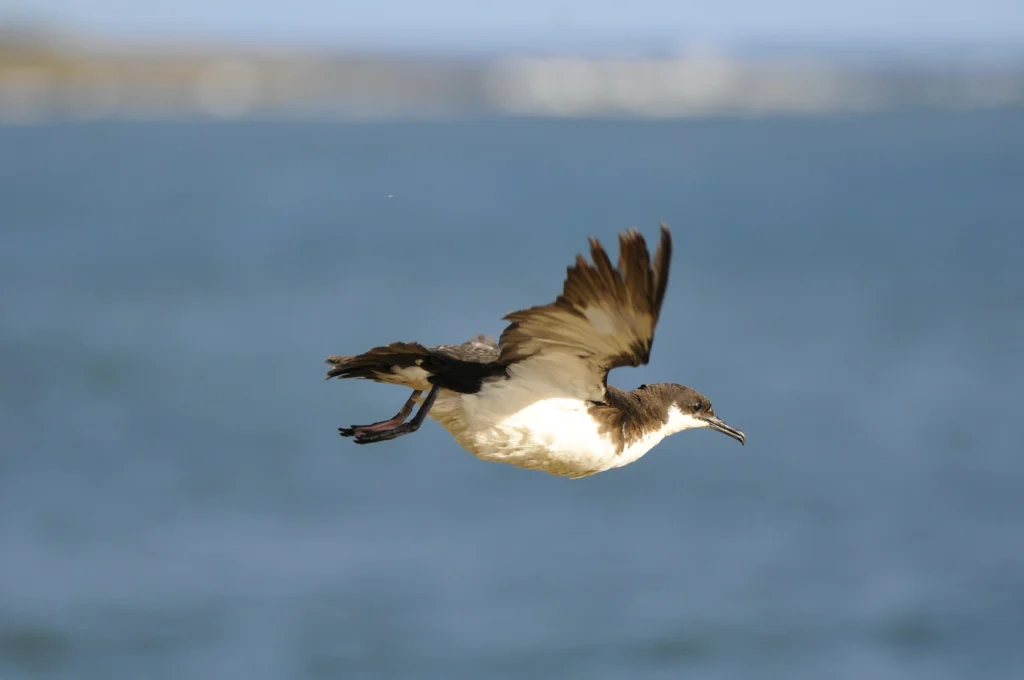
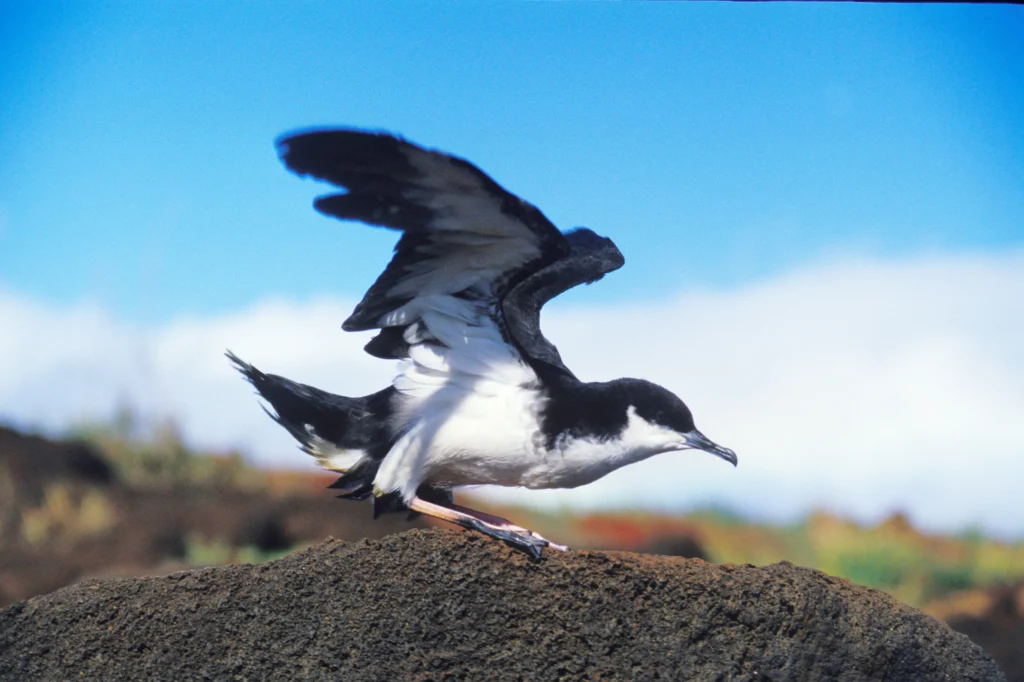
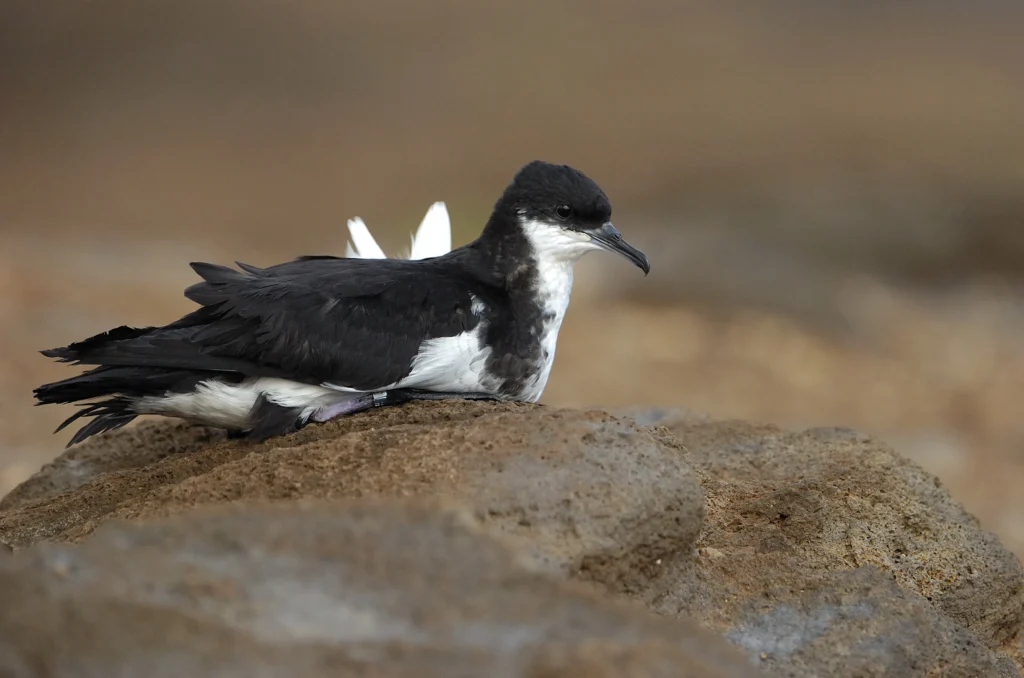
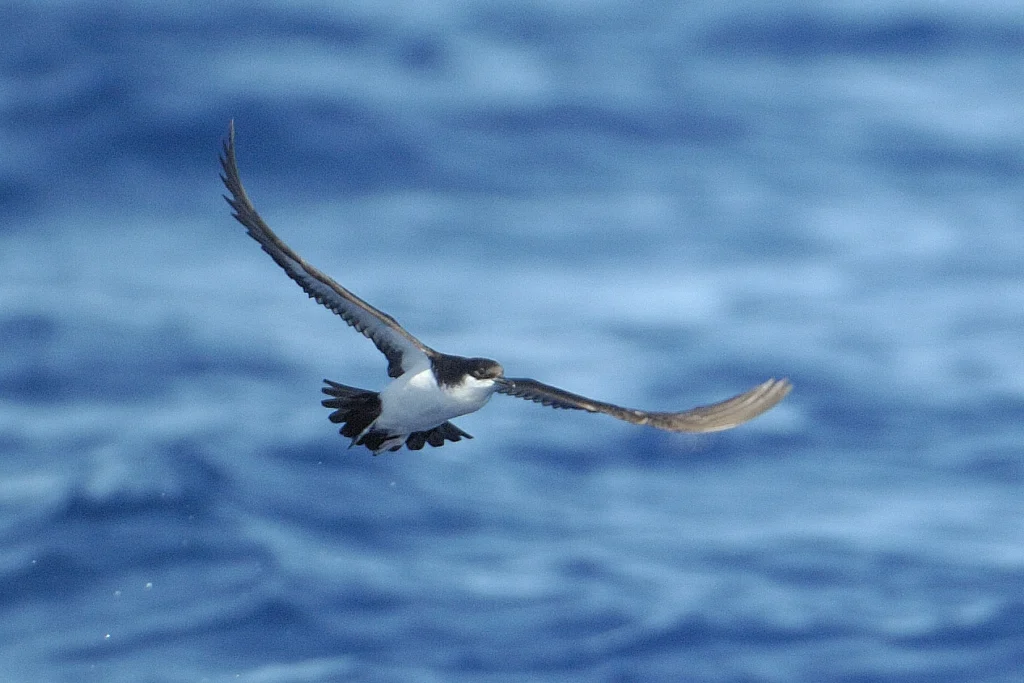
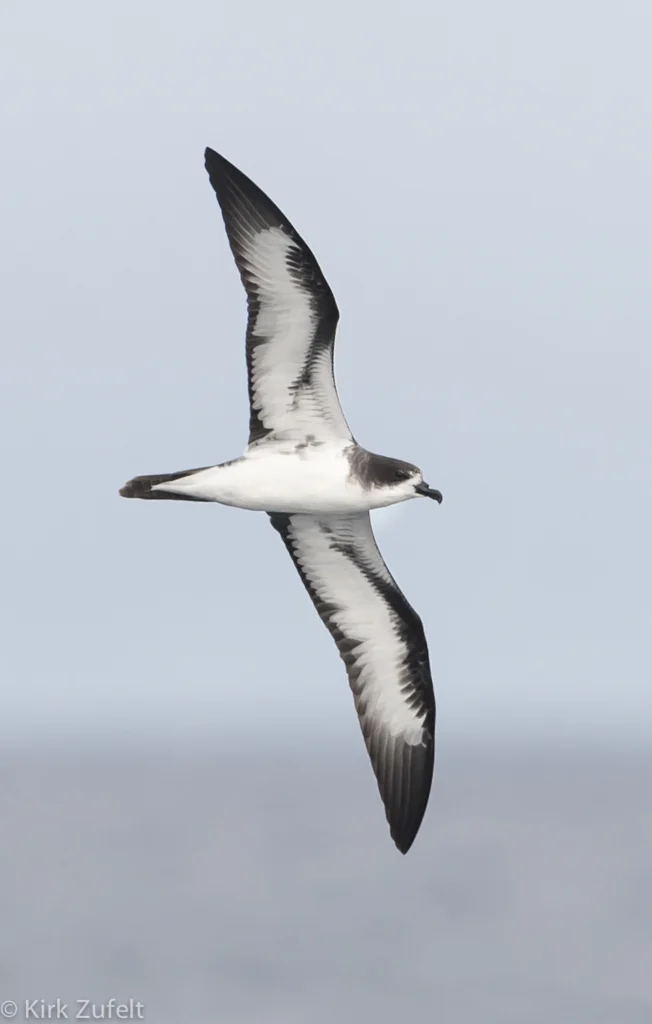
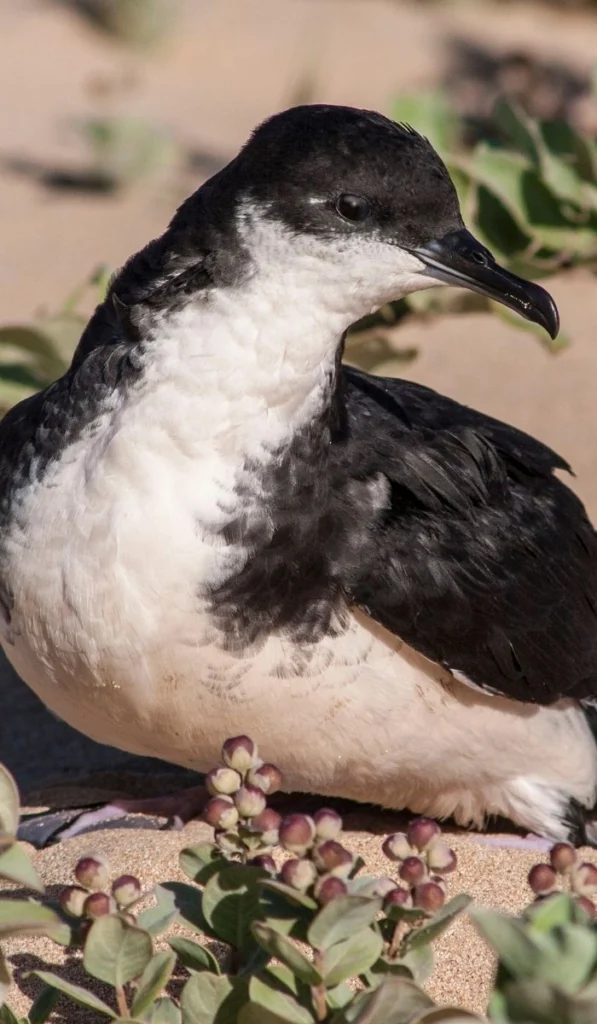
The ʻAʻo is simply patterned overall, largely white below and dark brown to black above. This pattern of “countershading” — dark above, light below — is common to many animals, but especially pronounced in marine predators, including sharks and dolphins as well as seabirds. A small triangular patch of white extends upwards from the throat behind the eye, and another patch stretches up from the belly to the back, just behind the wing. Compared to most birds, this shearwater’s wings are fairly long and narrow, but they are actually rather short and broad compared to other closely-related shearwaters. In fact, some experienced birders use this feature to differentiate the ʻAʻo from several similar-looking species, such as the Wedge-tailed and Sooty Shearwaters.

Sonidos

ʻAʻo are most vocal on their nesting grounds, where their loud raucous calls fill the night. Their typical call is composed of two parts: a harsh, noisy component that may sound like a croak, a rasp, or a snarl, and a more tonal, nasal whine or wheeze. The two components are always given in alternation; the harsh component is produced with an inhale, and the tonal component with the exhale. The overall effect is a long series of calls that sound like something between a donkey’s bray and a pet’s squeaky toy. Both male and female ʻAʻo give this call from the air and from within the burrow. Pairs may call together, forming a duet as their calls emanate from their earthen hole or crevice.

llamadas

Credit: Newell’s Shearwater by Eric VanderWerf; Cornell Lab of Ornithology | Macaulay Library. Accessible at https://macaulaylibrary.org/asset/569112751.

Hábitat

The ʻAʻo breeds at high-elevation sites with dense canopy cover, as well as in steep cliffs. During the nonbreeding season, these wide-ranging shearwaters patrol the tropical and subtropical Pacific.

  • Nest in forested areas with high rainfall, but also known to nest in dry canyon walls, as well as near-vertical walls of volcanic craters
  • Prefers foraging over upwellings at oceanic fronts, where water masses with different physical properties converge, driving up water from below

Rango y región

Rango y región


Newell's Shearwater range map

Área específica
Kauaʻi Island; Pacific Ocean

Detalles de la gama
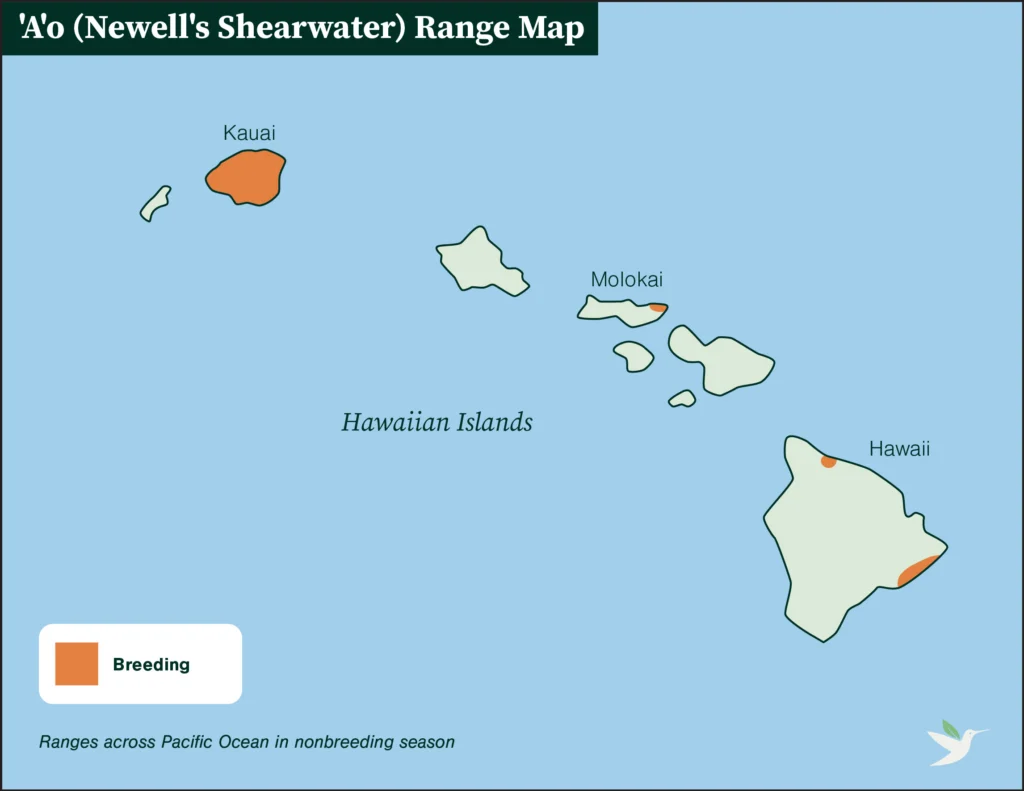
ʻAʻo only come to land in order to breed, and they do so only in Hawaiʻi, nesting largely on the steep forested slopes and cliffs of Kauaʻi. There are also small colonies on Molokaʻi, Maui, and the Big Island (Hawaiʻi). Outside of the breeding season, ʻAʻo roam widely over the tropical Pacific Ocean.

¿Sabías?
Some ʻAʻo colonies are located a surprising distance inland, some over eight miles from the sea. In these situations, the birds of a colony may use a particular flight path, sometimes through a river valley, but sometimes over gentle terrain with no apparent feature delineating the route.

Rango
Hawai
Patrón de migración
No migratorio
Distancia de migración
No migratorio

Historia de vida

The ʻAʻo is a wide-ranging bird, spending most of its life at sea. Even during the breeding season with a chick in the nest, ʻAʻo will travel far and wide in search of food. However, with their relatively short, broad wings, ʻAʻo aren’t built for soaring to the extent that other seabirds such as albatrosses and even other shearwaters are. As a result, they don’t travel nearly as far as some of their relatives. However, their stubbier wing shape allows them instead to “fly” underwater. Meanwhile, their lower legs or tarsi are flattened sideways, reducing drag as they swim. As pursuit divers, these seabirds are well-equipped for underwater dives, swimming comfortably after their prey.

Dieta

ʻAʻo forage far out over the open ocean, capturing and eating flying squid, flying fish, and other prey that are driven up toward the surface by predatory tuna. ʻAʻo seem to have a particularly strong association with yellowfin tuna (Thunnus albacares). Once their prey are close enough to the surface, ʻAʻo dive into the water and swim with partly opened wings, reaching depths of over 150 feet.

Noviazgo

Little is known of the breeding behavior of this species, largely because breeding colonies are hard to access, and courtship, copulation, and other pair behaviors take place at night or inside the nest burrow. Researchers suspect that pairs are monogamous and that pair bonds last until one mate dies.

Anidación

ʻAʻo spend their lives at sea, returning to land only during their breeding season. ʻAʻo nest in burrows, which they dig with their beaks and feet in thick underbrush, often at the base of a tree, on steep, inaccessible mountain slopes. ʻAʻo line their nests with vegetation, such as the fern uluhe (Dicranopteris linearis) and the cranberry relative ʻōhelo (Vaccinium reticulatum). Pairs use the same burrow year after year, even if it is damaged — the birds will just try to dig deeper.

Huevos y crías

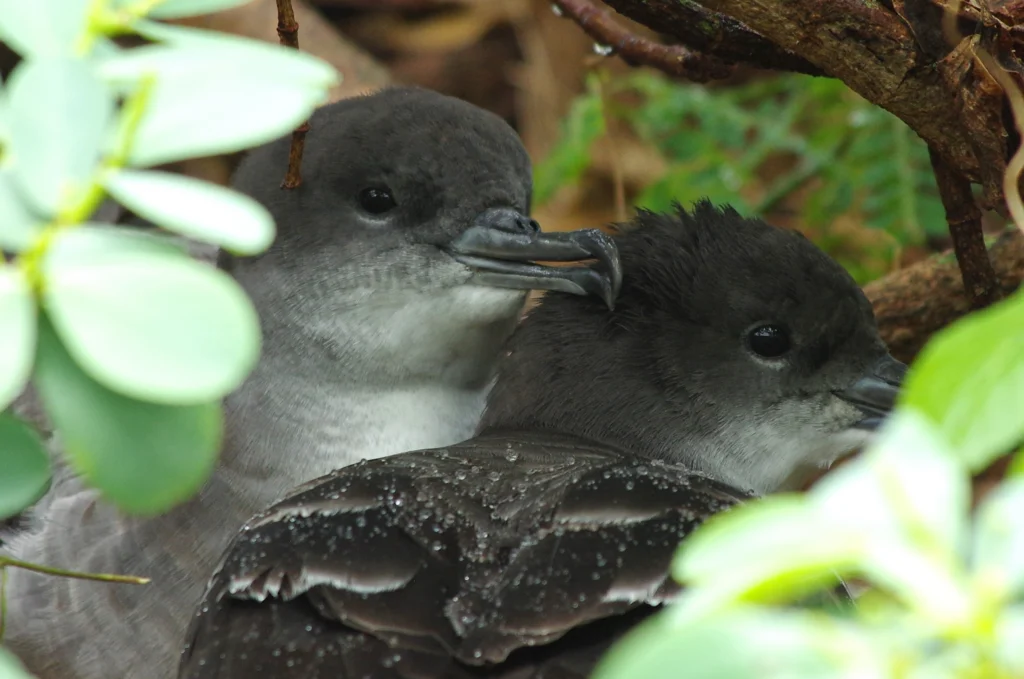
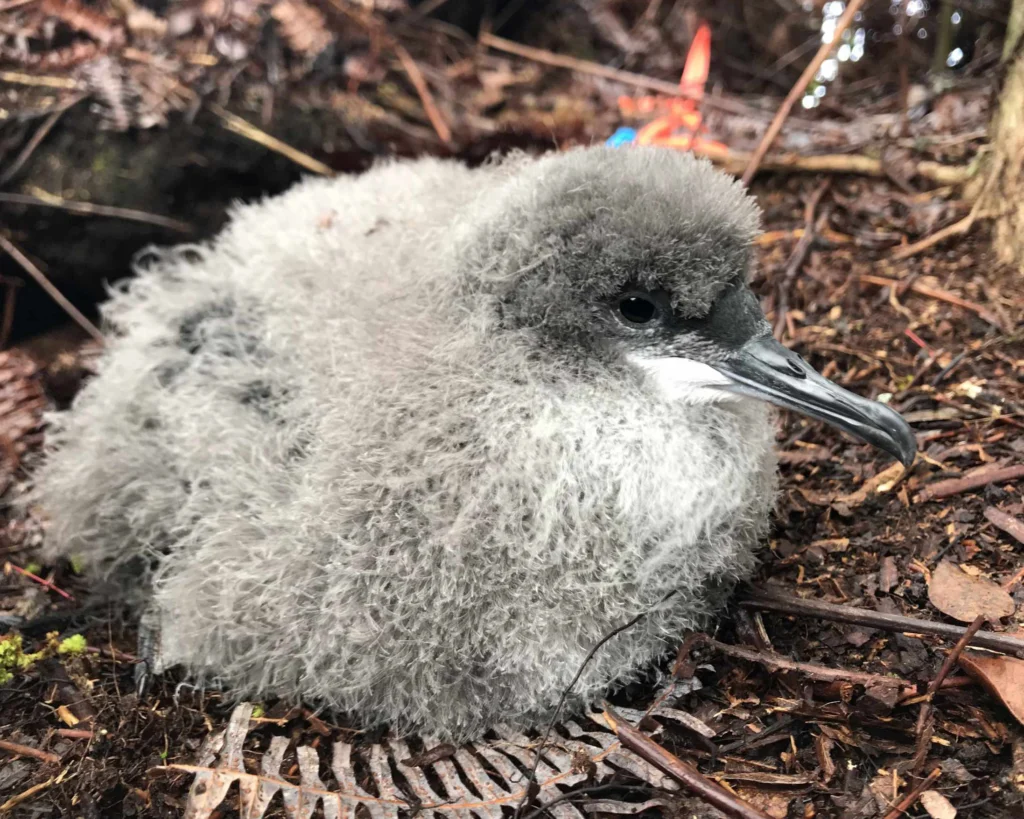
The female shearwater lays a single egg in a chamber at the end of the two- to three-foot-long nest burrow, and the parents take shifts incubating. Amazingly, a typical shift lasts between one and two weeks, and the parent on duty doesn’t eat for that whole time! When the fluffy gray chick hatches, both parents forage hundreds of miles offshore to feed it, returning to the colony at night. Young birds stay out at sea for their first few years, only returning to land for their first breeding season when they’re between six and seven years old.