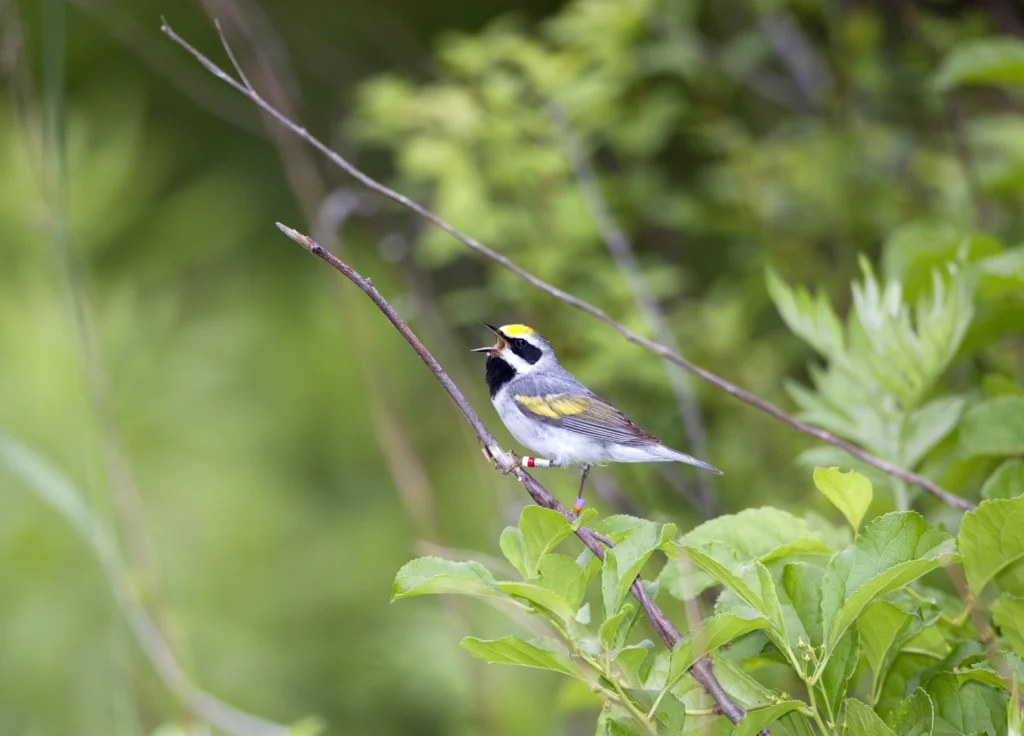
Cuando regresan a sus zonas de reproducción durante la primavera en el hemisferio norte, las reinitas alidoradas dependen de una combinación de matorrales boscosos o bosques jóvenes para anidar. Sin embargo, una vez que han emplumado el nido, estas reinitas jóvenes necesitan árboles caducifolios más viejos para alimentarse. Esta combinación de hábitats puede ser difícil de conseguir, especialmente en los Apalaches, donde la especie ha disminuido un 96 %. El panorama es ligeramente mejor para la población de reinitas alidoradas en la región de los Grandes Lagos, pero la especie aún se considera Casi Amenazada por la UICN.
Los propietarios de tierras privadas pueden ser algunos de los mejores aliados en el esfuerzo por crear un hábitat atractivo y saludable para las aves en los Apalaches y la región de los Grandes Lagos. La ABC administrada Empresa conjunta de los Montes Apalaches (AMJV) y el Programa de los Grandes Lagos de ABC trabajan con propietarios de tierras para ayudarlos a aprovechar el potencial de sus tierras como hábitat de aves y como bosque en funcionamiento.
Las perturbaciones que antaño creaban los hábitats dinámicos que necesitan las Reinitas Alidoradas, como los incendios periódicos, se han controlado en gran medida. El resultado es un paisaje relativamente uniforme con árboles de edades similares en lugar de un bosque diverso poblado de árboles de diferentes edades y tamaños, con claros naturales en el dosel que permiten la entrada de luz a las plantas que se encuentran debajo. Además de atraer a muchas menos aves, la falta de diversidad en un bosque también puede hacerlo más susceptible a la intrusión de especies vegetales no autóctonas, que causan graves daños a los árboles autóctonos. Esto es una mala noticia para los árboles y las aves, como... Reinita cerúlea, que los necesitan.
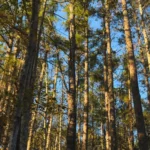
La buena noticia es que los bosques pueden gestionarse con cuidado para restaurar y mantener su salud y maximizar sus beneficios para las aves. También pueden gestionarse intencionalmente para permitir la cosecha simultánea y sostenible de madera. Para dar color y vida a bosques relativamente tranquilos y monótonos, los silvicultores pueden emplear diversas técnicas, como el aclareo. Talar algunos árboles más altos mientras se dejan otros en pie abre el dosel, lo que permite que la luz llegue a las plantas en el suelo. Después de varios años de crecimiento del sotobosque y la eliminación de los árboles más altos y valiosos sin comprometer la salud del bosque (un proceso llamado desbroce), un bosque homogéneo con poco que ofrecer a la vida silvestre comienza a convertirse en un hábitat dinámico y animado, con una mezcla de árboles viejos y jóvenes, nuevo crecimiento de vegetación a nivel del suelo y más cantos de aves en el aire de especies residentes y aves migratorias, incluidas las reinitas alidoradas.
El modelo de bosque en funcionamiento funciona tanto para las aves como para los propietarios de tierras, quienes pueden cosechar árboles de forma sostenible y generar ingresos, manteniendo al mismo tiempo un hábitat saludable. Existen programas que ofrecen incentivos financieros y apoyo para compartir costos para fomentar la gestión forestal sostenible, ya sea estrictamente con fines de conservación o como parte de un plan de gestión forestal en funcionamiento. En los Apalaches, los propietarios de bosques en funcionamiento también reciben otro tipo de incentivo: la aparición de la llamativa Reinita Alidorada, con sus rayas amarillas, en primavera, a menudo acompañada de otras especies que pasan por la zona o se preparan para la temporada de reproducción, incluyendo la Golondrina americana, Reinita común y Azulejo índigo.